The Overpopulation Project
TOP – Research and Outreach
Too many people consuming too much
Tag: Population Policies
-
Strange bedfellows of sustainability: How identity politics obstructs the future of wilderness
Preserving wild places is key to protecting Earth’s biodiversity. In the United States and elsewhere, identity politics undermines the commitment to do so. by Karen Shragg Preserving wilderness is in the best interests of all of us, especially the four-legged and two-legged creatures with whom we share our countries. When people give other species room,…
19 comments on Strange bedfellows of sustainability: How identity politics obstructs the future of wilderness -
Delusional population projections lead us sleepwalking into catastrophe
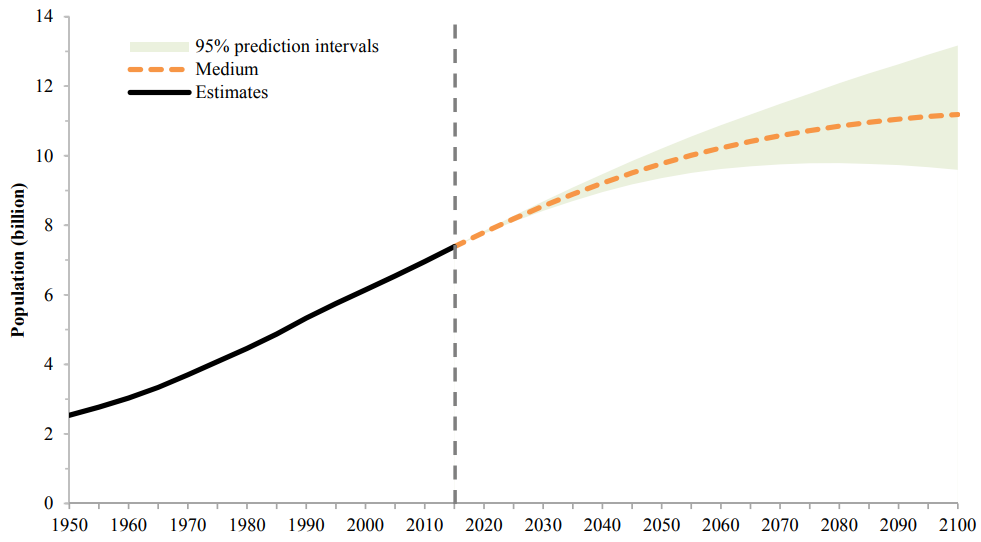
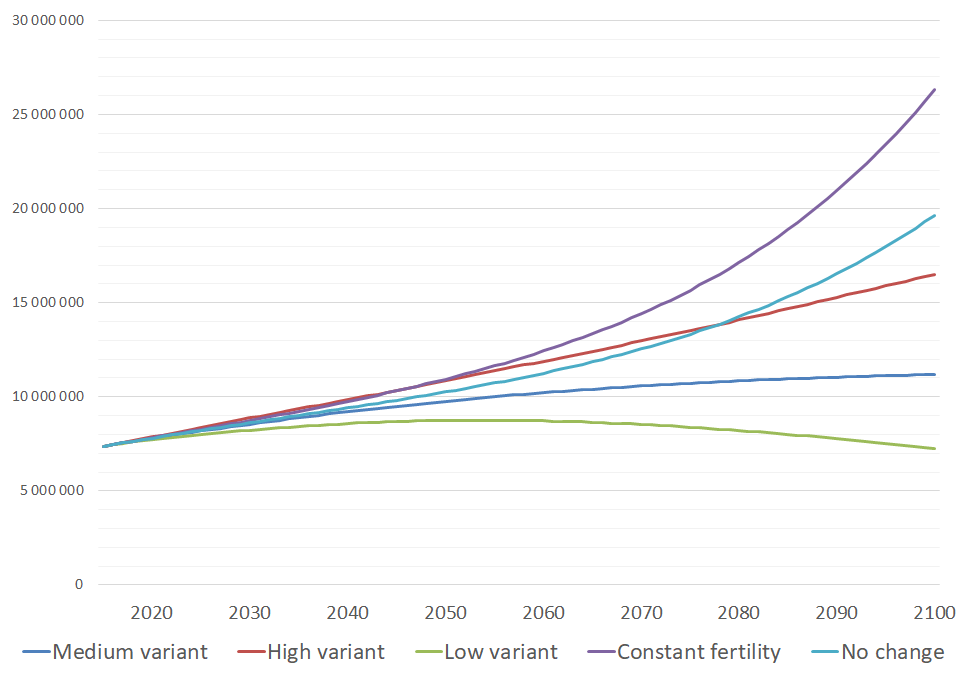
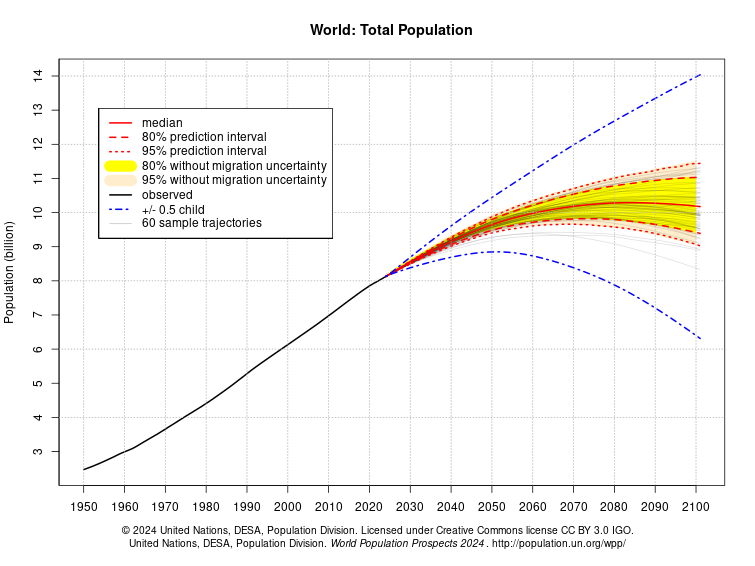
Recent United Nations population projections paint a comforting picture of immanent population stabilization. But what if they are wrong? Global population growth does not appear to be slowing as quickly as UN demographers have predicted, making widespread famines and run-away climate change more likely in the coming decades. By Jane O’Sullivan The Elon Musks of…
-
Human population reduction is not a quick fix for environmental problems
Then again, neither is anything else. The long lag time between fertility reduction and population stabilization is a key reason we need to address excessive human numbers sooner rather than later. by Phil Cafaro There’s an argument one often hears that goes like this: “sure, population is important. But we need to reduce our environmental…
-
Gattopardi and cheap labor
Reflections from Italy on the wicked problem of unregulated and unregulatable immigration into Western Europe. by Gaia Baracetti I could never understand what animal exactly the gattopardo was supposed to be. A leopard? A cheetah? A mythical beast? For sure, none of those roams my country. But I, like most Italians, always understood the meaning…
-
Australia’s population growth rate of nearly half a million ‘too high’
Australia is growing rapidly, in large part due to immigration. This causes strain on both infrastructure and the environment. By Sustainable Population Australia Sustainable Population Australia (SPA) considers Australia’s population growth rate in 2022 too high and called on the federal government to put a brake on immigration. The Australian Bureau of Statistics (ABS) released…
-
Why Overpopulation Should Be a Women’s Issue
The costs of overpopulation and lack of family planning access fall disproportionately on women. Securing women’s rights and ecological sustainability depend on a clear-eyed understanding of this. This raises the question of why there are not more women who are actively involved in the issue of human overpopulation. By Karen Shragg and Madeline Weld An observation…
-
The Population Factor back by popular demand
In 2020 and 2021, I recorded two seasons of the TV show The Population Factor. Each episode features in-depth conversations focused on a particular aspect of the population/environment connection. Check out seasons one (hour-long episodes) and two (half-hour episodes), all available for free streaming at the links below. by Phil Cafaro Season 1 Episode 1.…
-
The imaginary world of Earth4All’s low population projections
A new report from Earth4All says world population will peak below 9 billion. While it celebrates this result and says we must work to get it even lower, this unrealistically low projection itself is likely to have the opposite effect. by Jane O’Sullivan Last week a consortium under the name of Earth4All published new population…
-
Do three Pacific islands provide lessons for achieving a sustainable human population?
These islands were more-or-less isolated, microcosms that perhaps tell us what is going to happen with the global population. Anthropological accounts also describe remarkable forms of birth control. Do they tell us anything about how to achieve sustainable populations today? By Frank Götmark Easter Island, and historical background One of the most debated questions…
-
Plato and Aristotle on living well and optimal population
The ancient Greeks have exerted tremendous influence on western thought and culture, including in the realm of ethics. Yet few today realize that the founders of western political philosophy advocated a steady-state economy and limits to human numbers. by Theodore P. Lianos In the fifth century B.C., the Athenian philosopher Socrates (470-399) changed the course…
-
Global population has hit 8 billion
The world population has hit 8 billion, a milestone which has been widely discussed in the media. In this article originally published by The Hill, William Ryerson of the Population Media Center and Kathleen Mogelgaard of the Population Institute reflect on the economic and environmental effects of this milestone. By William Ryerson and Kathleen Mogelgaard…
-
Eight Billion – Our Greatest Mistake
According to the United Nations Population Fund, reaching a global human population of 8 billion is an achievement to be celebrated. In “a world of infinite possibilities,” they state, “imagine the boundless paths 8 billion can take.” Rather than taking refuge in irresponsible fantasies, it’s time our bloated societies reckoned honesty with demographic reality. By…
-
The per capita fallacy
Are many tiny ecological footprints more virtuous than fewer, larger ones? Will they be better for the Earth, or easier to accomplish? These hard questions need to be asked as humanity hurtles past 8 billion people and deeper into ecological overshoot. By Gaia Baracetti You’ve all heard the argument: high birth rates in poor countries…
-
The role of immigration in Italy’s recent election
How important were immigration issues in the recent electoral triumph of Giorgia Meloni’s Fratelli d’Italia party? TOP’s chief Italian correspondent gives us her analysis. by Gaia Baracetti History does repeat itself – but not in the obvious way. One could fear we’re witnessing a second March on Rome exactly a century after the first, but…
-
3 Women, 2 Countries, 1 Voice for World Population Day 2022
For those times when we feel worn down by the thanklessness of campaigning for population sustainability, it can be uplifting to hear the voices of veteran campaigners whose courage has never wavered. Michael Bayliss introduces us to a conversation to inspire. by Michael Bayliss In the most recent episode of Post-Growth Australia Podcast (PGAP) I…
-
The United Nations celebrates World Population Day by shaming population ‘alarmists’
Not content with omitting overpopulation concerns from its own rhetoric, in its World Population Day statement the UNFPA has gone on the attack, labelling all concerns about the numbers of humans ‘alarmist’. Jane O’Sullivan takes them to task. By Jane O’Sullivan The United Nations Population Fund (UNFPA) was created in 1969 to act on the…
-
Influencing politicians to act on population trends: an example from Sweden
To influence societal attitudes and population policy it is important for organizations that understand the population factor to reach out to politicians who can enact necessary changes. Below follows one such example, where the Swedish group Nätverket ‘Population Matters Sweden’ wrote letters to all members of the Swedish parliament, highlighting the need to address population…
-
Population commitments under the Paris climate accord
Under the Paris Agreement of the UN Framework Convention on Climate Change (UNFCC), the nations of the world have made pledges known as nationally determined contributions (NDCs). These represent countries’ proposals to adapt to and mitigate (limit) global warming. A new publication assesses the NDCs’ treatment of population growth and family planning. by The Overpopulation…
-
On Threats and How to Prevent Them
Threats that humanity faces today are planetary in scale. That and their menacing character require long-term thinking and preventive politics to deal with or, better yet, prevent them. This may require planetary governance that unites humanity for mutual protection. by Jan Greguš, Masaryk University, Czech Republic Few would have believed five or ten years ago…
-
Population in the IPCC’s new mitigation report
A new IPCC climate change mitigation report confirms that population increase and economic growth are the main drivers of today’s historically high greenhouse gas emissions. But that scientific information has been censored and removed from the Summary for Policymakers distributed to the world’s press and the public. Does a problem disappear if we don’t mention…
-
Religion, Fertility and Contraception in Sub-Saharan Africa, Part 4: African research and policy in Nigeria
African researchers have done excellent work to clarify how religious affiliation influences the use of contraception. In Nigeria, with high fertility and a large and growing population, use of modern contraception is still low. The teaching of Islam in particular, contributes to this situation. Several researchers emphasize that men and religious leaders should be involved…
-
Aid needs to go where it will help most
Development aid often fails to address the root causes of poverty in poorer nations. A recently proposed program to further sexual and reproductive health in Uganda provides a welcome example of a more focused and effective approach. by Kelvin Thomson When I began full time work 45 years ago, I started paying a monthly sponsorship…
-
Subsidies for large families in Sweden impair integration of immigrants
The family supplement, which gives extra financial aid for each additional child, was implemented in Sweden in 1982 at a time of falling birth rates. It now contributes to lock-in effects for immigrant women. Abolishing this supplement and limiting the child allowance to the first two children would help reduce social exclusion and public spending,…
-
Just population policies for an overpopulated world
After three decades of neglect, more environmentalists are waking back up to the need to limit human numbers. But like Rip Van Winkle, we find that the world changed while we were asleep. There are now billions more people, consuming more than ever, while our world has grown warmer, tamer, and more polluted. A new…
-
Glasgow follies
This coming weekend, representatives from 196 nations will gather in Glasgow for the 26th Conference of the Parties to the UN’s Framework Convention on Climate Change. Failure is assured, since addressing the fundamental causes of climate change isn’t on the agenda and all proposed national commitments are voluntary, with no penalties for not living up…
-
Lower birth rates and an aging population can help heal Asian economies
Slowing population growth can have broad benefits for society, including enhancing the many ways that older citizens enrich our communities. By Jane O’Sullivan and Susann Roth As the Covid-19 pandemic continues to disrupt people’s livelihoods through a second year, a lot of people are choosing to defer having children. Media stories lament a ‘baby bust‘…
-
The demographic fantasies of the IPCC
Climate change is now unequivocally an emergency according to the latest report from the IPCC. Our only hope lies in extremely rapid abandonment of fossil fuels and reversal of forest loss. But these lifeline scenarios also assume birth rates plummet in high-fertility regions. Jane O’Sullivan offers a reality check. By Jane O’Sullivan The Intergovernmental Panel…
-
Why we must become fewer people and consume less – and suggestions to improve the situation
The mainstream media rarely report about the role of population growth in environmental and climate disruptions, but the Op-Ed below was actually published in the high-circulating Swedish Social Democratic newspaper Aftonbladet a week ago. The original Swedish text is available here. The article gives a broad overview, ending with an unusual suggestion. There were 250…
-
Top scientists call for new UN sustainable development goal on population
A group of distinguished scientists have called for rapid action to reverse unsustainable population growth as threats to global ecological boundaries become more apparent. The evidence was set out at an online conference organised by Scientists Warning Europe to mark this year’s World Population Day. by Brian McGavin With the human ecological footprint already 170…
-
Past, present, and future population: a personal account of India
Sometime this decade, India is set to overtake China as the most populous nation on Earth. Below, a reader from India reflects on what these immense numbers mean for his country’s future. Despite being in the position of being able to have a family of his own, he chooses not to in protest. For him…
-
An Environmental Impact Statement on US Immigration Policy
What impact does US immigration policy have on greenhouse gas emissions, habitat preservation, or water and air pollution? Episode six of The Population Factor on Earthx TV addresses these questions, while episode seven, the final episode of season one, discusses how declining human populations open up new opportunities for ecological restoration. by The Overpopulation Project…
-
Coercion and population policies, Part 3 – More babies for the nation
PM’s Alistair Currie looks at a disturbing rise in restrictions on women’s rights due to coercive population growth policies that put pressure on women to have larger families. By Alistair Currie Last year, the policy of the Chinese government to force women in its Muslim Uyghur minority to be sterilised, have abortions, or get fitted…
-
Coercion and population policies, Part 2 – the remarkable case of Peru
The unsustainable growth of the global population needs to be halted through informed voluntary action. Coercive population policies such as those used in China are unacceptable. On the other hand, many millions of women and couples around the world face pro-natalist forms of coercion, such as being forced to give birth to unwanted children, in…
-
Two radical ideas whose time has come
Increasing economic inequality and accelerating ecological decline are the two great political challenges facing nations today. In recent decades, many complicated efforts to address these problems have been proposed or tried, but the problems have continued to worsen. Perhaps it is time to address them more directly. by Philip Cafaro I came of age politically…
-
Demographers fail to acknowledge the effect of population growth on climate change
A recently published article asked European demographers about their attitudes towards climate change and population growth. It shows that while most demographers are in agreement on the need to act on climate change, the effect of population growth is largely not understood. By The Overpopulation Project An article published in March this year in the…
-
Coercion and population policies, Part 1
The unsustainable growth of the global population needs to be halted through informed voluntary action, including empowerment of women, family planning and increased use of modern contraceptives. Coercive population policies such as those used for 35 years in China, in India 1975-77, and more recently in Peru, are unacceptable and must be condemned. But many…
-
IUCN recognizes the importance of attending to population to preserve biodiversity
After decades of silence, the International Union for the Conservation of Nature has passed a motion reaffirming the importance of addressing population matters to achieving conservation success. This continues a welcome recent trend among conservation scientists to speak up about the potential benefits of reining in population growth. by Pernilla Hansson The International Union for…
Explore the content and topics covered by TOP, search here
Recent blog posts
Blog categories
What we are reading, listening to and watching
Gallery of infographics – Learn more about overpopulation and environment