The Overpopulation Project
TOP – Research and Outreach
Too many people consuming too much
Category: Climate Change
-
The Progressive Left are the Bad Guys Too
The “Progressive Left” loves to shift blame for the climate crisis onto the climate-change denying right. But close examination reveals that they are just as guilty… by Michael Seebeck The progressive Left is as complicit as the climate-denying Right in driving mass extinctions, biosphere collapse, and anthropogenic climate change. Each side enables the other, accelerating…
8 comments on The Progressive Left are the Bad Guys Too -
Cutting the global population in half to achieve sustainability
A recent paper documents the role population growth has played in driving global ecological overshoot and advocates gradual population decline by encouraging low birth rates to help reverse it. “Malthus was wrong, Ehrlich was wrong, and these idiots are wrong,” wrote one annoyed commentator on X. Yet it has gotten a surprisingly thoughtful hearing in…
-
Ceuta incident: Population growth threatens both poor Africans and climate stability
Have you tried to publish a critical piece on population growth in the media? I find that such attempts usually fail. Yet it pays to contact and stay in touch with editors, who sometimes listen and publish. See my guest leader in Göteborgs-Posten, one of three large morning newspapers in Sweden (translated below). By Frank…
-
Why Project Drawdown should recommend family planning
The climate researchers at Project Drawdown didn’t always have a blind spot toward population. Their retreat means many concerned activists will remain ignorant of the most effective means to limit greenhouse gas emissions and adapt to the change that’s coming. by Pernilla Hansson While consumption is a widely recognised contributor to climate change, population growth…
-
What Are Floors Without Ceilings?
Staying within safe planetary boundaries for global resource use and pollution makes good sense. Are there a complementary set of economic and social measures that could help human societies remain within ecological limits? by Erik Assadourian Not long ago a new update to the Planetary Doughnut was published in Nature, complete with 35 indicators to…
-
The argument from failure
After seven years of research and blogging here at TOP, it’s sometimes hard to think of new things to say about population matters. But recent events suggest a new argument for overpopulation that readers may not have considered. By Philip Cafaro The top global environmental stories of the past month have been the failure of…
-
Population stability could improve UK living standards
With a population nearing 70 million, the UK is feeling the pressure on the housing and job markets. Stabilising the population would ease this pressure, giving more people access to affordable housing and strengthening wages, utlimately raising the quality of life for UK citizens. by R. M. Smilie Introduction The United Kingdom (UK) has rarely…
-
For the sake of food security, we must address population numbers
On World Population Day, Jenny Goldie reminds us that food is humanity’s most basic and most vulnerable necessity, but reducing the number of mouths to feed remains off the food security agenda. by Jenny Goldie As a child, the thought of other children going to bed hungry upset me. Later, I began university studies in…
-
Overpopulation: A New Survey Confirms the Cause of the Planet’s Environmental Crises
Synthesizing findings from hundreds of recent peer-reviewed scientific studies, a comprehensive new article reviews the effects of expanding human populations on humanity’s most pressing environmental problems. by Alon Tal A vast amount of research and rhetoric is devoted to the world’s many sustainability challenges. Yet most advocates and scientists assiduously avoid acknowledging the predominant driver…
-
No sustainable paradigm is attainable without gradual population reduction
The Jus Semper Global Alliance is dedicated to building a better world based on democracy, sustainability and fairly sharing the world’s wealth. Its website gathers valuable material on a full range of issues regarding economic, social and ecological justice. As its founder and executive director reminds us here, “no matter how efficient and fair the…
-
‘Climate refugees’ and the question of limiting immigration: a response to Migration in Hotter Times
A recent discussion paper on climate refugees, Migration in Hotter Times: Humanity at Risk, does much to muddy the water without presenting practical solutions. by Jane O’Sullivan and Philip Cafaro Immigration is a deeply divisive topic, even among population activists. It is not uncommon to have a strong commitment to global population stabilisation while believing…
-
Green parties lose big in EU parliamentary elections by ignoring the relationship between immigration and environmental damage
Green and left-wing parties lost ground in recent elections to the European Union Parliament, in part by neglecting and even denying the relationship between population growth by immigration and environmental stress. They could have used the topic to their advantage, but failed to do so. Instead it became the flagship issue of the right. By…
-
Offsetting CO2 emissions from flights: a connection to population
Carbon offsets are always a compromise, not a substitute for avoiding emissions. However, if you have to fly, there are better options than the airlines’ voluntary offset programs. by Stephen Warren, Emeritus Professor of Atmospheric Sciences, University of Washington, Seattle, USA Airplanes are responsible for less than three percent of global CO2 emissions1, but aviation…
-
Can we engineer our way out of the climate crisis?
Many scientists excited to develop new geoengineering technologies say yes, as do capitalists who stand to profit by continuing with business as usual. But most of the commoners who will have to live with the messes left behind when technocrats fail say a resounding no. by Philip Cafaro Sunday’s New York Times included a lengthy…
-
Carbon emissions and the desperate search for culprits
Are rich people with their private jets the main cause of climate change? Or are the hundreds of millions joining the middle class in China and India? Or maybe large families of poor farmers in the tropics deforesting to make room for low-productive agriculture? This blog questions the search for specific culprits, which is often…
-
Earth’s nature is being ravaged by population growth
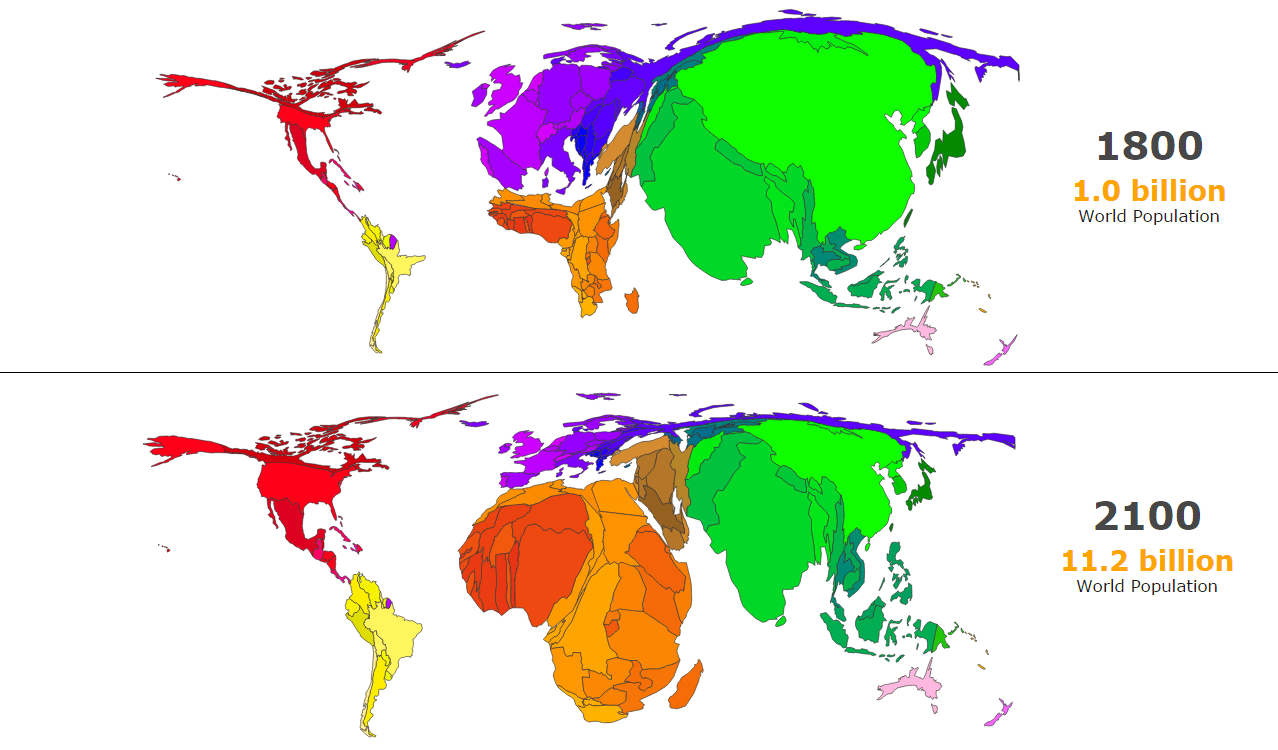
Humanity’s rapid expansion leads to environmental destruction, starvation and ravaged biodiversity. Population growth needs to be ended as soon as possible for sustainability. By Malte Andersson and Frank Götmark Published 2024-01-02 in Svenska Dagbladet, morning newspaper in Sweden (translated by TOP) In 1800, the world’s population was 1 billion, but in 2022 we exceeded 8…
-
No need to hold COP 29: Just follow Japan’s lead!
Japan has accomplished the difficult task of reducing their emissions, mainly through its decreasing population. by Terry Spahr COP 28, the United Nations’ annual climate summit is happening right now in Dubai, United Arab Emirates. These climate conferences have been taking place since 1995 and as Axios reported, each and every year, save for temporary recessions,…
-
How to Fix the Planet, the Easy Way
To avoid disastrous deterioration of Earth’s climate and biosphere, humanity has to reduce its demands on nature. Fewer births and a falling population is no quick fix, but compared with voluntary austerity, it has many more up-sides than down-sides. by Jon Austen Scientists are reporting that there is an existential threat to life on Earth.…
-
Strange bedfellows of sustainability: How identity politics obstructs the future of wilderness
Preserving wild places is key to protecting Earth’s biodiversity. In the United States and elsewhere, identity politics undermines the commitment to do so. by Karen Shragg Preserving wilderness is in the best interests of all of us, especially the four-legged and two-legged creatures with whom we share our countries. When people give other species room,…
-
Delusional population projections lead us sleepwalking into catastrophe
Recent United Nations population projections paint a comforting picture of immanent population stabilization. But what if they are wrong? Global population growth does not appear to be slowing as quickly as UN demographers have predicted, making widespread famines and run-away climate change more likely in the coming decades. By Jane O’Sullivan The Elon Musks of…
-
Procreation and Consumption in the Real World
The cause of global environmental decline is clear: an immense and rapidly growing human economy. In response, environmentalists should advocate policies leading to fewer people and lower per capita consumption, not one instead of the other. Addressing both provides our best hope of creating sustainable societies and preserving Earth’s remaining biodiversity. by Philip Cafaro There…
-
Human population reduction is not a quick fix for environmental problems
Then again, neither is anything else. The long lag time between fertility reduction and population stabilization is a key reason we need to address excessive human numbers sooner rather than later. by Phil Cafaro There’s an argument one often hears that goes like this: “sure, population is important. But we need to reduce our environmental…
-
Walk the talk: the world needs more Gretas and fewer Leonardos
People in rich countries must rein in their consumption, but the hypocrisy of high-profile environment advocates makes them poor role models, argues Gaia Baracetti. By Gaia Baracetti This is an overpopulation blog, but its authors have made it clear that overconsumption is a problem too, and that the two are, as it is often said,…
-
Big Australia needs rethink on World Population Day 2023
Another UN World Population Day passed with the UN focussing on anything but population growth. Australia’s population is growing faster than most, with sustainability not on the government’s radar, as Stephen Williams laments. By Stephen Williams I don’t pay much attention to awareness days, but I make an exception for World Population Day, first observed…
-
The Population Factor back by popular demand
In 2020 and 2021, I recorded two seasons of the TV show The Population Factor. Each episode features in-depth conversations focused on a particular aspect of the population/environment connection. Check out seasons one (hour-long episodes) and two (half-hour episodes), all available for free streaming at the links below. by Phil Cafaro Season 1 Episode 1.…
-
To Advance Humanity and Save Nature We Need a Common Agenda
Problems caused by rapid population growth, environmental degradation and climate disruption are harming human welfare and the natural world. These problems are largely addressed separately, with little common understanding or integration of efforts. Our recent paper, Advancing the Welfare of People and the Planet with a Common Agenda for Reproductive Justice, Population, and the Environment,…
-
Making media seriously discuss population growth and its consequences – a case in Sweden
Newspapers, radio, and TV in many countries usually avoid the problems of population growth and overpopulation. But by focused work it is possible to get the attention of mainstream media. This recently happened in Sweden, to judge from a TV program broadcast 13 April. By Frank Götmark and Malte Andersson How can you highlight the…
-
Dangerous distraction or elephant in the room? The role of population growth during three decades of increasing carbon emissions
How often have you heard some version of this claim: “population growth is not a problem for climate change, because populations are growing in poor countries whose contributions to global emissions are negligible”? It gets repeated like a mantra, soothing words that banish thought. But what justifies a claim is not the number of times…
-
Eight Billion – Our Greatest Mistake
According to the United Nations Population Fund, reaching a global human population of 8 billion is an achievement to be celebrated. In “a world of infinite possibilities,” they state, “imagine the boundless paths 8 billion can take.” Rather than taking refuge in irresponsible fantasies, it’s time our bloated societies reckoned honesty with demographic reality. By…
-
The per capita fallacy
Are many tiny ecological footprints more virtuous than fewer, larger ones? Will they be better for the Earth, or easier to accomplish? These hard questions need to be asked as humanity hurtles past 8 billion people and deeper into ecological overshoot. By Gaia Baracetti You’ve all heard the argument: high birth rates in poor countries…
-
Hello World of 8 Billion!
On 15 November 2022, Earth’s human population will pass 8 Billion, according to estimates by the United Nations. This sobering milestone should galvanise us to redouble our efforts to minimise further growth. By Valorie M. Allen I have found myself checking out the population counter on my website more and more often as it approaches…
-
More like a dying planet report
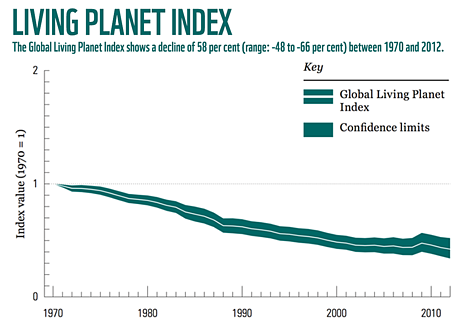
Earth continues to hemorrhage biodiversity, according to the latest Living Planet Report. Unfortunately, its authors cannot manage a clear statement of how to stop the bleeding. by The Overpopulation Project “You could think of it as a health check for the planet,” says the World Wildlife Fund, introducing its most recent biennial Living Planet Report,…
-
Population and the Great Transition
In June, the Great Transition Initiative ran a month-long forum under the title The Population Debate Revisited. The collection of contributed essays is now accessible on the GTI’s site, and makes for interesting reading. We thought three of the essays held particular merit and will republish them here over the next few weeks. The first…
-
Breaking boundaries but not population taboos
The book Breaking Boundaries by Johan Rockström and Owen Gaffney explains the basics of how the Earth works and how humanity is rocking the boat, ecologically speaking. While describing monumental challenges, it views the future with optimism. Despite having a chapter dedicated to population, it fails to acknowledge how larger global populations reduce our chances…
-
Population commitments under the Paris climate accord
Under the Paris Agreement of the UN Framework Convention on Climate Change (UNFCC), the nations of the world have made pledges known as nationally determined contributions (NDCs). These represent countries’ proposals to adapt to and mitigate (limit) global warming. A new publication assesses the NDCs’ treatment of population growth and family planning. by The Overpopulation…
-
On Threats and How to Prevent Them
Threats that humanity faces today are planetary in scale. That and their menacing character require long-term thinking and preventive politics to deal with or, better yet, prevent them. This may require planetary governance that unites humanity for mutual protection. by Jan Greguš, Masaryk University, Czech Republic Few would have believed five or ten years ago…
-
Population in the IPCC’s new mitigation report
A new IPCC climate change mitigation report confirms that population increase and economic growth are the main drivers of today’s historically high greenhouse gas emissions. But that scientific information has been censored and removed from the Summary for Policymakers distributed to the world’s press and the public. Does a problem disappear if we don’t mention…
-
Ethicists recognize that limiting population growth is key to addressing climate change
Faced with the reality of global climate change and its devastating impacts, climate ethicists have begun to address the role of population and the need for limits to growth. A new review article reports on this welcome development. by Philip Cafaro During the past 30 years of extensive political debate about global climate change, participants…
-
The “Silent Lie” in Coverage of Madagascar’s Famine
Graphic media coverage of the current hunger in southern Madagascar is not wasting the opportunity to advocate climate justice. But nobody mentions there are now seven Madagascan mouths to feed for each one present in 1950. This denialism is not in the interests of the hungry, nor Madagascar’s disappearing wildlife, argues Madeline Weld. By Madeline…
Explore the content and topics covered by TOP, search here
Recent blog posts
- The Progressive Left are the Bad Guys Too
- Reproductive rights: an unfinished project and an ecological imperative
- A shrinking population might actually be a good thing
- Cutting the global population in half to achieve sustainability
- Ceuta incident: Population growth threatens both poor Africans and climate stability
Blog categories
What we are reading, listening to and watching
Gallery of infographics – Learn more about overpopulation and environment