
Our World in Data has recently published a population projection tool that readers will likely find useful. Whether the trends and possibilities it illustrates breed complacency or urgency remains to be seen.
by Philip Cafaro
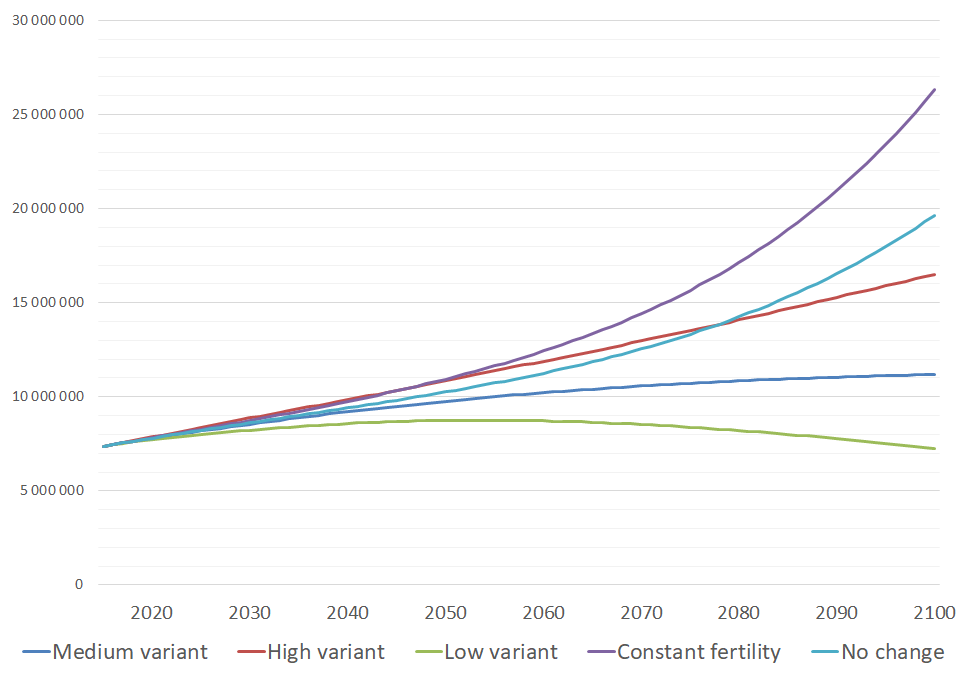
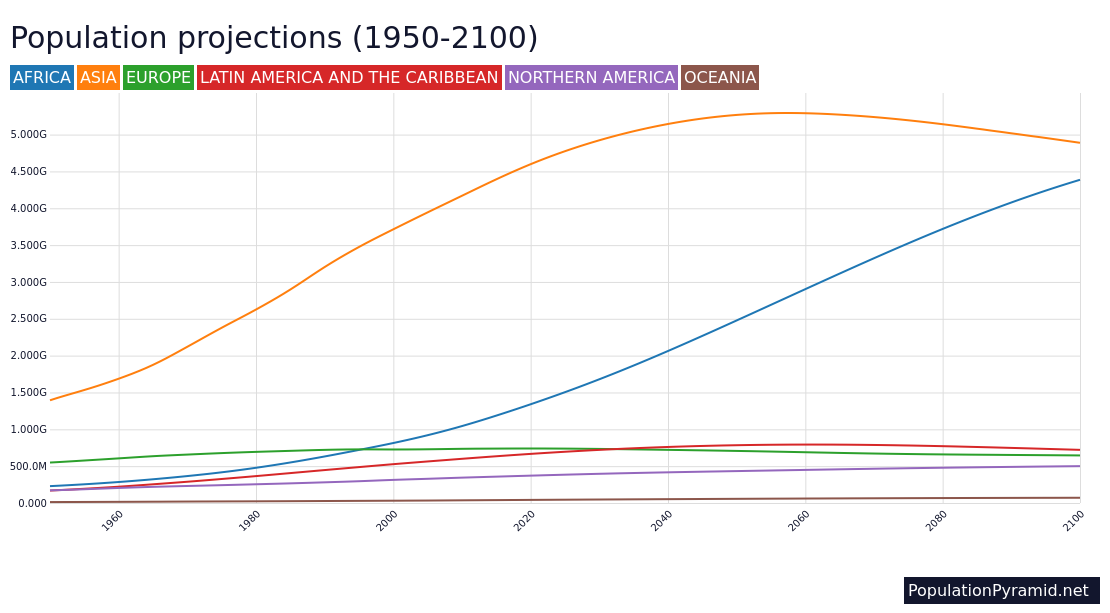
Within the past decade, Our World in Data (OWID) has emerged as a leading purveyor of global economic, health, and demographic statistics. Recently they developed and published a population projection tool that readers may find interesting. The tool graphically presents the latest United Nations median (or most likely) population projections for all countries, and for select regions and the world as a whole. It incorporates the UN projections’ parameters regarding fertility, longevity and net migration – then allows users to change any or all of those three parameters and see how those changes affect future population numbers.

A helpful bonus feature of this new projection tool is that each projection has an accompanying population pyramid (in five-year increments). This shows how changing various parameters changes a population’s age structure.
An unhelpful feature is that net migration is given as a percentage of total population, rather than as a simple number (as TOP has done in our population projection tools for the U.S. and the E.U.). This obscures the connection to national immigration policy discussions, which often focus on whether overall numbers are going up or down.
Still, the new projection tool is relatively user-friendly and fun to play with. We would be curious to know what lessons our readers take from it.
A brief for complacency
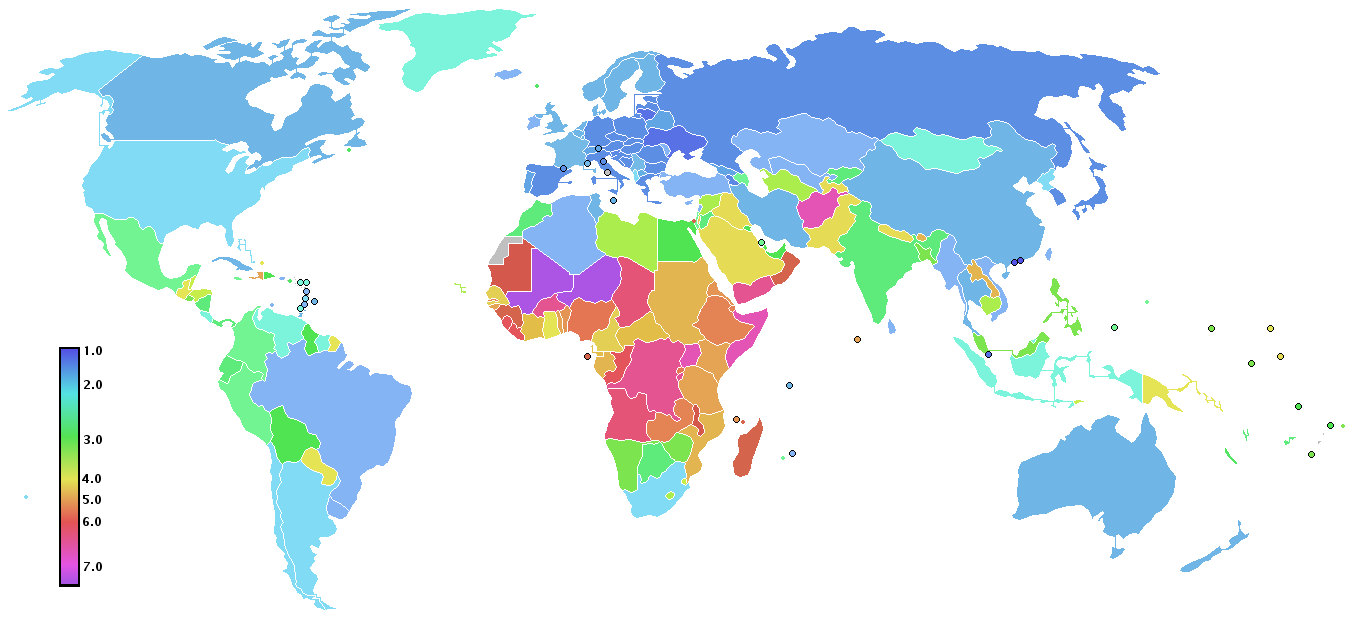
Hannah Ritchie is a senior researcher with OWID and a leading advocate for capitalism-friendly environmentalism. Ritchie is particularly keen to argue that technofixes can solve all environmental problems – no limits needed on human numbers, consumption, or greed. She foregrounds the projection tool in a new article about South Korea; her main point there is that the country’s fertility rate is so low that no remotely likely changes in any of the three parameters have much chance of keeping its population from decreasing substantially during the rest of this century.

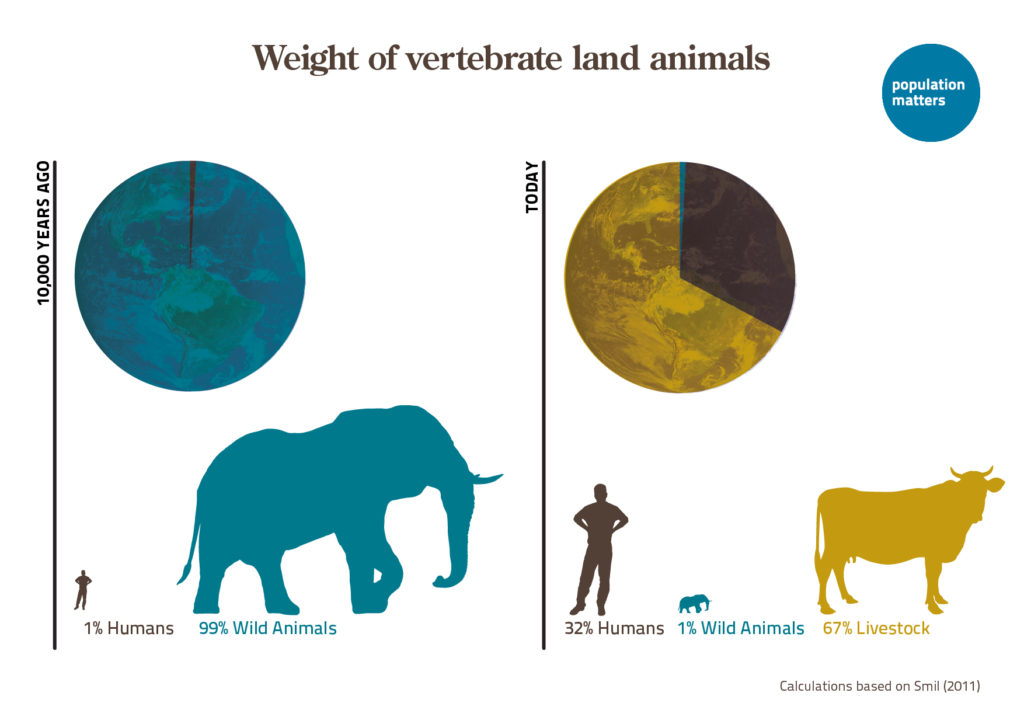
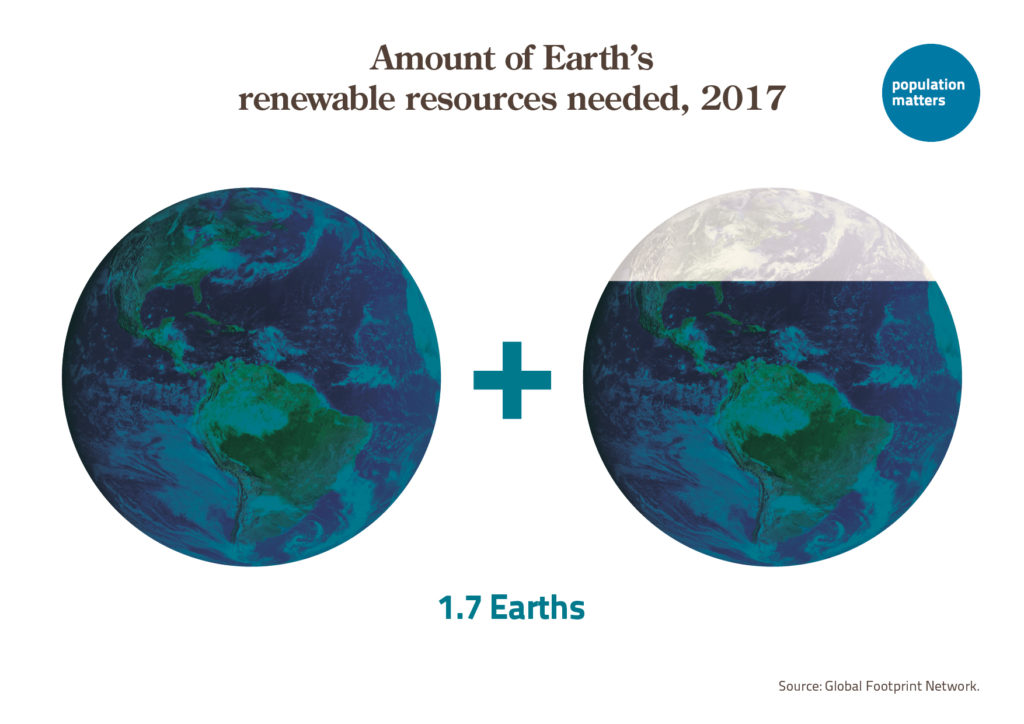
This is plausible, since South Korea has one of the lowest fertility rates in the world. However, it is also one of the most densely populated countries in the world. In Europe, the Netherlands is famous for its high population density (544 per km2), but the high density of South Korea (532 per km2) is rarely mentioned. As a wealthy country, it also has one of the worst ecological footprints in relation to the biological productivity of its land base. In other words, South Korea is nowhere close to sustainable at over 50 million people. From an environmental perspective, its incipient population decline is a very good thing, even essential to national and global sustainability.
Here as elsewhere in her writings, Ritchie is guilty of status quo bias in writing about population. She trades heavily on the fact that populations are or soon may be stabilizing. But as Karen Kuhlemann reminds us, just because a population is stable (or even declining) does not mean it is sustainable. It could still be much too large, as South Korea’s will be for the foreseeable future.
Other countries, other lessons
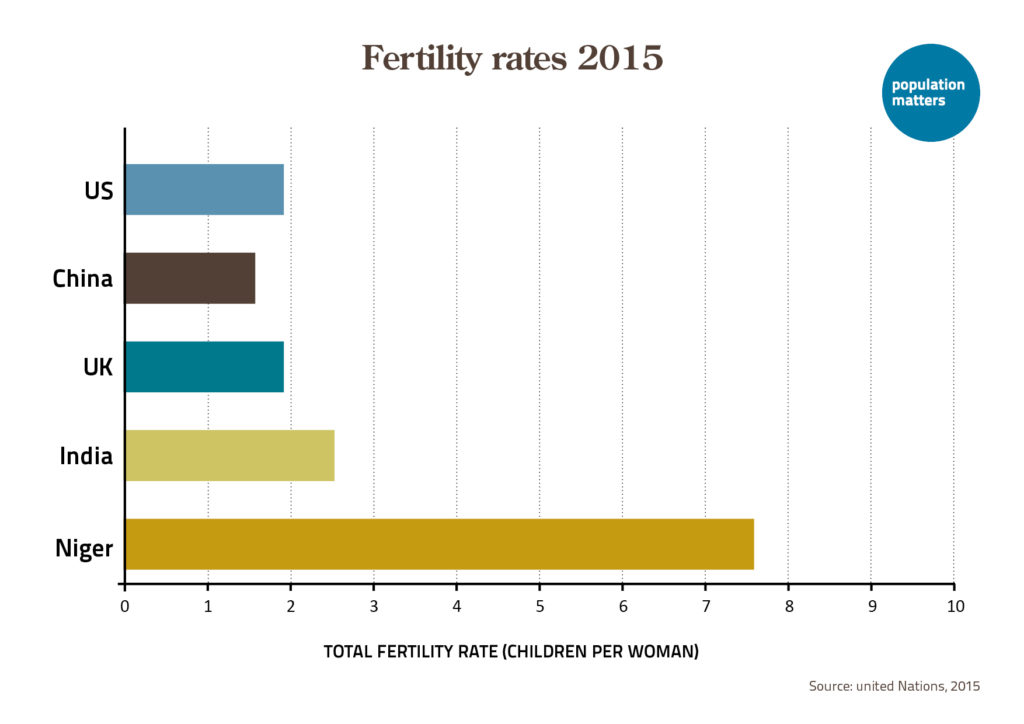
Looking at other countries provides less sanguine perspectives. The UN’s median projection for Nigeria has that country’s population increasing from 230 million today to 470 million by 2100, a prescription for hunger, violence and extreme environmental distress. But that projection includes a rapid decrease in fertility, all the way from 4.3 TFR today to 1.9 TFR by 2100. There is patriarchal and religious resistance to smaller families throughout sub-Saharan Africa (SSA), however. If its TFR slows more gradually and remains at 3.0 for the second half of the century, Nigeria’s population will instead balloon to 630 million with no end in sight to rapid growth. And if preferences for large families continue and TFR levels off at 4.0, Nigeria’s population could increase to one billion by the end of the century.

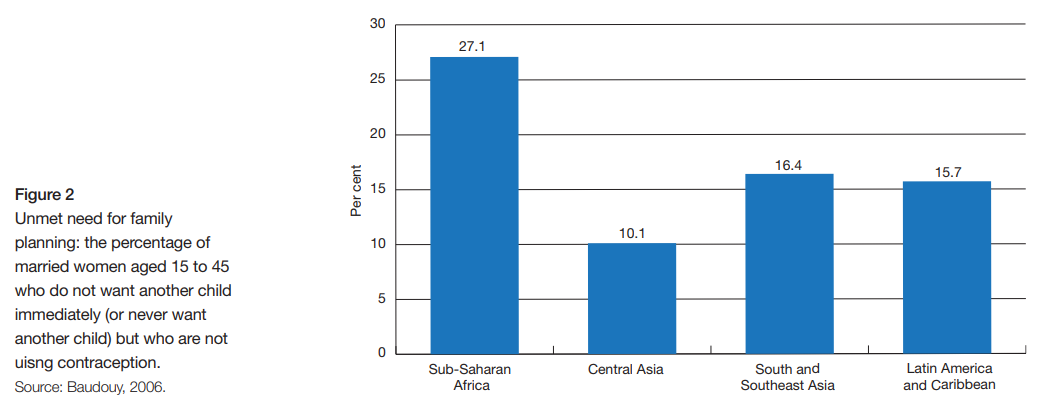
With Mauritius (TFR 1.8) and South Africa (TFR 2.2) as possible exceptions, similar concerns exist for the rest of SSA. Any optimistic demographic scenarios for Africa depend on great changes in social norms and large improvements in the provision and use of modern contraception. And even these optimistic scenarios still include dangerous population increases, baked in due to population momentum.
Many European countries show a very different pattern. For example, the UN projects Italy’s population will decrease from its current 59 million to 35 million by 2100. But this projection involves much lower immigration levels than the country has sustained for the past two decades. If Italy instead maintains roughly the same immigration levels it has for the past two decades, its population will decline much more gradually, to only 50 million.

Europe as a whole presents a similar demographic profile (although individual countries show extensive variation). With a relatively steady TFR around 1.4 and the prospect of increased life expectancy, Europe’s population is on track to decrease from a high of 750 million in 2022 to 590 million in 2100. But immigration is a demographic wildcard. The UN’s median projection has immigration into Europe decreasing over this century to half of current levels. Europe’s capitalists would instead like to double current levels in order to maintain economic growth. This would stabilize Europe’s population around 720 million, not too much less than current numbers.
The global perspective
I take three main lessons from playing with OWID’s new population projection tool. First, small annual differences accumulate into big total differences. Second, population policies have the potential to greatly alter our demographic future.
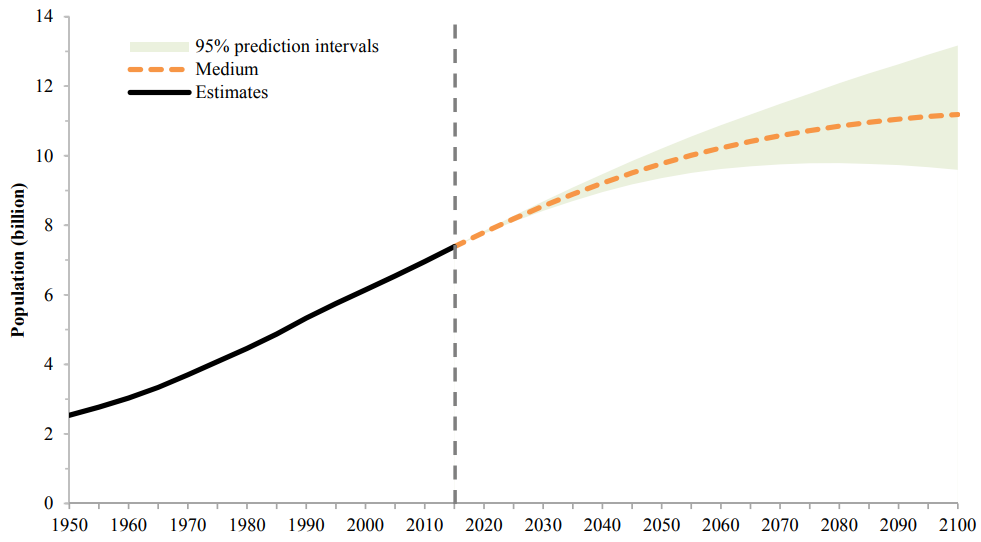
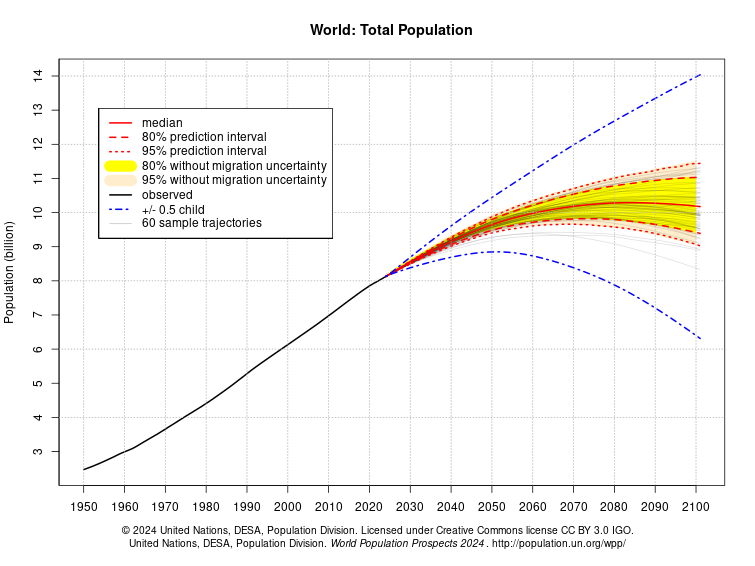
Consider the UN’s population projections for the world as a whole. Under their median projection scenario, global TFR continues to decline, to 1.8 children per woman, and the global population levels out around 10 billion. But imagine global TFR increasing by just one-half child more per woman, perhaps due to a worldwide resurgence of religious fundamentalism, or pro-natalist policies spurred by national security concerns. Then global population in 2100 instead reaches 12 billion. (Elon Musk might be happy, but will he or his computer avatar be able to send any excess people to Mars?)

Conversely, imagine a world where countries fully facilitated every couple’s right to choose the size of their families, by securing their access to modern contraception and socially endorsing its use. Such a world could instead approximate Europe’s TFR rate. In this scenario, the global population would peak before 2070 and would instead be 9.3 billion in 2100. That would be 700 million less than under the UN’s median scenario – and population would be moving downward, in the direction needed to create a sustainable world.
This teaches a third lesson. Population advocates need to decide whether stabilizing around current numbers is acceptable, or whether sustainability concerns demand we boldly advocate population decreases, worldwide and in our own countries.
We can already see how population debates are trending. Overwhelmingly, the focus is on the dangers of declining populations, even in countries like the U.S. and the U.K where populations continue to grow. Overwhelmingly, preserving endless growth in GDP takes precedence over real sustainability for people and wildlife. The past four decades of population neglect have come back to bite us, undermining serious public discussion of the dangers of overpopulation even as its impacts appear all around us.
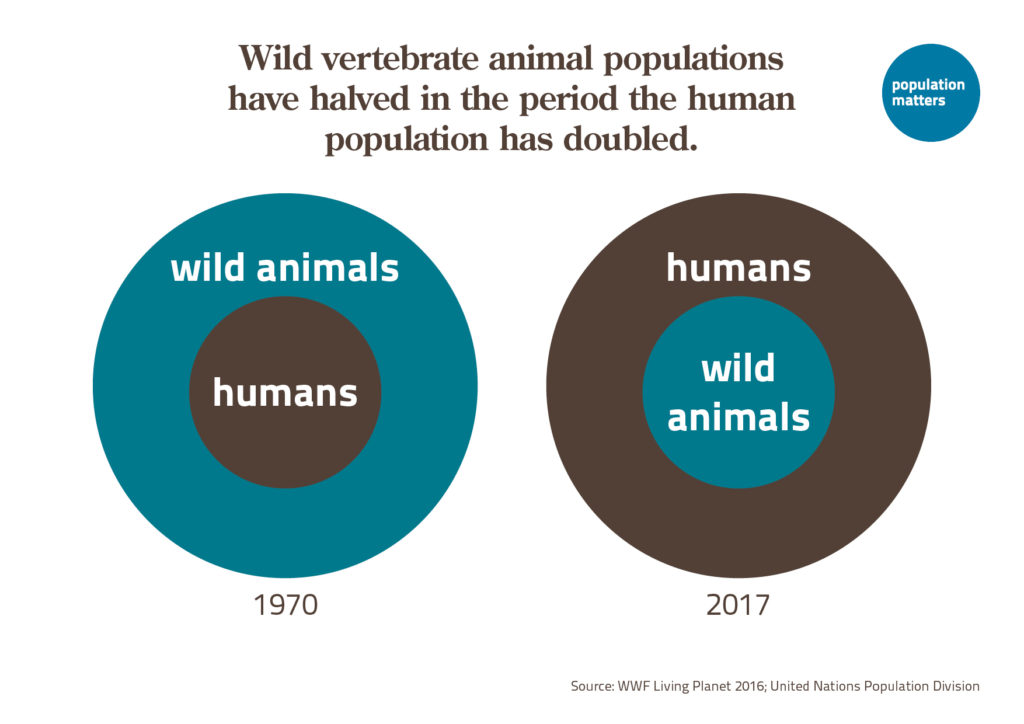
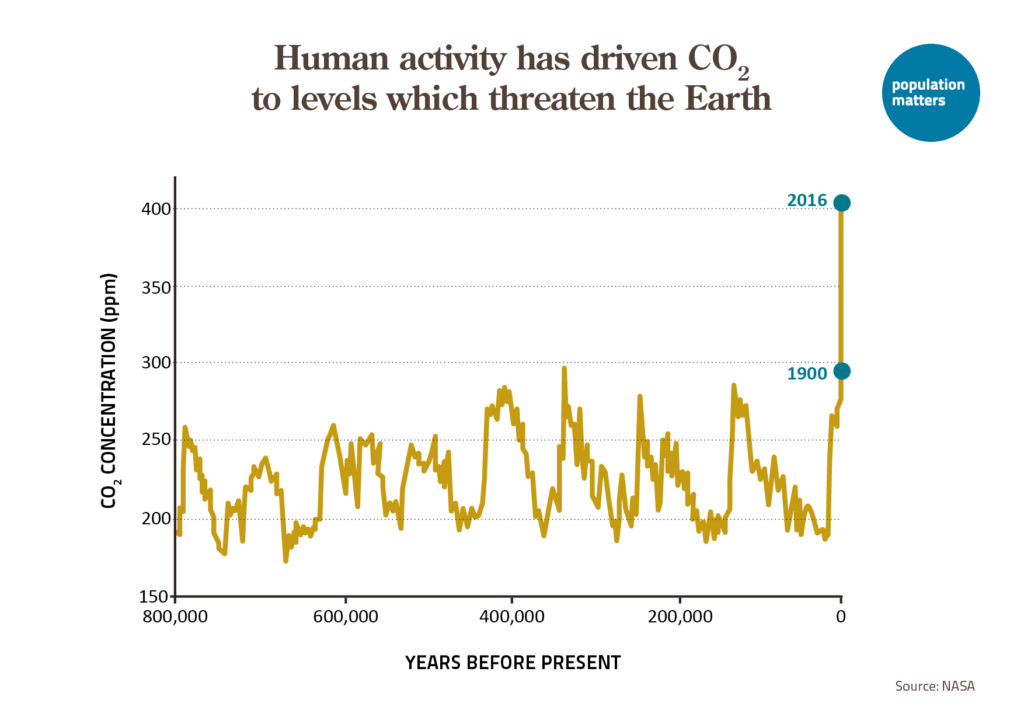
Still, the evidence seems clear that we are grossly overpopulated – and that our efforts to limit climate change, avoid mass extinctions and create sustainable societies are doomed to fail if we do not reduce our numbers. At least it seems so to us here at TOP.
What do you think? Please consider playing around with this new population projection tool and send us your charts and interpretations. We look forward to hearing from you!












Leave a Reply