The Overpopulation Project
TOP – Research and Outreach
Too many people consuming too much
The views and opinions expressed in guest blog posts are those of the authors and do not necessarily reflect the position of The Overpopulation Project.
-
Family planning pioneers: A film interview with Malcolm Potts
TOP is proud to present our second film featuring family planning pioneers. Given the contemporary trend to write family planning success stories out of history, we feel it is vital to put on the record the first-hand accounts of those who were involved. By The Overpopulation Project Malcolm Potts, who died April 2025 at the…
6 comments on Family planning pioneers: A film interview with Malcolm Potts -
Partha Dasgupta’s new book is a must read
Dasgupta is one of very few economists who pay sufficient attention to nature (the biosphere) and human numbers as key factors in a sustainable economy. Praised by both Paul Ehrlich and David Attenborough, how does he describe a sustainable economy and sustainable development? By Frank Götmark Despite being an important and original economist who emphasizes…
-
A useful tool to explore future population possibilities
Our World in Data has recently published a population projection tool that readers will likely find useful. Whether the trends and possibilities it illustrates breed complacency or urgency remains to be seen. by Philip Cafaro Within the past decade, Our World in Data (OWID) has emerged as a leading purveyor of global economic, health, and…
-
The role of mortality in fertility transition studies
Many of those concerned about overpopulation are encouraged by trends showing declining births per woman (TFR). However, a recent study by Skirbekk and Spoorenberg shows that taking declining death rates into account, net reproduction and hence the population growth rate have peaked later than typically reported. Most striking, in seven African countries, fertility transitions have…
-
Population growth is still rapid. Has the UN Population Fund (UNFPA) forgotten family planning programs?
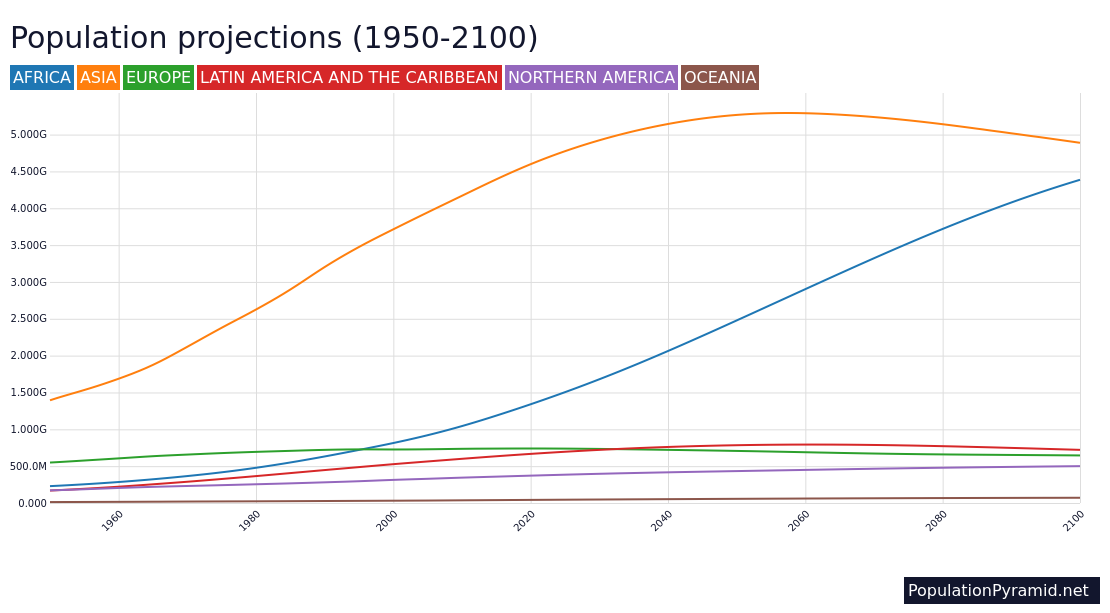
Projected population growth of about 2 billion in Africa and elsewhere contributes to poverty, impoverished reproductive health, and degradation of environment and climate. In a new publication in the journal Reproductive Health we argue that this unsustainable growth and the crucial role of family planning are neglected by among others the UN Population Fund. We…
-
The Most Appropriate Response to Falling Birthrates? Embrace Them
Many governments are panicking over declining birthrates, but efforts to reverse the trend are ineffective and undermine reproductive freedom. Falling birthrates should instead be celebrated as a sign of increased reproductive agency among women. By Nandita Bajaj As birthrates continue to decline in many industrialized countries, anxious governments are running out of schemes to keep…
-
New paper defends a pragmatic definition of overpopulation
Distinguishing ecologically sustainable from excessive human populations is necessary to understand humanity’s environmental challenges and pursue our best options for addressing them. A new publication from TOP presents a definition of human overpopulation based on plausible scientific and ethical criteria, rather than wishful thinking. by Philip Cafaro Last year, TOP published a working paper presenting…
-
The Psychology of our Strange Overpopulation Taboo
In the 60s and early 70s, we talked about overpopulation, but now it’s taboo. A new paper, using depth psychology, explains why: Unconscious wishes and fears related to reproduction, envy and omnipotence derail the conversation. by Miriam Voran It’s a bewildering fact: Humans abhor talk of overpopulation. Back in the 60s and early 70s, we…
-
Goodbye Paul Ehrlich
We remember a giant of the modern environmental movement, who passed away this past Friday at the age of ninety-three. by The Overpopulation Project Paul R. Ehrlich, an American biologist, died on 13 March. Ehrlich was one of the most influential environmental thinkers of the past half century. He built his early scientific reputation studying…
Explore the content and topics covered by TOP, search here
Recent blog posts
Blog categories
What we are reading, listening to and watching
Gallery of infographics – Learn more about overpopulation and environment