The Psychology of our Strange Overpopulation Taboo

In the 60s and early 70s, we talked about overpopulation, but now it’s taboo. A new paper, using depth psychology, explains why: Unconscious wishes and fears related to reproduction, envy and omnipotence derail the conversation.

by Miriam Voran

It’s a bewildering fact: Humans abhor talk of overpopulation.

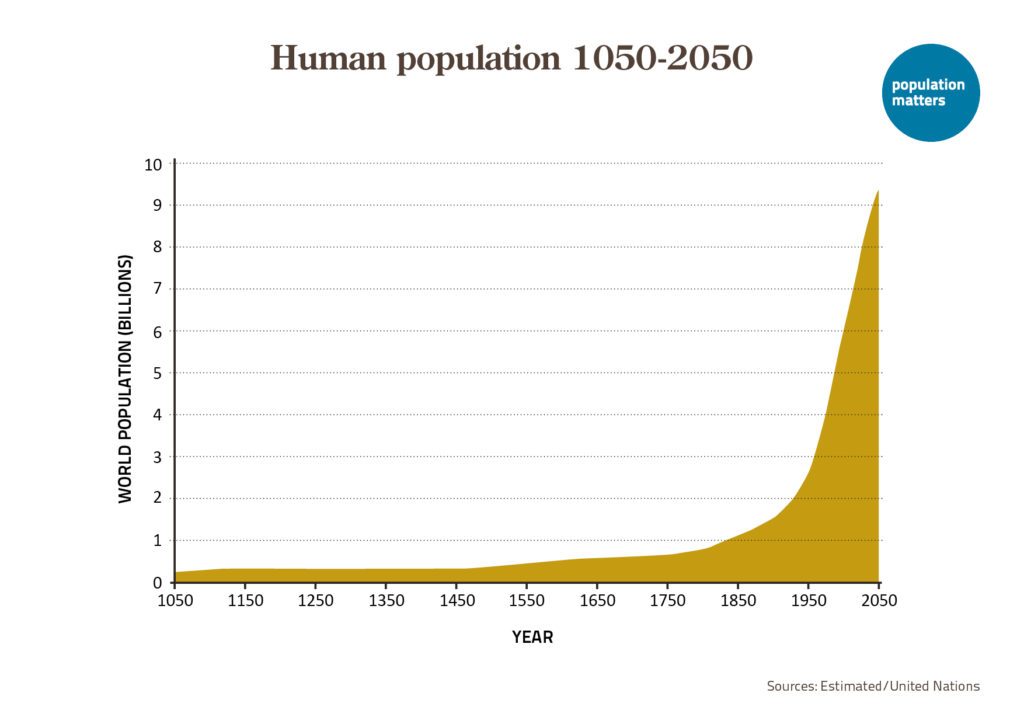
Back in the 60s and early 70s, we somehow relaxed the ban. The counter-culture, protesting the alienation of modern life, embraced environmentalism and rallied to protect Mother Earth. Many of us Americans remember the Cuyahoga River in flames and Rachel Carson’s Silent Spring. We remember Anne and Paul Ehrlich’s The Population Bomb, warning us against unlimited population growth. We remember urban crowding and violence, and the Cold War claims that population growth fueled Communism. And we remember that in 1970 President Nixon created the Commission on Population Growth to address what he considered “one of the most serious challenges to human destiny in the last third of this century.” For a moment, overpopulation mattered.

But the demands to silence this forbidden truth had already taken hold, so the Nixon Commission never released their report. We’d ventured into overpopulation, and stepped on a snake. Just as forager tribes ostracize and even kill members who touch the untouchable, our culture censored the population conversation. Within just twenty years, when delegates at the 1994 UN population conference in Cairo declared overpopulation a shameful, morally-indefensible topic, the curtain had fully descended.

The 1994 International Conference on Population and Developments in Cairo helped cement the overpopulation taboo.

Social scientists finger political and economic factors for this flight from population. The demographic transition led to declining fertility rates, which eased fears of the population bomb, even as it created The Population Explosion. Rising immigration to the U.S. was fueling population growth and de-population activists feared being called racist. Religious conservatives opposed birth control as attacking the sanctity of life. Women’s groups condemned the population conversation as oppressive and anti-woman. Human interests reigned supreme over habitat protection for other species. And capitalist expansion demanded endless population growth.

But there are deeper reasons than these for our flight from population. In a recent paper, “Human Population Overshoot,” I explain the taboo using depth psychology. Population, we know, is not just an abstract issue. The sanitized term “fertility rate” connects to the most intimate experiences of sex, pregnancy and childbirth. Our psyches load these experiences with powerful conscious, preconscious and unconscious meanings. Consciously and preconsciously, parents see a child as conferring status and immortality. Siblings envy the new baby and fear loss of parental attention.

The unconscious meanings of reproduction, coming from early mental life, seem counter-intuitive and even preposterous. Melanie Klein, a British psychoanalyst, showed in case after case, how exclusions provoke destructive envy. She showed that the young child feels excluded from parental coitus. This exclusion stimulates fantasies of both plundering the mother’s body and murdering the new baby. These primitive fantasies usually go underground, but they continuously agitate the human psyche. They surface in dreams, fairy tales, folk songs and myths. Wolves and witches gobble up children, and Rock-a-bye Baby’s cradle crashes to the ground. American psychoanalyst J. J. Penniman has worked out the connections between these Kleinian ideas and our resistance to overpopulation in a new book, Envious and Deceived. Beneath the surface, the population conversation reverberates with fantasies of homicide and infanticide. According to Penniman, “we associate depopulation with attacks on the unborn.” No wonder we declare the topic taboo.

A taboo is a reaction formation (a defensive reversal of an unacceptable impulse, often unconscious, into its opposite). For example, a parent might reverse resentment (bad) into coddling (good). The resulting overindulgence, masquerading as love, actually harms the child. Similarly, ecological limits imply depopulation, which we unconsciously consider tantamount to infanticide. So instead we embrace the apparent goodness of both perpetual growth and universal acceptance, despite their ecological destructiveness. The more dire our resource scarcity and climate derangement, and the more we hate human crowding, the stronger the taboo against discussing population.  

There’s a related reason: The fantasy of omnipotence. This is one of the child’s earliest defenses against helplessness. The baby is helpless to the terrors of exclusion and the envy and destructiveness that exclusion awakens. Omnipotence negates helplessness, and corrupts our reasoning. It helps us ignore the painful truth that our greed and destruction hurt what we love and need.

Humans have never relinquished the illusion of omnipotence. We’ve harbored it in our gods, in the conceit of eternal life, in the soaring achievements of technology. We’ve convinced ourselves that we’re exceptional. Human exceptionalism—the belief that we are exempt from the laws of nature—is a fantasy of group omnipotence. The population conversation, the one that implies limits, insults that omnipotence.

Urban sprawl of Tokyo, an example of human exceptionalism?

Omnipotence hides out in reproduction. Unconscious wishes motivate even the most rationally-planned pregnancy. Making a baby, in the parents’ fantasy, will compensate for their childhood deficiencies and heal their mortifications. It’s easy to see why we’ve sacralized reproductive freedom.

Clinging to omnipotence, frantic to evade destructiveness, we can’t acknowledge overpopulation. This collective inability resembles psychosis, as Wilfred Bion, a British psychoanalyst, described it. The psychotic personality, he said, masks reality with “an omnipotent phantasy that is intended to destroy either reality or the awareness of it.“ But even extremely ill patients, Bion wrote, harbor a realistic personality. It’s that personality which Bion tried to reach with empathic speech, feeding back a version of reality that the patient’s mind could stomach. With speech, Bion recognized, “problems can be solved, because at least they can be stated, whereas without it certain questions, no matter how important, cannot even be posed.” This shows the depth of our environmental dilemma. If we can’t name and digest true threats, we’re doomed.

Psychoanalysis, mindful of unconscious terrors and defenses, aims to name unthinkable truths. However, as I show in my recent paper, even psychoanalysis has succumbed to the population taboo. The psychoanalytic literature on the ecological crisis is a case study of disavowal, evasion and distraction with side-issues. (Some psychologists, like social psychologist Douglas Kenrick, name overpopulation, without explaining the taboo.)  

That overpopulation denial seduces even psychoanalysis illustrates the depth and power of the taboo. The proscription against waking humanity from its dream seems inviolable. In this dismal suffocating culture, The Overpopulation Project provides refreshing freedom to speak realistically about the most fundamental threat to our survival.

Published

34 responses to “The Psychology of our Strange Overpopulation Taboo”

  1. Esther Avatar

    Surely this deep resentment of further siblings due to loss of parental attention would have resulted in decisions down the line to have one child only to avoid this mental turmoil then?
    Anyhow I am afraid Mummy Gaia is going to inflict a correction very soon. Apparently that’s better than family planning! The mind boggles.

    1. Miriam Voran Avatar

      If only we made reproductive decisions rationally. Alas, we don’t!

    2. Alan Ditmore Avatar

      The trick is to talk about the overpopulation of other races while talking to other races about the overpopulation of your own race, so that races can supply contraception and abortions to each other.
      Abortion rights, as on the Golan Heights, are the only reason to support Greater Israel; not history.
      City abortion funding saves city school tax without answering to rural or suburban voters. Think globally. Act Locally, like the World Council of Mayors. .
      Abortion banners get bombed by Donnie and not by coincidence. Venezuela, Gaza, Yemen, Somalia, Nigeria and Iran all ban abortions. So he will not bomb Greenland, Colombia or Cuba because they have abortion rights. Donnie’s pretty good at bombing abortion banners for a guy that claims to be one.
      Abortion rights are not at stake in Ukraine or Taiwan, so divert all weapons to Greater Israel, where abortion rights are at stake. Abortion rights for the Philippines, as in Tibet, after carrier Lincoln abandonment. And abortion rights for Poland as in Donetsk.
      Only abortion rights are worth war, nothing else.
      Abortion banning populations were reduced by the Iraq war even if it failed to bring abortion rights to Iraq.

  2. Dag Lindgren Avatar

    I started a blog which I called “överbefolkning” = overpopulation https://www.stromstadakademi.org/befolkning/ but people do not discuss the matter, not even why it is not discussed. This is one of the most important questions for the future of Mankind, the taboo to consider it is one of the major threats for survival of sapiens!

  3. Mark Tang Avatar

    Hmmm. Why no discussion of the more obvious factor? Men (and women) really like to f*ck. It’s one of the few reliable pleasures available in many desperate lives. It is almost universal in its compulsion, and the downstream psychologically spun off associations such as social status, self worth, body image and more complex motivational drives are inextricably linked with this pursuit. Even our ‘Declaration of Independence’ says, ‘go for it’ (the “pursuit of happiness”). It’s unmistakably present in so many ways, so why not dwell on its positive charge just a little bit?

    1. gaiabaracetti Avatar

      From an evolutionary standpoint though, sex is pleasurable because it leads to reproduction, not the other way round.
      And it’s possible to have sex without getting pregnant, always has been (although modern contraception is much more effective).
      Also, people don’t refuse to talk about overpopulation because they are worried about themselves or others not having enough sex. If anything, religions such as Catholic Christianity explicitly condemns sex purely for pleasure, it has to be done for reproductive purposes every time.
      Finally, the practice of genital mutilation of women exists to make sure that women will *not* enjoy sex, so they supposedly won’t be tempted to cheat on their husbands. Yet those societies have very high birth rates.
      So, even though you obviously need heterosexual intercourse to procreate, sometimes its pleasurableness is considered an obstacle to reproduction, not a reason for it.

    2. Miriam Voran Avatar

      Of course, sexual pleasure is one of the reasons we reproduce. Regarding the taboo on discussing overpopulation, here’s how it comes in. We’re scared to disturb the copulating couple that’s having so much fun. Unconsciously, we fear the couple’s retaliation should we be so bold as to insert social and ecological concerns into the sanctum of their bedroom.

      1. Philip Cafaro Avatar

        If that is true, it supports efforts to increase contraceptive use that emphasize its value in making sex less worrisome, less likely to lead to a pregnancy. Which many proponents have said over the years!

  4. hbowie Avatar

    I recently bought a copy of The Port Huron Statement, and was surprised to see overpopulation called out plainly and forthrightly and prominently there as an environmental concern. There was no hint of any taboo surrounding the subject. I do believe that, in addition to psychological factors, the subject has become a political hot potato. Our belief systems have been calcified into the eternal left (progressive and egalitarian) and the eternal right (hierarchical and traditional) and, for different reasons, the topic of overpopulation simply has no place (other than in immigration restrictions on the right).

    1. David Polewka Avatar

      hbowie wrote: “Our belief systems have been calcified into the eternal left…and eternal right… ”
      If the solution to a problem will be unpopular, the politicians won’t touch it with a 10-foot pole,
      unless it’s a war, because the people don’t fight in it themselves, they send their kids to do it.
      The politicians’ primary purpose is winning elections, not solving problems. You have to be
      honest to solve problems; you don’t have to be honest to get elected.

  5. Leon Kolankiewicz Avatar

    Thank you for this important blog post. When all is said and done, the taboo against acknowledging and confronting overpopulation is one of humanity’s greatest shortcomings. Your paper and post address key psychological and sociological aspects of this denial.
    I wanted to correct a couple of points for the sake of historical accuracy.

    The bipartisan, 1970-72 Commission on Population Growth and the American Future established by President Nixon and chaired by John D. Rockefeller III (and thus often called the Rockefeller Commission), did release its report to the public in 1972. It was appropriately entitled Population and the American Future.

    At the front of the report, chairman Rockefeller famously wrote in his transmittal letter:

    “After two years of concentrated effort, we have concluded that, in the long run, no substantial benefits will result from further growth of the nation’s population, rather that the gradual stabilization of our population through voluntary means would contribute significantly to the nation’s ability to solve its problems.”

    Because it was an election year (1972), Nixon distanced himself from the report that he himself had commissioned. This has been attributed to the fact that among its many recommendations was a call for legalized abortion, at a time when Nixon was seeking Catholic votes.

    However, there was another report, National Security Study Memorandum 200 (NSSM 200), which was completed in 1974 by the National Security Council under the direction of Nixon’s National Security Advisor Henry Kissinger. (It is sometimes called the Kissinger Report.) This is the report which was initially classified and not released to the public for more than a decade. It analyzed rapid population growth in developing countries and concluded that this was a threat to the national security interests of the United States because of its effects on resource depletion, environmental degradation, civil unrest/political instability, and food scarcity.

    When we take stock of how world events have actually unfolded over the past half century, it is abundantly clear that these prescient early warnings about overpopulation from both the Rockefeller and Kissinger reports were broadly on target…and that they were ignored or denounced more often than not. The reckoning is coming.

    1. Miriam Voran Avatar

      Thank you for your corrections and clarifications about the fates of the Rockefeller and Kissinger reports. Yes, the reckoning is coming. It’s heart-breaking to consider what might have been if, at < 4 billion, we hadn't run scared from the necessary conversation.

  6. gaiabaracetti Avatar

    Interesting, but there seems to be a lot of assumptions about motivations that are unprovable and that I personally don’t find convincing.
    There are also other possibilities, for example that humans, like all animals, are so hardwired to reproduce at all costs because of competition with other groups and high rates of mortality – therefore reducing the number of offspring feels existentially dangerous. Or other possibilities. Wanting to kill your unborn siblings and therefore not believing that the world is overpopulated seems… far fetched. Also, childhood jealousy (which is not a universal experience) is usually outgrown.

    1. Jane O'Sullivan Avatar

      I agree, Gaia.
      Maybe it’s a case of, if you’re a hammer, everything looks like a nail. If you’re a psychoanalyst, everything looks like a childhood trauma?

  7. Oliver D. Smith Avatar
    Unfortunately the article published in International Journal of Applied Psychoanalytic Studies is paywalled and I do not have access. However, here are some open-access articles that discuss why overpopulation is a taboo or the ‘elephant in the room’:

    King, Maurice, and Elliott, Charles. “To the Point of Farce: A Martian View of the Hardinian Taboo – the Silence that Surrounds Population Control.” BMJ 315, no. 7120 (1997): 1441-1443.

    Kopnina, Helen., and Washington, Haydn. “Discussing why Population Growth is Still Ignored or Denied,” Chinese Journal of Population Resources and Environment 14, no. 2 (2016): 133-143.

    Washington, Haydn., and Kopnina, Helen. “Discussing the Silence and Denial Around Population Growth and its Environmental Impact. How do we Find Ways Forward,” World 3, no. 4 (2022): 1009-1027.

    Kuhlemann, Karin. “The Elephant in the Room: The Role of Interest Groups in Creating and sustaining the Population Taboo,” in Almiron, Nuria., and Xifra, Jordi Climate Change Denial and Public Relations (London: Routledge, 2020), 74-100.

    Shin, Gee. “Climate Change: Overpopulation is the Elephant in the Room,” BMJ 365 (2019) [online article].

    Campbell, Martha. “Why the Silence on Population,” in Cafaro P., Crist E. (eds.) Life on the Brink: Environmentalists Confront Overpopulation (University of Georgia Press, 2012), 41-55.

    Campbell, Martha. (2005). “Why the silence on population?,” Keynote address to the first annual meeting of the Population and Sustainability Network, London School of Hygiene and Tropical Medicine, October 13, 2005. Margaret Pyke Trust, London.

    Campbell, Martha. (2007). “Why the silence on population?”, Popul Envir 28:237-246.

    Lianos, Theodore P. “World population: the elephant in the living room.” Real-world Economics Review 91 (2020).

    Maher, T. M. (1997) “How and why Journalists Avoid the Population-environment Connection,” Popul Envir 16:339-372.

    Weld, M. (2012). “Deconstructing the dangerous dogma of denial: the feminist-environmental justice movement and its flight from overpopulation”, Ethics Sci Environ Polit 12:53-58.

    Boyle, Conall. “The Elephant in the Net-Zero Room: Why Advocating Benign Population Reduction Is Taboo,” in Examining Net Zero: Creating Solutions for a Greener Society and Sustainable Economic Growth (2025).

    Spernovasilis, Nikolaos, Ioulia Markaki, Marios Papadakis, Constantinos Tsioutis, and Lamprini Markaki. “Epidemics and pandemics: is human overpopulation the elephant in the room?.” Ethics, medicine, and public health 19 (2021): 100728.

    1. Esther Avatar

      There is also Karen Shraggs excellent short book “Move Upstream, a call to solve overpopulation”.

      1. Philip Cafaro Avatar

        A good read, and a good present to friends “on the fence” about population

    2. Jane O'Sullivan Avatar

      Great list, Oliver – thanks for posting.
      Add these from Diana Coole – the first is a really useful classification of obfuscation behaviours. The second is heavier going but some good new ideas.
      Coole, D. (2013) Too many bodies? The return and disavowal of the population question, Environmental Politics, 22:2, 195-215.
      Coole, D. (2021) The Toxification of Population Discourse. A Genealogical Study, The Journal of Development Studies, 57:9, 1454-1469.

      1. gaiabaracetti Avatar

        Alan Weisman’s ‘Countdown’ is amazing. I couldn’t put it down, even though it’s non-fiction and all about reiterations of one single topic. But it’s very very good in my opinion.

  8. Steve Willey Avatar

    Overpopulation continues growth and destruction of world environment and life quality for all species. It is good that it seems to be slowing for other reasons: specifically costs and burdens of raising offspring during the years individuals and couples are most pressured to develope income and skills of their lives. Knowledge of the environmental costs is still very low but practicality of personal life skills and productivity push delay or rejection of procr eation.

    1. Philip Cafaro Avatar

      Yes. Having children in their twenties, I wish there was a better way to reduce fertility rates than making it economically hard for young couples to have children. But at least those trends are driving fertility down.

  9. Stable Genius Avatar

    It’s an asymmetrical taboo. It’s true that one is Not Allowed to talk about overpopulation, but to bloviate about depopulation is Widely Allowed and a good career move for trendy academics. One of Australia’s star exhibits is Luara Ferracioli, Prof of Political Philosophy at U Sydney.

    1. David Polewka Avatar

      I just visited https://luaraferracioli.com/
      The last line says:
      My partner, Ryan Cox, is also a philosopher. We live in Sydney and we have three kids.
      ———–
      When I click on “Ryan Cox”, my AVG anti-virus program stops a threat from the infected wdouglascox.com

    2. Philip Cafaro Avatar

      Just to be clear: TOP is against bloviation, regardless of its ideological purview. We support intelligent discussion and discourage ad hominem comments. Even against people who are so stupid they disagree with us about overpopulation.

  10. David Polewka Avatar

    In Psychology Today website, Miriam Voran wrote: “I’m dedicated to self-knowledge. I’ll give you space to talk freely. I’ll listen carefully and add new ideas. I’ll help you catch the ways you deceive yourself. And I’ll stay open to whatever emerges and needs to be understood together, including in our relationship. With a mutual commitment to steady frequent sessions and honesty, your mind will grow.”
    That’s what we do in Alcoholics Anonymous. It’s a self-help program.

  11. Esther Avatar

    I think one way to put overpopulation on the “menu” is for people like us to make the clear link between the cost of living which now preoccupies so many people and the demand side of the equation… Economics have for far too long externalised environmental costs by borrowing from the future and not costing in environmental destruction. This is no longer possible.

    If economists and politicians started getting honest about what major factor is causing the current cost of living crisis. One problem with humans being tribal they may turn on minorities but they do that anyway … So maybe time to get out the old slogan “overpopulation is everybody’s baby”.

    As to sex and procreation there are also a couple of books by Verena Brunschweiger who are topical:

    Childfree, not childless
    Do chilfree people have better sex?

    Esther

    1. Philip Cafaro Avatar

      Couldn’t agree more with linking cost of living concerns to population growth. The links are clear and they resonate with where many people are at today in the U.S.

  12. Stephen McKevitt Avatar

    This is one aspect of the problem, and is nicely-presented. However it’s important for those of us trying to cope with overpopulation to look at the big reasons for this societal aversion to facing up to the looming trouble.

    In the late 20th century, the population issue came into public view, and many large elements of our Western Society saw it as a danger to their continued success. Economic corporations and social corporations (religions) were in this group. They then went to work opposing talk about the problem and instead offered distractions and alternate narratives. With major control of our news and social media, our cultural assets, and our moral thinking, they had a huge and hugely successful influence.

    Fundamentally, those individuals who support a Biblical religion or consider themselves to be a member of a Biblical church cannot be a leader or supporter of the movement that’s now working to rein-in and lower human population. Cannot. At their core, Western religions promote increased human population. So, what comes first? These people (trying to support both) are deluding themselves, or other people, or most often, both. You cannot say that your favorite color is blue and then say that your favorite color is orange. In the U.S. some older Population Organizations have been sadly sidetracked by people from these religions.

    Stephen McKevitt

    1. Esther Avatar

      I would like to give credit to the Quakers who have a group called Quaker Concern over Population.
      As a group/organisation who have world peace at the centre of their concerns this is absolutely sensible/sensical. The judeo christian religions are a joke in that respect, particularly since their own “God” had a single child policy!

      Esther

  13. kurtklingbeil Avatar

    A Kind Checklist for Talking About Population and Overshoot
    For anyone who cares about ecological overshoot and is thinking about population, here are a few gentle questions to sit with before jumping into the conversation.

    Am I starting from rights, or from numbers?
    If the concern is genuine, it usually shows up as support for women’s education, reproductive health, and voluntary family planning, especially where those are still lacking. If I’m not prepared to prioritize those, what exactly am I asking for?
    Have I looked at consumption and inequality first?

    A small minority of high‑consumption people and countries drive a large share of ecological damage. Before I point to “too many people,” have I seriously considered energy, materials, and lifestyles at the top?
    Whose bodies am I implicitly talking about?

    When I picture “overpopulation,” do I mostly see people from poorer regions, or with different skin colors or religions than my own? If so, how might that shape the policies I’m implicitly endorsing?
    Would my proposal feel acceptable if applied to people like me?

    Any idea about limiting births, movement, or resources should be something I’d accept if it were applied to my own community, not only to others far away.
    Am I aware of the history?
    Population rhetoric has often been used to justify coercion, eugenics, and harsh immigration policies. Can I clearly explain how what I’m suggesting avoids repeating those patterns?

    Am I confusing slow levers with fast ones?
    Education and voluntary fertility decline work over decades. Energy and resource policies can change much faster. When I talk about population, am I clear that it’s a slow, background lever, not a substitute for immediate cuts in high‑impact consumption?

    Am I holding myself to the same standard I ask of others?

    If I’m worried about “human impact,” am I also prepared to question my own entitlements—travel, housing, diet, vehicles, investments—before focusing on the family size of people with far less?

    Am I listening to practitioners?
    Many skilled people have spent their careers in reproductive health, education, and community‑based programs. Before offering my own quick fix, have I listened to what they’ve learned about what works, what harms, and what communities actually want?

    Can I talk about futures people would actually welcome?

    Instead of imagining grim controls, can I describe futures where smaller families emerge from greater security, education, gender equity, and real choices—and where reduced material throughput comes from better systems, not from enforced deprivation for the poor?

    What conversation do I want to leave behind me?

    After I speak, will people on the sharp end of these issues feel more seen, more empowered, and more respected—or more blamed and scrutinized? If it’s the latter, how can I adjust my framing?

    If we can pass at least most of this checklist, then talking about population can complement, rather than distract from, the harder work of transforming how the most privileged among us live on this planet.

    1. Esther Avatar

      Do you believe Kurt that the physics driving climate change will be concerned with such niceties?
      Overshoot is a bitter fact right now, species which underpin our existence are disappearing or rather to stop these silly euphemisms are wiped out by us en masse, daily. Do you think they had no right to existence? A lot of them predate us.
      A massive collapse in our numbers will happen in the coming years, if we are lucky maybe in a couple of decades. The choice is stark either we choose to implement one child policies to get our insane numbers down or many more will have to die. Which of these two evils do you prefer? A super El Nino may happen this year do you understand the consequences? And what on Earth makes you think that those of us who are concerned about our numbers are not equally concerned about overconsumption? This isn’t an either or, however generally speaking those who remain unborn consume very little indeed so they are far better humans altogether.

  14. Dag Lindgren Avatar

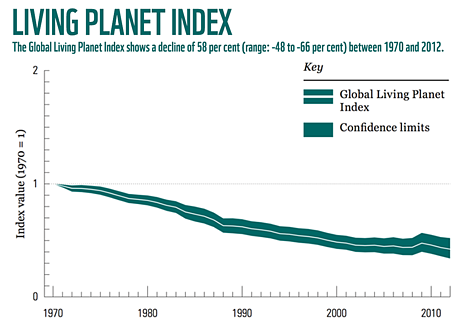
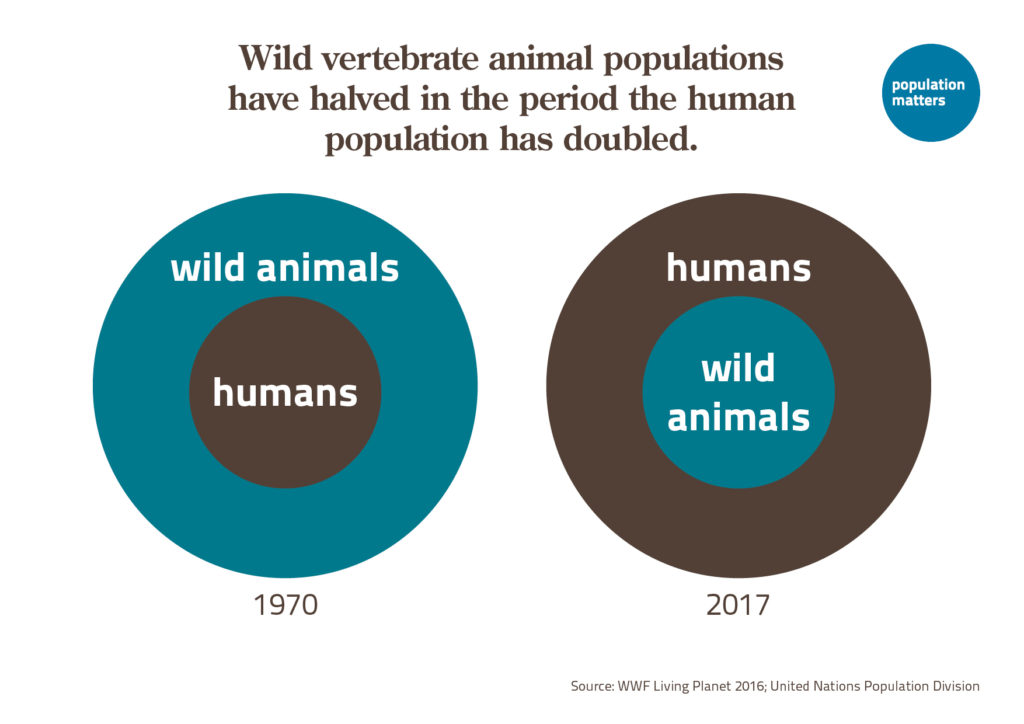
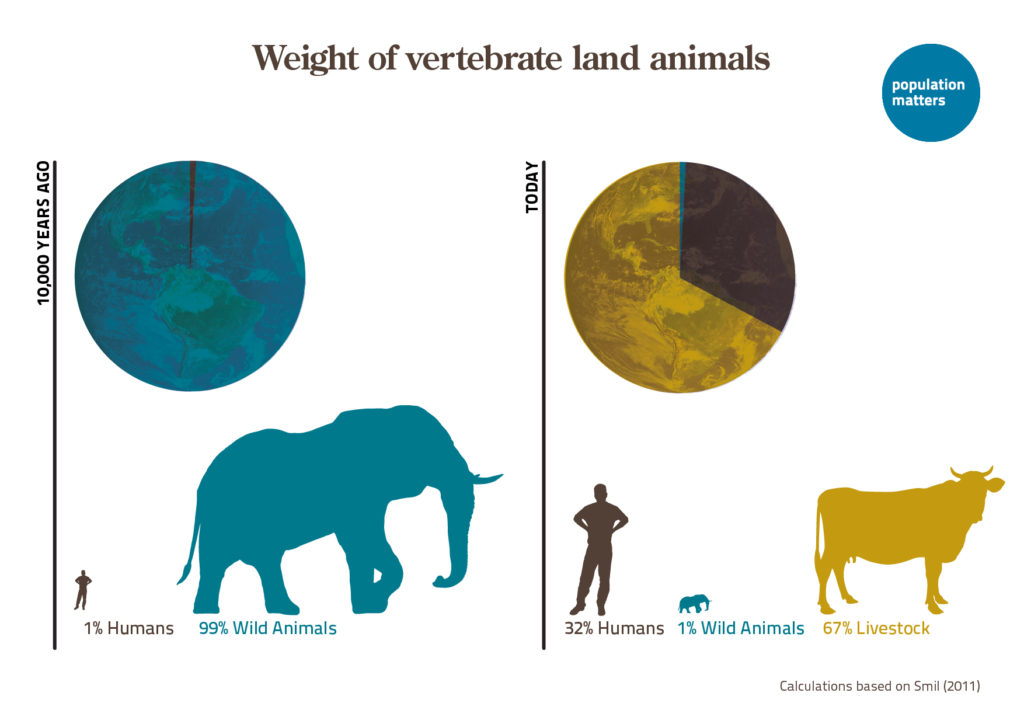
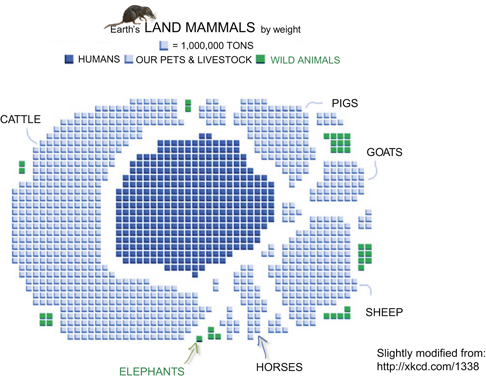
    WWF calculates that humans threats the biodiversity and ecosystems by reducing the percentage of biomass of “wild” mammals. I use it myself in arguing the world is overpopulated. But it hides that this is partly caused by total biomass has raised so is somewhat misleading caused by the overpopulation taboo

  15. Miriam Voran Avatar

    I want to thank TOP and Phil for giving me this valuable venue for the ideas in my paper. The TOP readers have had many responses, all of which I appreciate. The lively conversation makes me wonder if the topic has struck a nerve.

Leave a Reply

This site uses Akismet to reduce spam. Learn how your comment data is processed.

NOTE: Comments with more than one link will be held in wait and will only become visible on the site after an admin has approved it.

Explore the content and topics covered by TOP, search here

Blog categories
Gallery of infographics – Learn more about overpopulation and environment

Discover more from The Overpopulation Project

Subscribe now to keep reading and get access to the full archive.

Continue reading