A shrinking population might actually be a good thing

Many articles warn about falling birth rates, stoking fears that a shrinking population will destroy the economy. This ignores how other factors influence economic growth. In an article first published by The Globe and Mail, Chris Gay explains how increased productivity gains can counteract the effects of a smaller workforce, ultimately allowing the population to shrink while ensuring greater well-being. Thanks for the reference to TOP!

by Chris Gay

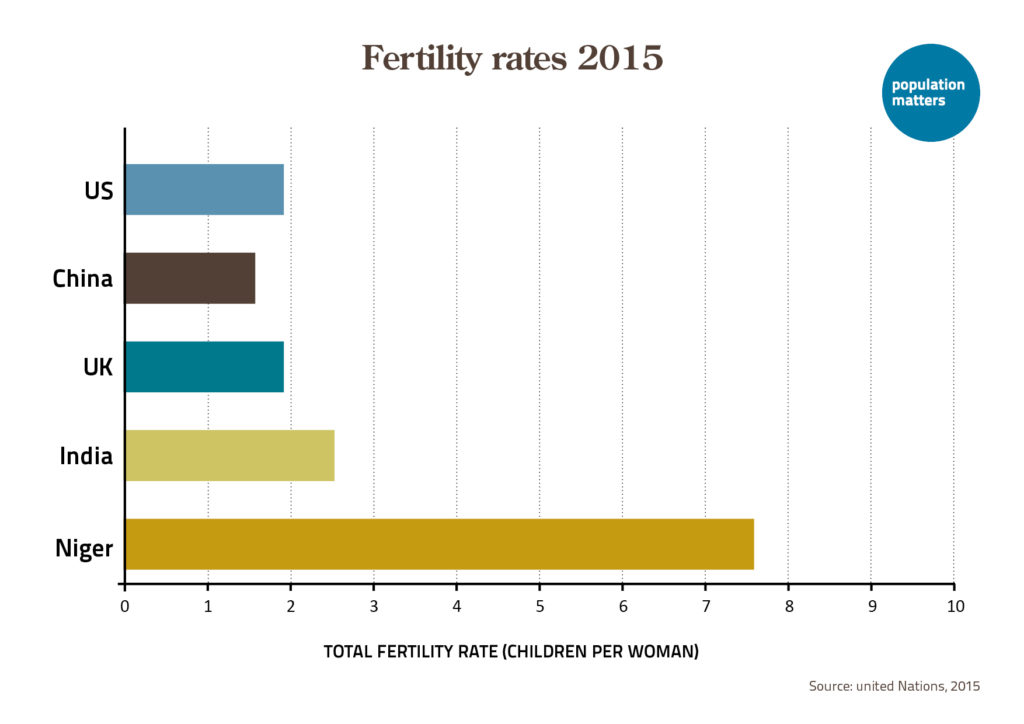
There aren’t many things that generate as much existential hand-wringing as global warming and artificial intelligence, but low fertility rates come pretty close.

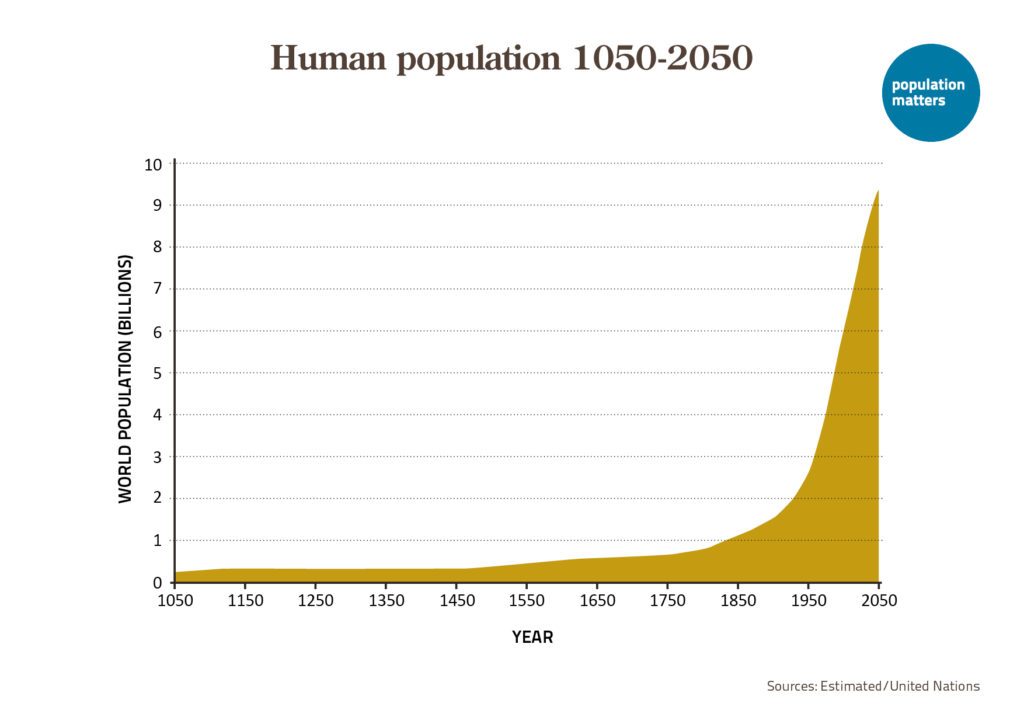
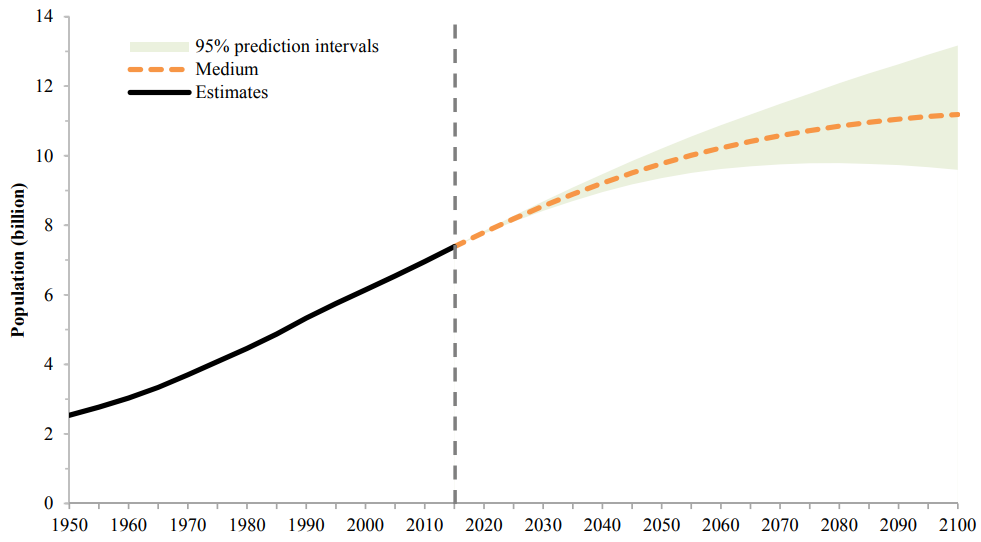
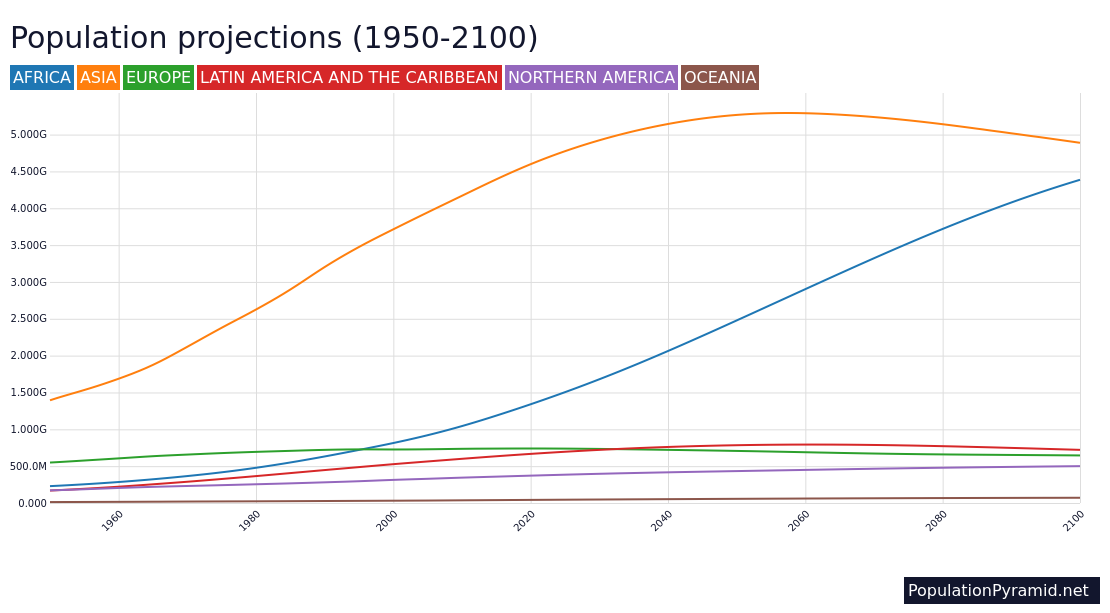
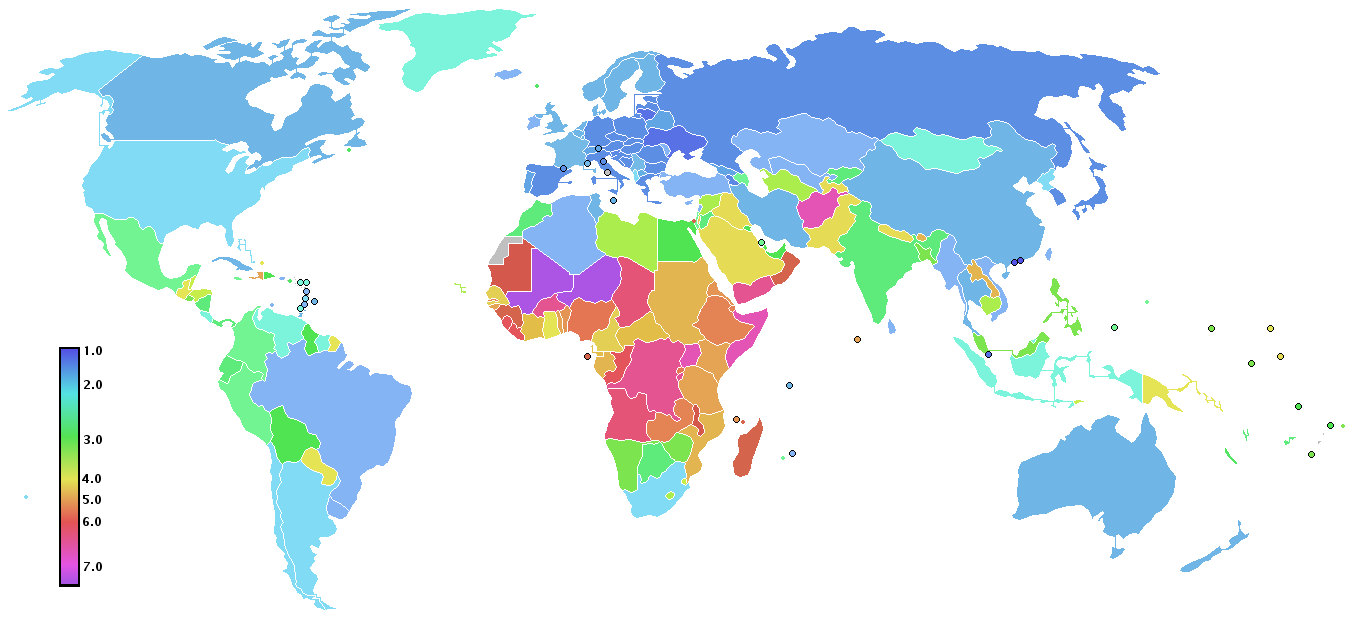
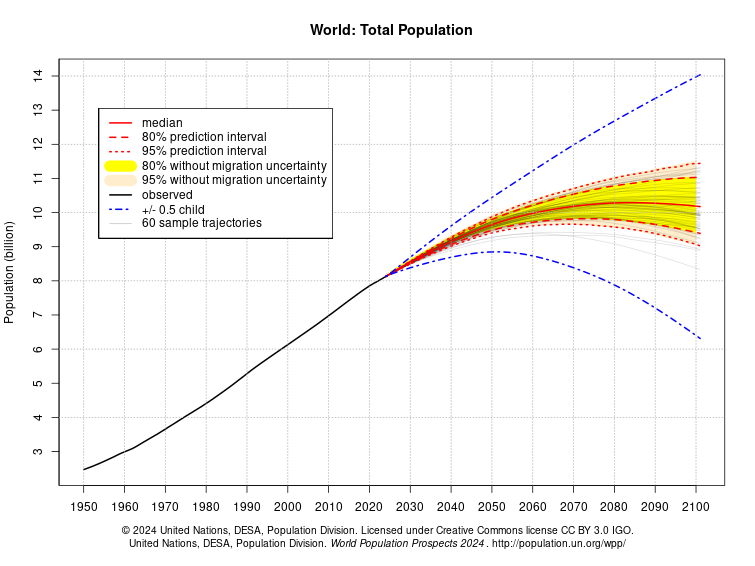
Birth rates in much of the world have fallen below replacement levels, portending gradual population shrinkage in many advanced economies. China is losing the fastest in terms of absolute numbers: The United Nations projects its population falling to just under 1.3 billion in 2050, from around 1.4 billion today.

Smaller populations, many fear, will have disastrous economic consequences separate from those associated with worsening dependency ratios (that is, fewer working-age people to support younger and older segments of the population). With fewer available workers and fewer consumers to buy their output, economies would seem destined to shrink and living standards to fall. Data provider Implan reported in February that slowing population growth is “breaking the U.S. economy,” costing the country US$104-billion in added value last year.

Pedestrians crossing an intersection in Yonge-Dundas Square, Toronto.

But these fears ignore a concept familiar to anyone who’s sat through Economics 101: What powers economic growth is not just numbers of workers and consumers, but increasing productivity – more output per unit of input.

The textbook example is agriculture. In 1870, half the U.S. population worked in farming to feed a country of 38 million; now, less than 2 per cent works to feed 340 million. A century ago, a third of Canadians were farmers, as against 1.3 per cent in 2023.

So, a question for birth-rate alarmists: Unless someone has pulled the plug on productivity gains, why should anyone worry about shrinking populations? Indeed, shouldn’t we welcome them? Who could object to smaller populations in which everyone gets a bigger piece of a growing pie?

The idea that stable or shrinking populations mean stagnant economies goes back a way. American economist Alvin Hansen proposed in 1938 that slow U.S. population growth was exacerbating a permanent state that he termed “secular stagnation” – sluggish long-term growth unrelated to the business cycle. Hansen was writing late in the Great Depression, when U.S. population growth had reached an all-time low and immigration was severely restricted. Subsequent events proved him spectacularly wrong.

Hansen contemporaries John Maynard Keynes and Joseph Schumpeter argued that population decline need not impair growth. That’s a controversial view today, but there are arguments in its favour.

For starters, a host of countries have seen their total and per capita output rise in the first two decades of this century even as their populations shrank. The Overpopulation Project, which describes itself as a non-profit demographic-environmental research group, argues that shrinkage itself could have pro-growth consequences. It could, for example, raise wages, increase labour participation and lower the unemployment rate. That, in turn, could increase the propensity to consume among lower-income households now earning higher wages.

A recent paper co-authored by Nobel economist Daron Acemoglu (who also co-wrote Why Nations Fail) argues that slowing population growth actually presages faster economic growth, partly in response to labour scarcity, which prompts adoption of labour-saving technologies that can increase gross domestic product.

“In cross-country data, declining birth rates lead to higher total factor productivity (TFP), larger capital stocks, a shift toward exports in high-tech industries, and more labour-saving patenting,” the authors write.

Smaller populations may trigger benefits not directly tied to increased productivity. Shrinking urban populations may reduce commuting times, increase leisure time and by extension raise leisure spending. Lower urban density could reduce crime rates and enable cuts in public spending on local security, freeing up government funds for more productive uses.

Outside of cities, per capita farmland could increase, helping to raise agricultural productivity. Shrinking population implies fewer resources needed for housing and other infrastructure – public roads, schools, utilities – reducing financial burdens on local governments. It might also help allay that bane of modern life, suburban sprawl, which, apart from adverse environmental consequences and exasperated commuters, has disfigured much of the landscape.

Then we come to the vast productivity potential of AI, which, assuming it doesn’t turn us all into paper clips, should make folks less worried, not more, about falling birth rates. A paper published this year by the National Bureau of Economic Research shows that while business executives surveyed report little AI impact so far on employment and productivity, they expect it to contribute significantly over the next three years, adding an average of 1.4 per cent to productivity and 0.8 per cent to overall output. (They also project it will cut employment at their companies by 0.7 per cent – not exactly the extinction event many workers fear.)

“The more the merrier” is a nice sentiment, but in a world of finite resources and infinite human ingenuity, it may turn out that fewer are merrier still.

Chris Gay is a contributing columnist for The Globe and Mail. He is a former Wall Street Journal staffer. He has also worked or written for U.S. News and World Report, the Far Eastern Economic Review, Forbes, Slate and others. He writes the newsletter Figure at Center.

This piece was originally published by The Globe and Mail on 3 September 2026.

Published

12 responses to “A shrinking population might actually be a good thing”

  1. Esther P Avatar

    There are two arguments to put to the population panickers.

    Who will pay for your retirement?
    Not raising children makes saving much easier – cash saved if one isn’t an idiot who burns through it can then be used to enjoy old age and for care needs.

    How do we look after a large cohort of old folks?
    What is easier? Looking after a large number of elderly or dealing with drought, floods, landslides, hurricanes etc.

    Moreover very high temperatures, pandemics, wars, lack of resources etc will greatly reduce the elderly population anyhow.

  2. spamletblog Avatar

    The whole concept has been turned on its head: the only imperative for ‘economic growth (as industrial output) arises from being unable to control population growth, so having to produce ever more to avert starvation!

    I remember the ‘Yellow Peril’ of out of control pop growth in China when its population was only a fraction of what it is now. I have, somewhere, a cutting from The Times, which calculated that, if every Chinese was to eat an egg a day, it would take the entire world rice harvest to feed the chickens!

    There were whole world conferences on what to do to turn exponential population growth around! It was an amazing achievement, when China showed the world that pop growth could actually be turned around within a lifetime, only to have accellerationist ‘economists’ start whingeing that ‘growth was slowing’! The BBC then, for decades had a policy of not mentioning population growth as a problem at all, though a whole generation of kids had engaged in one Blue Peter collection campaign after another to raise funds for equipment to help ‘starving third world kids’! It got to be such a taboo subject that veteran population campaigner produced a memoir of his letters to the BBC, that he titled ‘The Treason of the BBC’ because they went out of their way to prevent any action to save the environment for future generations that might result in reducing ‘economic growth’, which had becone a religion in capitalist circles.

    These people are making a mockery of the whole idea of economics, which, like ecology, comes from Greek ‘oikos’ ‘house’, and is about organising the labour of a population so that it produces enough of the right range of goods to cater for the needs of the whole population whatever its size. It’s not about providing more and more desperately poor people in order to keep wages down, which is the only reason for demanding population growth, other than for fighting forever wars: And who wants that bar the weapons makers and developers?

    1. spamletblog Avatar

      Population campaigner Jack Parsons’, who’s letters were compiled into ‘The Treason of the BBC’ not long before he died without seeing any signs of BBC ‘news’ or ‘science’ output, returning to the once crucial ‘Limits to Growth’. They became the UK’s leading contrarian lobby, on the back of their previous reputation as a reliable source of unbiased information.

  3. Graham Clews. Avatar

    A shrinking population ‘might’ be a good thing?

    It will be a good thing!

    Great for any country. Better still for the planet.

    1. Dag Lindgren Avatar

      I suggest TOP more often could make the opinion clear that a shrinking population is a good thing. For the planet and any part of it.

  4. gaiabaracetti Avatar

    This article seems to be all wrong to me.
    – It assumes that economic growth is a good thing, while THAT is the source of environmental damage
    – It confuses slower population growth with population decline, but in the former, the population still increases
    – It ignores the environmental and social costs of productivity gains (much of the increase in productivity are due to higher consumption of energy, or higher environmental impact, for example in agriculture)

  5. Dag Lindgren Avatar

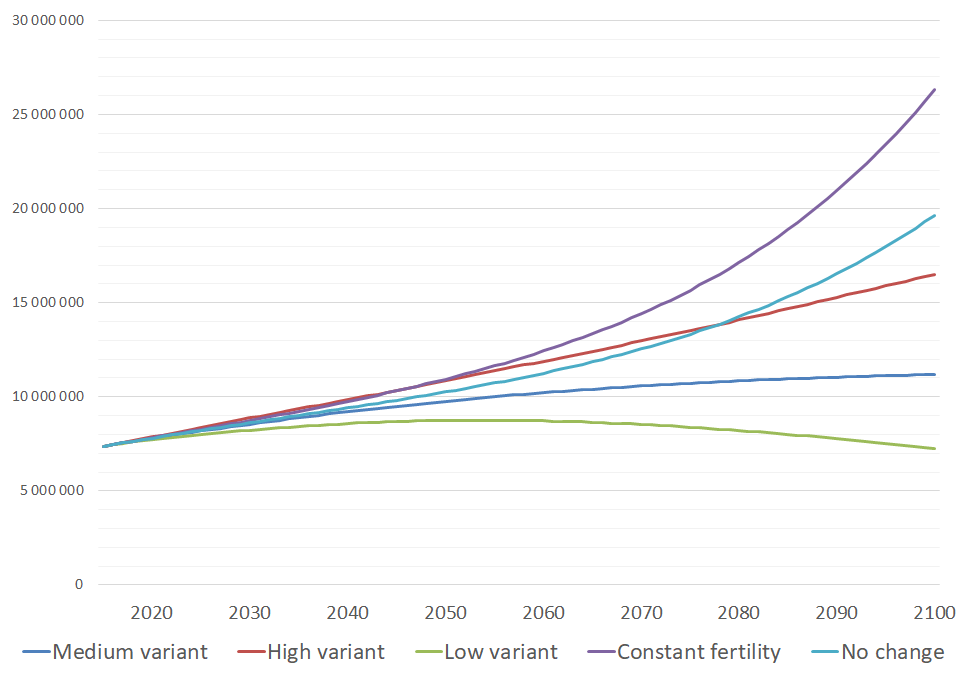
    The Swedish Government decided on 1 July 2025 to appoint a government commission tasked with analysing the declining fertility and its economic consequences for Sweden. In its latest report the commision found that it is better for the economy (GNP/capita) till 2100 if current low fertility remains and still better if it sinks somewhat. https://framtidmedbarn.se/

    1. Jane O'Sullivan Avatar

      And the reports are available in English! Thanks for posting this, Dag. It’s wonderful that Sweden is able to commission such objective work. In Australia, the growth lobby tends to dominate all advice to government concerning immigration.

      1. gaiabaracetti Avatar

        Lots of finger wagging and insulting coverage over the desire of many Swedes to limit immigration…

      2. Dag Lindgren Avatar

        The reports described as new are actually translations into English of old reports. The latest report dealing with GNP/capita is only in Swedish https://framtidmedbarn.se/wp-content/uploads/2026/06/Skrift-6-Farre-barn-och-fler-aldre-vad-hander-med-Sveriges-offentliga-finanser.pdf They are very careful to reveal that the government wants suggestions to raise the fertility. It is not an objective commission even if they are objective enough to – as a side issue – calculate GNP per capita in different scenarios. Everyone is very careful in wordings implying that we are too many. It is only me who runs a blog in Swedish straight about the issue of overpopulation (överbefolkning) https://www.stromstadakademi.org/befolkning/ Your blog is in English,

  6. Stable Genius Avatar
    Indeed, Canada is a textbook case. Suddenly, they’ve got 3% GDP growth, and a much better deal for renters, despite negative population growth. As compared with stupid Australia, with its unsustainable 1.5% population growth, for 2% economic growth.
    But you don’t see Australia’s undemocratic world-anomaly, net migration exceeding 1% of population, reported in world media. Maybe TOP should step into the breach?

    1. David Polewka Avatar

      I’ve been asking: “How many data centers and Flock cameras do you need with 4 billion
      population, and how many do you need with 8, 9, 10 billion population?
      ————————
      Australia has nearly 300 operational data centers, with major hubs concentrated
      along the eastern coast. Sydney and Melbourne account for the largest share of
      facilities, driven by high population density & extensive subsea cable connections.
      The country serves as a primary digital gateway for the Asia-Pacific region, landing
      over 20 international submarine cables in Sydney, Perth, & other coastal metros.
      Major players in the local ecosystem include NEXTDC, AirTrunk, Canberra Data
      Centres, Equinix, and Amazon Web Services. Recent expansions also feature
      partnerships with companies like NVIDIA scaling out AI factories. An influx of AI
      infrastructure proposals has accelerated the development pipeline. Dozens of large-
      scale facilities remain approved or under construction.
      Rapid growth has sparked intense debate over local resource consumption. Utilities
      warn that high-capacity AI data centers could demand significant fractions of
      municipal water and local power supplies.
      The federal government announced upcoming obligations for large-scale operators to
      manage power and water footprints under legislation slated to take effect in early
      2027. However, many newly approved builds fall outside these upcoming restrictions,
      & policy adjustments leave room for varied regional energy sourcing.
      ===================
      Flock Safety cameras do not currently operate in Australia, though Australian law
      enforcement agencies use their own government-run automated number plate recognition
      (ANPR) systems. Following intense backlash and camera sabotage in the US,
      Australians debate US-style Flock cameras as public backlash … has grown on local
      forums regarding the expansion of roadside AI surveillance.

Leave a Reply

This site uses Akismet to reduce spam. Learn how your comment data is processed.

NOTE: Comments with more than one link will be held in wait and will only become visible on the site after an admin has approved it.

Please keep a civil tone in the comments section. Excessively rude comments will be removed.

Explore the content and topics covered by TOP, search here

Blog categories
Gallery of infographics – Learn more about overpopulation and environment

Discover more from The Overpopulation Project

Subscribe now to keep reading and get access to the full archive.

Continue reading