Family planning pioneers: A film interview with Malcolm Potts

TOP is proud to present our second film featuring family planning pioneers. Given the contemporary trend to write family planning success stories out of history, we feel it is vital to put on the record the first-hand accounts of those who were involved.

By The Overpopulation Project

Malcolm Potts, who died April 2025 at the age of 90, was a professor in Maternal and Child Health and holder of the Fred H. Bixby Endowed Chair in Population and Family Planning in the School of Public Health at UC Berkeley, USA. As physician, reproductive scientist and contraceptive evangelist, Potts spent more than half a century directing programs that provided family planning services to women in developing countries. For instance, he helped to develop and promote the device most frequently used to perform surgical abortions, making them more safe.

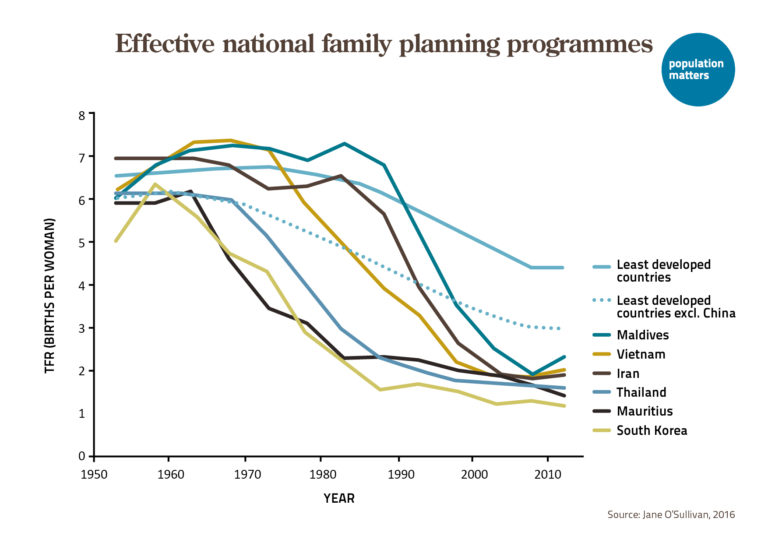
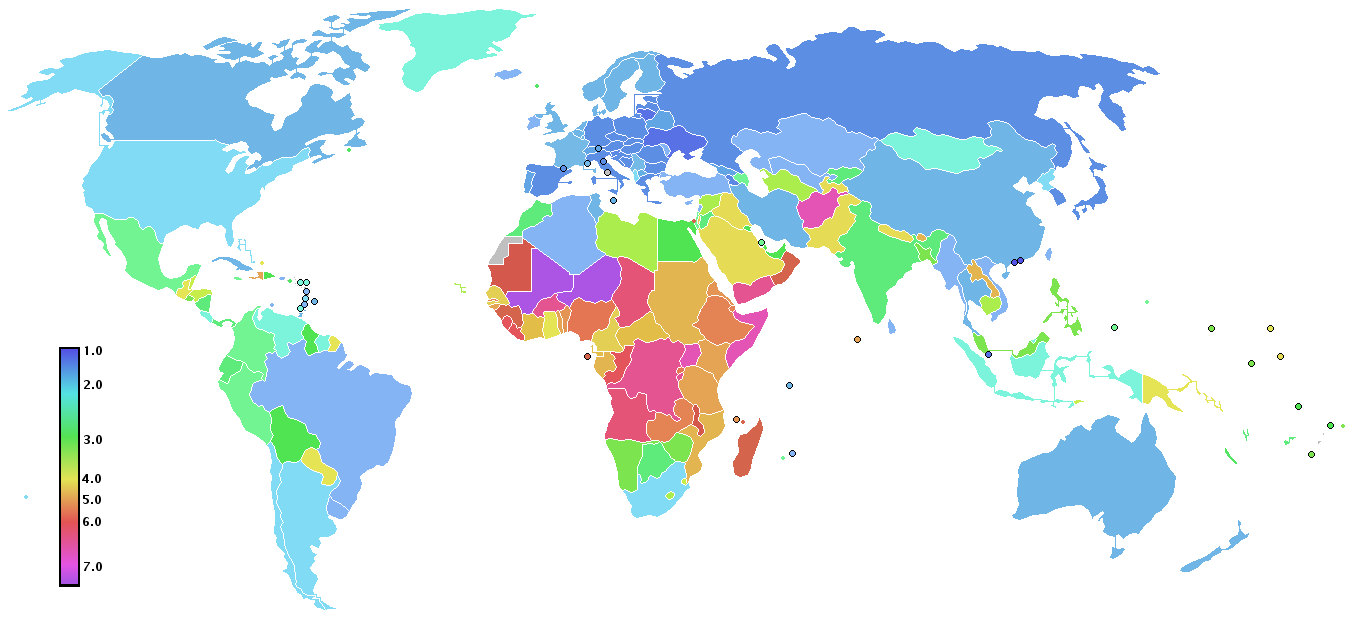
Malcolm Potts’ valuable and enduring work in developing countries stands out. As medical director of the International Planned Parenthood Federation and later as president of Family Health International, he advised and collaborated in many government and NGO family planning programs from Bangladesh and South Korea to Egypt and many others. In Thailand, he worked together with physician Alan Guttmacher and Mechai Viravaidiya to organize the first community-based distribution of oral contraceptives and condoms. The project contributed to a decline in the total fertility rate in the country from 7.4 children per woman in the 1960s to 1.5 by 2022. Potts later stated that without this achievement, “Thailand is unlikely to have become the prosperous, democratic country it is today.”

More recently, Potts co-founded an organization now known as OASIS (Organizing to Advance Solutions in the Sahel), devoted to educating adolescent girls, reducing maternal mortality, and expanding voluntary family planning in the Sahel region of Africa. Alisha Graves, a co-founder of OASIS, describes the background of this project: “The Sahel has rapid population growth, high malnutrition and low literacy.” She explains that Malcolm Potts ”always wanted to focus on the poorest parts of the world, and women who are most at risk”.

Beside such valuable and impressive work, Malcolm Potts was also a productive scientist and published ten books and several hundred scientific papers. This film is based on an interview Dr. Sofia Pineda Ochoa conducted with Malcolm from 2017, where he describes his background, work and vision. We encourage readers to share this video, to help combat the prevailing misinformation about voluntary family planning programs and their role in curbing population growth in developing countries.

TOP thanks those who made this film possible: Dr Sofia Pineda Ochoa for the film interview, Dr Nap Hosang and Alisha Graves for help and advice, Madison Iler, Richard Grossman and Alisha Graves for donations, and AWARE film and Johan Heurgren for film production.

The first film in our series about Family Planning Pioneers featured Carl Wahren and his work for international aid to developing countries. You can watch that film here.

Published

5 responses to “Family planning pioneers: A film interview with Malcolm Potts”

  1. J. Joseph Speidel Avatar

    Your project should be aware of the SmityhCollege Population and Reproductive Health Oral History Project oral histories that has interviews with about 40 population pioneers that I supported when at the Hewlett Foundation. Joe Speidel

    1. Overpopulation Research Project Avatar

      Thanks for alerting us to these materials Joe. The main site for the collection doesn’t provide any usable links to the material, and much of it seems closed to the public completely. However, transcripts of some interviews are available here: https://www.smith.edu/libraries/libs/ssc/prh/prh-narrators.html. These include interviews with Nafis Sadik, Frances Kissling and others

  2. Dag Lindgren Avatar

    There are multiple signs the world is overpopulated today, The human population would get it better if it shrunk say one percent annually from now. This creates problems, but no severe disadvantage for the people. But the nations get less powerful.
    This film shows lucky two kid families, but that may lead to low and late population decrease even if it was a large improvement some decades ago. Why do so few in many countries with many births do not subscribe to the idea of stopping population growth but must get impulses from “western” professors? Why is China more banned that praised for its successful one-child policy? And why had UN since 1995 in increasing tempo banned even the concept overpopulation, at least from the climate meetings? Development aid from at least my country has a diminutive and probably sinking share for family planning, why? Well its rhetoric questions, I am familiar what some are likely to say. But to me it seem we live in a weird world too much governed by the deepest rooted egocentric instincts:: It is good to be many!

    1. David Polewka Avatar

      We didn’t do anything to deserve all the wonderful modern conveniences we enjoy,
      with cheap fossil fuels to power everything; we’re just beneficiaries by accident of birth.
      But people like it so much, they want to get as much as they can and damn the consequences.
      They’re not thinking about waste or ecology, they’re thinking about their “bucket list”.

      1. Dag Lindgren Avatar

        You express it well for the majority of humans. But there are people thinking that we do not live in a sustainable way. Therefore a number of things are done to reduce the per capita pollution. I consider it is too little, but it has effects. I understand the difficulties to do more in a mainly democratic system!
        But the evident consequence that a lower number of people reduces the total pollution is hardly mentioned and taboo in the most important bodies. Very few dare to express it as clear in name and slogan as this blog. Why are so few thinking logic? And still I think this blog is too careful compared what with humanity would need for a better 2100!

Leave a Reply

This site uses Akismet to reduce spam. Learn how your comment data is processed.

NOTE: Comments with more than one link will be held in wait and will only become visible on the site after an admin has approved it.

Explore the content and topics covered by TOP, search here

Blog categories
Gallery of infographics – Learn more about overpopulation and environment

Discover more from The Overpopulation Project

Subscribe now to keep reading and get access to the full archive.

Continue reading