Population stability could improve UK living standards

With a population nearing 70 million, the UK is feeling the pressure on the housing and job markets. Stabilising the population would ease this pressure, giving more people access to affordable housing and strengthening wages, utlimately raising the quality of life for UK citizens.

by R. M. Smilie

Housing in Fortuneswell, England.

Introduction

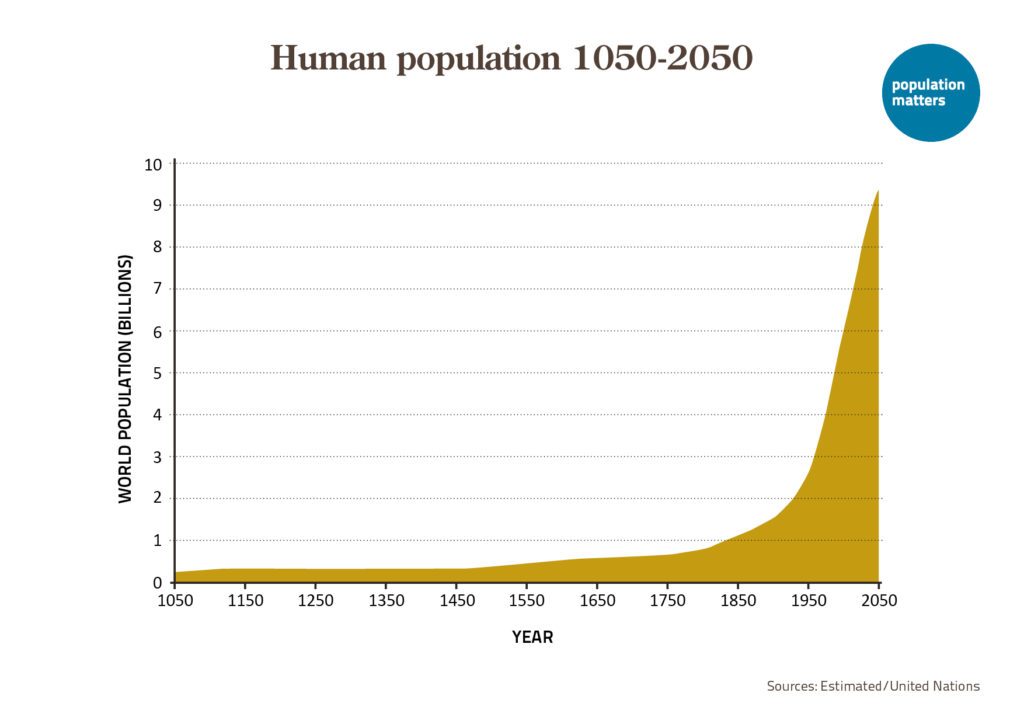
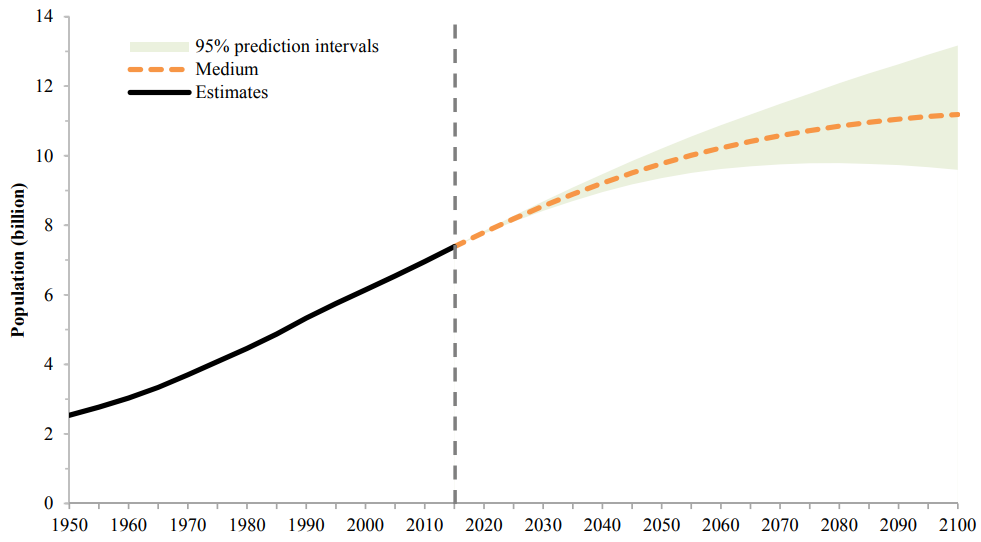
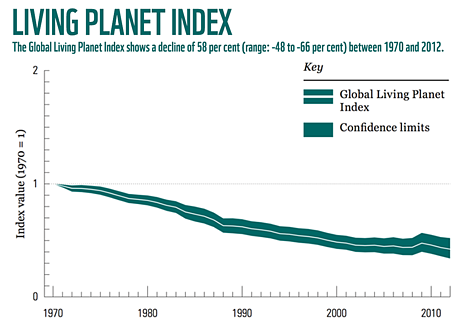
The United Kingdom (UK) has rarely been associated with overpopulation. Defined as when an environment cannot support those living within it, overpopulation has mainly been used to describe countries or regions where people struggle to access food and water. Yet, as the UK approaches a population of 70 million, pressure is continuing to build on the housing market, high-paying jobs are becoming increasingly rare and overall quality of life is falling, including for biodiversity(1). These are the symptoms of population growth outpacing infrastructure development as the UK approaches overpopulation, and they are set to worsen if left unaddressed.

To date, urban expansion has provided the additional jobs and housing required to accommodate a growing population, and despite being sufficient so far, it is ultimately unsustainable. This strategy facilitates overpopulation which is accompanied by poverty, food shortages and poor living standards.

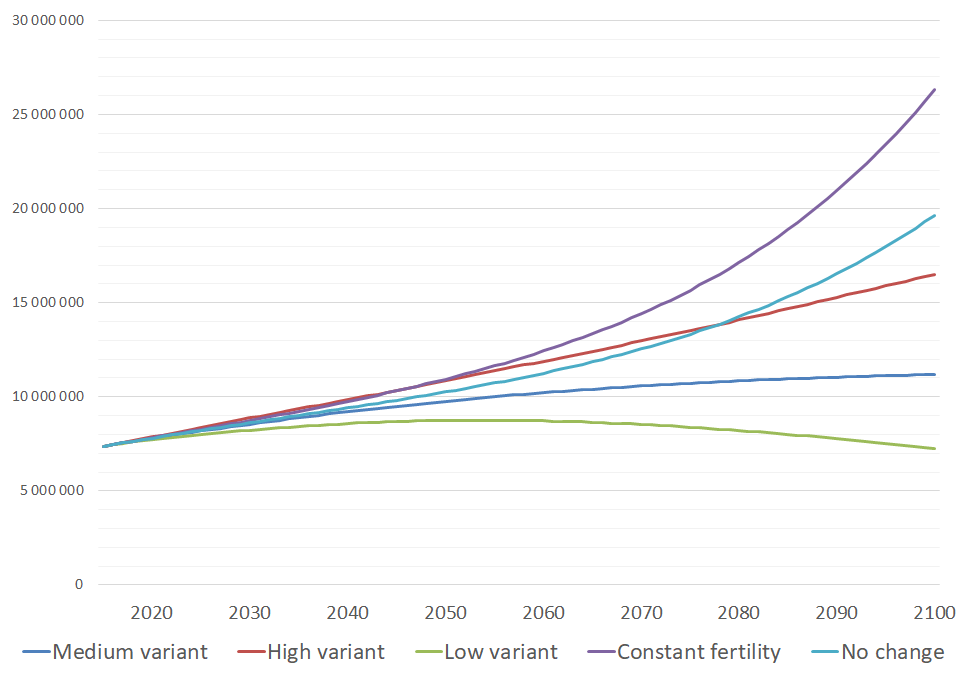
Alternatively, a stable population could be created, where the number of people doesn’t increase or decrease over time. Not only is this model more sustainable in the long term, but it could improve current living standards in the UK by creating a housing market proportional to population need, a more valuable workforce and enable government investment to improve services instead of simply managing population growth. Overall, a stable population offers a chance to improve the current quality of life in the UK.

You may be thinking that overpopulation is a distant threat, but many countries are already suffering its consequences, with many more experiencing a deterioration in life quality due to population growth. Mumbai, for example, is a city of over 22 million people where existing infrastructure cannot support its population with over 50% of citizens left in slum housing(2). Even in highly developed nations such as Japan, housing standards have declined to the point where ‘coffin apartments’ – apartments so small they can be less than 3 meters long – are becoming commonplace(3). These cases encapsulate the reduction of modern living standards associated with large and dense populations.

In the UK, the effects are more subtle but no less significant. There are no coffin apartments, but declining housing quality, increasing housing prices disproportionate to salaries, and the cost-of-living crisis implies a steady decline of living standards. These issues can be partly attributed to population growth for two key reasons. First, increased demand for housing inflates prices and creates pressure for more low-cost accommodation, often leading to a decline in housing standards(4). Second, population growth expands the labour force, allowing employers to offer lower wages due to greater competition for jobs. As wages are influenced by the balance between labour supply and demand, a large workforce relative to the job market would suppress long-term income growth(5). Together these factors make housing increasingly unaffordable and reduce expendable income, hindering the improvement of living conditions for many people. Some may argue that housing prices and the cost-of-living crisis are influenced by a multitude of factors – and they would be correct. However, population growth is central to the pricing of essential goods such as housing, food, water, energy, and more. Therefore, as population increases, a greater demand for essentials leads to higher prices. This disproportionately affects families that spend a larger portion of their income on essential goods, widening wealth disparities.

How could a stable population address these issues?

In a stable population, access to housing would increase as new homes would be available for the existing population, not for accommodating an infinitely increasing number of people. As a result, access to housing would increase further in a stable population compared to a growing population for the same financial investment.

A housing market proportional to population demand creates a more accessible property market and lowers barriers to home ownership. In a growing population, this balance is unobtainable as constant demand for additional housing creates a persistent shortage that increases costs – a trend that will worsen with population growth. Opposition to population stability is likely to come from landlords and corporate property owners as it threatens to reduce the demand for housing – and the appreciation of their property assets – caused by population growth. However, residential homeowners would not be disadvantaged as a property would retain its relative purchasing power. Therefore, a proportional housing market benefits citizens as property becomes more aligned with wages, and more affordable.

The UK job market would benefit from a stable population by increasing the value of the workforce. This is because in a growing population, the number of jobseekers continues to rise, allowing employers to offer low wages and still fill the position which perpetuates a low quality of life. However, in a stable population, the competition decreases, pushing employers to offer a more competitive wage to attract workers which improves household income. Provided the UK economy remains competitive and stimulated by individual spending and government investment, a stable population would create a higher demand for workers which raises their value. This was the reality in Germany between 2012 and 2022 where workforce shortages were estimated to account for up to 19% of real wage increases(6). The opposite could be argued as true considering that more than half of the global labour force is situated in Asia and the Pacific – a region that has represented high-population density and cheap labour for many years(7). Additionally, as artificial intelligence (AI) becomes increasingly powerful, its ability to replace the human workforce is improving. So much so, Goldman Sachs estimates up to 300 million jobs could be replaced by AI worldwide(8). In combination with an increasing population, AI risks mass unemployment and severe socio-economic issues. Population stability could help reduce this threat as a stable workforce combined with national investment in education and training, would produce highly skilled workers better equipped to find employment in an AI-driven economy.

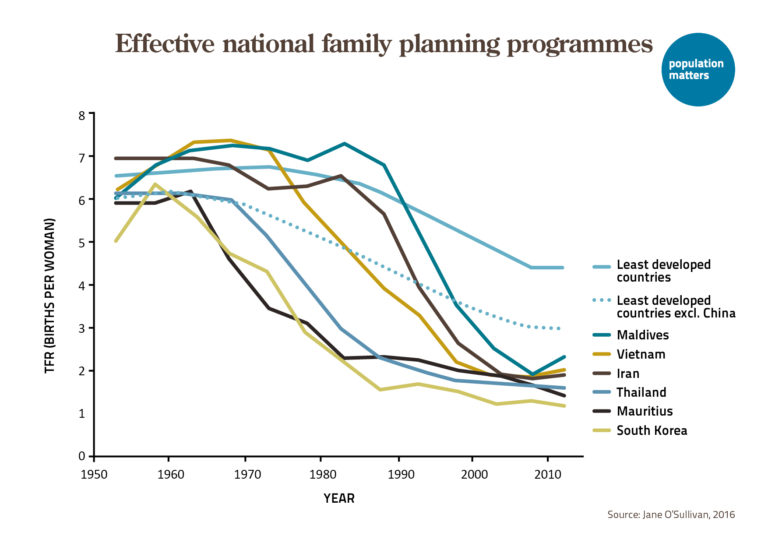
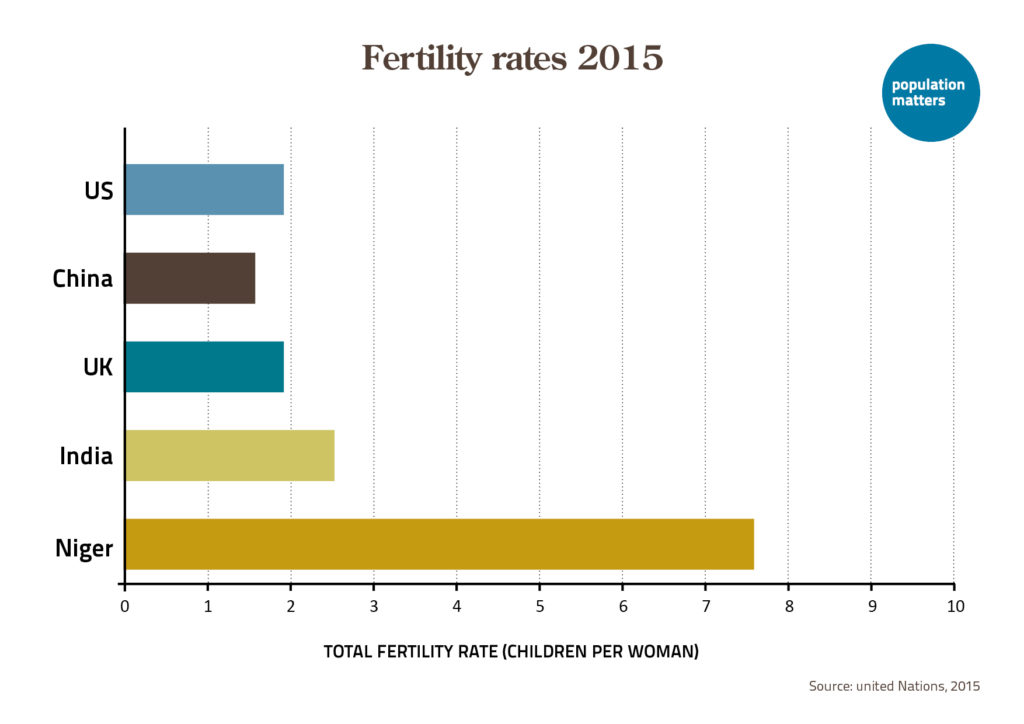
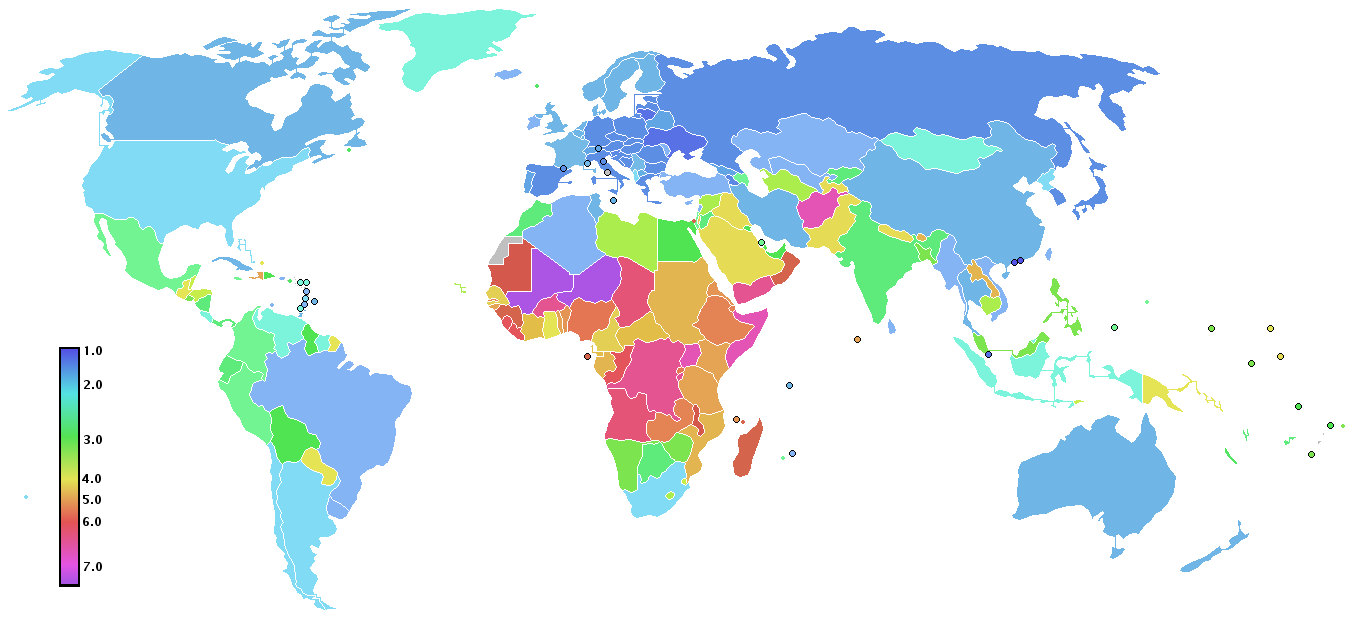
Government investment into the UK would be more beneficial to citizens in a stable population as funding allocated to sustaining a growing population could be reallocated to underfunded services such as the National Health Service (NHS) For example, in the UK government 10-year infrastructure strategy (2025-2035), £39 billion has been pledged for affordable housing, at least £49 billion for expanding the NHS and £20 billion for new schools(9). This funding does not improve living standards in the UK but aims to accommodate a growing population, effectively declining living standards as funding is inadequate to mitigate increased stress on public services under a growing population. In a stable population this funding could be better spent improving services instead of expanding them. Overall, a stable population enables investment to be compounded over time and definitively improve living standards. Clearly there are many benefits to a stable population. With a national fertility rate of 1.34 that is well below replacement rate, the UK is well positioned to achieve one.

What would the effect be on immigration policy?

To achieve genuine population stability, effective immigration control is essential. Without it, overall population growth will continue despite achieving a low native birthrate, exacerbating pressure on living standards and public services. However, legal immigration should be welcomed—particularly when it brings in skilled workers and enriches the UK’s cultural landscape. The number of immigrants allowed to enter each year should align with population stability goals and workforce requirements. Sustained efforts to address illegal immigration are necessary to uphold border integrity and protect job security. While the UK has both a legal and moral obligation to accept genuine refugees, it can’t accommodate all those whose asylum claims are rejected. It must have avenues to deport failed asylum seekers, in order to stem the inflow of illegal migrants. A more effective way to help the world’s poor, of which the illegal migrants are a tiny share, is through international aid, especially supporting family planning to stem the overpopulation from which they flee.

Would a stable population diminish national security?

If the UK were to achieve a stable population, national defence strategies would need to adapt to ensure continued security in a world where some national populations continue to rise. Fortunately, advances in technology and shifts in modern warfare mean that a smaller, well-equipped population can remain more effective than a larger, growing population suffering overstretched budgets in its struggle to accommodate its growth. This is evident in the ongoing Russo-Ukrainian war, where traditional, manpower-heavy combat has increasingly given way to technologically driven tactics, with drones and precision missiles playing a central role(10). Under these changes, a stable population wouldn’t necessarily diminish the defence capabilities of the UK. Instead, it would prompt a shift towards increased investment in advanced military technology, aligning the UK more closely with the demands of modern warfare.

Conclusion

In conclusion, stabilisation of the population presents an opportunity to improve the housing market, create a more valuable workforce and enable greater government investment into the UK. These outcomes collectively raise the quality of life and build a more sustainable, prosperous nation, whilst mitigating the inevitable strain on resources caused by unchecked growth. The ability of the population to advocate for national improvement defines a healthy democratic society, and currently, the UK stands at a point where change is not only possible but necessary. A stable population offers a potential solution that stands to benefit UK citizens greatly.

If you have any feedback on the text or are interested in supporting future work, please get in touch at rmsmilie@outlook.com.

References

1. Overpopulation Research Project (2023). A British perspective on population and biodiversity – The Overpopulation Project. [online, accessed 16 Sep. 2025].

2. Amit, R. (2020). Slums, Migrant Workers, and COVID-19 in Mumbai – Journal of Migration Affairs A Bi-Annual Journal. [online, accessed 3 Aug. 2025].

3. Miller, D. (2013). Living in a box: The tiny ‘coffin’ apartments of Tokyo which cost up to £400 a month to rent. [online] Mail Online

4. Homesight.org. (2024). The Impact of Population Growth on Housing Market Trends. [online].

5. Pettinger, T. (2017). Factors that explain wage inequality | Economics Help. [online]

6. Börschlein, E.-B., Bossler, M. and Popp, M. (2024). Scarce Workers, High Wages? SSRN Electronic Journal.

7. International Labour Organization (2022). Population and labour force. [online] ILOSTAT.

8. Vallance, C. (2023). AI Could Replace Equivalent of 300 Million Jobs. BBC News. [online] 28 Mar.

9. UK Infrastructure: A 10 Year Strategy. (2025).

10. Watling, J. and Reynolds, N. (2025). Tactical Developments During the Third Year of the Russo–Ukrainian War. [online] Rusi.org.

Published

13 responses to “Population stability could improve UK living standards”

  1. Jan van Weeren Avatar

    As put forward in my blog on TOP, https://overpopulation-project.com/overpopulation-as-a-local-problem/ overpopulation is mainly a local problem, especially in developed societies. People from abroad are attracted by job opportunities, which are often concentrated in major cities or specific regions. This is proven by the mentioning of ‘coffin apartments’ in Japan in this article. Since 2010 the Japanese population is shrinking, from more than 128 million people to about 120 million in 2024. Theoretically this must have relieved the housing market, but unfortunately not in Tokyo.

    1. Kathleene Parker Avatar

      Sorry, Jan, it is NOT a local problem, and that’s what made Biden’s alleged climate-change initiative such a joke. Here the U.S. was, THE HIGHEST PER-CAPITA CARBON NATION ON EARTH, exploding our population by MILLIONS OF ‘PER CAPITAS’ A YEAR through illegal immigration, making us the 6th fastest growing nation on Earth, and we were to believe that was fighting climate change!?

      Of course, never did he or Kammie ever once allude to the absolute imperative of not just producig green energy, but decreasing DEMAND, i.e., perhaps if we’d all learn not to go off and leave lights and appliances on that are not in use, if cities would stop wasting 40 percent of their street-lighting energy up into the atmosphere as light pollution, if we’d stop the huge wastes of energy in power transmission (in other words, collectors on roofs, NOT in distant deserts) that might be a climate-change program that was believable.

      I suggest you read the Rockefeller Commission report on immigration and the American future, with inclusion of statements that our population “problem” is a global problem, and it was much of why 54 National Academies of Science stated we CANNOT solve climate or ANY global environmental problem without solving population.

      Yes, Japan still has an overcrowding problem in certain cities, but one can’t expect short-term decreases in population to instantly change housing situations in crowded urban areas, but the point is, IT ABSOLUTELY WILL OVER TIME! Meanwhile, more rural areas of Japan are experiencing an environmental revival.

      Just as, perhaps, if our stopping OVER immigration in the U.S. might mean over the next 50 to 60 years, our current ghastly population nearing 350 million might, possibly, be returning to what it was on the first Earth Day, or roughly 200 million people–to OUR benefit and to the world’s benefit! But, of course, “corporate” media–owned by those who profit from high immigration so they can pay low wages and profit from population growth–are making darned sure that we mostly don’t get that conversation about how Trump’s crackdown on open-borders might mean a whole better demographic future! But, of interest, the U.S. is already, today, 2 MILLION FEWER PEOPLE than 6 months ago!

      1. Jan van Weeren Avatar

        High consuming and polluting populations and low consuming and polluting populations are unevenly distributed over the world. In the US and other rich countries there are high concentrations of the first category, but there also will be regions with populations of the second. These regions are normally sparsely populated. You may aggregate the per capita footprints per country and conclude that it is ecologically overpopulated (as is the whole world), but overpopulation still remains a local phenomenon. It would be absurd to tell a woman in Subsaharan Africa that she should have less children because of the world’s ecological overshoot.

    2. Esther Phillips Avatar

      Of course the whole world is overpopulated – grotesquely so. We are in utter global overshoot, the carrying capacity of the planet for such an apex predator would have been about 2 billion.
      At 8 billion – should we have wanted to slow climate change and we obviously don’t – the carbon allocation per person per annum would have been something like 1.5 tons. That is the lifestyle of the average bod in Yemen or Chad. Not to talk of the rampage we have caused with regard to other species, species that as opposed to us, used to regulate the climate. And then there is the pollution and of course the conflicts for ever scarcer resources and the unpleasantness of pandemics that happen when animals are sitting on top of each other.

  2. David Polewka Avatar

    If we stopped suppressing flu, MMR, and Covid, people would think twice
    about going to the big city for employment,… or for tourism, too!

    1. Kathleene Parker Avatar

      You obviously have never lived in a small town with no job prospects. And, sorry, I’m not at all interested in suppressing flu, especially with the grim likelihood of avian flu lurking about. And, why worry about those things when the leading threat to American longevity isn’t such diseases, but S.A.D., the Standard American Diet of seed oils, “false” fats, dyes, preservatives and general garbage that was THE main factor in why the U.S. contributed 16 percent of all deaths globally to COVID, even though we only have 4 percent of the world’s population. Go RFK, Jr.!

      1. David Polewka Avatar

        The small town people could create amusements and attractions to get tourists
        to come, instead of going to tour cities where there is greater concentration of
        nasty bugs, and thus get some jobs that way. The greatest risk factor for Covid
        is obesity, because the extra fat puts stress on the heart and lungs.
        The data is from the World Health Organization.
        Rank…Country…& of adults with obesity (BMI ≥ 30)
        1…Tonga…70.5, 2…Nauru…70.2, 3…Tuvalu…63.9, 4…Samoa…61.2.. 5…The Bahamas…47.6, 6…Marshall Islands…47.3,
        7…Saint Kitts and Nevis…46.6, 8…Kiribati…46.2, 9…Micronesia…45.6, 10…Kuwait…45.2, 11…Qatar…43.8, 12…Egypt…43.0,
        13…United States…42.9, 14…Palau…42.2, 15…Belize…41.9, 16…Saudi Arabia…41.4, 17…Chile…39.5, 18…Georgia…38.9,
        19…Romania…38.2, 20…Barbados…38.2, 21…Iraq…37.4, 22…Bahrain…37.2, 23…Hungary…36.4, 24…Libya…36.2,
        25…Mexico…36.1, 26…Panama,,,36.1, 27…Argentina…36.0, 28…Croatia…35.7, 29…Jordan…35.6, 30…Uruguay…34.7,
        31…Malta…34.6, 32…Turkey…34.3, 33…New Zealand…34.2, 34…Jamaica…34.2, 35…Antigua and Barbuda…34.1,
        36…Saint Lucia…33.9, 37…Fiji…33.8, 38…Greece…33.7, 39…Saint Vincent and the Grenadines…33.6, 40…Nicaragua…32.4,
        41…Brunei…32.4, 42…Paraguay…32.1, 43…Costa Rica…32.0, 44…Australia…31.8, 45…United Arab Emirates…31.5,
        46…Dominica…31.5, 47…Poland…31.4, 48…Czech Republic…31.3, 49…Syria…31.2, 50…Lithuania…31.1, 51…Lebanon…31.1,
        52…Ireland…30.8, 53…North Macedonia…30.6, 54…Grenada…30.5, 55…Slovakia…30.3, 56…Seychelles…30.3, 57…Oman…30.2,
        58…South Africa…30.0, 59…El Salvador…29.9, 60…Latvia…29.8, 61…Ukraine…29.2, 62…Trinidad and Tobago…29.2,
        63…Dominican Republic…29.1, 64…Suriname…29.0, 65…Brazil…28.8, 66…United Kingdom…28.7, 67…Honduras…28.5,
        68…Uzbekistan…28.5, 69…Tunisia…28.3, 70…Greenland…28.2, 71…Russia…28, 72…Guyana…28.0, 73…Armenia…27.9,
        74…Bolivia…27.8, 75…Azerbaijan…27.5, 76…Canada…27.3, 77…Eswatini…27.3, 78…Peru…27.2, 79…Portugal…27.1,
        80…Ecuador…27.0, 81…Estonia…26.7, 82…Albania…26.6, 83…Belarus…26.6, 84…Serbia…26.1, 85…Moldova…25.6,
        86…Bosnia and Herzegovina…25.5, 87…Iran…25.3, 88…Guatemala…25.2, 89…Cyprus…25.1, 90…Kyrgyzstan…24.4,
        91…Algeria…24.2, 92…Bulgaria…24.2, 93…Germany…24.2, 94…Mongolia…24.0, 95…Colombia…23.9, 96…Finland…23.7,
        97…Cuba…23.5, 98…Israel…23.4, 99…Venezuela…22.8, 100…Iceland…22.6, 101…Malaysia…22.4, 102…Slovenia…22.2,
        103…Morocco…22.1, 104…Belgium…22.0, 105…Pakistan…21.8, 106…Solomon Islands…21.6, 107…Italy…21.6,
        108…Montenegro…21.1, 109…Mauritania…20.8, 110…Tajikistan…20.8, 111…Andorra…20.5, 112…Luxembourg…20.2,
        113…Turkmenistan…20.2, 114…Papua New Guinea…20.1, 115…Gabon…20.0, 115…Vanuatu…19.9, 117…Norway…19.8,
        118…Mauritius…19.5, 119…Kazakhstan…19.3, 120…Lesotho…19.3, 121…Spain…19.2, 122…Afghanistan…17.6,
        123…Maldives…17.6, 124…Botswana…17.5, 125…Equatorial Guinea…17.2, 126…Austria…17.0, 127…Netherlands…16.9,
        128…Sweden…16.4, 129…Liberia…16.2, 130…Comoros…15.5, 131…Sudan…15.5, 132…Namibia…15.3, 133…Cape Verde…15.1,
        134…São Tomé and Príncipe…15.0, 135…Thailand…14.5, 136…Denmark…14.3, 137…Switzerland…13.7, 138…Singapore…13.5,
        139…Cameroon…13.4, 140…The Gambia…13.2, 141…Somalia…12.7, 142…Zimbabwe…12.4, 143…Ghana…12.1,
        144…Bhutan…12.0, 145…Yemen…11.6, 146…Indonesia…11.5, 147…Tanzania…11.4, 148…Kenya…11.0, 149…France…10.9,
        150…North Korea…10.9, 151…Djibouti…10.9, 152…Nigeria…10.8, 153…Sri Lanka…10.6, 154…Ivory Coast…10.6,
        155…Angola…10.5, 156…Haiti…10.2, 157…Togo…10.4, 158…Guinea-Bissau…10.1, 159…Mali…10.0, 160…Benin…9.9,
        161…Zambia…9.4, 162…Mozambique…8.8, 163…Philippines…8.7, 164…Senegal…8.7, 165…Guinea…8.3, 166…China…8.2,
        167…South Sudan…8.0, 168…Rep. of the Congo…8.0, 169…Laos…7.8, 170…Central African Republic…7.7,
        171…Myanmar…7.5, 172…India…7.2, 173…Uganda…6.9, 174…South Korea…6.7, 175…Nepal…6.6, 176…Sierra Leone…6.5,
        177…Malawi…6.4, 178…Burkina Faso…6.1, 179…DR Congo…5.8, 180…Chad…5.7, 181…Niger…5.3, 182…Burundi…4.5,
        183…Bangladesh…5.3, 184…Japan…4.9, 185…Eritrea…4.2, 186…Rwanda…4.6, 187…Cambodia…4.4, 188…Madagascar…3.8,
        189…Ethiopia…2.4, 190…East Timor…2.2, 191…Vietnam…2.1,
        ~Monaco…Unknown
        ~San Marino…Unknown
        ~Vatican City…Unknown
        ~Liechtenstein…Unknown
        \

      2. David Polewka Avatar

        How many people left New York City when Covid hit?

  3. Stable Genius Avatar

    Staggering. Tiny UK is now > FR in population. Historically, FR used to be 3-4x greater. It’s madness. Trump has said it plain to UN – net zero and mass migration are toxic for Western nations. As China laughs its head off, with stabilised population and a phantom “7-10%” [2035] emissions target.
    While stupid AU and UK do mega (62-70%, 81%) emissions targets and huge 3rd world immigration. Yet to AU “intelligentsia”, it is Trump not Albanese is the threat. You couldn’t make it up.

  4. Esther Phillips Avatar

    When you are as overpopulated as the UK, and indeed the world you don’t, cannot aim for stability but for a reduction in numbers. This will happen as nature bats last but there are only two ways in which this can happen:

    Design, using our so-called intelligence and family planning, or attrition/catastrophe/wars/pandemics etc.

    The ultimate problem is that the most intelligent people understanding the limits to growth had few or no children for at least half a century. Their gene pool has disappeared, particularly empathy as those with most empathy don’t put their children through life on Earth, and this makes solving the dastardly problems that we have in an elegant manner ever more unlikely.

  5. Esther Phillips Avatar

    Hi this is off topic but email didn’t work

    Hello Frank and others at OP

    What makes a conservation giant as Jane Goodall was called a lot in various Eulogies?

    Jane was amongst many things a Patron of Population Matters (as well as David Attenborough, Jonathon Porritt, Chris Packham, James Lovelock and many others).
    She did not shy away from talking about our numbers, about the need for family planning as she understood very well that the fate of her beloved Chimps (and the rest of the biosphere) depended on that.

    In the many articles written this was mostly not mentioned so we should redress this I believe.

    Best wishes
    Esther

  6. […] * R.M. Smilie, Population stability could improve UK living standards […]

Leave a Reply

This site uses Akismet to reduce spam. Learn how your comment data is processed.

NOTE: Comments with more than one link will be held in wait and will only become visible on the site after an admin has approved it.

Explore the content and topics covered by TOP, search here

Blog categories
Gallery of infographics – Learn more about overpopulation and environment

Discover more from The Overpopulation Project

Subscribe now to keep reading and get access to the full archive.

Continue reading