Can we engineer our way out of the climate crisis?

Many scientists excited to develop new geoengineering technologies say yes, as do capitalists who stand to profit by continuing with business as usual. But most of the commoners who will have to live with the messes left behind when technocrats fail say a resounding no.

by Philip Cafaro

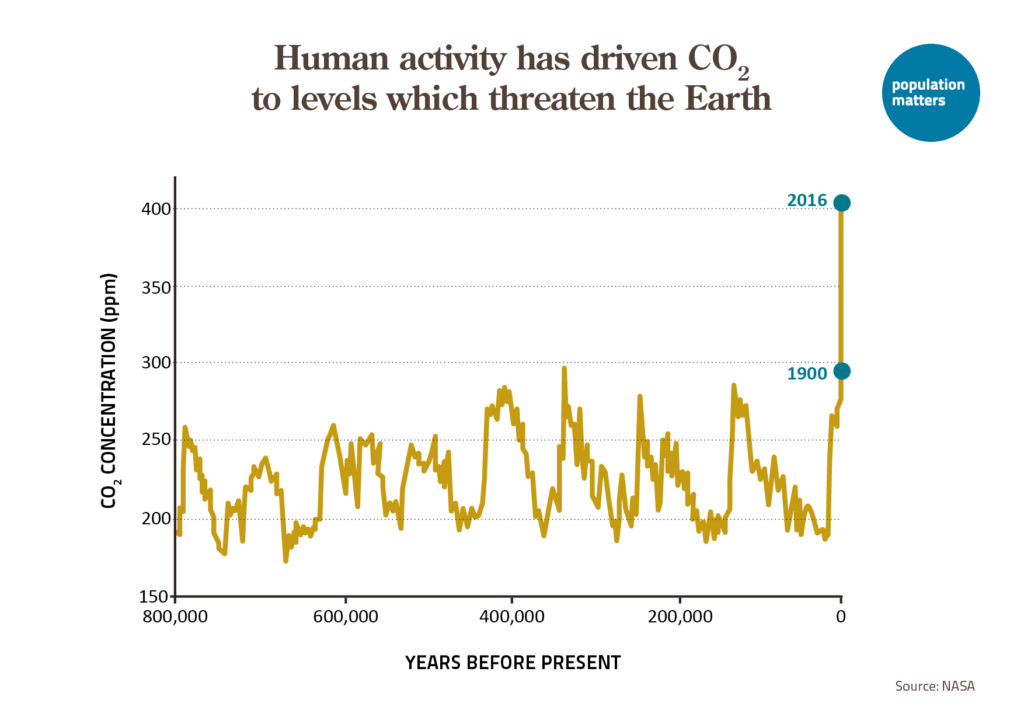
Sunday’s New York Times included a lengthy article on climate geoengineering, the first of a series, titled “Can we engineer our way out of the climate crisis?” Reading it, I was struck by two things. First, the number of technofix experiments currently underway and the serious money behind some of them. Our capitalist overlords seem to have decided this is the path forward and, as usual, government efforts to control technologies for the common good seem to be seriously lagging.

Second, the inability of the reporter, David Gelles, to articulate the chief alternatives to geoengineering: limiting human numbers and per capita energy and materials use. Gelles quotes several authorities about potential dangers of relying on carbon capture and sequestration, rather than limiting carbon emissions directly. But he never straightforwardly discusses how limiting human economic demands can be part of dealing with the problem. So the debate just toggles back and forth, between taking existential risks to deal with climate change or letting climate change rip. That’s a false choice that ignores the moral demand climate change makes on us to face up to limits to growth.

Carbon capture facility under construction. Photo: SaskPower (cropped)

Turning to comments on the article, however, my faith in the good sense of my fellow humans was restored. The overwhelming majority of them are critical: of the narrowness of the reporter’s analysis; of the failure to mention overpopulation as a major contributing factor to the problem; of the technological hubris of pretending we are wise enough to manage Earth’s fundamental biogeochemical systems.

Here are the two most popular comments, starting with the most “liked” of all of them, from Michael Collins of Vallejo, California:

We cannot engineer our way out of the climate crisis. The root of our climate crisis is socio-political.

All our economic systems assume continuous and never-ending growth within a finite world. That proposition is insane at face value; we’ve all been conditioned to accept it.

All of the world’s powerful and influential political cultures are rooted in the economics of patriarchy. Women must be coerced into having more children so that population growth can support our economic model.

The problem is socio-political, and therefore, the answer is socio-political. The world is finite, and we have pushed beyond its boundaries of sustainability, seriously damaging our biosphere. …

“LJ” from Oak Valley focuses even more centrally on population and calls climate change what it really is, ecological overshoot, writing:

Of course we will have to explore some of these technological options, but if the photos are meant to be a comfort they are not. These sprawling industrial monstrosities will chew up land and water. The workers will be housed in trailers and cheap apartments.

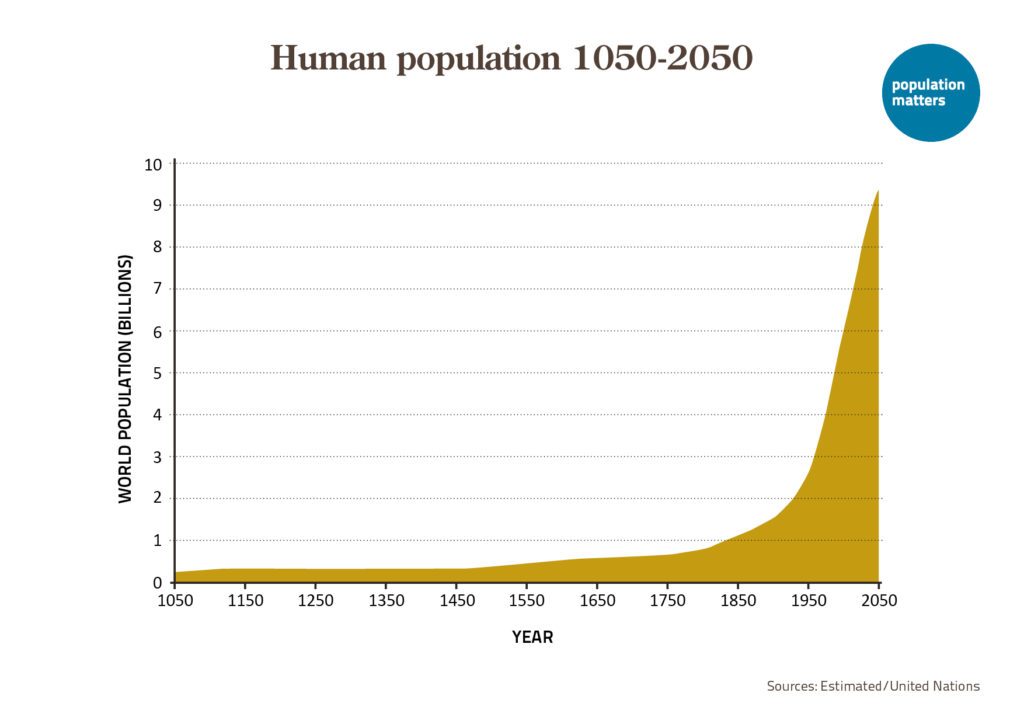
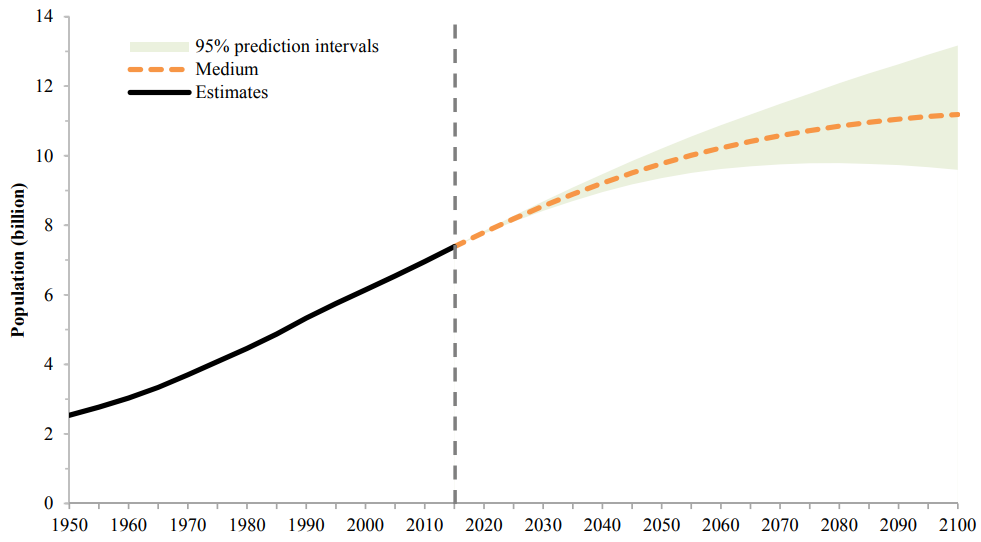
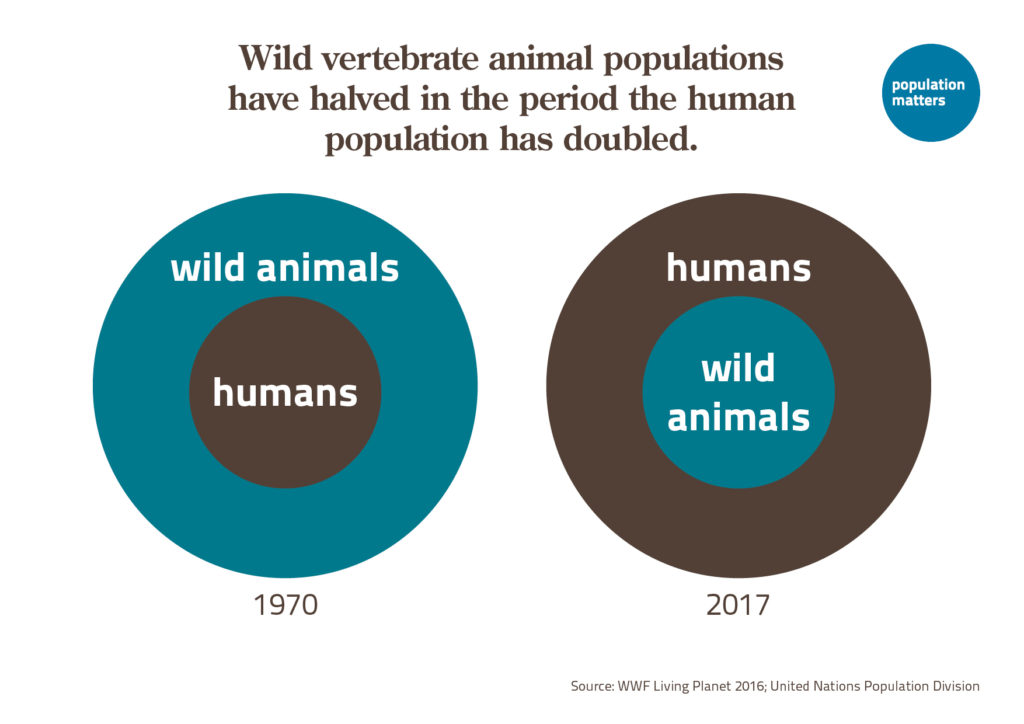
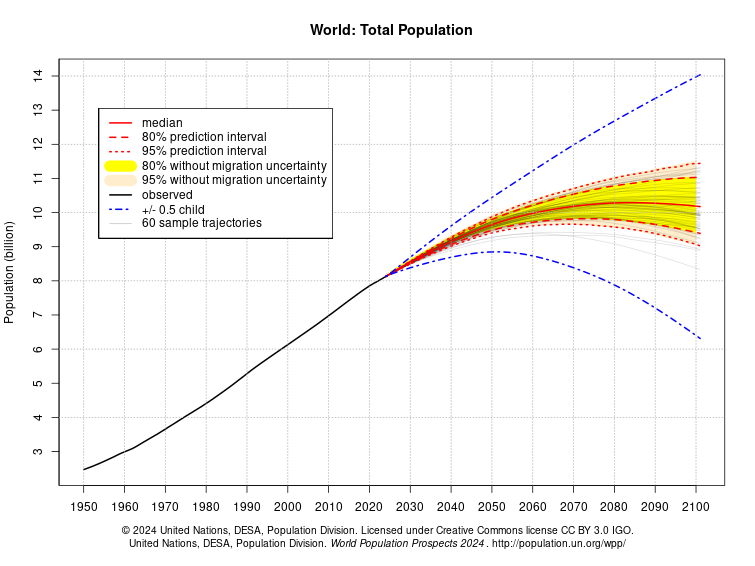
We will not make progress until we address the factor that corporate structures want us to ignore. That is the current rapid expansion of human population. We will be moving from 8 billion towards 9 billion in about the next 10 years.

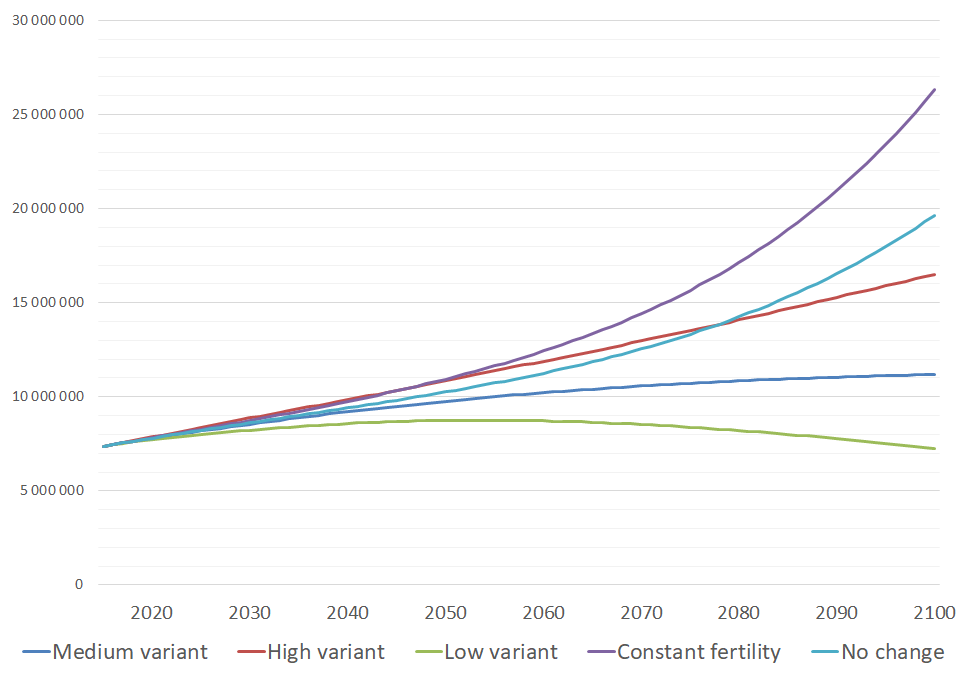
Economists and demographers, and the business people and governments that fund them, are attempting to raise a false panic in the opposite direction in regards to a slight decrease in birth rate. Business people depend on never ending population growth for never ending profits.

Governments depend on never ending growth for the so-called demographic weapon, large masses of military age young people. This is an increased concern with the rapidly accelerating violence in a number of areas in our world. Xi wants every Chinese woman to have a few more children. Putin is calling for Russian women to have eight or more children for the motherland. And conservative men of power want to limit women’s reproductive choices in our own country [the United States].

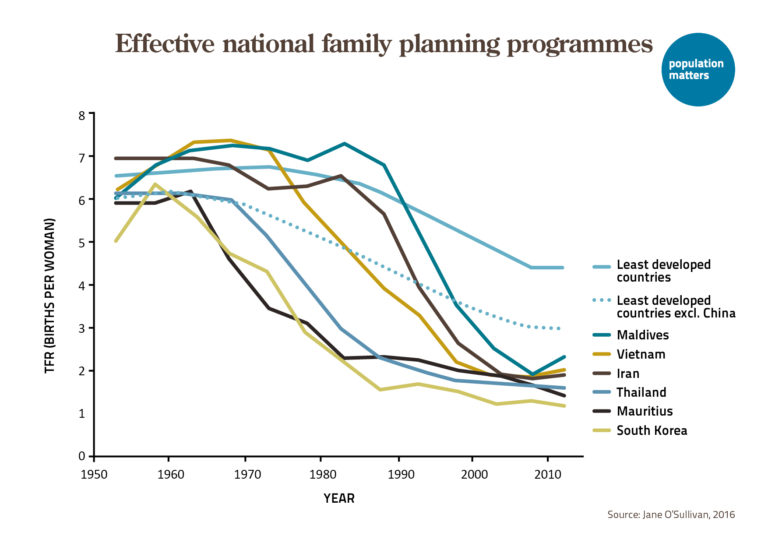
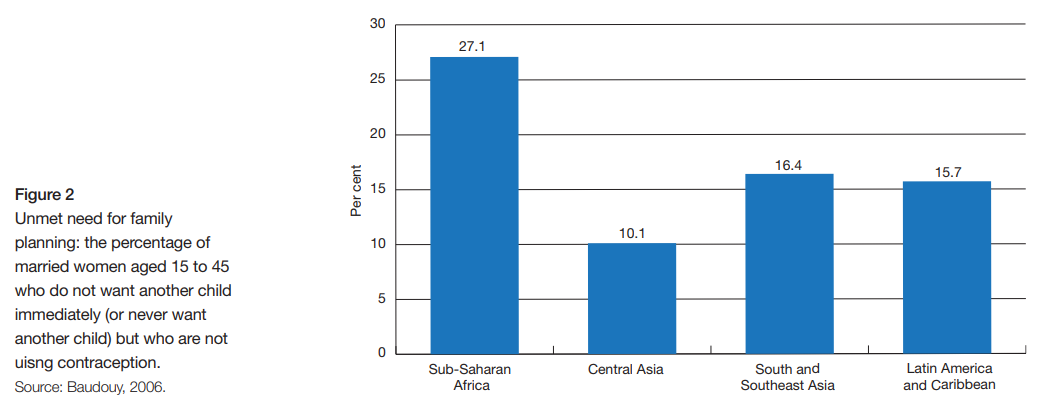
We need to understand what is at stake in a world where we have reached earth overshoot. Understanding is the first step. Then advocacy and action, particularly for the increased availability of ethical family planning around the world.

Many commentators on the article are skeptical that new, unproven technologies can be deployed without disastrous unintended consequences. Others note the folly of shifting from free, natural systems that have sustained human beings for countless millennia, to costly, complicated, managed systems that are unproven. As “Skeptic” from New York puts it: “We already have a machine that pulls carbon dioxide out of the air. It is called a tree.”

DJt from northern California is also skeptical of technological fixes, seeing them correctly as an excuse for ignoring limits and not changing our behavior. He or she writes:

I think the author means “can we engineer our way to preserving the climate while continuing depraved gluttony?” We can engineer our way to preserving the climate with all sorts of existing technologies and the ability of humans to adapt to new diets, new patterns of living, simpler lives, etc. That itself is going to take an astounding amount of engineering AND behavioral change. If human behavior and ever-expanding gluttony is a given, the engineering must be applied to the atmosphere. Any effort in this regard is going to have a negative impact that will be found to cost 10X the cost of the engineering, and so on. …

Jack from New Mexico returns to population and the failure of the mass media to consider alternatives to endless growth, writing:

The only way to control climate and ecological degradation is to limit and reduce human population. You cannot say, let’s all drive electric vehicles and then cram another 10 billion people onto one tiny planet. Malthus was right, although too narrow in his focus. Any environment, including an entire planet, has a limited carrying capacity, and we humans, the species with the highest maintenance costs, have already exceeded our limits.

What this means is that we will need not only dynamic family planning protocols, but also a new way of thinking about economics that doesn’t rely on ever increasing consumer head counts. This is something The New York Times is in absolute denial about.

It would be great if future articles in the series were to take these criticisms on board and look more broadly at what needs to be done to deal with ecological overshoot. We’ll see!

Most of these comments spurred further comments in their turn, leading to a more comprehensive discussion of how to create sustainable societies than was found in the original article. For example, in response to Jack from New Mexico’s comment, “RocketScientist” from Munich wrote:

@Jack what’s easier, limiting people or limiting consumption? Which is moral?

To which Rebecca from the US replied:

@RocketScientist Both are doable and absolutely required. And I assume you aren’t implying that limiting people is immoral? If so, is this some kind of belief that humans don’t need to have any limits?

Here we touch on one of the reasons we started TOP six years ago. In fact, the environmental movement’s retreat from honest discussions about population has gone hand in hand with a retreat from grappling with limits more generally. The futility of this approach has been amply shown in recent decades, as humanity charges further into ecological overshoot and the possibility of disastrous climate change becomes a probability. But people, like the commenters on the article, are catching on. Who knows? In a few years, even apologists for the economic status quo like the New York Times and the Wall Street Journal may be singing a new song.

Published

13 responses to “Can we engineer our way out of the climate crisis?”

  1. gaiabaracetti Avatar

    Maybe people should stop reading so much establishment media and start supporting the alternatives… I’m starting to think that the New York Times doesn’t deserve the prestige it has! Although, to be fair, pro-growth bias is pretty much everywhere.

    1. David Polewka Avatar

      Maybe we can use technology to prevent earthquakes! Why not?
      Some people don’t know about “economies of scale”, which is why
      there are so many billionaires and “capitalist overlords”. And the
      political class is all about pushing people around and spending other
      people’s money, and they can’t get enough of it! Politicians Anonymous
      was first mentioned in print in the July 1960 A.A. Grapevine magazine.
      The 12-step spiritual recovery program is a new way of life where you
      learn to be more honest and less selfish! You have to be honest to solve
      problems; you don’t have to be honest to get elected!

    2. PHILIP CAFARO Avatar

      I think you’re right. Would love to hear your (and others’) suggestions for alternative media, especially alternative media that provide a saner view of growth and its many related issues

      1. gaiabaracetti Avatar

        I’ll think about it. Right now I can only come up with Italian media (and very little of it), or super-niche things, like individuals with their own blogs or websites (such as Nate Hagens or John Michael Greer), or very specific (such as Low Tech Magazine), or themselves reacting to mainstream media (such as Growth Busters)… But in “generalist” media, such as the Guardian, even if you do find alternative views the pro-growth bias is still very strong.
        The thing is, you need money to do media, of any kind, and you’re not going to get a lot of money from either sponsors or followers if you preach de-growth. Some of those I mentioned seem to have made their own money one way or the other, and/or have a large following, for which using English helps a lot. I have tried to run my own blog and ask for donations, even very small ones, but everyone is just too used to having things for free, i.e. payed for by someone else.

      2. Jack Avatar

        This attitude about technology being a savior for the planet is relatively new. When I was on the board of ZPG (Seattle chapter- one of the more active boards) the basic formula was I=PAT (impact equals population times activity times technology) at the time technology was thought to be a variant – good and bad. In the interim it is now being seen by informed people as mostly negative.
        In the 19th century an economist, William Stanley Jevons came up with a theory known as the Jevon’s paradox. This states: In economics, the Jevons paradox (/ˈdʒɛvənz/; sometimes Jevons effect) occurs when technological progress increases the efficiency with which a resource is used (reducing the amount necessary for any one use), but the falling cost of use induces increases in demand enough that resource use is increased, rather than reduced. Governments typically assume that efficiency gains will lower resource consumption, ignoring the possibility of the paradox arising. https://en.wikipedia.org/wiki/Jevons_paradox In actuality technology only makes matters worse.
  2. Stable Genius Avatar

    Can we engineer out of the climate crisis? Idiotic question. Only dumb answers are possible. But NYT is compelled to abide by the UN script. Otherwise, They Might Be Racists.

    Human Emissions (A) – Emissions Removals (B) = Zero. The most simplistic and stupidest equation ever invented by humankind. In five years flat, this UN canard has become gospel, across the western world. To challenge it is a near-automatic loss of caste and status.

  3. gaiabaracetti Avatar

    The climate crisis is only one of many environmental crises we face today. I think that the fact that it’s gone so mainstream is because it’s the easiest to make money off of trying to solve it. Look at the ludicrous carbon credit market, which is making rich people richer and not offsetting anything, or at the environmental devastation caused by large scale renewables.
    Doing something about the loss in biodiversity, plastic pollution, habitat loss, would require downsizing the economy and population – no money to be made there. Although I’m sure they’ll find a way.

  4. Edith Crowther Avatar

    Good news about the NYT comments (sort of – but this is 1970s-level awareness about the folly of technological “fixes”, and not that widespread either I don’t suppose – plus I maintain that Birth “Control” is just another “fix”). Also many thanks for the link to the November 2022 article by Philip Cafaro, with those graphs from Bill Rees showing that population growth in middle-income countries goes hand in hand with increased consumption, and that low-income countries – with even higher population growth – look set to be more of a problem than both middle and high income countries as their consumption levels rise (and they will rise because “poor” countries are sitting on a lot of raw materials, unlike “rich” countries, and the former are starting to stop the latter siphoning them out). One of the “poorest” countries in the world, DRC in the centre of Africa, is possibly the richest in vital minerals as well as biodiversity. As I write, China is building the Grand Inga Dam on the Congo River, which will be the mightiest power station in the world in Megawatts, overtaking the Yangtse Dam (22,000 MW). But China itself has run out of road, despite its originally vast Biocapacity Reserve. Building a dam in the Congo won’t change that – in fact it will make it worse. Egypt has such gigantic solar farms that it exports electricity via undersea cables – but the consequences for Egypt itself have been ghastly. This is the meaning of the myth of the Midas Touch, isn’t it? Turn everything to gold and your food and your kindred will turn into it too. And you will have to wear asses’ ears for the rest of your life. Perversely, the entire world has twisted this myth to mean the Midas Touch is something good and desirable.
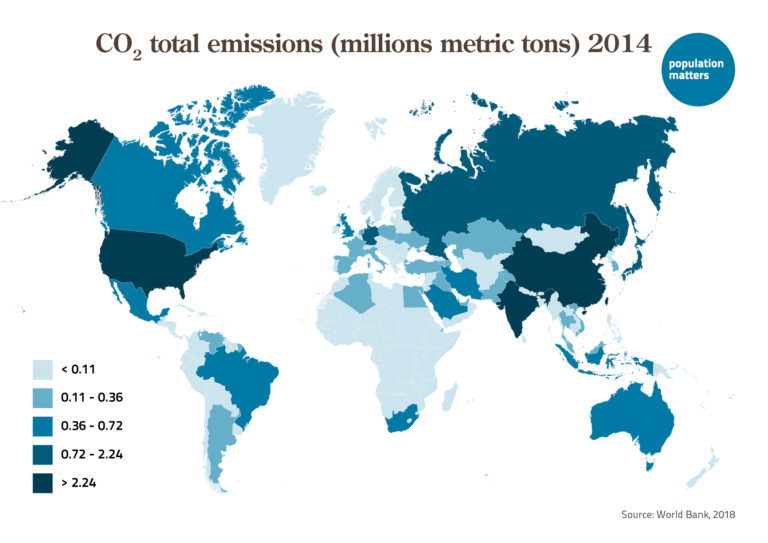
    Megadams and solar farms are all very well, but the world’s deadly Midas Touch is almost entirely powered by fossil fuels, and always will be – so long as they last. No amount of power from other sources can even begin to compare with the horsepower of fossils. Yet, the nations with the highest GDP (thanks to fossil use) have the largest Ecological Deficits [ED is the difference between a country’s biological capacity and its environmental consumption rate]. China is top (or bottom, really) at minus 4 billion hectares, then the USA, then India, then South Korea and Japan. After that the UK, Italy, Germany, Mexico, Iran, Turkey, France, Spain – not necessarily in that order, the picture keep shifting but once you are in any kind of ED, even a mere 100 million hectares, you are into Desertification which is, like the Midas Touch, irreversible except by intervention of the Gods.
    The world as a whole moved out of Ecological Credit into Deficit in 1970. Its biocapacity continued to increase very slightly, from 10 billion hectares to about 12 billion – but its consumption, which was level with biocapacity in 1970 at 10 billion, is now about 21 billion hectares, which means there is an ED of about 9 billion (i.e. just over 1 hectare per capita). One hectare deficit per person does not sound a lot, but neither does one centimetre rise in sea level. What scientists keep telling us, is that once things get into a vicious circle or positive feedback loop, you get self-perpetuating outcomes which reach a tipping point after which they cascade irreversibly. This applies to both population growth and population decline (in any species) – both can be equally steep.
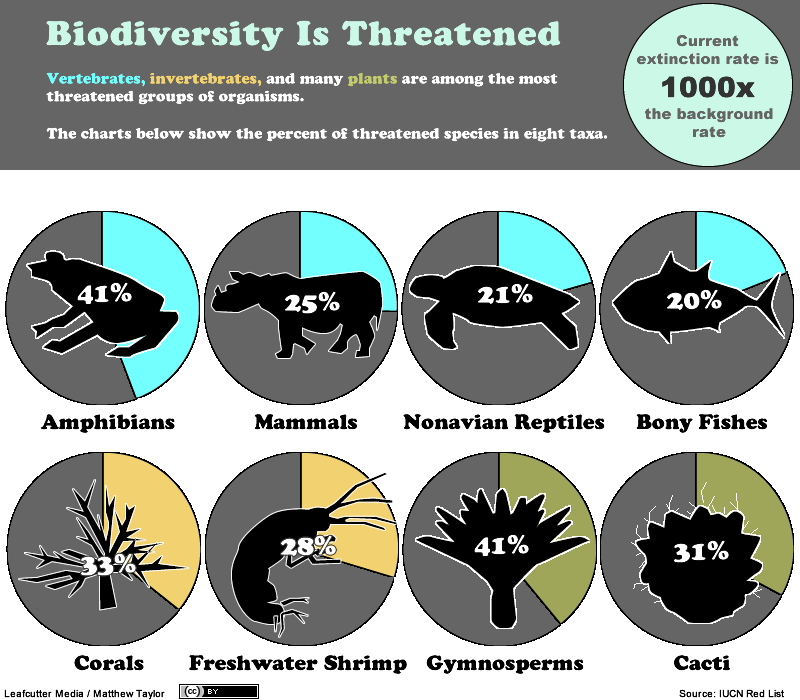
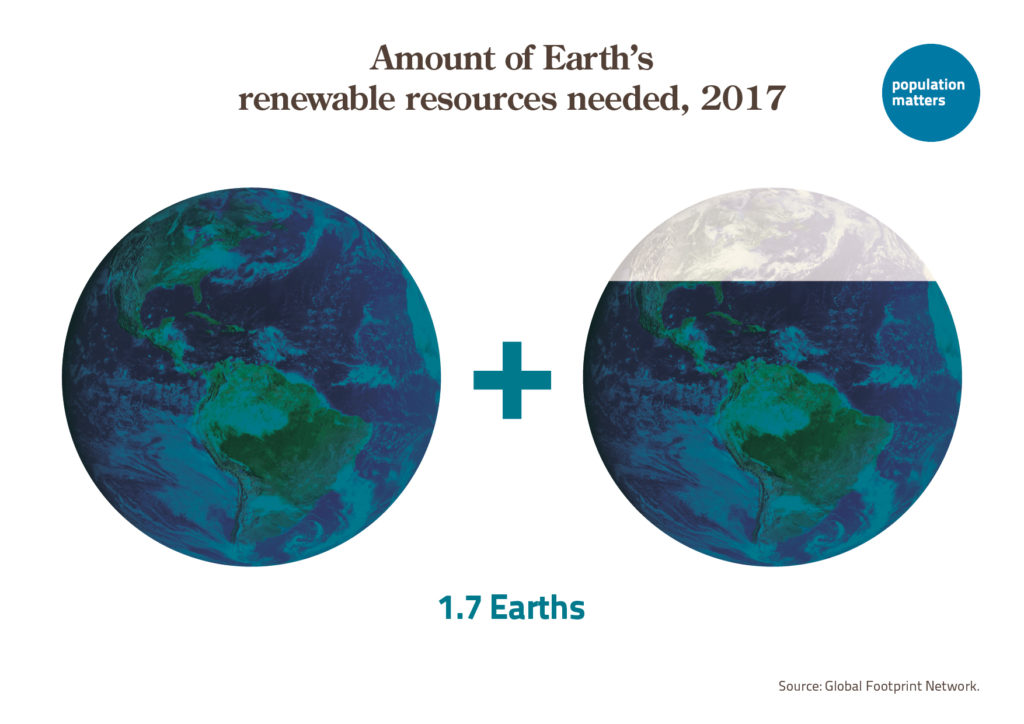
    In any case, one hectare per capita deficit is a global average. The Global Footprint Network has a useful page charting how many countries and how many Earths each Nation needs for its current rate of consumption. Most Nations need more than one country and at least half need more than one Earth – even Third World nations. Qatar needs 9 Earths (and 15 Qatars). Israel needs 3 Earths (and 25 Israels). Hungary needs 2.4 Earths (and 1.5 Hungarys). It is not all the usual suspects – though obviously many African nations still need less than one Earth and a couple need less than one country like their own – but how long is this going to last?
    https://overshoot.footprintnetwork.org/how-many-earths-or-countries-do-we-need/
    A country with a large ED usually has an extremely low birth-rate – this is voluntary, if you call being unable to eat because you have acute appendicitis voluntary. Animals in zoos are not keen to breed, and neither are humans in human zoos. Rather than using birth control and abortion, mating just does not occur. Why would it? In any case, sperm counts are plummeting in the human zoo. (And endocrine disruption is also occurring in the wild amongst other species, so any humans still living sustainably are just as exposed as humans in zoos and battery cages.) If people want to imagine they retain a smidgen of Control via Birth Control – we are all allowed to fantasize, I suppose. But in Biology, species numbers are controlled by external factors, not by themselves – and humans are no different. They may imagine they are exercising population control (and consequently consumption control) by not having more than one child, or being childless. They are not.
    Leaving control fantasies aside, we are not going to stop using fossils until they run out completely. WHEN they run out, then the human population will crash from whatever dizzy height it has reached at that time down to 2 billion or even 1 billion. That is not going to be a pleasant sight or a pleasant experience. If you think you will live that long, I suppose you could prepare for it – but how? In any case, it might not reverse Overshoot – because so much permanent damage has been done. I am not going to apologize for being “negative”, though I used to. I think people should get a grip and face biological and geological facts. And they should stop blaming the “patriarchy” for everything – this is even more daft than saying there is no problem at all. I have yet to see any evidence that female humans are any less acquisitive than males when it comes to “creature comforts” that have become “bare necessities” (I include myself). Acquisitiveness is on a sliding scale amongst both men and women – but in any case, where it is on the scale is not relevant because even low levels are not sustainable given the vast array of products on offer in the 21st century and the vast numbers of humans who can access many or even most of them.
    Two billion humans consuming at levels considered normal in all countries now (NOT just the West) – not sustainable or even do-able. If the two billion live like most in, say, Belgium, they will need 4.3 Earths and 9 Belgiums. If they lower their sights a bit and live like, say, Bulgaria, they will need only one Bulgaria (phew!) – but 2.3 Earths – eeek! I leave it to you to find the countries on the GFN list which need only one of themselves (or less) and only one Earth or less (at the moment). That is the lifestyle the global 2 billion must have – and that is without accounting for irreparable damage to ecosystems which is accelerating (together with mass extinctions of plants and animals) whilst we wait for world population to plummet to 2 billion (and then live like Tanzania, or Myanmar, or the Solomon Islands, or Zambia – the few other nations living sustainably are plunged into famine so ghastly that consuming little does not seem like a choice, but more like a doom).

    1. stevemckevittda604d1b36 Avatar

      You have amassed a great deal of information, some of it very useful. However, to me it appears that you are in the employ of the Petrochemical Corporations, spreading a “nugget” that they want presented. You state: “Leaving control fantasies aside, we are not going to stop using fossils until they run out completely.” I assume you understand that the known fossil fuel reserves are enormous. Enough to totally ruin the biosphere.

  5. David Polewka Avatar

    In 1867, Jevons married Harriet Ann Taylor, whose father, John Edward Taylor,
    had been the founder and proprietor of the Manchester Guardian. Jevons
    (1835-1882) suffered from ill health and sleeplessness, and found the delivery
    of lectures covering so wide a range of subjects very burdensome. In 1876,
    he was glad to exchange the Owens professorship for the professorship of
    political economy in University College, London. Travelling and music were
    the principal recreations of his life; but his health continued to be bad,
    and he suffered from depression. He found his professorial duties increasingly
    irksome, and feeling that the pressure of literary work left him no spare
    energy, he decided in 1880 to resign the post. On 13 August 1882 he drowned
    whilst bathing near Hastings.
    https://en.wikipedia.org/wiki/William_Stanley_Jevons

    1. jack Avatar

      Thank you for repeating my original comment about this important but too oft ignored economic philosopher. Seems corporations tout the very thing that is destroying us. A favorite author of min is Alexander McCall Smith (he has written over 150 books and still counting. Even though his books are fiction there’s a lot of important insights in his writings. One book is about how the Grand Cayman’s have become a tax haven for the rich. including hedge fund investors. “Money obscured everything for them: the heat, the sea, the economic life for ordinary people. Wealth, and a lot of it, can be a powerful protector against the resentment of others.”
  6. […] Can we engineer our way out of the climate crisis? by Phil Cafaro […]

  7. […] to solar radiation management or other forms of radical geoengineering, providing condoms and other […]

Leave a Reply

This site uses Akismet to reduce spam. Learn how your comment data is processed.

NOTE: Comments with more than one link will be held in wait and will only become visible on the site after an admin has approved it.

Explore the content and topics covered by TOP, search here

Blog categories
Gallery of infographics – Learn more about overpopulation and environment

Discover more from The Overpopulation Project

Subscribe now to keep reading and get access to the full archive.

Continue reading