The Overpopulation Project
TOP – Research and Outreach
Too many people consuming too much
Category: Family Planning
-
The Population Factor back by popular demand
In 2020 and 2021, I recorded two seasons of the TV show The Population Factor. Each episode features in-depth conversations focused on a particular aspect of the population/environment connection. Check out seasons one (hour-long episodes) and two (half-hour episodes), all available for free streaming at the links below. by Phil Cafaro Season 1 Episode 1.…
7 comments on The Population Factor back by popular demand -
To Advance Humanity and Save Nature We Need a Common Agenda
Problems caused by rapid population growth, environmental degradation and climate disruption are harming human welfare and the natural world. These problems are largely addressed separately, with little common understanding or integration of efforts. Our recent paper, Advancing the Welfare of People and the Planet with a Common Agenda for Reproductive Justice, Population, and the Environment,…
-
More population neglect from the United Nations
The UN’s latest State of the World Population 2023 report deepens its denouncement of population concerns. While it commendably emphasizes women’s reproductive rights, it neglects the role an excessive and growing population plays in driving global ecological degradation and overlooks the many ways overpopulation can undermine poor people’s rights to safety and security. by Jan…
-
Making media seriously discuss population growth and its consequences – a case in Sweden
Newspapers, radio, and TV in many countries usually avoid the problems of population growth and overpopulation. But by focused work it is possible to get the attention of mainstream media. This recently happened in Sweden, to judge from a TV program broadcast 13 April. By Frank Götmark and Malte Andersson How can you highlight the…
-
The imaginary world of Earth4All’s low population projections
A new report from Earth4All says world population will peak below 9 billion. While it celebrates this result and says we must work to get it even lower, this unrealistically low projection itself is likely to have the opposite effect. by Jane O’Sullivan Last week a consortium under the name of Earth4All published new population…
-
Do three Pacific islands provide lessons for achieving a sustainable human population?
These islands were more-or-less isolated, microcosms that perhaps tell us what is going to happen with the global population. Anthropological accounts also describe remarkable forms of birth control. Do they tell us anything about how to achieve sustainable populations today? By Frank Götmark Easter Island, and historical background One of the most debated questions…
-
Global population has hit 8 billion
The world population has hit 8 billion, a milestone which has been widely discussed in the media. In this article originally published by The Hill, William Ryerson of the Population Media Center and Kathleen Mogelgaard of the Population Institute reflect on the economic and environmental effects of this milestone. By William Ryerson and Kathleen Mogelgaard…
-
Religion and religiosity pose challenges for fertility decline in Sub-Saharan Africa
Sub-Saharan Africa (SSA) is the only world region projected to continue population growth in the second half of this century, and even beyond 2100. In SSA, religion and religiosity are major factors contributing to the persistent high birth rates. A new publication by TOP co-workers is reviewing the relationship between human fertility and religions in…
-
Smaller human populations are neither a necessary nor sufficient condition for biodiversity conservation
That’s the title of a paper just published in Biological Conservation in response to TOP’s recent paper on population and biodiversity loss in that journal. Are its authors right? by The Overpopulation Project In one sense, Alice Hughes and company clearly are correct. Efforts to protect wild nature are ongoing throughout the world, and for…
-
Fertility decline in developing countries does not depend on economic growth but follows contraceptive use
Many politicians, the public, and some scientists still think that economic development is a major cause of reduced birth rates in developing countries. We tested this belief empirically in a recently published long-term study of many countries (1970-2014). We found no relationships between fertility and economic growth, but a strong association with modern contraception: birth rates…
-
Eight Billion – Our Greatest Mistake
According to the United Nations Population Fund, reaching a global human population of 8 billion is an achievement to be celebrated. In “a world of infinite possibilities,” they state, “imagine the boundless paths 8 billion can take.” Rather than taking refuge in irresponsible fantasies, it’s time our bloated societies reckoned honesty with demographic reality. By…
-
The moral imperative of depopulation
Anthropocentrism is preventing humanity from dealing with the world’s cascading environmental crises. Stephen Williams reviews the work of Catholic historian Paul Collins who argues depopulation is an urgent moral imperative. By Stephen Williams A new discussion paper on population ethics written by Catholic historian Paul Collins is as radical as it is worthy. The paper…
-
In America, reproductive rights have fallen prey to a creeping theocracy
The United States of America is becoming a theocracy. The Dobbs decision has bypassed the Congress by having the Supreme Court establish a de facto religion which forces unwilling women to become mothers. By Richard Grossman, MD © 2022 For years I have hesitated to write about the effect of religion on population. My hesitation has…
-
Population growth has contributed 80% of ecological overshoot
William Rees is the originator of ecological footprint analysis, the influential approach to measuring sustainability. In a new article, he argues that humanity is deep into ecological overshoot and that we need to ratchet back our numbers and the size of our economies before nature does it for us. by Philip Cafaro William Rees has…
-
The per capita fallacy
Are many tiny ecological footprints more virtuous than fewer, larger ones? Will they be better for the Earth, or easier to accomplish? These hard questions need to be asked as humanity hurtles past 8 billion people and deeper into ecological overshoot. By Gaia Baracetti You’ve all heard the argument: high birth rates in poor countries…
-
Time for Sweden to resume focus on international family planning aid
Recent research suggests lack of contraception and high desired family size both hinder population stabilization in Africa. We call on the newly elected Swedish government to prioritize international family planning aid, resuming a valuable Swedish tradition. By Frank Götmark, Nordhild Wetzler, Malte Andersson, Carl Wahren, Karl-Erik Norrman An Op-Ed originally published in Svenska Dagbladet…
-
More like a dying planet report
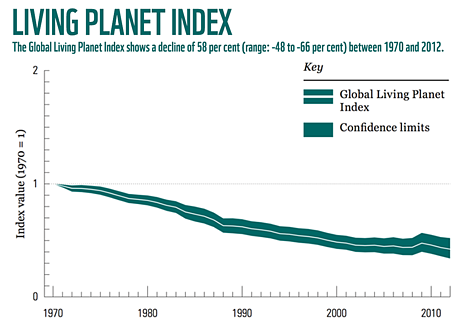
Earth continues to hemorrhage biodiversity, according to the latest Living Planet Report. Unfortunately, its authors cannot manage a clear statement of how to stop the bleeding. by The Overpopulation Project “You could think of it as a health check for the planet,” says the World Wildlife Fund, introducing its most recent biennial Living Planet Report,…
-
Advocating for the Education She Did Not Have
Education is important for girls and women to be able to control their own lives. To celebrate International Day of the Girl this Tuesday, Population Media Center highlighted their article about education and overcoming social barriers in Nepal, which we have republished here. Read about Binita and her determination to advocate for her sister-in-law’s continued…
-
The Natural Synergy between Population Stabilization and Reproductive Rights
In the second essay we are featuring from the Great Transition Initiative’s forum The Population Debate Revisited, Céline Delacroix highlights the win-win relationship between elevating women’s health, rights and autonomy and minimising population growth. Why then is the topic so unwelcome in international policy discourse? By Céline Delacroix Reading Ian Lowe’s opening essay to this…
-
“Decline and Prosper!” A review of a comprehensive book about fertility by Vegard Skirbekk
A new book by the productive demographer Vegard Skirbekk has the commendable title Decline and Prosper!. It is a valuable resource, presenting much research on fertility around the world. It also raises questions about how to deal with high fertility and population growth in many countries. By Frank Götmark The book, in paperback from Palgrave…
-
Population and the Great Transition
In June, the Great Transition Initiative ran a month-long forum under the title The Population Debate Revisited. The collection of contributed essays is now accessible on the GTI’s site, and makes for interesting reading. We thought three of the essays held particular merit and will republish them here over the next few weeks. The first…
-
Growing populations increase the risk of pandemics
Thank you, László We begin this week’s blog by gratefully highlighting the memory of László Szombatfalvy, Stockholm, who recently died at the age of 94. In his book The Greatest Challenges of Our Times László describes overpopulation as the overarching threat to Earth and humanity, above other existential threats. He and his research foundation supported…
-
World population is growing faster than we thought
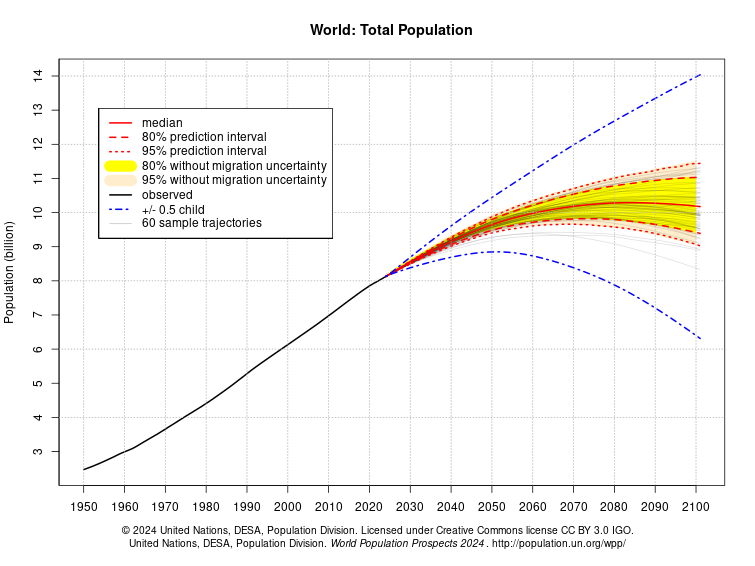
We’ve all heard the aphorism ‘Lies, damned lies and statistics.’ Statistics are an invaluable tool for understanding and responding appropriately to the world, but when the numbers say one thing and the headlines say another, it’s a cause for concern. TOP takes a dive into World Population Prospects 2022. by Jane O’Sullivan The world’s population…
-
The United Nations celebrates World Population Day by shaming population ‘alarmists’
Not content with omitting overpopulation concerns from its own rhetoric, in its World Population Day statement the UNFPA has gone on the attack, labelling all concerns about the numbers of humans ‘alarmist’. Jane O’Sullivan takes them to task. By Jane O’Sullivan The United Nations Population Fund (UNFPA) was created in 1969 to act on the…
-
Influencing politicians to act on population trends: an example from Sweden
To influence societal attitudes and population policy it is important for organizations that understand the population factor to reach out to politicians who can enact necessary changes. Below follows one such example, where the Swedish group Nätverket ‘Population Matters Sweden’ wrote letters to all members of the Swedish parliament, highlighting the need to address population…
-
Religion, Fertility and Contraceptive Use in Sub-Saharan Africa, Part 6: Progressive Religious Organisations
While contraception in Sub-Saharan Africa is still considered taboo in many religious settings and children are viewed as a “gift from God”, some religious leaders are actively promoting the importance of family planning and considering its role in population growth. In this last part of our series on religion, fertility and contraceptive use in Sub-Saharan…
-
Nine strategies to stop short of 9 Billion – ten years on
In 2012, as the human population reached 7 billion, Robert Engelman, President of the Worldwatch Institute, advanced 9 strategies to halt global population growth. He suggested that humanity had to stop short of 9 billion to accomplish environmentally sustainable prosperity. Ten years later, we have added 800 million people, corresponding to an annual increase of…
-
Religion, Fertility and Contraception in Sub-Saharan Africa, Part 5: Views and Opinions of the Local People
While statistical analyses of data can paint a picture of contraception and fertility trends in Sub-Saharan Africa, much can also be learned from speaking directly with citizens. In Part 5 of our series, we examine focus group discussions and in-depth interviews conducted by researchers with local groups across Sub-Saharan Africa. From such work, one gains…
-
Religion, Fertility and Contraception in Sub-Saharan Africa, Part 4: African research and policy in Nigeria
African researchers have done excellent work to clarify how religious affiliation influences the use of contraception. In Nigeria, with high fertility and a large and growing population, use of modern contraception is still low. The teaching of Islam in particular, contributes to this situation. Several researchers emphasize that men and religious leaders should be involved…
-
Aid needs to go where it will help most
Development aid often fails to address the root causes of poverty in poorer nations. A recently proposed program to further sexual and reproductive health in Uganda provides a welcome example of a more focused and effective approach. by Kelvin Thomson When I began full time work 45 years ago, I started paying a monthly sponsorship…
-
Subsidies for large families in Sweden impair integration of immigrants
The family supplement, which gives extra financial aid for each additional child, was implemented in Sweden in 1982 at a time of falling birth rates. It now contributes to lock-in effects for immigrant women. Abolishing this supplement and limiting the child allowance to the first two children would help reduce social exclusion and public spending,…
-
Religion, Religiosity, Fertility and Contraception in Sub-Saharan Africa: Part 3, A Study of Christian Denominations in Mozambique
How does affiliation with different Christian denominations influence fertility? In a study1 from a Christian high-fertility area in Mozambique, Victor Agadjanian and Scott Yabiku examine fertility from two perspectives: dynamically, by looking at risks of births in any given year, and cumulatively, by the number of children ever born versus length of membership in a…
-
Just population policies for an overpopulated world
After three decades of neglect, more environmentalists are waking back up to the need to limit human numbers. But like Rip Van Winkle, we find that the world changed while we were asleep. There are now billions more people, consuming more than ever, while our world has grown warmer, tamer, and more polluted. A new…
-
Pro-natalism: The role of the Vatican
Those of us who care about overpopulation need to pay far more attention to the powerful pro-natalists who are coaching or instructing people to have more children. Religion is obviously a big factor, although not the only one, and there has been much coverage of evangelical Christians. Much less has been written about the Catholic…
-
Religion, religiosity, fertility and contraception in Sub-Saharan Africa – Part 1, Introduction to studies of religion
How important is religion and belief in the supernatural for family life, contraceptive use, fertility, and family size? Presumably many of our readers have considered the role played in high-fertility societies by the belief that “children are God’s will”. In this blog series based on a literature review1, we focus on Sub-Saharan Africa (SSA) and…
-
The demographic fantasies of the IPCC
Climate change is now unequivocally an emergency according to the latest report from the IPCC. Our only hope lies in extremely rapid abandonment of fossil fuels and reversal of forest loss. But these lifeline scenarios also assume birth rates plummet in high-fertility regions. Jane O’Sullivan offers a reality check. By Jane O’Sullivan The Intergovernmental Panel…
Explore the content and topics covered by TOP, search here
Recent blog posts
Blog categories
What we are reading, listening to and watching
Gallery of infographics – Learn more about overpopulation and environment