The Overpopulation Project
TOP – Research and Outreach
Too many people consuming too much
Tag: Book review
-
Partha Dasgupta’s new book is a must read
Dasgupta is one of very few economists who pay sufficient attention to nature (the biosphere) and human numbers as key factors in a sustainable economy. Praised by both Paul Ehrlich and David Attenborough, how does he describe a sustainable economy and sustainable development? By Frank Götmark Despite being an important and original economist who emphasizes…
17 comments on Partha Dasgupta’s new book is a must read -
Thank you for the Baklava
Through a story centered around the nurturing of an orphaned owl, author Carl Safina tackles topics such as biodiversity loss, human overpopulation, and human beliefs. Richard Grossman has read the book. by Richard Grossman MD “Alfie & Me” is a many-layered joy to read! Its main story is as delicious as they come. An orphaned…
-
Slow Down: The Degrowth Manifesto
Socialism or barbarism or … social democracy with a mature acceptance of limits to growth? That’s the question posed by Kohei Saito’s provocative new best-seller. by Philip Cafaro Let me admit right up front that I’m a little jealous. As a philosophy professor who’s written a few books but no best sellers (yet!), I can’t…
-
Kohei Saito’s Degrowth Manifesto: A nonviable solution to a misidentified problem
An obscure Japanese philosophy professor produces a surprise best seller, urging the world to slow down and shrink consumption via economic “degrowth.” Population Institute Canada’s president provides a critical overview. by Madeline Weld Until his book “Slow down: The Degrowth Manifesto” recently hit the market and became a surprise bestseller in Japan, I had never…
-
“Decline and Prosper!” A review of a comprehensive book about fertility by Vegard Skirbekk
A new book by the productive demographer Vegard Skirbekk has the commendable title Decline and Prosper!. It is a valuable resource, presenting much research on fertility around the world. It also raises questions about how to deal with high fertility and population growth in many countries. By Frank Götmark The book, in paperback from Palgrave…
-
Breaking boundaries but not population taboos
The book Breaking Boundaries by Johan Rockström and Owen Gaffney explains the basics of how the Earth works and how humanity is rocking the boat, ecologically speaking. While describing monumental challenges, it views the future with optimism. Despite having a chapter dedicated to population, it fails to acknowledge how larger global populations reduce our chances…
-
Should the right to procreate eclipse future generations’ interests entirely? Book review of “Under the Sky We Make” by Kimberly Nicholas
Under the Sky We Make is an excellent exploration of what needs to be done to fight climate change. Its author succeeds in the difficult task of inspiring the desire to act. Yet she ignores the importance of reversing population growth, missing an important opportunity to educate readers on a key aspect of climate disruption…
-
The moral case for population reduction
A frequent assumption in population policy debates is that stabilizing populations will be sufficient to achieve ecological sustainability. But as Karin Kuhlemann observes, “that a population’s size is stable in no way entails sustainability. It may be sustainable, or it may be far too large.” A recent book from philosopher Trevor Hedberg convincingly argues the…
-
10:59 – time to address population?
The population crisis lies at the core of the first full-length novel by British author N. R. Baker, an eco-thriller called 10:59. Through a well-developed storyline, it details the destruction caused by our ever-growing population, following a compelling main character as he joins an organisation intent on saving the planet. Ms. Baker manages to balance…
-
New book argues for a sustainable world with 3 billion people
In his new book A Planet of 3 Billion, Christopher Tucker presents a vision of a future world inhabited by 3 billion people, compared to 7.8 billion today. Inspired by Joel Cohen’s 1995 book How Many People Can the Earth Support? Tucker sets out to answer exactly this question. The ecological destruction caused by humanity…
-
Drawdown: a review of the Review
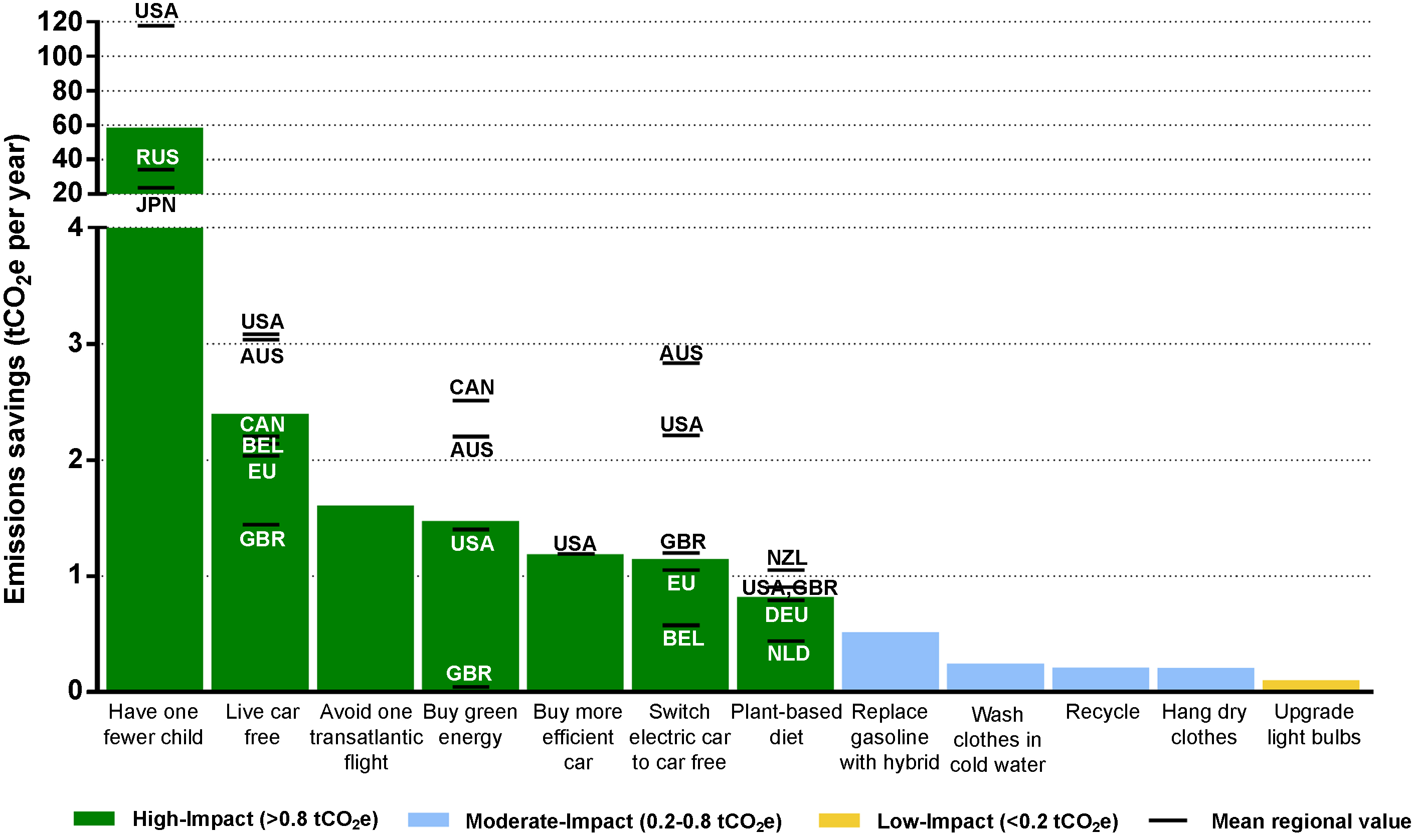
By Jane O’Sullivan Hats off to Paul Hawken, the environmentalist behind Project Drawdown. Three years ago, he published a best-selling book, ‘Drawdown: the most comprehensive plan ever proposed to reverse global warming’. The concept was brilliantly simple. It stripped away the complexity of how to respond to climate change, by cataloguing the hundred most impactful…
-
Review of “Empty Planet: The Shock of Global Population Decline” Part 1
By John McKeown Empty Planet moves confidently from an optimistic premise to unwarranted conclusions. It has been reviewed favourably by Steven Pinker, The Wall Street Journal and the New Statesman, among others. Its premise is that world population will peak far lower and sooner than the UN forecasts, and that because of a faster-than-expected decline in…
-
Toward a small family ethic: How overpopulation and climate change are affecting the morality of procreation
By Trevor Hedberg, University of South Florida The global human population is currently about 7.6 billion people, and our numbers are still increasing. Although human population growth has not been a popular topic to discuss in the last quarter-century, its contribution to various environmental problems is becoming harder and harder to ignore. Travis Rieder’s Toward a Small Family…
-
One Child: Do we have a right to more?
by Phil Cafaro Given current consumption levels and the ongoing attempt to increase them as fast as possible (through increased economic growth, the chief goal of most national governments) a strong case can be made that Earth is overpopulated. It almost certainly cannot support the current human population of seven and a half billion people…
Explore the content and topics covered by TOP, search here
Recent blog posts
Blog categories
What we are reading, listening to and watching
Gallery of infographics – Learn more about overpopulation and environment