The immigration impasse in Holland

The Dutch government has collapsed twice in succession because of disagreements about immigration policy. Now the leader of the party that won the last elections by a landslide has pulled out of the ruling coalition. Why is immigration such a big issue in The Netherlands?

By Jan van Weeren

Two years ago, the Dutch government collapsed, as the Council of Ministers discussed several measures to curtail asylum immigration. Liberal and Christian party ministers could not accept the proposal to end family reunification for war refugees. New general elections were necessary, in which the votes for an anti-immigration party – Geert Wilders’ Party for Freedom – outnumbered all the other 15 parties, of which only four had more than 20 seats in the Parliament. This posed a difficult problem for the formation of government: up until then, no other party in the House of Representatives had been willing to engage with this Party for Freedom which had remained in opposition for a quarter of a century. Now they were forced to work with Wilders.

Geert Wilders. Photograph by courtesy of Wynia’s Week

Nevertheless they drew the line at making Wilders Prime Minister. Normally, the leader of the party with the highest number of votes becomes the new Prime Minister. However, two out of four parties forming a new government did not agree to that. The Party for Freedom had to appoint a neutral manager to preside and represent the Council of Ministers. Dick Schoof became the new Prime Minister.

In victory, Geert Wilders promised the country the ‘strictest asylum policy ever’, but this objective did not work out very well. The Party for Freedom proposed an emergency law, but this was seen as illegal by the Parliament. In order to speed things up, Wilders recently presented a list of demands for a stricter asylum policy in a rather take it or leave it mode. His list contained several measures that other parties rejected, such as a complete asylum stop, closing Asylum Seeker Centres, halting family reunification, and sending Syrian refugees home. His coalition partners preferred to stick to the original agreement that was established about a year ago, as the new coalition was formed. Then Geert Wilders pulled out of the four-party coalition. This prompted the Council of Ministers, including the Prime Minister, to resign.

There are a number of speculations regarding Geert Wilders’ decision to leave the coalition. The new government was not very successful in getting things done. Many of the promises made before the elections went unfulfilled. As a consequence, the Party for Freedom was falling in the polls. However, immigration control has been the most important issue to the electorate; more important for example than more housing, mitigation/adaptation of climate change, and affordable health care. The Party for Freedom is seen as the first topic owner of immigration control, which earned it 37 seats out of 150 in the House of Representatives after the last elections. It became by far the largest party. A combined left labour-green party became second with only 20 seats.

Why is asylum immigration such a big issue?

The general term ‘immigration’ is synonymous with asylum immigration in the eyes of most people in The Netherlands. But how could it become a major issue in elections? There are a number of explanations:

1. There is a huge housing problem in Holland. For young people it is almost impossible to find affordable housing. As a couple you need two relatively high incomes and financial help from your family to buy a house. To rent a house could be an alternative, but the private sector is too expensive, and subscribing for social housing puts you on an endless waiting list.

Under these circumstances it is unbearable for Dutch people to learn that so-called ‘status holders’, i.e. asylum seekers that have been granted a residence permit, get priority on that waiting list. Admittedly, cancelling this priority would not solve the present housing problem, but granting it was perceived very negatively. And after all, with ‘status holders’ the waiting list has become longer.

2. Many young men coming from Africa and the Middle-East make use of the regulations in the Geneva Convention and Directive 2011/95/EU in an attempt to enter the country as asylum seekers, although the chance of getting a residence permit is practically zero. These men are allocated to Asylum Seeker Centres in various communities, where some of them cause trouble. This varies from shoplifting to knifing and from intimidation to sexual harassment. Such incidents are highlighted in the media. In a number of communities, inhabitants vehemently opposed the establishment of an Asylum Seeker Centre.

3. Many ‘status holders’ remain unemployed for a long time and depend for their existence on social welfare. They are viewed as hangers-on in public opinion.

The scope of immigration in The Netherlands

Let us take one step back and ask: Is immigration a problem in The Netherlands? It definitely is, at its present scale.

From April 2024 until May this year, 130,000 immigrants were added to the Dutch population. This is a net increase (people that left the country have already been subtracted). It is the number of inhabitants of a medium-sized city. It will become worse the coming year, as a net number of 140.000 immigrants is projected. In an earlier blog I discuss the problems caused by the permanent influx of immigrants in densely populated industrialised countries. But to what extent is asylum immigration responsible for these problems? We need facts and figures to settle this question.

Immigrants coming to The Netherlands stem from inside or outside Europe. In 2022 [data below from Statistics NetherIands, published by the end of 2024], most immigrants from inside Europe came here for work (47,000), followed by people with Dutch nationality (44,000). A third group came as a partner or for family reunification (ca. 32,000) and a group of about the same size arrived for several other reasons than labour, family or study. 19,000 immigrants came here to study.

In 2023 immigrants from outside Europe came mainly for family reasons (42,000), among them partners from abroad or family members of ‘status holders’. 37,000 Ukrainians arrived under a EU-Council Directive for Temporary Protection. 26,000 immigrants came here for work, 23,000 for study, 5,000 for other or unknown reasons, and 32,000 were asylum seekers.

It will be clear that a yearly net influx between 130,000 and 140,000 immigrants in a country with severe housing problems, too little space for the energy transition, imminent floods, crowded highways, a congested grid, lack of water connections, an overburdened health system, and all in all a natural environment heavily under pressure, is not sustainable. Asylum seekers and their following family members are only part of the immigration burden, albeit an important part.

But that is not the whole story, if we are to create good immigration policy. A seminal study by Jan van de Beek and others assessed how far immigrants contribute to the common good. One important objective measure is a comparison of the economic costs and benefits over the entire life course of immigrants. Benefits minus the costs is their net contribution.

Van de Beek et al. found out that the net contributions of different immigrant groups differ greatly. Immigration for work and study from most Western countries and from a number of non-Western – especially East Asian – countries shows a positive outcome according to national transfer accounts. All other forms of immigration are budget neutral or have a negative effect on the national budget. The latter applies especially to family and asylum immigrants, particularly from Africa and the Middle East.

Table 1: Average lifetime net contribution of immigrants per capita to public finances, by immigration motive, including the cost/benefit for the second generation (rounded to multiples of €10,000). Van de Beek et al., p 18.

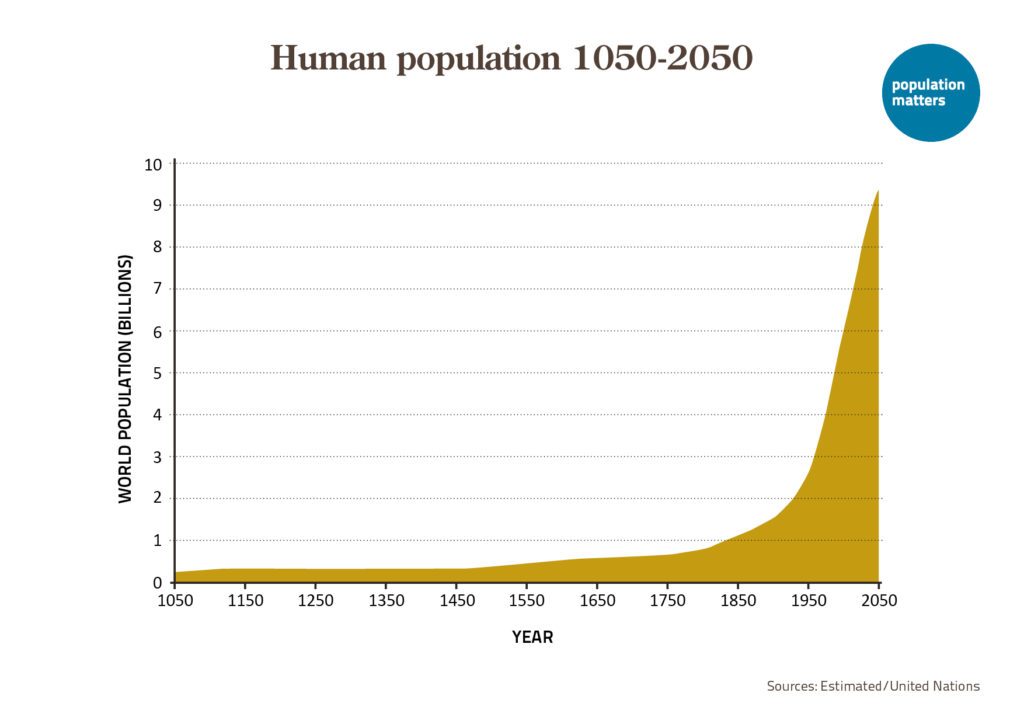
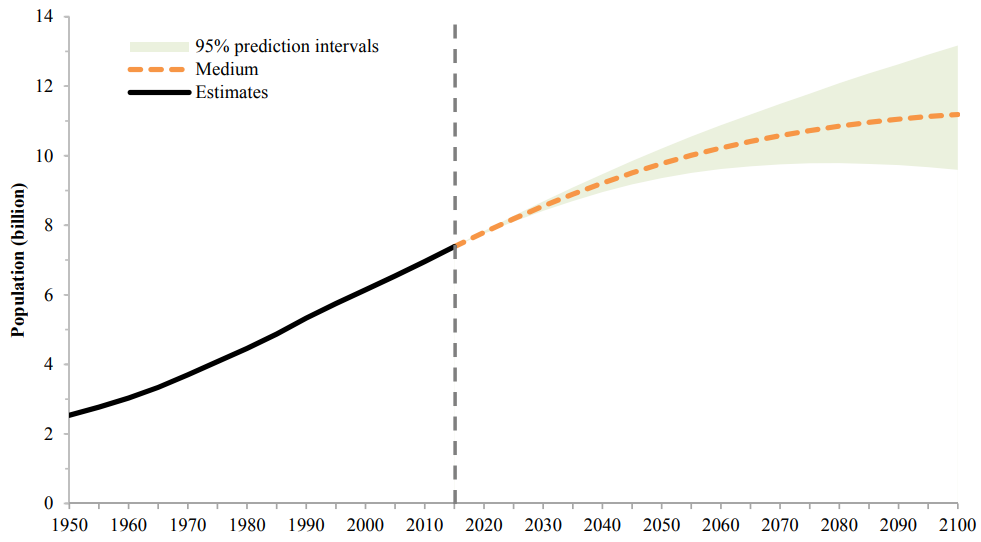
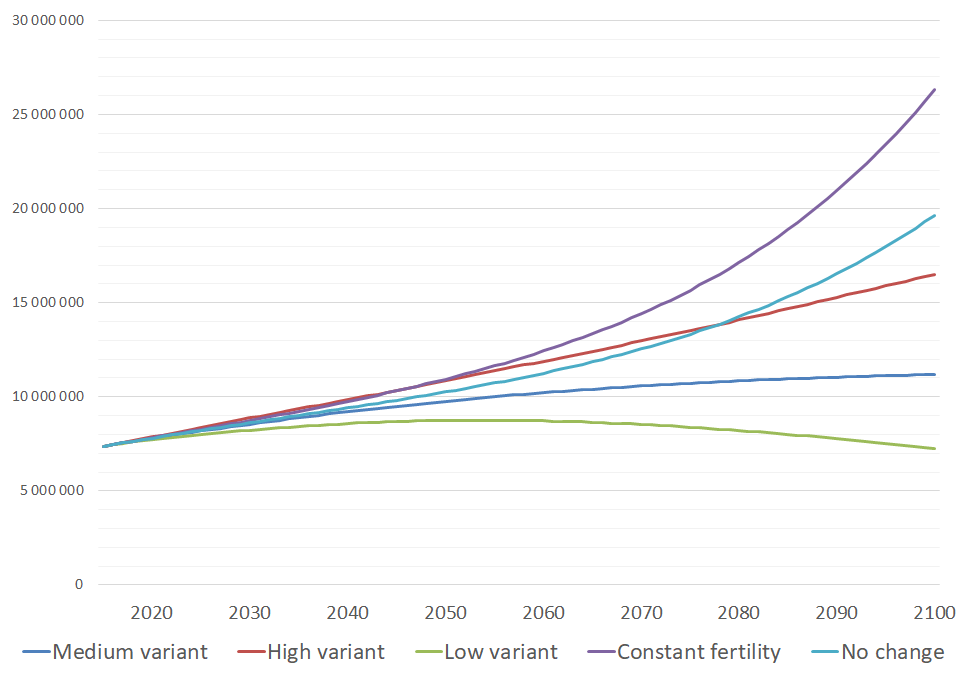
These findings are retrospective. But what if we look to the future? The Dutch population is ageing, its total fertility rate is by now below 1.7 child per woman. Some economists argue immigrants of all kinds are needed to keep our economy going. However, immigration is not a solution to ageing. If we tried to keep the percentage of those over the age of 70 constant with immigration, the Dutch population would grow extremely quickly, from around 18 million now to approximately 100 million by the end of this century. Such a ‘cure’ would surely be worse than the disease.

To what extent has Wilders a point if he focusses on asylum immigration?

All kinds of immigrants contribute to population growth and environmental pressure. They exacerbate overpopulation in The Netherlands. In this respect, all immigrants are equal, while from an economic perspective, some immigrants are more costly than others. Highly skilled expats have a positive net contribution. However, they require housing, additional health care, as well as education for their children. When they move out from their home country, they will leave an empty house there, and not in The Netherlands for Dutch families. Other labour migration is at best budget-neutral and mostly negative, surprisingly sometimes very negative.[1]

Immigrants who on average make a large negative net contribution to public finances are mainly found among those who exercise the right to asylum. They and their families tend to stay forever, whereas many study and labour migrants leave the country after a while. However, they will be replaced by others, so without restrictive measures there will be permanent quotas of labour and study migrants in The Netherlands. Their quotas may grow, but they do not cumulate systematically as with ‘status holders’ and their families.[2]

Is Wilders right to focus on asylum immigration? Yes and no. If we look at it from a perspective of overpopulation and ecological overshoot, other groups of immigrants are co-responsible for population growth. If we look at the issue primarily from an economic lens, however, then focusing primarily on reducing asylum and family reunification immigration makes more sense.

The negative impacts of inflows by more highly-educated and skilled immigrants, and labour migrants generally, can be dealt with by better policies at a national level. To date, higher payed expats can earn one third of their income tax-free; this privilege can be revoked. Employers and temp agencies can be forced to pay competitive wages in comparison to those of Dutch employees to lower skilled labour migrants (mostly working in construction, horticulture, distribution centres and slaughterhouses). Furthermore, employers should be made responsible for affordable and appropriate housing for their migrant workers. Institutes of higher education must only be allowed to offer courses in English instead of Dutch if this is arguably necessary for a degree. It is expected that such measures will reduce immigration and stop the population from excessively growing.

With asylum seekers and their following relatives, it is a different story. International treaties such as the UN Refugee Convention and EU regulations largely determine who is or is not admitted to Dutch territory under these categories. Asylum migration including family reunification was about 15% of all immigrants in 2024, the same percentage as the year before. Asylum migrants with their relatives are bound to stay. They yearly accumulate and will become a growing part of the Dutch population. Their net economic contribution to the common good is expected to be strongly negative for many years. Curtailing this influx requires an opt-out or even withdrawal from international agreements.

Given the chronic nature of asylum migration and the international hurdles that must be taken in order to control it, Wilders’ impatience is understandable. After all these years and different governments, practically nothing has been achieved yet.

Jan van Weeren is secretary of Stichting OverBevolking, the Dutch foundation against overpopulation


[1] Immigrants with a master’s degree make a positive net life course contribution of €130,000 (non-western) to €245,000 (western) against €515,000 for natives (rounded off to multiples of €5,000). Immigrants with at most primary education cost the treasury a net €360,000 (non-western) to €195,000 (western) over their whole lives compared to €235,000 for natives. A positive net contribution requires the immigrant to have at least a bachelor’s degree or equivalent education, or skills that enable them to generate an income comparable to someone working at bachelor’s level. (Van de Beek et al., p. 19)

[2] The educational level of immigrants is very decisive for their net contribution to the Dutch treasury, and the same applies to their children. If the parents make a strongly negative net contribution, the second generation usually lags behind considerably as well. (Van de Beek et al., p. 20)

Tagged:

Published

19 responses to “The immigration impasse in Holland”

  1. Esther Phillips Avatar

    What is gutting is that, I will say mostly for a balanced view, the far right who sensibly want to curtail migration then want the “natives” mainly themselves to have lots of children. Our Farage had four himself which is at least twice the allocation of children Humans should have had after WW2 and the invention of modern contraception. Rees-Mogg six, Boris Johnson nine… The whole species is just a basket case.

    1. Philip Cafaro Avatar

      No argument from me on that, Esther! Same in the US. Republicans are thankfully curbing illegal immigration. But they are hostile to abortion and promotion of family planning and contraception use, and several high-ranking politicians are pushing a pro-natalist agenda to increase births to US citizens. Crazy.

      1. gaiabaracetti Avatar

        Do you approve of the way that Republicans are “curbing illegal migration”? Because to me, to say the least, the US right now is a case study on why you don’t want to elect someone who promises very strict measures against migrants, lest they harm everyone else, and fundamental principles, in the process.

      2. Philip Cafaro Avatar

        Hey Gaia,

        I approve of some of what Republicans are doing around immigration and disapprove of some of it. I reject any targeting of foreign students for expulsion based on what they say or write, for example. But I approve of deporting people who are in the country illegally; I don’t think we can set any limits to immigration if we do not do this.

        That’s really the crux of the disagreement between Democrats and Republicans at the moment, the most important difference. Dems don’t want to deport illegal immigrants, unless they have committed “serious crimes.” Repubs want to deport a lot of the illegal and “temporary” immigrants allowed in during the Biden administration. At least they say they do, but once farmers and the hotel and restaurant lobbying groups start complaining, that may change pretty fast …

  2. Hans Avatar

    The Law of the Jungle:” The strength of the wolf is the pack”. Start with border control. Problems ? Learn to mind tour own business. Remember Newton about physics and Darwin how to fit in that jungle of life to play the game.

  3. gaiabaracetti Avatar

    “Employers and temp agencies can be forced to pay competitive wages in comparison to those of Dutch employees to lower skilled labour migrants”: what does this mean?
    “Institutes of higher education must only be allowed to offer courses in English instead of Dutch if this is arguably necessary for a degree.” Are you saying that the Dutch should give up their language in higher education?

    This is an interesting article but with some serious blind spots. One is that not everyone can be a highly-paid and “skilled” professional, and migration is used exactly to recruit people to do menial and underpaid jobs. To then blame these very people for not contributing a lot of money to the society they are serving is a little unfair.

    You are also not mentioning the humanitarian reasons for granting asylum. No doubt the system is abused, and we could debate whether mass asylum is even helpful in the first place, but we can’t weigh people based on just how much money they bring or cost.

    1. Jan van Weeren Avatar

      #1. Unskilled migrant workers from Eastern Europe are heavily underpayed and exploited by employers and temp agencies. They have to pay a lot for inadequate housing and loose their home when they are fired. The profits are made by the employers and agencies. After having lost their job and their home, migrant workers nevertheless stay, hopng for new employment. They roam the streets, drink, use drugs and become dependent on social welfare. Unskilled migrant workers have a low productivity and do not really contribute to the economy. If they would be paid better wages and if employers would be made responsible for acceptable housing, then this cheap labour becomes more expensive and less attractive to them. With proper wages they could employ Dutch people or, alternatively, invest in robotics and automation. The point is that only few people profit from these migrant workers, whereas the costs of social assistance and benefits are paid by the State.
      #2. The use of an international language – i.e. some version of English – in higher education does not have any added value in many courses. Students do not learn to use Dutch in a job setting where they have to express themselves in Dutch, which is normally the case. The use of a foreign language puts an unneccesary burden on both teachers and students.
      #3. There are many good reasons for curtailing immigration in densily populated areas. First of all overpopulation, but also social desintegration and a heavy load on the State’s expenses.

      1. gaiabaracetti Avatar

        Thank you. A quick counter-reply:
        Point 1 is a bit of an exaggeration. Migrants do integrate eventually, they aren’t all drunks living on the streets. Any large influx is destabilising, but you are simplifying here. “Unskilled migrant workers do not contribute to the economy” is simply false.
        Point 2. Ok, I had not understood what you were arguing for.
        As for the last point, yes, but you could also make a moral argument and say that it’s better to accept people who are in need of protection, as opposed to those who only come to make money. It depends on what the priorities are.

  4. clairecafaro Avatar

    Hello

    I just tried to post a reply to Hans\’ comment but I\’m not sure if it went through. Can you please check and let me know? Thanks, claire cafaro

  5. Kathleene Parker Avatar

    It’s a problem in Holland and everywhere because of recent movements toward a “come one, come all” attitude toward immigration, never mind the consequences such as (as warned about by iconic Congresswoman Barbara Jordan (D-Texas) and Coretta Scott King no thought toward its impacts on resident poor and minorities. To quote Jordan’s study for Bill Clinton, “Those who should be here should be allowed to stay, those who should not should be made to leave,” with her concern (as stated in her Jordan Commission Report “over-immigration” was gutting all of the progress of the Civil Rights movement.
    And let me add, while media ridiculed Paul Ehrlich’s POPULATION BOMB, he predicted exactly where we are now on immigration (though illegal border crossers are NOT immigrants by any standards of the law’s definition) with country after country pulling up the welcome mat. But the good news is, with the world’s falling birth rate, perhaps soon, population pressures and related reason to migrate will ease.

  6. Stable Genius Avatar

    The new (American) pope is backing open-borders. Continuing the perfect alignment of the UN, world religions, and market economists, and there’s not a damned thing you can do about it.

    1. gaiabaracetti Avatar

      That was the previous pope too. Christianity is by its very nature an internationalist, universal religion. That being said, politicians are under no obligation to do what the pope says.

  7. gaiabaracetti Avatar

    Philip, I’m not in the US, but my understanding is that the issue isn’t so much whether to deport illegal immigrants (Obama and Biden were doing that) but that people are being denied due process, which is a right for everybody, thrown into detention centres for a very long time and whether or not they were illegals, and especially that El Salvador prison. That’s beyond the pale as far as I’m concerned. Not even illegal immigrants, not even actual criminals, should be sent to such a place. Some of them are not even from El Salvador.
    I mean, they way it looks from here, they are picking people off the streets and locking them up, whether they are illegal immigrants or not. Also if you accept that some people don’t have any rights whatsoever, that will start applying to more and more people, until they come for you too. That’s a lesson learnt from history, in Europe especially.

    1. gaiabaracetti Avatar

      Also you will have to get rid of birthright citizenship eventually, but good luck with that!

    2. Philip Cafaro Avatar

      Arguments about “due process” are largely proxies for whether or not to deport people in the country illegally. The people marching in LA aren’t really saying they want their family members, friends or colleagues to have an extra hearing or two, or more time to prepare for it. They are objecting to their being deported. I understand where they’re coming from; I just disagree.

      We just ended 4 years of absurdly high immigration levels courtesy of the Biden administration. The highest levels in US history, something around 3 million net in 2023. That included millions of people allowed in on “temporary” visas that the Trump administration is now proposing to not renew. That seems to be fully within their power and fully in line with “due process,” yet Democrats are fighting it as hard as they can.

      Until proven otherwise, Dems are the party in favor of open borders, or as close to it as they can force their fellow citizens to accept.

      1. gaiabaracetti Avatar

        But it IS true that people have been deported even though they had legal status, or when they didn’t have a chance to prove that they did. It is also true that you cannot legally send someone to a place where they will be abused, such as that prison in El Salvador.
        A while ago, a court ordered the Italian government to bring back asylum seekers they had sent to Albania, basing the order on a very specific (and, to me, ridiculous) interpretation by a European court of a European law. The government complied. I don’t agree with courts giving absurd interpretations of the law and that mattering more than popular mandate, but I would agree even less with governments just ignoring the courts altogether and doing whatever they want. That’s dictatorship. If the law says you can’t do something and you are the government, you change the law, you don’t ignore it. Shortcuts and quick fixes in these things don’t work.
        It’s very dangerous that so many people accept that the end justifies the means. Like the saying goes: “first the came for the socialists…”

      2. Philip Cafaro Avatar

        I’m not saying that the ends justify the means. There are many particular cases where I disagree with the Trump admin’s execution of immigration enforcement. And I’m on record, on this very blog, that Donald Trump is not to be trusted with the reins of government.

        All that said, I want my government to enforce our immigration laws. That’s going to be costly for a lot of people in the country illegally, and for those who want to come here illegally in the future.

        Any time you read another story about an immigrant who may or may not be being accorded “due process” during an enforcement action, you need to also ask what lawful immigration enforcement would look like. For decades, US governments have been treating immigration laws as suggestions that they were free to ignore. The majority of Americans are fed up with this, and we are justified. To turn around, as many immigration advocates are doing, now and complain about lawlessness, when they have been encouraging lawlessness in immigration for decades, is hypocritical.

  8. gaiabaracetti Avatar

    Philip, point taken. I don’t disagree with expelling illegal immigrants, although it needs to be done with a minimum of respect, they are still human beings. We have a similar problem here, and I suspect there comes a time in any system when rules and systems of enforcement become too complicated and start being abused or getting in their own way, so people ask for a quick fix, which might cause bigger problems or backfire.
    Ideally, you should change the laws and hire more judges in order to speed up the process. I saw in a recent “Start Here” Al Jazeera video that Trump might not actually be deporting that many more people than the previous administration, he’s just detaining more. That might be because the detention centres are private and there’s money to be made by keeping people there – which could also explain why so many tourists end up being detained for weeks for no real reason.

  9. […] * Jan van Weeren, The immigration impasse in Holland […]

Leave a Reply

This site uses Akismet to reduce spam. Learn how your comment data is processed.

NOTE: Comments with more than one link will be held in wait and will only become visible on the site after an admin has approved it.

Explore the content and topics covered by TOP, search here

Blog categories
Gallery of infographics – Learn more about overpopulation and environment

Discover more from The Overpopulation Project

Subscribe now to keep reading and get access to the full archive.

Continue reading