The Overpopulation Project
TOP – Research and Outreach
Too many people consuming too much
Tag: overpopulation
-
Demographers fail to acknowledge the effect of population growth on climate change
A recently published article asked European demographers about their attitudes towards climate change and population growth. It shows that while most demographers are in agreement on the need to act on climate change, the effect of population growth is largely not understood. By The Overpopulation Project An article published in March this year in the…
-
Humanity needs to halt both population growth and climate change
Many of today’s environmental problems are more due to population growth than climate change, and climate change is driven in part by continued global population growth. Development funding to make family planning and modern contraceptives universally available could make a big difference in solving these interlocking problems. By Malte Andersson, Frank Götmark, and Anders Wijkman…
-
Survey shows the general public is ready for discussions about population
A new survey from the Global Challenges Foundation shows wide concern about population growth and overpopulation in many parts of the world. by Pernilla Hansson In an attempt to assess the general public’s understanding of global catastrophic risks, the Global Challenges Foundation (GCF) recently carried out a large survey among people in 10 countries: Australia,…
-
New television show dedicated to population debuts
After months in the works, a new television program devoted to exploring all aspects of the population / environment connection is now streaming free on demand. Dallas-based EarthX TV hosts The Population Factor, whose first episode features an interview with environmental legend Paul Ehrlich. Two other episodes follow: one about the challenges of limiting climate…
-
10:59 – time to address population?
The population crisis lies at the core of the first full-length novel by British author N. R. Baker, an eco-thriller called 10:59. Through a well-developed storyline, it details the destruction caused by our ever-growing population, following a compelling main character as he joins an organisation intent on saving the planet. Ms. Baker manages to balance…
-
‘A Life on Our Planet’: Attenborough’s recipe and human reluctance — Chronicle of a failure foretold
“Never let your sense of morals prevent you from doing what is right”I. Asimov In the outstanding film “A life on our planet”, Sir David Attenborough tells us which actions we need to implement to avoid a future catastrophe. His plan is feasible and affordable: we already have all the knowledge and technology required to…
-
Boiling Frogs
by N.R. Baker According to the well-known metaphor, if you were to put a live frog into boiling water, it would – very wisely – leap straight out again. However, if you put the frog into tepid water that was then brought slowly to the boil, the hapless creature would be cooked before it even…
-
Earth overshoot day and population
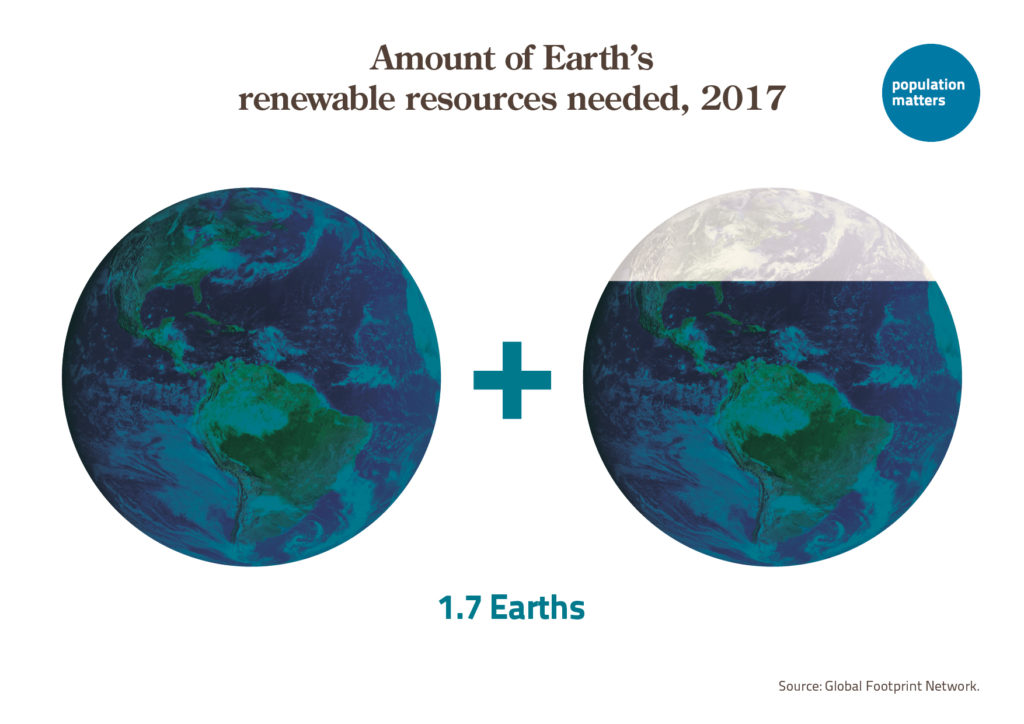
Too many people consuming too many resources and generating too much waste: that’s why humanity keeps pushing deeper into ecological overshoot. On Earth Overshoot Day, let’s not forget the P factor. by Lucia Tamburino & Philip Cafaro Every year on Earth Overshoot Day, a table like the one below makes the rounds, showing the number…
-
Climate refugees or overpopulation escapees?
In recent years, migrants fleeing overpopulation and lack of economic opportunity have been rebranded as “climate refugees” by corporate media looking to justify open borders. But expanding migration will simply fuel continued population growth, leading to greater resource consumption, higher greenhouse gas emissions and worse climate change. It’s a Ponzi scheme perpetuated by falsehoods that’s…
-
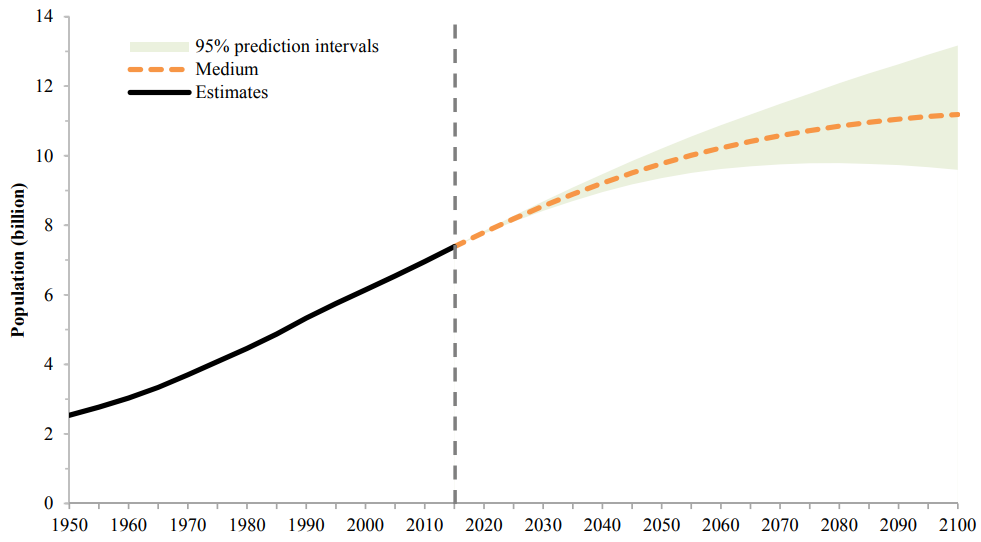
Will global population peak below 10 billion?
A major media storm has erupted about a new scientific paper published in the Lancet claiming that global population will soon peak and decline. The prospect is met with doom and gloom, rather than jubilation. But Jane O’Sullivan finds many reasons to challenge both the claim and its assumed economic threat. By escalating unfounded fears…
-
New book argues for a sustainable world with 3 billion people
In his new book A Planet of 3 Billion, Christopher Tucker presents a vision of a future world inhabited by 3 billion people, compared to 7.8 billion today. Inspired by Joel Cohen’s 1995 book How Many People Can the Earth Support? Tucker sets out to answer exactly this question. The ecological destruction caused by humanity…
-
Lessons from a global pandemic
Covid-19 continues to take a great toll on societies around the world. As we struggle to respond appropriately, our societies can emerge ecologically and socially stronger—provided we learn the important lessons this tragedy has to teach us. by Kelvin Thomson In Australia, and I suspect in many other countries as well, there are three key…
-
Overshoot day: the other side of the coin
Every year on Earth Overshoot Day, a table becomes very popular, showing the number of Earths needed to be ecologically sustainable if all the people in the world had the same ecological footprint as the average citizens of various countries. This is computed by fixing the world population at the current value and varying the…
-
New EU Biodiversity Strategy Fails to Address a Key Component of the Biodiversity Crisis – Human Numbers
The latest biodiversity strategy from the EU Commission makes some good suggestions for increasing protection for Europe’s dwindling biodiversity. While new, ambitious targets for protected areas and ecological restoration are welcome, the document fails to point out the central role population size will play in whether they are achieved. Through allowing the EU’s human population…
-
Drawdown: a review of the Review
By Jane O’Sullivan Hats off to Paul Hawken, the environmentalist behind Project Drawdown. Three years ago, he published a best-selling book, ‘Drawdown: the most comprehensive plan ever proposed to reverse global warming’. The concept was brilliantly simple. It stripped away the complexity of how to respond to climate change, by cataloguing the hundred most impactful…
-
Can Human Use Be Combined with Biodiversity Protection in the Tropics?
With the ongoing tropical biodiversity crisis, protected areas play an important role for many species. But strict protection can harm local human communities that are reliant on the lands around them for survival. In addition, resources are often lacking to prevent illegal exploitation or hunting in strictly protected areas. Community-managed reserves have been suggested as…
-
A lesson from the COVID-19 pandemic on the perils of density
In recent years, some environmentalists have argued that increasing population density is the key to creating sustainable societies. COVID-19 suggests they are mistaken. When increasing density becomes a substitute for setting limits to human numbers and demands on nature, environmental conditions deteriorate. And as usual, poor people and other species wind up paying the price.…
-
The disconcerting association between overpopulation and the COVID-19 crisis
This week, we reprint a valuable article by Professor Alon Tal, published in The Times of Israel on 25 March, on the connection between overpopulation and the coronavirus pandemic. Professor Tal explains the relationships between population density, human encroachment on natural areas, and disease transmission, and also the situation in Israel, a densely populated country.…
-
From Population to Production: Scientists’ Changing Views on How to Feed the World
Fifty years ago, in his 1970 Nobel Peace Prize acceptance speech, Norman Borlaug said: “There can be no permanent progress in the battle against hunger until the agencies that fight for increased food production and those that fight for population control unite in a common effort.” Borlaug was insightful, but also a genuinely humble man.…
-
Support the overpopulation documentary: “8 Billion Angels”
Ecologist Terry Spahr Turns to Kickstarter For His First Feature film, 8 Billion Angels, a Documentary About Overpopulation Independent filmmaker Terry Spahr is turning to the Internet to raise funds for his provocative feature film project, 8 Billion Angels, a documentary about overpopulation and its effect on the environment. With funding as a major obstacle…
Explore the content and topics covered by TOP, search here
Recent blog posts
- The Progressive Left are the Bad Guys Too
- Reproductive rights: an unfinished project and an ecological imperative
- A shrinking population might actually be a good thing
- Cutting the global population in half to achieve sustainability
- Ceuta incident: Population growth threatens both poor Africans and climate stability
Blog categories
What we are reading, listening to and watching
Gallery of infographics – Learn more about overpopulation and environment