Farewell to Jane Goodall — Population Activist

Jane Goodall was a champion for chimpanzees, conservation, and population activism. The latter aspect of her work has been conspicuously neglected in recent tributes to this scientific giant.

by Leon Kolankiewicz

Pioneering English primatologist Dr. Jane Goodall (1934-2025) passed away last week at the age of 91. In the days since, numerous, well-deserved and glowing tributes have paid homage to her inspirational achievements and legacy.

Starting in 1960, this animal lover, with no college degree but imbued with a sense of adventure, curiosity and courage — the essential ingredients of authentic scientific endeavor — began conducting field research on wild chimpanzees in Gombe Stream National Park in the East African country of Tanzania. For much of the time in those early years, she was a twenty-something woman alone in the wild.

Mentored by another scientific pioneer, paleoanthropologist Louis Leakey (1903-1972), Goodall’s findings challenged conventional wisdom about cognitive abilities long thought to be uniquely human. She discovered that wild chimps make and use tools, hunt cooperatively, and possess an array of complex social structures and emotions once regarded as ours alone. She shared her findings with the public in her best-selling 1971 book In the Shadow of Man and many other writings. The National Geographic Society supported and featured her work.

This iconic photo by Hugo Van Lawick of Jane Goodall and the infant chimpanzee Flint first appeared in National Geographic in the 1960s. Although it is no longer deemed appropriate to have physical contact with chimps in the wild, this image has long symbolized “biophilia” — our innate yearning to interact with other life forms.

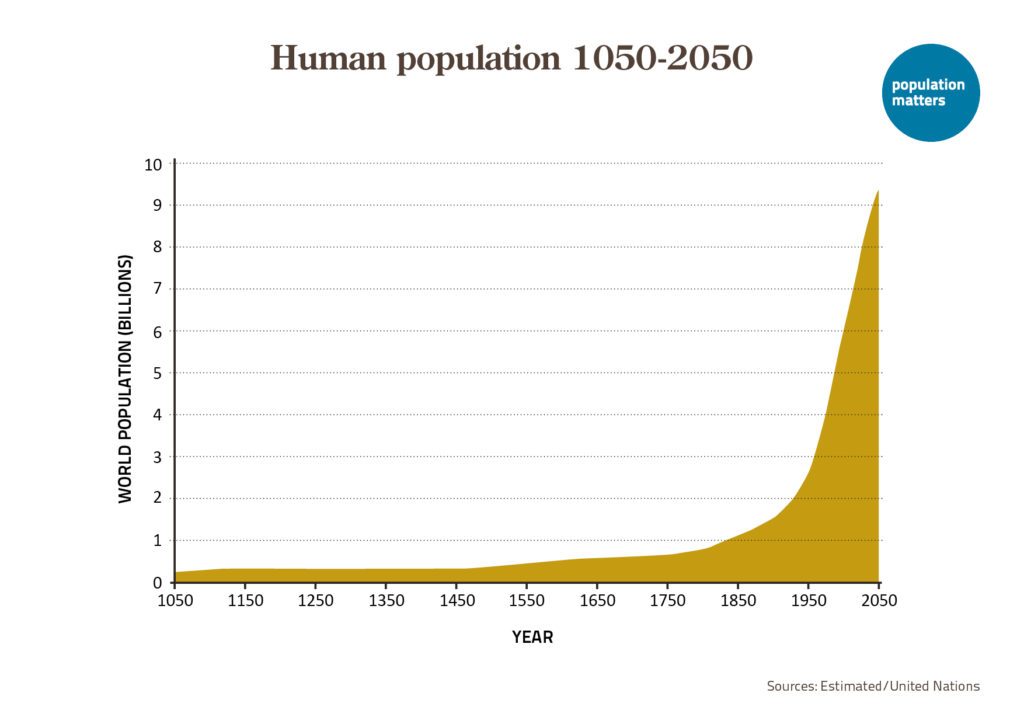
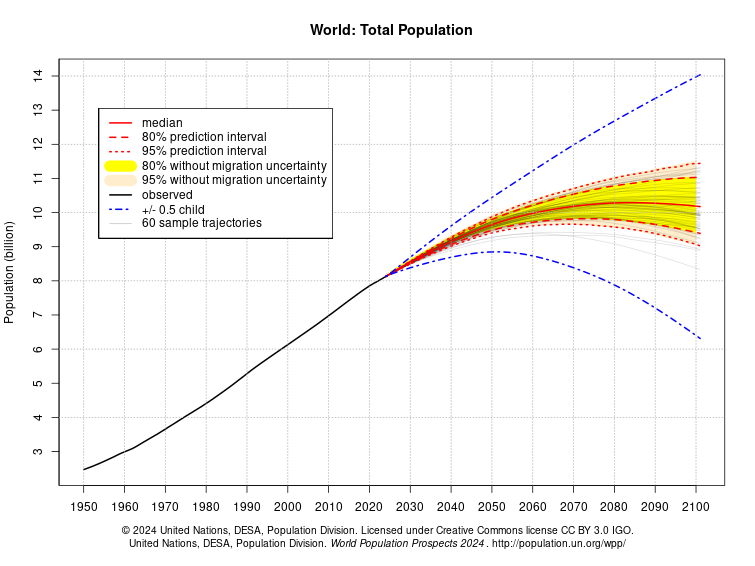
In her later years, Goodall founded the Jane Goodall Institute and became a respected advocate for wildlife conservation. In this role, she spoke out forcefully and often on the environmental perils posed by human overpopulation.

In a 2007 public forum in San Francisco, in her role as a U.N. Messenger of Peace, Goodall was asked if overpopulation was a taboo subject. In her calm, self-assured manner, Goodall replied:

It has been politically incorrect for a very long time. If you go to a global conference on those [environmental] issues and I’m there, you will hear me talking about the mushrooming human population growth that’s led to deforestation that leads not just to harm for the animals and the environment but the people living there too.

No question.

In 2019, speaking to a conference sponsored by Population Matters, an activist group of which she was a patron, Goodall said:

[Population] is one of the most important issues that we face today. It first hit me — really hit me — when I flew over Gombe National Park, where I’ve been doing chimpanzee research since 1960. And when I began, the little, tiny Gombe National Park was part of the equatorial forest belt that stretched from East Africa across to the West African Coast.

When I flew over Gombe in 1990, it was a tiny island of forest surrounded by completely bare hills and it was obvious there were more people living there than the land can support. It’s absurd really to think that there can be unlimited economic development on a planet with finite natural resources.

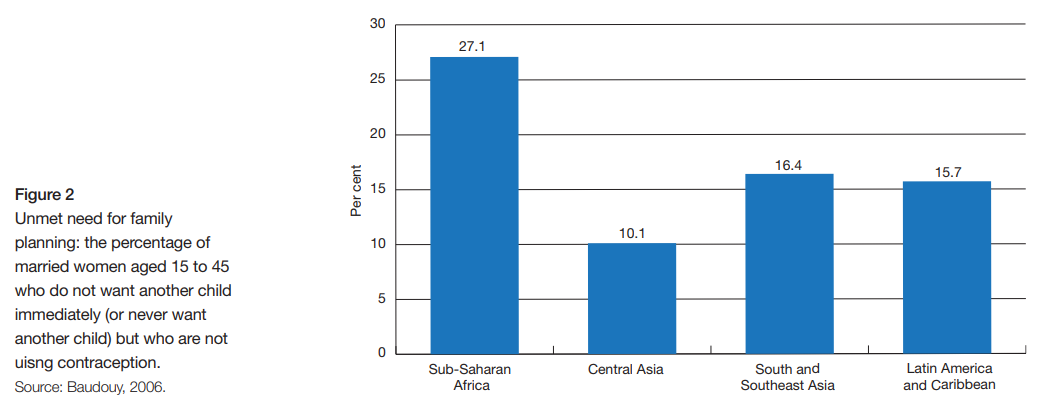
As one who spent much of her life in Africa and traveled widely in her role as a conservation ambassador, Goodall raised the population issue in many different places and among many different peoples. She learned firsthand that ordinary folks were receptive to the idea of smaller family size and well aware of overpopulation pressures on nature. This contradicts the myth propagated by many overpopulation deniers that overpopulation worries only the affluent “Global North” and not those in developing nations most afflicted by the consequences of rapid population growth.

Goodall belonged to a generation of environmental pioneers who unflinchingly told it like it is on overpopulation — leaders like Gaylord Nelson, David Brower, Donella Meadows, Dave Foreman and David Attenborough. These influencers both acknowledged the population issue and advocated for addressing it. Many of their voices have fallen silent with the passing of the years.

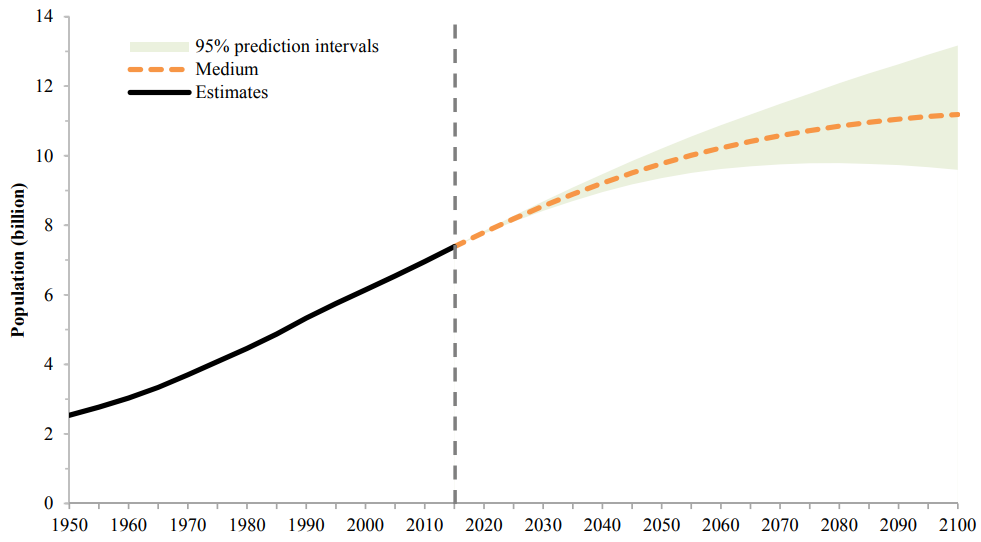
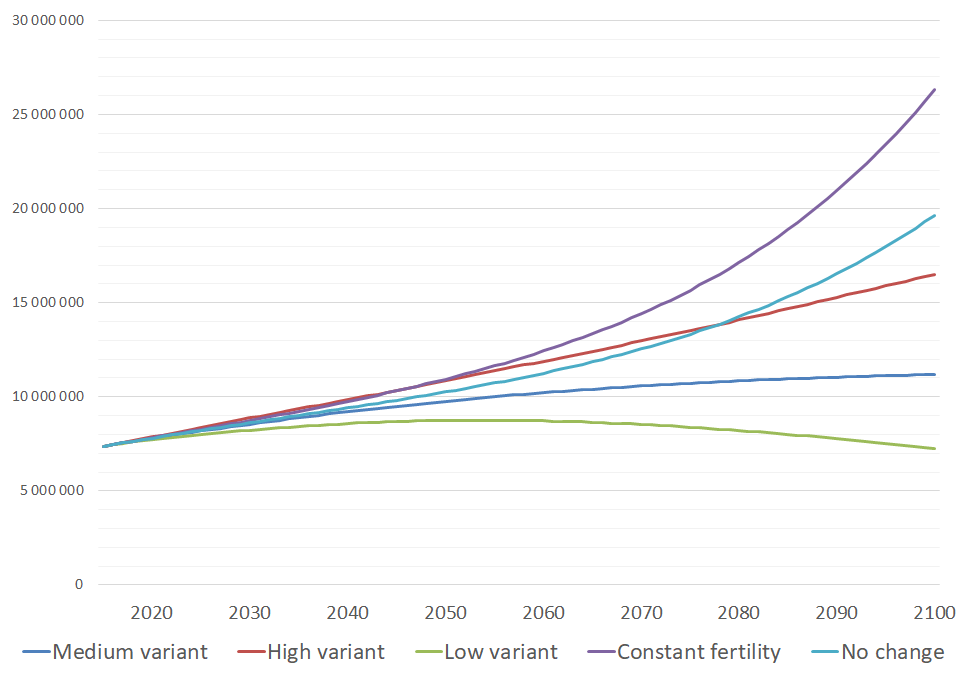
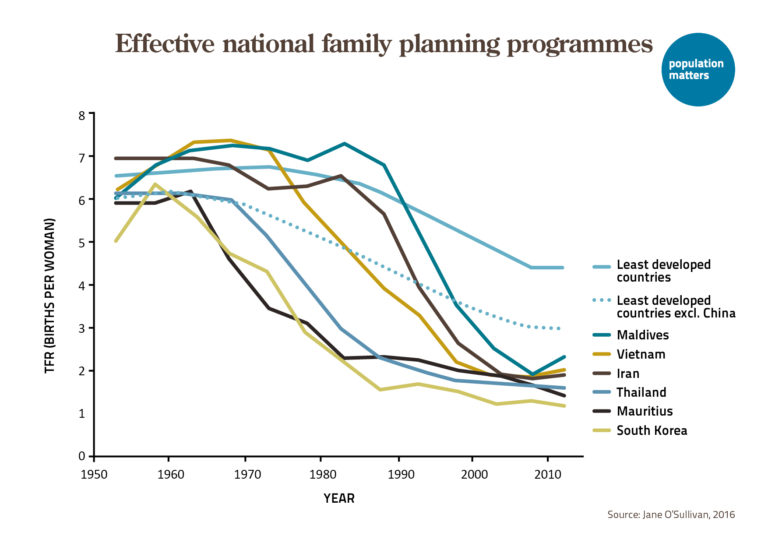
We live in an era when support for international family planning has sagged. Incredibly, many prominent men with enormous megaphones are calling for even more population growth. Here’s hoping Jane Goodall’s common sense can inspire a new generation of population activists on behalf of a besieged biosphere.

This piece was originally published by NumbersUSA on 6 October 2025.

Published

11 responses to “Farewell to Jane Goodall — Population Activist”

  1. Stable Genius Avatar

    Also conspicuously suppressed, neglected – indeed abhorred to this day – are her basic observations that chimp bands instinctively (adaptively) practise lethal territorial warfare. Preferred today is the UN fairytale, where the eight billion humanoids are a triumph of “diversity”, talk of over-population and over-migration is shockingly “racist”, and UN climate-adaptation and mitigation for “net zero” will magically fix the inexorable environmental and societal decay. No chimp would fall for that yarn.

    1. Leon Kolankiewicz Avatar

      Yes, Goodall and other chimpanzee researchers discovered that troops of male chimps would patrol the boundaries of their territories and could treat outsiders or intruders “with extreme prejudice.”

      This territoriality and violence in defense of borders and resources probably did not accord with a naive or Disneyesque “Bambi” view of serene, wild nature or even human nature.

      The United Nations and even the U.N. Population Fund have radically changed their tune on population growth in recent years, and certainly not for the better. And of course they are not alone.

  2. David Polewka Avatar

    A Brief Chronology of the Sierra Club’s Retreat from the Immigration-Population Connection (Updated)
    By CIS on August 14, 2018
    The Sierra Club, one of America’s largest non-profit environmental organizations, once treated the effects of immigration-driven population growth as among the most serious concerns facing America’s environment. However, over the past few decades, the organization has continually retreated from that position toward neutrality — and more recently has openly lobbied for higher levels of immigration into the U.S. In fact, the club is now starting to launch partisan attacks on the current administration over everything from family separation and detentions along the border to amnesty for illegal aliens to the border wall. How did we get here? How did one of America’s oldest and most highly respected environmental organizations stray so far from its original outlook? It involves activists, changes in leadership, and big money. Below is a brief chronology of how the Sierra Club retreated from its views on population stabilization and immigration:
    1980. A Sierra Club representative testified before the federal Select Commission on Immigration and Refugee Policy, saying: “It is obvious that the number of immigrants the United States accepts affects our population size and growth rate. It is perhaps less well known the extent to which immigration policy, even more than the number of children per family, is the determinant of the future numbers of Americans.”
    1989. The club’s board adopted this policy position: “Immigration to the United States should be no greater than that which will permit achievement of population stabilization in the United States.” The board sought to avoid offending ethnic sensibilities with the further declaration: “The Sierra Club will lend its voice to the congressional debate on legal immigration issues when appropriate, and then only on the issue of the number of immigrants — not where they come from or their category, since it is the fact of increasing numbers that affects population growth and ultimately, the quality of the environment.”
    1992. A few weeks after Carl Pope became the club’s executive director, he presented his views in a letter to the editor of the New York Times. Pope wrote that the club believed that all nations “should act to curb their own population growth.” He added: “The United States and other developed nations have a special responsibility because of our disproportionate per capita consumption of world resources. Our goal in the United States should be achieving domestic population stabilization.”
    1996. Under pressure from immigration activists, the club’s board adopted a position of neutrality, declaring, “The board’s actions reflect a desire to put the immigration debate to rest within the club and to focus on other pressing components of our population program. The board instructs all club chapters, groups, committees, and other entities to take no position on immigration policy.”
    1998. In response to the neutrality declaration, a group called Sierrans for U.S. Population Stabilization (SUSPS) brought the issue to club membership in the club annual election. The National Journal reported that prominent Sierran Anne Ehrlich, a long-time advocate of reduced immigration, had taken the position that the club could not act on the immigration-population connection as long as its minority-group members saw racism as the underlying motivation of those who wanted to limit immigration. The SUSPS proposal to reverse the neutrality declaration and restore the club’s previous advocacy for immigration limits was defeated about 60-40 after a heated campaign, which involved club president Adam Werbach calling environmentalists who supported SUSPS and urging them to rescind their support. Ultimately, the club’s leaders were horrified that SUSPS even managed to get the vote as close as it did. Pope celebrated the results in an essay for the Christian Science Monitor in which he also acknowledged the importance of the global population issue. The club, he said, had been “wrestling with a critical question not just for the Sierra Club, but for the nation and the world. Where do we draw the front line in the fight to reduce overpopulation — one of the most serious threats to our environment? … The issue won’t go away. Americans have some big decisions to make.”
    2004. In another vote, club membership defeated an effort to elect immigration-limitation advocates to its board. SUSPS knew that if it could secure 3 of the 5 seats in the vote, it would be able to form a majority and oust Carl Pope. This vote followed a controversial and heated campaign in which Pope and other club leaders contended that those who wanted to limit immigration were motivated by racist bigotry. “By pulling up the gangplank on immigration, they are tapping into a strand of misanthropy that says human beings are a problem,” Pope said.
    That same year, the Los Angeles Times reported that David Gelbaum, an American businessman focused on green technology who has donated at least $200 million to the Sierra Club, had warned Carl Pope that his donations were contingent upon how the club handled the issue of immigration. “I did tell Carl Pope in 1994 or 1995 that if they ever came out anti-immigration, they would never get a dollar from me,” the Times reported he said.
    2010. Michael Brune succeeded Carl Pope as executive director. Brune had previously led the Rainforest Action Network, where he pressured corporations to stop selling wood from endangered forests. Brune largely avoided the topic of immigration in his first several years as director, and the club continued to receive donations from Gelbaum.
    2013. The Sierra Club’s board adopted a resolution calling for legal status for all illegal aliens living in the country, but said the resolution was “not modifying the underlying policy on immigration” of the organization. In a statement, the Sierra Club defended its decision by saying that many immigrants “live in areas with disproportionate levels of toxic air, water, and soil production” and thus deserved to move to cleaner countries.
    2017. In a statement, the club praised DACA, President Obama’s executive action that granted deferrals from deportation to some illegal aliens who were brought to the country as children, and condemned President Trump for deciding to terminate it. Executive Director Michael Brune said it was “mean-spirited” of Trump to terminate DACA and that DACA recipients “are making our country better.” These remarks were noteworthy in that they were the first time that the club publicized its position on a specific immigration-related policy. Previously, the club had offered general statements supporting “immigrants’ rights”, but not concrete endorsements.
    2018. After the precedent set by its comments on DACA, in 2018 the club began putting out frequent statements condemning a range of immigration-related policies under the Trump administration. For example, in April, Brune said the Sierra Club opposed the construction of a border wall and of the administration’s push to speed up deportation proceedings, calling it “xenophobic”. In June, in response to the “zero tolerance” policy and family separations at the border, the club attacked the administration for its decision to “jail and cage kids”, and Brune called for a stop to “Trump’s racist agenda”.

    https://cis.org/Immigration-Studies/Brief-Chronology-Sierra-Clubs-Retreat-ImmigrationPopulation-Connection-Updated

    1. Leon Kolankiewicz Avatar

      Thank you for this brief history of the Sierra Club and population by my friend and colleague Jerry Kammer at the Center for Immigration Studies (CIS). It’s a long, pathetic story.

      Back in the late nineties, I was deeply involved in that losing struggle for the heart and soul of the Sierra Club. It was a bitter, internecine war between more traditional conservationists/environmentalists (who regarded overpopulation as a serious threat) and what might be called “proto-woke” or “social justice” elements, and the latter ultimately won decisively.

      IMO, nowadays the Sierra Club is more of a so-called “social justice” organization than an environmental one.

      In 2001, I co-authored for CIS a much longer account of this fight and its implications for the American environmental movement more broadly and the environment itself. Entitled “Forsaking Fundamentals: The Environmental Establishment Abandons U.S. Population Stabilization,” it’s available here: https://cis.org/Report/Forsaking-Fundamentals.

    2. Philip Cafaro Avatar

      Thanks for this account David. I was there during the big fights of the late 90s and early 2000s, as a Sierra Club activist and group leader in Colorado. I can vouch for the accuracy of your account. As you note, it has been a 40 year evolution, with some big fights along the way. But the direction has all been in first complacency and then active misrepresentation of population issues. These definitely include immigration’s huge contribution to US population growth. But also a general downplaying of the role overpopulation plays in all our environmental problems.

  3. gaiabaracetti Avatar

    Gaylord Nelson had three children. David Brower had four.

    1. Leon Kolankiewicz Avatar

      Gaia, you seem to be calling out inconsistency or even hypocrisy on the part of Earth Day Founder Gaylord Nelson and Sierra Club executive director and Friends of the Earth founder David Brower for each having more than 2.1 children, while they were both outspoken about overpopulation.

      Keep in mind that each was born more than a century ago: Nelson in 1916 and Brower in 1912. They would have had their above-replacement-level number of children well before concern about overpopulation became widespread. In the United States, that really only happened with the publication of Paul and Anne Ehrlich’s best-selling book The Population Bomb in 1968.

      IMHO, if someone born during the Baby Boom (1945-1964 in the U.S.) became a population activist (and there were many) and then still proceeded to have more than their “allotment” of two children, that I would call hypocrisy, failing to act on their own words and supposed beliefs, or in the vernacular, “not walking the talk.”

      1. gaiabaracetti Avatar

        I’m not convinced. So they only worried about overpopulation because other people pointed it out? And did they ever express “regret” – non in the sense that they did not love each child, but that they should have known better? There’s way too many people talking about overpopulation and then having more than 2 children.

  4. Philip Cafaro Avatar

    Timing makes a difference. In the 1930s and 40s, when Nelson and Brower would have been having children, the “population explosion” was just starting. It wasn’t on people’s radar worldwide. And in the U.S., with Depression and the Word War II, fertility was down, many people were postponing having kids, which would have been another reason population growth. By the time a small vanguard started talking about rapid population growth in the 1950s, the Brower and Nelson families would have had their children.

    1. gaiabaracetti Avatar

      Fair enough. But then you should say: “don’t do what I did”.

  5. […] diverse year for blogs, including everything from book reviews (Richard Grossman on Carl Safina’s Alfie and Me) to photo essays (George Wuerthner’s beautiful The Need for More Wilderness Preservation) to Leon […]

Leave a Reply

This site uses Akismet to reduce spam. Learn how your comment data is processed.

NOTE: Comments with more than one link will be held in wait and will only become visible on the site after an admin has approved it.

Explore the content and topics covered by TOP, search here

Blog categories
Gallery of infographics – Learn more about overpopulation and environment

Discover more from The Overpopulation Project

Subscribe now to keep reading and get access to the full archive.

Continue reading