The Overpopulation Project
TOP – Research and Outreach
Too many people consuming too much
The views and opinions expressed in guest blog posts are those of the authors and do not necessarily reflect the position of The Overpopulation Project.
-
Boiling Frogs
by N.R. Baker According to the well-known metaphor, if you were to put a live frog into boiling water, it would – very wisely – leap straight out again. However, if you put the frog into tepid water that was then brought slowly to the boil, the hapless creature would be cooked before it even…
3 comments on Boiling Frogs -
Why global support for contraception is critical in the pandemic age
Saturday, September 26th is World Contraception Day. This key date is a reminder that access to affordable contraception and reproductive health services is a fundamental human right across the globe. Furthermore, family planning and reproductive autonomy (particularly in the Global South), together with lowering our personal environmental impacts (particularly in the Global North) is fundamental…
-
Population growth and climate change: environmental threat multipliers – a new publication from TOP
The Overpopulation Project is pleased to announce its most recent publication, “Population growth and climate change: Addressing the overlooked threat multiplier” published in Science of the Total Environment. Through a review of national and global studies, the paper describes the emission reduction and vulnerability reduction benefits of slowing population growth, and outlines policies that can…
-
Achieving the Sustainable Development Goals depends on reducing birth rates faster
With ten years left to go, the international community must break its silence and tackle population growth directly if the UN’s SDGs are ever to be realised. Creating a better world, with security and opportunity for all, cannot occur in a context of continued rapid population growth. by Robin Maynard To celebrate World Population Day the environmental…
-
Earth overshoot day and population
Too many people consuming too many resources and generating too much waste: that’s why humanity keeps pushing deeper into ecological overshoot. On Earth Overshoot Day, let’s not forget the P factor. by Lucia Tamburino & Philip Cafaro Every year on Earth Overshoot Day, a table like the one below makes the rounds, showing the number…
-
Climate refugees or overpopulation escapees?
In recent years, migrants fleeing overpopulation and lack of economic opportunity have been rebranded as “climate refugees” by corporate media looking to justify open borders. But expanding migration will simply fuel continued population growth, leading to greater resource consumption, higher greenhouse gas emissions and worse climate change. It’s a Ponzi scheme perpetuated by falsehoods that’s…
-
Will global population peak below 10 billion?
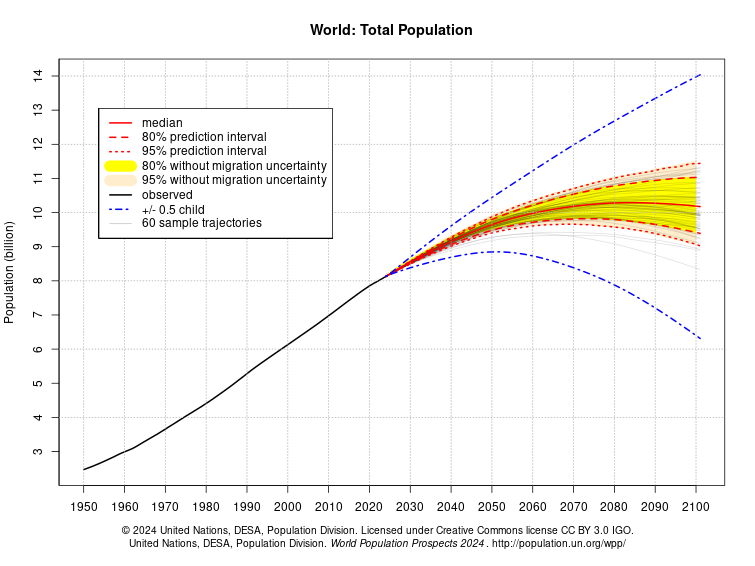
A major media storm has erupted about a new scientific paper published in the Lancet claiming that global population will soon peak and decline. The prospect is met with doom and gloom, rather than jubilation. But Jane O’Sullivan finds many reasons to challenge both the claim and its assumed economic threat. By escalating unfounded fears…
-
New book argues for a sustainable world with 3 billion people
In his new book A Planet of 3 Billion, Christopher Tucker presents a vision of a future world inhabited by 3 billion people, compared to 7.8 billion today. Inspired by Joel Cohen’s 1995 book How Many People Can the Earth Support? Tucker sets out to answer exactly this question. The ecological destruction caused by humanity…
Explore the content and topics covered by TOP, search here
Recent blog posts
Blog categories
What we are reading, listening to and watching
Gallery of infographics – Learn more about overpopulation and environment