The Overpopulation Project
TOP – Research and Outreach
Too many people consuming too much
The views and opinions expressed in guest blog posts are those of the authors and do not necessarily reflect the position of The Overpopulation Project.
-
Lower birth rates and an aging population can help heal Asian economies
Slowing population growth can have broad benefits for society, including enhancing the many ways that older citizens enrich our communities. By Jane O’Sullivan and Susann Roth As the Covid-19 pandemic continues to disrupt people’s livelihoods through a second year, a lot of people are choosing to defer having children. Media stories lament a ‘baby bust‘…
7 comments on Lower birth rates and an aging population can help heal Asian economies -
The Population Factor returns for a second season
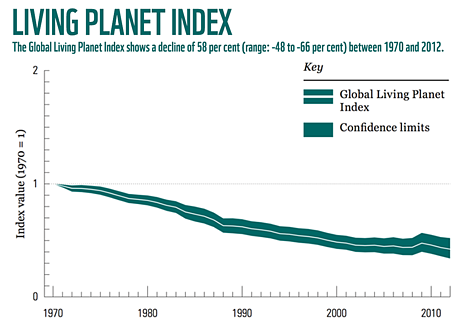
The Population Factor, the show hosted by The Overpopulation Project’s own Phil Cafaro, returns with a second season, starting off with a discussion about the Nature Needs Half proposal. by The Overpopulation Project Wildlife populations are dwindling rapidly across much of the world and the number one cause is habitat loss, driven by excessive human…
-
Reconciling human demands with planetary boundaries: a new approach to quantifying sustainability at the national and global levels
Human population grows, Earth doesn’t. A certain environmental impact is needed to satisfy basic human needs. When multiplied by a huge population, even a small average individual impact can become high, overshooting planetary boundaries. Achieving both environmental sustainability and high human development is hence a challenge. Can we win this challenge without considering the population…
-
The most ethical gift: Towards a sustainable demographic future
Demographic changes are not immediate, but rather take a long time to happen. In an article originally posted in The Ecological Citizen, Joe Bish argues that the population discussion needs to be reframed as an imperative to achieving a long-term sustainable civilisation, rather than an overriding priority for near term goals. By Joe Bish The…
-
The demographic fantasies of the IPCC
Climate change is now unequivocally an emergency according to the latest report from the IPCC. Our only hope lies in extremely rapid abandonment of fossil fuels and reversal of forest loss. But these lifeline scenarios also assume birth rates plummet in high-fertility regions. Jane O’Sullivan offers a reality check. By Jane O’Sullivan The Intergovernmental Panel…
-
Why we must become fewer people and consume less – and suggestions to improve the situation
The mainstream media rarely report about the role of population growth in environmental and climate disruptions, but the Op-Ed below was actually published in the high-circulating Swedish Social Democratic newspaper Aftonbladet a week ago. The original Swedish text is available here. The article gives a broad overview, ending with an unusual suggestion. There were 250…
-
Students view human population growth as a threat to biodiversity
In their curriculum, university students in biology and environmental sciences rarely learn how human population growth affects the environment, or discuss its role relative to other factors. Human activities are often dealt with in courses, but not population increase. One exception, described below, comes from a Swedish ecology class that learned about and discussed how…
-
Liberate the Pill
Contraceptive pills are an important tool in allowing women to avoid childbirth, yet they can be expensive and difficult to obtain. While steps are being taken to make them easier to secure, further efforts are needed to ensure proper access and safe use. By Richard Grossman Do you think that a medication that kills more…
-
Top scientists call for new UN sustainable development goal on population
A group of distinguished scientists have called for rapid action to reverse unsustainable population growth as threats to global ecological boundaries become more apparent. The evidence was set out at an online conference organised by Scientists Warning Europe to mark this year’s World Population Day. by Brian McGavin With the human ecological footprint already 170…
-
The moral case for population reduction
A frequent assumption in population policy debates is that stabilizing populations will be sufficient to achieve ecological sustainability. But as Karin Kuhlemann observes, “that a population’s size is stable in no way entails sustainability. It may be sustainable, or it may be far too large.” A recent book from philosopher Trevor Hedberg convincingly argues the…
Explore the content and topics covered by TOP, search here
Recent blog posts
Blog categories
What we are reading, listening to and watching
Gallery of infographics – Learn more about overpopulation and environment