The Overpopulation Project
TOP – Research and Outreach
Too many people consuming too much
Category: Population neglect
-
Civilization extinguishing biodiversity, where are the viable alternatives?
A new United Nations report on biodiversity was released this week with much media coverage. Scientists and mainstream journalists seem unwilling to address the fundamental drivers of biodiversity decline, but public response suggests transformative change is gaining traction. By Jenna Dodson This week, many media outlets are covering the pre-release of a new United Nations…
9 comments on Civilization extinguishing biodiversity, where are the viable alternatives? -
When the heroes win, everybody loses
Human overpopulation is real; it’s serious and needs to be humanely handled by conscientious and charitable individuals. Thanos from the Avengers movies is neither one of those things. He recognized the problem but acted viciously on his “solution,” phasing out of existence 50% of all intelligent life in the Universe. What Thanos ended up doing…
-
The implicit population hypothesis hidden within EU Green party platforms
By Phil Cafaro In the run up to elections to the European Parliament in May, 2019, the coalition of European Green parties has put forth a statement of principles and political goals: “Priorities for 2019: What European Greens Fight For.” Organized around twelve key goals, all in line with “core Green values that we pursue…
-
Housing growth threatens biodiversity – are we ignoring fundamental causes?
By Patrícia Dérer The primary cause of the global biodiversity crisis is human-induced alteration and loss of natural habitats1. One of the most important causes of habitat destruction is housing growth, manifested both in rural and urban sprawl. The impacts of housing growth derive from both building human dwellings and their associated infrastructure such as…
-
New Australian population plan will be meaningless
By Stephen Williams Without a fundamental change to economic thinking, Australia will continue down the dystopian road, argues Stephen Williams. [The Prime Minister of Australia], Scott Morrison, met with state and territory leaders in Adelaide recently for the COAG chinwag. Topping the list of agenda items was population. I will try and summarise the population problem as succinctly…
-
Public believes population growth negative, risky, and requiring international attention, while politicians look the other way
Population growth is a potential political and social issue. And just like any issue, it requires recognition from both the public and politicians to be added to the agenda. Although population growth may not be a topic that compels you to call your representative, surveys from the Global Challenges Foundation (GCF) show that perhaps it…
-
“Karin Kuhlemann on Overpopulation”: Associated Researcher of TOP Team Featured Guest on Podcast
Karin Kuhlemann and host Thomas Hornigold tackle the complex discussion of overpopulation in a recent episode of Physical Attraction. In a refreshingly comprehensive dialogue, Thomas Hornigold and Karin Kuhlemann approach the conversation from a practical perspective, focusing on the best way to frame the overpopulation discussion, with an emphasis on potential solutions. Using helpful analogies,…
-
WWF Living Planet Report 2018 – “aiming higher”, but not on target
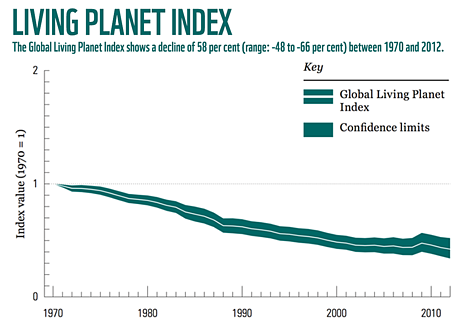
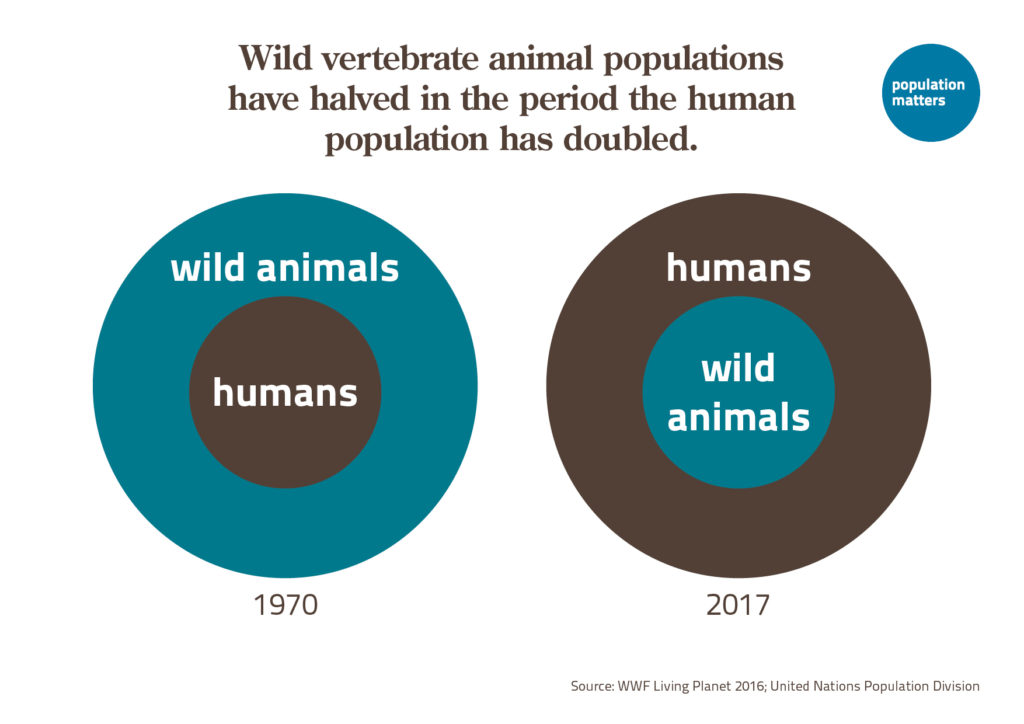
By Jane O’Sullivan Why would an organisation dedicated to protecting natural areas and to saving wild animals turn its back on arguably the biggest threat? WWF used to highlight human population growth, but not anymore. Populations of wild animals have declined, on average, by 60% since 1970. This alarming statistic was announced in WWF’s 2018 Living…
-
Announcing the new Human Overpopulation Atlas
The Overpopulation Project announces the Human Overpopulation Atlas, written by João L.R. Abegão. The Atlas is the extended masters thesis of the author in Ecology and Environment at the Department of Biology of the University of Porto in Portugal. This broad review work synthetizes knowledge about the past, present and future of human overpopulation. In…
-
Can the book “Factfulness” be improved?
Our blog about Factfulness led to comments, discussion and finally a response from one of its authors (note: the book is written in Hans Rosling’s voice and is the joint work of Hans Rosling, Ola Rosling, and Anna Rosling Rönnblad; Hans Rosling died in February, 2017). Ola Rosling states that he welcomes our criticism and…
-
”Factfulness”: a more accurate title for this new book would have been ”Selecting Facts to Make You Happy”
by Frank Götmark This year Hans Rosling, Ola Rosling, and Anna Rosling Rönnblad (below the “Rosling team”) published “Factfulness” (Note: H.R. died in February 2017.) As the book to a large extent is about global population and as Bill Gates is giving free copies of it to college graduates in the US, we need to…
-
Population growth is a threat to the world’s climate
Interview in Metro with Frank Götmark, 21.08.2018, translated from Swedish. See the original article here (pages 14-15)! The climate threat is now on everyone’s lips. However, it is rarely mentioned together with population growth, despite the fact that they interrelated. That is why actions to dampen population increase are missing, though they would lead to powerful…
-
Evidence for the changing discourse on population growth in an environmental magazine
By Patrícia Dérer Many of us still remember how researchers, environmentalists and the media were concerned about population growth between the 1950s and the 1980s. Many of us could also notice, that this concern and attention declined during more recent decades, despite continued population growth. Nowadays there is almost a complete silence about overpopulation, both…
-
UN’s Agenda 2030: add the goal “Slow down population growth”
For the original Opinion article published in one of Sweden’s largest morning newspaper (Svenska Dagbladet), and for 47 mainly positive comments (in Swedish) click here! In the discussion about the environment and our future, overpopulation should also be highlighted. The issue is often avoided in the debate – even though it is central. We urge the…
-
Green sex for climate’s sake
By Alisha Graves There’s no single solution for climate change, no magic bullet that can stabilize and eventually reduce the concentration of greenhouse gases in the atmosphere. But separating sex from childbearing represents an underappreciated opportunity to forestall climate disaster. To be sure, addressing the climate challenge will require a wide range of approaches. Conservation…
-
Are scientists using proper words to describe the negative influence of humans on the Earth’s ecosystems?
By Frank Götmark In “Responsible Use of Language in Scientific Writing and Science Communication“1 Kueffer and Larson discussed the role of language and concepts in scientific writing and communication. Researchers increasingly depend on marketing strategies to publish their findings and to obtain funding, according to the authors. They were especially interested in strong metaphors that may…
-
Including population growth in sustainability discussions, case study: Egypt
By Jenna Dodson Sustainable development has been defined as development that meets the needs of the present without compromising the ability of future generations to meet their own needs1. Using this definition, the United Nations developed a sustainable development framework centered around three pillars: economic, environmental, and social. Population is included in the social pillar…
-
A key driver of the biodiversity crisis is poorly evaluated: population size
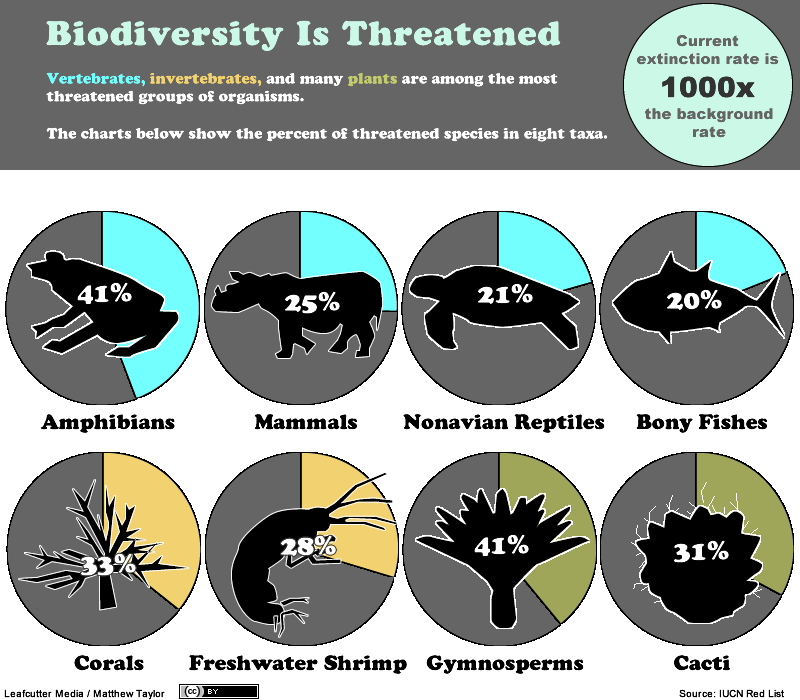
By Patrícia Dérer We are entering the sixth mass extinction of life on Earth, the first to be caused by humans1. Extinction rates are several orders of magnitude above normal. Humanity has managed to exterminate more than 300 vertebrate animals in modern times, the IUCN estimates that half the globe’s 5,491 known mammals are declining in…
Explore the content and topics covered by TOP, search here
Recent blog posts
- The Progressive Left are the Bad Guys Too
- Reproductive rights: an unfinished project and an ecological imperative
- A shrinking population might actually be a good thing
- Cutting the global population in half to achieve sustainability
- Ceuta incident: Population growth threatens both poor Africans and climate stability
Blog categories
What we are reading, listening to and watching
Gallery of infographics – Learn more about overpopulation and environment