That’s according to the editorial board of the New York Times, arguing for expanding immigration into the United States. Based on comments, most of their subscribers disagree.
by Philip Cafaro
By insisting that enforcing immigration limits is immoral, liberals in the U.S. have twice helped elect Donald Trump President. Facing a second Trump administration, some are beginning to rethink their position. Democrats in the U.S. Senate are poised to help pass the Laken Riley Act, which would make it harder for criminal aliens to avoid deportation. Last year, these same Democrats refused to take up the measure.

The editorial board of the New York Times is taking a different approach. Having opposed all measures to limit illegal immigration for decades, they now profess a willingness to enforce America’s immigration laws. Only, however, if the country greatly increases legal immigration. Their justification? “America needs more people.”
One might think that at 340 million strong and growing, the United States was sufficiently populous. However, the Times editorial continues:
Americans no longer make enough babies to maintain the country’s population. To sustain economic growth, the United States needs an infusion of a few million immigrants every year.
Without immigrants, the population would start to decline immediately, leaving employers short-handed, curtailing the economy’s potential and causing the kinds of strains on public services and society that have plagued Rust Belt cities for decades.
The Times generally talks a good game about protecting the environment and reducing economic inequality. But when push comes to shove, continued economic growth trumps all such commitments. This editorial demonstrates particularly clearly the connection between conventional economic thinking and a commitment to Ponzi scheme demographics.
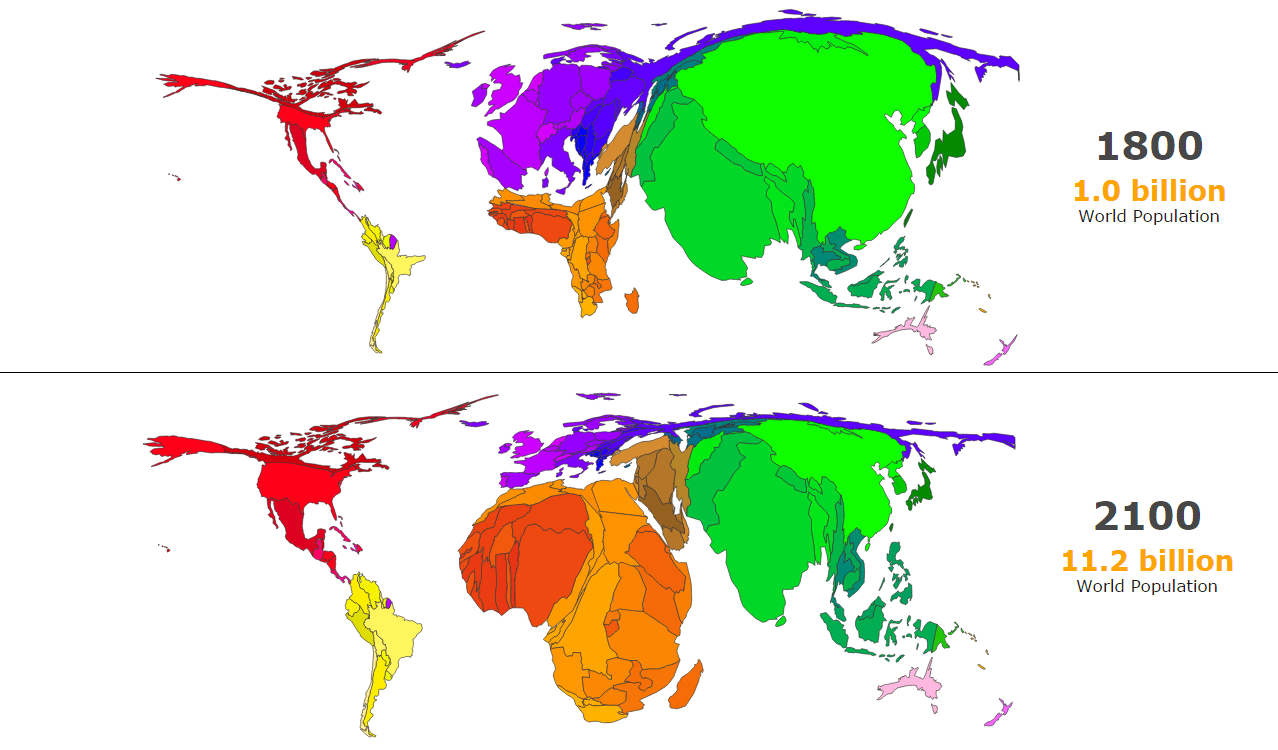
Make no mistake, if you live in the developed world, this debate is coming to your country too, if it isn’t occurring already. In recent decades, citizens in Germany and Holland, France and the UK, Australia and New Zealand have all chosen to have small families that would allow them to shrink national populations — while their governments have chosen to override that choice by increasing immigration.
Can developed nations ratchet back their numbers to a sustainable level? Can real environmentalists and genuine patriots defeat the unholy alliance of naïve open borders advocates and cynical neo-liberal capitalists pushing for continued population growth? Time will tell.
Interestingly, most New York Times readers aren’t buying what the elites are selling on immigration. Dozens of the most “liked” comments on the Times’ editorial reject the idea of endless growth, primarily on environmental grounds. Below we share some of the most popular and insightful.
Reading these comments, I felt my spirits rise. Most intelligent people, free from hubris or ideological blindness, understand that acknowledging limits is key to protecting the environment and creating sustainable societies. Enjoy!
Jack, NM
The population of the U.S. and the world needs to be much lower, not higher. Technology alone cannot prevent, let alone remediate, the environmental damage that has occurred and continues to occur. All environments have population limits. And open borders only undermine national and regional progress in lowering birth rates. The notion that we need to crowd more people into a landmass that is already buckling under the strain because Economists and their Billionaire overlords deem it necessary to vindicate theories and enrich stockholders is asinine.
2605 Recommend
Walker, FL
@Jack “But if we don’t have a steady flow of easily exploitable workers, how will we generate infinitely growing profit for our shareholders?”
1979 Recommend
Ss, NC
Why do we need more people? Articles like this seem to take it as an axiom that we do, but I’ve yet to see anyone explain it rational, evidence-based terms as to why. We were a strong and successful nation with 250M people, 300M people and 325M people. We had 140M people at the end of WWII, when we dominated the world economically and militarily. So why do we now need 350M people? 400M? 500M?
1698 Recommend
Rtj, Massachusetts
Seems that the Ed Board have, unsurprisingly, learned nothing from the last 4 years. We need housing, lots and lots of it. Build enough housing for the people here, and more. Then you can talk about letting more people in, not before. That’s before you get to crowded school buildings. hospitals, etc. Or as our solid blue state governor said as Biden sent waves and waves of immigrant families to a state with the tightest housing market in the country – we don’t have the infrastructure for this. And as for redirecting so much of fragile state, municipal, and federal money as “investment” funds for “new arrivals” dependent on the state, maybe invest in our own poor and underprivileged population first. And raise wages while you’re at it.
1544 Recommend
It starts at the top, Oregon
The need for more people stems only from the need for corporations to make more money and government to collect more taxes. The planet needs fewer people in order to rebalance its ecosystems.
1496 Recommend
Mr Mallard, MA
Excessive immigration has led to the waste of billions of dollars that should have been spent on American citizens. It has led to congestion, to housing shortages, to school and hospital crises. If the price of solving that is getting better wages for workers and watching rich people struggle to mow their own lawns, then sign me up. And the left wonders why it lost the working class. (Economics aside, you’ve also got to remember that overpopulation is The Problem underlying all major global problems. We are a species that has outgrown its habitat. We don’t need more people. We need a lot fewer of them.)
1129 Recommend
Arnold, NC
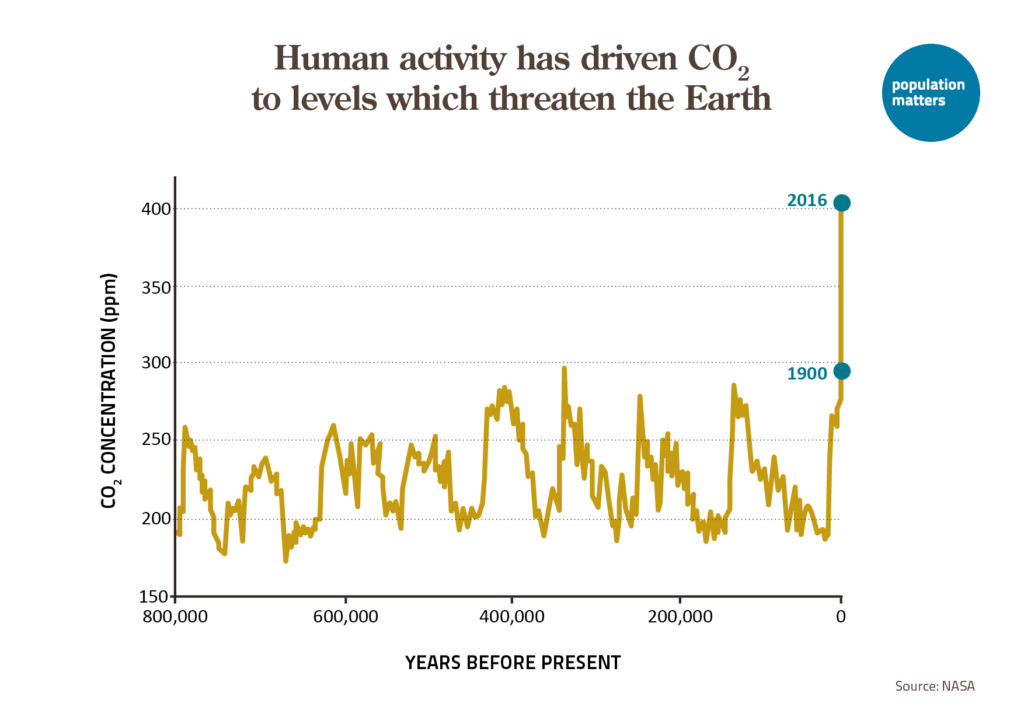
America does NOT need ‘more people’. We, as with most of the countries of this world, are already overpopulated. Destruction of our environment is directly proportional to demands from the ever higher population for more electricity, petroleum, roads, water, and food crops. We’ve shown that environmental regulations and ‘clean energy’ can’t keep up with greater and greater demand. In fact, steadily rising summer temperatures will inevitably lead to failure of major food crops, and thus to famine. Yes, our population is aging and most migrants reduce this age imbalance. But the new residents require food, toys, shelter, etc. which simply won’t be available. The real solution has got to be as Jimmy Carter suggested years ago – we have to use less, live simply, and find ways to cope in the life span we are awarded.
765 Recommend
Gaussian, Chicago, IL
One day, hopefully not too far in the future, the Times will look back on this article with a deep sense of regret—and perhaps even a measure of disgust. In a world already buckling under the strain of overpopulation and ecological collapse, advocating for more growth feels not only irresponsible but profoundly disconnected from reality. The Earth has limits, and we are already testing them to the brink. Instead of doubling down on unsustainable expansion, we must prioritize living within the planet’s means before it’s too late.
655 Recommend
LaPine, Pacific Northwest
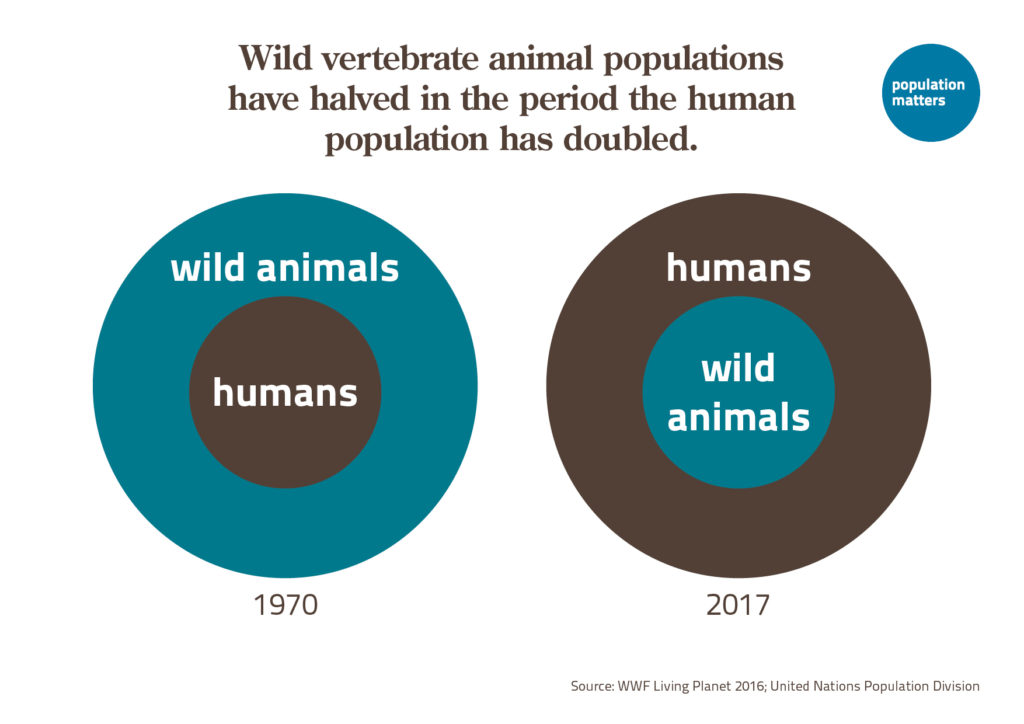
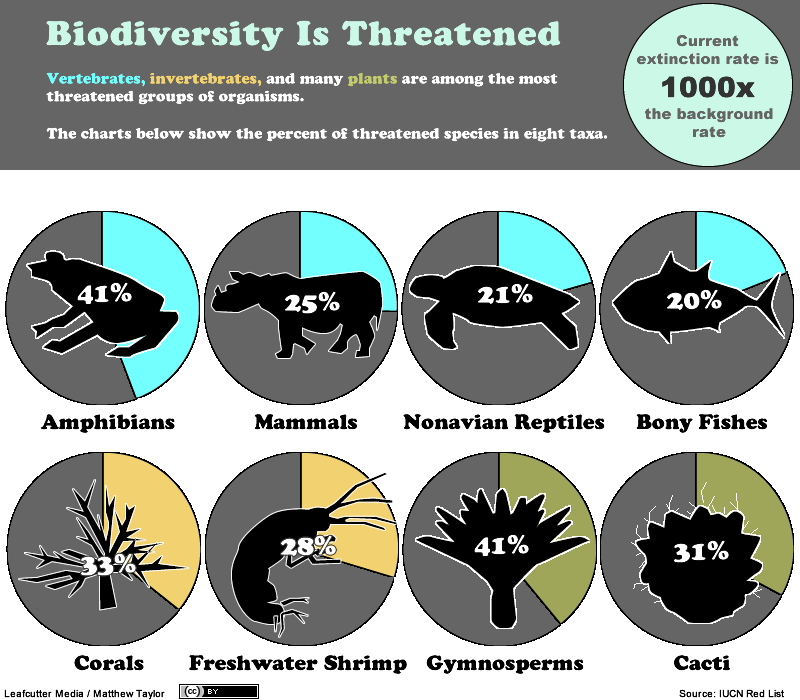
Our ability to breed isn’t finite, but our planet is. One would think this is an easy concept to grasp, but to date, it hasn’t sunk in. Our planet is slowly dying due to the effect of all emissions of its destructive inhabitants: humans. The arguments made in the first paragraphs are illogical and unsubstantiated. If there are 9 million fewer people in Japan, there is less mail to deliver, thus requiring fewer people delivering mail, not more. Let’s define the “rocket fuel” analogy as well: immigrants to be exploited at less than prevailing wages so their white overlords can make obscene profits from that exploitation. Why do you think American businesses move factories to China? Or 3rd world countries? Hello? As the abundant cheap labor force dries up, wages will rise proportionately, as they should. There will neither be a housing shortage, nor will housing costs rise beyond demand. Problem solved. A perfectly good immigration bill, arrived by a bipartisan committee, was quashed by the orange toddler, as it had to be a campaign issue. Even with this knowledge, voters put the new criminal felon in office, again. I don’t doubt the GOP Congress will float the bill now. We were a successful nation when I was born in 1953, with a population 155 million, less than half the current 346 million, who are burning up the planet, fueling the 6th great extinction of species, and destroying our oceans.
600 Recommend
Andrew, Washington
Can our beautiful land carry more people? Sure. But can it do so without further degradation of our environment and quality of life? No. Traffic is horrible. National and State parks are overcrowded. Housing is scarce. Wildlife habitat is shrinking. We’re using more and more energy and resources. If we can’t figure out how to live a decent quality of life without “forever growth” we’re doomed. Stabilizing our population through immigration may be a good first step. Helping other countries stabilize their economies and political situations will likely relieve the pressure on people there who want to leave. Ultimately finding a way to maintain a high quality of life while depopulating should be a goal of all nations.
598 Recommend
Tim M, Ohio
Travel to Japan, it has to be one of the cleanest, safest and most orderly in the world. Maybe a shrinking population is not so bad.
497 Recommend
Cljuniper, Denver
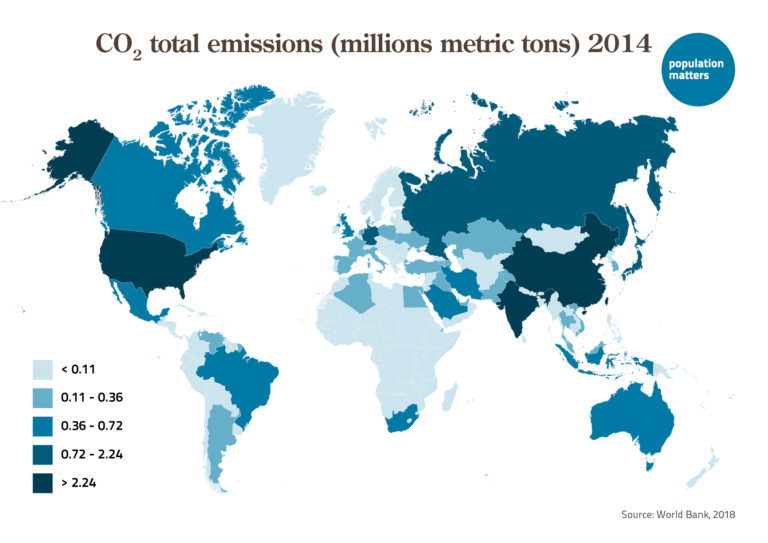
I wrote my BA economics thesis 50 years ago on the effects of Zero Population Growth birth rates. The likely outcome of ZPG birth rates then, and now, is higher per capita income. Your well thought-out editorial begins with the false assumption that what we call “economic growth” i.e. GDP growth is reflective of a quality of life, and is ecologically sustainable. Whereas by the end of the 1960s fore-sighted economists like Herman Daly and EF Schumacher and Kenneth Boulding had recognized the need for a “steady-state economy” and managing our limited resources and waste-handling capacity (climate chaos is a waste-handling capacity problem) in accordance with the fact we live on a spaceship, not an endless frontier. In short, we don’t need more people in the US. Our economy is dramatically unsustainable now – the most unsustainable per person in the world as measured by CO2 emissions per capita. With coming productivity and efficiency gains we’ll need fewer people to produce what’s needed – and thus the predictions 50 years ago of higher per capita incomes with fewer people. Who’s against that? Nobody. We do not have a demographic crisis; we have a crisis of antiquated management systems for 21st century challenges. We must work very carefully to avoid the “overshoot and collapse” predictions of the early 1970s – we are already seeing how poorly we manage ecological systems aka natural capital (required for creating wealth) in wildfires, extinctions etc. Rethink!
338 Recommend
Ben of Austin, Austin
We need a new economic paradigm that is not growth dependent. The ongoing sentiment and economic policy inherent in “To sustain economic growth, the United States needs an infusion of a few million immigrants every year” is devastating to the environment (how many ecosystems have been lost or are on the verge of collapsing because of a unrestrained growth mindset) and, ultimately, the planet. On a per capita basis, U.S. residents (citizens or not) consume more natural resources than any other nation. Resouce swallowing cities, like sprawling, non-dense Houston, can’t become the norm. Immigration is a complex issue and even with its complexities needs to be positioned with consideration of sustainability, housing, environmental protection, education, etc. And, economically, we need to somehow untether economic satisfaction from population growth.
281 Recommend
AKJersey, New Jersey
No, the key problem is too many people, worldwide! Overpopulation is directly responsible for global warming, environmental destruction, and resource depletion. In the long run, reducing world population is the only way to achieve a sustainable world.
269 Recommend
CMP NJ
I formerly worked in construction for a couple decades. Highly skilled and native-born master carpenters I know have seen their real wages decline by over 10%, largely due to the industry wide lower pay scales for immigrants. As a lifelong liberal Democrat, I see this issue as encapsulating the party’s problem with working class voters. It is also a prime driver of the authoritarian White Nationalism of Trumpism. Therefore, it’s way past time for the Democratic Party to become far more realistic about the damage its stance on immigration has caused.
241 Recommend
—
This is just a small sample of the many excellent comments generated by this clueless editorial. For more on the benefits of smaller populations, see:
Aging Human Populations: Good for Us, Good for the Earth, by Frank Götmark, Philip Cafaro and Jane O’Sullivan
How to Fix the Planet, the Easy Way, by Jon Austen
Overpopulation Is Still a Huge Problem: An Interview with Jane O’Sullivan, by Richard Heinberg












Leave a Reply