

The Overpopulation Project has been ranked as one of the 10 best demography blogs of 2025 by FeedSpot. Thank you to all our readers for engaging with and sharing our work.
Upholding human rights is key to any just approach to population policy, as contrasting examples of coercion from China and Africa illustrate. But rights must be balanced by responsibilities when it comes to procreation. In a finite world, morality demands reproductive restraint in addition to reproductive freedom.
by Philip Cafaro
An oppressive policy: China
When many people hear the words ‘population policy,’ they think of China’s one-child policy.[i] In place from 1979 until 2015, it limited most married couples to one child and strongly incentivized local officials to ensure that this limit was followed. Under the policy, local officials often tracked women’s monthly cycles and whether they were using birth control. Couples needed official permission to have children and were subject to various punishments for children born “out of plan.” These included loss of employment, loss of housing, heavy fines (sometimes amounting to several years’ wages, well beyond most people’s ability to pay), or worse.
As in most countries, children needed to be officially registered in China in order to attend school and receive other government benefits. This provided an important pressure point for local officials to either punish offenders, or pocket large bribes to look the other way. It also led to millions of unregistered children missing out on educational opportunities and other essential services, living as second class citizens.
Enforcement of the one-child policy waxed and waned in different localities. One year, an out of plan birth could be corrected by payment of a manageable fine, while the same village might see forced abortions the next year, if officials came under pressure to meet quotas. Mandatory sterilization after a first or second child was a common and much resented practice.

In her book China’s Hidden Children, Kay Ann Johnson recounts numerous stories of parents and children suffering under the one-child policy. For example in 2004, nine years after the birth of their first child, a son, Xu Guangwen and Jiang Lifeng had a second child, a daughter they named Shengshi.[ii] Because she was born out of plan, Jiang and Xu pretended they had found her abandoned by the side of the road, reasoning that the authorities would look more favorably on an adopted baby taken in as an act of charity. They did not, instead following the letter of the law and pressuring the couple into sending their daughter to an orphanage. At that point, Shengshi had been living with them for nine months. Johnson’s detailed account of their forced parting is harrowing. As she describes the aftermath:
For many months, Jiang was barely able to eat or speak and cried day and night. Her family feared for her health and sanity. At night she would dream that her child was back with her, that her life was happy and normal; then she would wake with a gasp, realizing that the reality was a nightmare. …[iii]
Xu also suffered, as both parents do to this day. Shengshi was eventually adopted out to a prosperous American couple, after a year surrounded by strangers at the orphanage. Johnson notes:
While the birth parents in this story suffered incredibly, the hidden child also lost everything she had, even if she fortunately went on to find a good life with a new family. At nine months, she was stripped of her identity; she had her parents, brother, extended family … and her birthright as a Chinese citizen taken from her by local government birth planning officials whose only concern was to clear their record of an over-quota child, a child that had no right to exist in their area.[iv]
As article 16, clause 3 of the United Nations Universal Declaration of Human Rights states: “The family is the natural and fundamental group unit of society and is entitled to protection by society and the State.” Here, instead, state officials broke up a family, undermining the health and well-being of its members. We see them infringing the liberty of the parents and the security of their daughter, in clear violation of article 3 of the Declaration: “Everyone has the right to life, liberty and security of person.”
This is just one example from among many millions of human rights violations that occurred under China’s one-child policy. The creation of millions of long-term unregistered children massively violated article 15, their right to a nationality and full citizenship, as well as articles 25 and 26, guaranteeing a right to health care, education, and other social services needed for healthy and prosperous lives. Forced abortions and sterilizations violated tens of millions of women’s right to bodily autonomy, an essential component of individual liberty. Prohibiting couples from choosing whether or not to have additional children directly infringed on their freedom in a very personal matter. Indeed, the deployment of an immense bureaucracy to police women’s fertility indicates an overweening government lacking respect for the human rights and freedom of its citizens.
Thankfully, the one-child policy is a thing of the past. In 2013, China instituted the dandu exclusion, whereby couples where at least one member was an only child could have a second child. Even before this, couples in some rural provinces were allowed a second child if the first child was a girl, a so-called “one and a half child policy.” In 2015, as worries increased over China’s low fertility rate and potential worker shortages, all couples were allowed to have two children. In 2021, China’s national fertility rate having declined even further, this two-child policy morphed into a three-child policy.
After decades of slogans like “Fewer kids, happier lives” and “If you want to be rich, have fewer children and plant more trees,” today billboards throughout China announce: “Implement the three-child policy and optimize population growth!”[v] From penalizing excess children under the one-child policy, local governments now offer inducements to fecundity, such as larger apartments and baby bonuses for additional births. So far though, these do not appear to be having much effect on national fertility rates, which remain among the lowest in the world.
Oppressive social norms: Sub-Saharan Africa
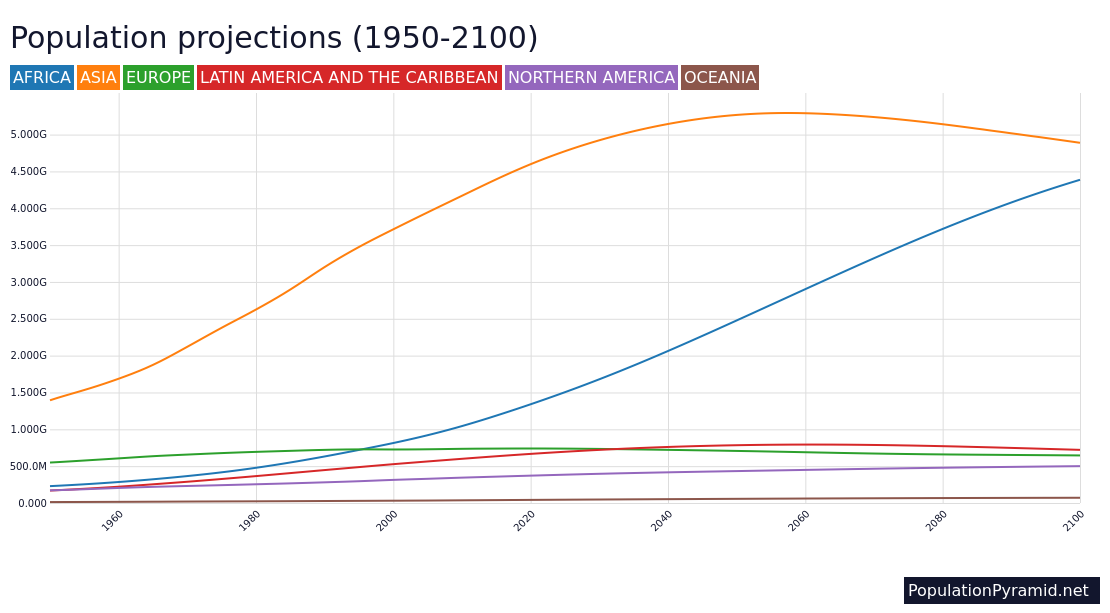
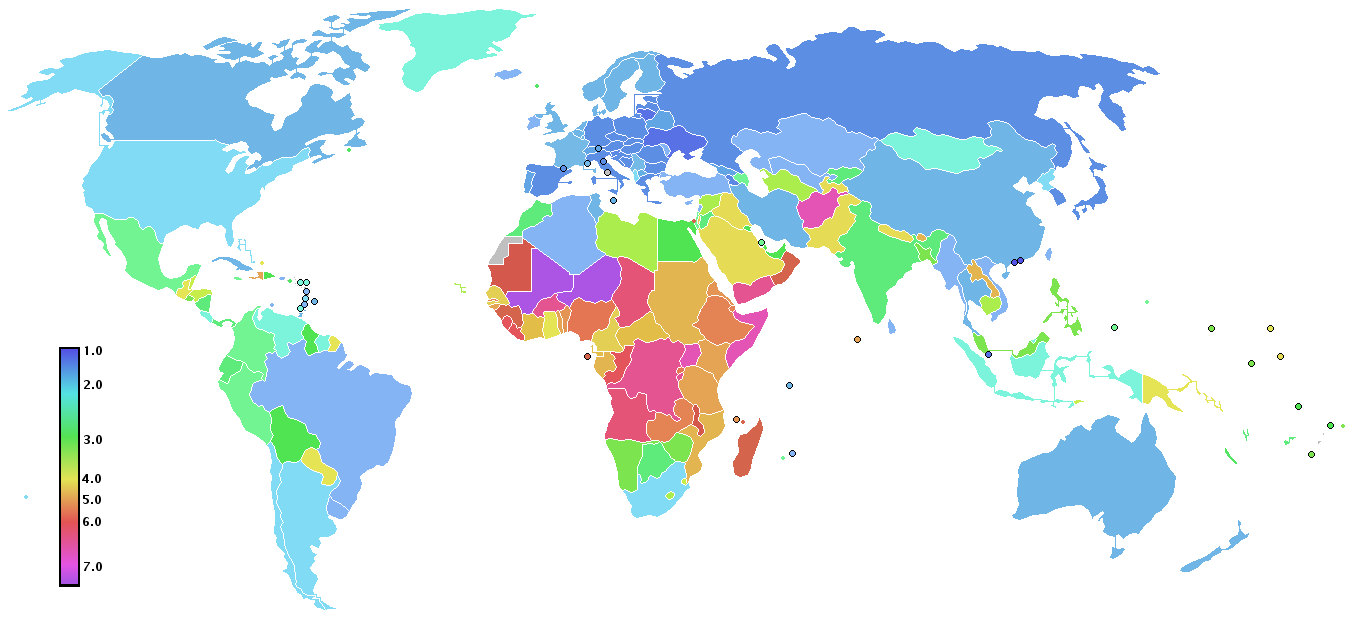
When many people hear the words ‘population growth’ or ‘overpopulation,’ they tend to think of Africa. While numerous countries around the globe now have below-replacement fertility rates, sub-Saharan Africa’s total fertility rate (TFR) stands at 4.3 children per woman according to the most recent UN figures. Many African countries are on track to more than triple their populations this century, including Congo, Angola, Tanzania and Mozambique. Rapidly growing populations have contributed to numerous problems on the continent, including entrenched poverty, hunger and child malnutrition, and many unemployed and underemployed young adults.
Africans tend to desire large families; both men and women often define status and wealth by number of children.[vi] So African women are more likely to employ contraception to help with birth spacing, rather than to limit overall births. Living in patriarchal societies, women who do want to limit the number of their children often struggle to access and use effective modern contraception, due to opposition from community and religious leaders, in-laws and other relatives, and especially husbands.[vii]
In study after study, female informants speak of the difficulty of negotiating contraceptive use with partners from a position of inferiority, and of the need to deploy contraception surreptitiously.[viii] As Madame H., a thirty-year-old woman from Niger, recounted:
I had three closely spaced pregnancies that were very difficult. I suggested contraception to my husband. He replied that he didn’t want to use any medical contraceptives but that we could practice abstinence while I was ovulating. We tried to do that for four months. In the end, my husband didn’t keep his promise, and I reminded him about it. He simply told me that it didn’t matter because the children who would be born would be under his care and he can afford it. But me, I didn’t agree. That’s when I started secretly going to a PMI [maternal and infant health services clinic] where a midwife friend works. Unfortunately, someone told my husband about my trips to the medical center … We really almost divorced. We are barely reconciled. I got pregnant soon after going back. And since I just can’t take any more of these repeated deliveries. . . . Four kids in less than eight years of marriage. I just can’t take it anymore and I know this problem will come up again. I need contraception, but my husband still doesn’t want to hear anything about it.[ix]
Women from across Africa recount physical violence, rejection, or divorce and ensuing impoverishment for themselves and their children following efforts to use modern contraception.[x] This is due less to oppressive government policies than to oppressive social norms and a lack of government policies to correct them. African women would benefit from more robust efforts to educate men about the benefits of smaller families and from stronger laws guaranteeing women’s equal rights within marriage and society.

Although it is decreasing, widespread polygamy exacerbates women’s relative powerlessness in childbearing decisions.[xi] Limiting reproduction can lead husbands to favor wives who procreate more rapidly, or to take additional, usually younger wives. Because women’s status in the family and the community depends on the number of children they produce, this can ramp up childbearing to unhealthy levels, as with Madame H.[xii]
According to Article 16, section 1 of the UN Universal Declaration of Human Rights, men and women are entitled to equal rights within marriage, yet this does not appear to be the norm in African countries. Within traditional communities, the payment of bridal dowries generates a sense of entitlement among husbands, including an entitlement to numerous offspring. Even in urban settings and less tradition-bound communities, men are the acknowledged decision-makers in families.[xiii] Since much of the day-to-day burden of raising children falls on women while high fecundity improves men’s status, patriarchal social norms tend to lead to low contraception use and high fertility rates.[xiv] In many cases, religious fatalism also plays a role in dismissing the possibility of family planning.[xv]
Nevertheless, cultural norms and economic imperatives are changing as Africa urbanizes and the need to educate children for a prosperous future becomes apparent.[xvi] Some couples take a more cooperative approach to family planning decision-making, and many African men are sensitive to the need to limit their offspring for the good of the family itself. Three participants in a Congolese (DRC) family planning study, two women and one man, illustrate this more modern approach:
What prompted me to use family planning was that my four children were sick. They had anaemia and were dehydrated. So I told my husband about family planning. We went to see the nurse at the health centre who advised us to use family planning to space births, as there was a risk of losing them.
I already have six children. We must feed them, send them to school, and cover all their needs. My husband and I decided to stop having children.
This prompted us to use family planning, because our children were malnourished, they were always sick. The nurses advised us to use family planning methods to space births.[xvii]
Although the older generation sometimes grumbles about lack of grandchildren (especially too few grandsons[xviii]), young couples’ attitudes toward large families are changing — just not as much or as fast as in other parts of the world. While “a small family” in Europe, Japan, or the United States means one or two children, a small family in Africa often refers to one with three or four. Meanwhile, child marriage and teenage pregnancy remain widespread in rural and remote areas, with more than one in four women in West and Central Africa giving birth by the time they turn eighteen.
Rights and responsibilities
While the pressures in China in past decades were to reduce childbearing and the pressures in Africa today are usually to increase it, their negative impacts on women’s rights have been similar. In both cases, women are or have been denied bodily autonomy and the right to make fundamental decisions about their own futures. In both cases, an instrumental view of women predominates, seeing them primarily as vessels for procreation, failing to respect their intrinsic value as persons with a right to make decisions for themselves. In part, this shows excessive willingness to sacrifice the individual for the sake of the collective, in extreme cases sacrificing women’s very lives (breeding them to death in Africa, forced and unsafe abortions and sterilizations in China). Most cases stop short of this, but still unacceptably crimp women’s freedom and threaten their health and wellbeing. In these ways, informal patriarchal community norms in Africa can weigh as heavily as formal laws and state intrusiveness did in China.
African norms and Chinese laws have also seriously harmed children and violated their rights. The Chinese system led to millions of children living “irregular” lives and being denied basic educational and health services.[xix] In extreme cases, children were torn from their families and sent to live or die amongst strangers. Meanwhile, Africans’ high fertility contributes to families having more children than they can adequately feed, house, or educate. Article 25 of the UN Universal Declaration of Rights maintains: “Everyone has the right to a standard of living adequate for the health and well-being of himself and of his family, including food, clothing, housing and medical care and necessary social services.” But many African children suffer physical and mental stunting due to malnutrition, since their parents cannot adequately feed them all. Many children live in unsanitary conditions and receive little or no medical care. Article 26 of the Declaration mandates a right to education. Yet tens of millions of African parents cannot provide an adequate education for even their more gifted children; they do not have the money to pay modest school fees.[xx] Whether we blame parents having too many children, or their societies’ failure to share wealth adequately, the upshot is the same: children’s right to adequate resources becomes a dead letter. Their right to develop into healthy, productive adults is abrogated.
What is the proper response to these cautionary tales of human rights failures? Here at TOP, we affirm a universal right for women and couples to choose when, whether, and how much to procreate. This is largely the consensus view among ethicists, women’s advocates and development experts. Considering stories such as Mrs. Jiang’s and Madame H.’s and given the temptation of societies and states to overreach, the urge may be to focus exclusively on strengthening individual rights. That would be a mistake. Rights exercised without informed understanding of the impacts of one’s choices can lead to poor outcomes for oneself and for others.
In other words, rights imply responsibilities. To one’s family. To the wider society. To future generations, both human and non-human (other species have a right to be here, too, and we have no right to crowd them off the face of the earth).
Responsibility is the antidote to coercion. A small child is coerced into doing all the things it needs to do, but as it matures, increasingly it is trusted to behave responsibly. With that comes personal autonomy and freedom. Population policies should treat people like adults, not children. Patriarchal societies should stop treating women like children. But people need information and open discourse to learn why certain choices may be irresponsible. Too often, this discourse is missing in the “health and rights” framing of family planning.
Rights affirm human dignity and worth; foregrounding human rights can help avoid abusive population policies. But, when it comes to procreation, rights must be balanced by responsibilities. Morality demands reproductive restraint in addition to reproductive freedom, if we want to ensure all children’s rights to food, safety and security. Since their ultimate goal is to further human flourishing, human rights and responsibilities should be interpreted and balanced against one another with this in mind. Since our ultimate goal is the flourishing of all life – human and non-human – human beings need to limit our numbers.
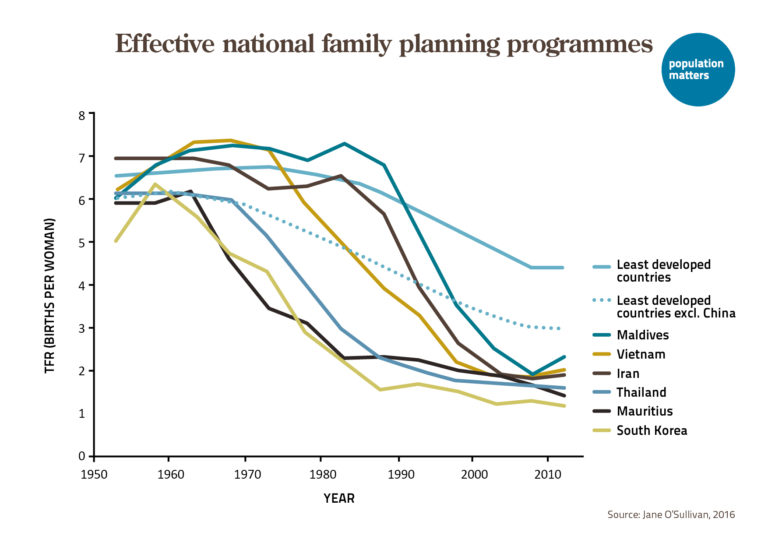
Note: TOP plans to discuss China’s family planning history in future blogs, comparing it with non-coercive programs in other countries.
[i] Valuable overviews of the one-child policy include Junsen Zhang, The Evolution of China’s One-Child Policy and Its Effects on Family Outcomes, Journal of Economic Perspectives (2017) 31: 141–160, https://www.aeaweb.org/articles?id=10.1257/jep.31.1.141; and Mei Fong, One Child: The Story of China’s Most Radical Experiment (Houghton Mifflin, 2016). For a more positive view of the one-child policy, see Wei Huang, Xiaoyan Lei and Ang Sun, Fertility Restrictions and Life Cycle Outcomes: Evidence from the One-Child Policy in China, The Review of Economics and Statistics (2021) 103: 694–710; also Jon Austen, Mainstream Media Blindness to China’s Depopulation Dividend (2023).
[ii] Kay Ann Johnson, China’s Hidden Children: Abandonment, Adoption, and the Human Costs of the One-Child-Policy (University of Chicago Press, 2016), pp.119-133.
[iii] Ibid., p.128.
[iv] Ibid., p.130.
[v] Joyce Jiang, China’s one-child policy hangover: Scarred women dismiss Beijing’s pro-birth agenda, CNN online, August 18, 2024.
[vi] Mbadu Fidèle Muanda, Gahungu Parfait Ndongo, Lauren J. Messina and Jane Bertrand, Barriers to modern contraceptive use in rural areas in DRC, Culture, Health & Sexuality (2017) 19: 9, 1011-1023. Quote page 1014.
[vii] A. Namasivayam, P.J. Schluter, S. Namutamba and S. Lovell, Understanding the contextual and cultural influences on women’s modern contraceptive use in East Uganda: A qualitative study, PLOS Glob Public Health (2022) 2 (8): e0000545, https://doi.org/10.1371/journal.pgph.0000545.
[viii] Alice Kang and Barbara Cooper (eds.), Yearning and Refusal, Hadiza Moussa (Oxford University Press, 2023), pp.180-182; Simon Kibira et al., Covert use of contraception in three sub-Saharan African countries: a qualitative exploration of motivations and challenges,BMC Public Health (2020) 20: 865, https://doi.org/10.1186/s12889-020-08977-y.
[ix] Kang and Cooper (2023), pp.174-175.
[x] Yolandie Kriel et al., Male partner influence on family planning and contraceptive use: perspectives from community members and healthcare providers in KwaZulu-Natal, South Africa, Reproductive Health (2019) 16: 89, https://doi.org/10.1186/s12978-019-0749-y.
[xi] Batula Abdi, Jerry Okal, Gamal Serour and Marleen Temmerman, “Children are a blessing from God” – a qualitative study exploring the sociocultural factors influencing contraceptive use in two Muslim communities in Kenya, Reproductive Health (2020) 17:44, https://doi.org/10.1186/s12978-020-0898-z.
[xii] Kang and Cooper (2023), pp.175-176.
[xiii] Fiacre Bazié et al.,“Everyone has their own problems and realities so the religious community cannot judge someone.” Contraception motivations and perceived consequences among young contraceptive users who practice a religion in Burkina Faso, Contraception and Reproductive Medicine (2024) 9: 33, https://doi.org/10.1186/s40834-024-00295-7; Kriel et al. (2019): 89.
[xiv] Kristina Söderbäck et al., Barriers to using postpartum family planning among women in Zanzibar, Tanzania, BMC Women’s Health (2023) 23: 182, https://doi.org/10.1186/s12905-023-02330-2
[xv] Kang and Cooper (2023), pp.177; Bazié et al.(2024): 33; Abdi et al. (2020): 44.
[xvi] Bazié et al. (2024) :33.
[xvii] Muanda et al. (2017): 1017.
[xviii] Ruth Maclean, How a TV Hit Sparked Debate About Having Too Many Babies. New York Times, Oct. 21, 2024.
[xix] Although Huang et al. (2021) and other studies argue that decreased numbers of children were crucial in making resources available that improved the health and economic prospects of recent Chinese generations.
[xx] Maclean (2024).














Leave a Reply