The Planet Cannot Hold the Weight of 8.2 billion Narratives.  Here’s Why…

As ecosystems deteriorate and wealth inequality deepens, the impact of overpopulation on the natural world is well-documented—but its effects on democracy, social cohesion, and psychological well-being remain largely unexplored. This essay examines how our bloated, hyper-complex societies have outgrown their ability to meet individual needs, leading to a breakdown in political and social structures.

By Michael Bayliss

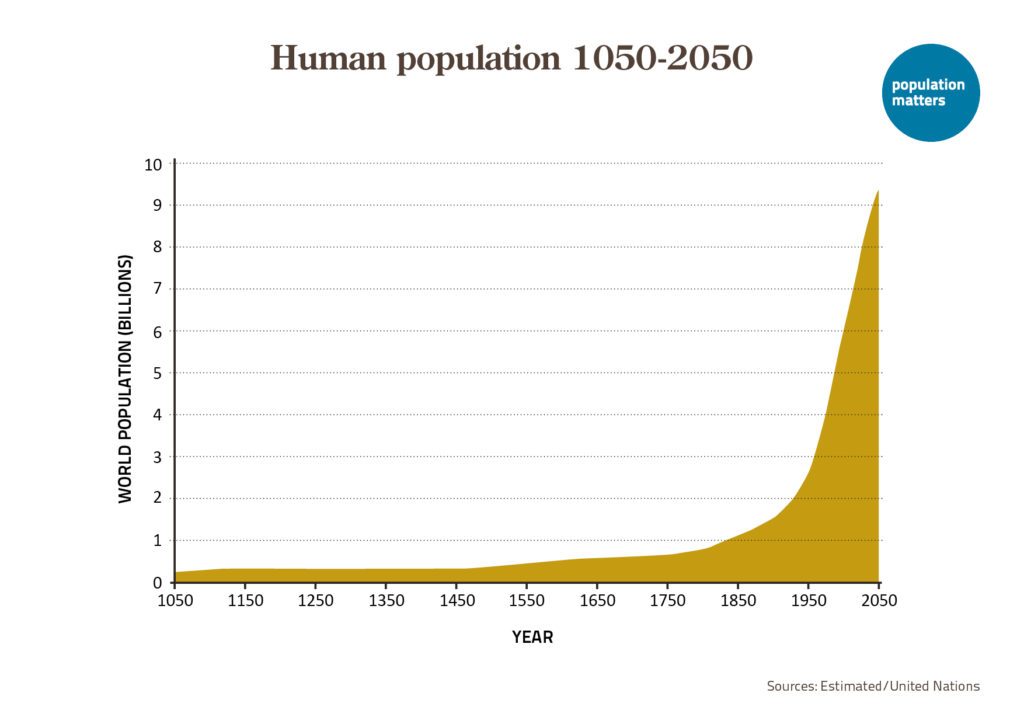
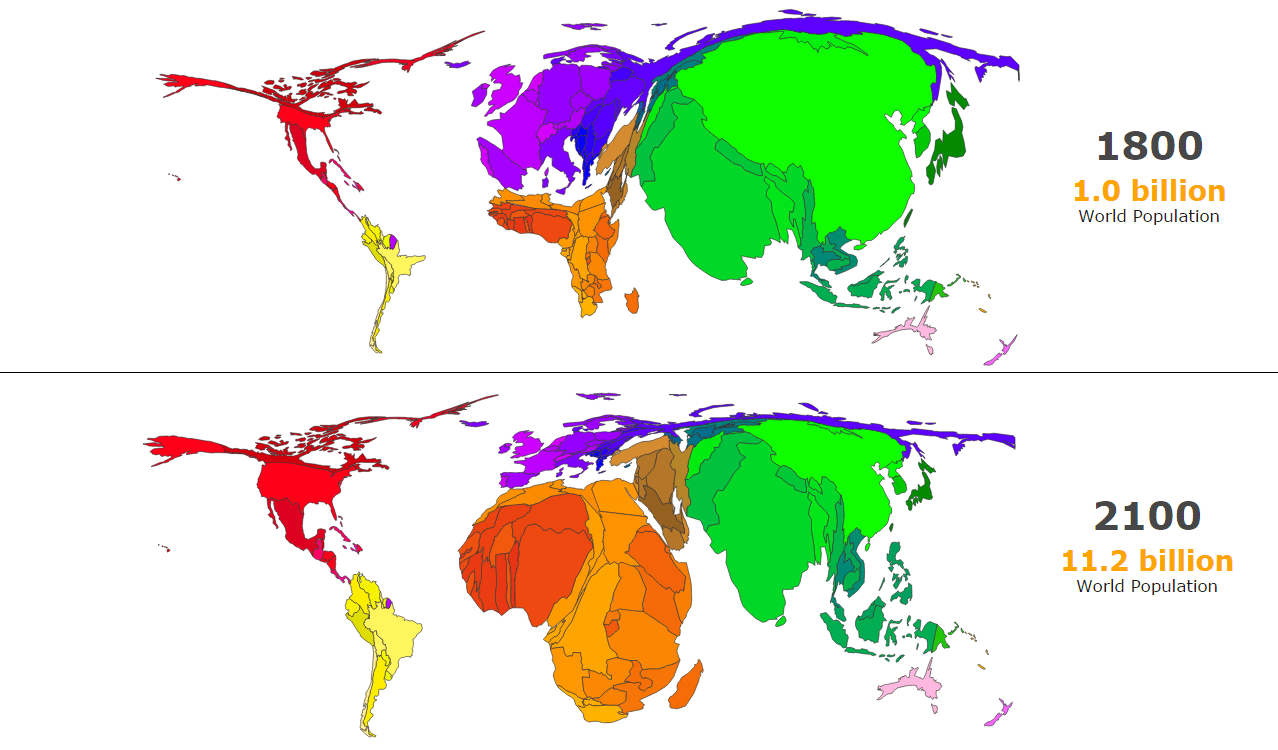
With 8.2 billion people navigating an increasingly fragmented world, collective narratives have spiralled out of control, fuelled by social media echo chambers and misinformation. The cognitive limits of human connection, as explored by thinkers like Yuval Noah Harari and Jared Diamond, suggest that civilizations struggle to function beyond a certain scale. The modern world has temporarily bridged this gap through technology and propaganda, yet this has only accelerated economic disparity, political disillusionment, and environmental destruction.

As economic instability mounts and the middle class erodes, societies risk turning to simplistic, authoritarian solutions—historically a precursor to fascism and oligarchy. However, the answer lies not in reactionary politics but in systemic change: planned degrowth to scale back unsustainable economies, rewilding to restore ecological balance, and family planning to address overpopulation in a humane and equitable way.

Ultimately, escaping our current dystopian trajectory requires dismantling our self-absorbed narratives and re-establishing a connection with the natural world. The more of us there are, the harder this becomes—making population sustainability not just an environmental necessity, but a psychological and human rights imperative.

Not just an ecological disaster

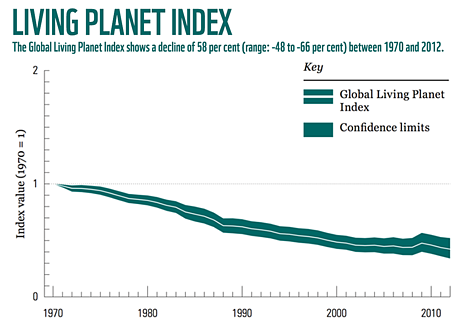
The impacts of human overpopulation on the natural world have been widely studied and intensely debated. We are witnessing its effects firsthand as ecosystems collapse around us. Less examined, however, is how population pressure influences social values such as democracy, equity, and social organisation. Rarer still is the exploration of its psychological and spiritual consequences at both individual and community levels.

In my article for Population Media Center, Population Growth and Wealth Inequality Are More Entwined Than We Thought: Here’s Why,” I discussed how rapid population growth exacerbates inequality, increases overconsumption, and dilutes both democracy and innovation. These areas warrant further study and discussion.

The recent decline in political and social cohesion underscores my concern that our globalized society has grown too vast and complex to adequately meet the diverse and individual needs of 8.2 billion people.

When societies become too big to handle

Research suggests there are cognitive limits to the number of social relationships the human brain can sustain. In Sapiens, Yuval Noah Harari argues that beyond our cognitive capacity for 150 stable relationships (what is referred to as Dunbar’s number), societies must rely on abstract symbols such as branding, myths, and bureaucracies to maintain cohesion. Similarly, in Collapse, Jared Diamond suggests that civilizations throughout history have ultimately crumbled under the weight of their own size and complexity, unable to adapt to disruption. The difference between the case scenarios detailed by Diamond and our current predicament is that as our societies have become global and interdependent, there is no ‘release valve’ of somewhere else to run off to in times of crisis.

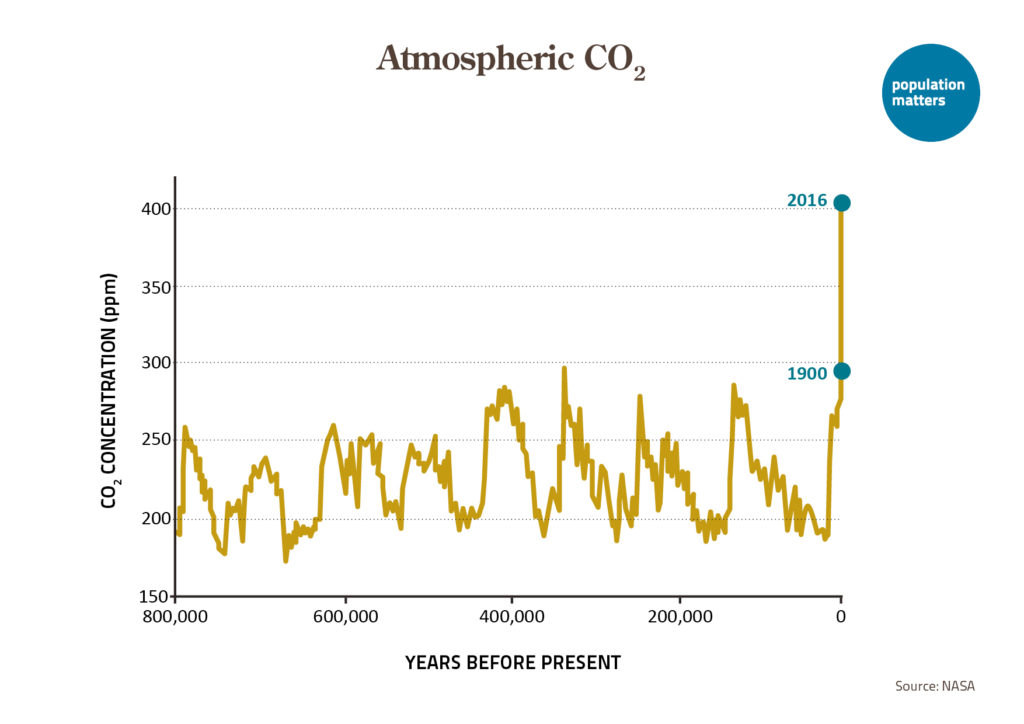
While modern technology has temporarily allowed us to function within an increasingly vast and globalised system, it has done so through tools of rapid communication, transactions, and most notably, advertising and propaganda. This has turned most of us into participants within a homogenous, ever-expanding system that accelerates its own growth while consuming the living world at an ever-faster pace.

While GDP growth continues to increase in the Global North, if we look at GDP per capita, it is arguable that average living standards have arguably peaked, stagnated or even declined. Yet the invisible forces driving our growth-based economy have convinced us that this system is both inevitable and natural, with deregulated, trickle-down economics framed as an unquestionable law of progress.

Unlike the kings and emperors of old, today’s ruling classes have until recently, hidden behind the illusion of democracy. Politicians, increasingly funded by billionaires, serve as their public enablers and apologists, while election cycles across many nations force voters to choose between two parties offering increasingly indistinguishable policies. Yet the real power remains out of reach, untouched by the ballot box. As their dominance grows more absolute, billionaires have become increasingly brazen—just ask Elon Musk.

This intricate, self-perpetuating system has, until now, been flexible enough to bind together 8 billion people. But several fault lines are beginning to crack. The cost-of-living crisis is one example driven by the natural limits to growth, a speculative economy built on inflated property prices rather than real productivity, and worsening wealth inequality. The result is a hollowing out of society, eroding the middle and working classes. History suggests that such conditions often precede the decline of once-mighty empires.

Living in a crowded world of 8 billion relative truths (and counting)

During the COVID years, while we were disrupted from our normal routines of ‘work and consumption’, there was some hope that we would emerge from the lockdowns recalibrated and with a better set of priorities.  Unfortunately, on reflection, it appears a very different reality has played out.  While mainstream society appears to have doubled down on the mantra of ‘growth is good’, a wave of conspiracy theories have proliferated, creating more division than ever. Disinformation can spread like wildfire, even as the planet burns.

Human societies have always existed within relative truths. Money, economics, hierarchy, even morality, are constructs of our collective subjectivity, shaped through language. While a necessary tool for navigating complexity, language can become dangerous when our egos become entangled in the ephemeral world of narratives. Today, as communities corrode—due in part to austerity and in part to sheer overpopulation – we find ourselves increasingly fragmented, living in close quarters yet seemingly unable to organise cohesively. As our worlds become more insular, myopic, and self-absorbed, our narratives spin further out of control.

As always, nature knows best

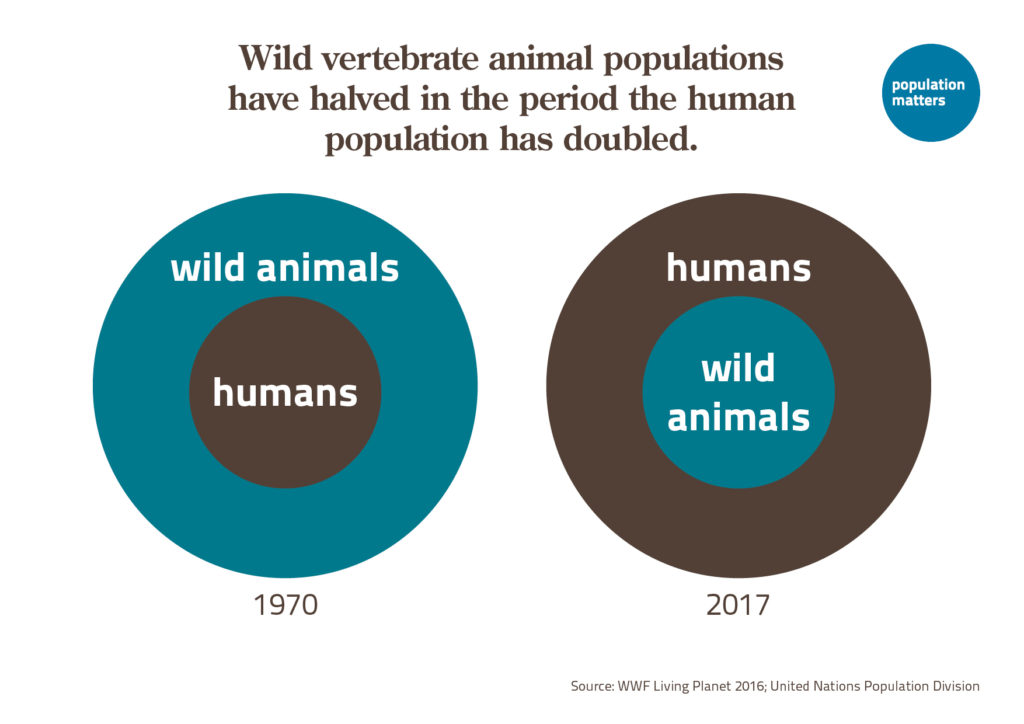
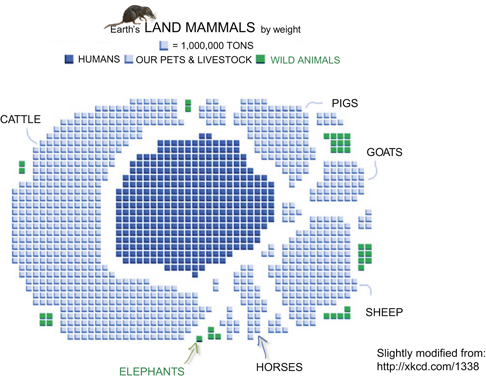
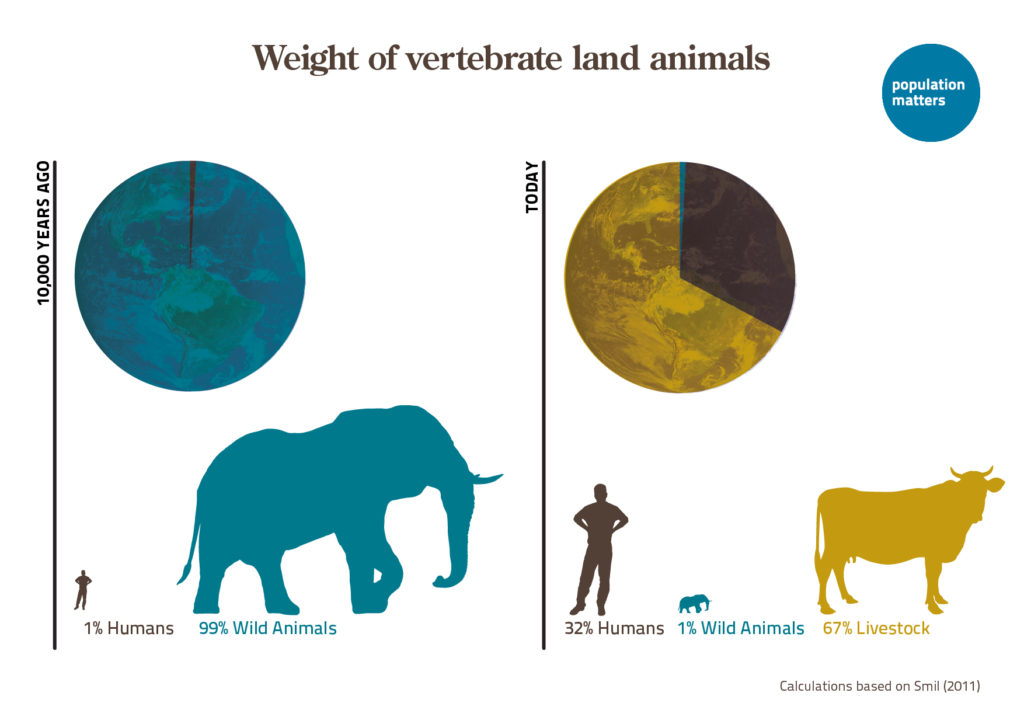
In my experience, the biosphere and the natural world exist (generally speaking) beyond the realm of human storytelling. It is the closest thing we have to an objective reality, a physical truth unshaped by human interpretation. For most of our history, the natural world vastly outweighed the human world. Even as civilizations rose and fell, nature provided a grounding force, a check and balance against our self-created illusions. But today, that balance has been obliterated. Wild mammals now account for just 4% of global mammalian biomass. For many, access to the natural world has been reduced to curated, artificial experiences, such as a trip to the city zoo or a national park, often more about aesthetics and Instagram posts than genuine reconnection.

A highly structured park in Palermo, Sicily.

The ratio of human-made to natural environments has inverted so dramatically that we are now almost entirely subsumed by our own creations. Physically, we are enclosed by sprawling suburbs, towering apartments, and endless urban landscapes. Virtually, we are consumed by screens and social media; an echo chamber of human narratives. With little access to nature, is it any wonder we have entered a post-truth era, where so many feel lost?

Unmoored and ungrounded

The psychological scale of this crisis is staggering. How can a globalised society truly address 8.2 billion individual narratives, each with unique needs and grievances? The only common thread seems to be that no one feels fully heard or understood, not even billionaires, who often appear more insecure and unhappy than the rest of us. The more people there are, the more each individual voice is drowned in an ocean of noise. This weight, though intangible, is deeply felt.

No one can sustain this burden alone. In confusion and desperation, many seek simple solutions to complex, unfathomable problems. This is when the temptation arises to rally behind the loudest, angriest figure in the room; the one who projects unshakable confidence and offers the illusion of easy answers. History has shown us where this path leads: fascism, oligarchy, tyranny, scapegoating, and, inevitably, dystopia.

No magic bullet solution

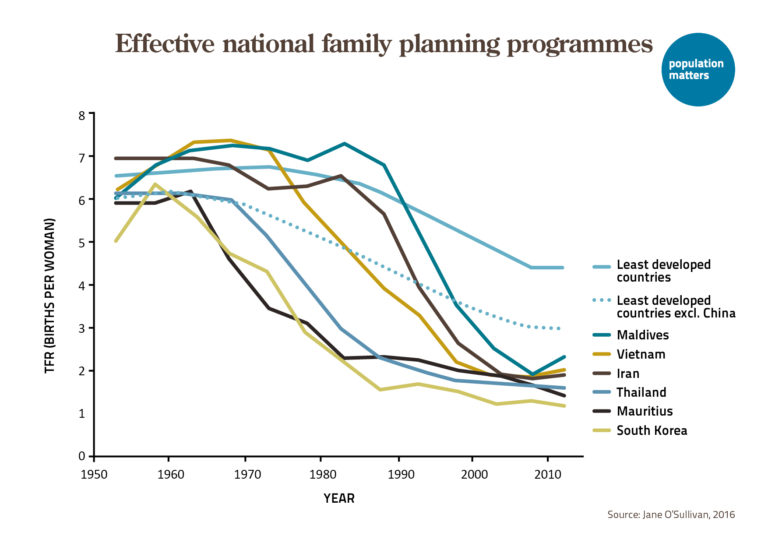
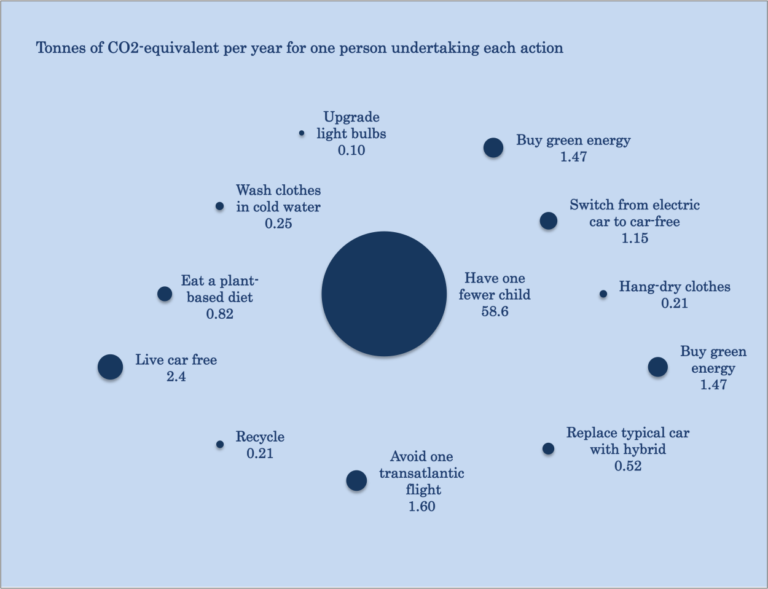
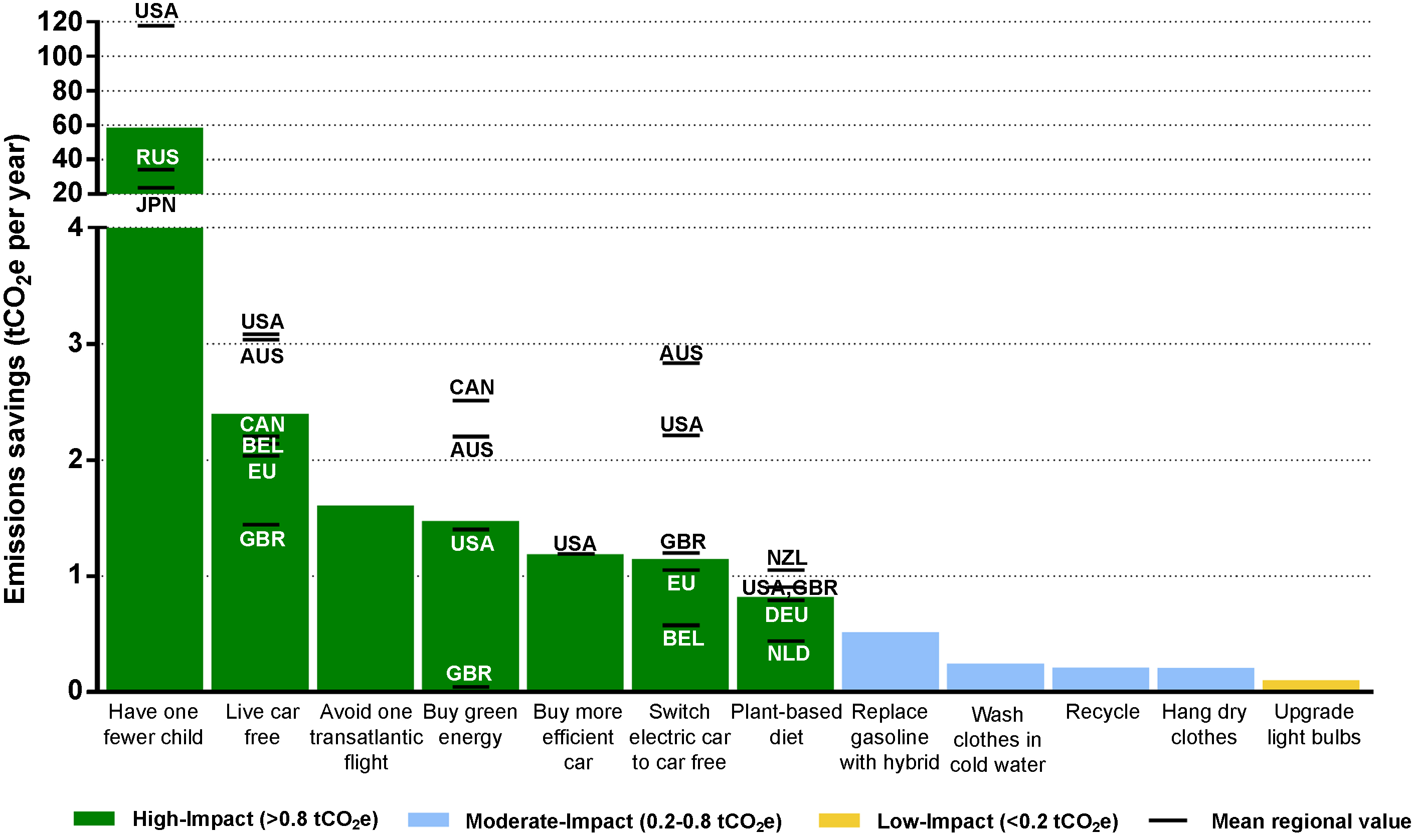
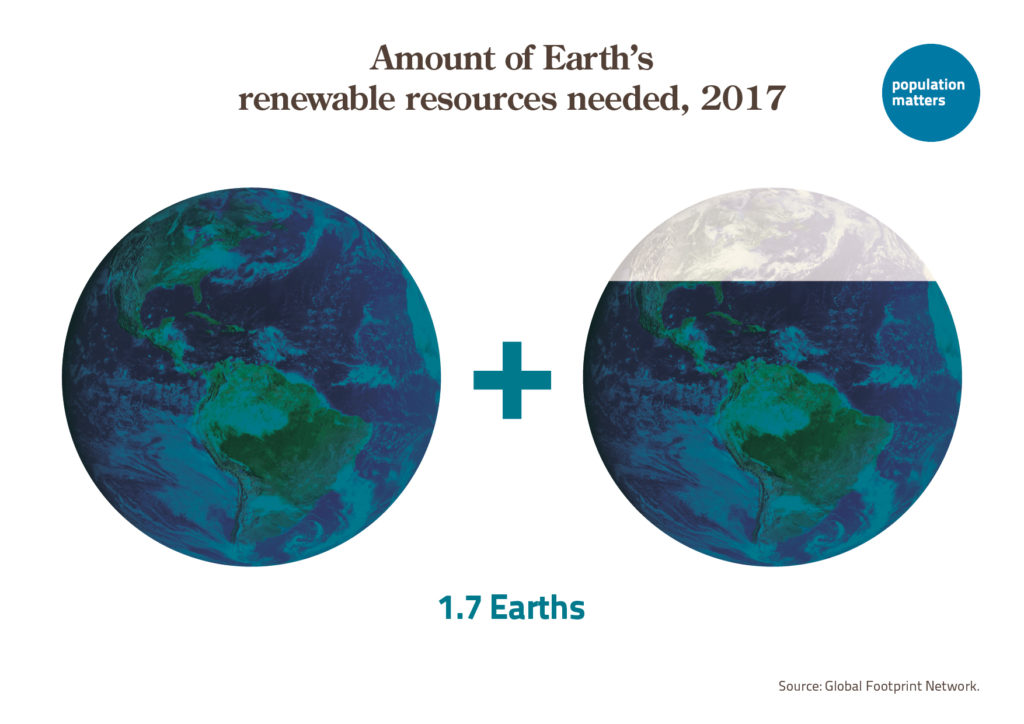
Complex problems require complex, multi-layered solutions. There is no single fix, only a collective effort. Our bloated, unsustainable societies must embrace planned degrowth, scaling down economies to levels that do not literally cost the Earth. We must rewild—restoring balance between the human and natural world, reviving biodiversity, and making space for life beyond ourselves.  We must finally confront the population issue with maturity and seriousness. This is not a matter for conspiracy theories or reactionary outrage, it is a fundamental issue of human rights, environmental stability, and long-term well-being. Expanding global access to family planning not only slows population growth but also empowers women, strengthens communities, and fosters economic resilience. In the Global North, choosing to have fewer children has a greater impact on carbon emissions than multiple lifestyle changes combined. A stable or declining population should be seen as a success, not a crisis, regardless of what Elon Musk might claim.

Ultimately, the only way to escape this dystopian spiral is to let go of our self-absorbed narratives and re-establish our relationship with the natural world.  To do so means actively working to look for connection and common ground among those we disagree with as a pathway towards constructive discourse. For this reason, new activist movements such as Holistic Activism and older ones such as Deep Ecology are becoming increasingly important. However, the more of us there are, the harder this becomes both physically and psychologically. Population sustainability is not just an environmental necessity; it is a human rights imperative and I believe, a psychological one as well.

Published

33 responses to “The Planet Cannot Hold the Weight of 8.2 billion Narratives.  Here’s Why…”

  1. Max Frederick Kummerow Avatar

    Excellent analysis. But the megaphone is small compared to pro-growth, birth dearth propaganda. How can this thinking find a wider adoption?

    1. Jon Austen Avatar

      It is getting adopted by default as it’s too expensive, risky and unfulfilling to have children now. The growthists can try, but it won’t work

      1. Barry Goldman Avatar

        but unfortunately its too little, too late . . .

  2. Margit Alm Avatar

    Well done Michael, but how do we get this message across to the wider – and often unthinking – community, whose desire is for a hedonistic lifestyle? How many read this article, watch the current ABC nature series on the Kimberleys? Our local U3A has almost 1000 members. For 5 years I ran an environmental discussion group with fewer than 10 people and declining. We were an enthusiastic group, but why not more participation from the rest?

  3. Kathleene Parker Avatar

    Come on! \”Log in???!!!\” I won\’t be wasting my time if you\’re going to put up barriers!

    1. Overpopulation Research Project Avatar

      Can I ask you to specify what asks you to log in that hasn’t been before? When writing a comment you will be asked to either log in or provide email and name, which is something that always has been requested to prevent spam.

    2. David Polewka Avatar

      “Log in OR provide your name and email to leave a comment.”

  4. woodra14 Avatar

    Excellent article Michael. I agree with your solutions, but am sadly pessimistic about humanity’s ability to implement them. We desperately need to stop overloading the planet with humans, and leave room for wildlife and nature. I only wish your article could be picked up by the mainstream media.

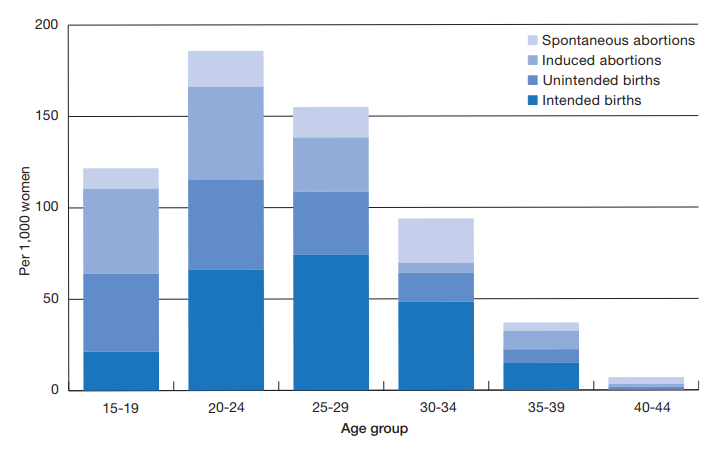
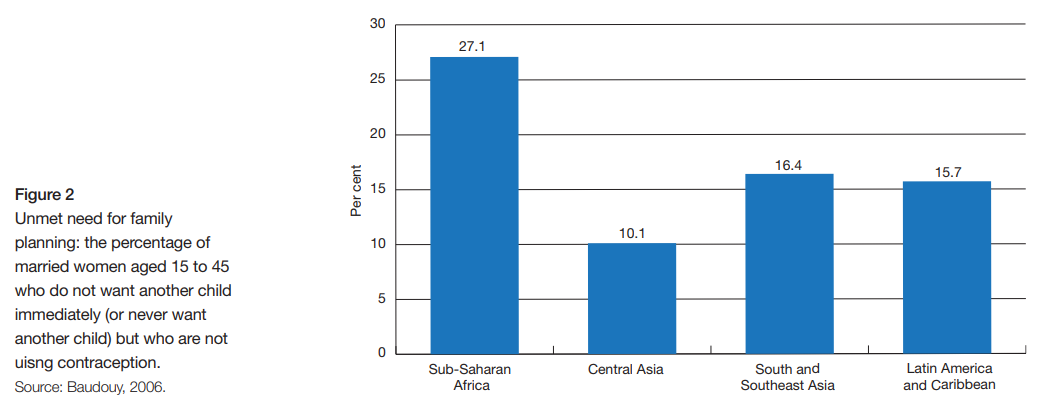
    I am also deeply saddened by the cuts to foreign aid for family planning to the third world. They desperately need help, as I understand 200 million women want contraception but can’t get access to it. Yet Western countries are happy to exploit them for their resources without investing in the needs of the developing world to help them help themselves. Instead, they are left to “populate to poverty”.

  5. Jill Quirk Avatar

    It is increasingly hard for people to reconnect with nature when it is incrementally removed from our daily lives and replaced with concrete. How will people in the cities of the not too distant tomorrow know nature?

    1. Philip Cafaro Avatar

      Replaced with concrete and screens of various sizes ….

  6. Deirdre Ryan Avatar

    Michael everything you’ve written here is so true and perhaps if humanity considered our future on our finite planet, even in the seventies, it’s very possible we might not be at this stage so soon. The reality now is, if humanity magically stopped growth in every form today, we would continue to hurl on our journey of civilizational and ecological collapse. Humans have caused and are accelerating this collapse but are no longer in control of our current trajectory.

  7. Michael Stasse Avatar

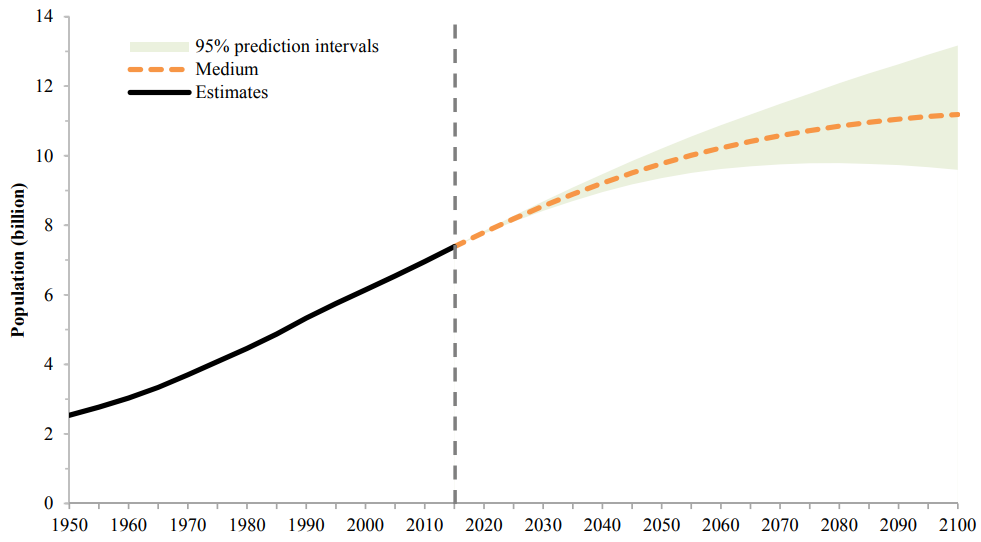
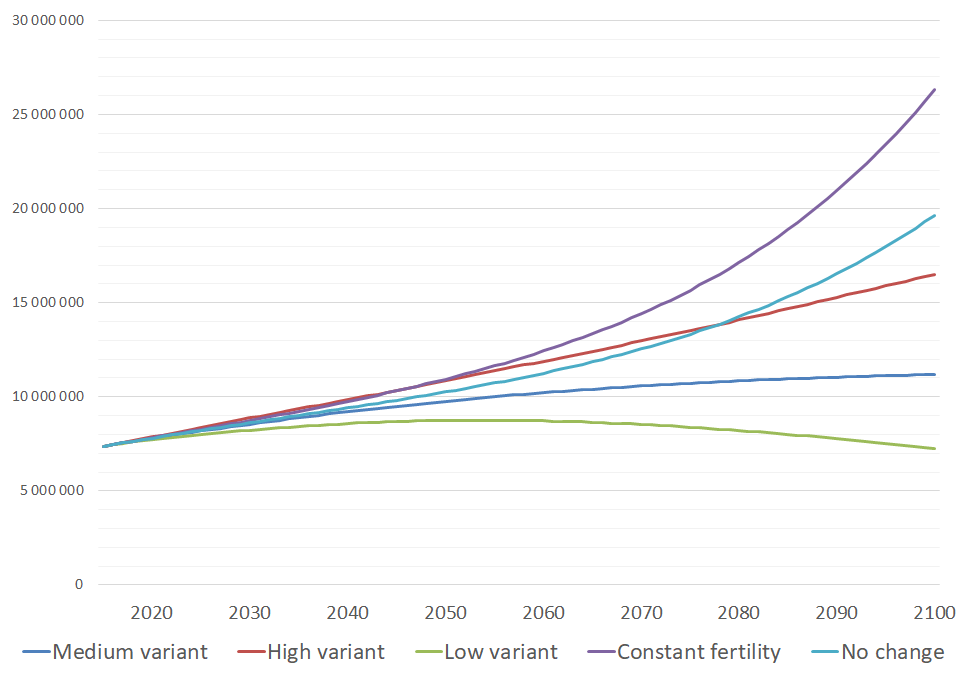
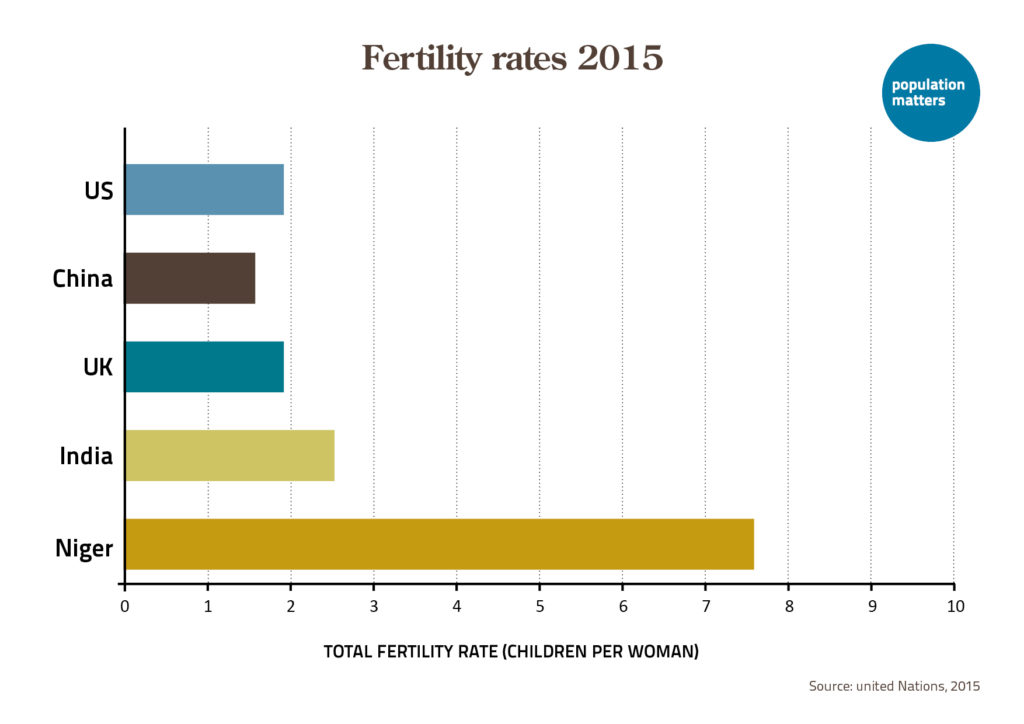
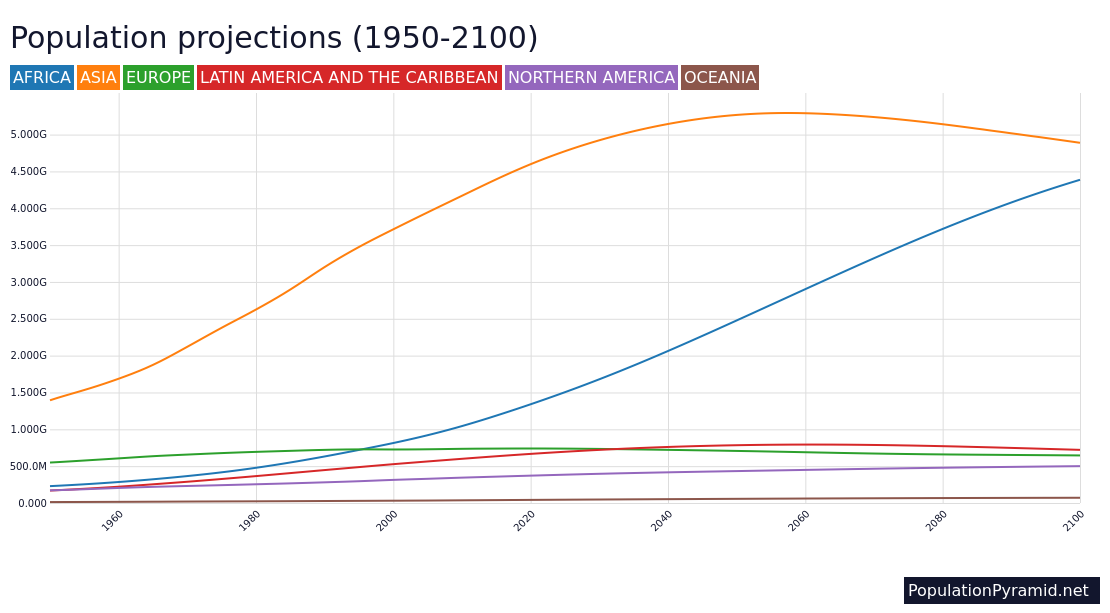
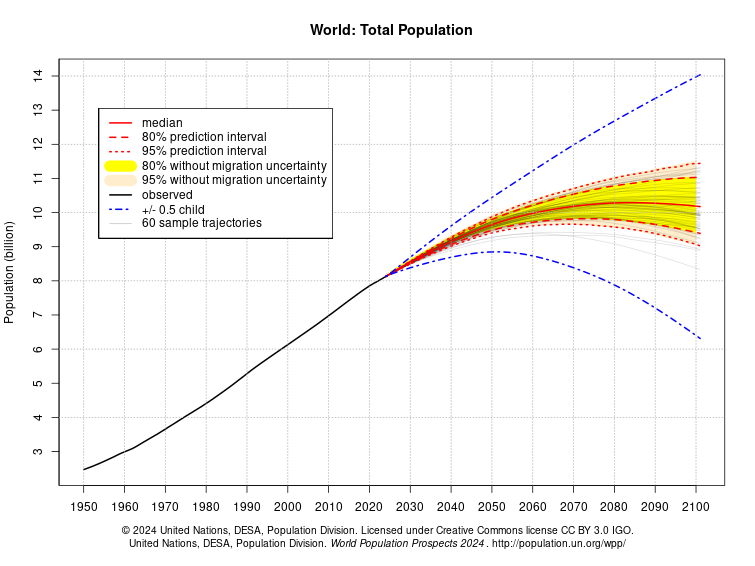
    My gut feeling is that global population growth is going to reverse within five years. Already replacement rates in several countries are below 1 (China, Korea and others) while most are below 1.5. Even Africa is falling fast.

    https://youtu.be/4-G70C90aas?si=PRXPjWnPe25WDkHf

    1. gaiabaracetti Avatar

      So it’s your “gut feeling” vs projections made by people who know how to make projections based on actual data…

      1. gaiabaracetti Avatar

        P.S. I do wish you were right. But I can’t see how the projections could be wrong, bar massive mortality events

    2. Philip Cafaro Avatar

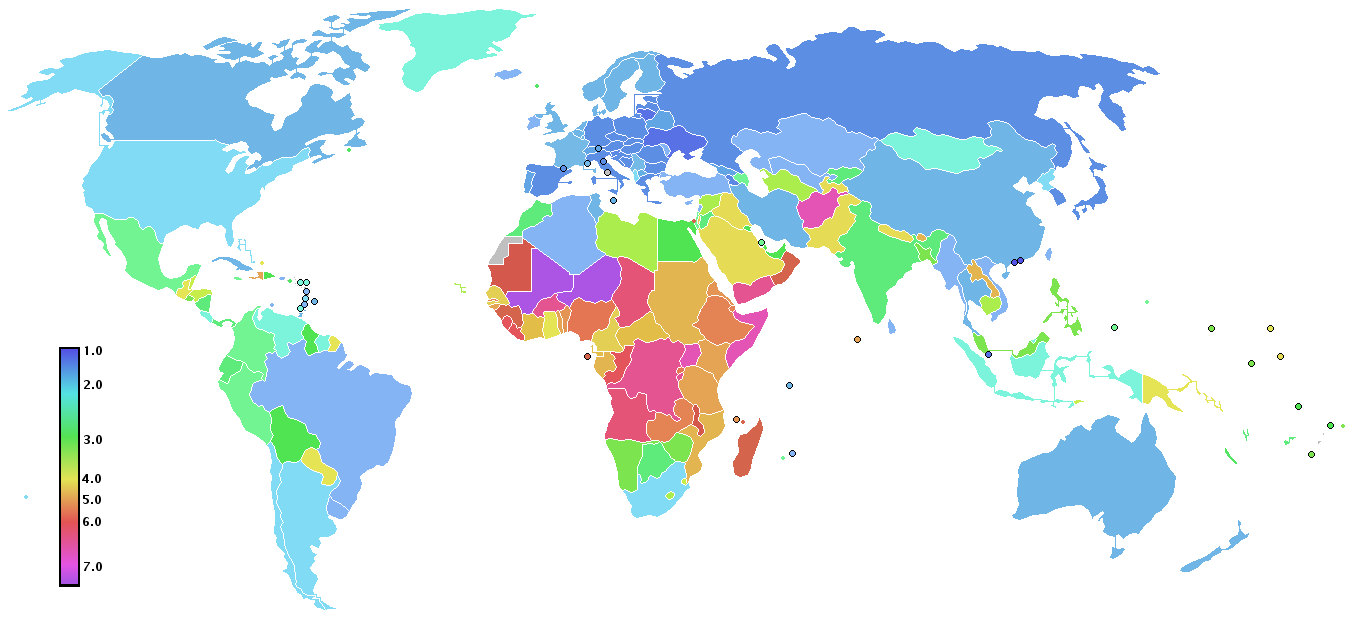
      Not really. Sub-Saharan fertility rates have fallen much slower than the UN has been predicting they would, for decades now. The most recent TFR for SSA is 4.5 children per woman, on average. They are on track for MASSIVE population growth in coming decades, massive enough to keep the world population growing, too.

  8. Jenny Goldie Avatar

    Terrific article thanks Michael. Without detracting from anything you wrote; it’s all made worse by the climate crisis confronting us. If increasing extreme weather and rising sea-levels cause a reduction in food supply, societal collapse could well be on the cards. I was just on a cycling trip around the Mekong Delta in Vietnam where land is a mere 84cms above current sea-level, yet some projections see more than 84cm rise in sea-level by the end of the century. There are 17 million people living on the Delta. Where will they go and make a living? What will happen to the economy of Vietnam when they lose all those rice exports? It will be highly disruptive. This story will be repeated around the world.

    1. gaiabaracetti Avatar

      If I may, did you by any chance take a plane to get to Vietnam? Because travelling is certainly a major contributor to climate change.

      1. Jenny Goldie Avatar

        Yes I did, with heavy heart knowing how much plan journeys pollute, but it was to commemorate the 50th anniversary of Operation Babylift on which my family and I were on in April 1975, including a newly adopted two year old. I went with my now 52 year old son and 12 fellow adoptees.

    2. passionatee8cbc4c7e6 Avatar

      Climate change is definately a concern Jenny, It is clear that the growing climate crisis is a symptom of overpopulation that leads to overconsumption, climate altering emissions and overshoot of planetary boundaries.

    3. woodra14 Avatar

      Climate change is indeed very scary for people in low lying areas. I hope you at least offset the carbon footprint of your plane journey with a donation to an organisation that plants trees or provides family planning.

  9. Peter Cook Avatar

    Terrific post, Michael, on a very important theme in the discussion about population. Throughout history, technology has been applied to solve or manage the problems created by population growth. This innovation process has accelerated over the past 500 years. Now, the techological innovations (e.g. digitisation) developed to manage huge increases in scale due to population, are further amplifying the splintering of group cohesion, strengthening modes of repressive centralised control, and further distancing the increasing mass of urban dwellers from ‘wild’ nature. This highlights the ambiguity of technology, where solving of problems in one domain creates new and unexpected problems in another.

    I also sometimes wonder whether the sheer increase in scale/ numbers, combined with new modes of highly individualised and anonymous communication, is a perfect breeding ground for creating highly anti-social and destructive niche group identities. We see this for example in online radicalisation through religion, conspiracy theories, Andrew Tate etc. While this potential may have always existed, it would have been much harder to gain traction prior to the 20th century. Such are the ‘unintended consequences’ of scale.

  10. kurtklingbeil Avatar

    Overall a pretty good overview…
    Specific nits which poke me in the eye and defy rational logical ethical analysis are:

    ** The Weight of 8.2 billion narratives.
    That explicitly and implicitly places the blame for our current global existential predicament and MetaCrisis onto “humanity” as a whole and each individual human.

    That certainly fits into the category of propaganda and marketing and not of sane rational analysis and problem solving.
    The assertion that each human being has a specific unique distinct “narrative” which exerts specific unique distinct pressures on the global social political ecological dynamics is totally ludicrous and functionally useless.

    It advocates and promotes a simplistic reductionist approach while imagining it avoids such a dynamic.

    The vast majority of humans breathe eat defecate and sleep in herds – not as distinct unique resolvable entities with identifiable narratives. That premise erects an unsolvable N-body problem in addition to the complex dynamics already inherent in Overshoot.

    Consider medical triage…
    When someone presents to a magical facility to obtain help with some malady, the diagnosis problem set is quickly decimated and classified into “bins” numbering in the hundreds/thousands – not in the millions/billions.

    Consider the political climate in America right now – and throughout its his-story.
    There are certainly not hundreds of millions of narratives – or even hundreds
    The dominant narrative can be classified down to DEMagogue and REProbate – with various mutations… Those two can be reduced into one given the degree that they are primarily corpiratist perspectives/narratives pandering to the perpetrators of the collection of crises – with competent diligent rigorous analyses a rather fringe niche project largely undermined and and sabotaged by propaganda from the perpetrators.

    ** Propaganda and marketing serve a useful/beneficial role…
    Only from the perspective of those who wield those tools as weapons and instruments of control

    ** Social media
    A favourite boogeyman which postdates Overshoot and MetaCrisis
    Far more insidious is the near-total abdication of the corpirate media of their Fourth Estate OBLIGATIONS and their collapse into propagandists and betrayal of society and of humanity …
    Consider climate denialism
    Back when Exxon scientists correctly analysed and identified the threats to the global ecosystem due to Global Heating and destabilization of atmospheric and oceanic thermodynamics – they chose to willfully deliberately create the denialism industry and the associated narratives and propaganda.
    They also successfully undermined and sabotaged decades of COPs – the predator foxes admitted into the climate chicken coop be political perfidy and betrayal.
    Any anal-ysis which evades the role of the predators and perpetrators is incomplete and impotent.

    Consilience Project / Daniel Schmachtenberger
    talk about the “Third Attractor” between
    Top-Down autocratic tyrranical non-solutions and Bottom-Up distributed impotent non-solutions.
    Deep Adaptation / Jem Bendell describe the futility of obtaining “solutions” at all given the breaching of global stability dynamics and six of nine global existential survivability thresholds.
    There are other high quality perspectives and analyses – commonly ignored – which must be integrated into any credible analyses and which considerably reduce the number of operative and critical perspectives from billions to hundreds

    Regards

    1. passionatee8cbc4c7e6 Avatar

      Kurt,

      I await your consdered thesis for a path forward.

  11. gaiabaracetti Avatar

    Jenny, sorry for putting you on the spot. My ideal would be a world in which everyone is allowed the rare long distance trip for a special occasion, if they want it, but the current excesses are strongly curbed. Most people never fly, but the ones that do often do so to an insane degree.

    1. Philip Cafaro Avatar

      Our poor old planet Earth is like a skinny kid getting beaten up by two muscly thugs: overpopulation and the overproductive industrial economy. We need to lock em both up! Even just one of them is more than enough to beat that runty teenager to death

  12. Stable Genius Avatar

    The point missing from this essay, neither can the planet “hold the weight” of the UN net-zero narrative, which is now by far the developed nations’ and market economists’ preferred proxy (or shorthand) for the endless growth that rightly dismays the essayist.

    With this fallacious narrative firmly in control, almost universally accepted by the educated left, you can bet the house, Earth (its ten billions) will be in worse shape in 2050. Trump or no Trump.

    1. woodra14 Avatar

      What on earth does net zero emissions have to do with endless growth??

  13. Kelvin Thomson Avatar

    Great work Michael. You are quite right that much of the commentary on the impact of rapid population growth concerns its environmental impacts, and there needs to be a lot more focus on its other impacts – on our physical and mental health, on our social cohesion, on our democracy. At the same time you managed to make important points about the vanishing role for nature in the 21st century. It is deeply ironic that some companies produce thousands of products every day featuring the (admired) image of an apex predator, while the real predator numbers just a few thousand in the wild, clinging precariously on the edge of extinction.

  14. Michael Akulov Avatar

    I wish I could write like this.

  15. Max Frederick Kummerow Avatar

    Population momentum keeps population growing for about half a century even after fertility transitions. It takes that long from all the pre-transition kids to grow up, have their kids (even if fewer than their parents) and finally age. Japan and China both took about fifty years to peak population from the year they first transitioned to less than 2.1 births/woman. And the peaks were 40% higher than population at the date they reached 2.1. Also mortality keeps falling, especially since smaller families are more prosperous and can afford better health care. And countries that provide family planning tend to improve medical systems. So Africa’s population will grow considerably, even if slow decline of fertility accelerates. The sooner they transition, the fewer will die from wars and famines.

    1. gaiabaracetti Avatar

      Their fertility rates are terrifying – to name one, Nigeria, a country of well over 200 million, has almost 5 TFR.
      I don’t think that it will only be wars and famines. They will either migrate – hundreds of millions of people making their way to Europe, Asia, North America – or directly invade. History shows that migrants become invaders when they are repelled, or numerous enough. No one sits at home and starves if they have an alternative; no one, when refused entry while in need, takes no for an answer.
      When the Europeans did this, we all know what happened to the rest of the world.
      We’re all screwed.

  16. David Polewka Avatar

    Yes, using vaccines to suppress communicable diseases is humane, in that it
    shows concern for the pain or suffering of another, but it doesn’t show any
    concern for the consequences of altering the death rate. It doesn’t show
    any concern for quantity or quality of the human race. It gives too much
    credit to humans and not enough credit to God and Mother Nature. Nature is
    harsh, Nature discriminates, there isn’t any equality in Nature.
    Just because we can do something doesn’t mean the benefits will outweigh
    the costs in perpetuity.

  17. […] aware of the multitude of problems stemming from population growth, be they related to economy, societal well-being, biodiversity loss, or climate change. But to raise the issue with the general public, it is […]

Leave a Reply

This site uses Akismet to reduce spam. Learn how your comment data is processed.

NOTE: Comments with more than one link will be held in wait and will only become visible on the site after an admin has approved it.

Explore the content and topics covered by TOP, search here

Blog categories
Gallery of infographics – Learn more about overpopulation and environment

Discover more from The Overpopulation Project

Subscribe now to keep reading and get access to the full archive.

Continue reading