New Page to Fight Myths About Population

Our new webpage “Myths about population” gathers some well-written responses to the most common misconceptions about population.

by Pernilla Hansson

Working in the field of population research, we often come across a few recurring arguments minimising the importance of the population factor or demonising actions to address it. The myths perpetuated in these arguments seem to be widespread. Time and time again, they are used to shut down discussions about population, helping prevent any meaningful action.

Our readers are well aware of the multitude of problems stemming from population growth, be they related to economy, societal well-being, biodiversity loss, or climate change. But to raise the issue with the general public, it is crucial that we can readily debunk the most common myths and misconceptions, ensuring that future population discussions are based on facts and strong evidence.

To help with this effort, we have gathered some of the best responses on a new page of our site: “Myths about population”. The links on this page lead to well-written texts that deconstruct some of the most common myths and misconceptions about population growth, depopulation, and policies to reverse overpopulation. We hope that this material can help counter population misconceptions, acting as a handy resource to be called upon when you come across these myths.

Of course, the relative importance of population among other factors driving environmental or social problems is always up for debate. The myths the writers bust are designed to undermine such discussions, by dismissing the population factor altogether.

If you have suggestions for other pieces that should be added to the new page, don’t hesitate to let us know, either via our contact page or as a comment on this blog. Thanks in advance for your suggestions!

We’d like to thank authors Peter Uetz, Jane O’Sullivan, Francesco Ricciardi, Susann Roth, and Lucia Tamburino for taking the time to write the well-written texts.

Published

18 responses to “New Page to Fight Myths About Population”

  1. Esther Phillips Avatar

    Funnily those who bleat that “it is all about consumption” are generally the very last people prepared to address theirs. Like that the status quo is maintained, and no-one needs to do anything!!

    1. gaiabaracetti Avatar

      To be fair, you also see people talking about population and then having multiple children…

      1. passionatee8cbc4c7e6 Avatar

        Probably counterproductive to point fingers at those with large familes. David Suzuki for one. Having children is a personal choice and chould not be a mandated, set agenda. Hooray for those who are one and done or childfree, but its a choice.

  2. Richard Grossman Avatar

    I suggest that we ask people who say “it’s all about consumption” what their carbon footprint is, and what they are doing to decrease their consumption.

    1. gaiabaracetti Avatar

      Why only them? I’d ask everyone, including people on this blog! The laws of physics and biology don’t change depending on what one thinks

  3. Madeline Weld Avatar

    Great to see TOP’s new page on myth-fighting. Population Institute Canada also has an FAQ page on population myths. It was created in 2012, so some of the values may be a bit dated, but the arguments still stand. Here are the FAQs we addressed: https://populationinstitutecanada.ca/faq/

  4. Dag Lindgren Avatar

    Very good compilation of relevant arguments. I added the information to my Swedish blog about the population matter https://www.stromstadakademi.org/befolkning/?p=805, But unfortunately very few will read it.

  5. Hugh Avatar

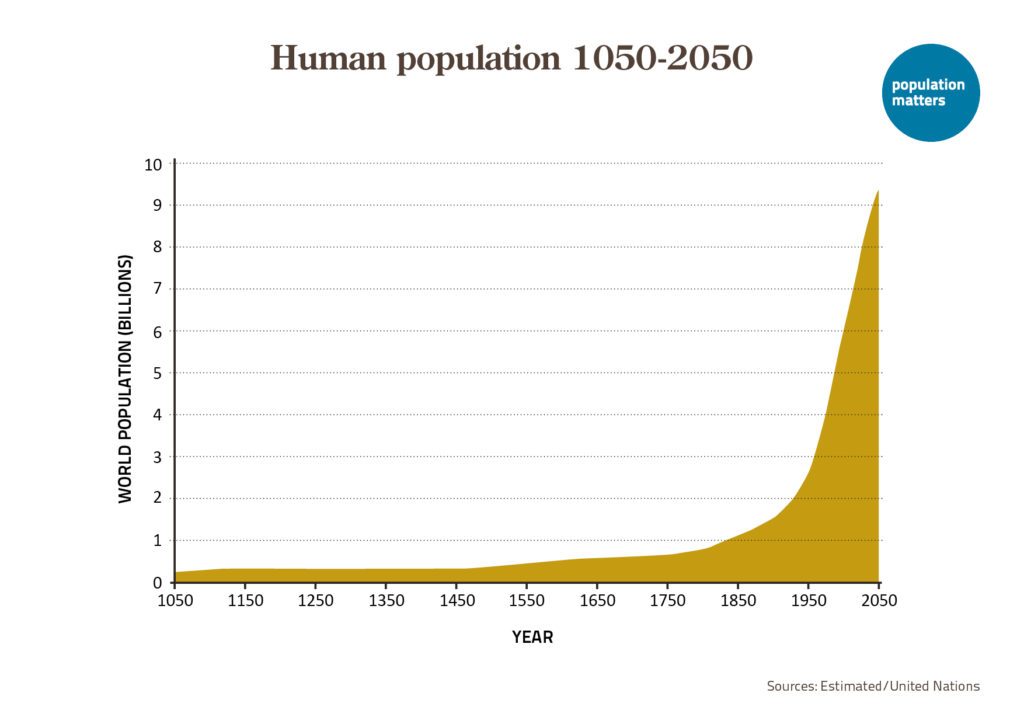
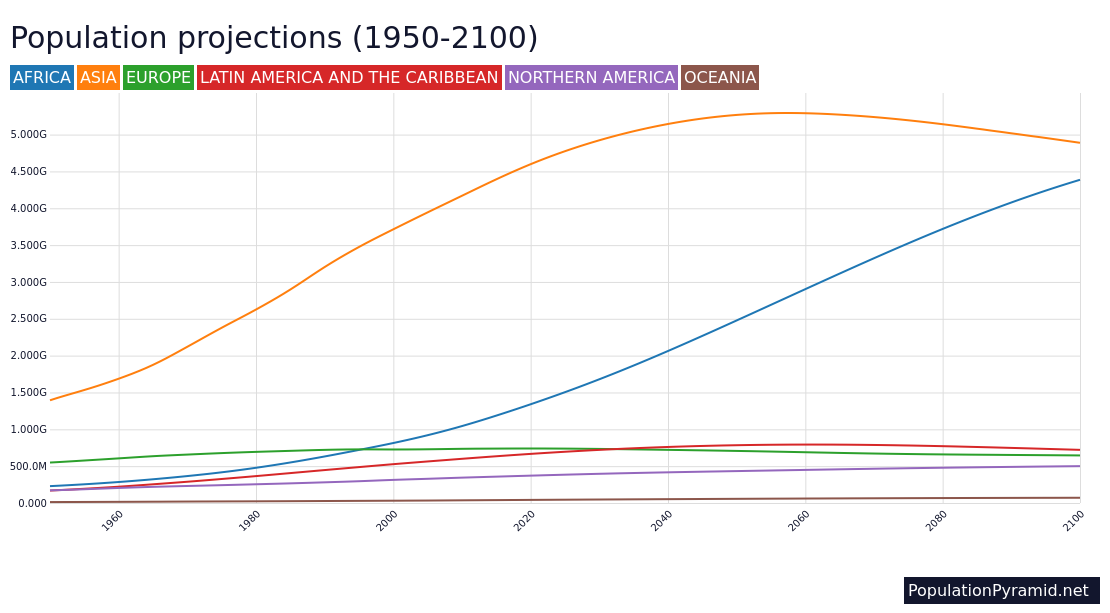
    Most of us reading “The Overpopulation Project” consider that the earth faces an existential threat due to the increase in the human population, from 2.5bn in 1950 to 8.3bn today, and the impacts that is having as a consequence. So why are we so dismissive, or is it patronising, condescending and down right “sniffy”, about Deng Xiaoping and the “One Child Policy” introduced in China in 1979 ? In 1979 there were 970 million Chinese living in grinding poverty, following the disasters that were Mao Zedong’s Great Chinese Famine and Cultural Revolution.
    Today there are 1.4bn with a standard of living that their grandparents could not have dreamed of. and the TFR has been maintained at 1.2 children per woman. This has been enabled by preventing 400 million live births during this period and the rest of us owe China at least a modicum of gratitude, since otherwise the world population would be at least 8.7bn already. It must have been difficult for China to achieve such a Great Leap Forward into the 21st century and there were millions of personal tragedies, in terms of forced abortions, reduction in ratio of females to males, lost aspirations of parenthood, but in the balance for the current and future generations was it worth it ? Perhaps we, Africa, Asia, the United Nations and NGOs have something to learn, that China could be a model to follow if we are serious about reducing the damaging human footprint on the earth.

    1. gaiabaracetti Avatar

      So, you are celebrating economic growth, which increases the human footprint, while praising a policy that you think reduced human footprint… it makes no sense.

      1. Hugh Cornwell Avatar

        I am praising lifting the Chinese people out of grinding poverty and the anarchy which resulted from Mao’s warlordism, a condition which still afflicts billions of people in Africa and Asia today. Hence migration flows WITHIN these continents, never mind to the rich “West”, have never been higher.

        The lives of Chinese people are infinitely better than in the time of Mao Zedong and I wish the same improvements for those suffering from the current crop of rapacious elites all around the world. At the same time I recognise that the standards of living in the “West” are morally indefensible, when compared with the world’s poor, while at the same time they are also the yardstick for the aspirations of billions of people in the rest of the world.

        In the “West” we need to reduce our CHRONIC over consumption and carbon footprint, which is not achieved by driving a Tesla and then flying off on business or on holiday, and in the rest of the world there is an IMPERATIVE to reduce every countries’ TFR to less than 2.1.

    2. passionatee8cbc4c7e6 Avatar

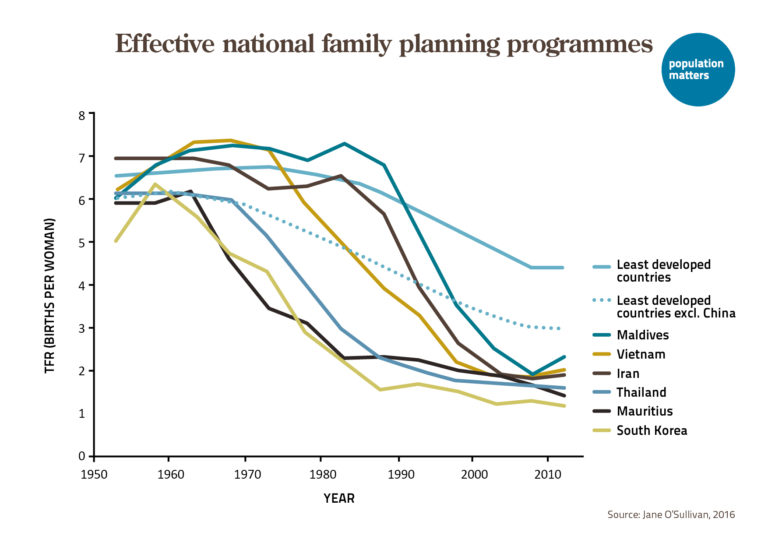
      China’s centralised family planning was a failure and a human rightsd disaster. After the one child policy, China’s TFR, which had been falling rapidly, flat-lined for 8 years and there are now 30 million more males than females in the 30-40s age cohort becaseof femicide/infanticide. Contrast this with places like Iran in the 90s and Thailand in the 70s which brought in massive, free and voluntary family planning programs that saw TFRs fall from >5 to <2 in a decade.

      1. gaiabaracetti Avatar

        The male preference is unrelated to the one child policy (which made some allowances for families with a female child). India has the same problem, and there was no one child policy.

      2. Hugh Cornwell Avatar

        This week’s “The Economist” P.14 “Briefing Population Change” uses falling TFR rates in middle income countries, just like Iran (Persia) and Thailand (Siam) mentioned by passionatee8cbc4c7e6, to sound the alarm that the world faces the possible extinction of the human race if this current TFR trajectory continues.

        These falling birth rates have so far occurred in 132 high and middle income countries with, by and large, stable governments, growing economies, an educated population and a rich cultural heritage.

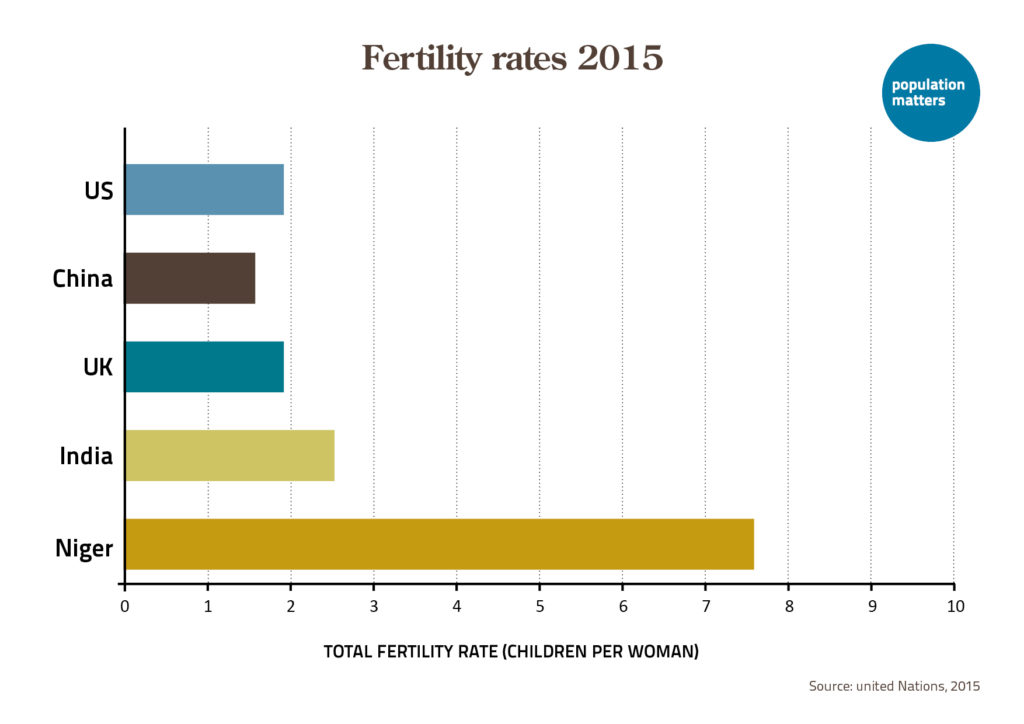
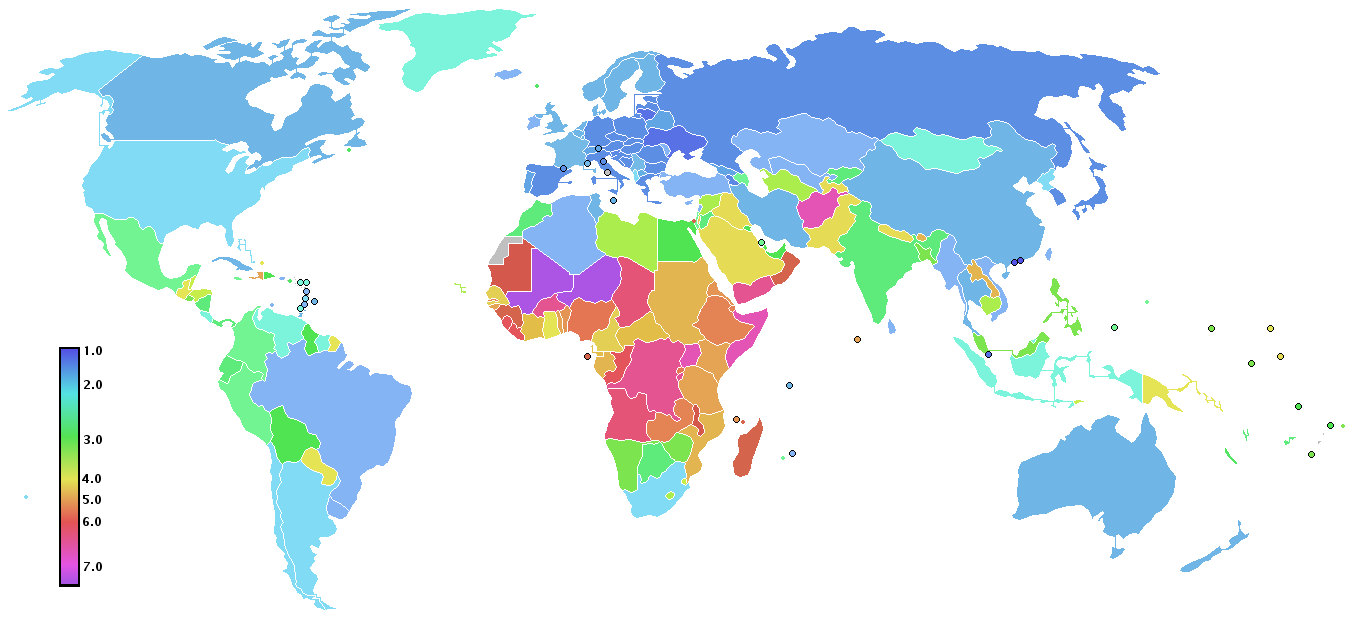
        However there are 105 countries whose birth rates are above 2.1., and often well above. These are ALL situated in Africa and Central Asia, for example Chad’s TFR is 6.03 and Somalia’s TFR is 6.01, and include the likes of the DRC, Mali, Nigeria, Yemen, Afghanistan and Pakistan, and they all suffer, in one form or another, from chaotic governments, warlordism & tribalism, rampant corruption, lack of international investment, institutionalised misogyny and lack of education for the majority of their populations.

        Reducing the TFRs in middle income countries was, for demographers, the low hanging fruit. Doing the same in Africa and Central Asia will be much more difficult . . . and will probably require the coercion of their political elites, rather than of their already oppressed populations.

        The Economic Growth desired by Elon Musk and “The Economist” appears to be entirely dependent upon Population Growth. The more mouths there are, the more “stuff” that can be sold, the larger and more reliable the profits that are likely to result. I would suggest that this is equally, from an economist’s point of view, the low hanging fruit.

        A far more ethical business opportunity lies in raising the standards of living of the poorest, in particular in the 105 countries with the highest TFRs, and welcoming the plateauing of the human population, as soon as possible, followed by its rapid decline.

        Of course, neither business “influencer” mentions the benefits of a rapidly declining human population on the Natural World, the reduction of human despoilation and pollution allowing for the recovery of natural habitats and their endangered species. A healthier planet and no need to go looking for a new one.

  6. Dag Lindgren Avatar

    Usually it was no really severe conflicts in China one-child policy people understood and had in memory recent starvation periods, now it is milder. Even in Swedein it was worse earlier with forced sterilizations and similar. The consequence was usually restricted to that you could not keep an official job or get state support if you had to many children. It was may exceptions and usually not as grim consequences as I write. And it is very bad that those old memories like the nazis against unsuitable people are major reasons for official silence about overpopulation today.

  7. gaiabaracetti Avatar

    passionatee8cbc4c7e6, I disagree. Yes, it should be a choice, but we are all in this planet together and those having a large number of children and contributing to its destruction. It’s like saying “oh, this river is very polluted”, and then when someone dumps more waste in it, write it off as “their choice”. I know it’s not an exact analogy, but if you recognise there’s a problem, people contributing to that problem aren’t merely exercising their free choice.
    At any rate, I was specifically referring to people preaching about the environment and overpopulation, and then going against their own message by having large families (or wasteful lifestyles). This diminishes their credibility and discourages people from listening to them.
    I didn’t know about Suzuki; apparently he said “Canada is full”, which is pretty disgusting from someone with five children!

  8. Stable Genius Avatar

    In Australia, by far the most important myth of all is, “You’re A Racist”. August 31, 50,000 Australians protested Australia’s staggering overpopulation – 1.4 million immigration in three years flat. With PM Albanese leading the charge, they were smeared as neo nazi hate speech. A senior opposition figure was sacked after stating the bleeding obvious, the government imports Indian migrants to stack its vote. This is a matter of record – Albanese signed two discriminatory pacts with Modi that preference Indian qualifications and student-migrants over all other nations on earth.

    1. gaiabaracetti Avatar

      Australia has a 2.1% population growth rate. Canada has 3%, which is insane – a 24 years doubling time.
      Both are higher than the population growth rates for India or Pakistan.

      1. Hugh Cornwell Avatar

        Presumably those population growth rates in Canada and Australia are due to immigration, not to TFR.

Leave a Reply

This site uses Akismet to reduce spam. Learn how your comment data is processed.

NOTE: Comments with more than one link will be held in wait and will only become visible on the site after an admin has approved it.

Explore the content and topics covered by TOP, search here

Blog categories
Gallery of infographics – Learn more about overpopulation and environment

Discover more from The Overpopulation Project

Subscribe now to keep reading and get access to the full archive.

Continue reading