
Habitat loss from agricultural expansion is a leading cause of biodiversity loss. A new study published in PNAS found that reducing population growth in low-income countries would shrink future global cropland requirements more than slashing consumption in higher-income countries.
by Olivia Nater, originally published by Population Connection
Biodiversity loss from crop expansion
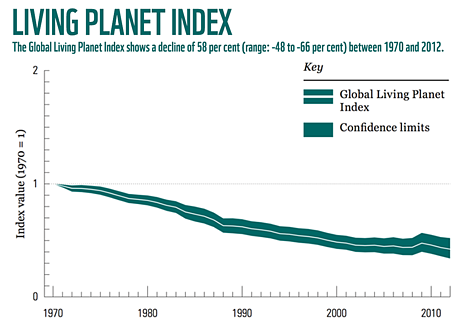
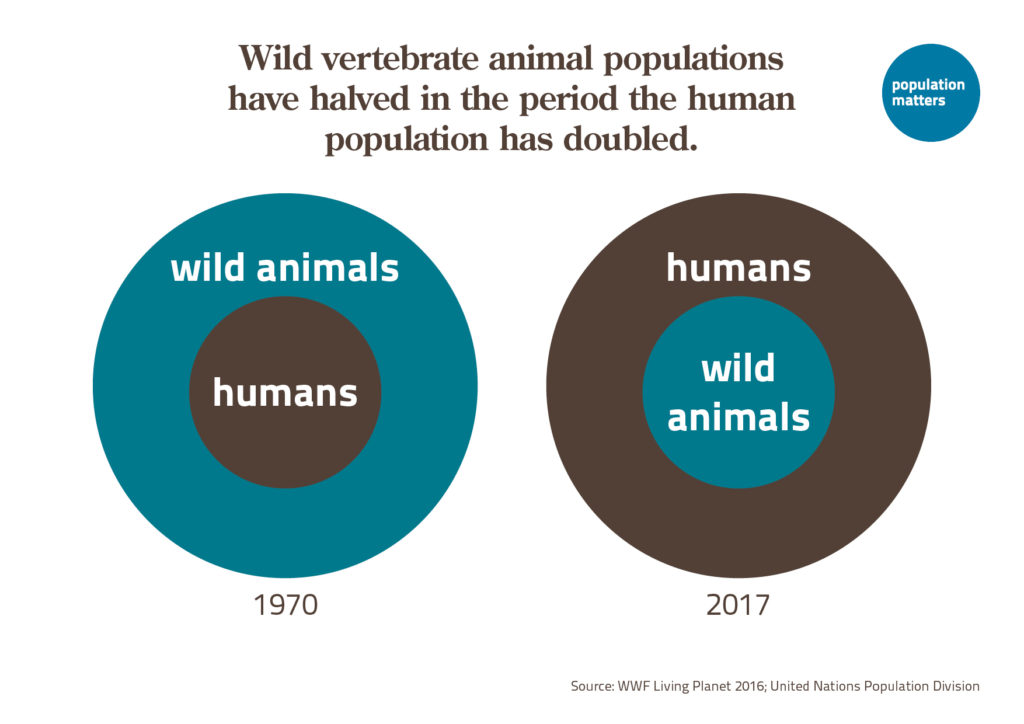
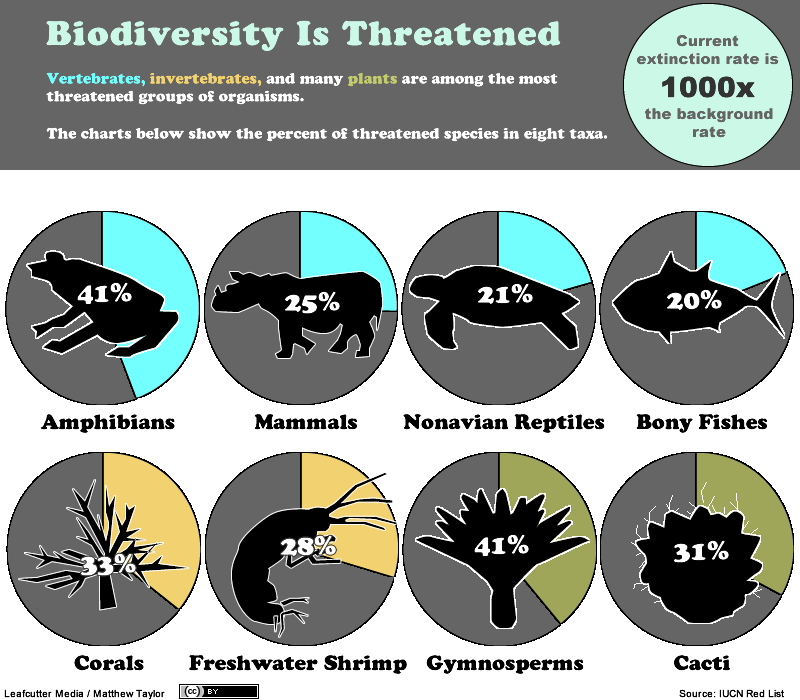
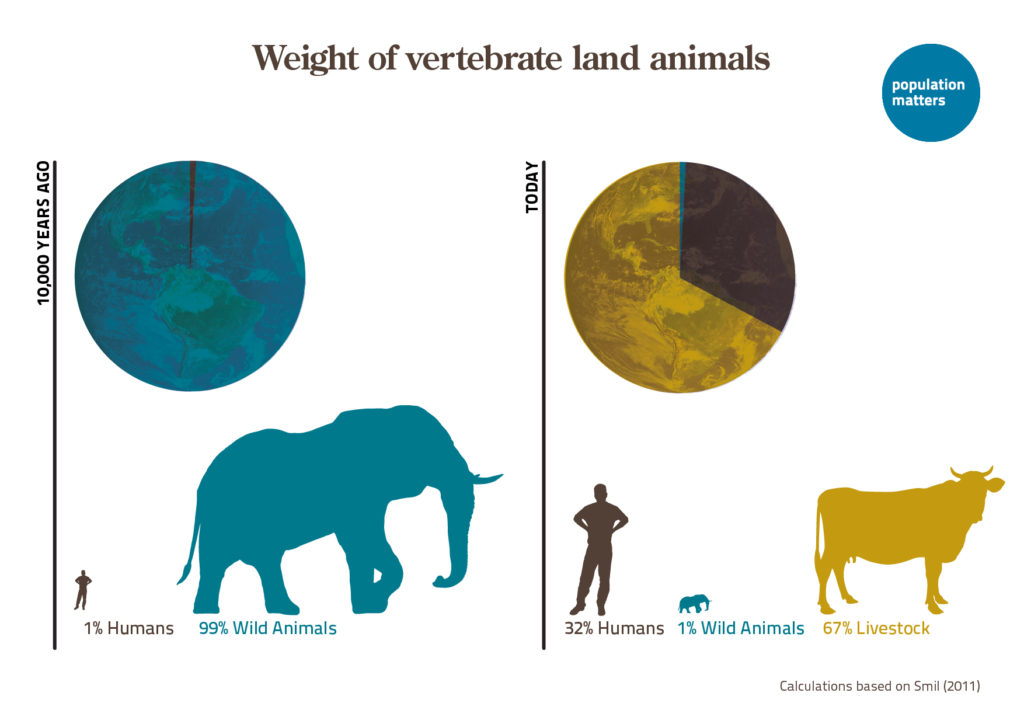
Almost half of all habitable land on Earth is already being used for agriculture. Agricultural expansion to keep up with growing demand from projected increases in population and consumption rates means more and more terrestrial species will be squeezed out of existence.

The various ways economic growth can affect the environment
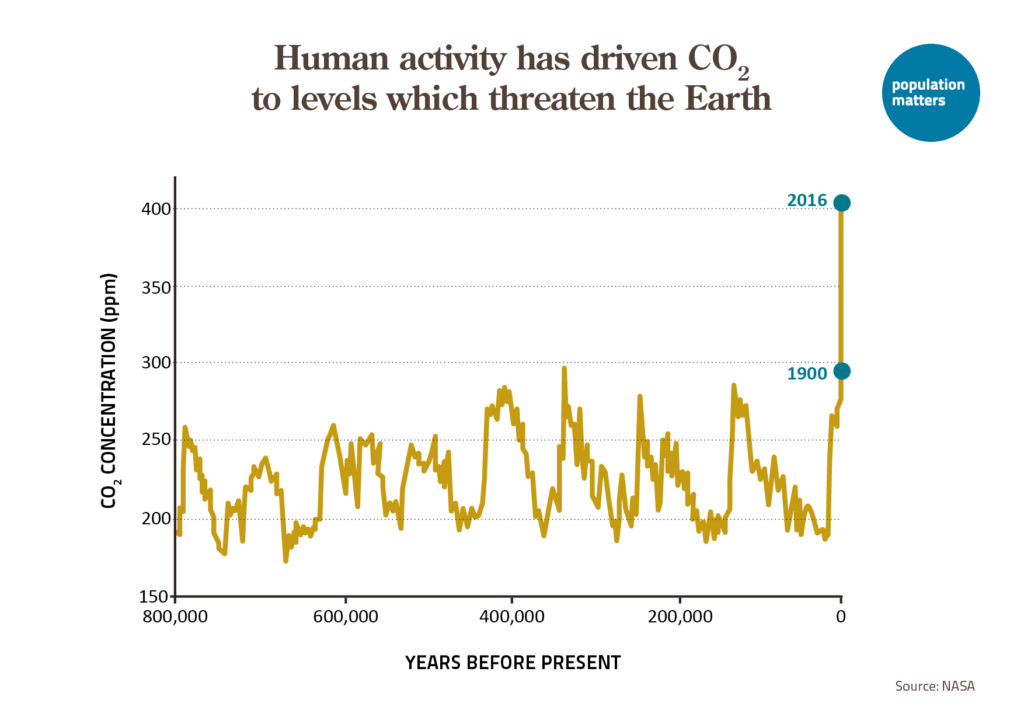
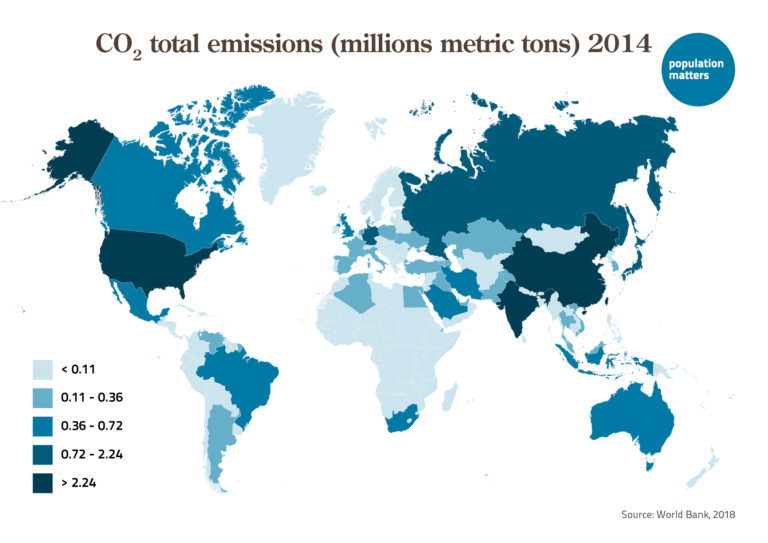
Economic development is largely seen as detrimental to the environment because it increases consumption levels and greenhouse gas emissions. High-income countries contribute far more to climate change than poorer countries, for example. Global poverty reduction can also bring significant environmental benefits, however, through slower population growth.
The GDP-fertility connection
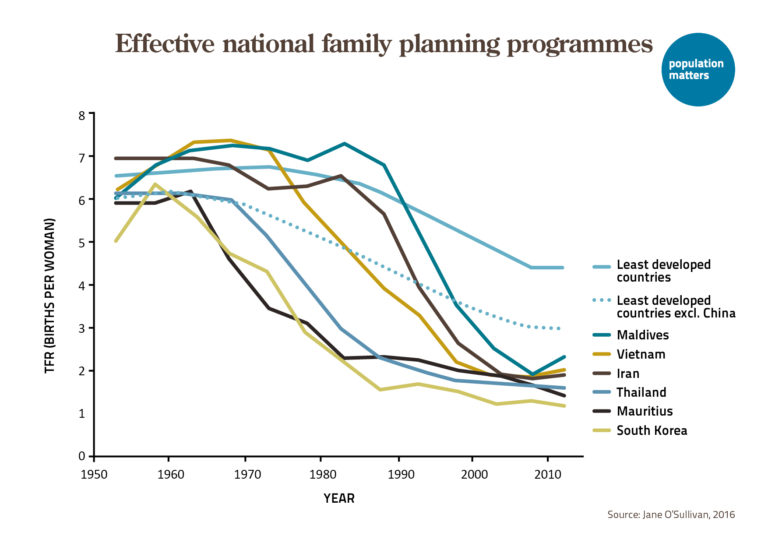
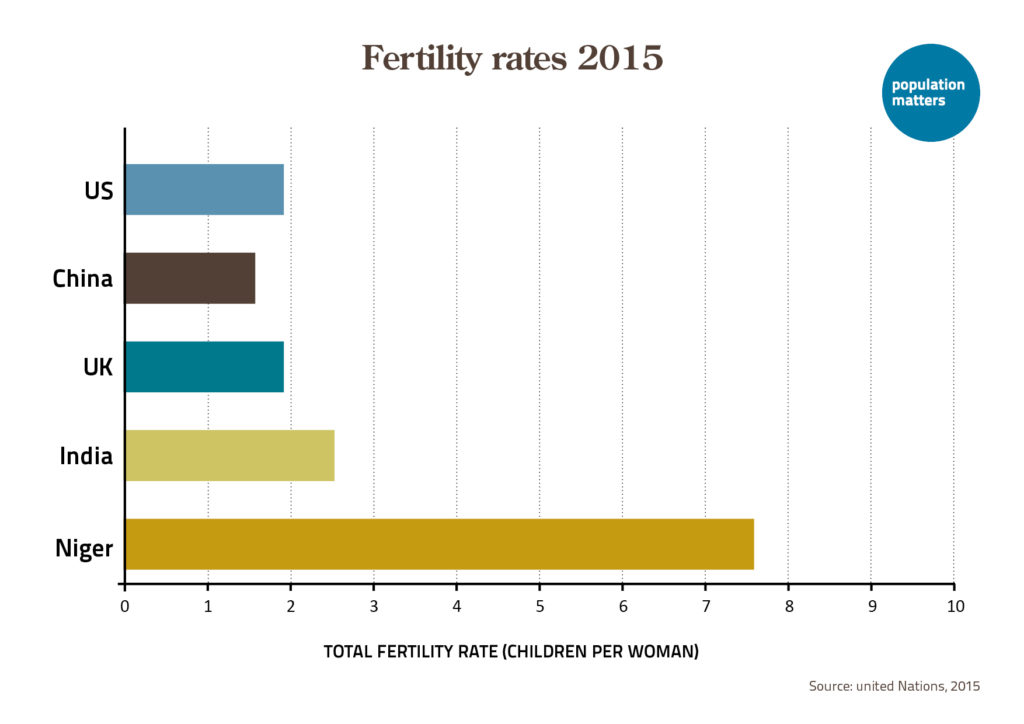
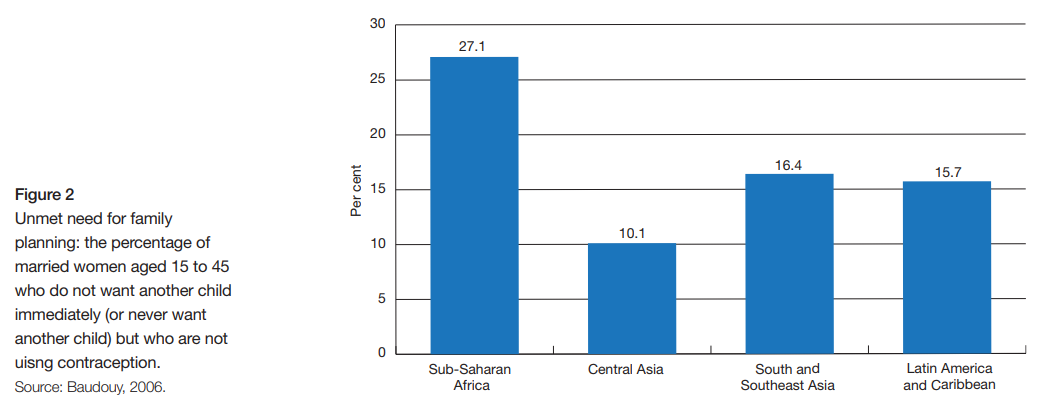
Increasing GDP is usually correlated with declining fertility rates (and thus lower population growth) because wealthier countries have more opportunities for women outside of marriage and childbearing and greater access to reproductive healthcare, including modern contraception. As economies develop, gender inequality tends to decrease, with higher education rates for girls and later marriage and motherhood for women leading to smaller families.
This economy-gender correlation works the other way around too. In fact, fertility decline is usually the precursor to faster economic development. This is because smaller family sizes help people escape poverty, allow for higher investment per child, make it easier for women to join the workforce, and shrink the ratio of young dependents to workers (the “demographic dividend”), boosting productivity.

Population as a key factor
The PNAS study analyzed past and anticipated future trends in population, per capita crop demand (a reflection of food demand), and crop yields to estimate global agricultural cropland requirements by 2050 and 2100, under moderate levels of climate change.
The authors modeled several different scenarios, including one in which per capita crop demand in wealthy countries decreases, one in which economic development in low-income countries accelerates, and one where we continue with “business as usual.”
The paper states,
“Economic development in lower-income countries could reduce future cropland requirements via slower population growth, improved crop yield, and higher volumes of global crop trade, which could more than offset rising per capita crop demand. These impacts would far exceed reductions in cropland requirements from decreased crop demand in higher-income countries.”
The authors quantified the relative contribution of population, per capita crop demand, yield, exports, and imports to each country’s area of cropland with country-level data from 1961 to 2016. They found that across all income groups, population had the largest relative impact on cropland expansion.
Diverging trends
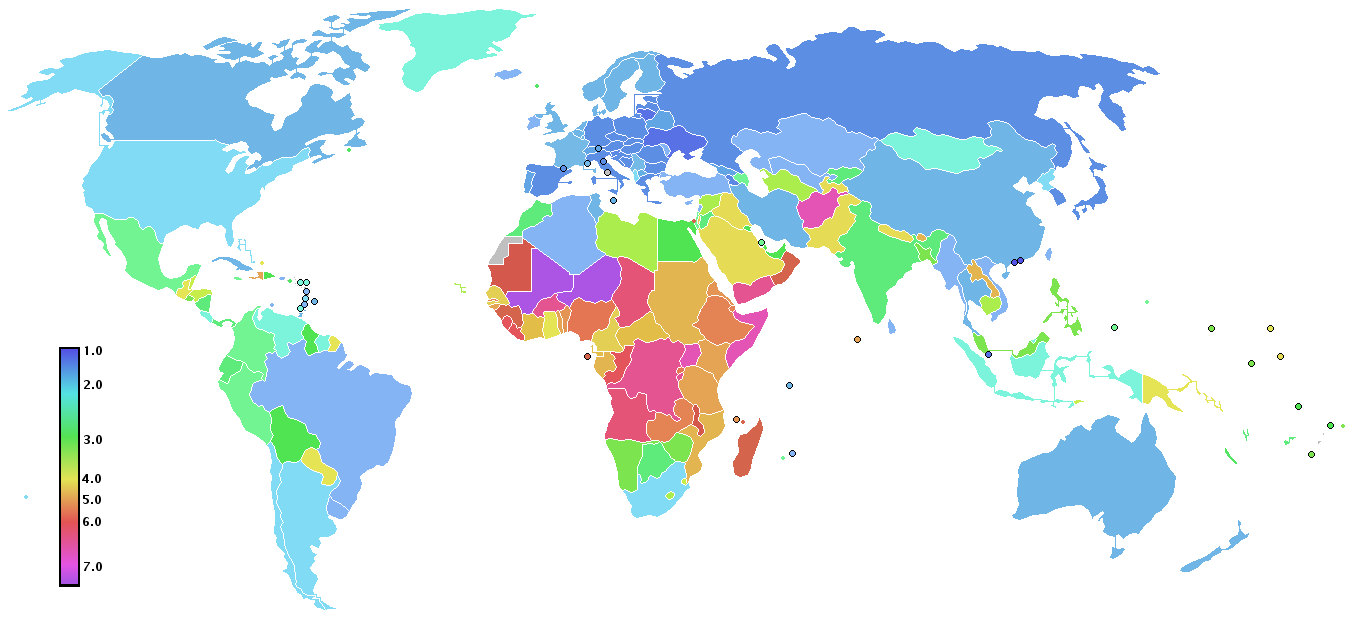
The study notes that in low-income countries, cropland area has almost doubled since 1961, while the population has increased three-fold. Low-income countries have the highest fertility rates due to poverty and extreme gender inequalities.
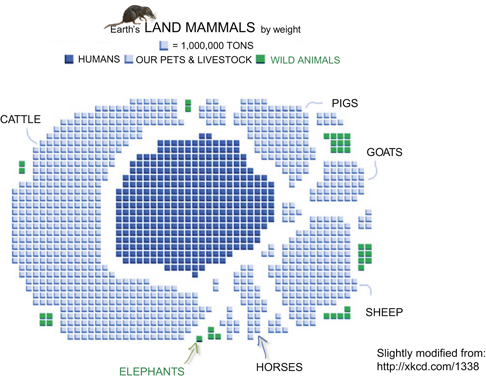
In high-income countries, total cropland area has actually declined since 1961, coinciding with dramatically boosted cereal yields and smaller increases in population relative to developing countries. The authors point out that rich countries would have seen a much greater decrease in crop area if it hadn’t been for crop-based biofuels and the increased demand for grain-fed meat (including grazing pasture, livestock farming uses as much as 80% of all agricultural land).
Possible futures
Business-as-usual
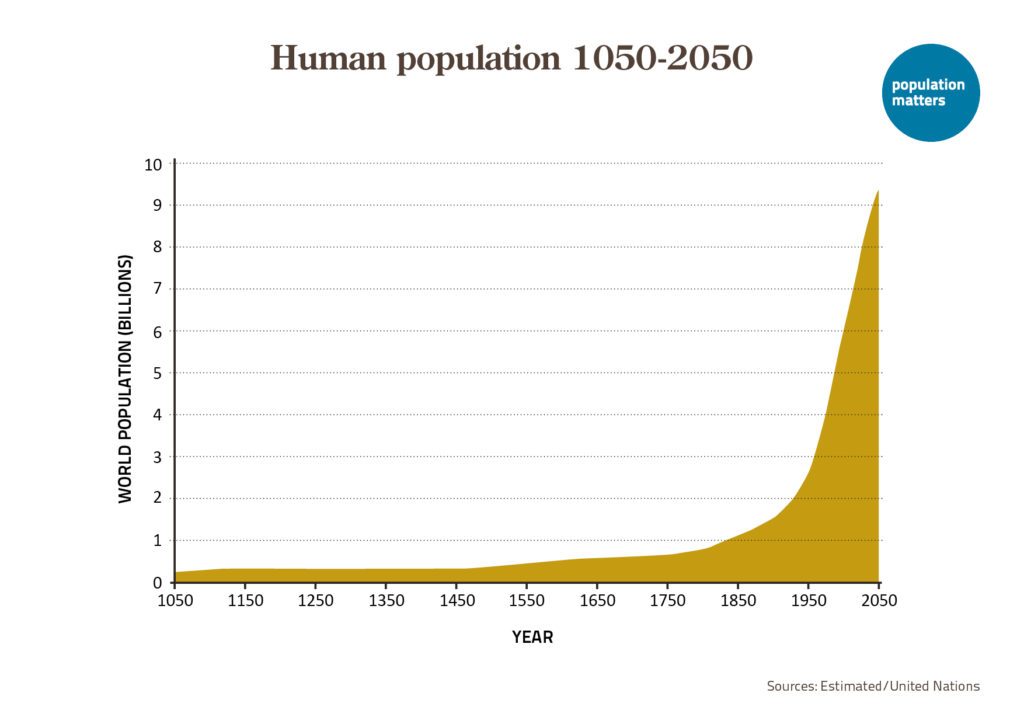
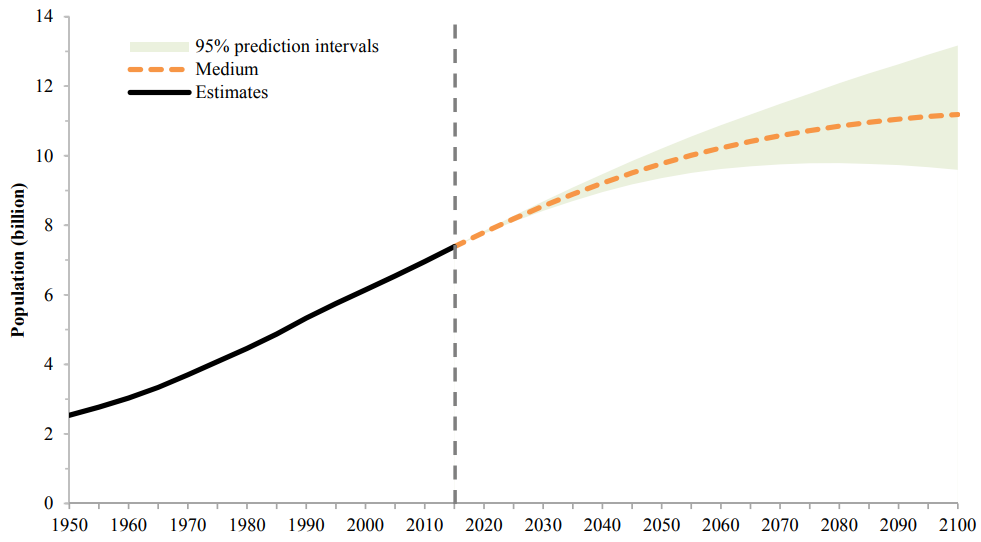
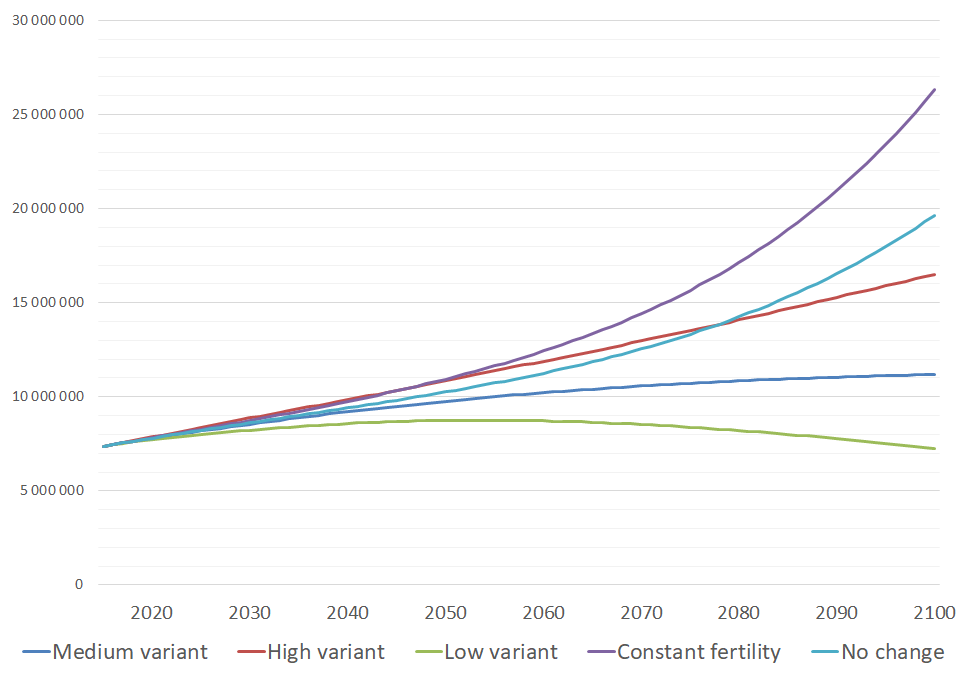
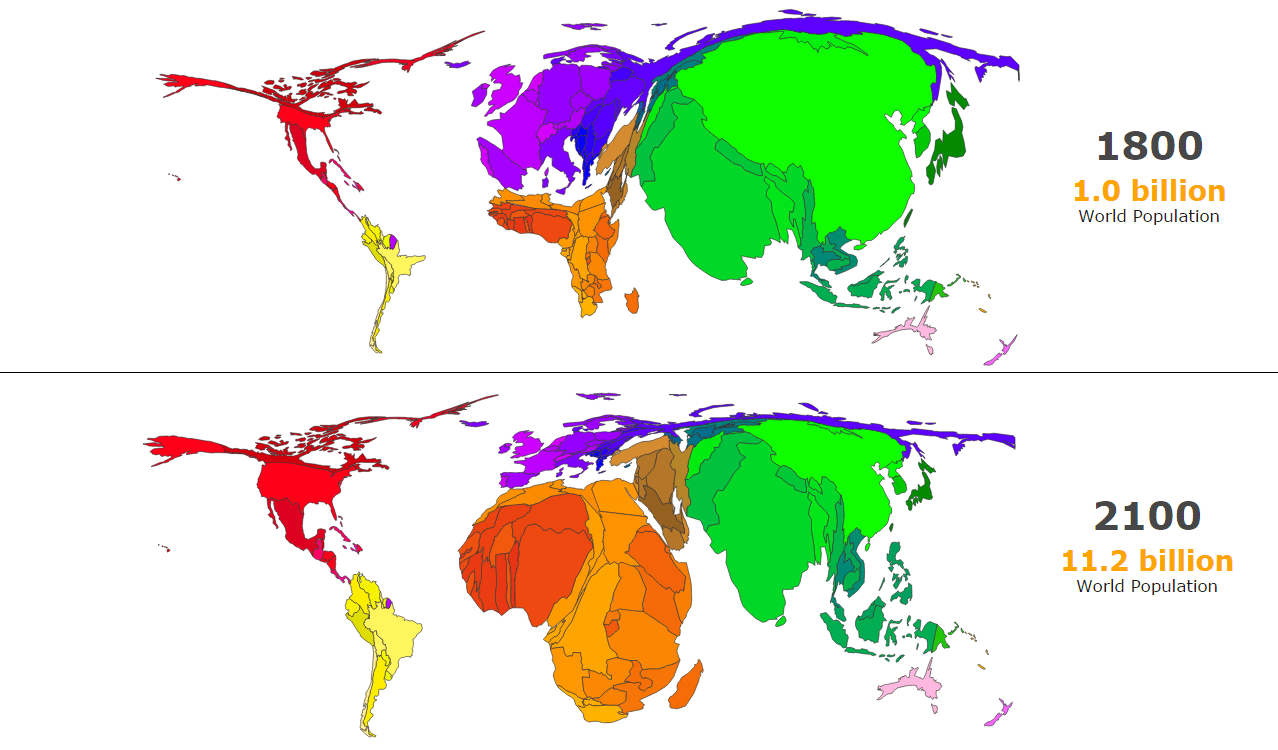
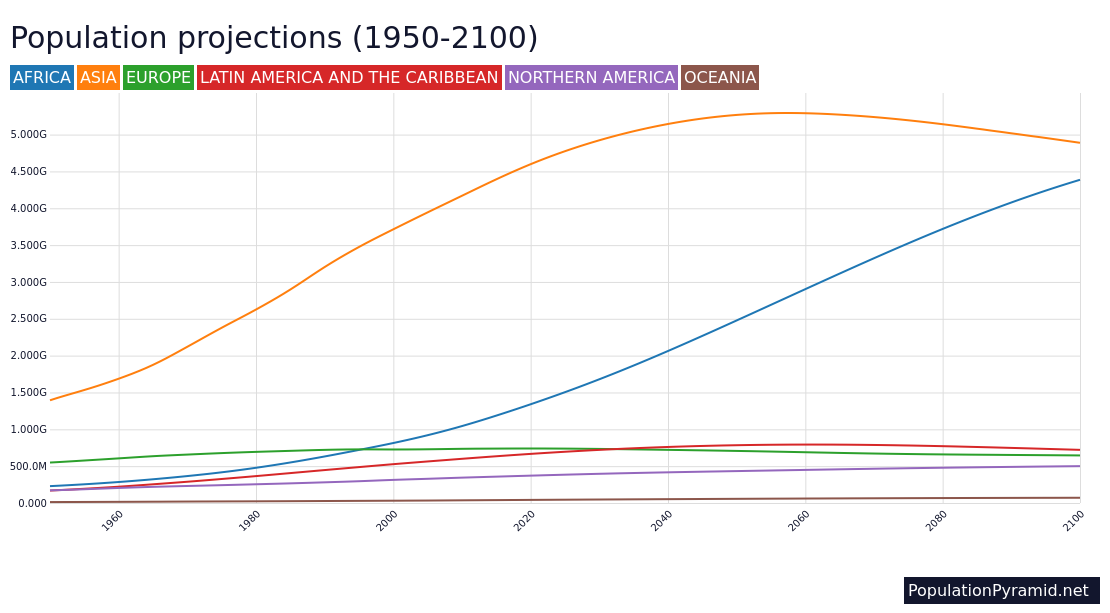
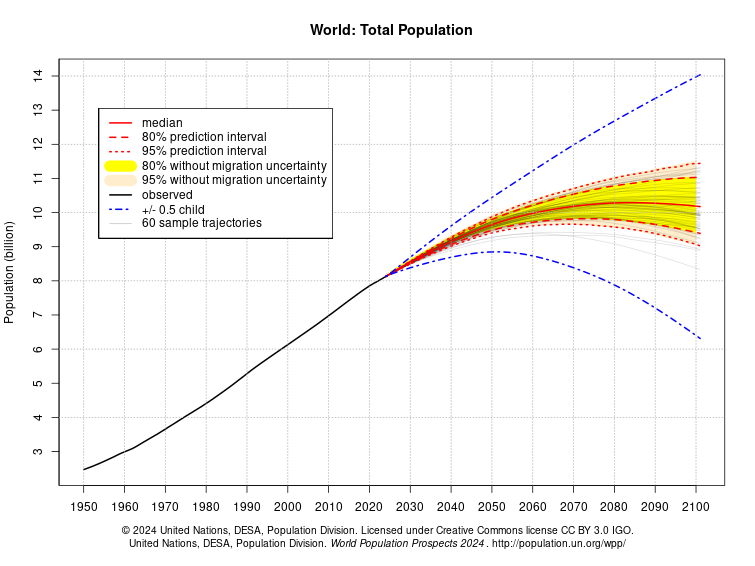
The authors’ business-as-usual scenario assumes our global population will follow the UN’s median trajectory, exceeding 10 billion this century. Under this scenario, cropland is projected to expand by an additional ~1,270 million hectares (ha) from today’s ~1,560 million ha, because growth in crop demand is expected to outpace yield growth. In higher-income countries, the authors found that large areas of existing cropland could likely be retired by 2050 and 2100. These benefits would be outweighed by far greater environmental losses from agricultural expansion in lower-income countries, however.

Reduced demand in wealthy countries
Under the Reduced per capita crop demand in higher-income countries scenario, population growth stays the same but daily per capita crop demand in higher-income countries is reduced from the 2018 estimate of 11,500 kcal to the global average of 5,000 kcal by 2100. The authors state that this could be achieved by shifting consumer preferences toward plant-rich diets and replacing biofuels with renewable energy. In this scenario, cropland requirements in lower-income countries would continue to expand, however, leading to global cropland expansion by ~507 million ha by 2100.
Faster economic development in poor nations
Under the Accelerated economic development in lower-income countries scenario, the authors assume higher per capita crop demand, higher yields, and slower population growth. This scenario uses the highly optimistic population projection from Vollset et al. (2020) that assumes rapid attainment of the UN Sustainable Development Goals, resulting in a population of just 6.3 billion in 2100. The authors write,
“Besides helping hundreds of millions of people out of poverty and improving living conditions, the overall impact of Accelerated economic development in the lower-income countries would result in a sizable net reduction in global cropland requirements by 2050 and a reduction of ~513 million ha by 2100. These results occur because of reduced population growth and increased yields associated with rising incomes, which could outpace increases in per capita crop demand in the lower-income countries.”
The way forward
Only improving yields or only reducing demand in rich countries would not produce the same benefits for biodiversity. The researchers argue that higher yields tend to lower prices, which often leads to greater demand rather than reduction in cropland area. It’s also important to note that yield increases are usually associated with agricultural intensification, which has other profoundly negative impacts on biodiversity, such as higher pesticide use.
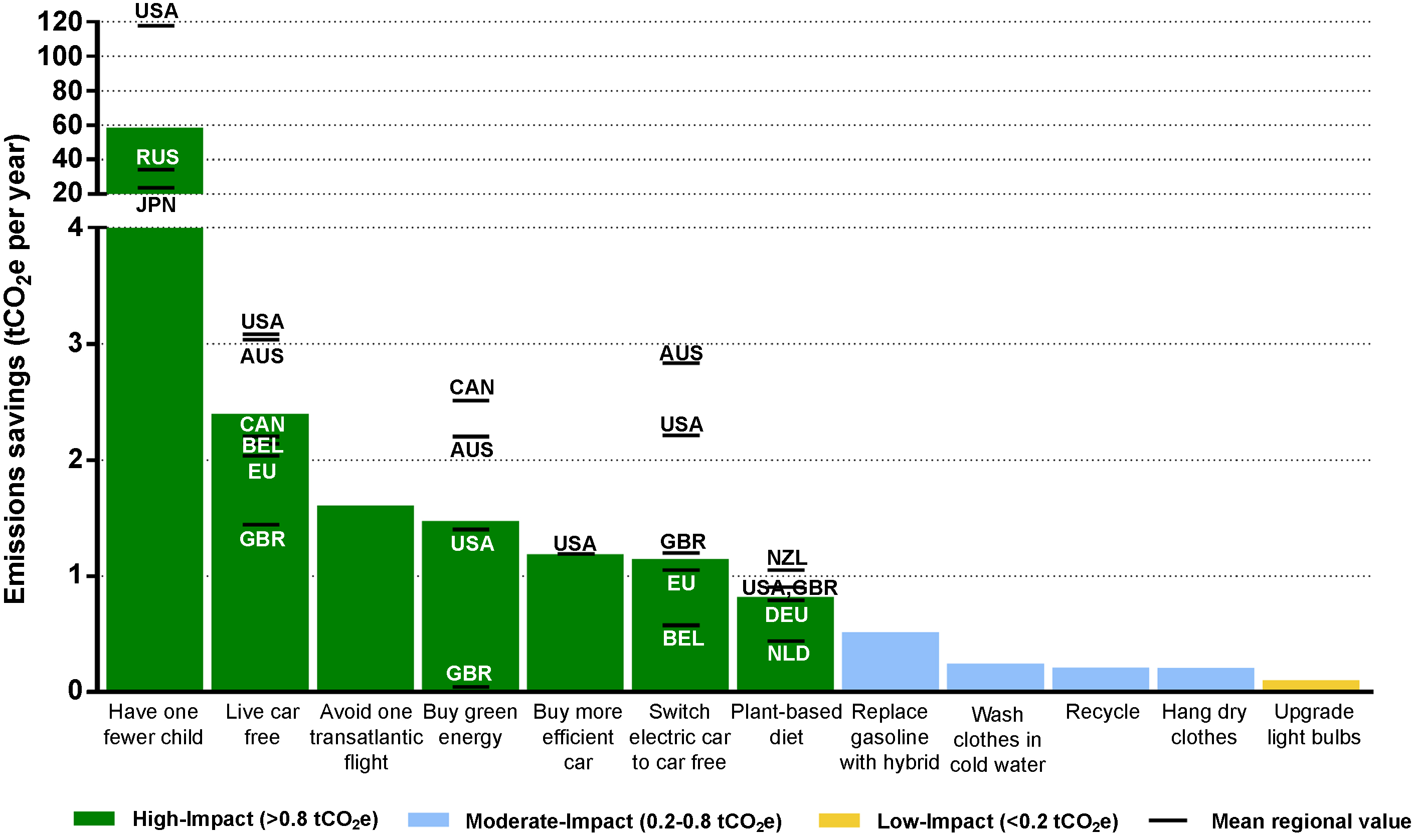
Regarding tackling overconsumption, the study claims that reducing food waste and shifting towards plant-based diets “are extremely difficult to implement and require changes that much of the world appears unwilling to accept.” Achieving global sustainability requires many profound changes to our societies and economies, all of which are difficult to implement, but that doesn’t mean we can avoid pursuing them. The paper does promote a holistic approach:
“… accelerated economic development and increasing yields in lower-income countries along with reduced crop demand in higher-income countries and expanded trade could be truly transformative in terms of biodiversity, climate change, human health, and well-being.”
The low-hanging fruit
The population factor really is the low-hanging fruit, however, because the measures needed to slow population growth — reducing poverty, empowering women and girls, and removing barriers to family planning and girls’ education — are all morally essential in their own right, and universally beneficial. Despite this fact, tragically, many governments and funders are slashing investments in these key areas due to the combination of a rising far-right, growing nationalism, and widespread belief that population concern is “taboo.”
The study authors warn,
“The imposition of tariffs and recent cuts to international aid to the world’s poorest nations could potentially make even our [business-as-usual] scenario unrealistically optimistic.”
Hopefully, some decision-makers will pay attention to this study and to the substantial body of research that shows how empowering population solutions are key to improving lives and protecting the environment.
This piece was originally published by Population Connection.











Leave a Reply