The Overpopulation Project
TOP – Research and Outreach
Too many people consuming too much
The views and opinions expressed in guest blog posts are those of the authors and do not necessarily reflect the position of The Overpopulation Project.
-
New publication shows how overpopulation drives biodiversity loss
The concept of human overpopulation, once common, is now rarely used in the scientific literature. Yet overpopulation is a major driver of biodiversity loss and a key obstacle to fairly sharing habitat and resources with other species. A new publication from TOP explores the connections between human numbers and preserving wild nature. by The Overpopulation…
26 comments on New publication shows how overpopulation drives biodiversity loss -
The United Nations celebrates World Population Day by shaming population ‘alarmists’
Not content with omitting overpopulation concerns from its own rhetoric, in its World Population Day statement the UNFPA has gone on the attack, labelling all concerns about the numbers of humans ‘alarmist’. Jane O’Sullivan takes them to task. By Jane O’Sullivan The United Nations Population Fund (UNFPA) was created in 1969 to act on the…
-
What do citizens of a donor country think drives fertility decline in low-income countries?
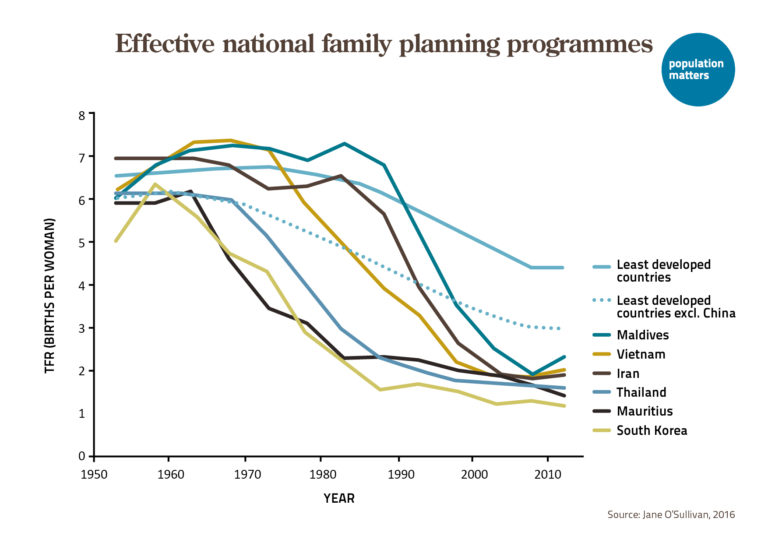
In TOP, we have researched what causes the birth rate and family size to fall in developing countries. A major factor has been voluntary family planning programs in countries like Costa Rica, Iran and South Korea. In current academic literature, the dominating paradigm is increased education of women. In developmental aid, “reproductive health” is often…
-
Influencing politicians to act on population trends: an example from Sweden
To influence societal attitudes and population policy it is important for organizations that understand the population factor to reach out to politicians who can enact necessary changes. Below follows one such example, where the Swedish group Nätverket ‘Population Matters Sweden’ wrote letters to all members of the Swedish parliament, highlighting the need to address population…
-
Two ways to argue for population’s importance
Here at TOP, we are often asked how we define overpopulation and whether it’s a helpful concept. Good questions! Below I propose a definition of overpopulation, after first considering the suggestion that it’s not necessary or helpful to deploy the term, even —or especially! — if we want to convince our societies to accept good…
-
What have you learned in school about population? Please tell us!
Many of our readers may have memories from their school years of lessons about population growth – or perhaps memorable situations when population talk was avoided. As far as we know, there are few studies regarding how population is taught around the world. TOP wants to know more about this, whether your memories are from…
-
The Hidden Dividends of Stopping Population Growth
Ending population growth is necessary to create ecologically sustainable societies. That’s reason enough to do so. But the evidence suggests smaller populations have other important benefits, including more honest and responsive governments and happier citizens. by Kelvin Thomson Most people concerned about rapid population growth are concerned about its impact on our environment, on other…
-
Breaking boundaries but not population taboos
The book Breaking Boundaries by Johan Rockström and Owen Gaffney explains the basics of how the Earth works and how humanity is rocking the boat, ecologically speaking. While describing monumental challenges, it views the future with optimism. Despite having a chapter dedicated to population, it fails to acknowledge how larger global populations reduce our chances…
-
Population commitments under the Paris climate accord
Under the Paris Agreement of the UN Framework Convention on Climate Change (UNFCC), the nations of the world have made pledges known as nationally determined contributions (NDCs). These represent countries’ proposals to adapt to and mitigate (limit) global warming. A new publication assesses the NDCs’ treatment of population growth and family planning. by The Overpopulation…
Explore the content and topics covered by TOP, search here
Recent blog posts
Blog categories
What we are reading, listening to and watching
Gallery of infographics – Learn more about overpopulation and environment