The Overpopulation Project
TOP – Research and Outreach
Too many people consuming too much
The views and opinions expressed in guest blog posts are those of the authors and do not necessarily reflect the position of The Overpopulation Project.
-
Big Australia needs rethink on World Population Day 2023
Another UN World Population Day passed with the UN focussing on anything but population growth. Australia’s population is growing faster than most, with sustainability not on the government’s radar, as Stephen Williams laments. By Stephen Williams I don’t pay much attention to awareness days, but I make an exception for World Population Day, first observed…
9 comments on Big Australia needs rethink on World Population Day 2023 -
Population’s effects on biodiversity: evidence from recent scientific literature
A lot of great scientific work has been done lately on population and biodiversity, spanning all areas of the globe. A new study from TOP describes this work and summarizes its main lessons. by The Overpopulation Project Earlier this year, Phil, Pernilla and Frank released A Bibliography of Recent Scientific Work on Population and Biodiversity…
-
Gattopardi and cheap labor
Reflections from Italy on the wicked problem of unregulated and unregulatable immigration into Western Europe. by Gaia Baracetti I could never understand what animal exactly the gattopardo was supposed to be. A leopard? A cheetah? A mythical beast? For sure, none of those roams my country. But I, like most Italians, always understood the meaning…
-
Australia’s population growth rate of nearly half a million ‘too high’
Australia is growing rapidly, in large part due to immigration. This causes strain on both infrastructure and the environment. By Sustainable Population Australia Sustainable Population Australia (SPA) considers Australia’s population growth rate in 2022 too high and called on the federal government to put a brake on immigration. The Australian Bureau of Statistics (ABS) released…
-
Wildlife in decline: the impact of human population growth and consumption
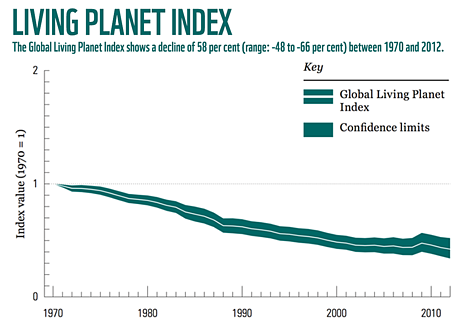
In a short film about wildlife loss, Nastaran Rahnama takes a broad approach, investigating food sold in the UK, its production far away, and the links to population growth and declining large mammals. By Nastaran Rahnama In my lifetime including living in Iran, England, and traveling, I noticed that the natural world and the sound…
-
Why Overpopulation Should Be a Women’s Issue
The costs of overpopulation and lack of family planning access fall disproportionately on women. Securing women’s rights and ecological sustainability depend on a clear-eyed understanding of this. This raises the question of why there are not more women who are actively involved in the issue of human overpopulation. By Karen Shragg and Madeline Weld An observation…
-
The Population Factor back by popular demand
In 2020 and 2021, I recorded two seasons of the TV show The Population Factor. Each episode features in-depth conversations focused on a particular aspect of the population/environment connection. Check out seasons one (hour-long episodes) and two (half-hour episodes), all available for free streaming at the links below. by Phil Cafaro Season 1 Episode 1.…
-
To Advance Humanity and Save Nature We Need a Common Agenda
Problems caused by rapid population growth, environmental degradation and climate disruption are harming human welfare and the natural world. These problems are largely addressed separately, with little common understanding or integration of efforts. Our recent paper, Advancing the Welfare of People and the Planet with a Common Agenda for Reproductive Justice, Population, and the Environment,…
-
Adversity for Biodiversity: A Reflection on My Experience at COP15
The Kunming-Montreal Global Biodiversity Framework1 adopted in December 2022 by representatives of most of the world’s national governments is inadequate to halt and reverse the disturbing loss of biodiversity globally. Concerted efforts to increase the new Framework’s ambition were dismissed and ultimately ignored. Human overshoot – the collective impacts of more than eight billion people…
-
More population neglect from the United Nations
The UN’s latest State of the World Population 2023 report deepens its denouncement of population concerns. While it commendably emphasizes women’s reproductive rights, it neglects the role an excessive and growing population plays in driving global ecological degradation and overlooks the many ways overpopulation can undermine poor people’s rights to safety and security. by Jan…
Explore the content and topics covered by TOP, search here
Recent blog posts
Blog categories
What we are reading, listening to and watching
Gallery of infographics – Learn more about overpopulation and environment