The Quixotic pursuit of sustainability: our year in review

As TOP turned six in 2023, we continued to explore and encourage discussion of the population / environment connection, particularly regarding climate disruption and biodiversity loss. We wish all our friends, colleagues and readers “lycka till och framgång” in the new year!

by The Overpopulation Project

In 2023, the world held the 28th (or was it the 82nd?) annual “conference of the parties” climate meeting in the United Arab Emirates, a leading fossil fuel exporter. Sultan Ahmed Al Jaber, CEO of the Abu Dhabi National Oil Company, served as meeting President. In the inspiring words of the Sultan:

“Progressive climate action is not only necessary, it can also be a powerful economic driver, and if we do it right, it can actually put the world on a new low carbon/high growth development trajectory. So we need to start looking at the climate challenge as an opportunity.”

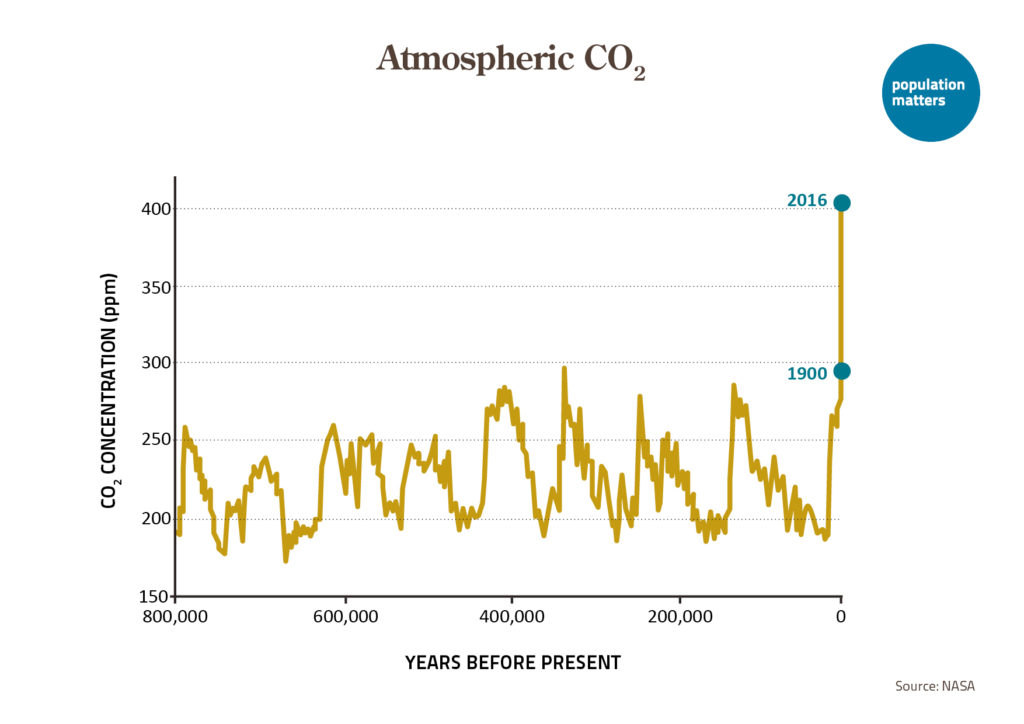
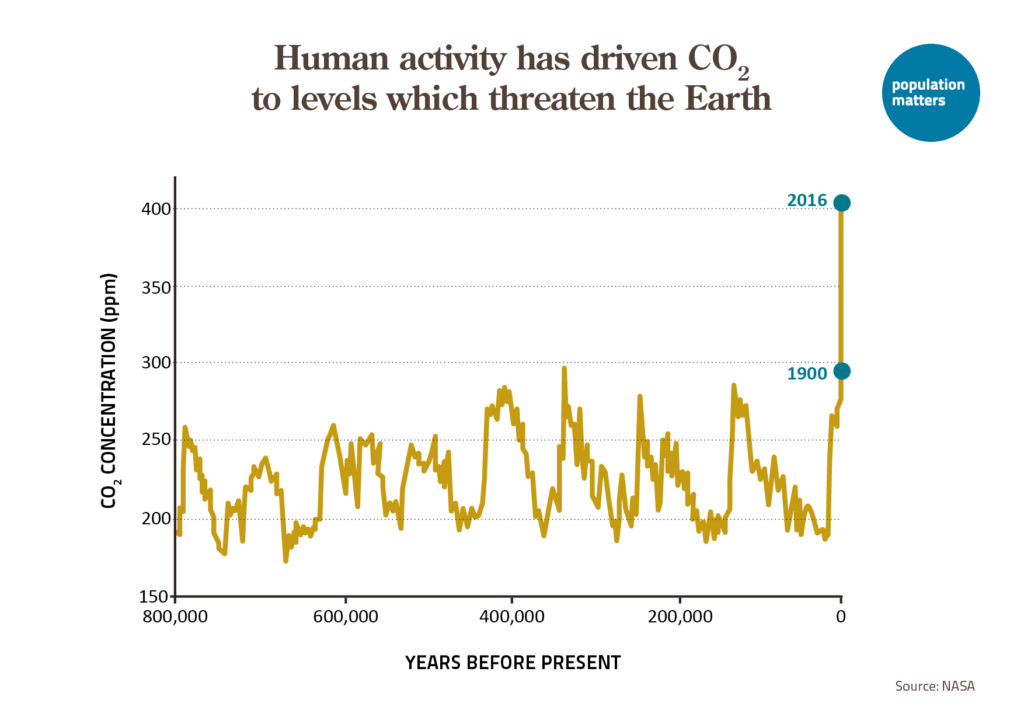
Similar neoliberal, win/win, pro-growth verbiage has been spoken by Angela Merkel, François Hollande, Barack Obama, Boris Johnson and 10,001 other political leaders over the past few decades. Meanwhile atmospheric carbon topped 420 parts per million this year, higher than at any time in the past 3 million years. The last time atmospheric carbon was this high, the global surface temperature was 2.5–4 degrees Celsius warmer than during the pre-industrial era and sea levels were 7 to 25 metres higher.

With ferocious fires, floods and droughts across the globe, 2023 might go down as the year “green growth” finally stood revealed in all its absurdity. What lies beyond — reform or collapse? What is clear is that an honest and realistic environmentalism must embrace limits. Limits to growth, limits to corporate power, limits to personal indulgences, and above all, limits to human numbers.

Meanwhile, it was a productive year for The Overpopulation Project. We published eight scholarly articles in 2023:

Demographic Delusions: World Population Growth Is Exceeding Most Projections and Jeopardising Scenarios for Sustainable Futures. Jane O’Sullivan. World (2023).

Human fertility and religions in sub-Saharan Africa: A comprehensive review of publications and data, 2010-2020. Nicola Turner and Frank Götmark. African Journal of Reproductive Health (2023).

World Population Growth: A Once and Future Global Concern. Karl-Erik Norrman. World (2023).

Procreation and Consumption in the Real World. Philip Cafaro. Environmental Ethics (2023).

Population Effects on Biodiversity and Climate Change: Evidence from Recent Scientific Literature, 2010-2022. Philip Cafaro, Pernilla Hansson, and Frank Götmark. Indian Journal of Population and Development (2023).

Advancing the Welfare of People and the Planet with a Common Agenda for Reproductive Justice, Population, and the Environment. Joseph Speidel and Jane O’Sullivan. World (2023).

Fewer people would help preserve biodiversity: A response to Hughes et al. (2023). Philip Cafaro, Pernilla Hansson, and Frank Götmark. Biological Conservation (2023).

An Analysis of Three Decades of Increasing Carbon Emissions: The Weight of the P Factor. Lucia Tamburino, Philip Cafaro, and Giangiacomo Bravo. Sustainability (2023).

TOP also published 47 new blogs on our website, by 27 authors from 5 continents. These short essays ranged widely, from biodiversity to religion, Plato to population projections, overshoot to identity politics. They are a valuable resource for scholars, activists and anyone looking to keep informed regarding news, policies, publications, and all things population/environment related. Here are some of our favorite blogs from the past year:

Walk the talk: the world needs more Gretas and fewer Leonardos. Gaia Baracetti.

What you should know – but didn’t know to ask – about overshoot and the ‘population question’. William Rees.

How environmental professionals acknowledge overpopulation – and then ignore it. Leon Kolankiewicz.

Overpopulation as a local problem. Jan van Weeren.

To advance humanity and save nature we need a common agenda. Joseph Speidel and Jane O’Sullivan.

No need to hold COP 29: Just follow Japan’s lead! Terry Spahr.

Boiling frogs. Brad Meiklejohn.

Fertility decline in developing countries does not depend on economic growth but follows contraceptive use. Frank Götmark and Malte Andersson.

Adversity for biodiversity: A reflection on my experience at COP15. Rob Harding.

Why overpopulation should be a women’s issue. Karen Shragg and Madeline Weld.

Wildlife in decline: the impact of human population growth and consumption. Nastaran Rahnama.

We are grateful to all our blog authors: Malte Andersson, Jon Austen, Gaia Baracetti, Denis Garnier, Richard Grossman, Rob Harding, Leon Kolankiewicz, Theodore Lianos, Oskar Lindvall, Brad Meiklejohn, Kathleen Mogelgaard, Anastasia Pseiridis, Nastaran Rahnama, Bill Rees, Bill Ryerson, Karen Shragg, Terry Spahr, Joseph Speidel, Lucia Tamburino, Nicola Turner, Jan van Weeren, Madeline Weld, Stephen Williams, Sustainable Population Australia and the European Alliance for a Sustainable Population.

We gratefully acknowledge a grant in 2023 from the GAIA Initiative for Earth-Human Balance for help in maintaining TOP’s website. Special thanks to Dan Carrigan, CEO of the GAIA Initiative, for his generous support in recent years.

To all our friends across the world: thank you for your support, and for your varied efforts on behalf of ecological sustainability. Be well and stay in touch.

Tagged:

Published

13 responses to “The Quixotic pursuit of sustainability: our year in review”

  1. ganzettifrancesco Avatar

    I just read “https://overpopulation-project.com/why-overpopulation-should-be-a-womens-issue/” :

    my conclusion is that we need a lot more courage on birth control policies, on coercitive ones too.

    PS: I have directly observed that it is just on more fertile soils that bordering woods try to regain space over agricultural fields: there at least 3 o 4 meters full with turkey oak sprouts….What we need to do is just to let woods regain space over agricultural fields: IT IS JUST SECONDOLY that we try to manage famine and overpopulation question not the opposite…GAIA have no time to wait for us to solve our weak moral issues, as MEDEA, the vendicative aspect of GAIA, is waiting for us jut behind the corner.

    1. Frank Avatar

      Hi Ganzettifrancesco, I think woody regrowth on fields and various soils depends much on species of plant. Several shrubs, and some trees produce sprouts from roots. These usually grow faster on fertile soils.

      1. ganzettifrancesco Avatar

        Hi Frank; R sprouts grow faster on fertile soils; Y indeed. Mark Bekoff and Sir James Lovelock insist on necessity of rebuilding “corridors of wilderness”, that means letting forests regrow even on medium latitudes and on fertile soil areas giving back part of agricultural fields. Lovelock hypotize we need give back to woods at least 1/4 of current farmland areas. We are discussing and proceeding at reverse speed in my opinion, that means first we are researching and taming our sentiments then, may be, acting organically towards rebuilding some sort of these corridors of wilderness: it should be the opposite. In this sense,like in middle ages it was the nobilty who saved some woods in form of private areas for hunting and refreshing, we must hope that some of the richest ones buy vast areas and change destination form agricultural to wild areas. Where climate and fertile soil consent it, chestnut woodland is an acceptable compromise beeing equally useful for men and wild life. It is really pity that during 18th and 19th centuries vast areas of previous ancient (roman date) chestnut forests have been cut and converted to corn cultivation: they enjoyed having 3 of 4 children per family…..

      2. gaiabaracetti Avatar

        As much as some areas do need to rewild, I would personally much prefer turning built areas to greenery first. We need food and fiber – it can be permaculture, it can be food forests, but we do need agriculture too. While we campaign for population de-growth, we should also strive to take down unnecessary buildings, reduce and revert the staggering loss of greenery and fertile soil caused by infrastructure development, and reclaim those for nature first.
        Building a road destroys the environment not just on the built area but all around it too. And on road surfaces, as opposed to a field, there is ZERO plant cover. We don’t need all those airports, parking lots, redundant highways, etc. We also don’t need holiday homes, mansions, this much office space for jobs that are often unnecessary, factories for stuff we don’t need…
        Picking farmers as the first enemies of sustainability doesn’t work – look at the Netherlands. You want them on your side.

  2. Max Kummerow Avatar

    Growth of both population and economic demands on resources must end. Ending population growth seems the easier one since liberated women mostly choose small families.

    1. ganzettifrancesco Avatar

      Hi;
      Y, R “since liberated women mostly choose small families.”
      Y, but that will always be just for a part of women.
      We urgently need to take away from women the liberty of deciding how many children they want ot have. Human children are the main weapon of mass (all biota) destruction.

      1. gaiabaracetti Avatar

        “We urgently need to take away from women the liberty of deciding how many children they want ot have”
        Stop trolling. This is insane.

  3. gaiabaracetti Avatar

    The US will have what might be its first anti-growth presidential candidate ever: https://www.davetheplanet2024.com/
    I dare you to cover this on TOP!

    1. PHILIP CAFARO Avatar

      OK, Gaia, we’ll take you up on this in the New Year! I’m a big Dave Gardner fan. If you don’t know Dave’s work, check out his Growthbusters podcast: https://www.growthbusters.org/podcast/

      1. gaiabaracetti Avatar

        Looking forward to this.
        I was following (on Twitter…) the debate about the upcoming US elections and some people are literally framing it as a choice, when it comes to Muslim Americans at least, between genocide somewhere else and deportation from their country… who is the lesser evil between two old devils. How did it come to this?
        It’s always baffling how American democracy comes down to a choice between only two, often dismal, options. No other democracy in the world that I know of works that way. We always have several options to choose from and parties rising and falling all the time.
        So I keep hoping Americans wake up to the possibility there might be a third choice, and a fourth, and so on. Binary thinking should be left to computers, not humans.

  4. ganzettifrancesco Avatar

    R Gaia Baracetti “As much as some areas do need to rewild, I would personally much prefer turning built areas to greenery first. ”

    It is not about what you prefer, but it is about what can be done an what can not, what is right to do and what is not.

    May be you have not read what I have reported from excellent authors such Bekoff and Sir James Lovelock himself, who firstly imagined Gaia theory, whic is a scientific evidence since Amsterdam conference on climate change few years ago.
    They talk about “corridors” of wilderness, and not about islands of wilderness, exactly because we need to grant a continuum to woodlans areas.
    Furthermore recovering cooncrete areas as suburban ones to productive soil is a titanic enteprise and totally a non sense.

    As I wrote before farmalands located in milder climate areas and rich soils are the best ones: I personally withness a belt of 4-5 meters all around fields where turkey oak sprouts are constantly growing back; it is an area with very rich soil,with good climate and quite rich in water.

    We simply must reduce food consumption not only changing food culture, which is good, but reducing human mouths grinding food: is not this a blog focused on overpopulation?

  5. ganzettifrancesco Avatar

    R GAIA BARACETTI stop”“We urgently need to take away from women the liberty of deciding how many children they want ot have” Stop trolling. This is insane.

    May be you could argue better : I think to discuss is more proper then throwing stones.

    1. gaiabaracetti Avatar

      On the contrary, I think that there should be some basic things that we all agree on and do not even consider debating, and one of those things is that forced abortions and forced sterilisations are wrong.

Leave a Reply

This site uses Akismet to reduce spam. Learn how your comment data is processed.

NOTE: Comments with more than one link will be held in wait and will only become visible on the site after an admin has approved it.

Explore the content and topics covered by TOP, search here

Blog categories
Gallery of infographics – Learn more about overpopulation and environment

Discover more from The Overpopulation Project

Subscribe now to keep reading and get access to the full archive.

Continue reading