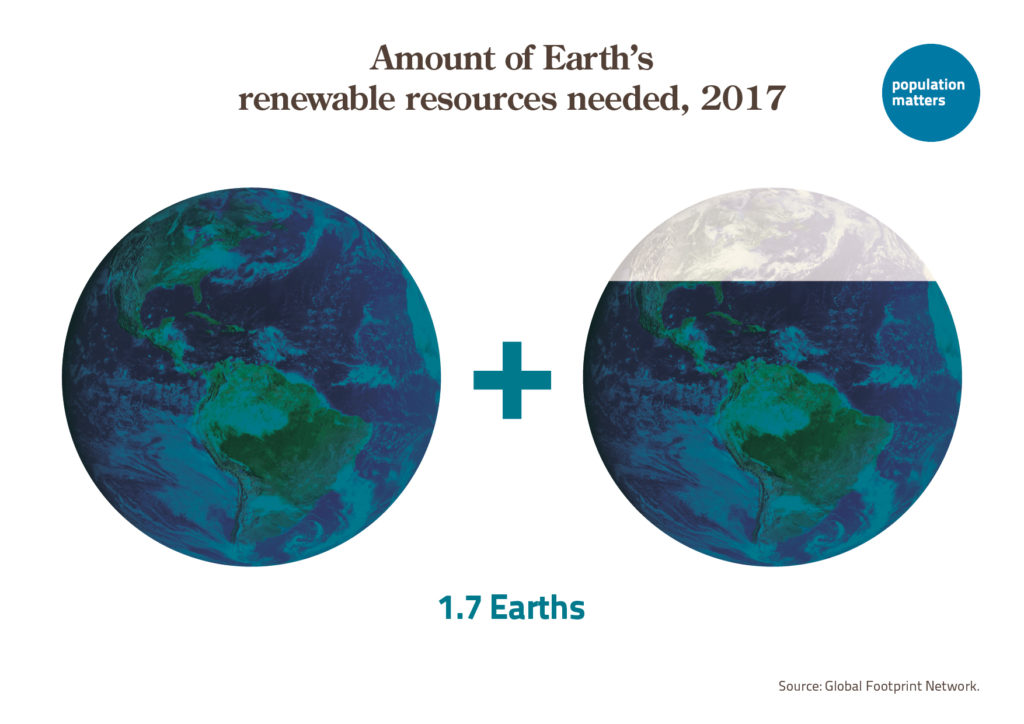
Are many tiny ecological footprints more virtuous than fewer, larger ones? Will they be better for the Earth, or easier to accomplish? These hard questions need to be asked as humanity hurtles past 8 billion people and deeper into ecological overshoot.
By Gaia Baracetti
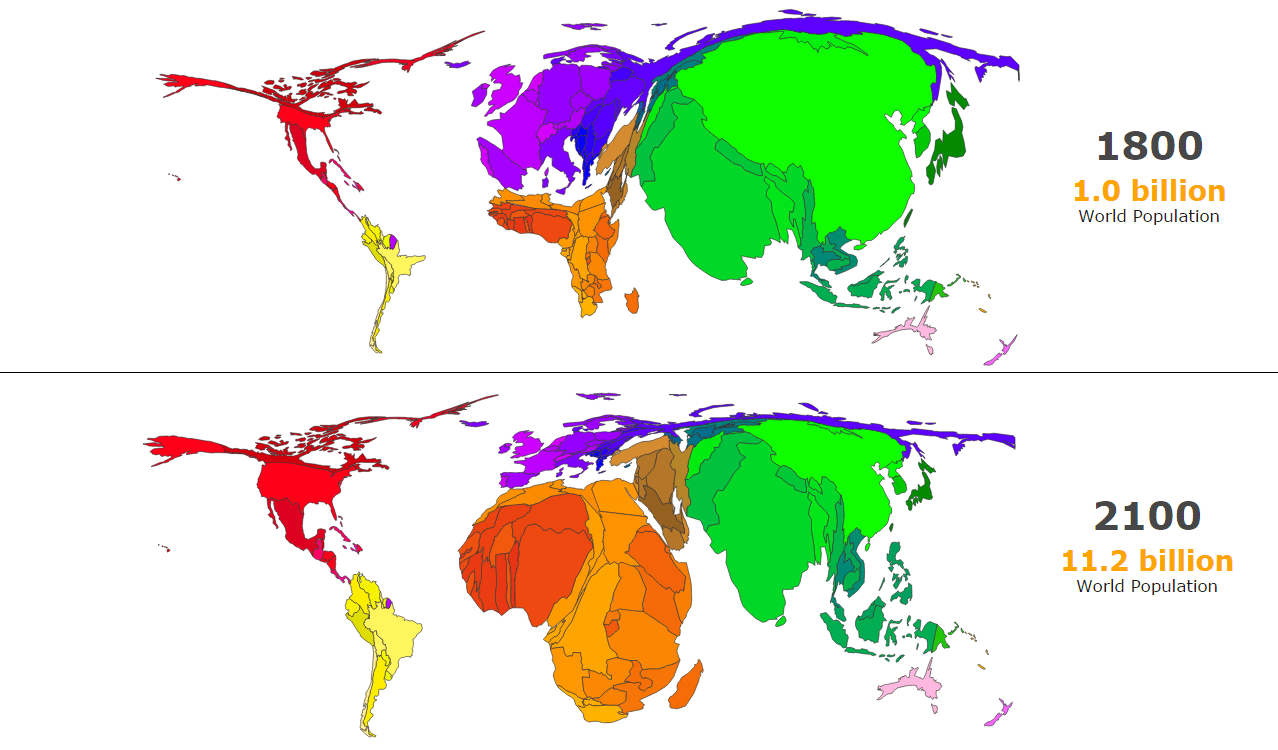
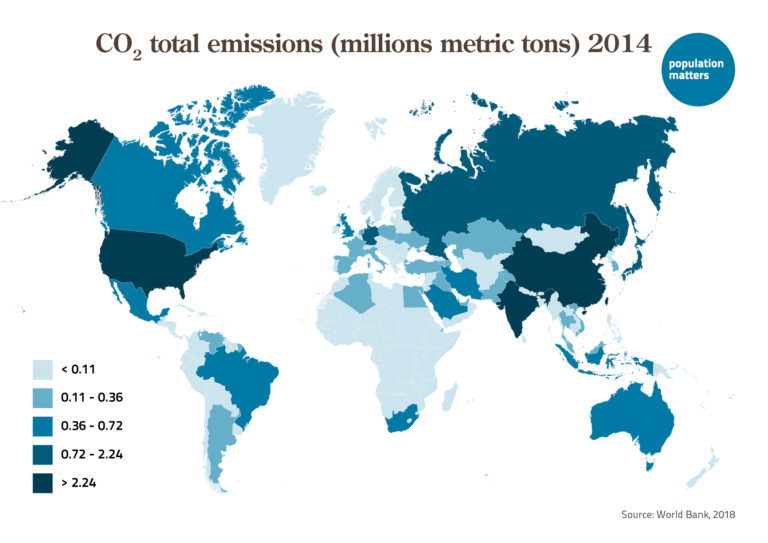
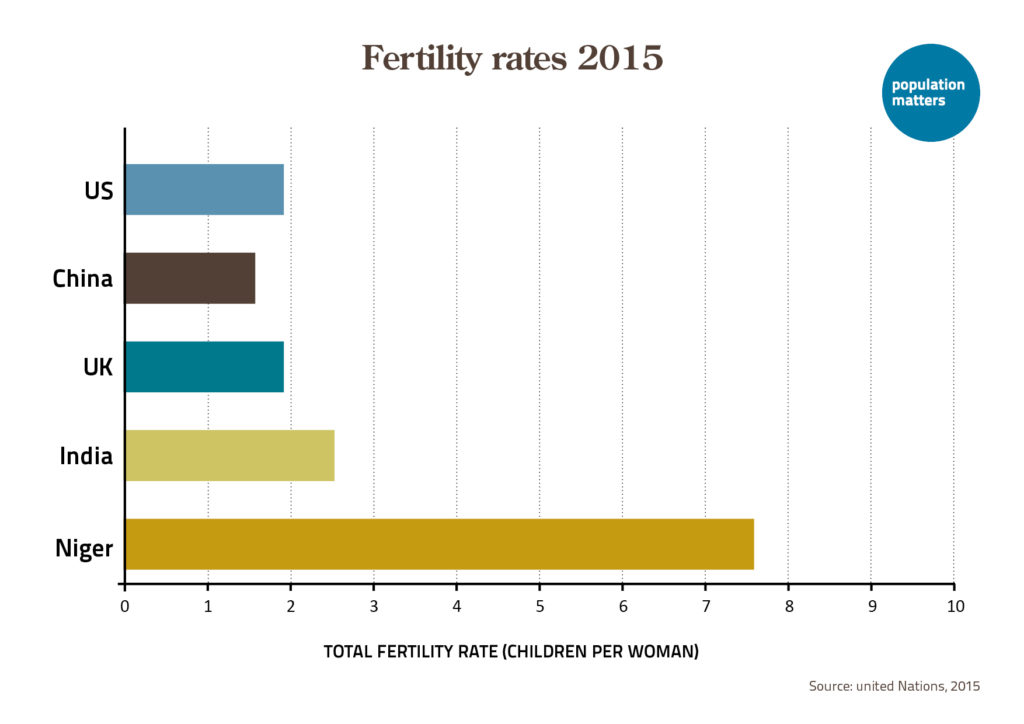
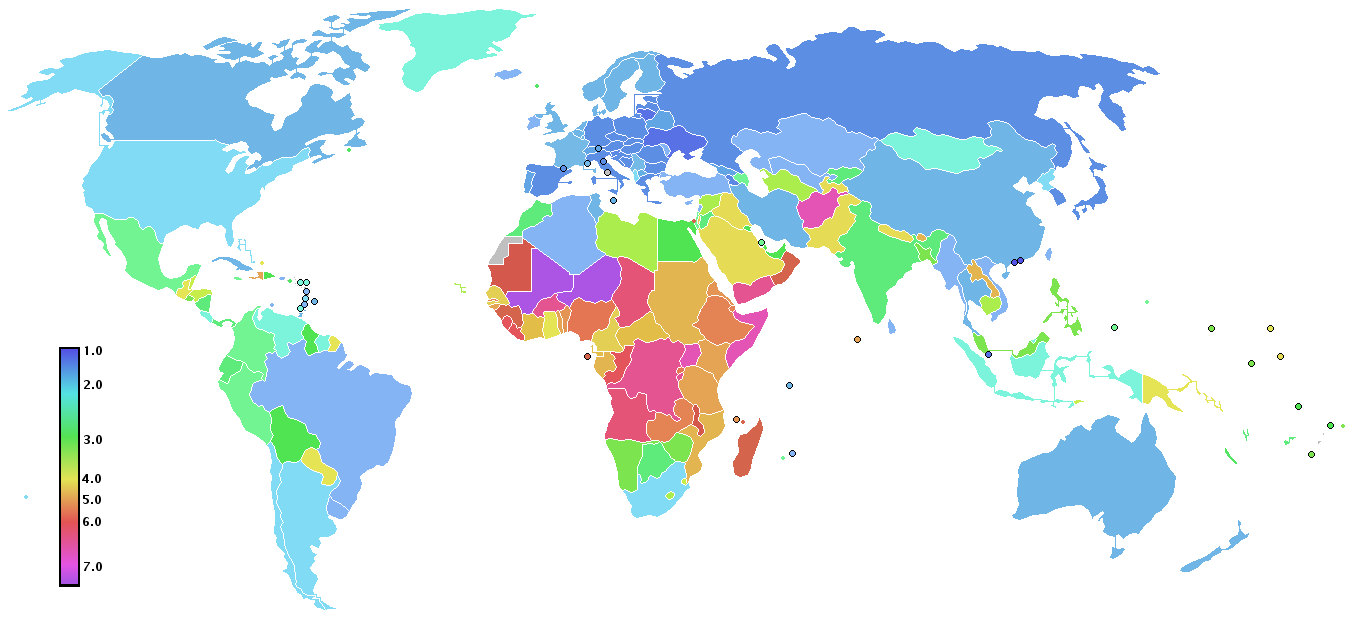
You’ve all heard the argument: high birth rates in poor countries are not a problem because of the very low levels of average per capita consumption, or CO2 emissions, among their populations. In other words, it is unfair – or a waste of time – to ask the poor to have fewer children while the rich get to keep their extravagant lifestyles and pop out fewer but more spoilt children. But is it really?
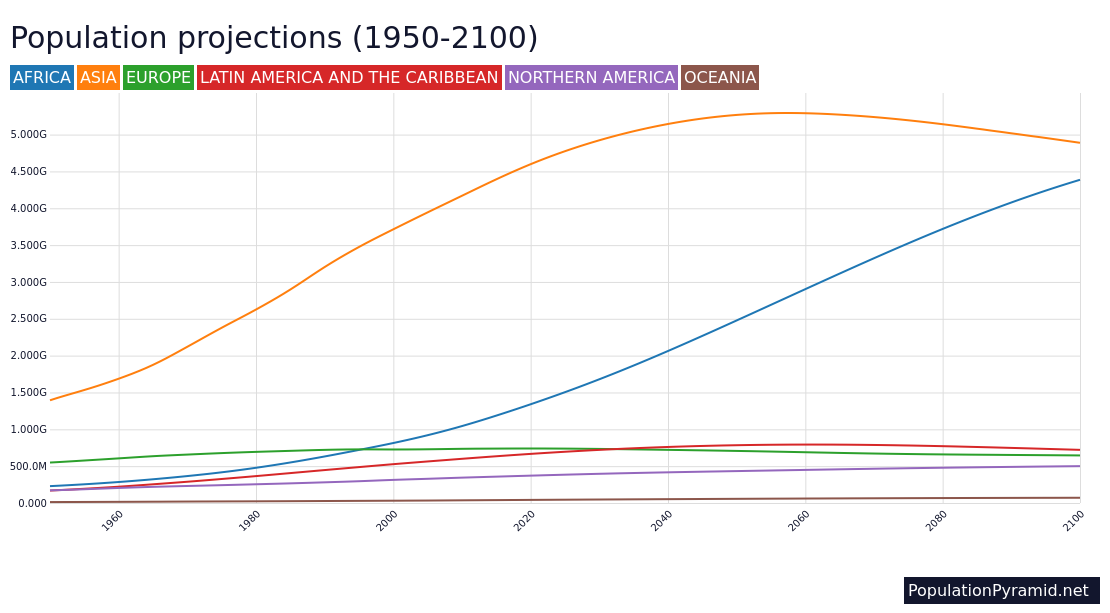
Some counter-arguments are fairly obvious. The poor do not intend to stay poor forever – as high-fertility countries also grow their economies, both their overall and their per-capita consumption increase. And if they fail at improving their conditions through economic growth, at least some of their citizens will migrate to wealthier countries, thus expanding their previously low footprints. Already, most rich countries would be shrinking their populations – and possibly their overall ecological impacts – if it wasn’t for immigration. When looking at population projections, there’s always an unstated assumption that a person born in Nigeria, China or Turkey is “just” that, a Nigerian, Chinese or Turk and not, as is often the case, a future citizen of Canada, Australia or Germany.

At the same time, things can change fast and a person born in a wealthy country today might see their standard of living decline in the future; we can never be sure that an American child will really eat more meat and drive a bigger car than his Indian peer. It is an accident of history that the “West” is now mostly richer than the rest: for most of the time humans have been on Earth this was not the case at all. (It’s also a gross oversimplification to think that it’s only “Western” countries that are rich: the inhabitants of most oil-rich Arab states plus Israel, Japan and the “Asian Tigers” are very wealthy compared to world averages; Australia and New Zealand are often counted as “West” but geographically they aren’t.)
Moreover, environmental impact has many components and is context-dependent. While, overall, being rich is the worst thing one can do in terms of the environment, even someone who is barely surviving could – precisely for that reason – personally contribute to irreversible environmental damage, with desperate actions like cutting down the last tree for firewood or hunting threatened species for food.
A critical argument
These objections to the “per capita footprint” argument are fairly common; there is another one that is crucial but less straighforward and never seems to come up. It could be summarised thus: like consumption, population density too is a matter of choice, both at the individual and the collective levels. In other words societies can choose to lower their populations in order to enjoy more resources per capita and, as long as they do so in a way that protects the environment, do not deserve to be criticised for this.
We could think of two middle-class siblings who have the same salaries, but whereas one has five children, the other chose to stop at two. Inevitably, under similar conditions two children will enjoy more material well-being than their cousins would, yet it would seem unfair to suggest their parents should sacrifice this to support their more numerous nephews and nieces instead.
When it comes to countries, the situation is never this neat, but the analogy is still valid. Collective choice is a complicated matter, but this doesn’t mean it doesn’t exist. Through a sum of individual choices, shared values and government policies, countries can decide what population they want to have. Some want to push this number up as much as possible, for several reasons including military might and economic growth. Other countries wake up to the dangers of never-ending population growth and try to limit their numbers. If carried out properly and thoroughly, the result of this course of action could be both higher per capita consumption and lower overall consumption than if they had a bigger, more crowded and poorer population. Countries with high population densities that are also wealthy are invariably exceeding their carrying capacity; but this is often also true of high-density countries where the majority of the population does not enjoy adequate living standards. These countries shouldn’t boast that their per capita consumption is low as if poverty was a good thing, or as if it absolved them of any responsibilities to their citizens or to the environment.
Objections?
One might object that not all countries are blessed with the same resources – but that’s exactly the point. Every country should take stock of what it has and plan accordingly. The Global Footprint Network offers estimates of the biocapacity per person for each country, so that we know which populations are living beyond their means (ecological deficit: most) and which aren’t (ecological reserve: hardly any). But even this measure misses a key point. The availability of resources doesn’t entail an obligation, or even a right, to use them all for humans. That’s one of the main problems with per-capita thinking: any population that hasn’t maxed out yet is encouraged to do so in order to rescue those that have. There is a pressure on wealthy countries to “share” their abundance with the poor of the world – as if it was immoral to share it with wildlife instead. Sustainability or justice toward other species will never be possible as long as we think this way – and a lot of well-meaning environmentalists do.

Of course, in a globalised world, it would be misleading, bordering on absurd, to suggest that some countries are wealthy just because they make prudent use of their own resources. International exploitation, level of industrialisation and quality of governance are major factors, and an abundance of natural resources in a mismanaged country is often a curse rather than a blessing. At the same time, in well-managed countries such as Norway or Canada, Costa Rica or Botswana, the population does profit from its plentiful resources.
Some useful comparisons
But there’s more to it. If we compare like with like and consider a broader definition of wealth that includes quality of life, countries with lower population densities are often doing much better overall than crowded countries that are similarly wealthy.
Finland, for example, is apparently the happiest country in the world. It has 18 people per km2. When asked what makes their life so good, its citizens cite the proximity of nature as a major factor. Other explanations, such as solidarity and trust, arguably could also be linked to the fact that people live in smaller communities where they know each other, and that they do not have to deal with the stress and competitiveness of extreme crowding.
Compare this with rich but crammed Japan (338 ppl/Km2) and South Korea (527 ppl/Km2), which its young citizens have dubbed Hell Joseon – that is, not a great place to live in at the moment. That will certainly be subjective to a significant extent, but there’s no denying that some of South Korea’s well-known woes – from unbearable competitiveness in the work place, a problem shared with most other East Asian countries, to young people being crushed to death in a recent crowd surge, or being forced to live in underground apartments where they can drown during floods – are almost too literal an illustration of what extreme overcrowding looks like.

Another like-with-like comparison, this time between poor countries, is Haiti vs the Dominican Republic – an easy one given that they share the same island. 414 people per km2 in the former, 225 in the latter. Anyone following current events knows that Haiti is, unfortunately, not doing so well, due to widespread poverty, gang violence and frequent epidemics, while the Dominican Republic is actually considered, overall, a good place to live.
Why? There are many reasons; in his book Collapse, Jared Diamond concluded that one of the main ones was a vast difference in population density.
These are not cheap shots at places that are struggling for a variety of reasons. It would be impossible in a short article to go into detail about what is and is not good about the aforementioned places, and why; moreover, one could argue that it is precisely the extreme human population density of places like South Korea and Japan that has incentivised and inspired their famous, widely popular cultural products. This is true: suffering inspires art – and yet people still strive for happiness. They want to walk in the forest, not play the Squid Game to the death. Hell might have interesting company or make for better stories, but it’s still punishment.
If we accept that high population density results automatically in less per capita resource availability, and potentially in greater stress and unhappiness, it follows that it is misguided to hold up countries with vast populations and low levels of per capita consumption as examples for others to emulate. We must discard what I call the “per capita fallacy”.
Questions and consequences
Interesting and difficult questions follow. What is the truest dimension of the human experience? Where do freedom, meaning and responsibility most naturally reside: at the individual, communal, societal, or global level? Clearly, all of these matter.
What is less obvious is that extreme globalisation leads to extreme individualism. If all that counts is that every individual in the world is entitled to the same quantity of resources, then a Chinese person, upon realising that a Canadian enjoys more of them than he does, could move to Canada and claim his fair share, followed by his countrymen until Canada too has at least half a dozen cities with tens of millions of people in them. Only that would be “fair”. This would, however, nullify not just the idea of being Chinese or Canadian, but also that of the self-determination of the Chinese and Canadians as people: the meaning of their culture and their ability to make collective choices about how they want to live. Canada has some of the last remaining vast wildernesses of the world; huge open spaces, endless forests, and vibrant but green and confortable cities. “Well”, say the proponents of per-capita thinking, “it shouldn’t.”
I should have perhaps chosen a more absurd example, because Canada – like other countries such as the United States, Australia and Brazil – has indeed been and still is being used this way. Native populations who had found a balance with their nature (“resources”), by keeping very low human densities and much room for non-human species, were subjected to all forms of persecution and ethnic cleansing so that the abundance they enjoyed could be shared with the hungry masses of Europe, Asia and Africa. A common European objection to the Native Americans’ protestations was (and still is!): surely you do not want to keep all of this for yourself?
One could object that consumption and availability are different things, a valid point. However, the distinction is once again context-dependent: for example, eating meat often or burning wood have a bad reputation precisely because there are so many of us doing it, but can be perfectly sustainable with low human population densities in healthy environments. That’s how many indigenous tribes used to live in what is now the United States, and yet the place was full of such abundance of life that the first Europeans who saw it described it as nothing short of a paradise.

If all that matters is per capita allocation, why should humanity let a small tribe roam untroubled across an area the size of a European country, a vastness that could be farmed, or that holds some precious resource – oil, rare earths – that could give energy, food, electricity to millions in some other part of the world, millions that currently have a need for those things? We hide behind the corporate blame game, but we know that it’s not just corporations that plunder the Amazon forest – it’s poor Brasilians and Colombian farmers, too. Even when the problem is rich corporations, whatever they dig up or grow will end up being used by anyone who can afford it. That’s why they are rich: because people buy what they are selling. It’s not only millionaires who drive cars or own smartphones.
So why do we side instead with tribes protecting precious ecosystems from exploitation? Partly it is because we are in denial about where our stuff comes from. Partly because we hope to go there on holiday, after having trashed everywhere else. But we also instinctively recognise that all wealth comes from nature, that wealth is nature, and that letting a small group of people keep all that true wealth for themselves actually amounts to saving it.










Leave a Reply