Even starving children won’t break the population taboo

Since 2020, stunting in children is on the rise. For those in denial about the impacts of population growth in poor countries, the inevitable is presented as a mystery as ideology trumps honesty and compassion.

by Jane O’Sullivan

Heralding World Food Day on 16 October, an editorial in Nature focused on the disturbing rise in the global prevalence of stunting in children. It cited a recent UN report on “Levels and Trends in Child Malnutrition.” After years of improving nutrition, this trend reversal was presented as an unexpected shock. Nature begged scientists to “determine the reasons why malnutrition is increasing.”

Stunting (children who are markedly shorter than normal for their age) is a consequence of chronic undernutrition. Stunted children become short adults, often with some cognitive impairment. It used to be a fairly normal condition through much of the world: we’re familiar with the low doors and ceilings of European houses a few centuries old, and the caricature of East Asians being short – they no longer are.

Yet, even at the turn of the century, a third of children under five were affected by stunting. Encouragingly, this declined to around 23% by 2020. But then the decline petered out and numbers started to increase.

Source: The Gates Notes

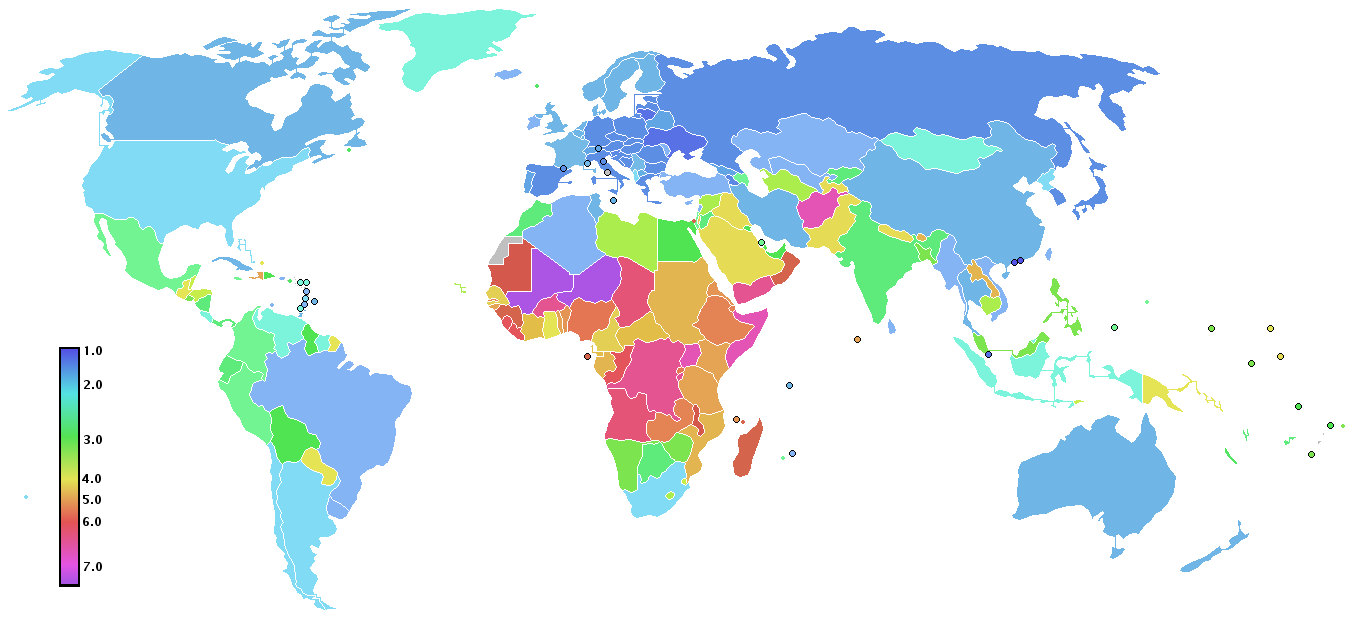
Prevalence is now concentrated in South Asia (almost one in three children) and sub-Saharan Africa (in some countries over 40% of children). Sadly, but not coincidentally, these are the regions in which most children reside: in 2024, some 77 million of the total 132 million births worldwide occurred in these two regions.

In its plea to better understand how this reversal came about, Nature pointed to the role of conflict and the jump in food prices due to the Covid-19 pandemic supply chain disruptions and the 2022 Russian invasion of Ukraine. It failed to mention that hunger has been on the rise since 2015, well before these events. The 2017 edition of the State of Food Security and Nutrition in the World stated that the number of chronically hungry people grew from 777 million in 2015 to 815 million in 2016, reversing years of decline. Although hunger has since declined in most regions, it continues to rise in Western Asia and, especially, Africa. It would seem logical that a rise in the prevalence of hunger almost inevitably leads to a rise in the incidence of child stunting.

What none of these UN reports or Nature articles mention is the population growth rate in these hungry, conflict-ridden countries. The term “population growth” appeared only once in the UN’s “Levels and trends in child malnutrition” report, in a footnote explaining a calculation relating the number to the percentage of stunted children. It is entirely absent from the 2025 edition of “The State of Food Security and Nutrition in the World”.

Nature links us to various related articles focusing on the value of cross-disciplinary collaboration, of reducing food waste, of giving a leg-up to smallholder farmers, of avoiding trade sanctions that reduce food access for the poor – always zooming in to smaller facets of the problem rather than zooming out to the bigger picture.

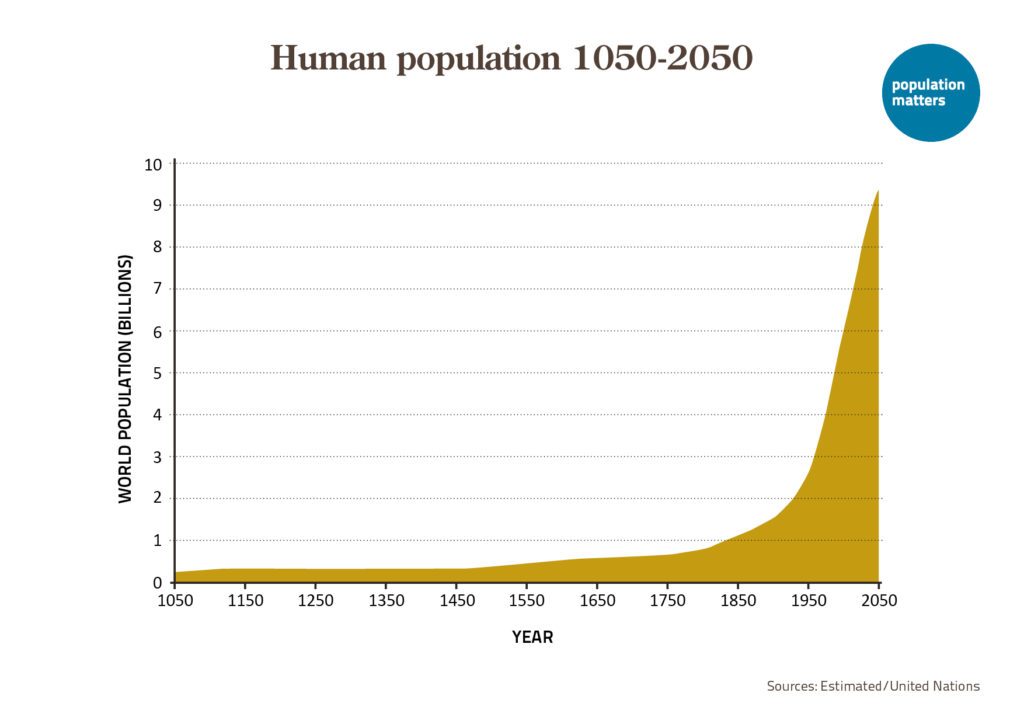
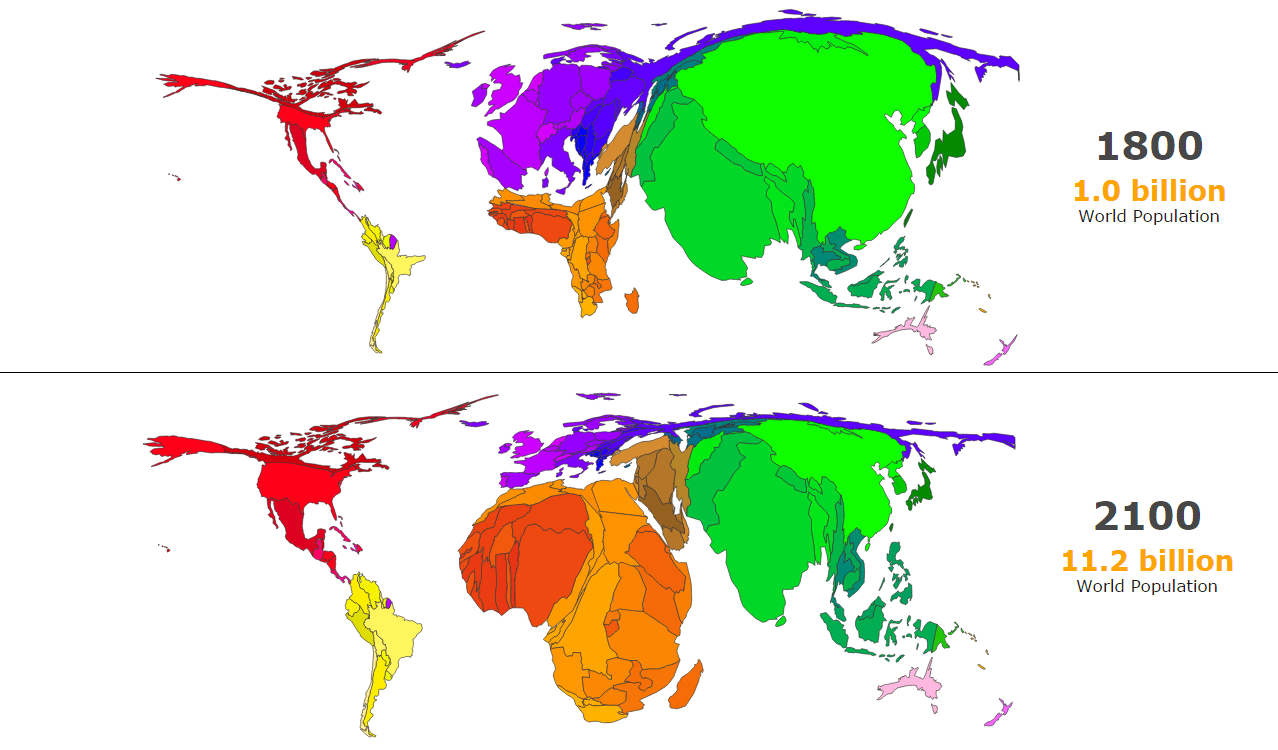
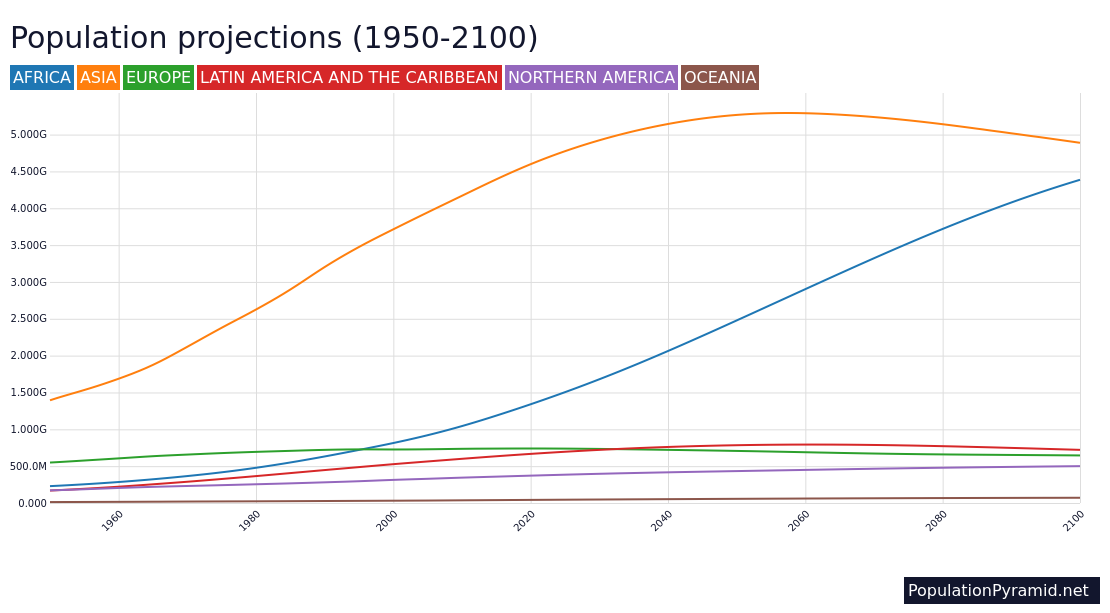
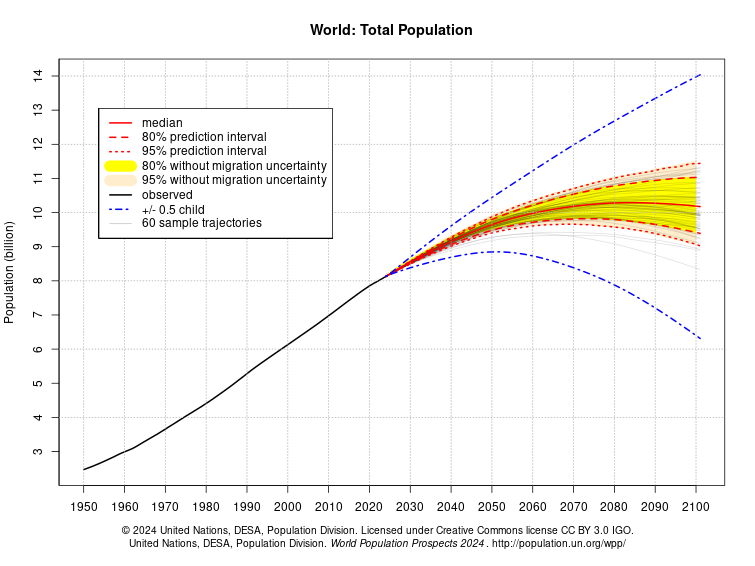
The picture in which, in the space of 75 years, sub-Saharan Africa’s population has increased by a factor of seven.

More people, more hunger

Since 1950, the land area sown to crops in sub-Saharan Africa has roughly doubled, but cropland per person went from three-quarters of a hectare to only one-quarter. That’s above the global average of about 0.2 ha, but on average Africa’s cropland is much drier and less fertile. It’s unlikely the next population doubling will see as much expansion of cropping: most communities have long since run out of forests to fell and fallows to shorten. Soil degradation due to overclearing, overgrazing and overcultivation is worsening rapidly. Deforestation and overgrazing reduce rainfall, lowering crop yields and exacerbating soil degradation.

In Africa and South Asia, the sentimental myth that smallholders feed the world confronts the reality that many don’t adequately feed themselves, let alone provide a surplus for townsfolk. Hungry people flock to urban centres where they increasingly rely on imported foods, while global food prices rise and local currency values fall.

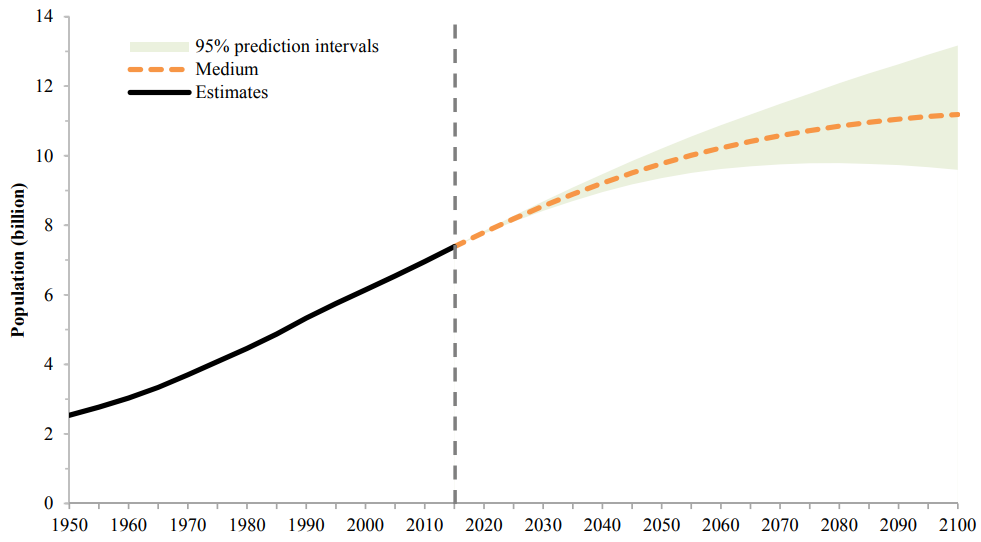
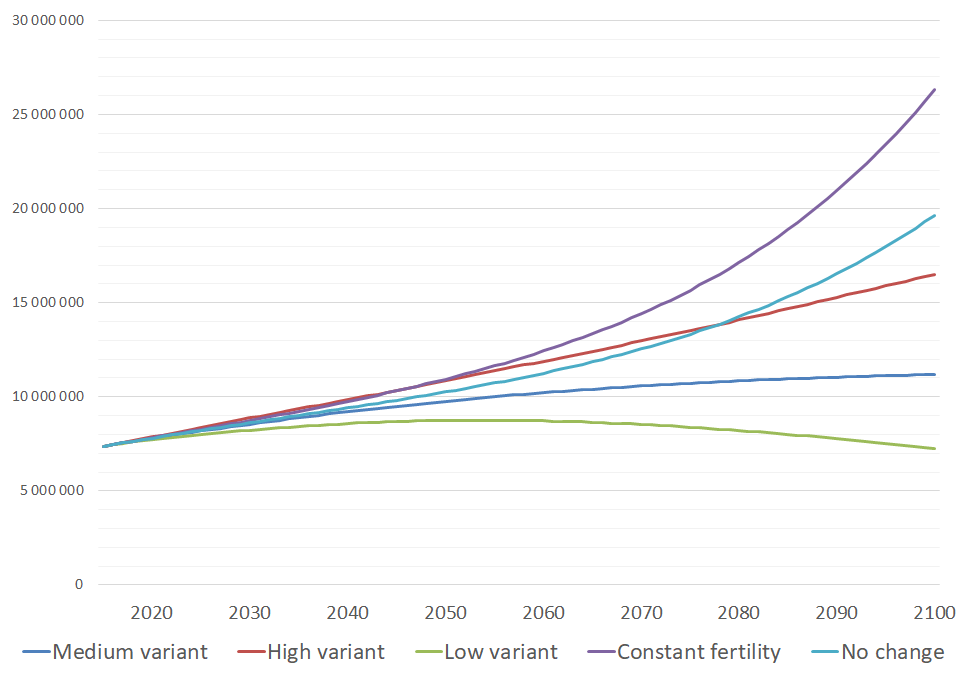
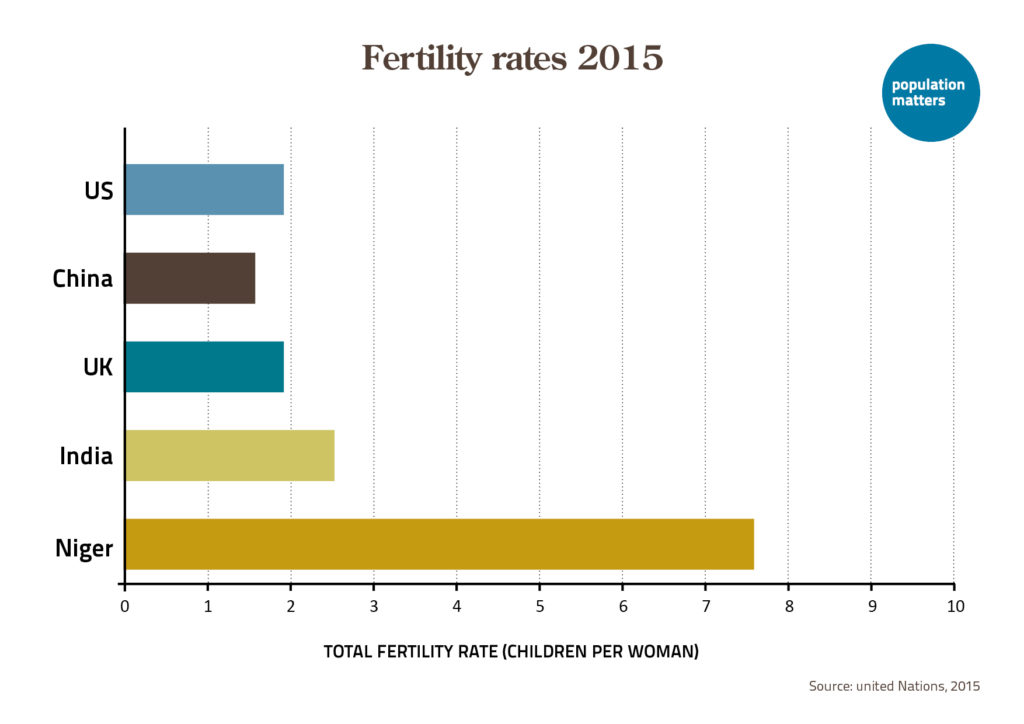
Nor is the increment of population growth slowing. Sub-Saharan Africa added less than 4 million people per year in 1950 but now adds over 30 million per year and still rising. The region’s population has doubled since the year 2000 – a single generation. A recent study found the fertility decline in several African countries has not kept pace with improvements in child survival, so the number of surviving children per woman has risen until very recently. They conclude, “In Middle Africa, TFR data suggest that fertility peaked in 1987 and has since declined, while [net reproduction rate] measurements indicate that fertility has yet to decline at all in this region.” Elsewhere, countries like Pakistan and Iraq have failed to achieve a consistent slowing of growth as their painfully slow fertility decline is countered by ever bigger cohorts of mothers.

The links between population growth, hunger and conflict are well known, and well summarised in the Population Institute’s 2015 Demographic Vulnerability report. A 2003 study by Population Action International found the risk of conflict related to three stress factors: the proportion of those aged 15 to 29 in the adult population, the rate of urban population growth, and the per capita availability of cropland and fresh water. A 2011 study demonstrated spikes in food prices triggered violence during the ‘Arab Spring’ and elsewhere. In Africa, while conflict tended to increase food prices, rising food prices increased the incidence of conflict with greater certainty. And food prices rise wherever demand outstrips supply.

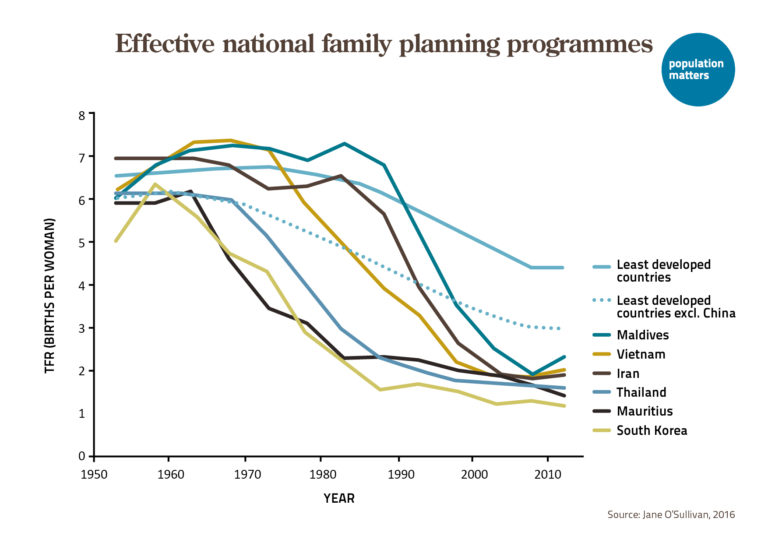
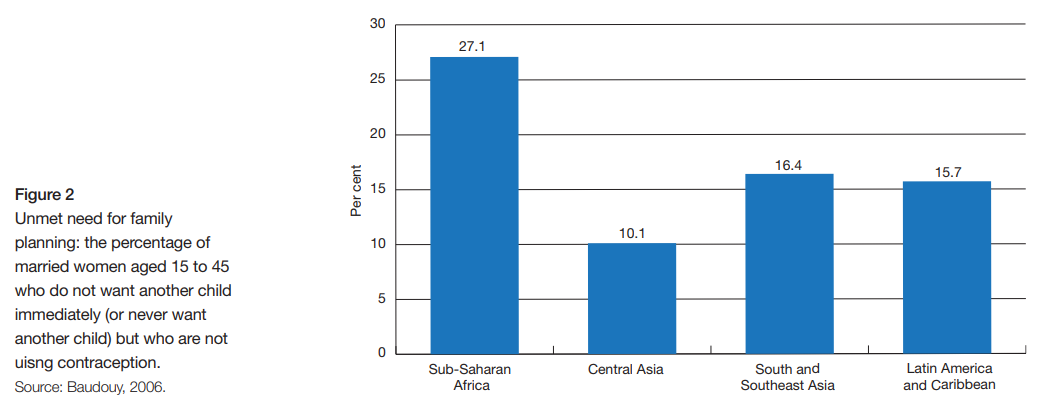
Yet, more support for family planning programs does not feature in any of the food security reports from the UN or Nature. The United States, until recently the world’s largest funder, has drastically cut aid for family planning, and other developed nations are failing to pick up the slack. Why would they, when the scientific community is silent on the need?

Even if one believes population growth is tapering off and requires no help to do so, science demands we acknowledge it as a still-relevant and powerful counter-current against today’s efforts to reduce hunger and conflict in the world. Increasing food production might have outpaced population for a while but this doesn’t refute its impact. If that progress has now foundered, it is no mystery.

But heavens no, we can’t say that! As long as this taboo persists, more children will go to bed hungry.

Published

18 responses to “Even starving children won’t break the population taboo”

  1. Esther Phillips Avatar

    I remember the famines in the 1970s whilst the Pope was strutting the world stage clamouring that “contraception was a sin”. Put me off religion entirely together, with reading in the Bible that we should go forth and multiply and dominate the Earth, a recipe for the disaster announced at the end of the book in the shape of “The Apocalypse”. I don’t know what it is with this species, is it clinging on to myths that God will turn one remaining fish into millions? A better Bible verse would be this one:
    “Woe to you who add house to house and join field to field till no space is left and you live alone in the land”.
    Isaiah 5:8.
    Bet none of the “pro lifers” have ever heard this one.
    As we are in complete and utter overshoot already we should be desperately aiming for 0 population growth and gentle de-growth by having fewer births than deaths. Otherwise we’ll all end up playing “The Hunger Games”.

    1. Kathleene Parker Avatar

      But of note, I remember that era when most of my Catholic friends absolutely ignored “his Holiness,” part of why births have not FOR DECADES been a major driver in U.S. population growth. And, of note, THE SAME IN ITALY, with the lowest birth rate in the world!

  2. Jack M. Pedigo Avatar

    Thank you for the Bible quote. I belong to several godfree groups and many have said they left religion due to reading the bible from front to back. It is said the Bible is one of the most sought after, but less read books around.

    1. Kathleene Parker Avatar

      I actually have far more trouble with the “god-free” groups like the Unitarians (I used to be one.) and the Sierra Club, the latter of which, backed off of population, because in the U.S. it’s primary driver is immigration, and gosh, they accepted a donation of over $100 million in return for their silence on the topic!

      1. Jack M. Pedigo Avatar

        I was on the board of the Seattle chapter of ZPG. A new director came along and felt money was needed to get out our message. At first he courted Ted Turner but then, later, it was decided to accept money from an anonymous donor on the grounds we remove immigrants from our population growth formula. A PBS program, To the Contrary, with Bonnie Erbe (I still have the DVD of that broadcast) talked about the anonymous donor being a group of industrialists donating $100M to both ZPG and the Sierra Club. Most of the existing board left as they saw infighting coming along. Later, the Sierra Club was having a membership vote for some new national board members. Two were advocating to re include population. One person, not running, had a comment on the voting brochure and stated those two were using the term, greening of hate. They did not get elected. Sometimes big organizations get too big and lose sight of their original mission.
        BTW, the,then fringe group Negative Population Growth is still going strong and they have no problem with mentioning the immigration issue. The same goes for this site. It’s good to see some are still driven by evidence and reason and not emotion!

  3. Dag Lindgren Avatar

    Why not call it overpopulation taboo?

    1. Philip Cafaro Avatar

      That’s REALLY taboo!

  4. Kathleene Parker Avatar

    How can we expect ANY focus on population when–in today’s DEREGULATED, CORPORATE media environment (no longe REQUIRED BY THE LAW TO REPORT “without bias and in fairness)–population isn’t even reported on?

    How can we expect John and Jane Q. Public to know diddly squat about population, when EVERYTHING in media (including PBS, which in my view ceased being “public television” way back in the 1990s, in favor of CORPORATE PROFITS), ignore the topic or put out FALSE narratives about how population growth is “somehow” going to stop (No matter that there is little reason for it to stop!) and ignoring–no, make that LYING about–the POPULATION EXPLOSION in the U.S. post-1967 (Thank you, Lyndon “Bain” Johnson!) and the Democrats’ open border campaign, with upwards of 93 percent of our EXPLOSIVE GROWTH in recent years, driven by immigration.

    Of note, on the first Earth Day in about 1972, the U.S. population was roughly 200 million. We were approach (in early 2024) 350 million, though, with the “loss” of roughly 5 million post-late January, perhaps that has changed.

    Yet, WE HAD THAT POPULATION EXPLOSION ABSOLUTELY WITHOUT REPORTING–AND OFTEN BLATANT LIES SAYING WE WEREN’T GROWING–BY U.S. Big 6 Media, and that gratis Ronald “Rayguns” and Republicans revoking the Fairness Doctrine and gratis Billy Boy Clinton and the Democrats working hard to set the media loose to do as they CORPORATE MEDIA wanted, with the 1996 Telecommunications Act–something that marked the END OF HONEST REPORTING IN THE UNITED STATES because, for the first time in U.S. HISTORY, it allowed the slippage of ALL media ownership into a few POWERFUL CORPORATE hands, such as Disney, Time-Warner, News Corp, and JUST 3 other corporations.

  5. Stable Genius Avatar

    For 30 years now, systematically, cruelly, the UN has ditched the obvious population (women and children) issue in favour of Climate Action for Net Zero, as one celebrates the diverse 8 billion. This UN switch has worked a treat. In the Western elites, climate action is virtuous, one speaks of reparations for “loss and damage”, but to diss over-population and over-immigration is “racist”.

    The UN trope is now Standard Operating Procedure for the Australian Government, which by world standards boasts radical emissions targets and crushing levels of immigration. Upon mass-migration protests emerging this year, government has upped the ante, dissent is not just racist but “nazi”.

  6. Dag Lindgren Avatar

    Probably global warming adds to the problems of overpopulation and overpopulation adds to global warming. Now the question is if UN COP 30, 10 – 21 Nov. 2025 Climate Change will discuss interactions important for peoples well-being between overpopulation and climate change. Since 2019 UN has applied a Culture of Silence about overpopulation and these interactions. The climate change seems alarmingly fast https://doi.org/10.1093/biosci/biaf149 .

  7. Stellarwind72 Avatar

    Who exactly do the authors of those reports think they are helping by denying overpopulation?

    1. Dag Lindgren Avatar

      The genetic code has worked for billion of years and shaped us, all our ancestors had genes with main property to forward copies of themselves. Thus our deepest rooted instinct is to favour many copies of our genes. That is reflected by denying overpopulation!

      1. Stellarwind72 Avatar

        Have you heard of Ajit Varki’s Mind Over Reality Transition?

  8. David Polewka Avatar

    Your Comment on “In Some Parts of Scotland, ‘The Only Thing We Need Is People’”
    FROM: The New York Times , Nov 04 at 06:46 PM
    Your comment has been approved!
    Thank you for sharing your thoughts with The New York Times community.
    David Polewka, Chapel Hill, NC
    If we stopped making flu, MMR, and Covid shots, to shorten the average life span by a few years, and finally control population, 50+ years after the ecologists called for ZPG, then a lot of people would leave urban areas and repopulate other areas, just like they did in the Covid pandemic.
    [View your comment]
    If you’re having trouble viewing your comment, please copy and paste this link in your browser:
    https://www.nytimes.com/2025/11/04/world/europe/rural-scotland-immigration-labor-uk.html#permid=146410289
    ————————-
    When I click the link, I get:
    The comment you are looking for is currently unavailable.

  9. Stellarwind72 Avatar

    Jem Bendell has a sobering paper on this. He argues that food systems will collapse in most countries due to hard trends including but not limited to, biophysical limits to food production, fossil fuel depletion and climate change.
    https://insight.cumbria.ac.uk/id/eprint/6927/1/Bendell_BeyondFedUp.pdf

    1. Stellarwind72 Avatar

      The paper includes a nice summary.
      In this chapter we have looked at the six hard trends that are already happening, and lead to food
      system breakdown:
      1. We are hitting the biophysical limits of food production and could hit ‘peak food’ within one generation;
      2. Our current food production systems are actively destroying the very resource base upon which they rely, so that the Earth’s capacity to produce food is going down, not up;
      3. The majority of our food production and all its storage and distribution is critically dependent upon fossil fuels, not only making our food supply vulnerable to price and supply instability, but also presenting us with an impossible choice between food security and reducing greenhouse gas emissions;
      4. Climate change is already negatively impacting our food supply and will do so with increasing intensity as the Earth continues to warm and weather destabilises, further eroding our ability to produce food;
      5. Despite these limits, we are locked into a trajectory of increasing food demand that cannot easily be reversed;
      6. The prioritisation of economic efficiency and profit in world trade has undermined food sovereignty and the resilience of food production at multiple scales, making both production and distribution highly vulnerable to disruptive shocks.

      He bluntly describes our situation:
      Considered individually, each one of the hard trends presents a very significant challenge to global food security. Considered collectively and interdependently, it becomes clear we have created a predicament on a scale and depth unprecedented in modern history, and unprecedented for the sheer number of people who will be affected.
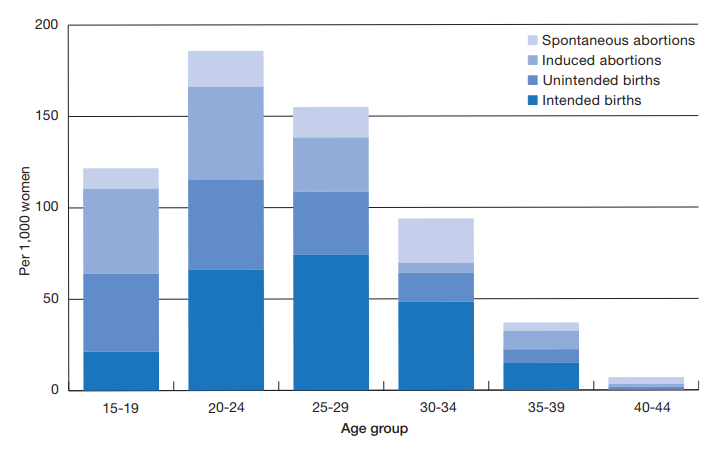
  10. […] is increasing in Africa since about 2017, and stunting in children is one consequence. As food security is low in Africa, its huge projected population […]

Leave a Reply

This site uses Akismet to reduce spam. Learn how your comment data is processed.

NOTE: Comments with more than one link will be held in wait and will only become visible on the site after an admin has approved it.

Explore the content and topics covered by TOP, search here

Blog categories
Gallery of infographics – Learn more about overpopulation and environment

Discover more from The Overpopulation Project

Subscribe now to keep reading and get access to the full archive.

Continue reading