It’s not racist to say: we are full

Should migrants be “blamed” for rising house prices? Or should we set aside blame and acknowledge that population growth, whatever the source, has some negative impacts? 

by Gaia Baracetti

I recently had the good fortune of visiting Vancouver, a city where I used to live a long time ago. While still beautiful, it appeared to me almost unrecognisable: everywhere, high-rise buildings, each more futuristic and imposing than the next, were rapidly replacing the pretty wooden houses I remembered, and swallowing green spaces. In spite of this building frenzy, real estate prices in Vancouver have risen madly; houses now sell for about 1,000 Canadian dollars per square foot, making it one of the most expensive cities in the world to buy a property.

Anonymous glass high-rise buildings in Vancouver

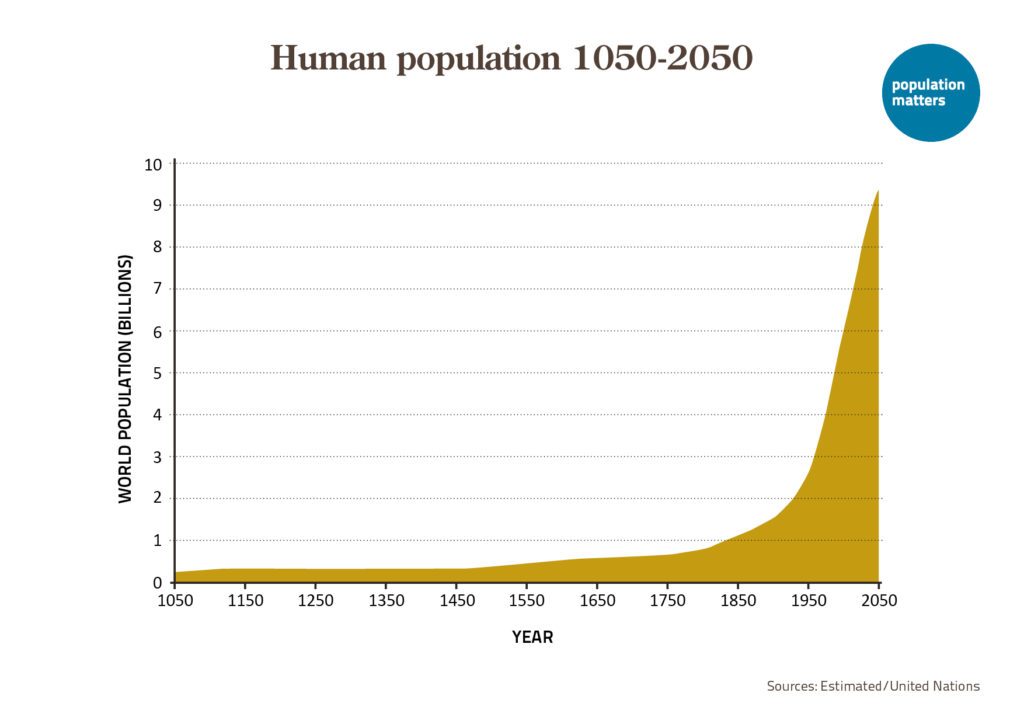
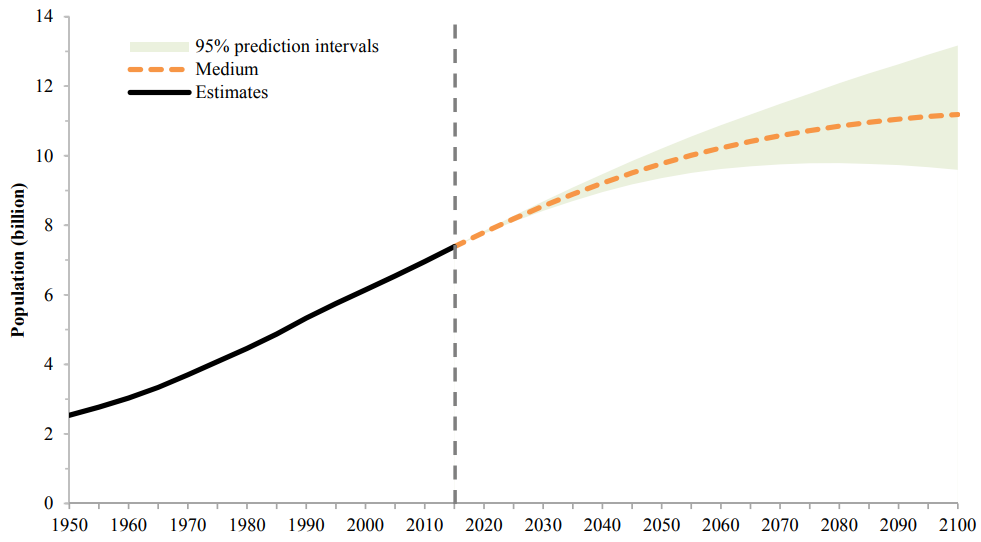
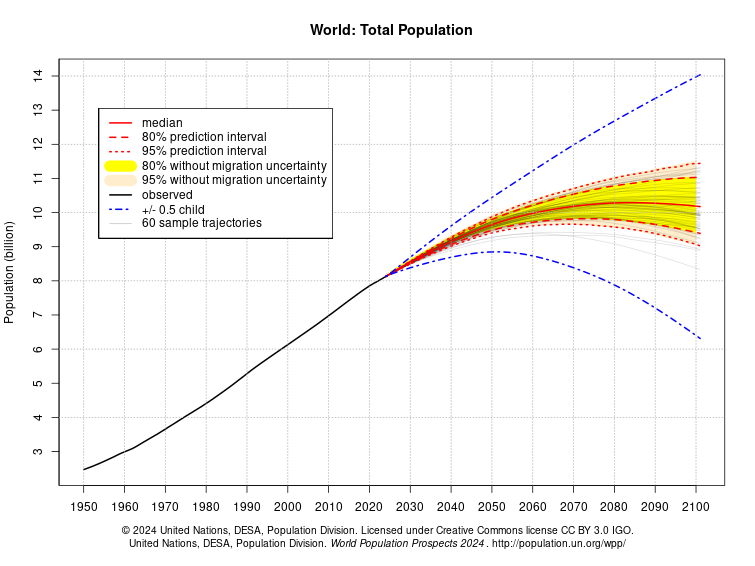
Looking at the data, it appears that the metropolitan area of Vancouver has gained over 650,000 more people compared to when I last was there two decades ago. It’s not just this particularly desirable city: the country itself gains hundreds of thousands of new residents every year. In Canada as in most other wealthy countries, after decades of below-replacement birth rates, the only reason the population is growing is international migration.

According to the law of supply and demand, migration-driven population growth creates more demand for houses and therefore leads to an increase in both building activity (supply) and prices. Except, according to the newspaper The Guardian, it does not.

Their case study is actually the Netherlands, where, the newspaper tells us, Migrants overpaying for substandard homes face blame for Netherlands housing crisis. That does sound doubly unfair. The inference is that, while both things are true – migrants are being ripped off and being blamed – the connection to higher housing costs doesn’t actually exist. According to The Guardian, it is an invention of the racist right-wing parties. It’s not because there are more people that rent costs more, it’s because… there aren’t enough houses. Except, “enough” is always relative to demand, and why is there so much demand for housing? Because the population keeps growing. And why does the population keep growing? Because of migration.

Grazing land in the Netherlands, a type of area often lost to urban development.

In the article, we are told that “the housing crisis is not a migration crisis … It is a crisis resulting from a series of poor policy choices, and overall, from a lack of enforceable legal recognition of the right to adequate housing.” Interesting. The “enforceable legal recognition of the right to adequate housing” doesn’t appear to have the same tangible usefulness, the life-saving materiality, of actual houses. Houses that cannot be willed into existence by a legal pronouncement: they need to actually be built, somewhere, by someone. The article itself suggests as much, as if it was an easy thing to do. However, the author does hint at environmental laws that might impede further building in the Netherlands, and that even some people on the political left argue to reduce migration. Meanwhile, we’re told that losing the cheap labour migrants provide would force Dutch people to work more and retire later (slightly lowering the standard of living and therefore consumption in one of the richest countries in the world isn’t even considered as an option).

Facing reality

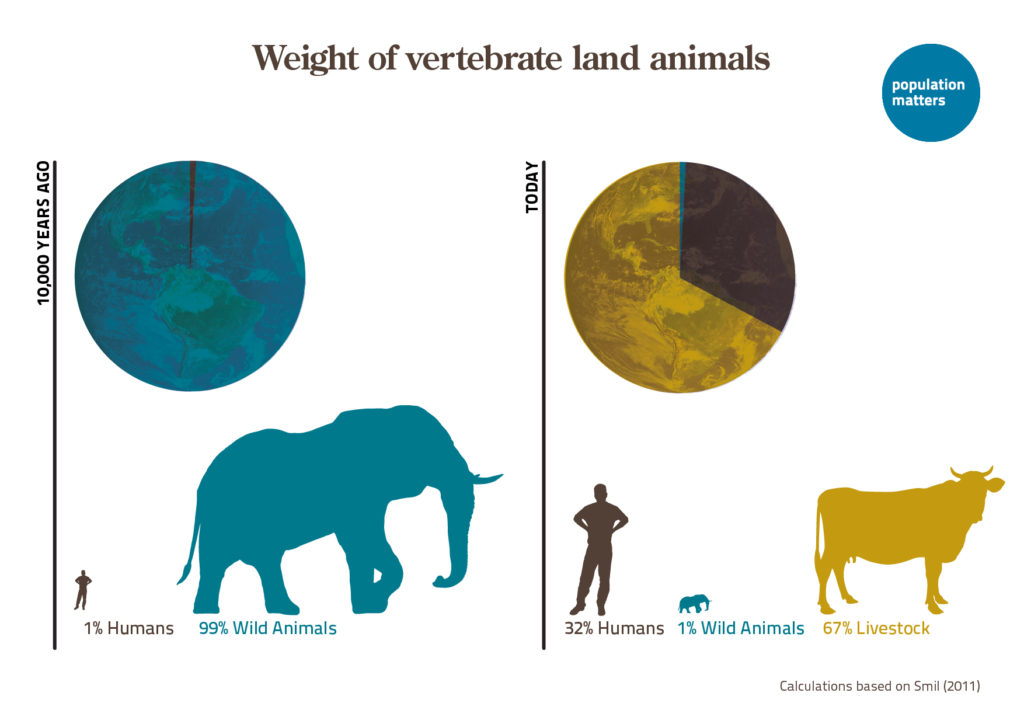
So it is the migrants, after all? Let’s be real: where could new houses possibly be built in a country that already has – at over 500 people per square kilometre – one of the highest population densities in the world? A country that is chock full of humans and livestock, to the detriment of everything else. A flat, nearly treeless country that needs to import its building materials from abroad, because it can’t mine enough on its own soil. A country that already sits, for about a fourth of its area, below the sea level – and the sea level is rising.

Construction site in Rotterdam, the Netherlands.

The reason why the media struggle with what should be simple logic and basic economics might come down to the problems caused by the notion of “blame”. If it’s the migrants’ fault that something bad happens, it means that they have done something wrong. Therefore they are bad people, therefore they deserve to be the target of racism and xenophobia. Since this is to many people a very undesirable outcome, they consider it their responsibility to try and prevent it by writing things that make no sense, hoping that their readers will believe them.

It would be helpful in such cases to put morals aside and focus on policy instead. Of course, morals will always underpin politics. But a moral case could be made either way: that migrants must be allowed in because they are people in need who come with the intention of working hard and making a positive contribution, or that, when considering whether to move to a country that is already overcrowded and struggling with high prices, they should be expected not to put their selfish needs ahead of those of the native population. Morals aside, however, it is a fact that a shift in demand does lead to higher prices, and that unaffordable substandard housing constitutes a problem for most people, bar a few profiteers. Once we acknowledge that, and the implications of acting upon either supply or demand, or both, then we can make informed choices as a society.

Limiting migration does cause pain. But so does destroying the natural environment, the quality of life of residents, and potentially the fabric of society. A global redistribution of wealth is the best way to ensure people are able to enjoy a decent standard of living wherever they are, without needing to move to countries that cannot support any more humans, and should instead be striving to reduce their own populations. Wealth redistribution could also discourage speculation in real estate and the purchase of multiple homes per household, which also contribute to higher prices.

Whatever the moral case for migration, countries still need to make decisions about how many inhabitants they can support while protecting the environment, future generations, and whatever else they consider to be of value. If there is no affordable housing and nowhere left to build, it’s not racist to say: we are full.

Published

23 responses to “It’s not racist to say: we are full”

  1. Herb Bowie Avatar

    It’s so refreshing to hear this kind of thinking expressed publicly. Sometimes I wonder if I’m crazy, or if I’m the only sane person left, when I read so much stuff saying that the housing crisis (which seems to be everywhere) has been caused solely by (fill in the blank, but everything except increasing population levels).

    1. Philip Cafaro Avatar

      Glad you enjoyed the blog, please share with friends and colleagues!

  2. Alex Avatar

    No it’s not crazy you are right as Maltus was.

  3. winthrop staples Avatar

    There are two more variables that are almost never discussed in regard to alleged concern about somehow “equalizing” wealth in the world. The first is of course the one alluded to here that …. eventually what good does it do for those from poorer countries to come in such large numbers to limited in space developed nations if their vast numbers degrade target nations down to third world status in regard to not only standards of living but also in reduced rights and freedoms. And then number two is the dynamic that two very intelligent foreign students I studied with years ago alerted me to. Both said that “going for the money” from developing to developed countries did nothing to increase the welfare of the immense majority that will always remain behind in nations of origin. So they made a point of saying that they intended to use what they had learned in American universities to increase the welfare of their nations’ citizen majority by going back home and working and sacrificing to make their home countries decent places to live. Because the current open borders globalist ideology’s inevitable result will be to make everyone equally worse off if the majority of the world’s population is jammed into the relatively small area that comprises the USA, Canada, Australia and Europe.

    1. Gaia Baracetti Avatar

      By equalising wealth what I meant is exactly this, making things better for people in their country of origin, by giving up, us citizens of wealthier countries, our unfair share of world resources and cheap labour (or them making us give it up, more likely).
      Of course us hiring doctors and nurses or IT specialists or whatever from poorer countries only benefits them individually while depleting their countries’ “human” capital and turning into waste the money spent by those countries to train them. You do get remittances in exchange, but that’s not enough.
      Ironically, the anti-immigration right-wing party in Italy Lega Nord (Northern League) had the slogan “let’s help them in their own homes” (as in “home countries”).

      1. Philip Cafaro Avatar

        “Equalising wealth” between the developed and developing nations is a pretty big “ask.” More reasonable is to say to citizens in developed nations: “you’re doing pretty well, there is great need in some other countries, please support generous foreign aid (private or governmental).”

  4. Monica Avatar

    Wow. I suppose this is how the people of North America, Australia, and South America felt when Europe sent their “poor huddled masses” across to them.

    1. Gaia Baracetti Avatar

      I think that they felt even worse, since at least migrants to rich countries today are not slaughtering us en masse.
      They felt like the Palestinians are feeling today.

      1. kurtklingbeil Avatar

        The very framing of this reveals insecurity and a degree of bigotry.
        Anytime some starts and or ends with
        “I’m not racist… BUT……”
        one can be sure that the “not” is wrong.

        It’s just the same “There are too many (brown) people – and we certainly don’t want them here.”
        “We demand to live out our days in comfort in our little priviledge niches and what happens after is none of our concern … Bye!”

        There is an element of karma involved…
        The euroTyrranies sailed their Galleons and Guns all over the globe to ravage and exploit and extract the natural and human resources to build the euroEmpires – into the shining beacons of prosperity – which may attract attention from the abused and abandoned populations in the colonies.

        Was there ever any resolution or restitution or reparations for the centuries of horror and abuse by the euroTyrranies ?

        Amerikkka kicked up the racism another notch … Not only were they RAF against PoC, they
        we’re plenty racist against the second wave immigrants from Europe after WWII.

        One can never be truly objective about ones own racism …

  5. Marianne Pietersen Avatar

    There are various reasons for housing shortages in developed countries. In Netherlands, where I grew up, there was a shortage after the war, result of the war activities. Most people in Netherlands were renting, we never talked about getting our own free standing home. Australia advertised for people and we migrated, hoping for a future home ownership. If every one in Netherlands had a free standing home, there would be no space for farms.
    Australia has more space available, but a lot of good arable land is sacrificed for homes. If we just kept building outwards, the prices of new homes would grow proportionately. One reason that prices have risen so dramatically is that these days we demand larger homes with multiple bathrooms, open living arrangements, modern kitchen equipment, reversible a/c & heating, etc. Not even considering solar roof cells, double glazing and wall insulation. Also, people used to build their own homes, these days we leave it to the tradies. We need to build more smaller homes for small families and retiring persons. I have downsized to a retirement village, most of my friends in ACT have not.
    Before moving to Australia I lived in USA for 20 years, in three different states. Never was treated like migrants were not welcome. But that might have been different if I were Mexican. In NY this is not noticeable, but in other states it would have been.

    1. Gaia Baracetti Avatar

      Both the US and Australia had much more wildlife until not long ago, and economic and population growth destroyed so much of it. Unlike a lot of wildlife in Europe, this is well documented because the change was recent. Whereas we don’t really remember a time when there were lions in Europe, or vast woodland, at least in some countries.
      Australia is wrong in pursuing an aggressive population growth policy. It doesn’t give it a chance to address the harm done to the Aborigenals and the land they lost, and it’s driving new extinctions.
      People do or do not welcome migrants based on a lot of factors among which environmental impact is always last – that’s what we are talking about here.

  6. Esther Phillips Avatar

    There are a couple of problems with climate change and pollution which are also driving people to move elsewhere and means even finance is not going to keep them where they were. And lets not forget wars…

    1. Gaia Baracetti Avatar

      Yes. But the Netherlands will be under water soon. Canada is having more and more wildfires. What looks safe now might not be so in the near future.

    2. Esther Phillips Avatar

      Same with the UK which is woefully unprepared for climate change. There will be retreat from quite a few coastlines and massive pileups on land that would have been used previously for growing food… Plus all the migrants – not a good scenario.

  7. Kathleene Parker Avatar

    What on Earth is all this CHALLENGE IN POSTING? My God, you aren\’t talking protecting bank accounts here, and I am FED UP with wasting time ATTEMPTING to post using Google!

  8. Stable Genius Avatar

    In Australia, not only is it “racist” for citizens to say that there is too much immigration [even though all previous records have been broken by 70-80%], it is even [with the open encouragement of the government] “nazi” or neo nazi. And yet, the very same government urges “mature debate” and “respectful conversation” about immigration.

  9. Gaia Baracetti Avatar

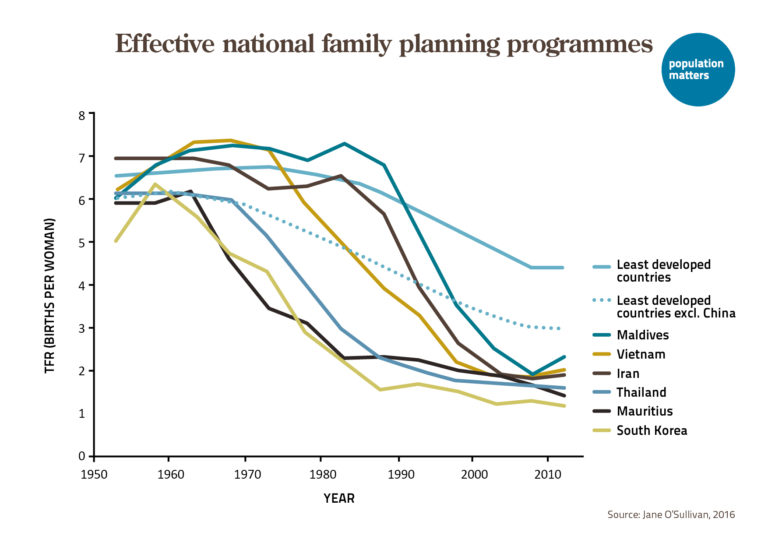
    Philip, aid is basically charity. Often, compensation for plunder disguised as charity. As long as the world is industrialised, you need to transfer industry and other money-making enterprises from rich countries to the poorer ones. That’s how people in places like Poland have stopped migrating and started going back home.
    Luddite here, but that doesn’t make me blind to how things work.

    1. Philip Cafaro Avatar

      Gaia, I think you are mixing two questions: what do rich nations owe poor nations, and what amount/kind of foreign aid might be in rich nations’ interest to send to poor nations, in order to reduce unwanted international migration.

      1. Gaia Baracetti Avatar

        But like I said, it’s not aid that reduces migration, it’s jobs.
        If you are receiving aid, you are probably too poor to migrate. People usually migrate to flee conflict or oppression, and to work.

  10. Jan van Weeren Avatar

    Great contribution, Gaia. Many people can be blamed for the housing crisis in The Netherlands, but that won’t solve the problem. We cannot accomodate our inhabitants sustainably without substantial population degrowth. This insight should guide our politicians.

    1. Gaia Baracetti Avatar

      Thank you. I’m Italian, and in my country it’s the same overall, even though we have some remote or poorer areas where there’s plenty of houses, but no one wants to live in them. Some of those areas are rewilding naturally, but unfortunately the mindset is such that politicians and even the public want people to populate the land at all costs.
      I hope I have shown no disrespect to the Netherlands per se, I visited once to see an exhibit in Leiden and I liked it a lot!

  11. […] Il blog The Overpopulation Project ha pubblicato un altro mio articolo, dal titolo ‘It’s not racist to say: we are full‘. […]

  12. […] Qui, in inglese, parlo di Vancouver e dell’Olanda e indirettamente anche di noi: It’s not racist to say: we are full. […]

Leave a Reply

This site uses Akismet to reduce spam. Learn how your comment data is processed.
NOTE: Comments with more than one link will be held in wait and will only become visible on the site after an admin has approved it.

Explore the content and topics covered by TOP, search here

Blog categories
Gallery of infographics – Learn more about overpopulation and environment

Discover more from The Overpopulation Project

Subscribe now to keep reading and get access to the full archive.

Continue reading