Time to vote!

Immigration is proving to be a hot topic in the run up to EU parliamentary elections. While the focus has been on immigration’s cultural and social effects, changes in immigration policy could also impact future population numbers across Europe. This has consequences for citizens, the environment and ecosystems.

by Philip Cafaro

According to the European Union’s statistical bureau, 5.1 million people immigrated into the EU in 2022 (the last year for which full statistics are available). That represented a 117% increase over 2021. Meanwhile, approximately 1 million people left EU member states for other nations, resulting in net immigration of 4.1 million. Despite a short-lived decrease after the public outcry in 2015 and another decrease due to COVID in 2020, EU immigration numbers have rebounded and are now the highest they have ever been.

Much of the recent increase is due to the war in Ukraine, particularly migration into eastern and central Europe. But the numbers have also been climbing rapidly for migration from the Middle East, South and East Asia, and Latin America. According to the United Nations, “In 2022, almost 3.7 million new residence permits were issued in European Union (EU) ­Member States – not including the influx from Ukraine – compared to 2.9 million in 2021.” Again according to Eurostat, “Germany reported the largest total number of [new] immigrants (2.1 million) in 2022, followed by Spain (1.3 million), France (0.4 million) and Italy (0.4 million).”

Mass immigration, a relatively recent phenomenon in Europe, raises pressing social questions. How willing are Europeans to accept large numbers of people from cultures without a strong commitment to human rights and gender equality? How well do those migrants integrate into European societies? Should current citizens have a right to slow migration to a pace that allows for full integration (if possible)? How do different immigration levels affect Europe’s generous economic safety nets?  And what would be the fate of the EU’s natural areas, including the network of protected nature (Natura2000) if the continent becomes even more densely populated?

Despite many Europeans stated desire for less immigration, political elites generally continue to offer up more. Over the past decade, this has strengthened the vote totals for far-right parties across the EU. Although center and social democratic parties in the coming election have started to follow right-wing ones in their migration policy proposals, it is not yet clear if mainstream parties really are willing to curtail immigration. But they may be, if only to remain in power. It is speculated, for instance, that Ursula von der Leyen, the liberal conservative president of the European Commission since 2019, may need to form a coalition with right-wing parties to continue on in that role.

*

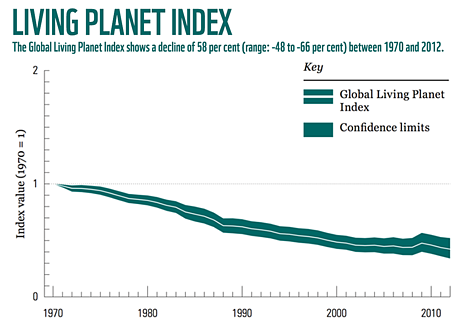
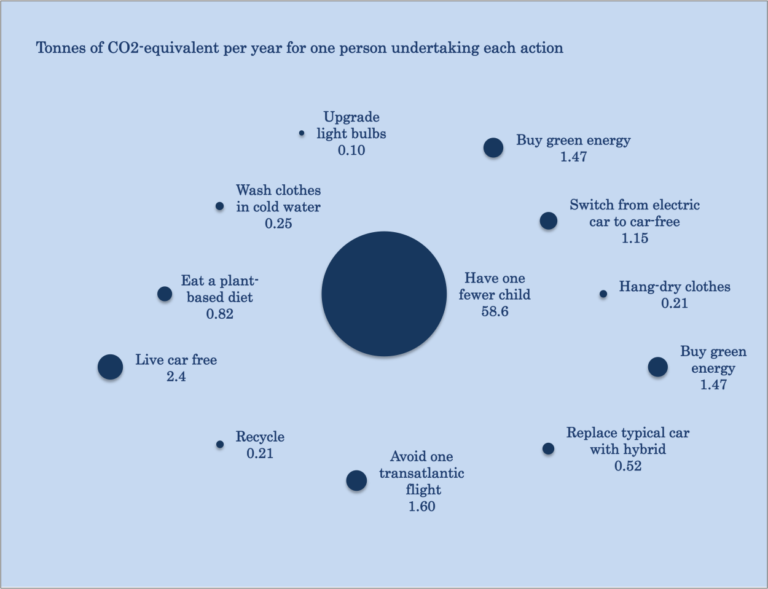
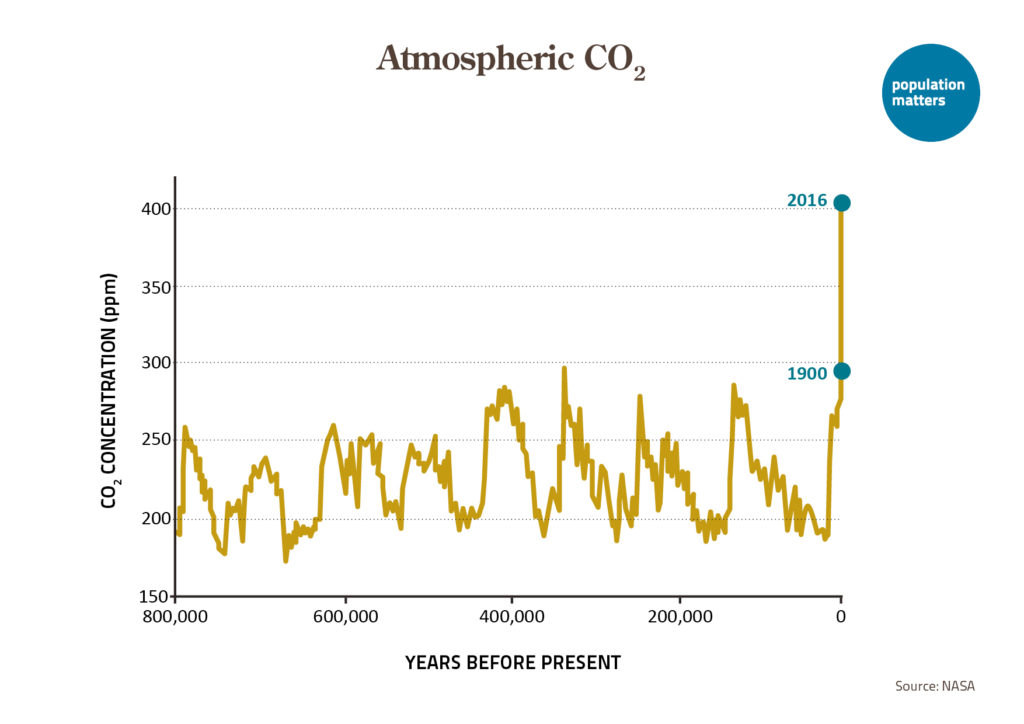
One issue that is generally neglected by both opponents and proponents of mass immigration is its demographic impact. Yet as followers of TOP’s publications are aware, immigration levels are a major factor in determining future population numbers in the EU, while future EU population numbers will be a major factor in determining greenhouse gas emissions, the success of biodiversity protection efforts, and other sustainability efforts within the EU. As a general rule, fewer people provide multiple environmental benefits. Conversely, the more of us there are the more damage we do.

For those living in the EU who are curious to know how raising or lowering current immigration levels will affect future population numbers for your country, we encourage you to visit our TOP-grapher. This graphs various levels of annual net migration for all EU countries (and the United Kingdom) and the EU as a whole, allowing visitors to see how these changes affect population numbers in future decades.

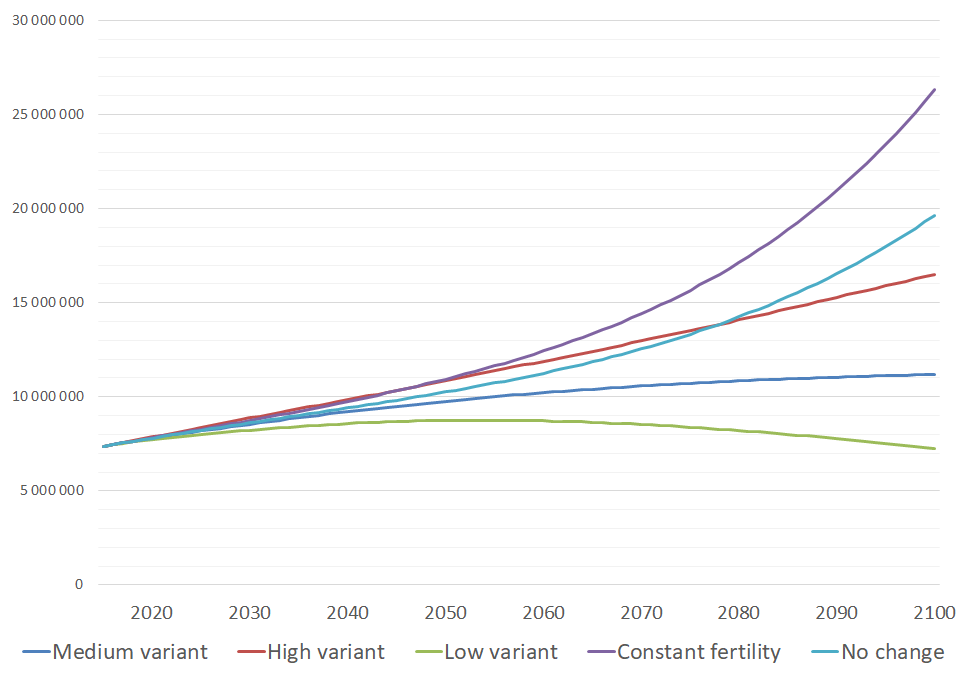
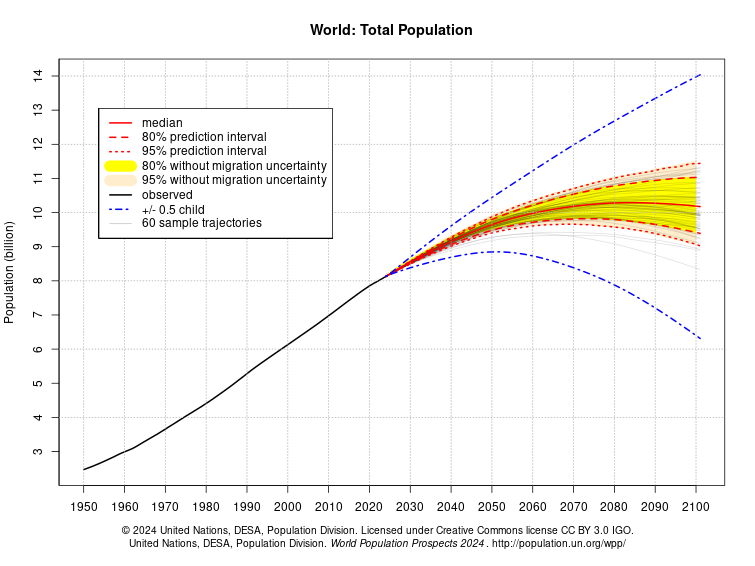
For example, Germany’s annual net migration for the twenty years prior to 2016 was about 260,000. The TOP grapher shows five multiples of this annual number: zero, 50%, 100%, 200% and 400%. At 200% (or about 520,000 annual net migration) Germany’s population is projected to increase from 82 million to 113 million by 2100 (see graph). But in 2023, annual net migration was much higher, about 700,000, according to DeStatis, the German statistical office. If that level continues throughout the century, Germans can expect a population that is several tens of millions higher — with all the attendant environmental pressures. Conversely, decreasing or zeroing out annual net migration is likely to lead to population decline in Germany — with attendant environmental benefits.

Or consider France, where net migration reached 183,000 in 2023, the highest in years. In the two decades prior to 2016, annual net immigration to France averaged 100,000. So the 2X status quo net migration level, graphing 200,000 annual net migration, provides a fairly close approximation of where the 2023 net migration level will take France’s population in coming decades. In 2100, this scenario reaches 90 million, 33 million more people than today.

Finally, consider the European Union as a whole. The 4.1 million annual net immigration figure provided by Eurostat for 2022 is much closer to the 4X status quo net migration figure (4.75 million) than the 2X status quo net migration figure (2.4 million) calculated in our study published five years ago. It is humorous to remember how much pushback we received from some demographers, who said the 4X scenario was much too high to ever be sustained and should not be included in the study. Well, the EU is almost there now, and some advocate more permissive regulations that would raise immigration levels even higher.

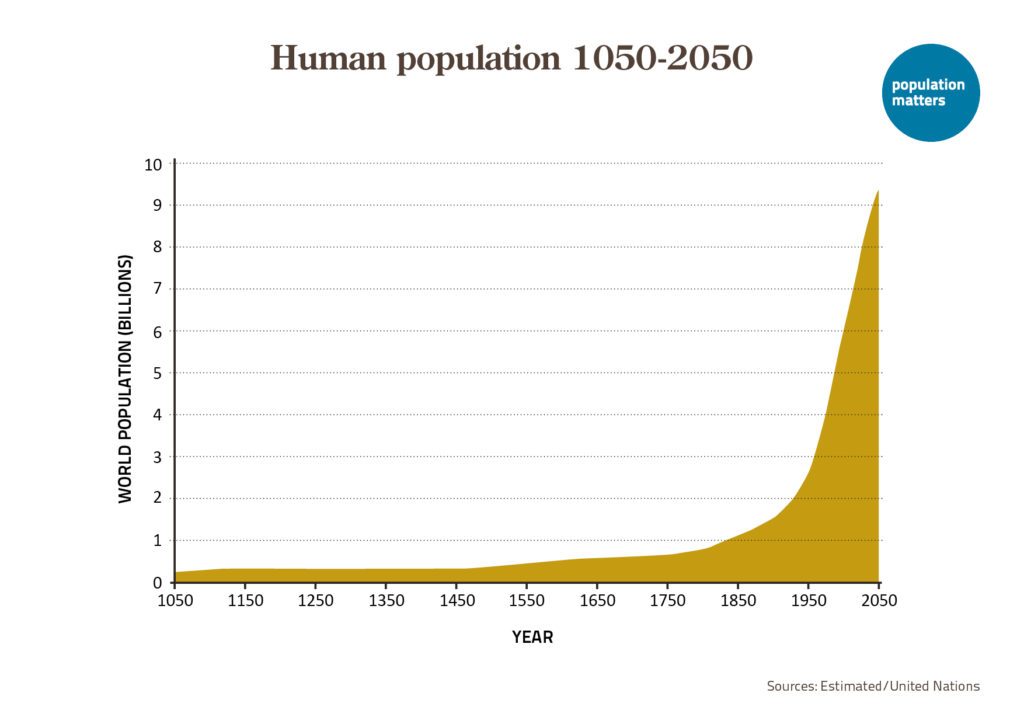
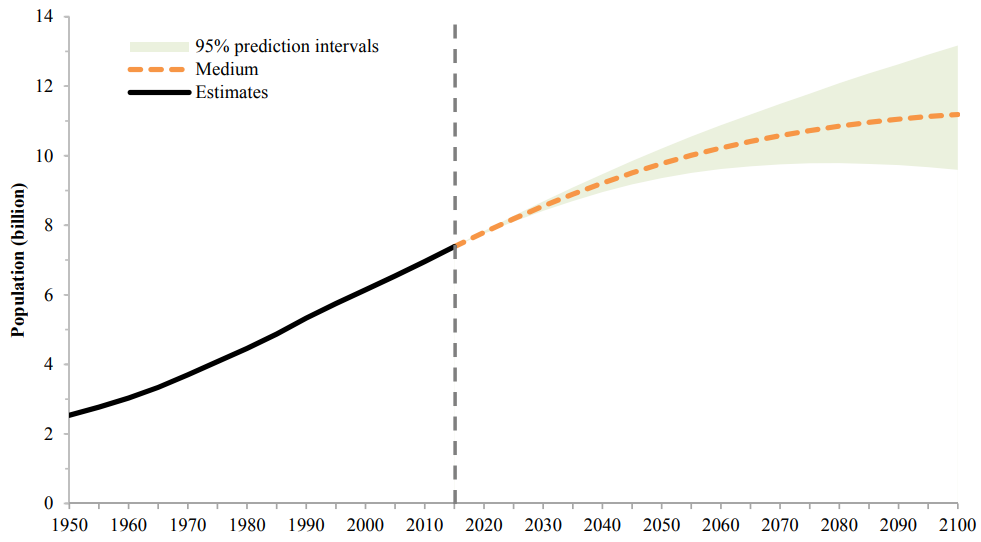
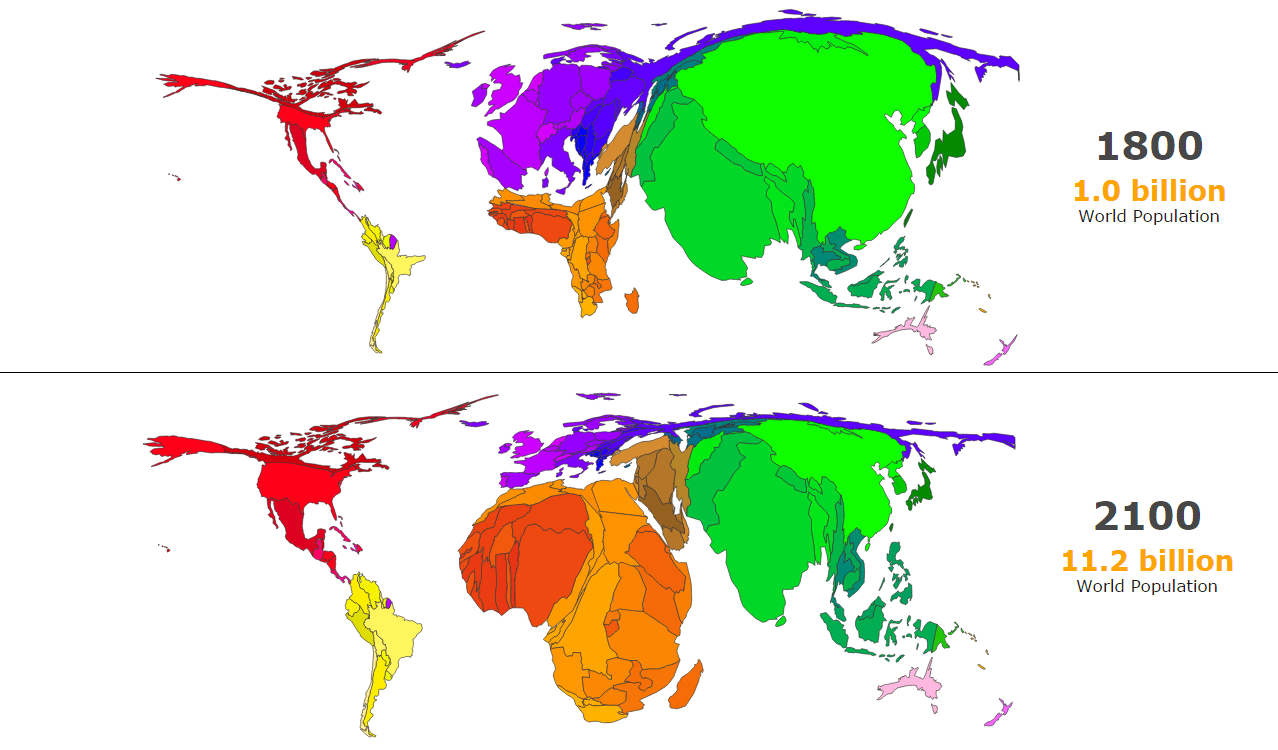
If the EU were to continue accommodating its current high level of net migration throughout the century, the EU population would approximately double by 2100. At lower immigration levels, conversely, there are paths to gradual population decline. These differences of hundreds of millions of people more or less in 2100, a mere three generations in the future, will obviously make a big difference in Europeans’ ecological footprint and in their ability to create sustainable societies.

Published

26 responses to “Time to vote!”

  1. Daniel Avatar

    While I support the motivation I think this is a dangerous path to go down. I think you would agree that proposing kicking out 20% of the current EU population is inhumane, even if it would decrease CO2 emissions and reduce overpopulation in Europe. Similarly, there is a large humanitarian aspect to allowing immigration which needs to be considered. And possibly more importantly it’s not clear to me that this isn’t an oversimplified model that is only considering regional effects. Immigrants who move to developed countries tend to have fewer children and converge to the local fertility norms. So in a global scale it could very well be the case that immigration reduces the total number of people we end up with. If you assume that eventually the whole globe will converge to equivalent standards of living and per capita CO2 emissions then while you might have short term benefits you won’t actually be reducing CO2 emissions over the long term through this approach.

    1. gaiabaracetti Avatar

      You could also argue, and it’s proven to an extent, that the possibility of migrating is what incentives people to have more children – they see them as an investment. I’ve seen interviews with people (from Africa, for example) saying as much.

      Also, Philip didn’t say anything about kicking people out! It’s about how many more we are letting in.

      1. jack Avatar

        A previous study showed that people in developing country’s living near a developed country tended to have more children. This is done to increase the odds that one child (usually male) will be able to emigrate to the richer country and send money back to the family.

      2. Barbara Rogers Avatar

        I think that would just be an extension of general pro-natalist emotions, especially among men. it is a bit dangerous to claim that blocking migration would reduce birth rates in sending countries. Migration is a controversial enough topic without that one.

    2. PHILIP CAFARO Avatar

      I think the dangerous path is for Europeans to keep increasing their populations in a world in steep ecological decline.

      Citizens around the world need to create sustainable societies, and that includes reducing, not increasing, their numbers.

      Smaller populations will help nations decrease their demands on global ecosystem services, and make it easier to deal with the shocks and problems that global overshoot is likely to throw at them going forward

    3. Jack Avatar

      My late partner was an immigrant from Iran. She fully understood the seriousness of this issue and the need to address it from a reason based standpoint. We must not be the worlds social worker and must stop letting emotion rule our laws. This issue is not about people but the system under which all must live, immigrants and citizens alike. I also see some have to be expelled when it is shown they are in a country illegally or have committed crimes. Most have nooo idea the cost to a country of having to assimilate masses of people many who do not share our language or values.

    4. spamletblog Avatar

      Many people do not seem to understand what graphs actually show. At the turn of the 21C, many European populations’ growth curves were levelling off or even declining. In the UK the rate of increase was declining and set to go negative, but developers and ‘planners’ insisted on projecting arithmetic increases, and went ahead and ‘created jobs’ and built houses, for people who would not exist except by net migration. The result was the hose price and economic collapse, followed by net migration averaging 300,000 average per annum ever since. The Eurostat figures I looked at for 2011, actually, when looked at as a whole, predicted that, essentially, *all* Europe’s net population growth was set to take place in the UK! Mainland Europe was set to decline, as you can see in the black line that is the *actual* population that was measured year on year: it was struggling to increase numerically, but developers continued to project the whole curve to that point as if it was a straight line: hence the crash! However, since then, climate change has both directly forced migration, and caused the strife that adds to the migration, plus a number of countries still have uncontrolled internal population growth that environments and or economies cannot support. This has turned the declining population growth curves of both Europe and the UK around, and all are now, apparently, set for disaster again. I had not realised how bad it had got since I last looked at EU figures. I knew the UK was doomed to starvation and civil war when world food trade collapses mid century, but I had hoped that EU stable populations, less mad for development, might fare better. 🙁 Anyhow, those who speculate that newcomer’s adjustment to local norms may bring down growth curves, only need to look at the black part of the curves since Y2K to see that this is not the case. The fact is that migrants are usually the young, healthy, fertile, and economically capable fraction of ‘population donor’ nations, so their effect is both to boost population growth AND the economic growth that vacuums up even more of the young and fertile from all over the world! There is no way out of this deadly multiplier effect, without reversing the dominant doctrine of politics: which is just a game of ‘economic growth bonfire building’! All the ‘free traders’ have forgotten Adam Smith’s two great warnings to policy makers, which can be paraprased as: ‘Never trust businessmen.’ and ‘The countries where the most profits are to be made, are the ones that are going fastest to ruin.’

      1. spamletblog Avatar

        I found notes I made from Eurostat back in 2013.
        It’s quite a lesson to see how world events conspire to mess up projections. Only UK seems to be continuing more or less as expected. 🙁

        European population projections 2013.
        (Links were included but WordPress is not allowing them.)

        EU pop to increase by 13.2 million by 2080;

        UK pop projected to be 85.1 million by 2080; (Germany to *fall* by 3 million.)

        UK pop 64.8 million in 2015.

        Thus UK pop increase projected = 20.3 million;

        Which is actually 7.1 million *more* than the growth for the whole of Europe because we increase as the others decrease.

        “Europop2013 projections indicate that the EU-28’s population will grow overall by 2.6% between 2014 and 2080, with the number of inhabitants increasing by 13.2 million persons. The EU’s population is projected to peak around 2050, reaching 526 million persons, an increase of 18.7 million (or 3.7%) compared with the situation in 2014. The size of the EU’s population is then projected to fall to reach a low of 519.8 million by 2075, after which a modest increase is projected through to 2080, when the EU-28’s population is projected to still be around 520 million persons (see Figure 1 and Table 1).”

        By 2080, Germany is likely to be the third largest EU Member State in population terms, behind the United Kingdom and France”

        “For almost half of the EU Member States, the projections for 2050 indicate that population numbers will be lower than in 2014, with Germany (74.7 million) and Poland (34.8 million) both recording decreases of more than 3 million inhabitants. By the end of the time horizon in 2080, Europop 2013 projections indicate that the EU Member States with the largest populations will be the United Kingdom (85.1 million inhabitants), France (78.8 million), Germany (65.4 million), Italy (65.1 million) and Spain (47.6 million).”

  2. gaiabaracetti Avatar

    As a European, I’ve made peace with the fact that we’re not getting less immigration no matter who we vote for. I never voted right, and I’ve started skipping elections because the choices across the board are so dismal, but it’s obvious at this point that you could vote the most right-wing party since 1930, and you would still get more migrants, and clumsy natalist policies to boot. Look at Italy. We have more migrants coming in than before, some weird pro-life policies, and a government that seems to be getting more repressive. And instead of actually bringing down the numbers of immigrants, they just do mean things like closing down mosques to look tough.
    Sometimes left-wing governments try to limit migration, but then they are accused by their own constituencies of pandering to the right. Not to mention that the more immigrants there are in our societies, the less likely we are to get anti-immigration policies. There’s a weird disconnect by which some people, even migrants themselves, do agree it’s too much, but any policy that would address that is treated by everyone like Satan’s idea and fought against on the streets, media, courts.

    The problem is that all parties are committed to economic growth, and that requires more people. What citizens want is besides the point – and to be fair, while they might think they want less migrants, they also want more money. You go to the places run by right-wing voters, and you will see many if not most of the employees are foreigners. If not having so much migration is a priority for voters, why is everyone hiring migrants? It would be cruel, but European societies could stop mass migration tomorrow by boycotting it and only hiring natives. But that will never happen. If anything, hiring foreigners is something people brag about – on the left, because you are helping them; on the right, because you’re sticking it to those lazy European youngsters that “don’t want to work”.
    Not to mention, one of the most popular jobs here for otherwise unemployed left-wing youths is working at the centers that welcome immigrants and prepare them to do the jobs that the aforementioned youth deems beneath them. There’s no hope, really.

    1. PHILIP CAFARO Avatar

      Gaia, is it really that hopeless? It shouldn’t be that hard to reduce immigration, but I agree that it’s striking how often rightwing governments renege on their promises to do so. Another example is the UK, where immigration has continued to rise in recent years under Tory governments.

      Here in the US, the Trump administration mostly flailed around on immigration, failing to take the most straightforward steps to reduce it, such as mandating employment verification for all new hires, and instead went in for more expensive and complex border control efforts, in order to “look tough.” Then again, things can always get worse — as we’ve seen in the explosion of illegal immigration under the Biden administration.

      1. gaiabaracetti Avatar

        Yes, it’s hard because it would:
        1. Cause great and visible human suffering
        2. Damage the prospects of economic growth
        3. Break human rights laws or asylum laws
        4. Leave many low paid job positions vacant – the jobs people actually need done
        All things the majority of citizens don’t want to see, no matter what we here think.
        You’ve seen Russia and Belarus literally throwing migrants at the EU’s borders, because they know that people will help them in, and that once they are in they stay here, and will destabilise our countries further without us being able to do anything about it.
        You can see the lawyers and courts, in EU countries and the UK, stopping deportation schemes or single deportations, investigating a minister (Italy) for temporarily stopping a boat… Once the immigrants are in, who’s going to deport them back? What if their home country doesn’t want them, what if they disappear, threaten suicide? What if a judge rules that it’s unlawful to deport them?
        And how are you going to make sure they don’t come in? Are you going to sink a boat full of people? Are you going to push a Syrian to freeze to death back into Belarus or Bosnia? To be tortured and enslaved in Libya? Which we do do, and it weighs on our conscience.
        I want to be wrong, I want there to be a humane way to end this, but I don’t see the political will to make the hard choices and explain them to the population.
        I totally agree we need to stop mass migration, and we should start by working on the pull factors, the jobs for example. We should work to reduce birth rates in high fertility countries and to reduce inequalities, and by a lot, at the global level (which means you and I will be poorer).
        But employers in our countries ABSOLUTELY want those immigrants. They ask for quotas, and they get them. Even Giorgia Meloni’s supposedly anti-immigration government rushed to give quotas – we’re talking hundreds of thousands of people here. Per year. Plus all the illegal ones.
        Right-wing governments are subservient to big businesses, and sometimes small businesses too, that’s why they go back on their promises to curb immigration.
        And citizens don’t complain, because they want their strawberries and tomatoes picked, they want their old people’s bums wiped, their streets cleaned, and they sure aren’t going to do it themselves!

      2. PHILIP CAFARO Avatar

        Gaia,

        You bring up a number of valid obstacles and difficulties in reducing immigration. One straightforward way to do so might be to subtract the number of illegal immigrants from whatever quota of legal immigrants is allowed in every year. That might be one way for countries to say: “even though we know there is going to be some level of irregular immigration, we are not giving up on our responsibility to set an overall level that is in the public interest.”

        Of course, that approach breaks down if illegal immigration is way higher than legal immigration, as has been the case for the past few years in the United States.

        Regarding your “four reasons,” I don’t think 3 and 4 are serious problems:

        3. Break human rights laws or asylum laws
        4. Leave many low paid job positions vacant – the jobs people actually need done

        International asylum treaties and laws were never meant to allow in the huge numbers we see claiming asylum year after year, and were pitched to political asylum seekers, not today’s primarily economic migrants. Nations aren’t legally bound to let themselves be overrun, and if they are, they need to change their laws.

        As for leaving low paying jobs vacant — tant pis. Employers can offer higher wages or leave the jobs unfilled. If there are jobs that absolutely need to be done, we can pay people enough to do them.

        Your reasons 1 and 2 are the core of the issue, and more intractable:

        1. Cause great and visible human suffering
        2. Damage the prospects of economic growth

        People do want continued economic growth, and the high levels of consumption that go with it. But I think we are agreed that we need to get past this to ever have sustainability.

        Regarding the human suffering caused by limiting migration, it’s real. But so are the costs of excessive immigration levels, and the costs of failing to create sustainable societies.

      3. Barbara Rogers Avatar

        In the UK and other European countries, large-scale immigration is government policy – in the UK’s case it is largely about care workers, who fill the gaps left by local care workers who cannot live on the wages offered. The cure is better wages for care workers. Otherwise immigrants are effectively being brought in to undercut the local people and keep wages at rock bottom. In addition, it avoids the need for a well organised and properly funded care system. This is not just about care for older people, incidentally: the heaviest expenditure is for children and young people with complex needs.
        There is heavy propaganda at the moment, especially from the BBC, about the need to make women have more children to cope with an “ageing population”. Too complex for a brief comment, this whole argument needs a serious demolition job.

  3. Johan Löfqvist Avatar

    We humans are surely the most invasive of all species. We multiply and deplete nature that we depend on. When survival is threatened we should take steps to survive. The sooner the better, otherwise Nature will force us, and that will be brutal.
    1. Jack Avatar

      We are also, by far, the most destructive.

  4. David Polewka Avatar

    Everybody thinks that “Anything goes”, “Numbers don’t matter”, and “There’s no limits”.
    So, I ask them: “What is the limit on human population?” They never know, and
    they don’t want to know. “Just keep da good stuff coming, da beers and da Bears.”
    “We don’t wanna hear no negative stuff, just keep da good stuff coming.”
    They don’t read, so they’re ignorant. Ignorance rules the day!

  5. gaiabaracetti Avatar

    Philip, I agree with you – though I think you underestimate how strong the judicial, media and popular backlash is against stopping migration in practice. And how strong the power of business interests who do not want to pay people more to do certain jobs (or to leave room for the self-employed to do those jobs at whatever conditions they see fit). We should know by now that our elected officials respond to lobbies more than they do to the people who voted them.
    But we’re on the same page – you acknowledge the difficulties I mention, and I agree that they should be overcome. It just isn’t happening. Short-term thinking definitely prevails, here as in elsewhere. There are so many things we *should* be doing that we just aren’t doing – both individually and collectively.
    I’m trying to do my part, and I think we should keep talking about this – maybe the tide will change.

    1. gaiabaracetti Avatar

      That’s the one thing we can, and should, do: reframe the discourse. We need to convince a lot of people both that mass migration is an environmental and social problem and needs to be brought down from present levels, and that we should strive to do so in a way that is humane, equitable and as fair as possible.
      We need to make it mainstream, both a left and right thing, to want to do so – right now it’s the opposite.
      We should be clear that it’s not about thinking that some people are intrinsically more or less deserving of peace and prosperity, or that we “don’t like them”, but that any society faced with a rapid and overwhelming influx of people from elsewhere will see its environment degraded and its social cohesion and trust threatened. This is true whether it’s “us” going “there” or “them” coming “here”.
      One option that has been implemented is, for example, voluntary repatriations with a (one-time) financial incentive. A drop in the ocean, but it does send a message and help a few people.
      Another, again, hard but necessary, would be a global redistribution of resources and especially of the advantages and costs of industrialization.

      1. Frank Götmark Avatar

        Hi Gaia, you would be a good person to write a book on the subject! With citation from you above, as basis:

        “We need to convince a lot of people both that mass migration is an environmental and social problem and needs to be brought down from present levels, and that we should strive to do so in a way that is humane, equitable and as fair as possible.”

        Sounds very good. Many voices needed.

  6. gaiabaracetti Avatar

    Frank, thanks! But in this case it’s not even a matter of telling people that, since it’s obvious, it’s of people wanting to believe it… I’ve met people who openly said they did not like the effects of mass migration, to the point of making xenophobic statements, but when you discuss the actual policies that would be required to do something about it, they go back to the same usual talking points that migration is unavoidable and doing anything about it is racist.
    So many things – consumerism and economic growth being another – have been drilled into our heads so much that people would rather contradict themselves than face the obvious.

    1. David Polewka Avatar

      The best way to get chronic troublemakers to change their behavior is to require their
      attendance at regular spiritual recovery meetings to learn a new way of life. It works
      very well for alcoholics and addicts. If we allow the politicians to continue as they are,
      they will just keep making those selfish decisions at the expense of others, and we will
      keep getting the same results.

  7. Stephen Warren Avatar

    Thanks, Phil, for writing this. However, some of the numbers are puzzling.

    As a baseline, let’s take numbers from Paragraph 2, which says that in 2022 Germany had 2.1 million new immigrants, and France had 0.4 million. Assuming the net was 80% of the new (according to Paragraph 1), this gives us net immigration of 1.7 million into Germany and 320,000 into France.

    In the following year, 2023, Frances’s net immigration was only 183,000, according to Paragraph 8. You say that this number, 183,000, was “the highest in years”, yet the previous year had almost twice as many.

    It’s also puzzling that Germany’s net immigration in 2023 (700,000 according to paragraph7) was only 40% of the value for the previous year. Why the precipitous decline in just one year?

    1. PHILIP CAFARO Avatar

      Part of the difference between the 2022 figures in the first two paragraphs and the 2023 figures in paragraphs 7 and 8, for Germany and France, is that the 2022 figures are for new immigrants, while the 2023 figures are for net immigration (immigrants minus emigrants). Part of the difference may be a decrease in immigration from 2022 to 2023, perhaps due to less emigration from Ukraine.

  8. Maria Fotopoulos Avatar

    Europe has been committing suicide via mass, culturally incompatible immigration and destruction of cultures for several years. ( https://patch.com/california/brentwood/global-instability-will-continue-drive-immigration-2015-0 ) The U.S. has done the same on immigration and culture. Add to that now the insanity of supporting a proxy war in the Ukraine, a war in the making for years by U.S. neocons committed to taking down a sovereign country and stripping it of its assets. Collectively, the Global West is in free fall.

    Who knows how it will end or how far down the craphole the Global West “leadership” will take us, but I see few positive signs, as we move towards World War III and potentially nuclear Armageddon. Will any reasoned leadership break the death grip the current “leaders” hold over the West?

    Not enough regular citizens seem to be engaged, certainly in the U.S.

  9. Oliver D. Smith Avatar

    Completely agree with these arguments to reduce immigration but political parties that want to substantially reduce immigration are virtually always conservative/pro-natalist and want to increase birth/fertility rates and also tend to be climate-change deniers. So I do not see them being a political option and I would not vote for them. To my knowledge the only exception is the Sustainable Australia Party but I do not live in Australia but the UK. In the UK we have the Reform Party who want substantially reduce immigration but they are climate change deniers. They also have many other disastrous policies.
    Who do or can anti-natalists vote for? No one really. The political route is a dead-end.

Leave a Reply

This site uses Akismet to reduce spam. Learn how your comment data is processed.

NOTE: Comments with more than one link will be held in wait and will only become visible on the site after an admin has approved it.

Explore the content and topics covered by TOP, search here

Blog categories
Gallery of infographics – Learn more about overpopulation and environment

Discover more from The Overpopulation Project

Subscribe now to keep reading and get access to the full archive.

Continue reading