Reality Check: We’re Still Overpopulated—And It’s Still A Problem

We cannot confront our environmental crises without confronting our problem of scale.  It’s time for a reality check, according to the director of Greenwashed.

by Sofia Pineda Ochoa, MD

Today, human overpopulation is treated as an outdated issue by much of the environmental movement. Raise the subject, and you’re likely to be met with sneering, jeering, and name-calling rather than serious discussion. “The population obsessives!” “Those dumb Malthusians”—chuckle, chuckle—“they actually think it’s about human numbers!”

Concern about overpopulation is often portrayed as somewhere between ignorant and morally suspect—a relic of outdated thinking from people naïve enough to believe numbers still matter to environmental degradation.

The environmental establishment has apparently moved on—to technological solutions, social justice, and a host of other concerns, while population itself has somehow come to seem unfashionable. The cool kids have declared the issue settled: overpopulation, they seem to think, is a non-issue and one that’s also very “passé.” So 1970s or 1980s. Not something enlightened people concern themselves with in 2026.

The opening of the World Population Conference in Bucharest in 1974, when the population issue was still taken seriously. Photo: UN Photo

Rather like worrying about nuclear power. That’s passé too. So Cold War. In fact, nuclear is cool now.

Never mind that we still don’t have a long-term solution for radioactive waste, or that some of the radioactive waste we produce today will remain someone else’s problem for… well… only about 100,000 years. Never mind that Three Mile Island came frighteningly close to having a catastrophic meltdown. Or that Fukushima was both a disaster and, in many ways, a miracle. Had events unfolded only slightly differently, it could have been much worse; the Japanese government’s worst-case scenario envisioned the evacuation of around 50 million people (including Tokyo!).

No Explosion? Look At The Numbers

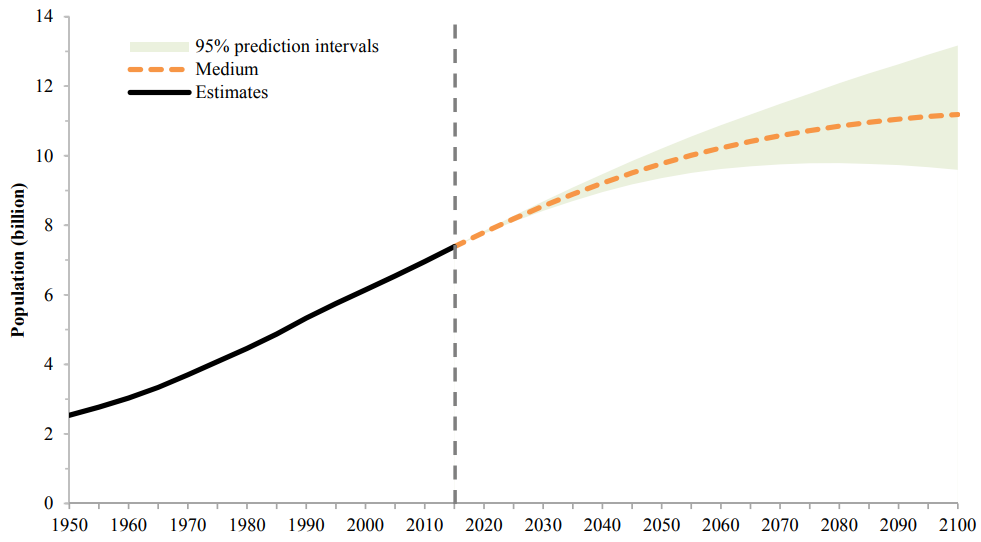
Speaking of explosions, a few years ago The Guardian published an article titled, “World ‘population bomb’ may never go off as feared, study finds.” The headline framed concern about overpopulation as somewhat alarmist rather than a legitimate environmental issue. Because if no population bomb is going off, then all must be good on that front.1

One hates to bring some bad news—a taste of reality—but guess what?

It already did.

The population bomb already went off.

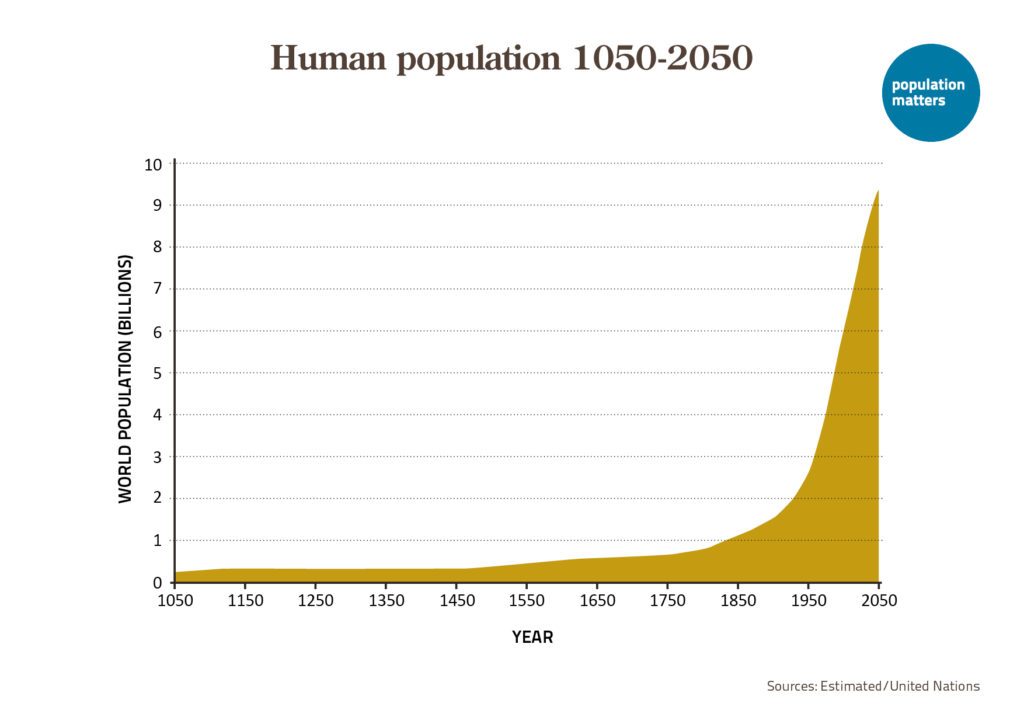
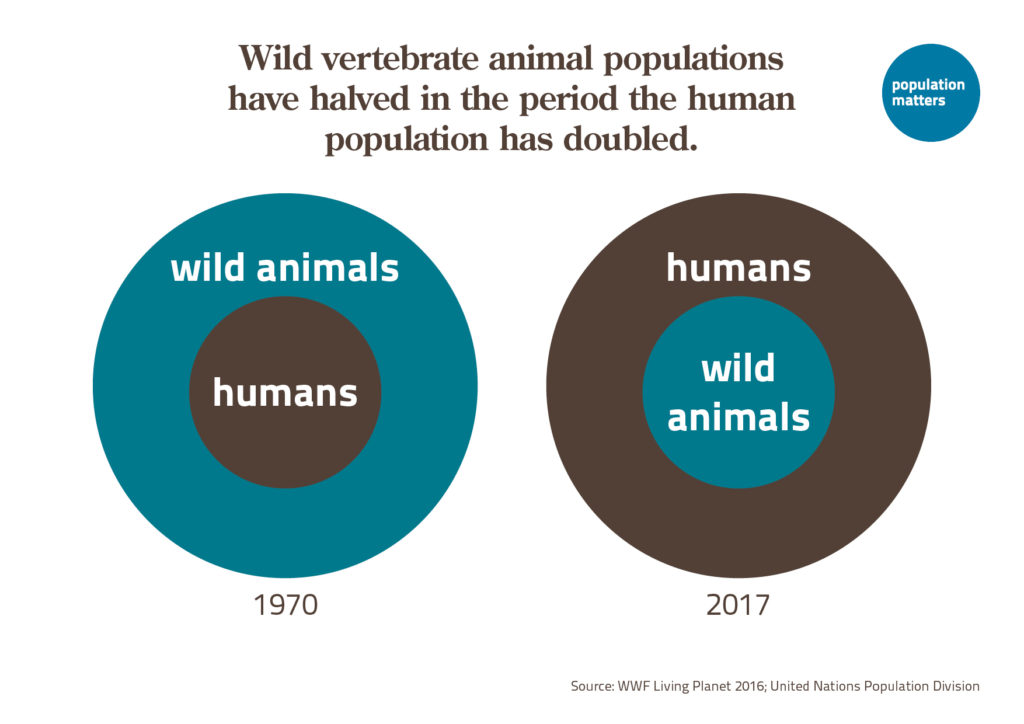
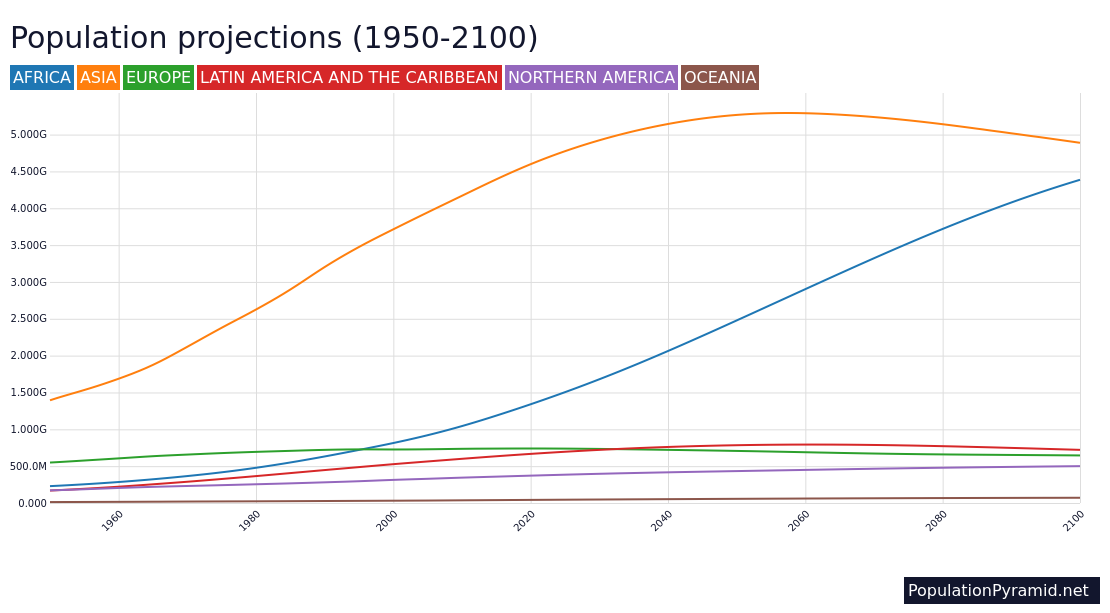
It’s not some future event waiting to happen. It was the jump from two billion people to eight billion—a quadrupling of the human population in less than a century. Less than some people’s lifetime.

In fact, if you want to zoom out, an even bigger population bomb went off with the advent of agriculture some 11,000 years ago, taking us from a world population measured in mere millions to 8.3 billion today.

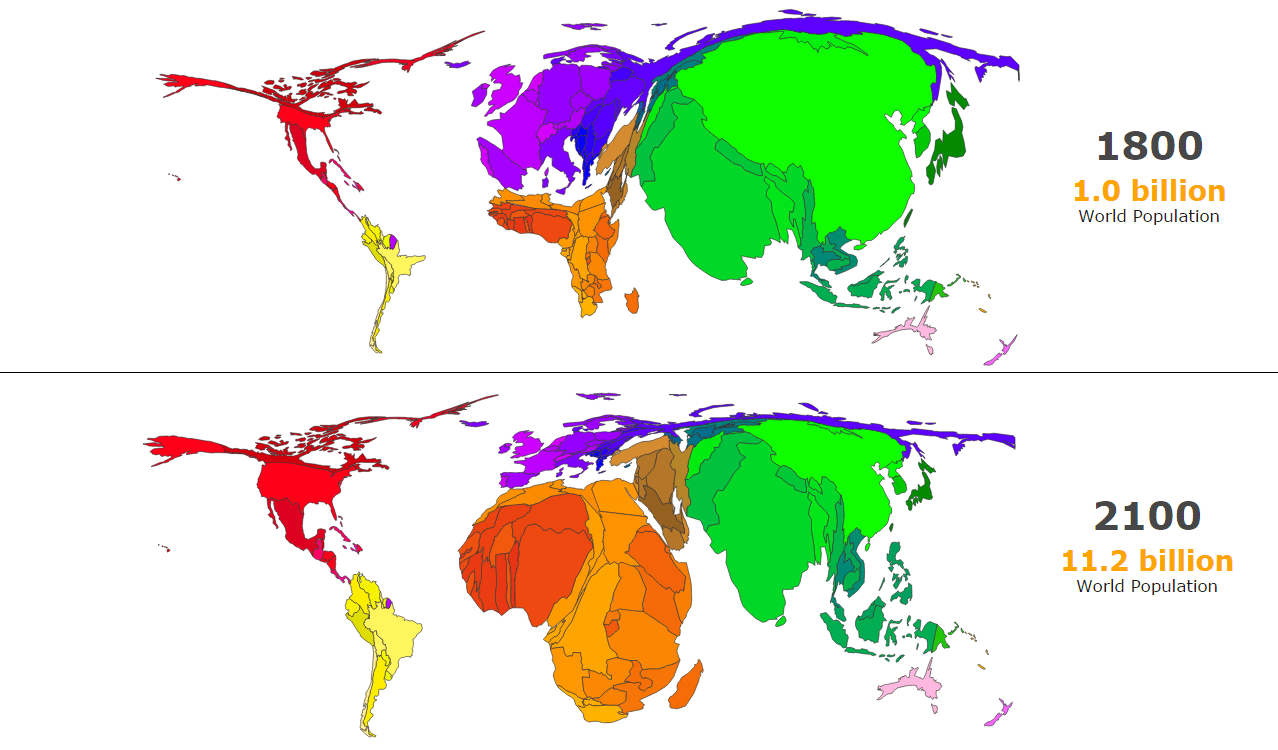
But if we want to stay focused on relatively recent events, we can safely say the population bomb went off with the Industrial Revolution. That’s when our dramatically increased access to food and energy helped propel humanity from one billion people in the early 1800s to more than eight billion today.

If multiplying our population eightfold in just two centuries is not a population bomb, then I don’t know what is.

And despite widespread confusion about population decline (people thinking that human numbers are shrinking when it’s only the rate of growth that’s declining) our global population is actually still growing by well over one million people, net, every week. That’s more than one million additional new lifelong consumers who will need housing, energy, food, clothing, transportation, education, infrastructure, roads, hospitals, and schools – every single week.

For example, in my film Greenwashed, we show how, with current net population growth, we’d need to build, finish, and staff the equivalent of more than 63,000 new classrooms every week just to keep up with our current growth, assuming we want every child to have access to education (1.26 million net population growth per week, assuming 20 students per classroom).Week after week after week. Building and staffing 63,000 classrooms—with cement, wood, books, finishings, everything—over and over and over.

It’s hard to imagine how this is not relevant to our environmental impacts—or, indeed, to providing people with a decent quality of life.

And with such dramatic growth, people may think, is that the problem? The growth we’re having?

The Pesky Little Problem Of Scale

Unfortunately, the population problem is not just about growth or growth rates. Not exclusively, anyway. Because even if our population had zero growth, or even if the global population were actually shrinking (which it’s not, but even if it were), our population would still be a problem for a long time. Because even without any further growth, what we have now is a serious problem of scale.

In Greenwashed, we talk about how an estimated 15 billion trees are cut down globally every year, which equates to roughly 28,000 trees every minute.

Every minute.

Even just for toilet paper, we use the pulp equivalent of more than 40,000 trees every day just to wipe ourselves. How can that ever be sustainable?

Well, you may say, if all that toilet paper is not sustainable, then we need to use bidets.

So, produce eight billion bidets?

Again, the problem of scale comes back to bite us in everything we do. Everything we touch. Every solution we come up with. Every aspect of our lives becomes a challenge when you have to scale it up to support eight billion people.

From energy to vegetable oils, our current scale is unsustainable and profoundly destructive.

Wide urban sprawl of Taipei, Taiwan.

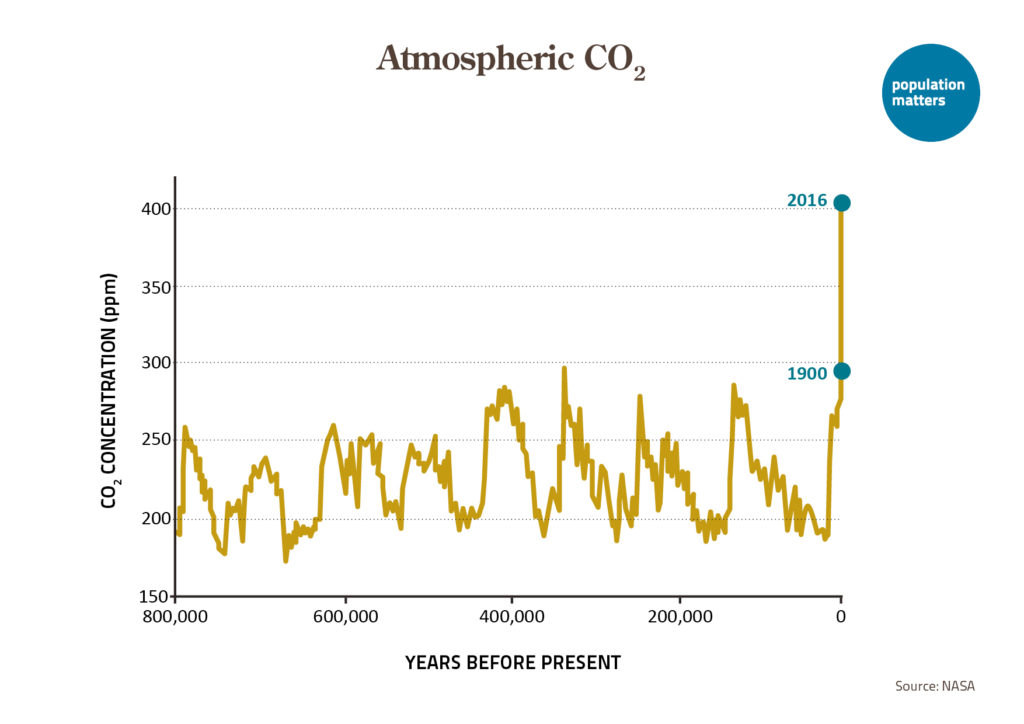
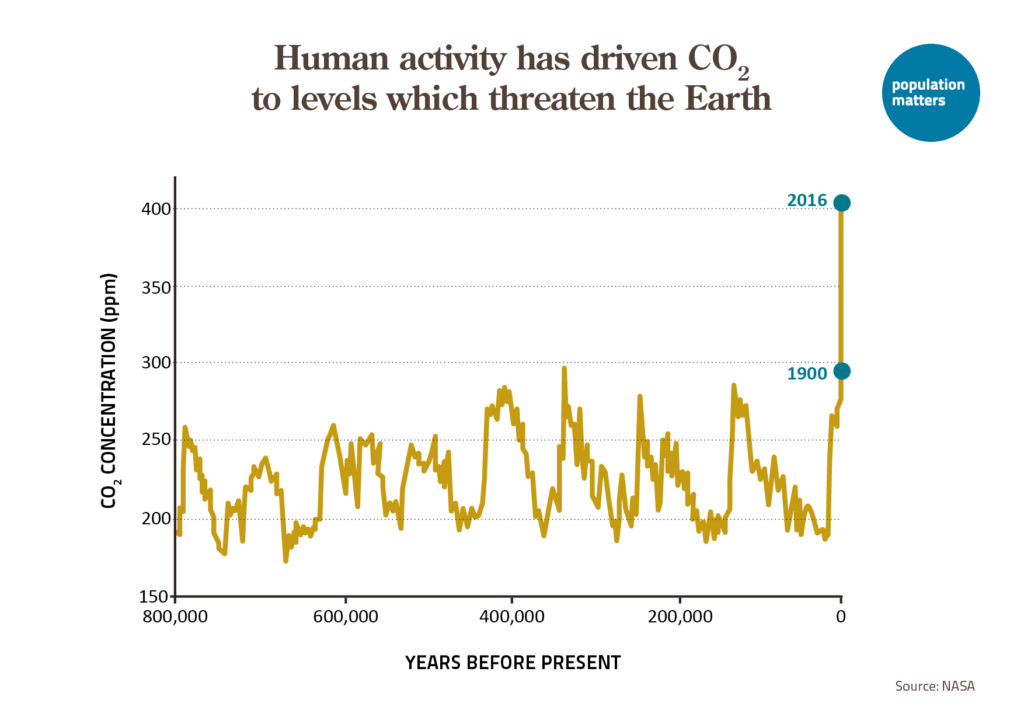
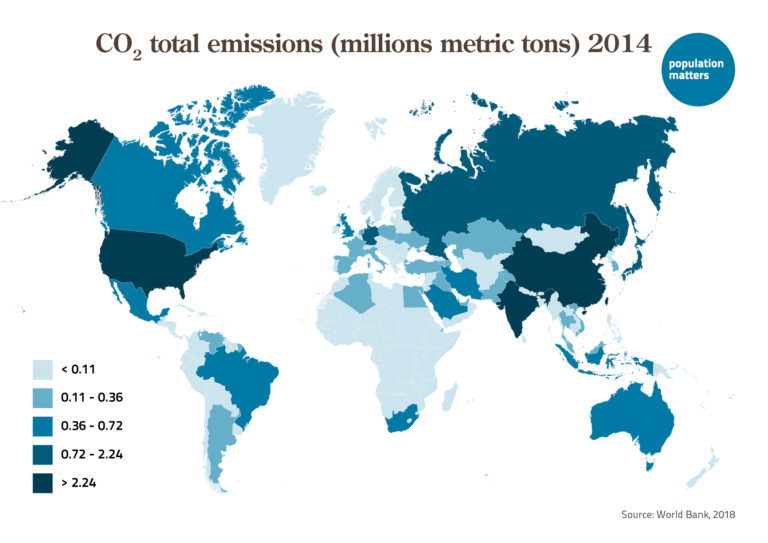
Even the energy transition begins to look more and more like a pipe dream when we confront the material requirements of implementing it at our current—and still growing—scale. So, if we care about climate change, like we claim we do, shouldn’t we, for example, be realistic about the enormous quantities of minerals this transition requires? Their mining is already damaging ecosystems and is expected to expand dramatically in the coming decades. Shouldn’t we acknowledge the role population growth plays in climate change? The IPCC identifies population growth as one of the strongest drivers of increased CO₂ emissions, so why so much silence from the climate crowd that is otherwise anything but silent?

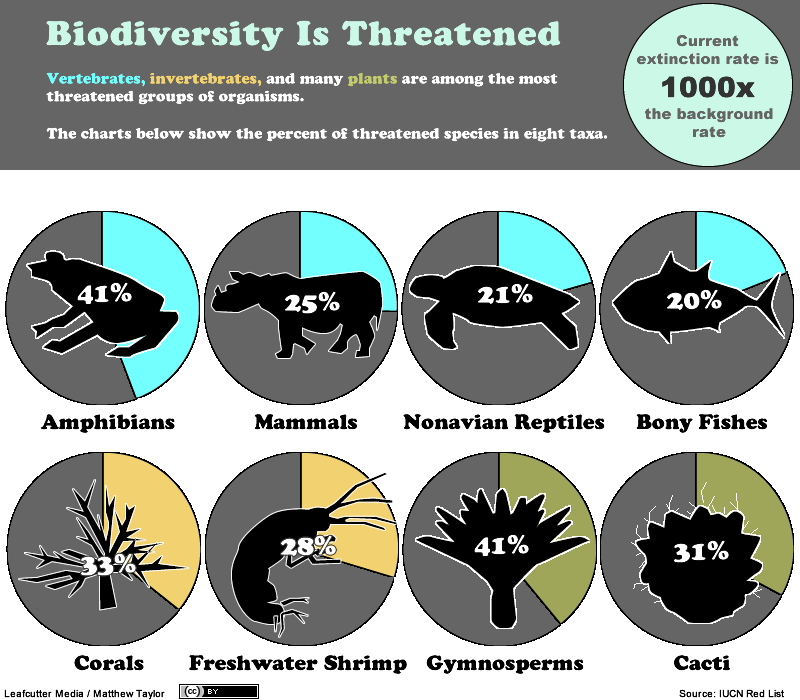
I don’t think the koalas burning to death as climate change intensifies would appreciate our silence on the matter—or the environmental movement’s selective choice to ignore and dismiss the population issue. For us and for the animals we share this planet with, overpopulation needs to be acknowledged and urgently addressed.

Denial Never Solved Anything

As a physician who specializes in psychiatry, I’ll tell you that, with my patients—whether they’re struggling with cocaine, alcohol, methamphetamine, or any other addiction disorder—understanding and acknowledging the problem is usually the first and most important step toward improving the situation. If you’re in denial, no progress can begin until you acknowledge the reality of what you’re dealing with.

And I think it’s no different here. Unless we understand and acknowledge that our scale is unsustainable and harmful—until and unless we truly internalize this issue—we cannot hope to address it.

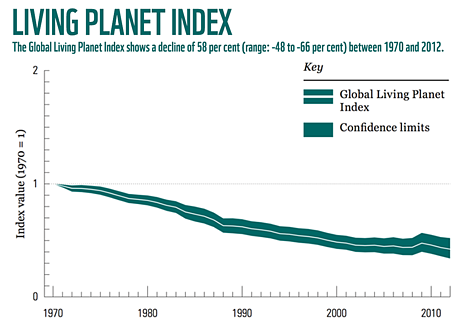
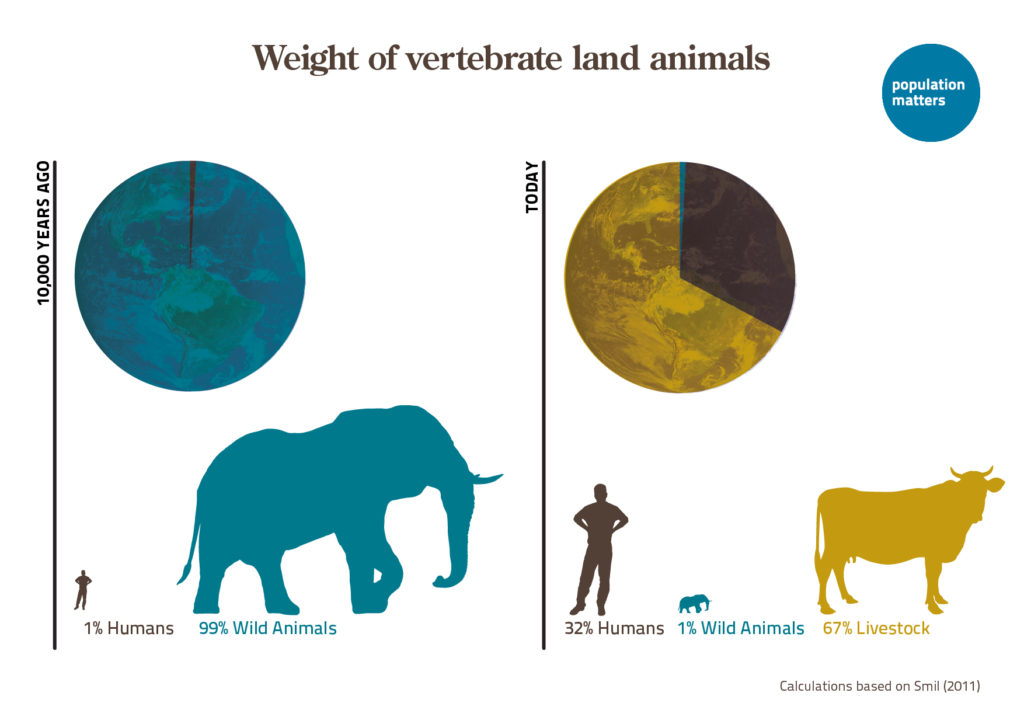
Wild animals will continue to be in freefall because their habitat is being taken away by us humans. By our farms. Our roads. Our developments. We will continue to take their water for our own needs, depleting the water sources they depend on and making their survival harder. We will continue to take the land they depend on to grow our food and use it for our own needs. We leave less and less for them, gradually squeezing them out of the habitats they depend on for survival—and ultimately out of existence.

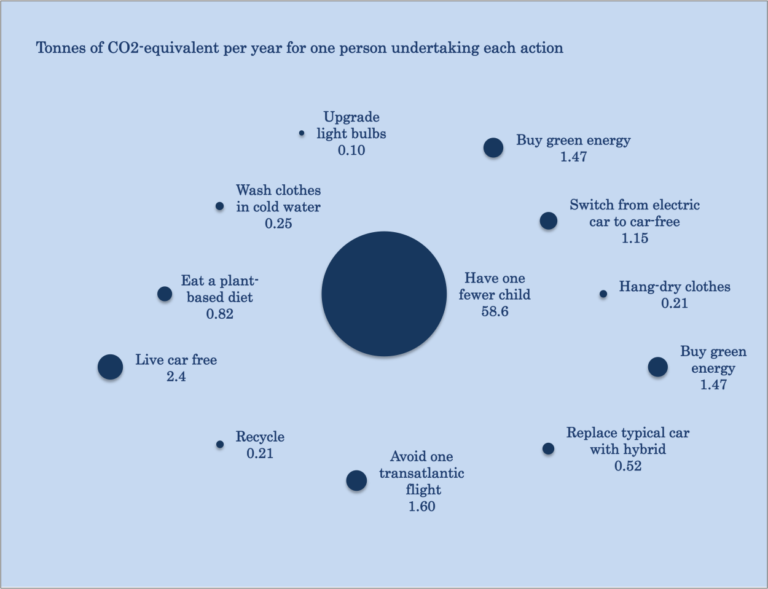
So, in addition to addressing consumption—which we absolutely must do—inequality, animal agriculture, the need to transition to plant based diets, and all the rest, we also need to put population back into the conversation. These things are not mutually exclusive. We can address them all in parallel, and we must, to have any hope of meaningfully confronting our environmental challenges.

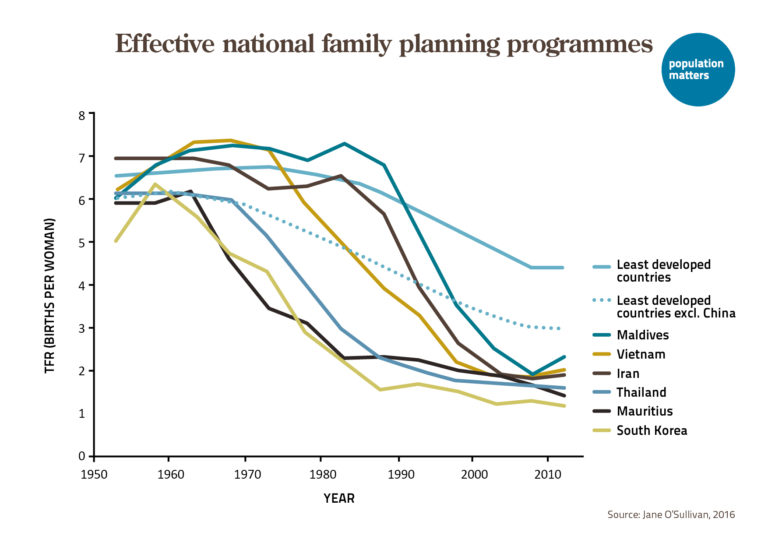
How? By raising awareness of the issue. By being willing to acknowledge that overpopulation exists and that our scale matters. By normalizing that conversation and making that reality widely understood. I believe people would make different family-planning choices if they understood that we are overpopulated and that those choices have consequences far beyond their own families.

That is one of the central messages of Greenwashed, and I hope you get a chance to watch it.

Because with 8.3 billion of us—and still growing—trying to survive, trying to stay alive, and trying not to destroy the very planet and ecosystems we depend on to keep us alive, human overpopulation remains as timely and pressing an issue as ever.

Unless, that is, you consider our survival—and that of other species—something outdated and passé.

_________________________

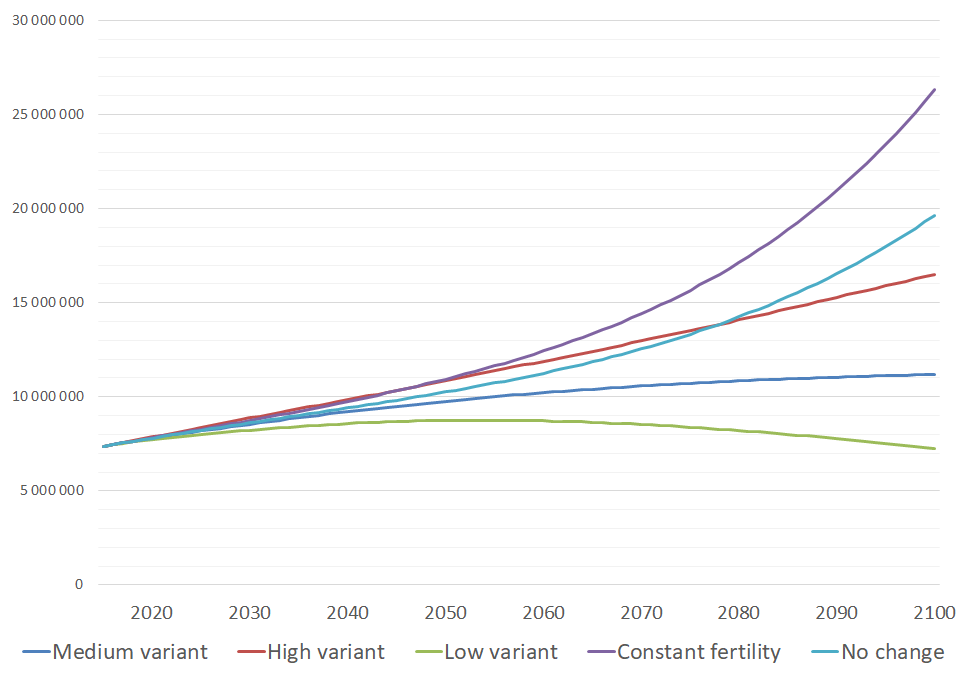
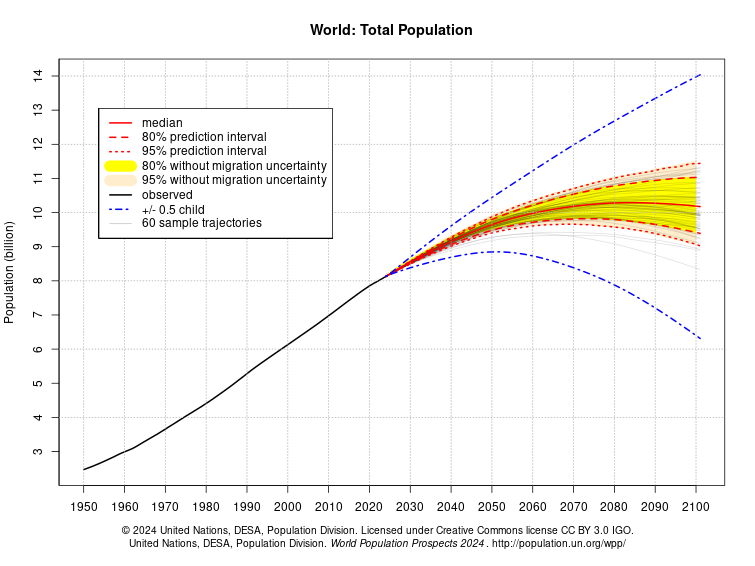
1 Interestingly, the Guardian article itself told a rather different story than its headline. Published in 2023, it noted that the UN still projected the global population to reach 9.7 billion by mid-century and to continue rising thereafter. From roughly 8 billion at the time the article was released, that’s another 1.7 billion people—an increase of more than 20%. In a world already in serious ecological overshoot, that sounds rather bomb-like to me. As is often the case, when one looks beneath the reassuring headline, the numbers tell a less reassuring story. The most recent (2024) UN population projections have a most likely scenario of global population peaking at 10.3 billion in the mid 2080s, then tapering off to 10.2 billion by 2100.

Published

14 responses to “Reality Check: We’re Still Overpopulated—And It’s Still A Problem”

  1. Steven B Kurtz Avatar
    I’ve been spreading this message since the mid-80’s. When people run low on water, food, fuel, electricity…some will wake up. Many will simply blame ‘others’ not realizing the all of user others to everyone else.

    1. Philip Cafaro Avatar

      Thanks for spreading the word! One good way to do so is to send friends and colleagues the link to Sofia’s excellent documentary Greenwashed. Well worth a viewing if you haven’t seen it already.

  2. Mark Tang Avatar

    Thank you, thank you, thank you…for stating the problem in current terms. Yes, it’s the scale as it exists. Never mind the slowing of the rate. It’s the pollution inherent with satisfying the needs of so many billions of us imaginative, acquisitive (and randy), souls wandering around this planet.

  3. Esther Phillips Avatar

    Hiya Sofia

    I fear a giant correction is just around the corner with Europe having insane temperatures and vastly reduced agricultural yields. We are at the beginning of a Super El Nino that will last until next year, and England looks like the Savanna. We have not had rain in months, and some of our newly planted trees might not make it. The poison between which I can chose is to let them go, as well as our pond or to draw on the aquifers that feed into our stunning and unique chalk streams…

    The worse it gets the more deluded some people seem to be. I met a guy who informed me that the Earth could take 20 billion humans, if only this, that and the other. Can you believe it? Esther

  4. gaiabaracetti Avatar

    Agree with everything (except the blanket demonisation of animal agriculture), but I must point out that the bidet is not an alternative to toilet paper. That’s disgusting! If anything, it’s an alternative to having to shower your whole body if you only need to clean parts of it.
    And yes, every human being should have one.

    1. Philip Cafaro Avatar

      For many Americans, the bidet signifies the superiority of European civilization.

      1. gaiabaracetti Avatar

        Yep.
        (I think that Indians do use water instead of toilet paper, I’m on the fence on that one).

  5. Edith Crowther Avatar

    Human population will crash back to 1 billion when we have consumed all finite natural resources and lethally depleted non-finite natural resources (such as Groundwater) which need thousands of years to replenish themselves. It won’t be pretty. There is no way the current Population Explosion is fixable – indeed as Dr Ochoa says, it has already happened. You can’t undo an Explosion. People are running about like chickens after losing their heads, trying to persuade people to have fewer babies or consume less or whatever. None of these efforts will make any difference now. What goes up must come down, equally fast. Just get ready for it if you think you will still be alive when the crash happens – because as Hemingway wrote in “The Sun Also Rises”, “How do you go bankrupt? Two ways. Gradually, and then suddenly.”
    Hemingway’s observation is widely interpreted as a metaphor for the nonlinear nature of change. Just as a snowball gradually accumulates mass before suddenly becoming an avalanche, financial, personal, or societal crises often develop imperceptibly before erupting dramatically. This insight has been applied beyond literature, including economics, risk management, and personal growth, emphasizing the importance of recognizing early warning signs and preparing for eventual tipping points.
    Just enjoy life if you can, even if you work in a gigantic consumer warehouse or emptying waste disposal receptacles. In my medium-sized English town, the Council pays one man in an orange boiler suit to go round all the pavements dissolving the chewing-gum patches with some sort of hand-held spraying machine. I look at him and think of Hercules and the Augean Stables. Because humans continue to spit out their gum onto the pavement of course. So he has a job for life, provided the Council does not go bankrupt. I would like to speak to him, but he looks grumpy – and also Eastern European. No-one ever does speak to him, or the Cleaners you see everywhere in public places. They are like some other Species, almost. [tbc]

    1. Esther P Avatar

      There is a difference one can make. Sofia and I, and plenty of others would if we could try to convince people to have no babies, and as this is too hard for many, to contemplate having maybe one. That makes a hell of a difference to each little human who is prevented and remains in blissful oblivion as a. no extra oil is being thrown on the climate fire, b. no or few children and other animals suffer the consequences of what we have done. Once the beauty of the Earth made up a little for the cruelty of this life, it no longer does. And for a little laugh here a definition of life I was once handed: Life is a sexually transmitted condition that is 100% fatal. And long may it stay so despite Elon Musks’ pathetic little dream of virtually living forever.

    2. Jack McQueen Pedigo Avatar

      During my time on the local board (Seattle Chapter of Zero Population Growth) it was repeated over and over if we don’t see this issue and take step to deal with it peacefully nature will take over and things will not look pretty. I often feel that the world is in denial perhaps of what’s known as the boiling frog syndrome. Right now things are so bad it’s impossible to ignore. Yet, too many continue to be in denial.

  6. Edith Crowther Avatar

    If you earn a living making films or writing books or managing websites about the Collapse of Complex Societies, by all means carry on. You have a job for life – and your work gives you and a lot of other people pleasure as well as enlightenment. Just don’t expect anyone to speak to you (if they know what you do). And don’t expect to change anything this huge and this uncontrollable. Acceptance will increase your personal happiness greatly, as well as being the sensible course of action (or rather non-action). Activism is part of being human and all our great heroes have been Activists of some kind, spreading their discoveries if they are Scientists, or spreading their insights if they are Artists, Writers, Composers, Film Directors, Architects, Philosophers, etc. It is what separates Humans from all other Species, by a very wide gap. So it is hard to stop being active in some way, if only through cooking or cleaning or washing in the Home.
    We are busy little bees – but we don’t only make Honey I am afraid. We make a lot of what I would call “Slurry” too. And this “Slurry” is threatening to engulf us. Slurry is a technical term in the oil industry but it has a lot of other applications, as the excellent article about it in Wiki reveals (to my astonishment). There is also “Sludge” – mainly used for Sewage Sludge which farmers illegally spread neat on their fields when their Artificial Fertilizer supplies dry up. Do we want to go out in a welter of Slurry and Sludge, or go out nobly in clouds of incense and music as at a Requiem Mass? Do we even have a choice? Looking at videos of the world’s Megacities, it seems even this choice has been taken away from us.
    Never mind – we still have a personal option and I intend to go out with the full works, in pre-Vatican Two liturgy in Latin, including the now disused “Dies Irae” and “Libera Me Domine”. This would be far more fitting for our Species than for little old me – but our Species no longer has any interest in such things, as a whole.

    1. Philip Cafaro Avatar

      There’s a conflict between acceptance, often touted as a key to personal happiness, and political engagement, which seems like a responsibility. Politics, in my experience, is a great source of frustration (although it’s true that I have no natural talent for it, so that might be part of why I personally get little enjoyment out of it).

      Then again, as you say, we are “busy little bees.” Most of us couldn’t sit still contentedly if we wanted to; it just ain’t in us

      1. David Polewka Avatar

        HOW DO POLITICIANS LEARN TO MAKE PROMISES THEY CAN’T KEEP, JUST TO GET VOTES?
        Politicians learn to make unrealistic promises through political strategy, campaign training, and game incentives. They realize that bold pledges attract media attention and motivate voters, even if the goals are mathematically or legally impossible to achieve.
        Incentives and Strategy
        ***Signaling Priorities: Research in political science shows that extreme or impossible promises act as signals to show voters and party members what issues the candidate cares about most.
        ***Bargaining Tools: Candidates use grand proposals during campaigns to stake out a strong position for future legislative negotiations, knowing they will later compromise.
        ***Short-Term Gains: Campaigns focus on winning the immediate election. Data indicates that a well-timed, attractive promise wins votes upfront, and the political cost of breaking it often comes much later.
        Training and Environment
        ***Media Coaching: Consultants and speechwriters train candidates to speak in emotional, absolute terms because nuance and realistic limitations do not win airtime or applause.
        ***Voter Psychology: Politicians observe that voters often respond better to an inspiring, simple falsehood than to a complicated, realistic plan.
        ***Shared Rationalization: Within party structures, making oversized commitments is treated as a normal part of competing against opponents who are doing the same thing.

        ================

        WHO STARTED THE BUSINESS OF MAKING POLITICAL PROMISES THAT CAN’T BE KEPT?
        Making political promises that cannot be kept is as old as organized government itself, meaning no single person started the practice. Ancient leaders, Roman senators, and early monarchs all made grand pledges to win power or appease citizens, long before modern campaigns began.
        Why Politicians Make Big Promises
        ***To win votes: Big goals attract people.
        ***To gain power: Hope helps leaders get elected.
        ***To show strength: Pledges make leaders look bold.
        Why Promises Fail
        ***Bad rules: Laws block good ideas.
        ***No money: Governments run out of cash.
        ***Surprise events: Wars or crashes change plans.

  7. John Sunday Avatar

    Sofia,
    I do agree with that our current
    Population it is too high for wildlife conservation and climate change mitigations.
    In just a decade, I have seen so many houses built, all parts of land being put in Agriculture use including wetlands. Thanks the government of Uganda and our local initiatives like River Mpanga and Rwamutahikya wetland Conservation Project which are trying to remove people from destructing such ecosystems.
    We shall not help anything unless we have space for “Regeneration” which is practically impossible with today’s population it self.This is because there’s no space left unhabited by people. Trees are cut per minute but planting them take hours and growing up for years. Uganda’s as the rest of Africa depends on firewood for cooking food and locals are now buying them unlike in previous years when they could just pick them from natural forests.
    The high population was greatly escalated by the religious,cultural,and political pressure. Inspite of all those, highly educated and rich people produced few children compared to the peasants whose work was majorly producing children and even not being in position to care for them. As a result, their children did not attend or finish a formal education that could enable them do jobs which are environmental friendly. They are so many now cutting trees for charcoal burning, growing vegetables and rice in wetlands which are both dangerous to our environment. The trend continues with their children also getting married at ages of 15 and 16 and producing dozens of children. In total truth, the population here is an active volcano 🌋.
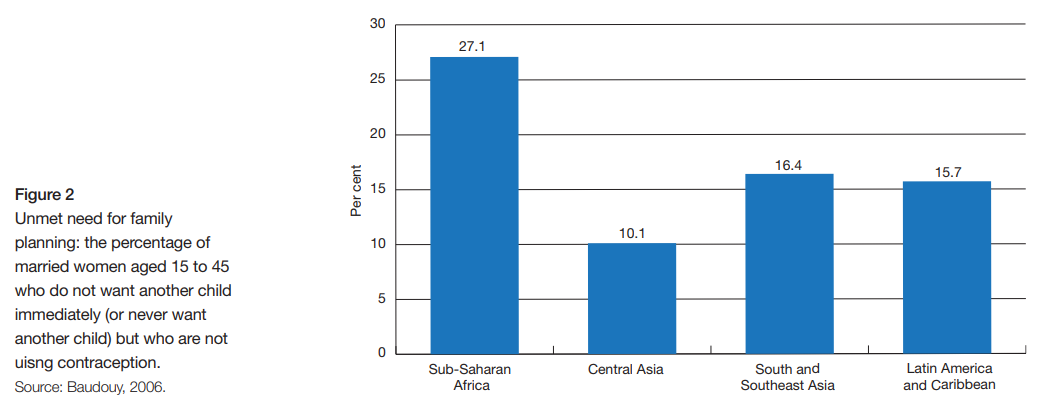
    Solution like family planning services, growing trees in existing hills that are still un cultivated, giving incentives to farmers who volunteer to plant tree, supporting equity and inclusive education and maybe sterilising men and women who take alcohol daily would bring us hope to stabilising population in my local context.

Leave a Reply

This site uses Akismet to reduce spam. Learn how your comment data is processed.

NOTE: Comments with more than one link will be held in wait and will only become visible on the site after an admin has approved it.

Please keep a civil tone in the comments section. Excessively rude comments will be removed.

Explore the content and topics covered by TOP, search here

Blog categories
Gallery of infographics – Learn more about overpopulation and environment

Discover more from The Overpopulation Project

Subscribe now to keep reading and get access to the full archive.

Continue reading