New US population projection tool under construction

TOP is developing a new population projection tool for the United States, based on US Census Bureau methodology and data. Check it out! You can run your own US population projections under different fertility and immigration scenarios — and help us improve the projection tool with your suggestions.

by Philip Cafaro

One of our more satisfying TOP projects over the years was creation of the TOP Grapher, by software developer Balázs Forián-Szabó. Built around policy-based EU population projections published in 2019, it allows visitors to see the impacts of changes in immigration and fertility rates on future population numbers for all 27 member countries of the EU, plus the UK and the EU as a whole.

Now I and my son Henry, a graduate in math and computer science from the University of Chicago, are creating a new population projection tool for the United States, using standard cohort-component projection methods. It duplicates the methods and parameters set by the US Census Bureau in their most recent (2023) US population projections, closely replicating Census Bureau results under their chosen fertility, mortality, and immigration scenarios. This new projection tool allows users to make your own projections by varying fertility and net migration rates as desired.

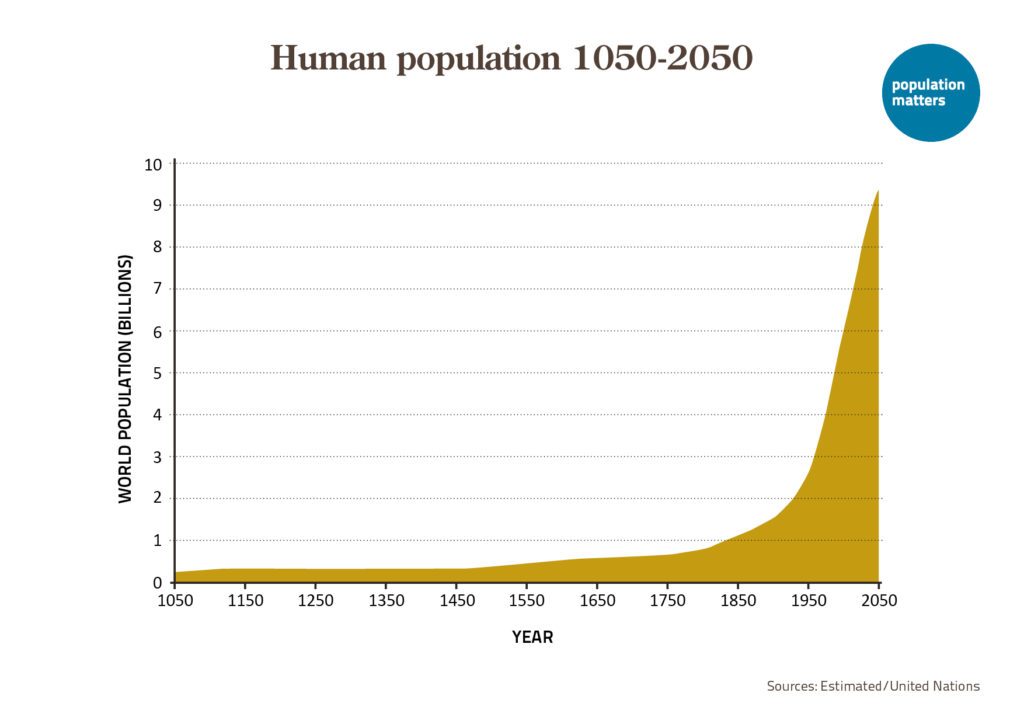
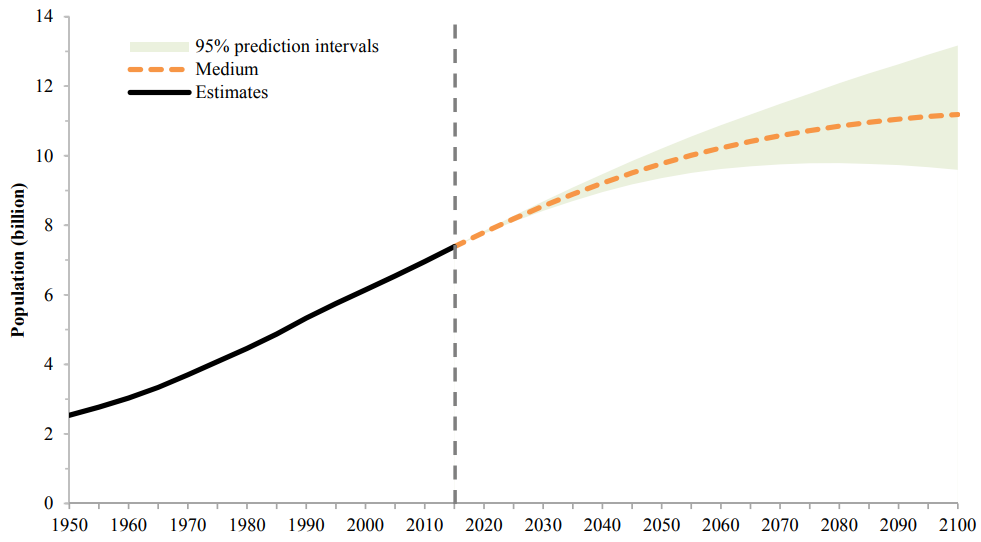
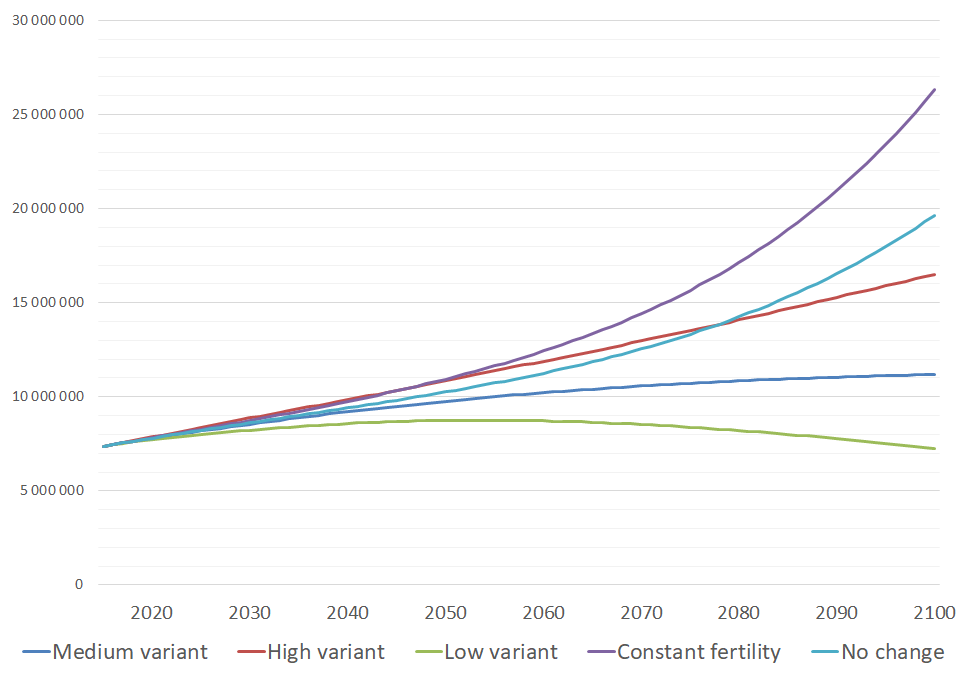
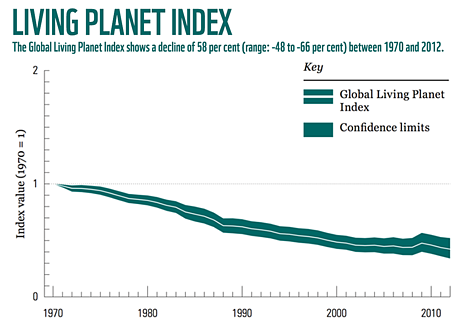
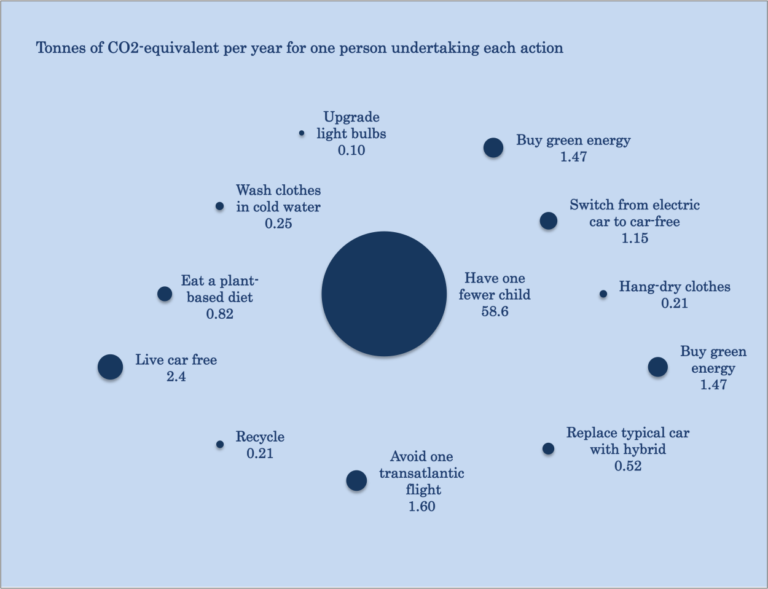
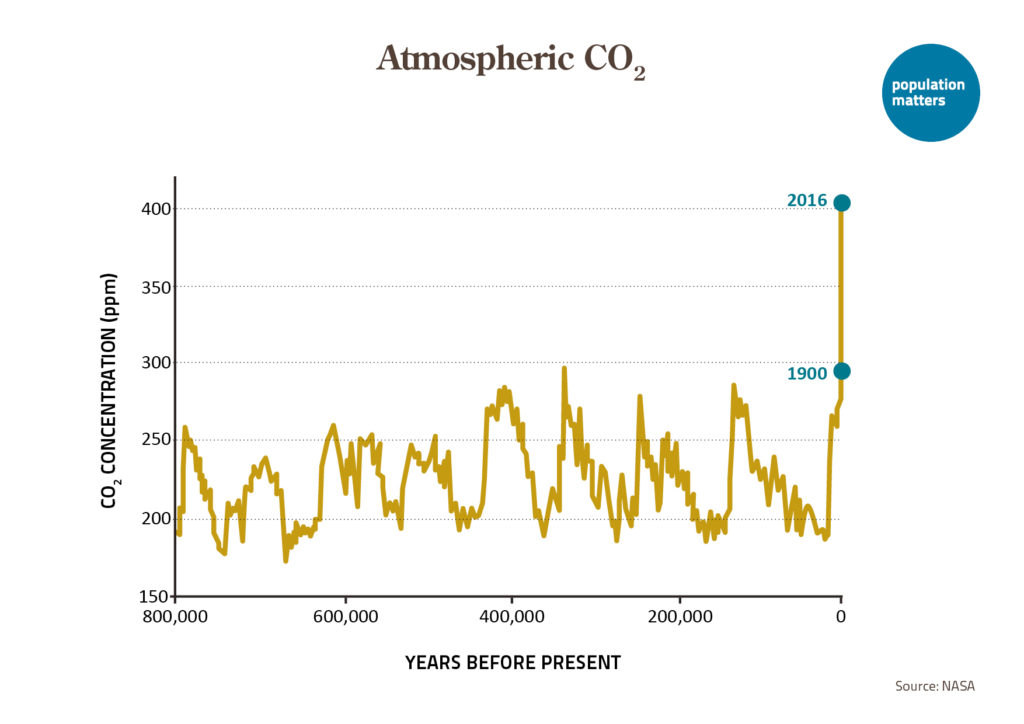
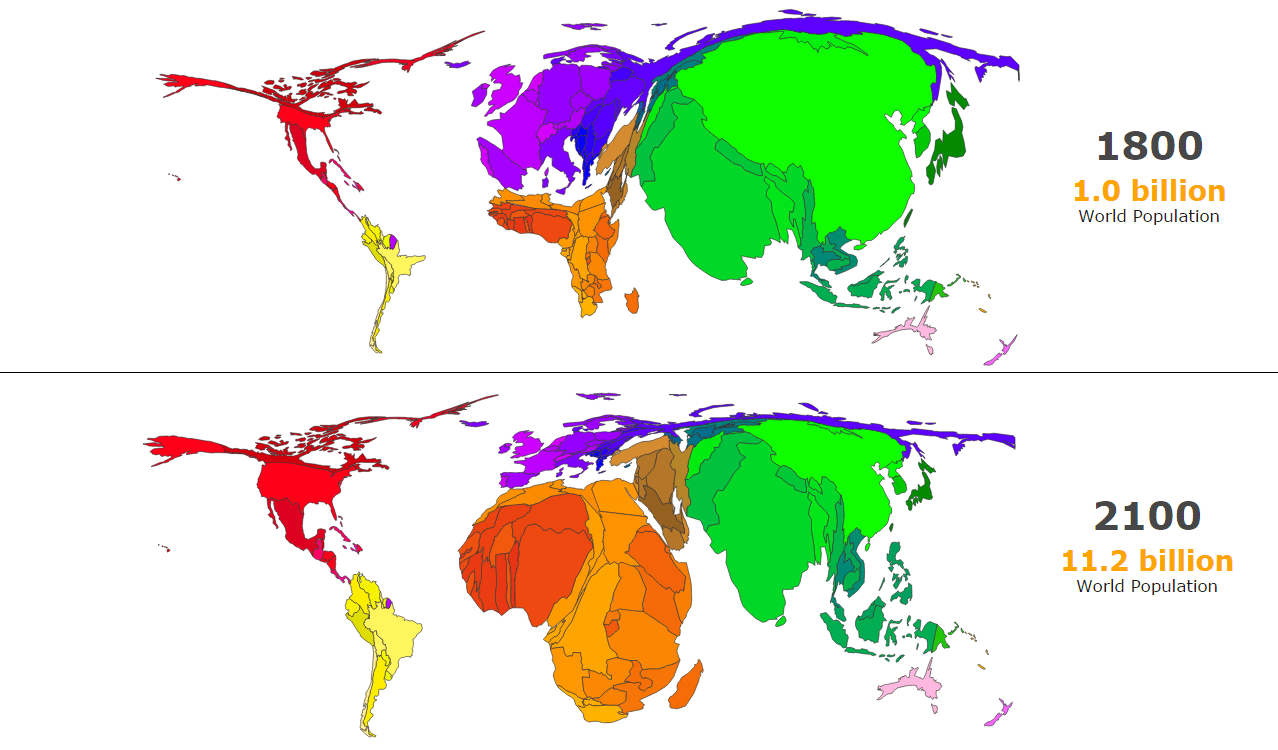
Click here or on the pictures below to pull up a rough prototype of the projection tool. The first picture graphs the US population out to 2100 under three different immigration scenarios: 1, 2 and 3 million annual net migration. Note that in a mere 75 years, those three plausible annual immigration scenarios generate a spread of 257 million in the 2100 US population, from 383 to 640 million.

Play around with this new projection tool and see what you think. Suggestions for improvement and added features are welcome. Note that it may take a moment for the projection tool to load and for the individual projections to run — we’re working on speeding that up!

In the current iteration, you can graph three projections at a time, facilitating comparisons. For example, in the past few years net immigration into the US has reached its highest levels ever. From an average of about 1.5 million under the Trump administration (and a low of 1 million during its last year, during the Covid emergency) net annual immigration is currently running over 3 million under President Biden. Whether we choose Trump-scale or Biden-scale immigration levels could make a difference of hundreds of millions to future US population size (see below).

Graphing the Trump and Biden projections shows that current immigration policies could increase the US population by 300 million by 2100 — from our current 340 million population to 640 million people in just three generations. Even Trump-level net immigration levels could increase our population by 100 million during that time. Arguably, US immigration levels should be reduced, so that we can stabilize or lower our population, as part of creating a sustainable society.

For Americans who consider ourselves committed environmentalists, it is worth asking whether the generally more environmentally-friendly policies of Democrats are worth the environmental costs of Democratic immigration policies, given the damage that hundreds of millions more Americans will inevitably inflict on our forests, wetlands, and native biodiversity.

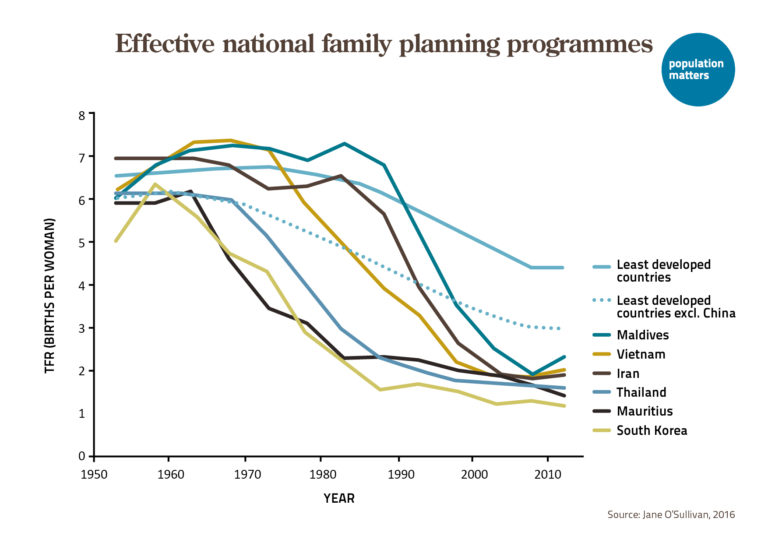
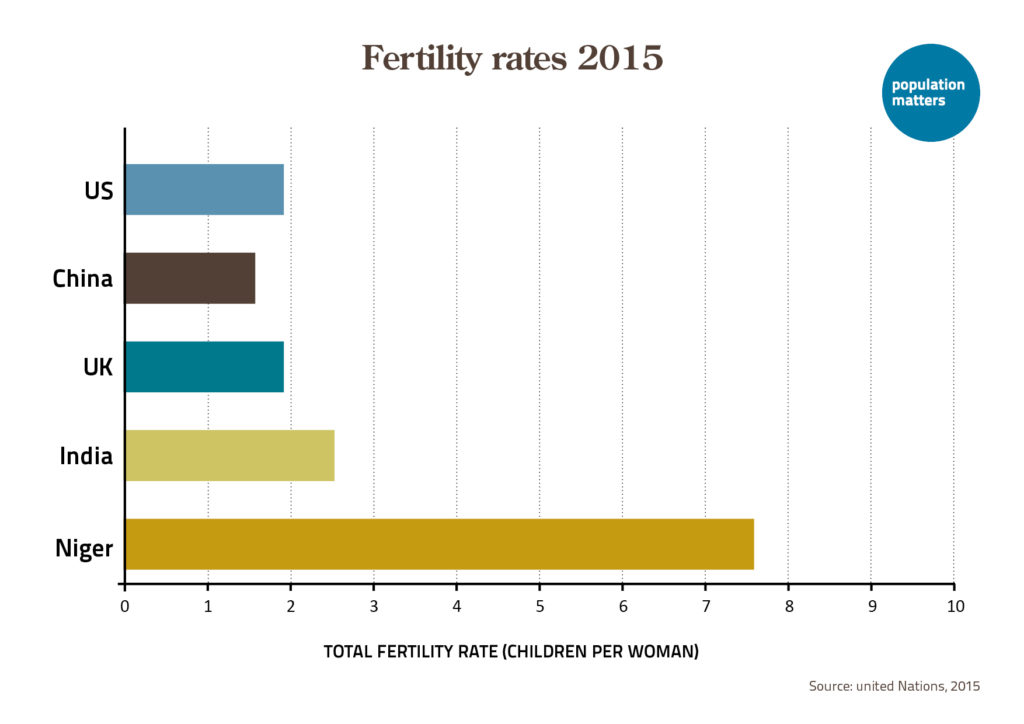
Note that you can also vary fertility rates using the new projection tool, exploring how higher or lower rates influence future population numbers, and the relative importance of changes in net migration versus changes in fertility rates. The current US total fertility rate (TFR) is 1.7. You can also graph changing fertility and immigration rates, following the instructions provided. Enjoy — and don’t forget to tell us what we’ve gotten right and what we need to improve, in the comments section below.

Published

22 responses to “New US population projection tool under construction”

  1. gaiabaracetti Avatar

    Is this legal or overall immigration?

    1. PHILIP CAFARO Avatar

      Overall (legal and illegal) immigration.

      1. Leon Kolankiewicz Avatar

        And it’s NET overall migration: that is, total immigration, legal and illegal combined, MINUS total emigration.

  2. Maria Fotopoulos Avatar

    Thanks. Good work! Great tool to have!

    1. Philip Cafaro Avatar

      Thanks Maria!

  3. Stable Genius Avatar

    On the face of it, the US net-migration figures cited here look to be about 2-3 times the “official” US Census net-migration figures. That makes a big difference, to where the population projections end up.

    On the other hand, the official net-migration figures for UK, CA, AU, and NZ appear to be “reasonably” reliable, meaning they can be fed into population projections much as is.

    1. Philip Cafaro Avatar

      Stable G, the projected net migration figures in the Census Bureau’s 2023 projections were broadly in line with average net migration from 1990-2020. However, net migration has EXPLODED under the Biden administration, primarily through lax enforcement of immigration laws, permissive rules for asylum applications, and parolling several million illegal immigrants from failing states into the US under “temporary” emergency provisions (Venezuela, Haiti, El Salvador …)

      President Biden and his Homeland Security Secretary have made it clear they want to continue these high levels of immigration, and even increase them. Most Congressional Democrats agree.

      Long story short, the most recent Census Bureau projections don’t represent net migration levels in recent years. Only significant policy changes will reduce net migration to the levels projected by the Census Bureau.

  4. stan becker Avatar

    Phil.

    Nice. I taught cohort-component projections for 25 years at JHU. I have been referring folks to Spectrum which has been a good tool. Yours seems simpler. Several caveats: 1) One needs to assume an age-sex distribution of immigrants; 2) maybe the model assumes immigrants adopt fertility of US citizens as soon as they come or, more realistically, there is a gradual decline to US TFR levels (obviously hard to know migrant a-priori fertility because a mix of countries though most immigrants come from higher-fertility countries (e.g. Guatemala, almost anywhere in SSA; Afghanistan) ; 3) need to note that all these projections assume mortality trends as per Census probably?; 4) with changes in TFR, there are usually changes in age pattern of fertility, which makes some difference in projections– mean age of US fertility has increased over time as TFR has decreased which leads to slightly lower projections.

    1. Philip Cafaro Avatar

      Hey Stan, I used the Spectrum program for the cohort -component projections Patricia and I made for the EU projections in 2019. The model Henry created for these new projections achieves a similar result: taking an existing population and varying it year by year based on particular fertility, mortality, and net migration rates, all of which can change with time.

      With respect to your points 1-4, we sought to mimic the Census Bureau’s assumptions in their 2023 projections. We think we did this fairly well, since our model replicates the 2023 results for the Census Bureau’s three main scenarios for the 2100 population, to within a million or two.

  5. gaiabaracetti Avatar

    Philip and Leon, thanks.
    Here in Italy, I check the monthly demographic updates, and every single time the “natural increase” is negative and the net migration is positive. “Great Replacement” indeed.
    Population keeps going up in the North even as the country overall declines or fluctuates. This is very scary, because Northern Italy is already overpopulated, overbuilt and overindustrialised and polluted like almost nowhere else in the world. And more people means more of this, but also more economy which in turn attracts more people. It’s a vicious cycle.
    It doesn’t help that people come from abroad or the South to the North, often hate it, but stay here out of convenience. This increases social tensions and dilutes the culture.
    People keep coming because there are more jobs; they earn money, spend and have kids, thus creating more jobs, thus contributing to further environmental damage and overpopulation.
    I’m starting to think that the only way to stop this is to start deindustrialising, which is already happening; unfortunately, other more parasitic sectors are taking the place of industry, such as finance and tourism, which is doubly scary because if something happens you can survive as a country and defend yourself with agriculture and industry, but not with stupid banks and hotels.

    1. David Polewka Avatar

      In March 2019, the European Space Agency (ESA) published images took from their satellites. These images show a big stain, made of nitrogen dioxide and fine particles, situated above the Po Valley area, which incorporates the city of Milan, Turin, and Bologna. Milan and Turin share high levels of ozone and nitrogen oxides, which are mainly produced by cars diesel and petrol engines. The big stain analyzed by ESA is the main reason why Po Valley air pollution levels are so high it is considered nowadays the worst area in Europe for air quality.
      https://en.wikipedia.org/wiki/Northern_Italy#Pollution

      1. gaiabaracetti Avatar

        Yep. The Po Valley (la Pianura Padana) is a dystopian hellscape. Unlike other overpopulated areas in the world, it’s not even pretty. It’s not Seoul or Shanghai or New York or Delhi. It’s hundreds of kilometers of greyness, industrial agriculture, ugly suburbia, roads and parking lots. A few and often gentrified pretty old towns, surrounded by the horror. I hate it with a passion. But it’s our economic “success story”. People there are nice, but all obsessed with money. The rich people with parasitic jobs are obsessed with money. The sons and daughters of farmers, with huge houses and manicured gardens, are obsessed with money. The immigrants and their rapper kids are obsessed with money.
        When Northern Europeans traveled to Italy at the time of the Grand Tours, and even more so before that, the Alps were considered ugly and something to cross quickly and be done with, and the fertile, lovely lowlands below were the beginning of beautiful Italy. Now anyone who lives in Milan or any other shithole in the Po Valley just leaves as soon as they can to go somewhere nice and less polluted.

    2. Philip Cafaro Avatar

      Gaia, It’s interesting that at the same time that miss migration is rapidly changing the ethnic composition of many developed nations, there’s been a concerted effort in the media to call any talk about this a “ conspiracy theory.”

      In the same way, those of us worried about a steadily more feeble US President have been told for several years that we were imagining things, or prejudiced against old people.

      In the end, it’s always better to face reality, I think. Because in the end, we have to!

      1. gaiabaracetti Avatar

        They always do that. They did it with Covid too – I’m vaccinated, so I’m not what many would call a conspiracy theorist about it, but looking back and being fair there were a lot of things we were told at the beginning that were either not true or not honest. Hence all the conspiracies. It’s like they think people can’t handle the truth and should be treated like children. But that’s how you make people suspicious.
        About ethnic “replacement”. The Italian edition of Scientific American did a whole issue about this that had a very unscientific agenda, telling us that it’s a problem if the population decreases, which is a value judgement and not a scientific fact, and since the only way at this point to increase the population is migration, the main feature article was on how ethnically mixed Italy already is due to millennia of migrations and invasions. It was very interesting, first of all because we ARE very mixed as a result of our history and geography and you can tell by looking at us, so the science behind that was certainly worth writing about, but the text itself went beyond that and even contradicted itself – they would take a few local ancient populations from a specific region or the other, say “they prove how mixed we are”, and then “based on what we know, these people were indigenous”. It was so weird. I mean, all humans come from somewhere else originally, so we all are and aren’t indigenous in a way; they could have just presented the data without commenting, and everyone could have drawn their own conclusions, but no, they couldn’t help themselves. Migration is good! Depopulation is bad!!

    3. Fons Jena Avatar

      Hi Gaia, I see you too are concerned about the replacement of local people. It’s impossible to have a serious debate about this so that’s why I was glad to read your comment. Some years ago I write a paper about this, called the ‘Diversity Paradox’. You can read it here:
      https://www.wezijnmetteveel.be/wp-content/uploads/2024/08/2022_diversity-paradox.pdf
      In fact it’s the main topic of a new book I’m writing. Working title is ‘The End of Diversity’, explaining how population pressure is not only decreasing biodiversity in nature, but also withing the human race. We are telling ourselves that we are building a nice and rich multicultural world, but the opposite is true.
      Greetings,
      Fons Jena

  6. Kathleene Parker Avatar

    And I should care one fig about ANYTHING from the U.S. Census Bureau–the Bureau that has down-played growth, did everything possible to use “low-range” numbers and puts out press releases about ancillary stuff–like how many dogs versus cats that we own–rather than INFORM THE AMERICAN PEOPLE ABOUT HOW AND WHERE WE ARE GROWING?!? I now depend entirely on FAR MORE HONEST U.N. data!

    1. stevemckevittda604d1b36 Avatar

      I very much agree. In general — and sadly — the statistics that come from the US Government are skewed. (Often to support the American Corporate World’s agenda.)

    1. Philip Cafaro Avatar

      Yes, it allows them to allay concerns about “aging societies” while also appealing to pro-immigration progressives. But it undermines their case for ditching “pro-natalist” policies and that societies need fewer people.

      If it’s really important to have smaller populations in the developed world, we need to reduce immigration. Otherwise we are looking at decades more growth. Check out this new projection tool and the TOP graphed, and see!

      1. gaiabaracetti Avatar

        Pensioners are quite a powerful group in industrialised societies. There’s nothing they wouldn’t do to preserve their living standards!

  7. spamletblog Avatar

    Thank you! The UK EU tool is fabulous and very useful work. It beautifully demonstrates the sheer madness of the UK reliance entirely on concrete development and the population poaching that is needed to service it, as our small island was set to take on 15million net, while the EU loses 20million even though we are three times as crowded! And the UK net migration has more than doubled since then!

    Obviously none of the projections are likely to occur though, because it is some years since the UN Year of the Soil, estimated there were only 60 harvests of availible soil left in the world, and sterilisation under concrete and tarmac, combined with sea level rise and a huge increase in catastrophic rainfall events will have greatly reduced the soil resource since then, plus the world’s aquifers and glaciers are disappearing fast, so much land will have to be abandonned. Thus it is very likely that the world food trade will collapse around mid century, and super-overpopulated countries like the UK will have to be evacuated or turn to cannibalism, which amounts to the same thing. Will the EU let people back in?…

    This highlights the lack of a population density switch on your prototype US one, as I’m sure that the US is pretty much empty apart from California and New York, due to the unspoiled continent before Europeans began arriving. You will need to be controlling migration to states like California, which may become largely inundated by the sea if you don’t dam the Bay to stop the Central Valley being lost to sea level rise. Florida is largely going to go too. If there was some way to add available food calories per capita to your graphs, that would be amazing! I’m sure that tech will see to that eventually if civilisation doesn’t collapse first.

    I would suggest that you find someone adept with Google Earth, so that, eventually the data can be accessed by dragging an active cursor over land areas to show the population and density of any rectangle, circle or freedrawn shape. It should be much easier in the US, where everything was plotted in rectangles to start with and such tools must already be being used for gerrymandering voting districts (Looks like it was made by the Borg! 🙂 ).

    Keep up the great work!

    1. gaiabaracetti Avatar

      The US is definitely not empty, and the EU is definitely not losing people, the Southern countries especially are facing Africa and the Eastern way are being bombarded with migrants (Russia and Belarus use them to put pressure on them, knowing they can’t do anything about it). We’re screwed.

Leave a Reply

This site uses Akismet to reduce spam. Learn how your comment data is processed.

NOTE: Comments with more than one link will be held in wait and will only become visible on the site after an admin has approved it.

Explore the content and topics covered by TOP, search here

Blog categories

Gallery of infographics – Learn more about overpopulation and environment

Discover more from The Overpopulation Project

Subscribe now to keep reading and get access to the full archive.

Continue reading