New study shows what is possible with strong family planning funding

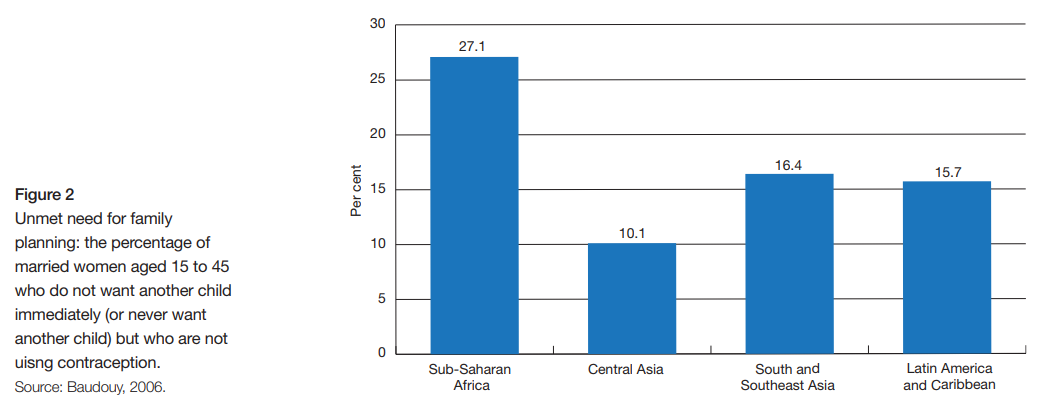
Access to voluntary, informed family planning should be the right of all people. In the past, only those with health insurance or who were well-to-do were likely to be able to access good family planning care. A new study by Franciele Hellwig and colleagues shows family planning equity has improved in five developing countries they studied, thanks to changes in their health policies. In 4 of the countries studied (Brazil, Ecuador, Egypt and Ethiopia), rich and poor women now have essentially the same high rate of contraceptive prevalence, while Rwanda still has a way to go.

by Richard Grossman MD

The Cairo Conference “Programme of Action” includes a statement that all people should have the right to decide freely and responsibly the number and spacing of their children. Unhappily, many people have been forced to follow the old adage “the rich get richer and the poor get children”.

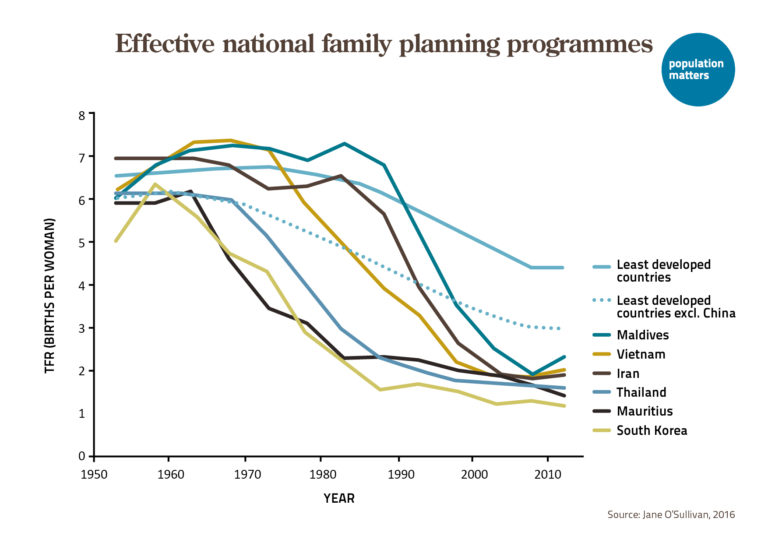
Fortunately, this adage has been disproven in at least 5 countries where voluntary Family Planning (FP) has been made accessible to all, with little regard to income. Brazil, Ecuador, Egypt, Ethiopia and Rwanda were chosen for study because they represent different societies on two different continents. 196 policies affecting the availability of FP services were identified in these countries from 1961 to the present, and the effect was described in a 2024 analysis. The progress in the availability of high-quality FP has been amazing in all five of these countries!

Contraceptive prevalence in Brazil, from the mid 1985 onward. mDFPS is a function of contraceptive prevalence rate. From: Policies for expanding family planning coverage: Lessons from five successful countries. Hellwig et al., 2024.

The genocide in Rwanda was 30 years ago. Hunger was a factor that led to neighbors killing neighbors. People in many places in this largely agrarian society were not able to produce enough food to keep away hunger. This was due to land degradation and rapid population growth; there was no violence in areas where people had at least 1500 calories of food per day. The average American eats almost twice that amount!

Back in the year 2000, few low-income people in Rwanda had access to modern FP. The country was largely Roman Catholic, which forbade modern FP and relied heavily on the unreliable rhythm method for birth spacing. Then, in 2005, the government started supporting a more effective method of natural FP, the Standard Days Method (SDM). It is considered acceptable by the Church and became popular. It is simple and is up to 95% effective—if used properly. Only 5 years after its introduction, the proportion of the poorest couples using effective contraception had risen to half!

The year 2005 also marked a presentation that changed attitudes in the Rwandan Parliament. The RAPID Model is a computer-based tool that stakeholders can use to demonstrate the effect of rapid population growth on different sectors, and the benefits of FP programs. The model demonstrated how FP can reduce mortality, improve health and increase the availability of women in the workforce. Rwanda has taken advantage of that benefit: almost 2/3 of Members of Parliament are women—the highest percentage of any country! RAPID also showed the economic benefits of FP—for every dollar spent on contraception, the government would save four. To quote a minister of health, “family planning is a tool of development.”

Since the five countries have different conditions and customs, each approached the need to slow population growth with different policies. For instance, the literacy rate is low in rural Egypt, so they used TV to get across FP messages. Ethiopia established primary health care for all—including contraception. Brazil focused on preventing adolescent pregnancies by improving sexuality education and facilitating access to FP for teens. In 2008 a change in Ecuador’s constitution named health care as a right, and ensured that women could make their own decisions about FP. Rwandan policies have already been discussed. It is remarkable that all 5 countries established policies that increased use of effective FP—and in 4 of the countries, there is equity between rich and poor in their use of FP.

Although each of these countries has its own policies and areas of focus, they all received help from the US government and from other rich countries. Nongovernmental agencies, such as the Gates Foundation, also provided expertise and resources. It is wonderful that all 5 of these countries did what they could to make family planning services available to all.

© Richard Grossman MD, 2024

Richard Grossman is a retired obstetrician-gynecologist. He writes a monthly essay on human population at: www.population-matters.org.

Published

7 responses to “New study shows what is possible with strong family planning funding”

  1. Edith Crowther Avatar

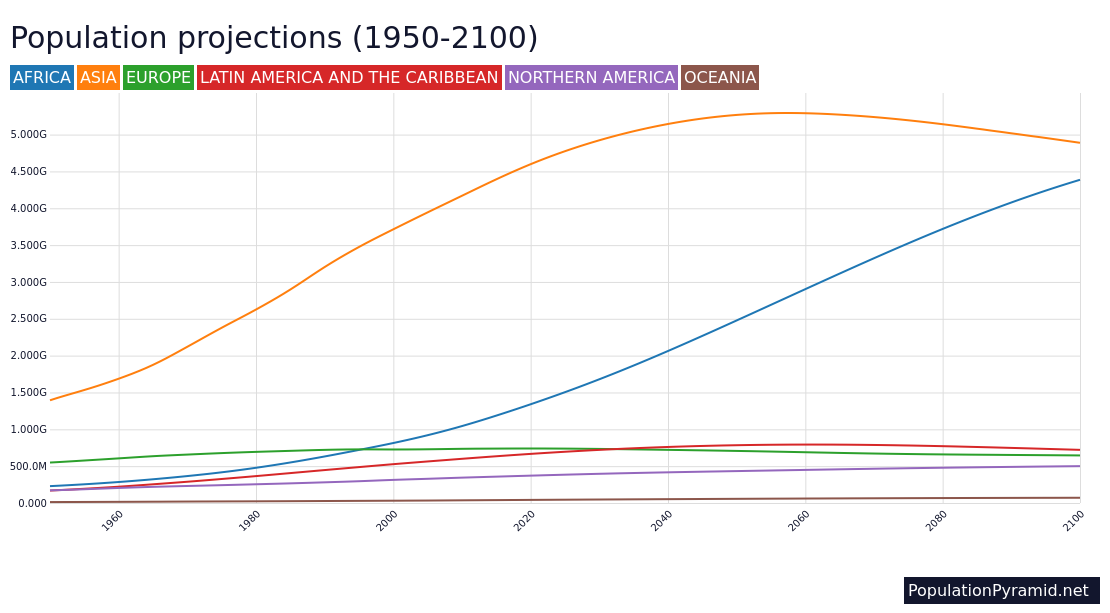
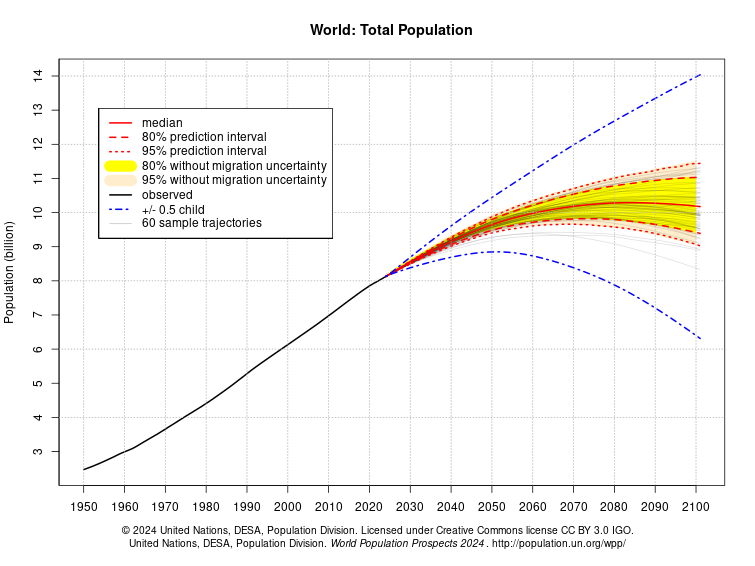
    The population of Rwanda was 9 million in 2006. Now it is 14 million, and growing steadily, though at a slower rate than in the first decade of the 21st century. The UN projection for 2100 is 28 million. This is not exponential doubling, which would by 14 million times 14 million (196 million). But it is a linear doubling which is also not sustainable.
    Already there is quite a lot of emigration from Rwanda – this does not happen in a nation where there is enough to go round. Primarily, Rwands is a source of Raw Materials for more highly developed countries (and some go to Rwanda itself). Accessing these will entail clearing large numbers of humans and other species off the land and into cities. Into Human Zoos, in other words. These Zoo Humans will gradually stop breeding without any assistance from peddlers of contraception – but no doubt they will be fed contraceptives anyway, as this will speed up the ability of Rwandans and non-Rwandas to make money out of Rwanda’s natural resources (including rivers and forests).
    Why this outcome is any better than Nature’s usual solution to human overpopulation (Famine, Pestilence, War), is not clear to me. In the end, it all comes to the same thing – natural resources are FINITE.

    1. dit7 Avatar

      every town on Earth has an excessive fertility rate and we need to establish one that doesn’t. Communities like Steamboat Springs favor large families by restricting and regulating the large numbers of small housing units needed by childless adults. And childless men are less affluent than fathers so the myth of childless affluence applies only to women.
      City abortion funding saves city school tax, so much so that cities can then fund country abortions as well, all without answering to country voters.
      In this way, my guess is that 10 cities can cover the USA and 25 can cover the world, coordinating via the World Council of Mayors and ignoring state and national governments completely. Think globally act locally.
      https://www.facebook.com/groups/4992336894196490

    2. Richard Grossman Avatar

      Thank you for your comments. I agree that doubling population is far from sustainable!
      You might like to read my blog of short essays on aspects of human population–www.population-matters.org. The hyphen is required and is your passport to crossing the Atlantic.
      Richard.

      1. David Polewka Avatar

        The biologists called for Zero Population Growth 50 years ago when we were at
        4 billion. They were looking at our ecological footprint, and nobody else was!
        So everyone thought they were nuts. What is the value of an uninformed opinion?

  2. Daniel Avatar

    The claim for effectiveness of this method seems a bit exaggerated [1]. From the cited source it also seems that the adoption was not so high “The highest recorded national prevalence of SDM is low (0.3% of 15–49 year old women reported current use in the 2010 Rwanda DHS [10])”. I wonder if there were other contraception types that drove this change: “Only 5 years after its introduction, the proportion of the poorest couples using effective contraception had risen to half”

    [1] https://www.contraceptionjournal.org/article/S0010-7824(16)00005-6/fulltext

    1. Richard Grossman Avatar

      Daniel, I agree about the optimism of the failure rate of Safe Days Method (SDM), and appreciate your giving the reference you linked. That article has a reference that suggests that any low efficacy contraceptive method is likely to increase the abortion rate. And since most abortions in Rwanda are not done in a safe manner, SDM may, paradoxically, increase the maternal mortality rate (see link below).
      I was also surprised that the surveys of contraceptive use in Rwanda considered SDM a modern, highly effective method. Perhaps the Georgetown group was too aggressive in marketing it. However, since the Catholic Church has been strong, and since SDM is definitely better than no method probably better than the prior rhythm method(s) in use, it doesn’t seem unreasonable for the Rwandan government to push it.
      Thank you for your comment!
      Richard
      https://www.contraceptionjournal.org/article/S0010-7824(03)00221-X/fulltext

  3. David Polewka Avatar

    Can the Government Get People to Have More Babies?
    By Motoko Rich, Oct. 13, 2024, New York Times
    There’s plenty of evidence that governments can change fertility rates, but generally in one direction: down.
    In East Asia, many of the countries that now have exceedingly low fertility initially imposed it on themselves. For more than three decades, China enforced a one-child policy. After World War II, Japan encouraged the wide use of contraception and decriminalized abortion in an effort to shrink the population. Likewise, in South Korea, the government legalized abortion in the early 1970s and discouraged families from having more than two children. Minchul Yum, an associate professor of economics at Virginia Commonwealth University who has studied South Korean birthrates, said his mother told him that “if you brought more than two kids onto public transportation, it was like a social stigma.” In Europe and the United States, fertility rates declined as more women entered the work force and the influence of religion — particularly Catholicism — receded. Young people, who started to leave the communities where they were raised, pursue careers and build networks that normalized postponing marriage, had fewer children as they started childbearing later. Lower birthrates signify progress: Declining infant mortality rates reduced the need to have many children. As economies transitioned away from predominantly agricultural or family-owned businesses that required offspring to run, people focused on leisure and other aspirations. Women could now pursue career goals and personal fulfillment beyond raising children. Undergirding it all was the rise of birth control, which meant women could determine whether and when they got pregnant.

    But the impediments to having multiple children have also grown. Housing costs are ballooning and the gig economy has made young people worry about their own — and their potential offspring’s — financial security. The cost of educating children and preparing them for a more competitive and inequitable job market keeps increasing. The kinds of institutions that once helped people meet future partners with whom they might want to have children, such as the church or formal matchmaking services, have waned. As families have fewer children, they invest more in those they have. Parents in China, Japan and South Korea compete to enroll their children in the best schools and pay for rigorous tutoring from a very young age. Some of those practices have become familiar in the United States, too. In August, Vivek H. Murthy, the surgeon general, issued an advisory to call attention to rising levels of stress and mental health concerns among American parents. Children no longer provide direct economic value with their labor, or an insurance policy in the way that in previous generations it was virtually guaranteed that children would take care of their parents in old age, according to Poh Lin Tan, a senior research fellow at the Institute of Policy Studies in Singapore. “We are at the place where having children is really a matter of pure joy and a preference where you kind of have to pay for and make some sacrifices in terms of your leisure and career advancement,” Tan said. Despite changes in family and work life, traditional ideas about who should take care of children — women, of course — have proved resistant to policy prescriptions. “Cultural expectations are designed to fit a way of living that doesn’t exist anymore,” said Matthias Doepke, an economist at the London School of Economics. “That is the root cause of these extremely low fertility rates that we have in rich countries.”

    In Japan, a demanding work culture that originated in an era when many women stayed home makes it difficult to balance career and family. Despite some changes, employees are still expected to put in long hours, socialize with colleagues or clients at night and travel frequently for business. More than in the West, Japanese mothers, even those with careers, take care of the majority of child care and housework. Kumiko Nemoto, a sociologist and gender scholar at Senshu University in Tokyo, interviewed 28 Japanese women in executive or managerial positions. Many did not have children. Those who did either relied heavily on their parents or paid as much as $2,000 a month for child care. “Almost all of these women said their husbands did not help them,” Ms. Nemoto said. Some governments on the other side of the world have tried to address these kinds of inequalities. Scandinavian countries have enacted policies to shift some of the burden onto men in the hope that they can support bigger families. In 1995, Sweden introduced what came to be known as the “daddy month,” a month of parental leave given to the spouse — usually the father — who had not already taken leave after the birth of a child. If that spouse did not use the month, the couple would lose it. With the addition of second and third “use it or lose it” months in subsequent years, more fathers took paternity leave. “That has created a change in cultural expectations on what it means to be a good father,” said Ylva Moberg, a researcher in economics and sociology at Stockholm University. Yet fertility rates in Sweden have not increased. Economists say it’s not clear that that means the policy has failed, given that Sweden’s rates are higher than those in East Asia. “The problem for economists is that even if the fertility rates haven’t gone up, they could have gone down more,” said Anna Raute, an associate professor of economics at Queen Mary University of London. Some conservatives and religious scholars suggest that rather than encourage fathers to do more, governments should incentivize women to quit work to raise children. But even countries like Finland and Hungary that provide generous benefits, such as letting a parent take up to two or three years off after a child is born, have not seen significant increases in their fertility rates. If more gender equality between parents, tax rebates and cash allowances can’t create bigger families, what else can a desperate government do?

    In Japan, policymakers are trying a new gambit: promoting weddings. Last year, fewer than 500,000 couples got married in Japan, the lowest number since 1933, despite polls showing that most single men and women would like to do so. One obstacle is that many young adults live with their parents — close to 40% of people aged 20 to 39, according to data from 2016, the latest year for which it is available. “Living with your mom is not the best romantic environment for finding your lifelong partner,” said Lyman Stone, director of the Pro-Natalism Initiative at the Institute for Family Studies in Charlottesville, Va. Japanese politicians have also talked about the importance of raising wages, and some economists say the government should support corporate social activities that could lead to relationships. L.G.B.T.Q. advocates argue that Japan should legalize same-sex marriage and help such couples have children. The Tokyo government recently launched its own dating app, but it has not released any enrollment figures. On social media, the initiative seems to have gotten more attention from Elon Musk than from local residents. It’s hard to imagine that this pro-wedding push will succeed in boosting the birthrate any more than Japan’s last three decades of initiatives have. In the end, it seems that governments can only do so much. In China, intrusive efforts by the authoritarian government to encourage childbearing have generated a backlash. In democratic countries, policies with a whiff of a mandate will likely engender fierce opposition, too. The truth is that a decision as momentous as whether to have children rarely comes down to mere economics or who will change the diapers.

    Influencing those choices may be beyond the reach of traditional government policy. For most people in affluent countries, having children is deeply personal, touching on our values, what kinds of communities we want to be part of, how we view the future. Sometimes it’s also about luck. “Policies cannot find you the best possible partner you dreamed of at the right time,” Mr. Sobotka pointed out. That’s not to say that some of the policies implemented to spur higher birthrates, or at least partly for that reason, are not meaningful. Providing high-quality, subsidized child care, motivating fathers to take part in their children’s lives and refashioning the workplace to let employees engage with their families can all help improve the lives of those who do have children. Here in Tokyo, friends with young children rave about the wonderful, affordable nursery schools where children from early infancy to as old as 5 eat nutritional lunches and caregivers send daily photos and personalized updates. Compared to when I was here as a newspaper intern in the late 1980s, I see more fathers taking their children on the subways and to playgrounds on weekends. Still, it’s hard to escape the feeling that old people far outnumber babies. And I’ll tell you what I see more frequently than parents walking with toddlers: adults with their dogs dressed in sweaters and bootees, toting them in carriers strapped to their chests or pushing them in strollers.

    https://www.nytimes.com/2024/10/13/world/asia/birth-rate-fertility-policy-japan.html

Leave a Reply

This site uses Akismet to reduce spam. Learn how your comment data is processed.

NOTE: Comments with more than one link will be held in wait and will only become visible on the site after an admin has approved it.

Explore the content and topics covered by TOP, search here

Blog categories
Gallery of infographics – Learn more about overpopulation and environment

Discover more from The Overpopulation Project

Subscribe now to keep reading and get access to the full archive.

Continue reading