
Within a few years, Mexico went from a staunchly pro-natalist country with high birth rates to having the strongest family planning programme in Latin America. As the latest in our series on successful family planning programmes, Mexico provides a case study for how family planning advocates managed to succeed despite a pro-natalist government, and how telenovelas were successfully employed to strengthen family planning messages.
By Pernilla Hansson
Pro-natalist sentiments have been very strong in Mexico, largely driven by historical losses. In 1848, to end the Mexican-American War, the Treaty of Guadalupe Hidalgo resulted in Mexico ceding half of its territory to the US. On top of this, many Mexicans died or fled the country during the Mexican Revolution, which lasted from 1910 to 1920. These losses of both land and population contributed to strong pro-natalist sentiments and policies until the 1970s1.
Although Mexico is the third largest country in Latin America by land area, less than 20% of that land is arable1. With a quickly burgeoning population, the country began to feel the pressure on resources in the mid 1900s, and in 1972, with a population of 54 million, the government finally began to address population. Yet even before the government transitioned away from pro-natalism, there were many organisations and dedicated individuals working within the restricted legal framework to promote contraceptive use.

Family planning under a pro-natalist government
Until the mid 1960s, fertility rates in Mexico were high, with almost 7 children per woman, resulting in an annual growth rate around 3%. A growing population was viewed by the government as a necessary source of labour for both industrial and economic development1.
The first Population Law in Mexico was established in 1936 with three goals: to increase the country’s population size, to settle uninhabited regions of the country, and to promote education and health services to achieve national integration2. In 1947, a new General Population Law encouraged measures to promote marriage and increase birth rates1. The establishment of the Sanitary Code forbade the distribution of contraceptives without medical prescription, restricted the manufacture of contraceptives, as well as prohibited the advertisement of family planning services.
Despite these strict laws, Mexico was integral to the development of the contraceptive pill. The discovery that Mexican yams could be used to produce a synthetic progesterone was vital to upscale the production of the hormone, and Mexican scientists further developed it into an orally administrative pill3. Yet the laws at the time meant that this success remained uncelebrated in Mexico for years4.
These laws, however, did not stop NGOs from providing much needed contraceptives to the Mexican people, without the support of the state. In 1958, the first family planning clinic in the country was founded by U.S. physician Dr. Edris Rice-Wray. Due to the Sanitary Code, it had to rely on word of mouth to spread information about its services. So precarious was the situation for family planning workers in Mexico at the time, that when the International Planned Parenthood Federation (IPPF) highlighted Rice-Wray’s work in their newsletter, she responded with a strongly worded letter, expressing fear that the attention might jeopardise her whole operation4.

The period between the 1940s and 1970 saw Mexico experience what was to become known as the Mexican Miracle: despite strong population growth, the country experienced very strong economic growth. During this time, the population more than doubled, growing from 20 to 50 million4. While the government had initiated a vast program for rural education following the end of the Mexican revolution in 19201, the country, similarly to the rest of Latin America, had high levels of poverty and high birth rates. This put the region in the spotlight for the first IPPF Conference, held in Bombay in 1952. The discussions there resulted in some private clinics in Mexico opening up to offer contraceptives to elite women who could afford it, although they still could not advertise their services4.
Changing attitudes
By the mid 60s, the negative effects of population growth became difficult to ignore. Despite continued rapid economic growth, much of its benefits were being cancelled out by an annual population growth of almost 3%. Mexican citizens felt their needs in terms of education, health, and jobs remaining unmet, leading most people to conclude that population growth was limiting their standard of living rather than being the positive influence it had been touted to be1.
The first big NGO to arrive on the Mexican family planning (FP) scene did so during this time of changing attitudes. MEXFAM was founded in 1965 and worked mainly with the poorer part of the population both in cities and rural communities, providing medical and educational FP services to improve their quality of life. Family planning services started becoming more available to the Mexican public with the building of new clinics, although the emphasis lay on the right of couples to decide the number of children they wanted rather than curbing population growth and its environmental effects1.
This changed in 1972, when President Luis Echeverría advised slower population growth in his speech at a UN meeting. In 1973, he announced the amendment of the 1947 General Population Law to annul the section that prohibited the advertising and selling of contraceptives. To reinforce that birth control must be voluntary, he introduced a new article in the Mexican Constitution, stating “All people have the right to decide in a free, responsible and informed manner on the number of children they will have and at what intervals”1.
In 1974, the government set up CONAPO, a government-led organisation tasked with conducting research on population issues and establishing free FP clinics around the country4.
The next landmark was the National Plan for Family Planning in 1977, setting demographic goals in the short and long term. The annual population growth, at the time estimated at 3.2%, was set to be reduced to 1.0% by the year 2000. This was the first time in Latin America that a head of state made such a policy decision regarding population growth1. While Mexico succeeded in some of their intermediate demographic goals, the growth rate took until 2016 to fall to 1%.

In other Latin American countries, FP programmes were met with resistance from the Catholic church. This was not the case in Mexico. The Church did not hold as much power there, due to the official separation of Church and State in 1880 and its further weakening via the Mexican Revolution1. Although the Vatican reaffirmed the Church’s ban on artificial contraceptives in 1968, many religious leaders struggled to reconcile this strict rule with the needs of their congregants (see also Costa Rica). Indeed, 80 Mexican bishops issued a declaration in 1972 implying that families had the right to make their own decision about contraceptives4. Contraceptives were also presented as a way to reduce abortions, a prevalent problem at the time. By disentangling the issue of FP from the controversy of legalising abortions, it was made more acceptable to members of the church2.
In addition, Mexican FP had the support of feminist groups. Feminists in some other Latin American countries, such as Brazil, were strongly opposed to family planning, but in Mexico they welcomed the movement as a valuable step to strengthening women’s rights1.
The Mexican FP programme had immediate effects. Earlier government efforts in education and literacy, as well as the work of early NGOs in providing family planning during the pro-natalist regime, set the scene for acceptance of FP messages and services1. The fertility rate dropped from 6.3 children per woman in 1972, when president Echeverría gave his speech on the need to limit growth, to 3.4 in 1990. Thereafter, it fell more slowly, falling below the replacement rate of 2.1 in 2016.
The use of Telenovelas
An important aspect of Mexican family planning was the spreading of information through radio and television. The use of soap operas known as telenovelas became massively successful and imitated around the world, for example by the modern day Population Media Center. The Mexican national family planning campaign used the format to effectively distribute their message.
Previously, Mexican films tended to show the happiness of women being directly linked to marriage and motherhood. New promotional material from the FP campaign tackled old gender norms by targeting macho behaviour to promote a new approach to the role of fatherhood and emphasising women taking control of their fertility4.
In 1974, the Mexican Institute for the Study of Communications (IMEC) was founded to investigate the educational uses of television. Earlier US research was frustratingly pessimistic, focusing primarily on television’s negative effects. Yet the founder of IMEC, Miguel Sabido, was optimistic; he had previously produced historical soap operas that had sparked the general public’s interest in Mexican history and culture. An earlier Peruvian series called “Simplemente María” (Simply Mary) further motivated his optimism. The story, which followed a poor migrant who endured various hardships but ultimately became a successful business owner through her decision to enrol in literacy classes and learn to sew, caused an upsurge in the sales of sewing machines and demand for literacy classes3. Mexican telenovelas followed a simple but effective format drawn up by Sabido. They were made as miniseries of half-hour episodes that would run for between 3 months to a year, allowing for flexibility to tackle new issues every series. Most of them would centre round romance and everyday family relations. Several shows would be ongoing at the same time in different time slots, so that as one telenovela would be nearing its end, another would be building up momentum4.
Before the development of the stories, Sabido would construct a “values grid” that expressed what behaviour each series was supposed to encourage or discourage. These were devised in collaboration with other organisations. Before tackling FP in the telenovelas, Sabido received help from the Catholic Church to devise the values grid, which resulted in a document that had been agreed upon by the religious community as well as the government and media team. This helped in minimising any objections towards the idea of using television broadcasts to influence personal behaviour4.

The content of the shows included both positive and negative role models, portraying the possible outcome of different behaviour. Based on social learning theory, the storylines followed the emotional progression of the characters, to promote viewers to discuss the dilemmas that the characters faced. This allowed the stories to harness the power of gossip and casual chatter among viewers as a springboard for social change. The episodes also had epilogues to relate the story to the lives of the viewer and present actions that the viewer could take4.
Many people become inspired by the messages of the telenovelas. For example, the telenovela “Acompáñame” (Come along with me) addressed gender inequality and the benefits of FP. While the series was ongoing, CONAPO received an average of 500 telephone inquiries a month regarding FP services, with many callers mentioning the telenovela as their reason for phoning. Contraceptive sales increased 23% in one year, as compared to a 7% increase the previous year. More than 500 000 women enrolled in FP clinics, and around 2 500 women registered as voluntary workers in the national family planning programme4.
Modern family planning programmes and Mexico today
Throughout the 80s and 90s, USAID was a major contributor to the Mexican FP program. This was done through collaborations where Mexican officials, managers, and doctors would travel to the US for training. It also supported the expansion of NGOs and provided contraceptives to the governmental FP programme to ensure that the demand was met5.
NGOs continued their important work in the country, working in collaboration with the government and focusing on slums and poorer areas of the country where the government-led work was insufficient. While in other countries feminist attitudes to FP were souring, feminists remained supporters in Mexico. During the “Earth Summit” in 1992 at Rio in Brazil, some feminist groups from other countries stated opposition towards FP, to which the founder of FEMAP, another important Mexican NGO, responded “You may talk for your country, but you do not talk for Mexico. … I represent more than 10,000 women in 36 projects and over 90 cities and they want family planning programmes. They consider family planning their right – we and they have fought for it and you are not going to take that right away from us!”1
In the 90s, discussions began about phasing out reliance on USAID assistance, which was ultimately achieved in 1999. This was seemingly successful, with the modern contraceptive prevalence rate continuing to grow after the phase out. Mexico’s FP programme was considered by many to be the strongest in Latin America5.
However, this time saw a global rephrasing of FP to elevate broader sexual and reproductive health and downplay demographic motives. In addition, after 70 years of the Institutional Revolutionary Party leading Mexico, a new party took power in Mexico in 2000, and although they supported family planning, their priorities lay elsewhere. As both governmental and global interest towards FP waned, securing external funding for programmes became difficult. Mexico was now a relatively wealthy country, and donors were more interested in funding cutting-edge development than FP services which were expected to be covered by Mexican domestic funding5.
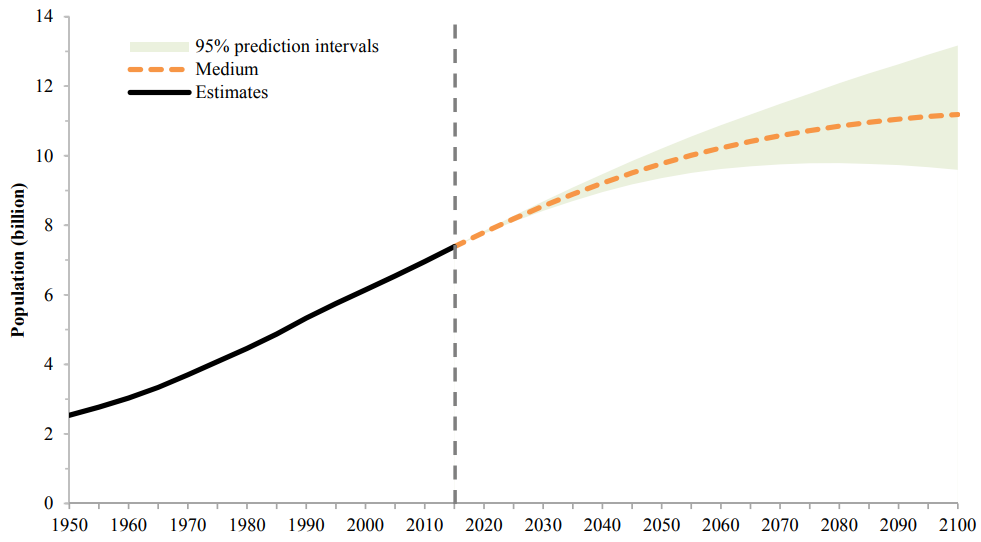
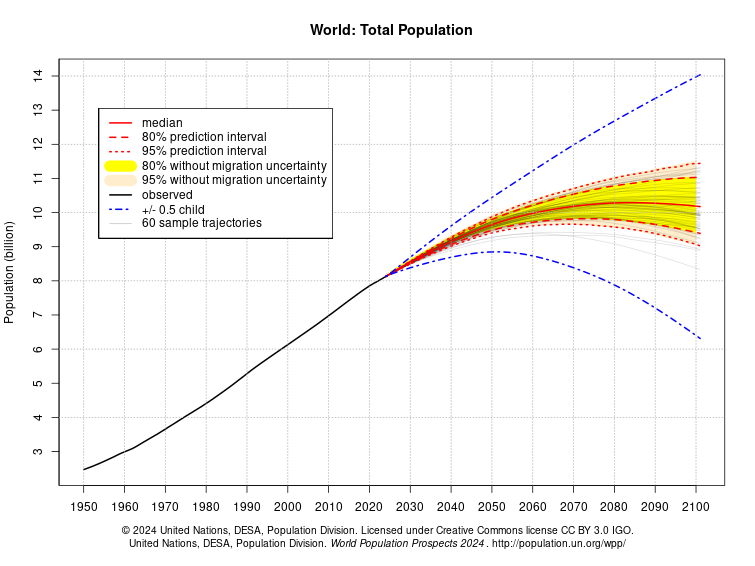
In this context, the previously impressive rise in contraceptive prevalence in Mexico plateaued in 2003, albeit at a relatively high rate. Similarly, the decrease in growth rate stalled between the mid 2000s and 2013, when the growth rate again continued to drop. This coincided with the Institutional Revolutionary Party regaining power. Another stall around 2018 followed another change of government, although the Covid pandemic confounds any trend. However, this volatility should raise uncertainty as to whether future population declines predicted by the UN are likely to happen.

Mexico still struggles with population and reproductive issues today. Abortions have been decriminalised, but adolescent pregnancies are common, with Mexico having the second highest rate of all OECD countries6. The availability of FP services varies greatly between regions. Historically large illegal immigrations of Mexicans across the border into the US peaked in 2000 and have decreased greatly since, although large numbers of non-Mexican migrants continue to travel through Mexico into the US7. Mexico’s population of 131 million continues to grow by over 1 million people every year, despite a total fertility rate below 2. Yet they have come a very long way from where they were in the 1970s, when a typical woman had 7 children. Indeed, if their growth rate had remained what it was in 1972, when the president first signalled a change from pro-natalism, the Mexican population today would have been around 246 million people. That is almost double the current population. With such growth, the considerable economic progress and relative political stability Mexico has achieved would have been impossible. This speaks for the success of “The Global Family Planning Revolution”.
In a similar vein to how Mexican family planning used telenovelas and effective storytelling to change attitudes, Population Media Center produce high quality programmes today to do just that. Read about the good work they do on their website.
References:
- Family Planning Success Stories (Asia, Latin America, Africa). Rahul Singh. Published 1994
- Do Population Policies Matter? Fertility and Politics in Egypt, India, Kenya, and Mexico. Anrudh Jain (ed). Published 1998
- A Timeline of Contraception. PBS
- Broadcasting Birth Control: Mass Media and Family Planning. Manon Parry. Published 2013
- Family Planning in Mexico: The Achievements of 50 Years. Ward, Santiso-Gálvez, and Bertrand. Published 2015
- Age of mothers at childbirth and age-specific fertility. OECD
- Beyond Stocks and Surges: The Demographic Impact of the Unauthorized Immigrant Population in the United States. Jennifer Van Hook (2024)
Other countries discussed in our family planning series:











Leave a Reply