Study: Slowing population growth could do more for biodiversity than reducing consumption

Habitat loss from agricultural expansion is a leading cause of biodiversity loss. A new study published in PNAS found that reducing population growth in low-income countries would shrink future global cropland requirements more than slashing consumption in higher-income countries.

by Olivia Nater, originally published by Population Connection

Biodiversity loss from crop expansion

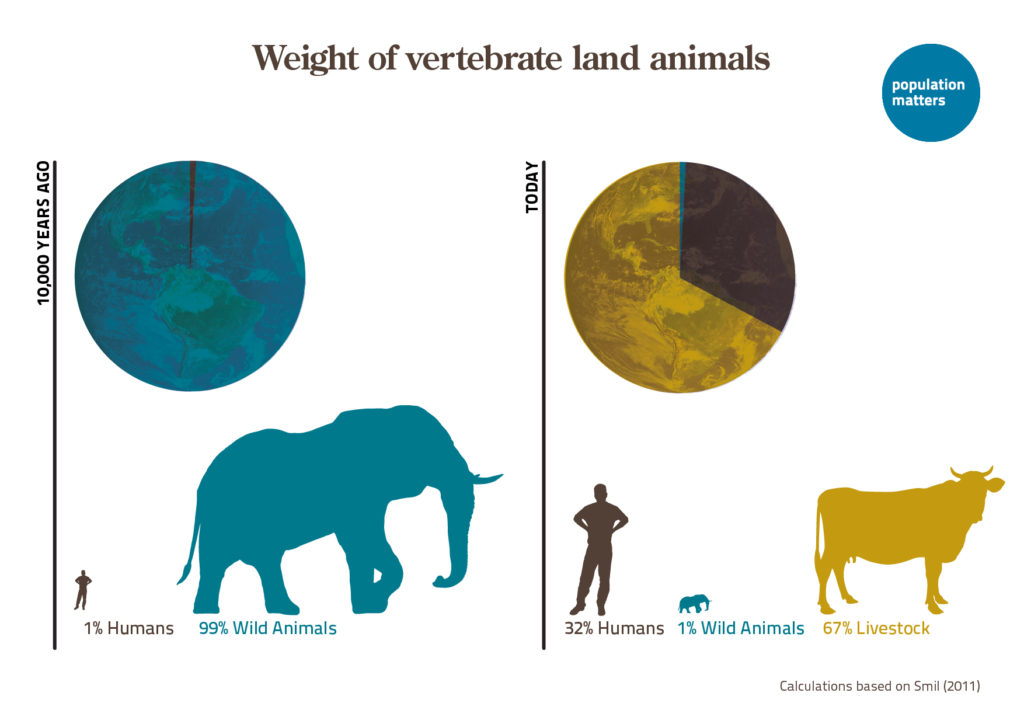
Almost half of all habitable land on Earth is already being used for agriculture. Agricultural expansion to keep up with growing demand from projected increases in population and consumption rates means more and more terrestrial species will be squeezed out of existence.

The various ways economic growth can affect the environment

Economic development is largely seen as detrimental to the environment because it increases consumption levels and greenhouse gas emissions. High-income countries contribute far more to climate change than poorer countries, for example. Global poverty reduction can also bring significant environmental benefits, however, through slower population growth.

The GDP-fertility connection

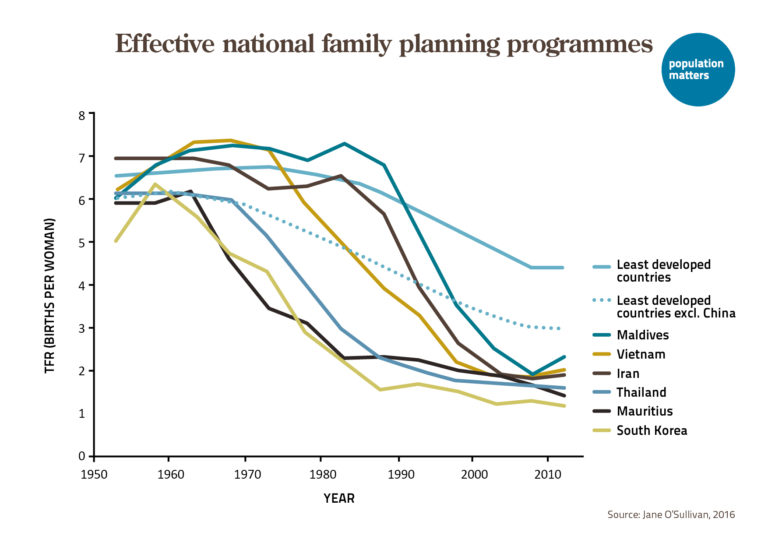
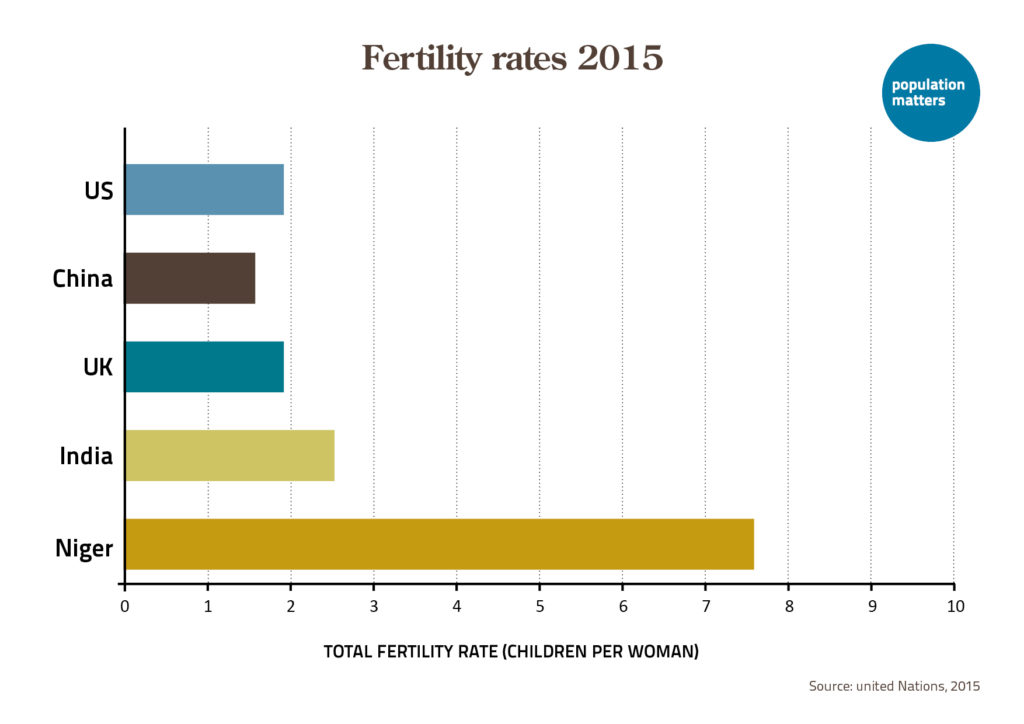
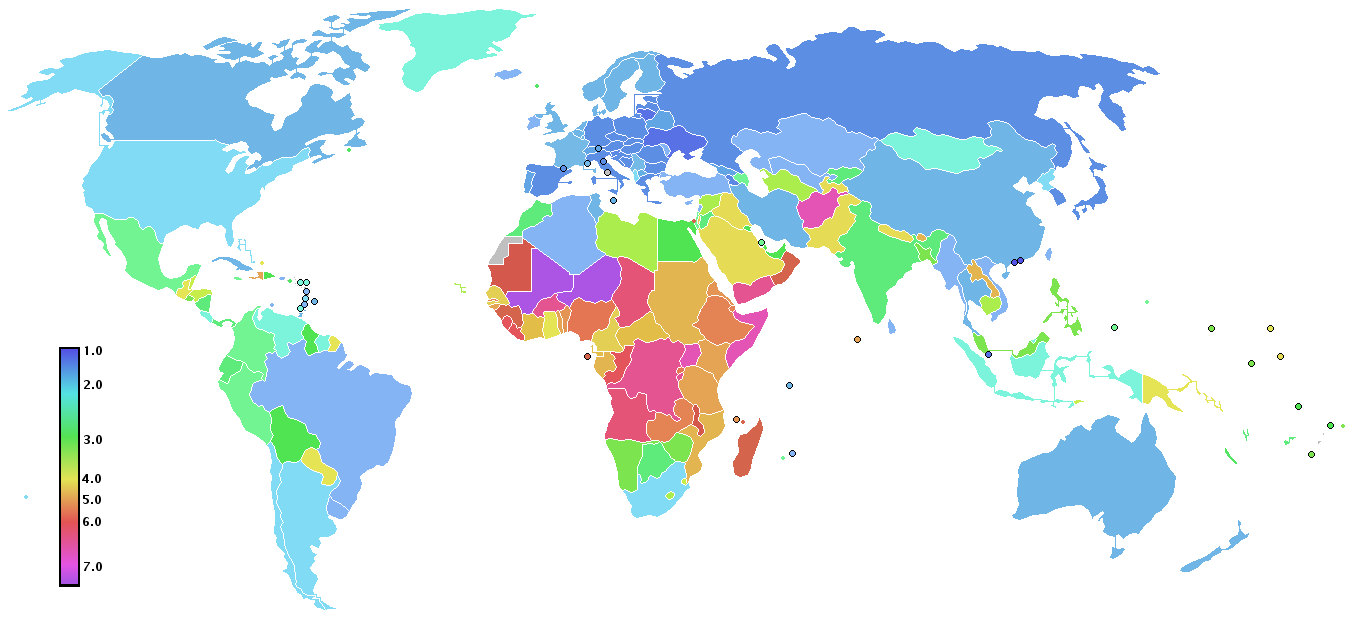
Increasing GDP is usually correlated with declining fertility rates (and thus lower population growth) because wealthier countries have more opportunities for women outside of marriage and childbearing and greater access to reproductive healthcare, including modern contraception. As economies develop, gender inequality tends to decrease, with higher education rates for girls and later marriage and motherhood for women leading to smaller families.

This economy-gender correlation works the other way around too. In fact, fertility decline is usually the precursor to faster economic development. This is because smaller family sizes help people escape poverty, allow for higher investment per child, make it easier for women to join the workforce, and shrink the ratio of young dependents to workers (the “demographic dividend”), boosting productivity.

Population as a key factor

The PNAS study analyzed past and anticipated future trends in population, per capita crop demand (a reflection of food demand), and crop yields to estimate global agricultural cropland requirements by 2050 and 2100, under moderate levels of climate change.

The authors modeled several different scenarios, including one in which per capita crop demand in wealthy countries decreases, one in which economic development in low-income countries accelerates, and one where we continue with “business as usual.”

The paper states,

“Economic development in lower-income countries could reduce future cropland requirements via slower population growth, improved crop yield, and higher volumes of global crop trade, which could more than offset rising per capita crop demand. These impacts would far exceed reductions in cropland requirements from decreased crop demand in higher-income countries.”

The authors quantified the relative contribution of population, per capita crop demand, yield, exports, and imports to each country’s area of cropland with country-level data from 1961 to 2016. They found that across all income groups, population had the largest relative impact on cropland expansion.

Diverging trends

The study notes that in low-income countries, cropland area has almost doubled since 1961, while the population has increased three-fold. Low-income countries have the highest fertility rates due to poverty and extreme gender inequalities.

In high-income countries, total cropland area has actually declined since 1961, coinciding with dramatically boosted cereal yields and smaller increases in population relative to developing countries. The authors point out that rich countries would have seen a much greater decrease in crop area if it hadn’t been for crop-based biofuels and the increased demand for grain-fed meat (including grazing pasture, livestock farming uses as much as 80% of all agricultural land).

Possible futures

Business-as-usual

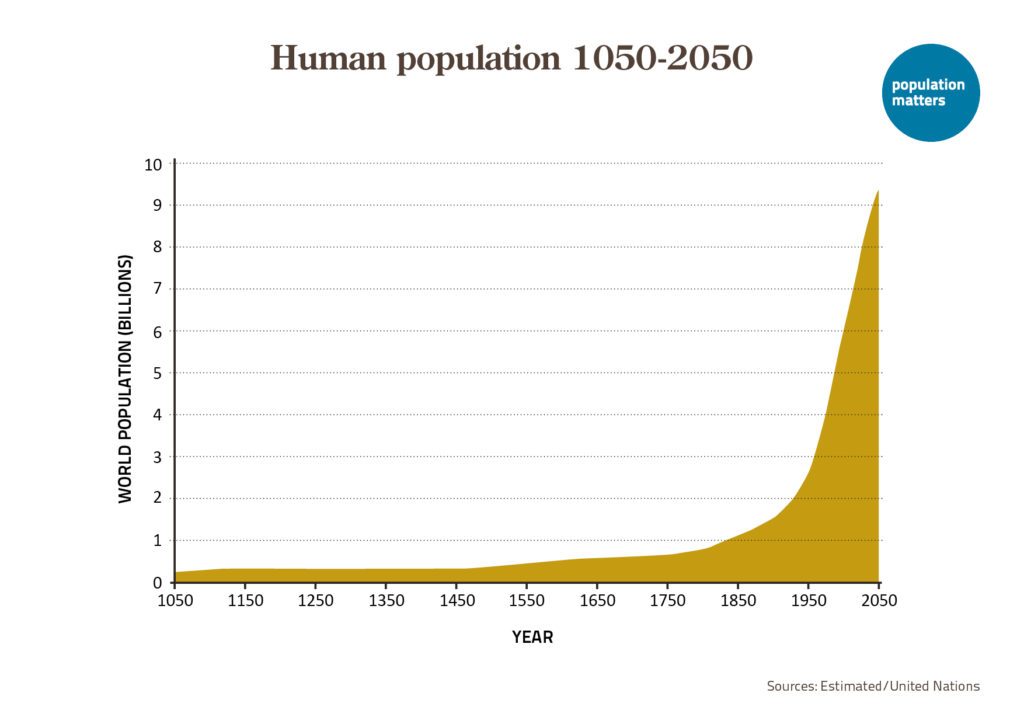
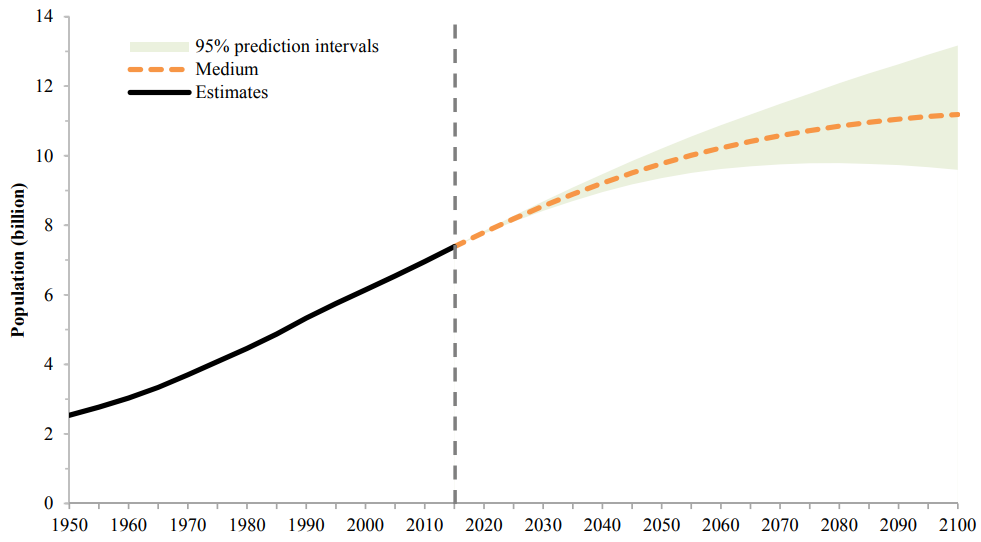
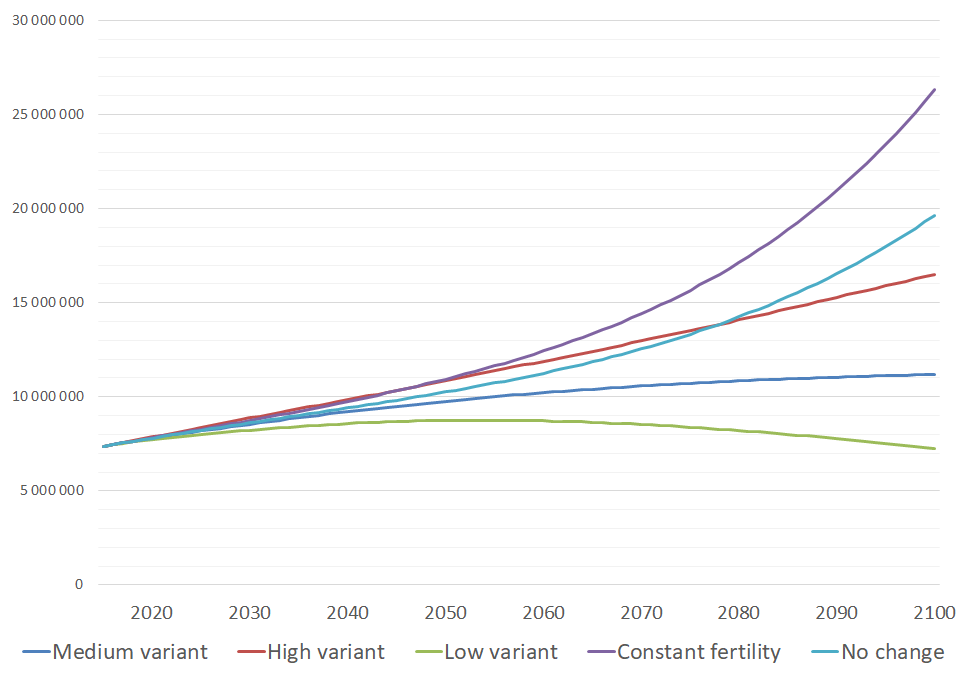
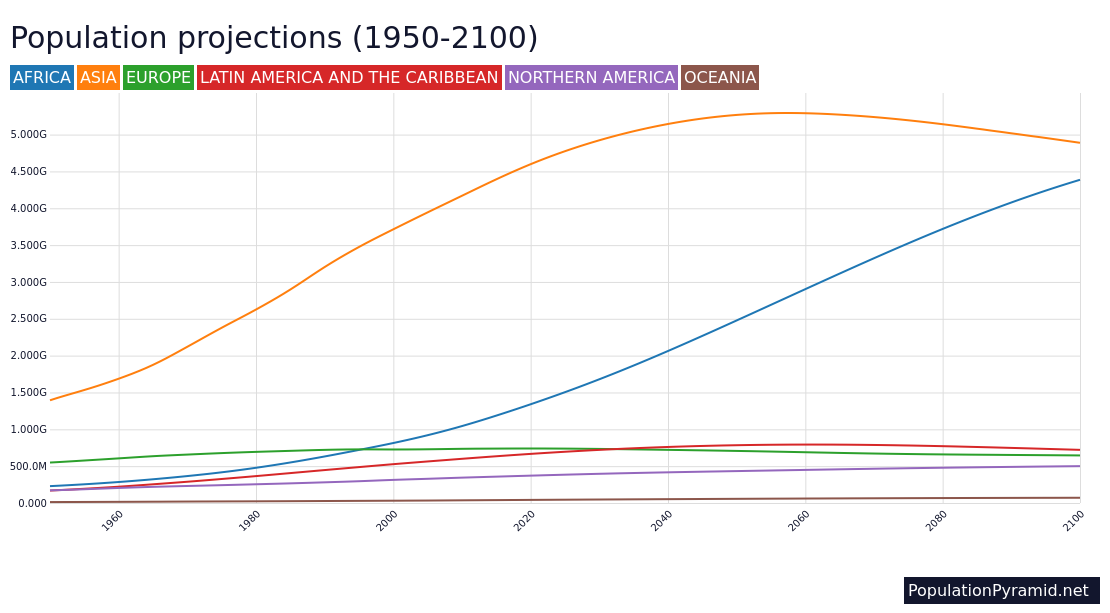
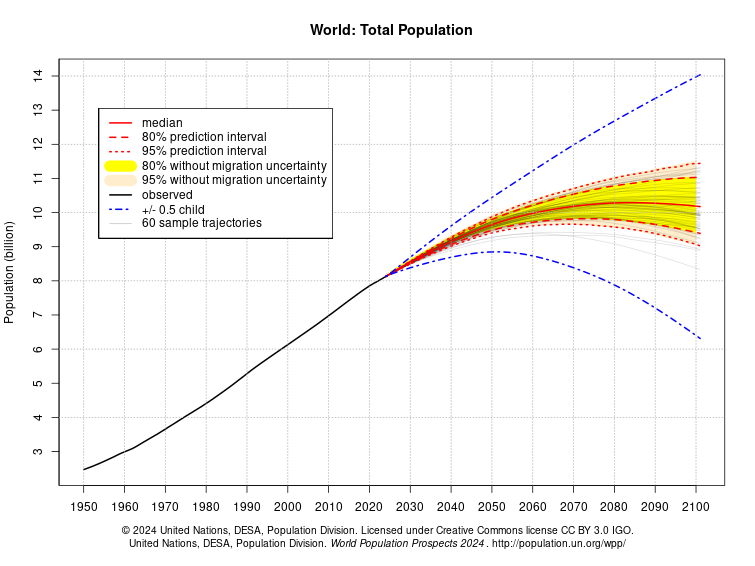
The authors’ business-as-usual scenario assumes our global population will follow the UN’s median trajectory, exceeding 10 billion this century. Under this scenario, cropland is projected to expand by an additional ~1,270 million hectares (ha) from today’s ~1,560 million ha, because growth in crop demand is expected to outpace yield growth. In higher-income countries, the authors found that large areas of existing cropland could likely be retired by 2050 and 2100. These benefits would be outweighed by far greater environmental losses from agricultural expansion in lower-income countries, however.

Reduced demand in wealthy countries

Under the Reduced per capita crop demand in higher-income countries scenario, population growth stays the same but daily per capita crop demand in higher-income countries is reduced from the 2018 estimate of 11,500 kcal to the global average of 5,000 kcal by 2100. The authors state that this could be achieved by shifting consumer preferences toward plant-rich diets and replacing biofuels with renewable energy. In this scenario, cropland requirements in lower-income countries would continue to expand, however, leading to global cropland expansion by ~507 million ha by 2100.

Faster economic development in poor nations

Under the Accelerated economic development in lower-income countries scenario, the authors assume higher per capita crop demand, higher yields, and slower population growth. This scenario uses the highly optimistic population projection from Vollset et al. (2020) that assumes rapid attainment of the UN Sustainable Development Goals, resulting in a population of just 6.3 billion in 2100. The authors write,

“Besides helping hundreds of millions of people out of poverty and improving living conditions, the overall impact of Accelerated economic development in the lower-income countries would result in a sizable net reduction in global cropland requirements by 2050 and a reduction of ~513 million ha by 2100. These results occur because of reduced population growth and increased yields associated with rising incomes, which could outpace increases in per capita crop demand in the lower-income countries.”

The way forward

Only improving yields or only reducing demand in rich countries would not produce the same benefits for biodiversity. The researchers argue that higher yields tend to lower prices, which often leads to greater demand rather than reduction in cropland area. It’s also important to note that yield increases are usually associated with agricultural intensification, which has other profoundly negative impacts on biodiversity, such as higher pesticide use.

Regarding tackling overconsumption, the study claims that reducing food waste and shifting towards plant-based diets “are extremely difficult to implement and require changes that much of the world appears unwilling to accept.” Achieving global sustainability requires many profound changes to our societies and economies, all of which are difficult to implement, but that doesn’t mean we can avoid pursuing them. The paper does promote a holistic approach:

“… accelerated economic development and increasing yields in lower-income countries along with reduced crop demand in higher-income countries and expanded trade could be truly transformative in terms of biodiversity, climate change, human health, and well-being.”

The low-hanging fruit

The population factor really is the low-hanging fruit, however, because the measures needed to slow population growth — reducing poverty, empowering women and girls, and removing barriers to family planning and girls’ education — are all morally essential in their own right, and universally beneficial. Despite this fact, tragically, many governments and funders are slashing investments in these key areas due to the combination of a rising far-right, growing nationalism, and widespread belief that population concern is “taboo.”

The study authors warn,

“The imposition of tariffs and recent cuts to international aid to the world’s poorest nations could potentially make even our [business-as-usual] scenario unrealistically optimistic.”

Hopefully, some decision-makers will pay attention to this study and to the substantial body of research that shows how empowering population solutions are key to improving lives and protecting the environment.

This piece was originally published by Population Connection.

Published

12 responses to “Study: Slowing population growth could do more for biodiversity than reducing consumption”

  1. Frank Götmark Avatar

    I certainly agree with Olivia that the population factor is the low-hanging fruit: efforts to reduce population growth is essentail in developing, high-fertility countries, and this would also help to reduce the destruction of biodiversity. Unfortunately, the PNAS study does not recognize the importance of family planning programs per se in such countries; the study is weak on this point, and it neglects much good recent literature. In addition, surprisingly, it lacks a specific conclusion on population in the Abstract and Discussion, which is remarkable given the analyses presented.
    The study relies on the Vollseth et al population projection, which leads to much fewer people in 2100 than UN’s projection (6.3 billion versus 10.7 billion for UN’s 2019 projection, which was used). How lower growth, and population reduction, shall be achieved is not considered in any detail in the PNAS paper. The authors assume that economic growth/development in lower-income high-fertility nations will slow population growth and lead to declining population. However, evidence from several studies shows that economic growth (GDP per capita) had no association with declining fertility rate (TFR) in developing countries (see, for instance, graphs for the period 1970-2014 here: https://onlinelibrary.wiley.com/doi/full/10.1002/sd.2470
    Studies instead show that declining TFR is strongly associated with contraceptive use, which in turn is correlated with family planning programs, and norm shifts. This is history, from which we can learn. The PNAS paper is a projection where many factors are modelled, and the results over long time periods are highly uncertain. Let’s hope there is some truth in what they project, but I am pessimistic, especially as they have not bothered to carefully consider the rich population literature.

    1. Overpopulation Research Project Avatar

      My problems with the PNAS study also concern their “take” on economics. The primary value of the study is that it makes a (somewhat indirect) case for addressing population to help preserve biodiversity. As we at TOP know, that is all too rare in the scientific literature. But in order to make this message palatable, the authors wrap it in conventional economic thinking, misleading readers in the process.

      Frank mentions one important instance: the notion that economic growth, all by itself, will decrease fertility. The paper he references provides evidence that this ain’t necessarily so.

      Gaia mentions another in her comment below: the authors’ idea that increased global “trade” will decrease agricultural expansion. They can only argue this because they assume this increased trade will lead to immense efficiency gains, a highly speculative claim. So far, this hasn’t been the effect expanding trade has had; instead, new export markets have facilitated agricultural expansion in many parts of the developing world. And even if increased trade did manage to help reduce agricultural expansion, the increased energy use would have negative environmental impacts (again, as Gaia points out).

      Another problem: the authors promote economic growth in poorer societies, where there is a reasonable case that pursuing it is justified (despite its environmental costs). But such growth is tied to growth in richer nations. We live in one densely interconnected global economy. There is neither the desire nor the means to grow in certain nations and not others. Academics writing about sustainability may specify futures in which economies grow in poor places where it will really do some good but not in rich places where it isn’t needed, as part of an overall strategy for a just and sustainable world. But its hard to see that happening, and I know of no politicians who advocate it. The PNAS study is silent on this issue.

      I’m not sure of the way forward here. But it seems to me, we’ll never be able to think clearly about such matters until we admit that it is the very size of the global human economy that is the fundamental problem. And it is just here that the PNAS study falls down. Because in order to make slowing population growth palatable, they wrap it in a “growth is good” framework which hides the fact that it is growth that is driving the global environment’s rapid decline.

      “Poor countries’ economies need to grow, global trade needs to grow, agricultural intensification needs to continue and perhaps even accelerate … If we do all that, population growth will slow, end, and then reverse, and we’ll need less agricultural land and be able to leave more habitat for biodiversity. Best of all, we won’t have to consider limiting economic growth to leave room for other species. More growth, the right kind of growth, will do it for us. We also won’t have to talk explicitly about limiting human numbers, which makes people uncomfortable. Again, growth will do all the hard work.”

      Sometimes, when something seems too good to be true, it is. Or am I missing something here?

  2. gaiabaracetti Avatar

    This is all over the place and feels more like rage bait than a serious proposal.
    First of all, it only considers crops for food as a source of environmental degradation, whereas food is now in wealthier countries only a small fraction of what people spend on. What about infrastructure, crops for energy (barely mentioned and not addressed properly), fabric production, industry, recreation, and so on and so forth? Why only ever just food?
    It is acknowledged that intensification of agriculture reduces biodiversity, but at the same time the article says that it will *increase* biodiversity. So which is it?
    *More* trade is assumed to be a factor in reducing agricultural expansion, which is an unwarranted and risky assumption, and carries further environmental risks and impacts.
    Finally, there seems to be an assumption that equality doesn’t matter, and that citizens of wealthy nations don’t have an interest or right in restoring their environment, as long as the environment is not destroyed all that much somewhere else. As a European suffering during a heatwave, I beg to differ.

    Some people seem to be so hell-bent in arguing against reduced consumption as a strategy for reduced environmental impact, that they publish questionable stuff such as this. At some point, one needs to ask oneself what the motivation is. It’s all good to argue for population reduction, but if those that keep refusing to acknowledge the massive impact of the wealthy are just protecting their economic privilege under the appearance of concern for the environment, they won’t find many allies that way.

    1. Overpopulation Research Project Avatar

      Gaia, the paper does consider significant reductions in per capita agricultural consumption in developed nations, as one key strategy for reducing the human agricultural footprint. This would be done by a combination of more plant based diets and decreased planting of biofuels, which would be replaced by renewable energy sources. They show that such reductions could have significant benefits for reducing the need for agricultural lands, but go on to claim that the benefits of fewer people would be even greater. It is this later claim that might lead some to say they are “excusing” excessive consumption in wealthy countries. However …

      I don’t think that criticism is quite fair. Because the authors do also say that the best way forward, the way with the most reduction in the human agricultural footprint, would be to do both: decrease numbers and decrease per capita consumption. Then again, they point out that getting people to consume less is hard, so maybe that is more evidence for an unwillingness to really argue for less consumption …?

      I don’t know. I tend to think the basic failure of the paper is trying to argue that “more will lead to less,” more of what we want will lead to less of what we don’t want. Maybe sometimes, if we are really clever, human societies can accomplish that. But blowing it up into a whole economic system seems like a recipe for disaster.

      I was talking to my son the other day, lamenting some recent weight gain. He looked at me for a minute, then said: “you just need to eat less food.” Tough love!

      1. gaiabaracetti Avatar

        “they point out that getting people to consume less is hard” – but it isn’t, that’s the thing! Especially if we are talking about the rich – there’s popular demand for taxing them, and no one would suffer as a result.
        The fact that you keep saying that it’s hard to get people to consume less makes me think that *you* are unwilling to do it. Because lots of people do it and are perfectly happy, either when it’s their choice, or when a society is structured around equality and good public services.
        Renewable energy, by the way, is absolutely terrible for the environment too – we need to consume LESS energy, not more. What are we going to replace biofuels with? Hydro? Terrible. PV on agricultural land? Terrible. Wind turbines? Mostly terrible. We need to do these things anyways, but as little as possible, not as a replacement of what we are using, which is not going to solve any problem. We are now seriously talking about mining the seafloor, literally grinding it down, destroying the least explored and largest ecosystem on Earth, to mine metals to power the renewable energy revolution. And I’m supposed to believe that reducing consumption is not necessary, or doable?
        I don’t understand this constant need to pitch consumption reduction against population reduction. This blog can be more constructive by talking about overpopulation without constantly implying that behind it that there’s a desire to keep living lavish lifestyles.
  3. Tony Povilitis Avatar

    The paper favors “accelerated economic development in lower-income countries” and says that this will help biodiversity. I’m skeptical. If history is any guide, economic development combined with continued population growth will accelerate the loss of wildlife and nature. We are seeing this today, for example, in Kenya and Chile, places where I work. Economic development has a wide range of powerful environmental impacts beyond those tied to agriculture. We need to promote “sufficiency” economics and living in both affluent and lower-income countries.

    1. Overpopulation Research Project Avatar

      Yes! “Enough.” Not always “More.”

    2. gaiabaracetti Avatar

      We should promote global redistribution – consuming less in the richer countries, and leaving those resources to the poorest, so that they won’t be so poor anymore. This would also reduce migration, the only cause of population growth in most wealthy countries.

  4. Olivia Nater Avatar

    All valid criticisms. I agree in particular that the assumption that economic development and agricultural intensification lead to reduced biodiversity loss is questionable. I tried to explain in the blog post that fertility decline is often a necessary precursor to accelerated economic growth, not the other way around, which the study authors didn’t address. They didn’t mention the fact that intensive agriculture and the higher consumption rates that go hand-in-hand with GDP growth can be terrible for biodiversity too. I also thought their statement that diet change is difficult to implement was a bit of a cop-out. Nothing we have to do to end overshoot is easy to implement, but we have to do it all anyway. Nevertheless, the simplified takeaway that slowing population growth would be great for biodiversity is certainly welcome. I suppose disguising this fact as economic development in poor countries being good for conservation makes it more palatable to decision-makers.

    1. Philip Cafaro Avatar

      Thanks for those clarifications Olivia. Those of us who realize the importance of addressing population to preserve biodiversity are happy whenever that gets acknowledged. And given the status quo, wrapping that message in the conventional pieties that economic growth is good may indeed make it more palatable, both to politicians and to many in academia and the general public.

      There is the question of what is most likely to get past various gatekeepers and into publication where a wide public might see it, and what is an honest, straightforward account of our environmental predicament. The rhetorical touches needed to make an honest account palatable are likely to sway the fundamentals of the analysis itself. This paper actually repays careful reading, as a good example of that. Readers can certainly glean the message that reducing population growth is important in preserving biodiversity. But they likely will breeze right on past any sense of the terrible predicament that we are in, with so many poor people in the world who deserve a materially better and more secure life, where achieving that will drive many other species extinct.

      As you say, “Nothing we have to do to end overshoot is easy to implement, but we have to do it all anyway.” This gets to Gaia’s comment about the need to reduce consumption among the comparatively wealthy, which I think we all agree with. Taking “consumption” in a broad sense, not just food but all the ways we use and degrade resources and energy. Yet our economy is of course built on the precise opposite: on increasing consumption and production, overall economic activity and overall wealth. This is our predicament.

      1. David Polewka Avatar

        NOBODY PREDICTED THE GREEN REVOLUTION, but it should have been easy to predict global warming, when everybody wants to go to urban areas, so they sprawl out, so you have to drive more and longer distances, burning way more gasoline and emitting way more greenhouse gases! People rejected population control because they were afraid of losing something they have or not getting something they want. But nobody was capable of looking at the big picture, because they don’t read enough, they’re too busy enjoying all the modern conveniences and their bucket lists.

  5. John T Avatar

    I live in Switzerland and pretty much agree with the article. It was a propaganda victory. Propaganda works. The media is heavily biased and people rather be sheep than think themselves. Our Enlightenment ideal ”Sapere aude” is not so popular.

Leave a Reply

This site uses Akismet to reduce spam. Learn how your comment data is processed.

NOTE: Comments with more than one link will be held in wait and will only become visible on the site after an admin has approved it.

Explore the content and topics covered by TOP, search here

Blog categories
Gallery of infographics – Learn more about overpopulation and environment

Discover more from The Overpopulation Project

Subscribe now to keep reading and get access to the full archive.

Continue reading