Religion affects birth rates

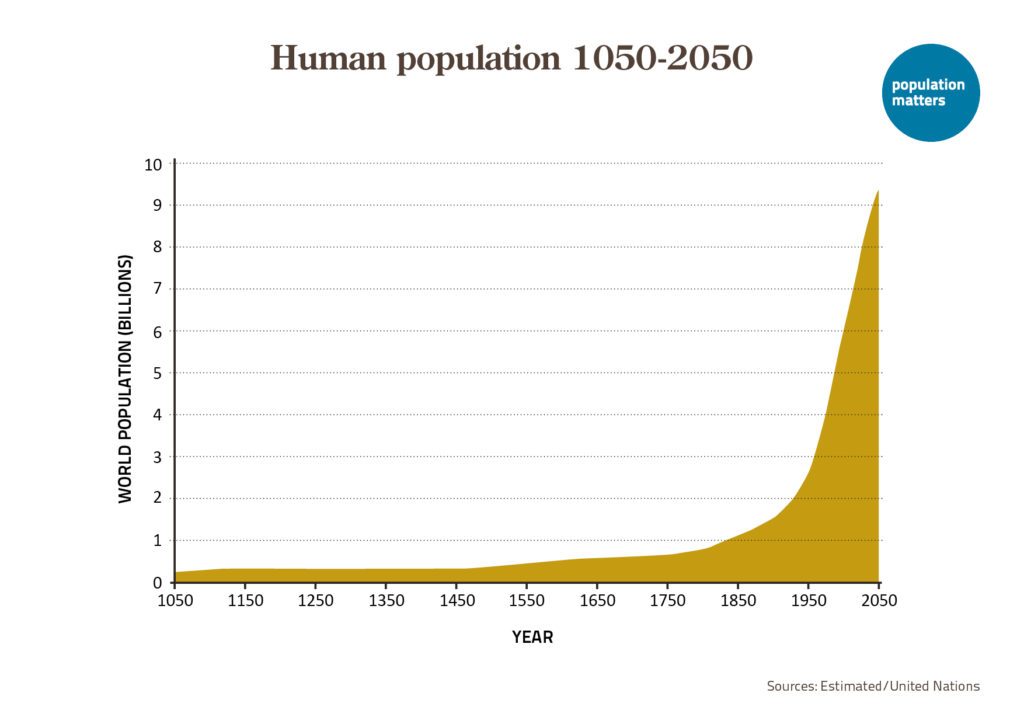
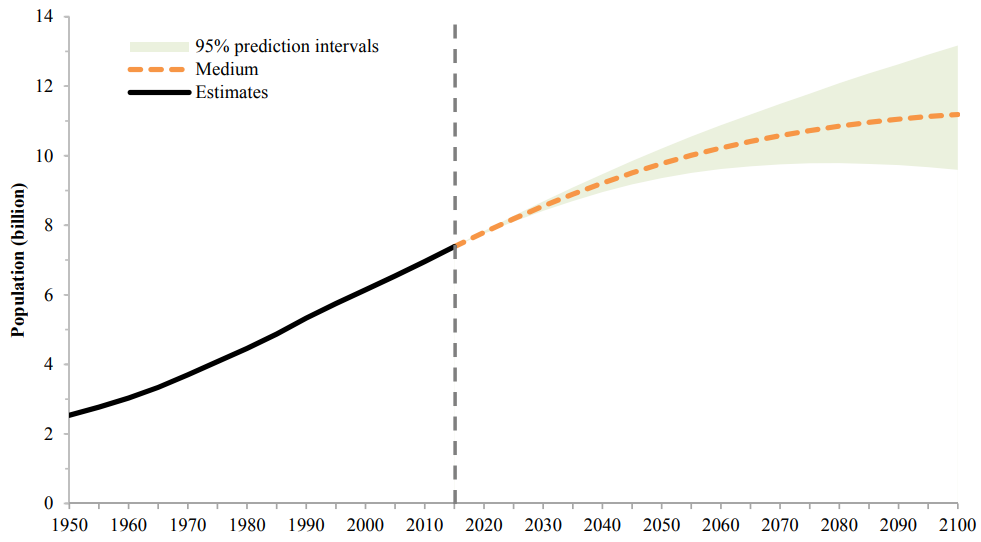
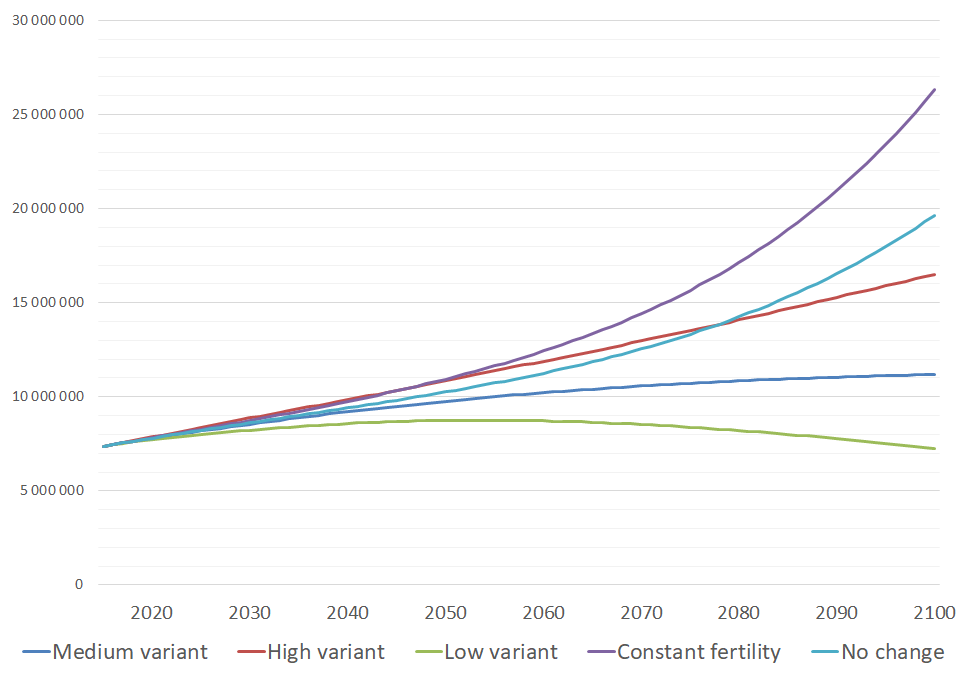
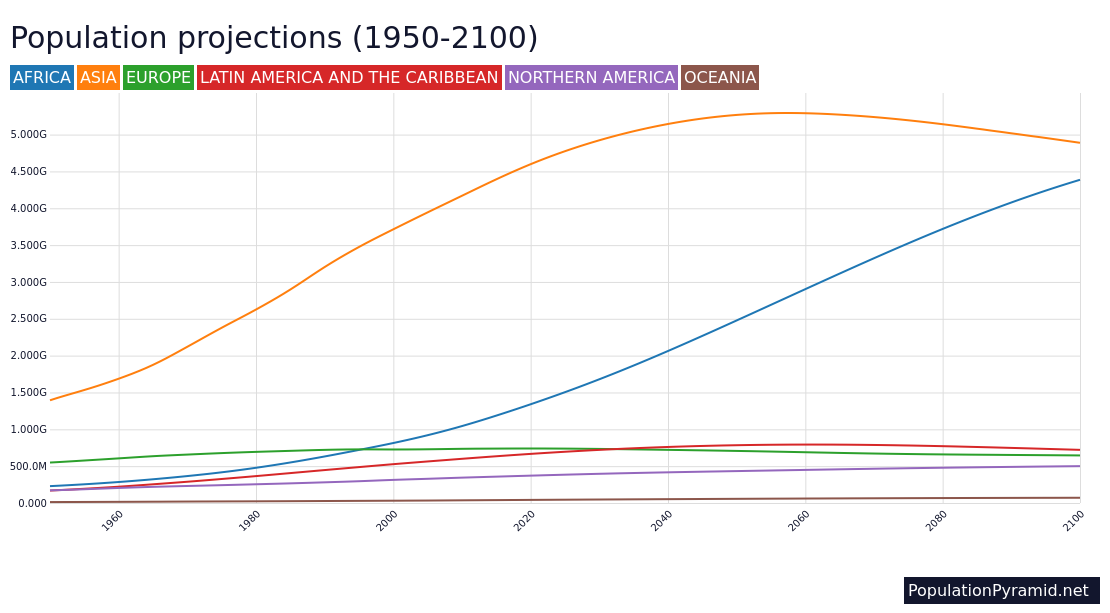
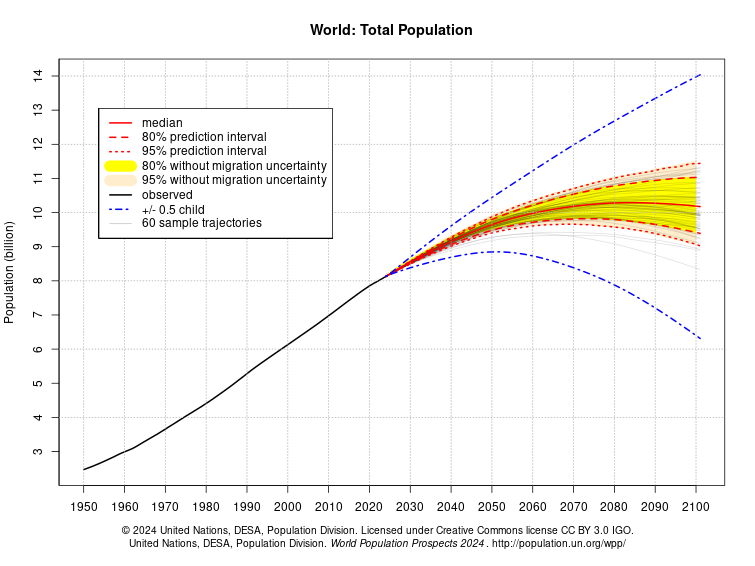
The global human population will increase by 2.4 billion to 2088, according to the UN. Birth rates are high in some parts of the world, leading to continued population growth. In Africa and parts of Asia, and within Muslim countries and communities, religiosity promotes high birth rates. This role of religion could, however, potentially be reversed.

By Frank Götmark

Religious immigrants to the West have high birth rates, the British political scientist Eric Kaufmann emphasized in his book Shall the Religious Inherit the Earth? (2010). Two years later, the psychologist Jonathan Haidt published The Righteous Mind: Why Good People Are Divided by Politics and Religion. He and Kaufmann both argued that religion is hard to eliminate through rational arguments, as evolutionary biologist Richard Dawkins and many others have tried. According to Haidt, religiosity is part of inherited behavior that reinforces social cooperation among competing groups of Homo sapiens.

Below, religion refers to belief in supernatural power, including spirituality and spirits that influence our attitudes and actions. Animism long dominated among hunters and gatherers via souls and spirits (deceased people, parts of nature, etc.). As agriculture evolved globally, larger hierarchical communities adopted gods to rule over them (monotheism).

The American researcher Stephen Prothero attempted to characterize the major religions in his book God Is Not One (2010). For Buddhism he suggests “the problem is suffering – the solution is awakening”, for Christianity “the problem is sin, the solution is salvation”, and for Islam “the problem is pride, the solution is submission”.

Muslims give birth to more children

In the Western world in the 1960s and 70s, many scholars believed that religions would fade away and that developing countries would become secular. This did not happen. For example, in Africa south of the Sahara and in Arab countries, according to Gallup surveys, on average 90 percent answer “Yes” to the question “Is religion an important part of everyday life?” In 2017, The Pew Research Center reported that Islam is the fastest growing religion, with a forecast that Muslims will give birth to more children than Christians by 2035.

This is supported by a study by the World Values ​​Survey in 57 countries which showed that Muslims give birth to more children than other religions. Immigrants to Europe from Muslim countries also appear to have higher birth rates than other immigrants and the host population.

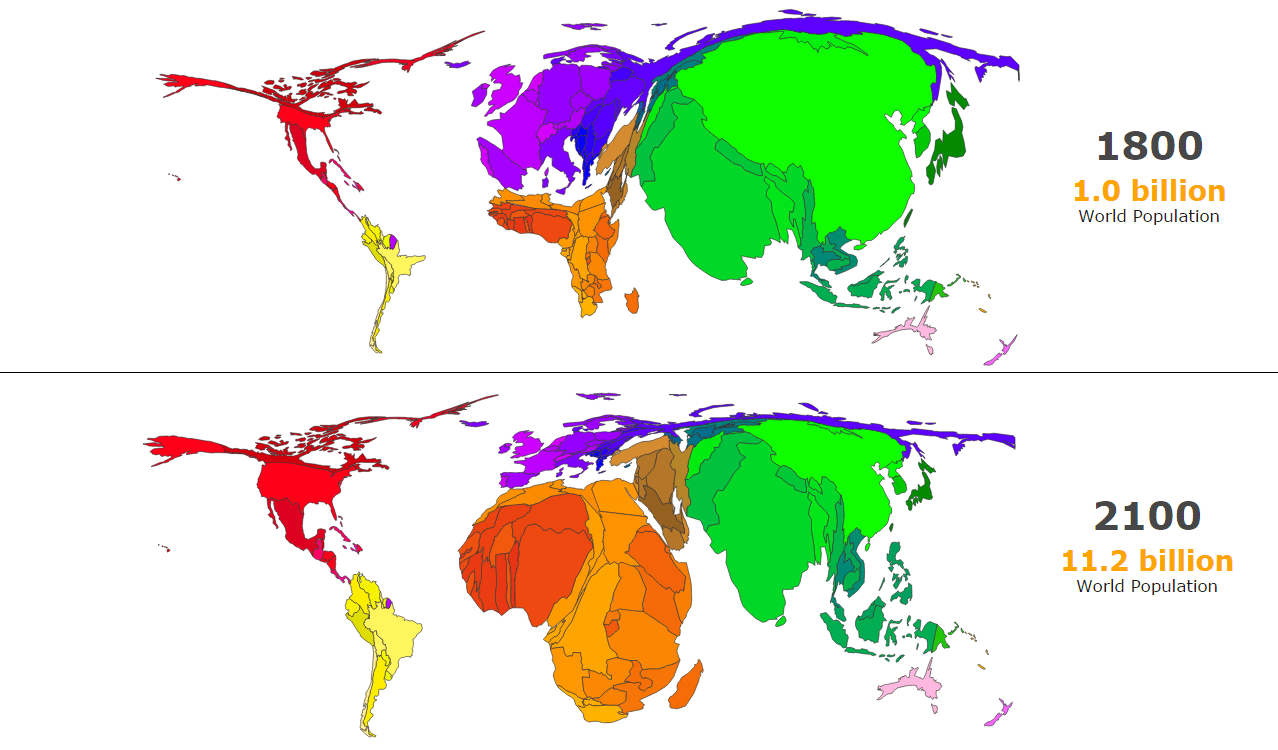
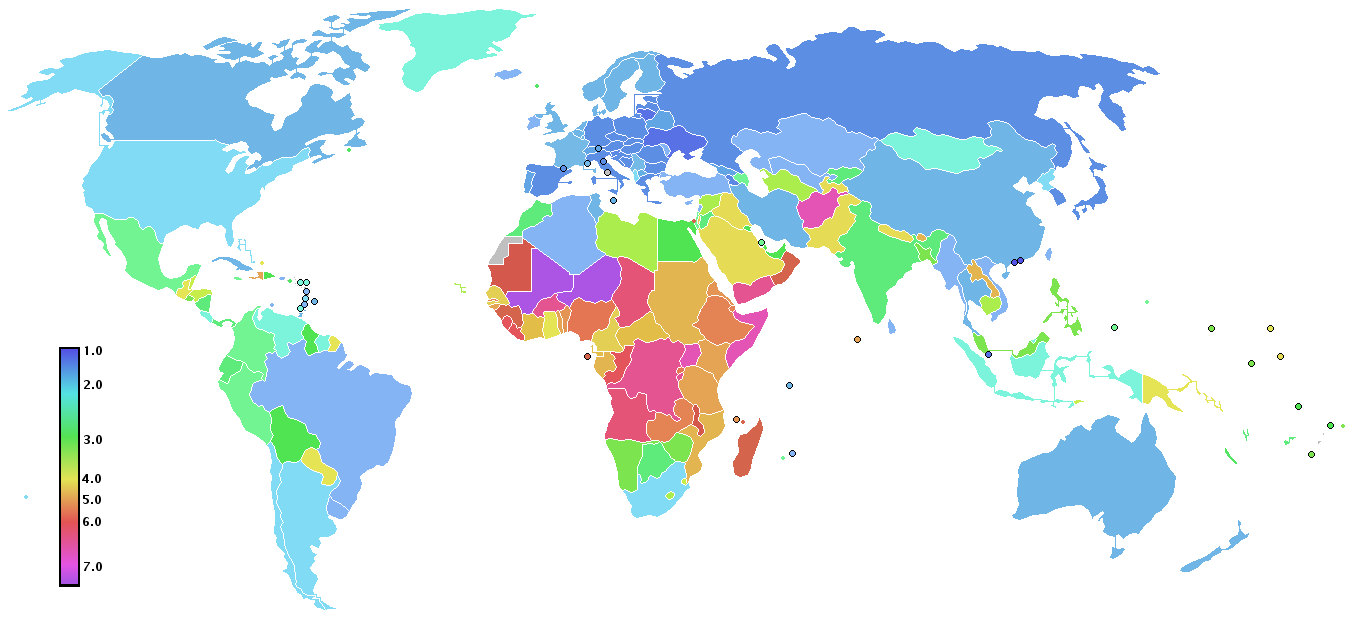
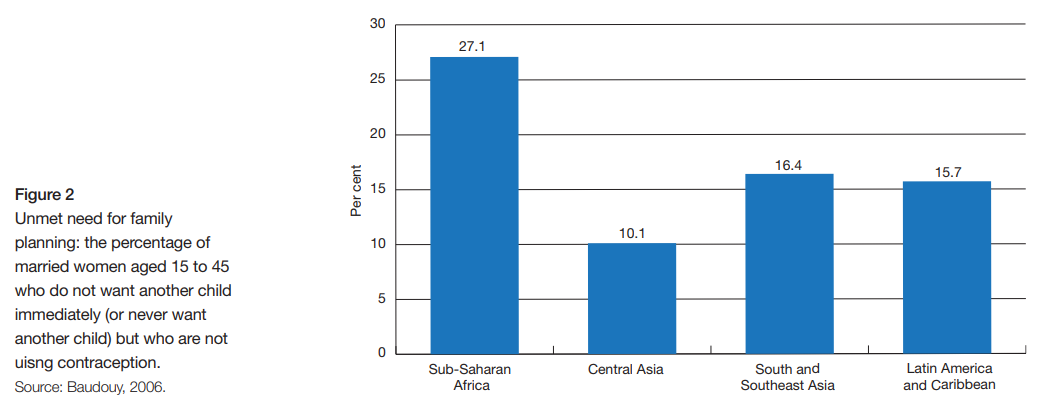
Population growth is strong today in parts of Western Asia (for example, Pakistan and Afghanistan) and in Africa, especially south of the Sahara. The UN forecast for Africa from 2022 is a dramatic increase from today’s 1.4 to 3.9 billion in 2100, which is largely due to high birth rates (today 4.3 children per woman). For Africa and other parts of the world, the UN’s Food and Agriculture Organization reports increased malnutrition. Meanwhile, the media is silent on the role of future population growth in Africa.

Declining religiosity?

Recently there have been some reports of reduced religiosity around the world, for example the American political scientist Ronald Inglehart’s analysis of the World Values ​​Survey in Religion’s Sudden Decline (2021). Decreased religiosity may apply to the USA and some other countries, but the World Values ​​Survey covers Africa poorly and cannot be used for conclusions about the most rapidly growing continent.

One should also be careful with the meaning of “religious” – for example, some people indicate in surveys that they do not belong to a congregation or organized religion, and so are marked as having none. A new survey by Pew Research shows that “none” responses have increased in USA from 16% to as much as 30%, but most of those people believe in a god or higher power, even though very few of them regularly attend religious services. In addition, spirituality and belief in spirits can be difficult to capture in surveys.

The British Africa specialist Stephen Ellis and his Dutch colleague Gerrie ter Haar describe the importance of spirits in Africa in Worlds of Power: Religious Thought and Political Practice in Africa (2004). Beliefs in spirits permeate culture and politics among poor and rich, urban and rural. They are ever present, and religious “mentors” often influence or control political leaders. President Kenneth Kaunda of Zambia, for example, was strongly controlled by two Indian gurus “who recognized him from his shamanistic journeys in the spiritual world”, and they were given access to power. Not infrequently, murders of political rivals are arranged with reference to spirits and gods. Some women are seen as witches possessed by evil spirits, displaced and relegated to special villages.

A colleague who used Ellis & ter Haar’s book at a Swedish university found that Africans who read the course recognized themselves in the book. Laura Grillo and co-authors, in Religions in Contemporary Africa (2019), give Ellis & ter Haar a prominent place. A February BBC report from north-east Nigeria, hit by skyrocketing food prices, poverty and security concerns, is also telling: the governor called for “divine intervention”, and for citizens to pray and fast. Lower birth rates and fewer mouths would be more effective for families and for the country, but it is unclear how many agree, or realize this.

Spirits and minor gods still exist in close-to-nature animism, where much is considered animate. But monotheism with a single, anthropomorphic ruling god (often assumed to be a man) predominates today in Africa and many countries. How did we get there? The development can partly be explained by autocrats exploiting religion. Researchers Bentzen and Gokmen, in an analysis of pre-modern societies and data from today, found that rulers with “divine legitimacy” contributed to religious laws. The societies that followed this path are today more autocratic, and their populations more religious than in democratic societies.

The dynamic development of congregations

How do individual churches and congregations develop? The sociologists Rodney Stark and Roger Finke and the economist Laurence Iannaconne argued for a kind of economic market model where believing individuals act rationally based on inherent needs and choose congregations based on so-called tension, i.e. degree of “distinctiveness, separation, and antagonism”. Stark and Finke describe the ideas in an original book, Acts of Faith: Explaining the Human Side of Religion (2000). Strong experiences and faith (linked to high tension) gives cohesion, with more closed congregations where the priest is financed by members who “demand” experiences.

The social position of long-standing congregations and their priests can be challenged by new congregations that provide stronger or alternative experiences. Christian charismatic churches (with “speaking in tongues”, ecstasy, etc.) are examples of rapidly increasing movements, at the expense of others: first in the United States, then, among other places South America, and nowadays in parts of Africa. Stark and Finke describe this as the religious market, in which the price extracted from members is rewarded by intense experiences. In traditional churches, belonging and faith are lower, but cheaper according to the authors. For example, in (highly secularized) Sweden it costs little to hang on to the Church of Sweden, but religious belief becomes weaker. In contrast, charismatic churches that provide high tension demand time and money, and free-riders are excluded there.

Rodney Stark, who died this year, argued that religion and religiosity are not going away. Some scholars are critical of the ideas of religious market and congregational dynamics. Additions to the models may be needed. In secularized countries, it may be that religiosity is latent and can increase rapidly, for example through crises such as wars and pandemics.

Islam is gaining ground

Islam is now gaining ground in Africa and increases in other places via migration and population growth. In an experimental survey of 15 European countries, immigration by Muslims was unpopular, independent of the respondents’ age, education, income, and political ideology. Covering clothing for women, gender segregation, Sharia law or sympathy for such, terrorist groups, and high birth rates probably contribute to make Islam unpopular in Western countries.

Nicola Turner and I reviewed studies from sub-Saharan Africa to see if the major religions differ in birth rates and thus potentially in relative future growth. We were surprised that so much information existed, including good research by African scientists. And the more you dig into databases and literature, the more you find! We also found valuable information in low-ranked journals and reports, and in reference lists of articles.

Our study of 44 countries in sub-Saharan Africa found that followers of older, indigenous African religions had the highest birth rates: between 4 and 58 per cent higher than for Christians, depending on country. But such religions, which once played an important role for group cohesion and survival, are now in the minority. Monotheism with a single ruling god has “won”. Within Islam, birth rates were 2–36 per cent higher than for Christians, except in two countries (where it was 2 per cent lower). On average, Muslims and followers of African religions had about the same birth rate. Our study and others suggest that religiosity in Africa contributes to large family size, although other factors such as patriarchal culture also influence fertility.

Possible measures against unsustainable population growth

It is often emphasized that (longer) education lowers birth rates in developing countries, but the importance of the content of the education has not been investigated in this context. Religious schools are common in Africa and are supported through extensive international aid. Could this contribute to birth rates falling slowly, or stagnating at a high level, in Africa?

In the early 1990s, the United States, a major donor, changed policy to allow government aid to Africa through Christian organizations. Both Republicans and Democrats support this development. At the same time, countries in Africa allowed the establishment of private schools paid by the United States, Arab states or other donors. To what extent does education in sexuality and family planning occur in these schools? This should be investigated.

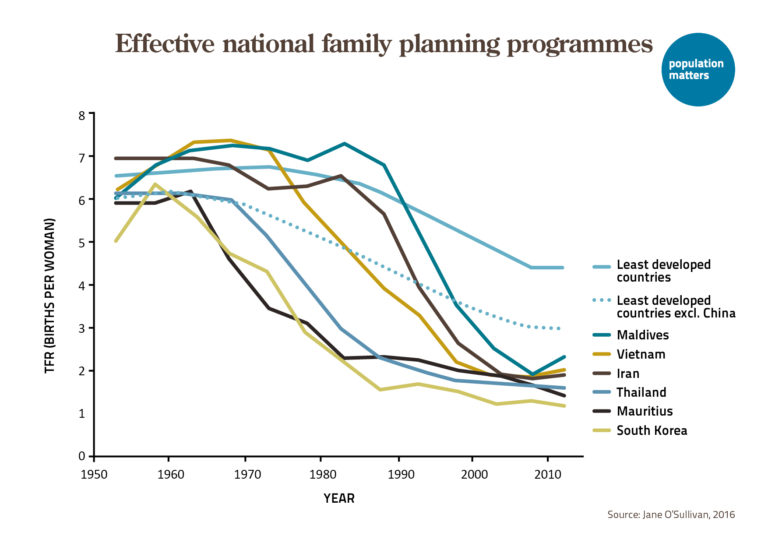
Aid to family planning could mean much for people, the environment, and wildlife in Africa and elsewhere. Researchers Bongaarts & Hodgson, in Fertility Transition in the Developing World (2022), argue that a major investment in voluntary family planning could halve the remaining population growth in Africa from 2 to 1 billion in the future! Aid to countries in Africa with a reported policy to lower fertility, and which themselves invest in family planning, should be a high priority.

Melinda Gates, in The Moment of Lift (2019), advocates for family planning and points out that male allies are essential; especially valuable are men who are religious leaders. Such leaders in sub-Saharan Africa advocating for family planning are relatively few, but those that exist need support. In addition, the greening of religion offers some hope.

Religion and faith are present in many contexts: from terror to quiet prayer and wise advice. To curb population growth, we should support religious leaders advocating for family planning programs in countries with high birth rates. Priests have potential to positively influence their congregation, the media, and even government policies. Historically, two examples are Costa Rica and Indonesia, where the birth rate today is 1.5 and 2.1 children per woman, respectively.

This blog is shortened version of a longer Swedish essay on population and religion published on the web site Kvartal this week. 

Tagged:

Published

18 responses to “Religion affects birth rates”

  1. gregdougall Avatar
    First sentence: The global human population will increase by 2.4 billion to 2088, according to the UN.
    You lost me at UN. The global human population is 9.5 billion now, in June of 2024, and at some point will reach 14 billion.

    This is what the “original teachings of wisdom, which is not a religion, but relegeon, said/should have said”

    GOTT 7:61

    61) But also be concerned that you do not have to suffer the misery of hunger (famine) if you breed a superfluity
    of descendants, therefore you shall not multiply like vermin; if you do however breed too many descendants
    then you are evidently acting in a mistaken wise because by doing so you invoke a calamity in great measure
    on yourselves, for your wellbeing (health) as well as for your world; and truly it is through your excessive descendants that you bring about great and worldwide battles (wars) and destruction, as well as hardship, misery,
    calamity and cataclysms in the extent of huge collapses (catastrophes) which you cannot set anything against,
    so you are helpless.

    and

    GOTT 4:5

    5) And as you create descendants, it shall be done in the measure of insight (rationality) so that the standard measure of the number of all peoples (humankind) does not get out of control in a very bad wise and result in immoderateness (overpopulation) and the world and its weathers, the appearance (nature) and all life on Earth do not suffer great and lasting damage (destruction of the environment/destruction of the climate/extinction of forms of life/wars/crimes, etc.); therefore, the recommendation of insight (rationality) and of control over extent is given for obedience (following) so that no calamity may come over you and your world; consequently, it is recommended that you keep yourselves within bounds (limits) and manage (monitor) the standard measure of the number of all peoples and that you undertake (carry out) a measurement (census) every certain number of years so that the measure of all inhabitants of Earth does not become too great and remains within the number of the maintainable (supportable) without leading to harm (529 million).

    excerpts from “Goblet of The Truth”

  2. Esther Phillips Avatar

    It is all very confusing as to which statistics to believe. I have always read that when immigrants came to western countries, their birth rates were falling into line. This at least is being spun to those who worry about “the great replacement”. I personally don’t, we have walked the genetic plank before getting pushed and have no children who will live in pain and terror. Life is already disgusting now, I can’t bear figuring what it will be like in years to come. The other utterly different scenario I read about more than once, was that some scientists reckon the big collapse will happen as soon as 2040. Again a completely different narrative, and considering the amount of horsemen of the Apocalypse we have lined up for ourselves through reckless reproduction – including some new ones (plastics, AI, new pandemic vectors due to changing climate, overheating) etc, I don’t see it being impossible that our numbers come down drastically through attrition instead of going up. Not by being wise and using family planning but through sheer bloody mindedness, thoughtlessness and lets face it stupidity.

    1. PHILIP CAFARO Avatar

      Esther, thanks for the comments. In general, the fertility rates of children and grandchildren of immigrants from the developing world to the developed world converge on the fertility rates of children of native born citizens. HOWEVER … immigrants themselves generally have higher fertility rates than native-born citizens, sometimes much higher. This increases their role in generating continued population growth in developed nations (or in postponing population decline). Not only does immigration add people immediately, it also adds extra children into the mix.

      In addition, and contra to what many believe, immigrants sometimes have higher fertility levels in their new host countries than the levels back in their home countries. For example: when I was writing my book on US immigration a dozen years ago, the TFR for Mexican immigrants to the US was about a full child higher than the fertility rate back in Mexico. It seems that (at least back then) the extra resources Mexican couples could access in the US led them to have more children. (This wasn’t the case for all immigrant groups, however. In most cases, immigrants had fewer children in the US than their compatriots averaged back home.)

  3. Esther Phillips Avatar

    And what is your take on the “great clear out” or not Philip? We can’t manage at 8 or is it already 9? billion. How do we defy the laws of physics and biochemistry and add another 2 or 3 billion poor sods into the mix? Are we all assuming we’re that clever?

    1. PHILIP CAFARO Avatar

      I’m assuming we’re not that clever! Ending population growth as quickly as possible, and then ratcheting down our numbers, is the way to go. I’d hate to have to live through a “great clear out”, although if we can’t get our act together to decrease consciously, maybe such a disaster would be for the best

  4. aroopmangalik Avatar

    Thanks for explaining, if we do not reduce our population we are doomed
    The poor people in poor countries especially
    All those who accept this need to work together
    Aroop Mangalik

  5. gaiabaracetti Avatar

    Iran, an Islamic theocracy, has a fertility rate of 1.68, well below replacement. It’s about the same as that of Sweden. Lower than Denmark or Iceland.

    1. Frank Götmark Avatar

      Yes Gaia, that is true – TOP has a blog about the successful family planning program In iran, https://overpopulation-project.com/the-iranian-miracle-the-most-effective-family-planning-program-in-history/
      It came about in several ways – family planning had occurred before the Khomeini came to power, and the ones that convinced the mullahs had been educated in the west, and knew of the importance of family planning.

      1. gaiabaracetti Avatar

        But this shows bias on your part. When we don’t like it, it’s religion, when we like it, it’s Western influence – although no Western country had a program like Iran did!

  6. Barbara Rogers Avatar

    We can be much more analytical about different faiths and congregations. The big ones are not homogeneous – there is no overarching religious authority for Islam, and the only one with a real discipline and hierarchy is the Catholic faith, embodied in the Vatican. Yet despite stern teachings against family planning, Catholics in countries where they have access to decent family planning services use them at practically the same rate as everyone else. Equally, Muslims are not monolithic: for example, Sunnis have much larger families than Shias. It all depends… again, an example: Bangladesh and Pakistan are very similar as Muslim-majority countries, yet the former has a very successful family planning provision while the latter does not, citing religion. It has to do with the teachings of the powerful religious-based political parties.
    Within every religion or cult there is a spectrum of observance, from liberal to fundamentalist. In my book “Children by Choice?” I conclude that there are fundamentalists in every one of them. What they have in common is a devotion to carefully selected texts or teachings, especially where they proclaim the subservience of women and the demand that they have as many children as possible. This is not accidental: the aim is to create such large numbers within the fundamentalist community that they come to dominate the religion as a whole. They also of course compete for numbers with other religions for numbers – as cannon fodder or voting fodder.
    I don’t think it is helpful to be anti-religious. We can try to understand better what is going on within their communities, and why. Then of course there is the abuse of religion: the Vatican (Holy See) has failed to convince its own members and so uses and abuses its anomalous status within the United Nations in particular, as well as with conservative Catholic governments, to block any attempt to promote women’s rights in general, and family planning services in particular. It’s religion gone mad, you might say.

    1. gaiabaracetti Avatar

      The three most Catholic countries in Europe – Italy, Spain and Ireland – have low fertility. The pope can say whatever he wants, but if people can’t afford children or have other things they’d rather do, they’ll use contraception.

      I’m starting to suspect children are becoming a sort of status symbol and the mega-rich have more than others. No data on this, but rich powerful men like Elon Musk, Donald Trump, the late Berlusconi, seem to have lots of kids, and so do celebrity clans such as the Kardashians or the Beckhams or other celebrities.

    2. Frank Götmark Avatar

      Thanks for good comments, Barbara. I agree that it is not helpful to be anti-religious, though the content of the religion is important. As you say, there is a wide spectrum. But the broad patterns should also be taken into account. It is interesting that we found no average difference in fertility rates between protestants and catholics in Sub-Saharan Africa (SSA). Maybe the resistance against modern contraception in the Catholic Church is counteracted by the Church’s strong emphasis on education and support of schools (though religious). It is also interesting that Indigenous African churches and Islam both have higher birth rates than Christianity in SSA. So one could speculate, had Christianity not been “exported” by colonialism in SSA, would birth rates been even higher today? But colonization also meant medical and other advances, increased life expectancy, etc. Christianity was the ruling norm among the colonizers at the time, and it takes time change culture and norms, as happened in Western countries. However, the big question is still the development of future religions in cultures with differential birth rates.

  7. Zanzoh Q. Avatar

    Religions, like other human invented institutions, have “conveniently” only “justified” what human animals do instinctively if no wisdom and soul is present — breed like rats — which has caused the current sixth mass extinction …. see “The 2 Married Pink Elephants In The Historical Room” at https://www.rolf-hefti.com/covid-19-coronavirus.html

    “Repeating what others say and think is not being awake. Humans have been sold many lies…God, Jesus, Democracy, Money, Education, etc. If you haven’t explored your beliefs about life, then you are not awake.” — E.J. Doyle, songwriter

  8. Max Kummerow Avatar

    The Catholic Church must reverse teaching on modern contraceptives and abortion. The arguments ignore biology of reproduction (6 in 10 conceptions are lost “naturally” abortion makes it 7 in 10 lost). As Peter Singer pointed out, the unborn are too many. We need to worry about the fate of life as a system, not the fate of eggs and sperm. Evolution produces extra copies so that species can survive and thrive in a changing world. Life does not “begin at conception” all life continues from LUCA two billion years ago. Sex in humans is not just for procreation, rather for bonding. If the Church would learn the science it would realize it is as far off base about reproduction as it was when it insisted that Galileo stop saying the earth revolves around the sun. Facts matter.

    1. David Polewka Avatar

      The last universal common ancestor (LUCA) is the hypothesized common ancestral cell from which the three domains of life, the Bacteria, the Archaea, and the Eukarya originated. It is suggested to have been a “cellular organism that had a lipid bilayer and used DNA, RNA, and protein”. The LUCA has also been defined as “a hypothetical organism ancestral to all three domains”. The LUCA is the point or stage at which the three domains of life diverged from preexisting forms of life (about 3.5–3.8 billion years ago). The nature of this point or stage of divergence remains a topic of research.

      https://en.wikipedia.org/wiki/Last_universal_common_ancestor

  9. Jess Avatar

    This is misleading. Yes, on average, Muslims have higher birth rates than Christians. However, this is not necessarily or even likely due to religion, but simply because Muslims are concentrated in poor countries, with few in wealthy countries where people have fewer children. A better comparison would be wealthy majority-Christian countries with wealthy majority-Muslim countries, and poor majority-Christian countries with poor majority-Muslim countries. For instance, Bahrain and the UK had nearly equal GDP per capita in 2022 (see Our World In Data, https://ourworldindata.org/grapher/gdp-per-capita-maddison/, with Bahrain at $38,652 and the UK at $38,407. The fertility rate in 2022 (again, Our World in Data, https://ourworldindata.org/grapher/children-born-per-woman)? 1.90 vs 1.87. Or take Ireland vs Kuwait (higher GDP per capita) and Saudi Arabia (lower). Ireland has 1.97; Kuwait, 1.92; and Saudi Arabia, 2.31 (though Saudi Arabia has the complicating factor of being so patriarchal). Belarus, Iran, and Argentina, with GDP per capita in that order, are 1.75, 1.54, and 2.2; a reversal of the general trend.
    In poorer countries this lack of a trend is true also. Pakistan is poorer than Angola, but Angolans have a little over five children on average and Pakistanis a little over three. The lack of a trend is true for Syria and Benin, and Gambia and Yemen (another reversal, where the wealthier country, Gambia, has more children, though Yemen’s civil war is a major complicating factor), Afghanistan and Malawi, and on and on.
    I admit there are some reversals to this trend, e.g., Kenya and Mauritania, or countries like Japan or Taiwan and similarly wealthy countries. However, the overall pattern is clear: what matters is wealth, NOT religion. The correlation you find is caused by another correlation: Muslim countries and poverty. When similarly-wealthy countries are compared, Muslim countries show little difference, if any.

  10. Frank Götmark Avatar

    Hi Jess, thanks for comments. I see no misleading information in the studies I refer to, or the conclusions in the blog. One can make many country by country comparisons, as you do, to “prove” certain fertility pattern or factor. The problem is that many confounding factors are involved. If we first look at religiosity generally, not religions, there are several studies suggesting that religiosity increases fertility. Our global study in BMC Public health, https://bmcpublichealth.biomedcentral.com/articles/10.1186/s12889-020-8331-7, strongly suggest that religiosity increases fertility (see graphs). Note that the pattern exist among the continents, and also within some continents, like sub-Saharan Africa (SSA). Most of Africa is poor. Our review paper, cited in the blog (https://www.ajrh.info/index.php/ajrh/article/view/3686), also suggest that religiosity per se increases fertility, in analyses of so called focus groups and Interviews. See references in these two papers regarding many more studies.

    Regarding Islam and fertility, although based on average values, the detailed study by Pew Research center should be taken seriously for the future. It is almost global in scope. Also within SSA my study with Turner shows that fertility of Muslims is higher than that of Christians. This pattern was also established in another good study: https://dhsprogram.com/pubs/pdf/AS48/AS48.pdf.
    Regarding Europe, I am no specialist, but it is not surprising that immigrants from western Asia and Africa often have higher birth rates than European-born natives. For instance, in his comprehensive book “Decline and prosper” (reviewed here https://overpopulation-project.com/decline-and-prosper-a-review-of-a-comprehensive-book-about-fertility-by-vegard-skirbekk/), Vegard Skirbekk states that “Across European countries, the fertility of Muslims is 47% higher than the national average.” Skirbekk worked with Pew Research Center to collect data.

    You mention wealth as a fertility factor and in some ways and situations it may be important, not least when rich parents today can afford more children within countries like Sweden. However, taking economic growth (GPD) as a proxy (or correlate) for wealth, for developing countries and the period 1970-2014 we show that GDP is unrelated to total fertility rate (TFR) and its decline, in this study: https://onlinelibrary.wiley.com/doi/full/10.1002/sd.2470. What clearly mattered was changes in contraceptive use, in turn related to e.g. social norms and family planning programs.

  11. […] Religion affects birth rates, by Frank Götmark […]

Leave a Reply

This site uses Akismet to reduce spam. Learn how your comment data is processed.

NOTE: Comments with more than one link will be held in wait and will only become visible on the site after an admin has approved it.

Explore the content and topics covered by TOP, search here

Blog categories

Gallery of infographics – Learn more about overpopulation and environment

Discover more from The Overpopulation Project

Subscribe now to keep reading and get access to the full archive.

Continue reading