No sustainable paradigm is attainable without gradual population reduction

The Jus Semper Global Alliance is dedicated to building a better world based on democracy, sustainability and fairly sharing the world’s wealth. Its website gathers valuable material on a full range of issues regarding economic, social and ecological justice. As its founder and executive director reminds us here, “no matter how efficient and fair the new paradigm is, the notion of unlimited billions of people consuming the earth’s resources frugally is not sustainable.”

by Álvaro J. de Regil

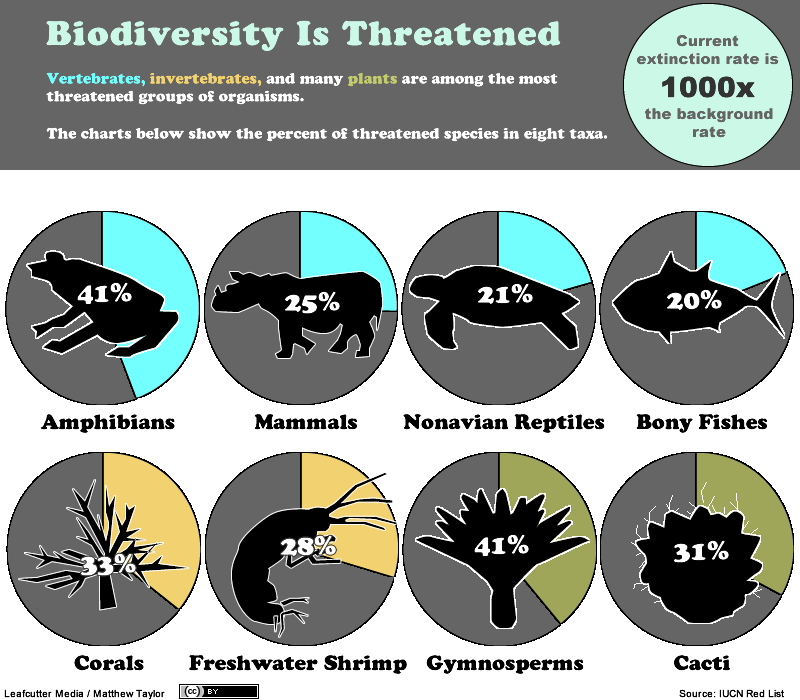
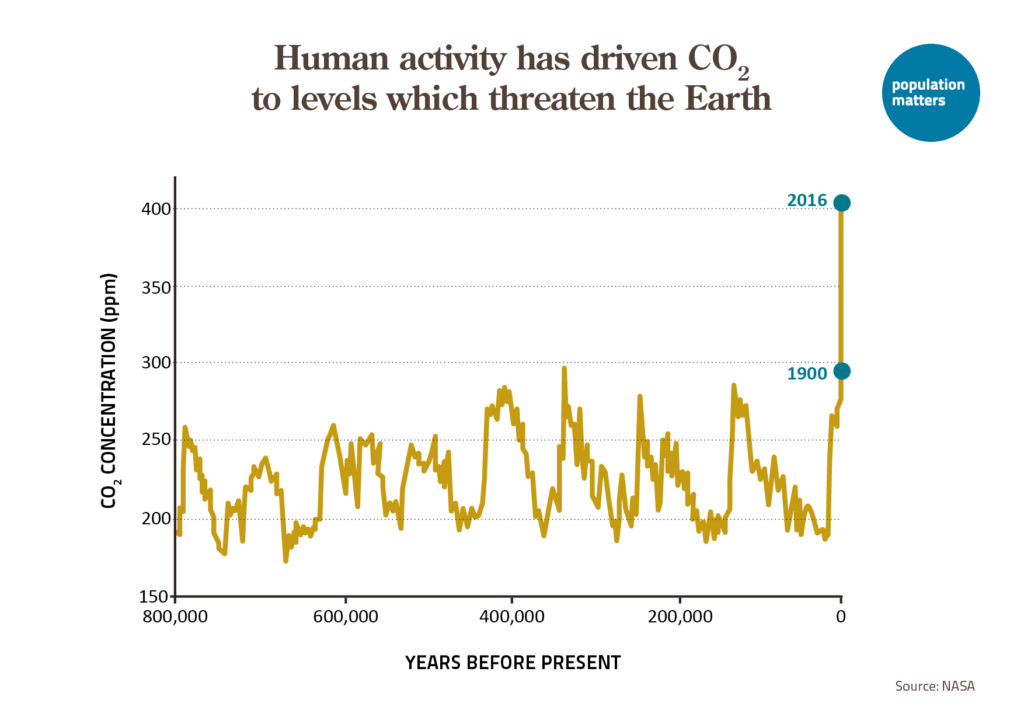
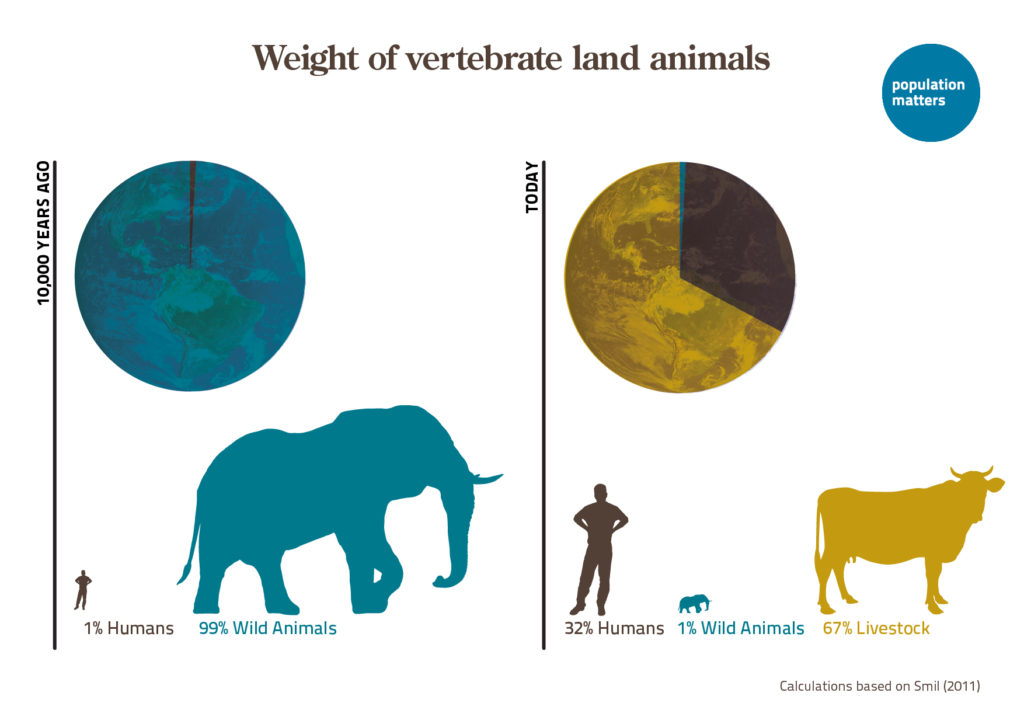
The purpose of a truly democratic ethos is to imagine a successful transition to a new, truly sustainable paradigm for humans and non-humans to end a system consuming unsustainable amounts of energy and the planet’s resources and producing unsustainable quantities of CO2. This system also generates gross worldwide inequality, producing tremendous social injustice by exploiting and destroying thousands of communities and their habitats. This is why, in geological terms, according to the latest stratigraphic evidence, we have entered the unsustainable Anthropocene Epoch, driven by our capitalocentric system of unrelenting consumption.1

Image by Gerd Altmann on Pixabay

Consequently, a successful transition means we must reverse, if it is still possible, or limit the damage we have already inflicted on the planet and end global inequality. Scientists consistently report that to accomplish this, we must not transgress the nine planetary boundaries, which requires radically veering away from our current trajectory. In the last three years, the IPCC Report on Mitigation of Climate Change confirmed that the strongest drivers of CO2 emissions from fossil-fuel combustion in the past decade are GDP per capita and economic and population growth.2 Hence, continuing on a path of growth puts us on a doomed trajectory. So far, “Total net anthropogenic GHG emissions have continued to rise during the period 2010–2019, as have cumulative net CO2 emissions since 1850”.3 Moreover, we must remember that climate change is only one of the nine Earth System Boundaries (ESBs) all living organisms need to reproduce and enjoy sustainable lives. In 2009, climate change, biodiversity loss and the nitrogen cycle boundaries already crossed the safe operating space.4 In the 2023 update, “Seven of the eight globally quantified ESBs have been crossed and at least two local ESBs in much of the world have been crossed, putting human livelihoods for current and future generations at risk”.5 As these studies attest, planetary sustainability has not only been compromised by human activity in what is increasingly called the Capitalocene in geological terms, but it is rapidly getting worse as we cross more ESBs and continue equating progress with growth.6

It follows that no sustainable alternative would allow remaining with the current system of unrelenting growth in consumption. Thus, we must drastically reduce our consumption of energy and all other resources simply because we cannot have a system requiring an infinite consumption of resources on a planet with finite resources. Technological Prometheanism will not overcome the planetary limits to consumption. We cannot change the laws of nature, specifically the Second Law of Thermodynamics or Entropy Law, which is the taproot of economic scarcity. In essence, we cannot order the planet how to behave the way we want. As Georgescu-Roegen explained, “were it not for this law, There would be no economic difference between material goods and Ricardian land. In such an imaginary, purely mechanical world, there would be no true scarcity of energy and materials. A population as large as the space of our globe would allow could live indeed forever.”7

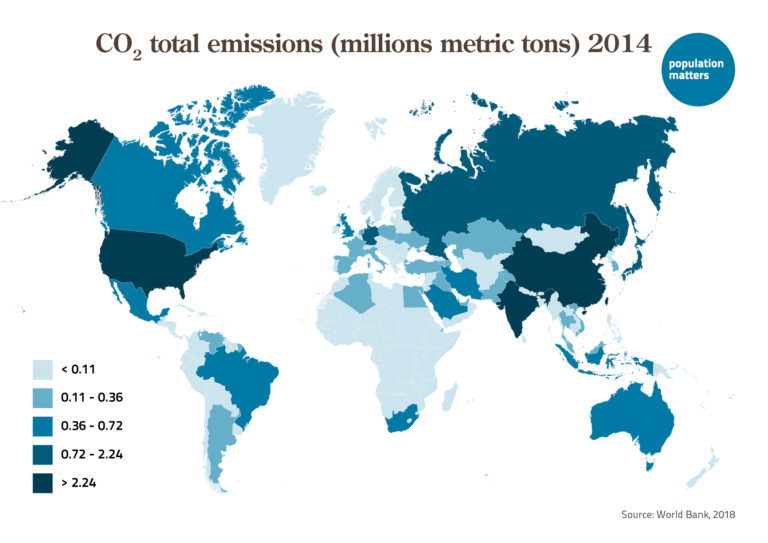
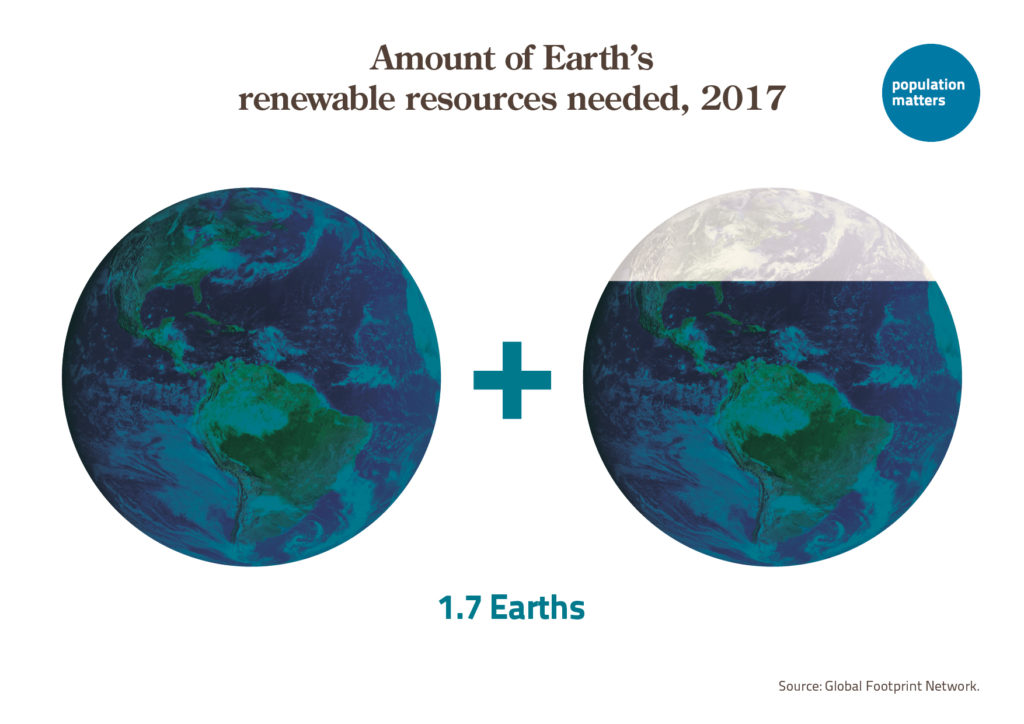
Consequently, the only way to achieve planetary sustainability is not to consume the planet’s resources faster than it needs to replenish them, and we must do it with equity. How can we accomplish this? We do it by transitioning to a safe, just and sustainable paradigm centred on caring for our planet, which I have called Geocratia (“Government by the Earth”).8 Accomplishing this requires rethinking our societal structures to transform cultural values and habits to radically replace capitalism and its consumerism. Thus, affluent sectors must drastically reduce global consumption levels and ecological footprints, for only the wealthy, North and South, are responsible for our planetary crisis. As of 2015, the rich countries of the Global North were collectively responsible for 92% of excess emissions.9 Thus, globally, we will be decreasing our consumption with equity if we lift billions of people from poverty while the wealthy drastically reduce their consumption. If we drastically cut production/consumption, we will drastically cut energy use and our footprint. This is a new quality of well-being design, where we must transition from the current trajectory of consuming the equivalent of 2,4 planets by 2050 to sustainably consuming one planet annually.10

Essentially, to drastically cut our ecological footprint, we must steer towards a degrowth trajectory in production/consumption11 until reaching a stationary or steady-state economy of no growth that is sustainable, just and safe for people and planet.12 Hence, the approach to follow is ecocentric and ecosocialist: degrowth with equity. No other perspective can deliver a safe and just transition to new societal structures, for it is the only one advocating a degrowth trajectory indispensable to cutting production/consumption with equity replacing capitalism, given its inherent unsustainability. A fascinating study shows how democratic ecosocialism is the only approach arguing that sustainability cannot occur without decoupling the economy from growth.13

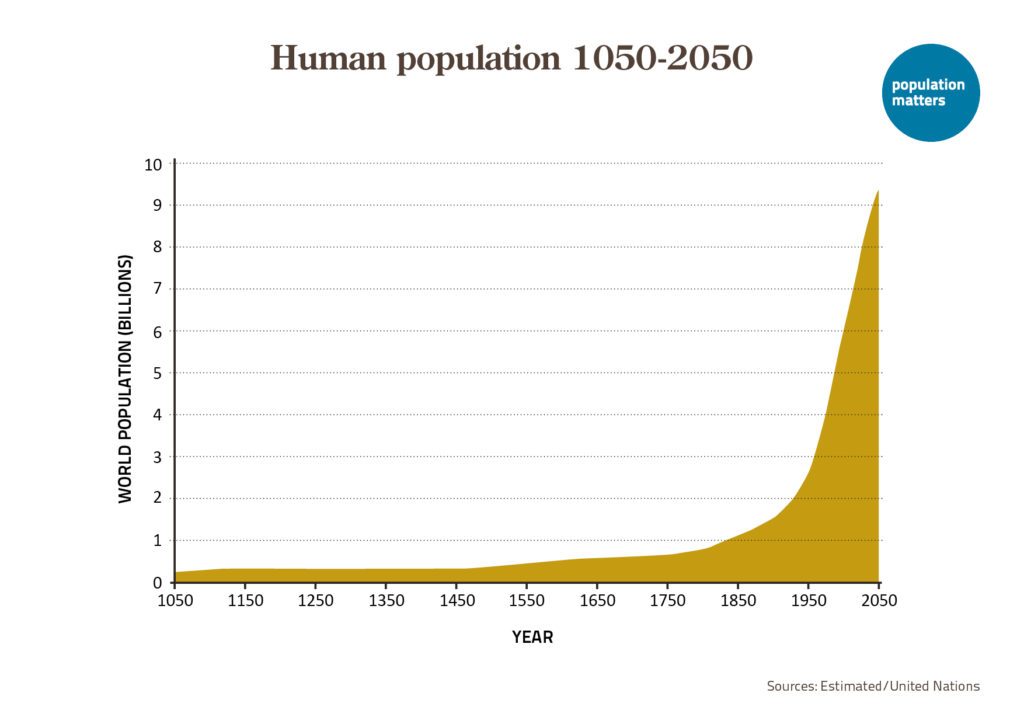
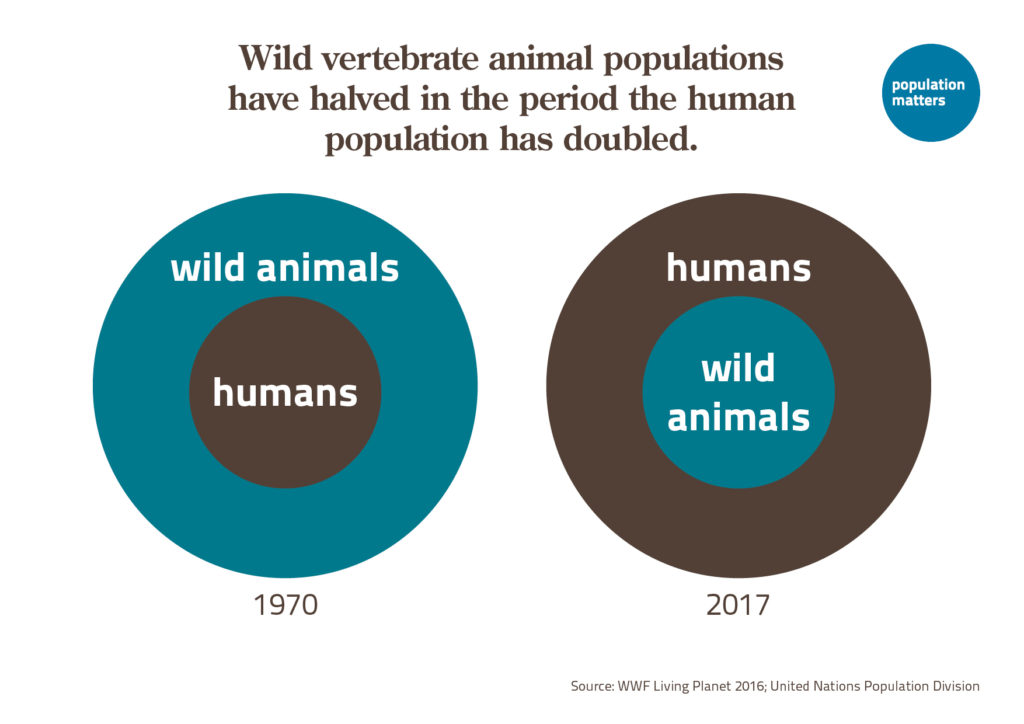
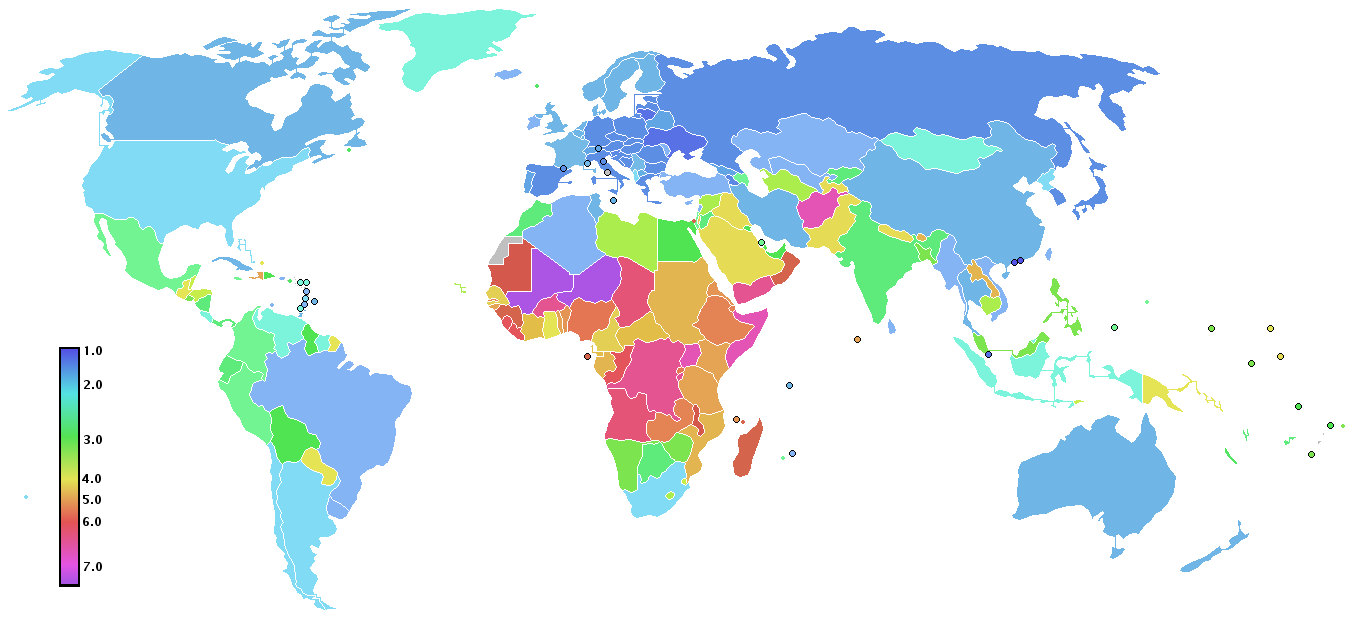
This is where the population variable comes into play, for the size of the world’s population is also a key element to assess in the transition that we must embark on if we want a sustainable future. The IPCC’s mitigation report repeatedly establishes in several chapters that the two drivers of carbon dioxide are economic and population growth.14 Indeed, scientists’ warnings point to population, economic growth, and affluence as drivers of planetary unsustainability.15 It follows that population size is inextricably linked to the ideal of achieving a sustainable and dignified ethos for all living beings. Consequently, the very complex and ethical issue of population must be addressed by asking people to consider that for a successful trajectory of degrowth in energy consumption, decreasing the world’s human population is paramount. Unquestionably, in a genuinely democratic ethos, such as Geocratia, people will always have the right to decide if they want to contribute to our effort of saving our home by having fewer or no children, but they must become aware that reducing population size is a crucial element in our effort.16

One study shows that reducing extreme poverty, which requires increasing ecological footprints, has a negligible impact on global greenhouse emissions.17 While this may be true, transitioning from the current unsustainable capitalistic paradigm does not pursue just ending extreme poverty but ending capitalism’s structures of exploitation and depredation to achieve social and planetary justice, which means transitioning to lift billions of people from all poverty levels to a new ecosocial system where everyone lives frugal but comfortable and enjoyable qualities of life, as in Geocratia. This implies that the ecological footprint of these segments will necessarily increase exponentially.

Chart 1. Hectare consumption per capita 2024 – 2060. Source: Chart plotted by author.

Let’s look at how this would work out. In Geocratia, people will enjoy a universal basic income plus remunerations for their community work and far more personal time for leisure, aesthetics, and communal and cultural activities. People will have free education, healthcare and social services. This lifts billions of dispossessed out of poverty permanently. But, as a result, their consumption levels and ecological footprint will increase substantially, sometimes manifold, from what they were under capitalism. Yet, this is possible because, as illustrated in Chart 1, the affluent would cut their per capita hectare consumption by as much as three-fifths, whilst poor people–Global South and North–would increase it by as much as threefold. A recent study found that the wealthiest 10 per cent of the world’s population was responsible for 52 per cent of the cumulative carbon emissions between 1990 and 2015, depleting the global carbon budget by nearly a third, while the poorest 50 per cent were responsible for just 7 per cent of cumulative emissions, and used just 4 per cent of the available carbon budget.18 Thus, achieving sustainability is possible if we cut consumption with equity. The chart illustrates what we must do to cut our energy production-consumption by at least one-third by 2050 and how this trend might diminish our global consumption while achieving the equity outcome a living remuneration represents by 2060.19 Moreover, research shows we can enjoy life with much less per-capita energy consumption (Milward-Hopkins, J., 2020).20 This is true as long as we end our consumeristic lifestyles.

Nonetheless, even if humankind can achieve a Geocratic paradigm, where billions of people (currently 8 billion) enjoy frugal but comfortable and dignified lives, the planet has finite resources. No matter how efficient and fair the new paradigm is, the notion of unlimited billions of people consuming the earth’s resources frugally is not sustainable. Let’s imagine that, beginning today, miraculously, we cut our consumption and achieve social justice and planetary sustainability. Everybody is happy because the new system finally fulfils all our real needs while consuming less than the planet can replenish in a year. Let’s also imagine that we currently consume only 90% of the planet’s capacity to replenish its resources and that through technological efficiencies, despite the Jevons paradox rebound effect, we reduce our consumption rate to 85% of the planet’s capacity.21 Well, if the human population keeps growing, no matter how fair we distribute all resources and how much we increase our efficiencies, eventually, the planet will not be able to provide all the resources frugal societies across the world would need as they keep growing for the simple reason that the laws of nature make our home, planet Earth, finite. This is an axiomatic fact that cannot be negated. If, on the other hand, we cannot achieve a Geocratic paradigm, our planet will be able to sustain much less than the current population. Capitalism would accelerate and deepen the planetary rift by transgressing its boundaries, with more consumption and depletion of its resources as the affluent segments continue increasing their consumption while the rest continue enduring more deprivation and destitution until we reach our final demise.

Assuming we save our planet, how many billions of people are sustainable? Latouche claims that we crossed the threshold of no sustainability in the 1960s when the world population was three billion, based on the assessment of biomass availability for renewable energies.22 Georgescu-Roegen considered in 1975 that the planet was already overpopulated.23 Three relatively recent works also concluded that two to three billion people might be sustainable globally. However, according to these studies, this would be true only if people made dramatic environmental improvements in existing modes of consumption and production.24 This is a very complex question that needs much more research and reflection to answer it with confidence, but that three recent studies attempt to determine the capacity of the planet to sustain humans under capitalism tells us, all the more so, that only by ending it and transitioning to a Geocratic paradigm can today’s 8 billion be sustainable.

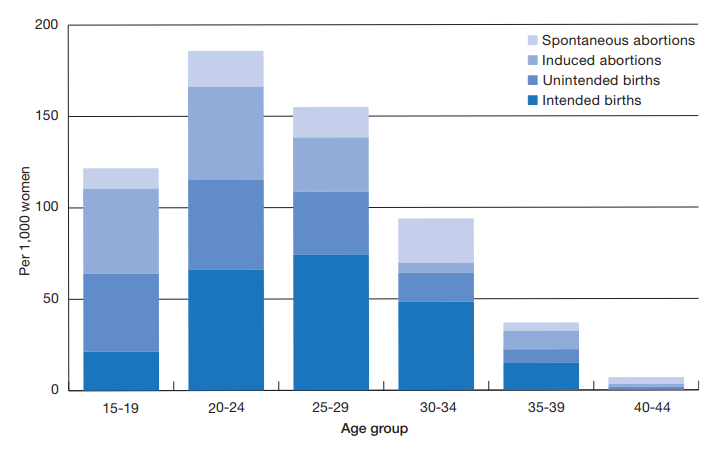
There are also several questions taking us into an ethical conundrum that communities must democratically resolve in our quest for long-term sustainability. How can we take care of the growing mass of elders if we cut the size of the rest? How will we feed the younger and the older segments if they keep growing on a planet with limited resources? How will we address the bioethical issue of our innate right to procreate if the planet cannot physically sustain us? What we know for sure is that no sustainable paradigm is attainable without gradual population reduction. We also know that if consumption decreases dramatically for the affluent- directly responsible for our planetary crisis-and increases meaningfully for the dispossessed, the global human ecological footprint will decrease substantially because the affluent segment generates the vast majority of consumption. Thus, as the first step to imagining what must be done to address our planetary existential crisis, we must internalise these facts if we want to stop the enormous existential risk that we are facing, which is happening much sooner than what scientists predicted. Then, we should reflect on how to organise a global movement to change the system, which is the only way out of our imminent ecological existential risk.

Originally published July, 2024 by the Jus Semper Global Alliance

References

  1. John Bellamy Foster and Brett Clark: “The Capitalinian: The First Geological Age of the Anthropocene” – The Jus Semper Global Alliance, October 2021. ↩︎
  2. Lecocq, F. et al., 2022: Mitigation and development pathways in the near- to mid-term. In IPCC, 2022: Climate Change 2022: Mitigation of Climate Change. Contribution of Working Group III to the Sixth Assessment Report of the Intergovernmental Panel on Climate Change [P.R. Shukla, J. Skea, R. Slade, A. Al Khourdajie, R. van Diemen, D. McCollum, M. Pathak, S. Some, P. Vyas, R. Fradera, M. Belkacemi, A. Hasija, G. Lisboa, S. Luz, J. Malley, (eds.)]. Cambridge University Press, Cambridge, UK and New York, NY, USA. doi: 10.1017/9781009157926.006 ↩︎
  3. IPCC, 2022: Summary for Policymakers [P.R. Shukla et al. In: Climate Change 2022: Mitigation of Climate Change. Contribution of Working Group III to the Sixth Assessment Report of the Intergovernmental Panel on Climate Change [P.R. Shukla et al., Cambridge University Press, Cambridge, UK and New York, NY, USA, page 6. doi: 10.1017/9781009157926.001. ↩︎
  4. Johan Rockström et al: A safe operating space for humanity. Nature 461, 472–475 (2009). https://doi.org/10.1038/461472a ↩︎
  5. Johan Rockström et al: Safe and Just Earth System boundaries. – The Jus Semper Global Alliance, April 2024. ↩︎
  6. Carles Soriano: “Anthropocene, Capitalocene, and Other ’-Cenes,” – The Jus Semper Global Alliance, March 2023. ↩︎
  7. Nicholas Georgescu-Roegen: “Energy and Economic Myths.” Southern Economic Journal 41, no. 3 (1975): 347-81. Accessed April 27, doi:10.2307/1056148. P 353. ↩︎
  8. Álvaro J. de Regil: Transitioning to “Geocratia – ”the People and Planet and Not the Market Paradigm – First Steps — The Jus Semper Global Alliance, May 2020. ↩︎
  9. Jason Hickel: Degrowth Is About Global Justice – The Jus Semper Global Alliance, August 2022. ↩︎
  10. Global Footprint Network, A Time for Change, Annual Report 2008. ↩︎
  11. Jason Hickel: Less is More – How Degrowth Will Save the World (Pinguin Books, 2020). ↩︎
  12. Herman Daly: A Steady-State Economy: Sustainable Development Commission, UK (24 April, 2008). ↩︎
  13. Thomas Wiedmann, Manfred Lenzen, Lorenz T. Keyßer and Julia K. Steinberger: Scientists’ Warning on Affluence — The Jus Semper Global Alliance, December, 2022. ↩︎
  14. IPCC, Climate Change 2022: Mitigation of Climate Change, chapters 1, 2, 3, and 5 ↩︎
  15. Thomas Wiedmann et al: “Scientists’ Warning on Affluence” – The Jus Semper Global Alliance, December 2022. ↩︎
  16. Álvaro J de Regil, “Is Population Crucial for Degrowth?,” Jus Semper Global Alliance, September 2022. See also Philip Cafaro, “Population in the IPCC’s New Mitigation Report,” Jus Semper Global Alliance, December 2022. ↩︎
  17. Philip Wollburg et al: Ending extreme poverty has a negligible impact on global greenhouse gas emissions – Nature 623, 982–986 (2023). https://doi.org/10.1038/s41586-023-06679-0 ↩︎
  18. Oxfam, “Confronting Carbon Inequality: Putting Climate Justice at the Heart of the COVID-19 Recovery,” September 21, 2020, 2. ↩︎
  19. GFN, A Time for Change, Annual Report 2008. ↩︎
  20. Millward-Hopkins J, Steinberger JK, Rao ND, et al. Providing decent living with minimum energy: a global scenario. Global Environmental Change, 65, 2020, 102168. ↩︎
  21. The Jevons Paradox materialises when new technologies increase efficiency and—under a market logic—increase demand due to a rebound in consumption levels. ↩︎
  22. Serge Latouche: Serge Latouche: La apuesta por el decrecimiento, Icaria – Antrazyt 2006, p.129-131. ↩︎
  23. Lénergie et les mythes économiques”, retaken in La Décroissance, quoted by Franck-Dominique Vivien, Le Développement Soutenable, op. quote p. 1O1. ↩︎
  24. Dasgupta P. (2019) Time and the Generations: Population ethics for a diminishing planet. Columbia University Press, New York, NY, USA. Lianos P. and Pseiridis A. (2016) Sustainable welfare and optimum population size. Environmental Development and Sustainability 18: 1679–99. Tucker C. (2019) A Planet of 3 Billion. Atlas Observatory Press, Washington, DC, USA. ↩︎

Published

15 responses to “No sustainable paradigm is attainable without gradual population reduction”

  1. jmalpert Avatar

    Much degrowth is enough?

    1. Álvaro de Regil Avatar

      Degrowth is not an end in itself. It is what we must do in production and consumption until we achieve sustainability, where we would reach a stationary state or steady-state economic ethos, like Herman Daily and other thinkers propose. But all of this must be part of the transition to a new People and Planet, and not the market paradigm that I call Geocratia. Thank you for your contribution.

      1. dit7 Avatar

        My problem is that the global focus is far too diluting leaving us a minority everywhere, in every city and town. We must concentrate if we are to win anywhere, one town at a time, which towns too often do with unit density limits that do nothing for birth rates. City abortion funding saves city school tax, so much so that cities can then fund country abortions as well, all without answering to country voters.
        In this way, my guess is that 10 cities can cover the USA and 25 can cover the world, coordinating via the World Council of Mayors and ignoring state and national governments completely. Think globally act locally.
        https://www.facebook.com/groups/4992336894196490

    2. dit7 Avatar

      We don’t need to answer this question as the limits are not in site, what we need to do now is bring abortion rights to Gaza and Kashmir as to Golan and Western Guyana. And that said the reasons for growth are really military as it is used to breed armies, and the author fails to address this.

  2. stevemckevittda604d1b36 Avatar

    This article is a good example of an all too common situation in our intellectual world: Of some social writers getting themselves lost in their words. I can understand that life may be frustrating for a commentator, with such a person being a wise observer and then having his or her words be of little effective use anywhere, and of “not being listened to”. But … please, remain coherent, with plain talk.

    I was not familiar with the the Jus Semper Global Alliance. The opening sentence “The Jus Semper Global Alliance is dedicated to building a better world based on democracy, sustainability and fairly sharing the world’s wealth.” I offer that the key word “democracy” in this statement should be upgraded to “democratic control of society”.

    The key focus of this group appears to be a desire to help make big corporations more socially accountable globally, in a voluntary manner. This is a fundamentally flawed idea. We need to look at the big basic pieces of our economy. Corporations have their place, a large one, but they are set up to make their money and not to help make a better society. This is spelled out in their documents. So a society must properly control them, in a clear and just manner. We must not become side-tracked. Especially when dealing with the two major issues of
    > overpopulation, and > the increasing use of fossil fuels (promoted by the oil corporations). Big Oil has been increasingly showing its powerful hand, controlling more of the conversation.

    But thank you for your intellectual exercise.

    1. Álvaro de Regil Avatar

      Thank you, Steve, for your critique, which is well taken. However, what was put at the top of this blog is an interpretation by whoever opened this page and not what we advance. I encourage you to visit our portal and our mission and principles page: https://jussemper.org/missionandprinci.html. You will find that we are not naive about corporations being good stewards of social justice. They are antithetical to social justice. If you read the first section refers to “The Living Wages North and South Initiative (TLWNSI), which exposes the enormous unequal exchange in the wage rates paid to workers in the Global South, working in the global supply chains of corporations, relative to the wage rates paid in the Global North for equal work, under the Universal principle of equal pay for equal work of equal value (Article 23 of UN’s Universal Declaration of Human Rights of 1948). Furthermore, in that same section, we state that “Jus Semper believes that in the best case scenario a rather limited reduction in labour exploitation and, thus, social injustice, can be achieved in the current market-centre paradigm, given its completely unsustainable fixation on the reproduction and accumulation of capital. Consequently, we believe that in order to achieve a true sphere of sustainable social justice —where all human rights: social, economic, civil, political and environmental are fully enjoyed by all societies in the world— we must aspire to build a completely different paradigm centred on the welfare of the people and the planet ethos and not on the welfare of the owners of the market-centred system ethos, as it is today. To achieve this, the “Demos” (the People) must work to create a radical transformative tectonic shift to build the new People and Planet paradigm to break the shackles that the current system has imposed to capture most societies in the world.

      Lastly, in complete congruence with the above, our Vision Statement is: “Achieving an ethos of sustainable social justice in the world, where all communities live under truly democratic spheres that provide the full enjoyment of human rights and sustainable living standards worthy of human dignity. Our Mission Statement is: Contribute to the generation of ideas for the transformative vision that would give form to the truly democratic and sustainable People and Planet paradigm. What do we mean by “sustainable social justice” and a “truly democratic ethos”? I would ask you to read the last paragraph on that same page regarding our Principles. You will find that in the People and Planet paradigm that we advance, corporations have no role to play whatsoever. So, please look at this page to get the right impression about Jus Semper.

    2. dit7 Avatar

      I disagree here. Billionaires are the problem and not large cap corporations which can be taken over by middle class investors as a result of progressive personal taxation especially progressive property taxation. So the left is too hostile to corporations and therefore not hostile enough to billionaires, reflected by letting jets off the hook by criticizing pickup trucks.

  3. David Polewka Avatar

    Every species has natural enemies that keep its numbers in check. Artificially extending
    life spans by suppressing communicable diseases is a selfish decision at the expense of
    other creatures, future generations, and the environment. Making selfish decisions at
    the expense of others is the cause of conflict!

    1. PHILIP CAFARO Avatar

      David,

      I think it is reasonable and ethical to take basic health precautions for ourselves and our families. What is unreasonable is to keep scaling up our numbers! We can avoid that by using contraception and limiting ourselves to 1 or 2 children, at most.

      1. David Polewka Avatar

        You can’t assume or pretend that the incidence of autism and all other aberrations
        is the same as it was in times past, when the data from those times is sketchy or
        unavailable. Our artificial stuff is never a done deal until time plays out. Lead paint,
        radium paint, leaded gasoline, asbestos, CFCs, DDT, Thalidomide, etc. etc.

      2. dit7 Avatar

        Car owners can’t even sustain one child as we must learn to choose between them.

  4. David Polewka Avatar

    FROM THE NAYSAYERS’ WEBSITE:
    Episode 1: Overpopulation: The Making of a Myth
    Where did this myth come from? When was humanity supposed to end?
    Table of Contents
    1. Did Malthus really say to kill off the poor?
    2. Malthus thought doctors shouldn’t cure diseases?
    3. Did Paul Ehrlich really say that famines would devastate humanity in the 1970s?
    4. What’s the UNFPA? How do they profit from fear?
    5. No way everyone could fit in Texas …
    6. Where are you getting these numbers?
    7. The world’s population will peak in 30 years? Prove it.
    —————————————–
    1. Did Malthus really say to kill off the poor?
    Yep. In his Essay on the Principle of Population, Malthus calls for increased mortality among the poor:
    All the children born, beyond what would be required to keep up the population to this level, must necessarily perish, unless room be made for them by the deaths of grown persons… To act consistently therefore, we should facilitate, instead of foolishly and vainly endeavoring to impede, the operations of nature in producing this mortality; and if we dread the too frequent visitation of the horrid form of famine, we should sedulously encourage the other forms of destruction, which we compel nature to use. Instead of recommending cleanliness to the poor, we should encourage contrary habits. In our towns we should make the streets narrower, crowd more people into the houses, and court the return of the plague. In the country, we should build our villages near stagnant pools, and particularly encourage settlements in all marshy and unwholesome situations. (Book IV, Chap. V)

    2. Malthus thought doctors shouldn’t cure diseases?
    “But above all, we should reprobate specific remedies for ravaging diseases; and those benevolent, but much mistaken men, who have thought they were doing a service to mankind by projecting schemes for the total extirpation of particular disorders. (Book IV, Chap. V)

    3. Did Paul Ehrlich really say that famines would devastate humanity in the 1970s?
    Yep. In his 1968 work The Population Bomb, Ehrlich stated: “The battle to feed all of humanity is over. In the 1970s the world will undergo famines–hundreds of millions of people will starve to death in spite of any crash programs embarked upon now.”

    4. What’s the UNFPA? How do they profit from fear?
    The United Nations Fund for Population Activities (UNFPA) was founded in 1969, the year after Ehrlich published The Population Bomb. They have been involved in programs with governments around the world who deny their women the right to choose the number and spacing of their children. Their complicit work with the infamous “one-child policy” mandated by the government of the People’s Republic of China, uncovered by an investigation of the U.S. State Dept in 2001, led the U.S. to pull its funding. The wealthy of the West, in their terror of poverty, have given copiously to the UNFPA and its population control programs. Visit Population Research Institute for more info.

    5. No way everyone could fit in Texas …
    According to the U.N. Population Database, the world’s population in 2010 will be 6,908,688,000. The landmass of Texas is 268,820 sq mi (7,494,271,488,000 sq ft). So, divide 7,494,271,488,000 sq ft by 6,908,688,000 people, and you get 1084.76 sq ft/person. That’s approx. a 33′ x 33′ plot of land for every person on the planet, enough space for a town house. Given an average four person family, every family would have a 66′ x 66′ plot of land, which would comfortably provide a single family home and yard — and all of them fit on a landmass the size of Texas. Admittedly, it’d basically be one massive subdivision, but Texas is a tiny portion of the inhabitable Earth. Such an arrangement would leave the entire rest of the world vacant. There’s plenty of space for humanity.

    6. Where are you getting these numbers?
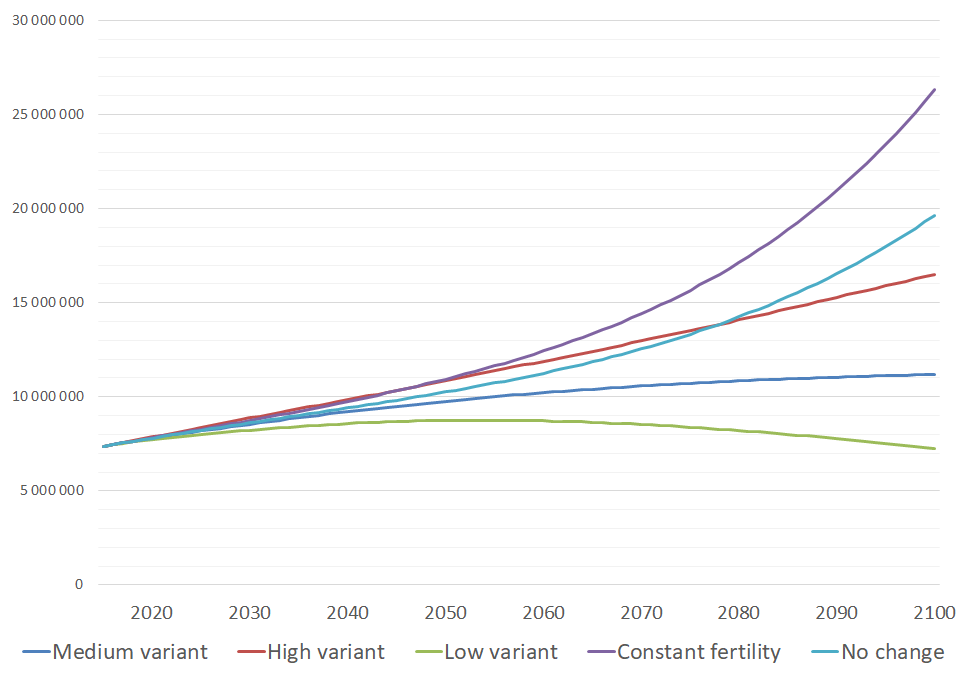
    U.N. Population Database. While they provide Low, Medium, and High Variants, the Low Variant is the one that keeps coming true, so the Low variant numbers are the ones used in this video. Check their online database.

    7. The world’s population will peak in 30 years? Prove it.
    According to the U.N. Population Database, using the historically accurate low variant projection, the Earth’s population will only add another billion people or so over the next 30 years, peaking around 8.02 billion people in the year 2040, and then it will begin to decline. Check their online database.

    https://www.pop.org/episode-1-overpopulation-the-making-of-a-myth/

  5. Álvaro de Regil Avatar

    We can all agree that there are “limits to growth”. We cannot aspire to an unlimited consumption of resources on a planet with finite resources. As humans, as any species, we need to consume the Earth’s resources to live. But we are the only species that fails to live in sync with the planet’s need to replenish the resources we consume timely. We do it unsustainably. The fact that the world’s population cannot be unlimited is a crucial factor to be assessed in the transition that we must embark on if we want a sustainable future. The IPCC 2022 Mitigation Report repeatedly establishes in several chapters that the two drivers of carbon dioxide are economic and population growth. Scientists’ warnings point to population, economic growth, and affluence as drivers of planetary unsustainability. Population size is inextricably linked to the ideal of achieving a sustainable and dignified ethos for all living beings. 

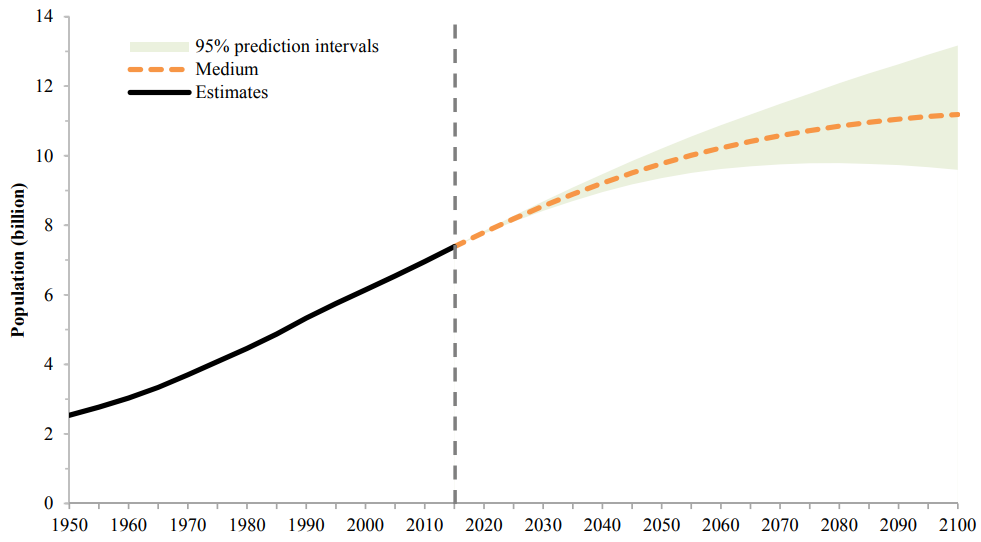
    We cannot base our look at the population factor based on a low, middle, or high variant of the UN’s projections. The UN low variant projection is that if fertility levels were consistently half a child lower than expected in the ‘medium fertility’ projection, the world population would rise only to 8.9 billion in 2050 and decline to 7 billion in 2100. However, UN projections also find that there is a 95% probability that the world population will increase to between 9.4 and 10.1 billion in 2050 and between 9.4 and 12.7 billion in 2100… unless we work to stop this.

    With over 8 billion, we are far from being able to fulfil all the necessities — and human rights — of a vast portion of the world’s human population, with food insecurity standing out. This is mainly because of an economic system based on unrelenting consumption growth under very unequal terms of distribution/sharing, which is also the cause of many social problems. However, even if we replace this system with a fair distribution system and no growth in the consumption of the Earth’s resources, we cannot have an ever-growing population because of our planet’s limits. 

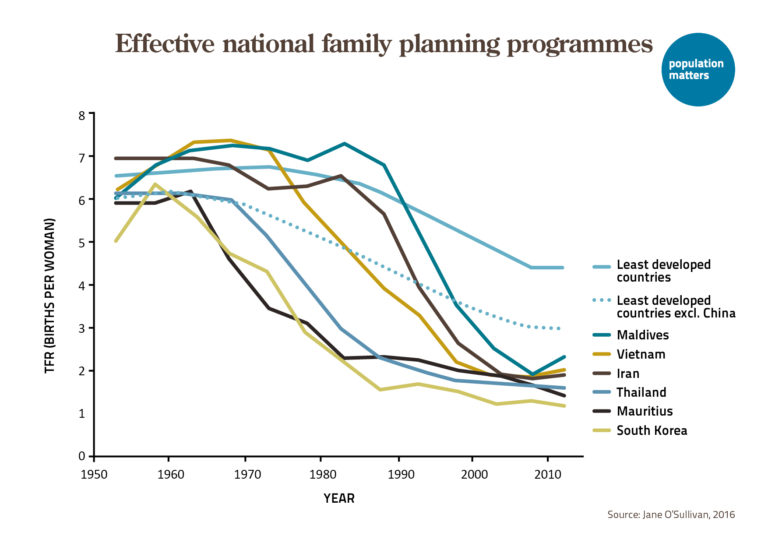
    I want to emphasise a 2023 study on this issue: “Advancing the Welfare of People and the Planet with a Common Agenda for Reproductive Justice, Population, and the Environment” by J. Joseph Speidel and Jane N. O’Sullivan. It explains that “Food insecurity is highly correlated with violent conflict, and both are associated with high population growth. According to the IEP report, “The 40 least peaceful countries will have an additional 1.3 billion people by 2050, accounting for almost half of the world’s population”. Even this disturbing projection assumes a rapid decline in family size. But what if fertility does not decline? In 2011, the United Nations projected future population size based on unchanged fertility and mortality up to the year 2300.”… According to this, “Asia’s population would reach 325 billion in 2300, and Africa’s population would reach 16.2 billion in 2100 and an impossible 3.2 trillion in 2300”. “These long-term projections clarify that eventually, either birth rates will decline through the benefits of family planning and reproductive justice or death rates will rise because of food shortages, disease, political instability, or other problems beyond the capability of developing nations to withstand. https://jussemper.org/Resources/Economic%20Data/Resources/JSpeidelEtAl-AdvancingWelfarePeoplePlanet.pdf

    We cannot aspire to achieve sustainability even if we move to a new paradigm of “fairness in how we share the consumption of the planet’s resources” unless we work to limit population growth. If we share fairly and substantially decrease our per capita generation of CO2 emissions, but the population keeps growing, collapse will occur because the planet cannot sustain billions more people. So we better work on a planned degrowth of consumption and population. 

    1. David Polewka Avatar

      The purpose of natural enemies (death control) is to keep a species numbers in check
      (quantity control), and keep its numbers strong (quality control). In any situation,
      people consider quantity and quality; it’s innate in every creature. You all can stop
      pretending that quality of people doesn’t matter. Everything matters! When we artificially
      extend life spans by suppressing communicable diseases, we are removing death control and
      quality control! I suggest we stop making flu, MMR, and Covid shots, to reduce the average
      life span by a few years.

  6. […] No sustainable paradigm is attainable without gradual population reduction, by Álvaro J. de Regil […]

Leave a Reply

This site uses Akismet to reduce spam. Learn how your comment data is processed.

NOTE: Comments with more than one link will be held in wait and will only become visible on the site after an admin has approved it.

Explore the content and topics covered by TOP, search here

Blog categories

Gallery of infographics – Learn more about overpopulation and environment

Discover more from The Overpopulation Project

Subscribe now to keep reading and get access to the full archive.

Continue reading