Goodbye Paul Ehrlich

We remember a giant of the modern environmental movement, who passed away this past Friday at the age of ninety-three.

by The Overpopulation Project

Paul R. Ehrlich, an American biologist, died on 13 March. Ehrlich was one of the most influential environmental thinkers of the past half century. He built his early scientific reputation studying the ecology and evolution of butterflies, conducting pioneering work on species interactions, host plants and population dynamics. This research helped shape modern ecological thinking and was reflected in early publications such as Butterflies and Plants: A Study in Coevolution. In the 1980s, he helped co-found the discipline of conservation biology. Throughout his career, he taught at Stanford University, serving for most of that time as Bing Professor of Population Studies.

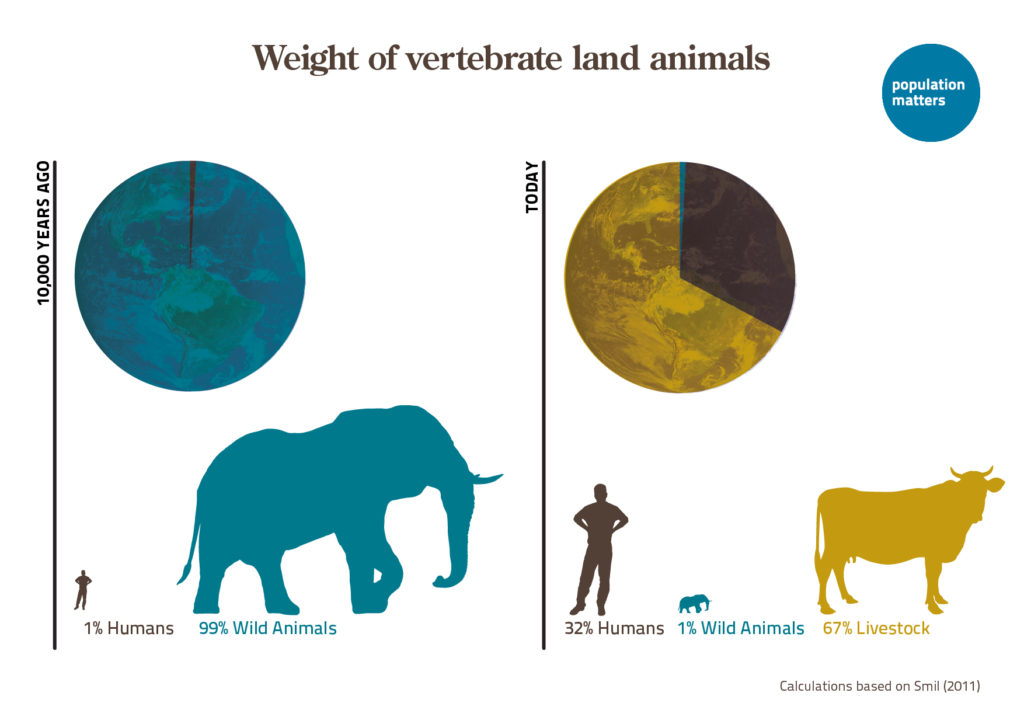
Over time, however, Ehrlich became best known for bringing scientific attention to the global consequences of rapid human population growth and environmental degradation. He helped introduce broad audiences to the idea that humanity’s demands on the planet were exceeding Earth’s ecological limits. Worldwide recognition began with his 1968 book The Population Bomb, co-authored with his wife Anne, which warned that continuing population growth could outstrip food supplies and strain ecosystems. Although some of the book’s specific predictions proved too pessimistic, it powerfully shaped public discussion about population and environmental limits.

Ehrlich argued that technological progress alone could not indefinitely offset the pressures created by growing human numbers, rising consumption and expanding economic activity. This message really took off after he started appearing on television on The Tonight Show. Its host, Johnny Carson, said that Ehrlich’s initial appearance elicited more mail than any previous guest. It led to many subsequent appearances, where Ehrlich’s commanding presence, booming voice, direct manner of speaking and powerful metaphors made him a star interviewee. In fact, he was amused to recount, he appeared on television so often that he was obliged to join the Screen Actors Guild.

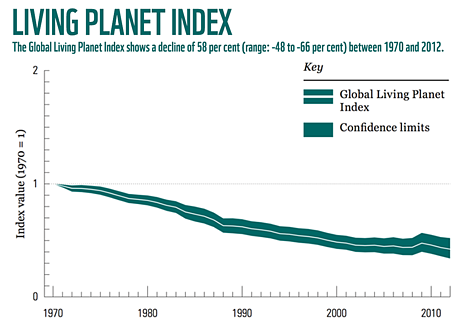
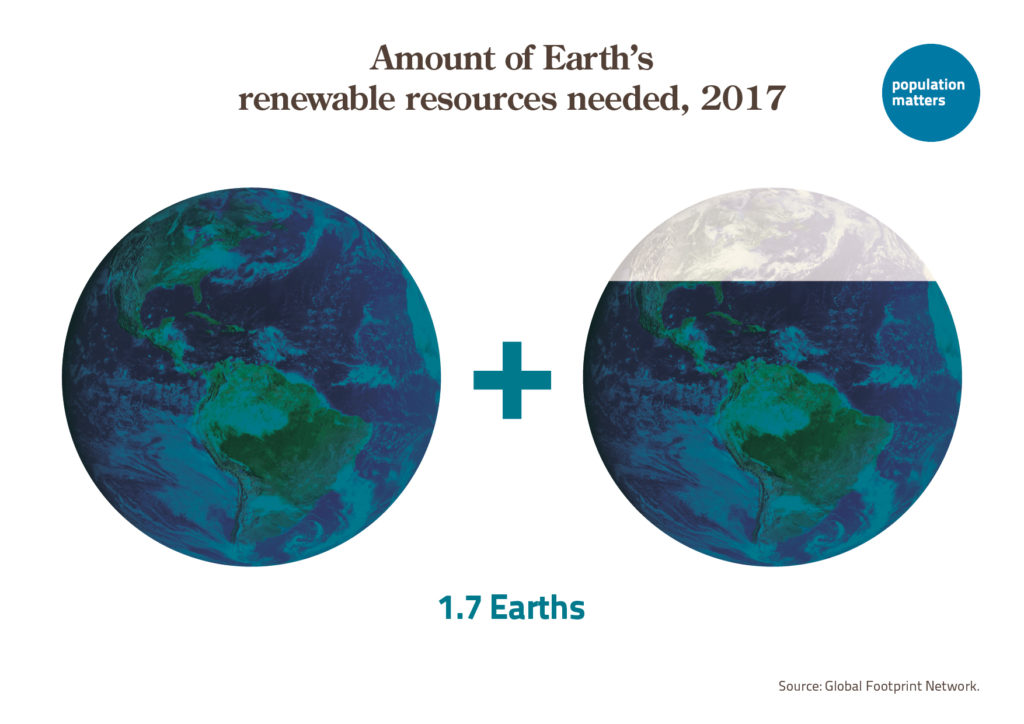
Central to Ehrlich’s thinking is the idea of ecological overshoot — the condition in which humanity’s resource use and waste production exceed the planet’s capacity to regenerate resources and absorb impacts. Together with his collaborator John Holdren (later Barack Obama’s chief science advisor), Ehrlich clarified the central role of population growth and consumption growth for environmental impact in the journal Science in 1971, and later popularized the influential IPAT equation: Environmental Impacts = Population × Affluence × Technology. Through this lens, Ehrlich and Holdren emphasized that environmental crises — from food scarcity to climate change, biodiversity loss to soil degradation — are interconnected symptoms of humanity pushing our demands beyond ecological limits.

Over the decades, Ehrlich continued to refine his thinking and apply it to humanity’s evolving environmental circumstances. He was an engaging raconteur and always generous with his time, accepting thousands of invitations to speak at events, films and podcasts. including this interview with Phil Cafaro from November, 2020:

Paul Ehrlich was interviewed by Philip Cafaro on the first episode of The Population Factor.

An important dimension of Ehrlich’s environmental philosophy is its non-anthropocentrism. Unlike mainstream environmental approaches that treat nature primarily as a resource for human use, Ehrlich consistently argued that other species also deserve space and resources to flourish. He emphasized that humans share the planet with millions of other beautiful and unique species that play irreplaceable roles within their ecosystems. For Ehrlich, addressing ecological overshoot means not only safeguarding human well-being but also the well-being of birds, bees – and butterflies. His love of nature comes through particularly well in this 2022 interview with Nandita Bajaj and Alan Ware on The Overpopulation Podcast:

The scope and scale of Paul Ehrlich’s many contributions are incredible. In recent decades, he continued to play a prominent role in environmental scholarship and advocacy. Working frequently with his wife Anne and other collaborators, he published influential research articles and books on biodiversity loss, ecosystem services, and of course overpopulation. In later years he helped found the Millennium Alliance for Humanity and the Biosphere (MAHB), an international initiative aimed at mobilizing scientists, policymakers and citizens to confront the problem of global ecological overshoot. Through this work, Ehrlich continued to emphasize that reducing the human population, reducing excessive consumption and protecting large areas of habitat are essential steps if humanity is to preserve a biologically rich and habitable Earth.

He has now passed the baton and we must carry it forward. We can only strive to do so with as much grace and integrity as this great man.

Published

20 responses to “Goodbye Paul Ehrlich”

  1. ROY H BECK Avatar

    A wonderful writeup. Thank you. Paul’s life basically spanned the whole history of the modern population-awareness era. I first met him as a cub newspaper reporter covering the nascent environmental movement in the 1960s. How wonderful it was to have so many tens of millions of people really paying attention. Unfortunately, it feels like population awareness has gone back to being the rather-obscure pre-Ehrlich province of specialists with little attention from the mass media and, thus, the public. The Overpopulation Project is one of the few (and perhaps most able) Keepers Of The Flame until political, media, scientific, and NGO leaders re-ignite the widespread attention that Paul’s concerns continue to demand.
  2. Kell Avatar

    Paul reminded us “it doesn’t need to be that way” -stupids!

  3. Mark Tang Avatar

    He opened my eyes at an early age for which I am grateful. Unfortunately, his belief in rationality appears to have been an overestimation of our present human evolutionary state. The level of destruction, man’s fascination with constructed ‘drama’, and video game level distractions are what we got now partially as a psychological result of the overshoot dilemma.

    1. Philip Cafaro Avatar

      Actually Paul was fascinated by the limits of human rationality. In his later years he talked about a better understanding of human psychology as one key to creating sustainable societies, even hoped that could be a focus of his MAHB project.

      1. gaiabaracetti Avatar

        “Indigenous” traditional societies aren’t what we would call “rational”, by our standards, but they are generally more sustainable than expansionist industrial societies. Rationality is way overrated as a motivator of human behaviour. If you have links to this later work, it’d be interesting to read it!

  4. Walnuts Avatar

    Along with the hills outside of Portland OR starting to give way to subdivisions, and the clear-cuts popping up along the highways, Paul and Anne Ehrlich’s book brought me to the awareness of human overpopulation as a child. A revolting development that one cannot unsee. I have been happily childfree for 65 years and am grateful for the diversity of life that still remains. While it is so unpleasant to see the naked emperor, I could never leave the company of the undershoot community.

    1. Philip Cafaro Avatar

      Think of how many people can say Paul Ehrlich was key to their environmental awakening. A great man and a great lover of the natural world!

  5. Jack Avatar

    I remember reading “The Population Bomb” and felt it was over the top. Things were, seemingly, starting to change for the better. Then came the UN conference on overpopulation in Cairo. I was glued to NPR. Later I joined one of the more active ZPG groups (Seattle) and joined the board. The group had lots of activities and created a special kiosk for our local zoo (it remained there for years). Unfortunately, some corporate group offered ZPG and the Sierra Club $100 million with the condition we change the net population growth formula from Population growth (in developed countries) = births + immigration – deaths. Many of the ZPG group boards (as did the Seattle chapter group) split up. The Sierra club eventually removed itself from population issues.

  6. Philip Cafaro Avatar

    Another nice remembrance of Paul Ehrlich comes from Sandy Irvine. It includes lots of useful links to writings of Paul and about Paul. Here it is:

    The sad news came today of the death of biologist Paul Ehrlich ( https://mahb.stanford.edu/blog/tributes-to-paul-r-ehrlich/ ). He had been one of the greatest true friends of the Earth in the last few decades. He also showed that there was another ‘America’, very different from the likes of, say, Trump or Musk.

    One of my treasured mementos is a friendly communication I received from Ehrlich. I had been involved in efforts to challenge the utter nonsense being spouted by the then Green Party deputy leader (2013). The latter had claimed that “the Earth could comfortably accommodate twice the current population” and, if need be, we could just get rid of “non-productive trees” to produce more food. It was a symptom how far ‘de-greening’ was harming the Green Party back then.

    Ehrlich has bequeathed a rich treasure trove of great writing on the planetary predicament. In it, he exposed the fantasies and falsities of assorted cornucopian dreamers, ‘hopium’ pushers, snake oil sellers of assorted ‘technofixes’ and other deluded folk. He was prepared to cross swords with popular but misguided pundits such as Hans Rosling, a prime ‘good news’ vendor ( https://mahb.stanford.edu/blog/a-confused-statistician/

    He also addressed the tunnel vision of certain academic disciplines and the consequent failure to see the big picture (e.g. https://www.jstor.org/stable/25434660 ). He saw how wrong it was to reduce everything to economics and see things just in terms of economic redistribution. He rightly stressed the deeper cultural crisis ( https://mahb.stanford.edu/library-item/the-culture-gap-and-its-needed-closures/ ), though, perhaps, he did not fully artiuculate the ‘ecocentric’ ethic we need.

    Ehrlich, often with a small group of colleagues, addressed a whole range of issues. Thus, pre-Covid, there was this prescient piece: https://www.annualreviews.org/content/journals/10.1146/annurev.energy.21.1.125 He tirelessly stressed that the destruction of biodiversity and related loss of related ecosystem ‘services’ was being dangerously ignored e.g. https://academic.oup.com/bioscience/article-abstract/33/4/248/232902 . He certainly pulled no punches about the general threat e.g. https://royalsocietypublishing.org/rspb/article-abstract/280/1754/20122845/74569/Can-a-collapse-of-global-civilization-be-avoided?redirectedFrom=fulltext

    Recent research has vindicated Ehrlich e.g. https://www.pik-potsdam.de/en/news/latest-news/seven-of-nine-planetary-boundaries-now-breached-2013-ocean-acidification-joins-the-danger-zone ; https://www.theguardian.com/environment/2026/mar/06/humanity-heating-planet-faster-than-ever-before-study-finds and https://www.theguardian.com/environment/2026/jan/20/era-of-global-water-bankruptcy-is-here-un-report-says . The UK is no safe haven e.g. https://www.theguardian.com/environment/2026/jan/25/the-looming-risk-of-food-shortages-and-anarchy-in-the-uk

    Ehrlich was widely denounced, largely because of his book ‘The Population Bomb’ (1968). It is true that he was somewhat cavalier in his predictions of famines on the immediate horizon. He failed to make sufficient allowance for the impact of high-yielded hybrid plants in the short term. Yet, as Norman Borlaug, ‘father’ of the Green Revolution, himself admitted, this was but a temporary fix, one with unsustainable needs in terms of resource inputs and equally unsustainable side-effects. Borlaug too recognised the threat from overpopulation (see his Nobel Prize speech).

    In the longer term, Ehrlich has again been vindicated ( https://mahb.stanford.edu/wp-content/uploads/2015/01/MAHBBlog_PopulationRedux_PEhrlich_Jan2015.pdf ). He further anticipated the complacent argument that fertility rates are falling so there is no need to worry ( https://www.researchgate.net/publication/257087803_Enough_already ) Overall, Ehrlich rightly argued that human number count. Population is indeed the multiplier of all else ( https://overpopulation-project.com )

    Yet his critics routinely ignore the fact that Ehrlich continuously stressed the multiplicative interaction of human numbers with the two other key drivers of human impacts, namely per capita consumption and the choice of this or that technology ( https://mahb.stanford.edu/blog/review-anthrozoology/ and https://e360.yale.edu/features/too_many_people_too_much_consumption . For that reason, Ehrlich called the USA, not just, say India or China, one of the most overpopulated countries in the world ( https://pubmed.ncbi.nlm.nih.gov/12178975/#:~:text=Abstract,

    Another line of attack on Ehrlich was that he ignored the role of inequality. This was another red herring (on the same moronic level of attacking him for being a ‘Neo-Malthusian”: https://www.academia.edu/13387314/Malthus_and_Modern_Times ) If his critics bothered to read books such as ‘How to be a Survivor’ ( https://archive.org/details/bwb_P8-ATU-533 ), they would find a big section on what it calls the “steerage”. The book makes perfectly clear that, on ‘Spaceship Earth’, the cabins range from the luxurious to the desperately poor. Ehrlich stood for an “unprecedented redistribution of wealth”. He also recognised how “the rich … run the global system”, calling their Davos summits “world destroyer’ meetings”. It is not the language of someone who ignored inequality and brute power.

    His critics also cite the bet he and his associates lost with cornucopian economist Julian Simon regarding the future cost of certain metals. Ehrlich seems to have made the mistake of assuming that prices just follow geology (i.e. the increasing scarcity of intrinsically finite resources). He made insufficient allowance for, say, the effects of economic downturns, government interventions, stock market movements, changing consumer preferences, and short-term effects of better mining technology and other such improvements. But the longer term trend is as Ehrlich argued ( https://assets.booklocker.com/pdfs/10605s.pdf and https://richardheinberg.com/museletter-356-the-final-doubling )

    Moreover, it is not just resource availability and particular prices at any moment in time but, rather, the side effects of production and consumption, whose unsustainable costs are routinely not included in the prices consumers are charged. Many of Ehrlich’s critics seem unaware that there were actually two bets but Simon ducked out of the second. Ehrlich had rightly shifted the proposed wager to those wider impacts and, as references above evidence, he was spot on about a deteriorating state of the planet. The real story is told here: https://www.earthisland.org/journal/index.php/magazine/entry/the_vindication_of_a_public_scholar/ The affair is also discussed: https://islandpress.org/books/betrayal-science-and-reason#desc (this is the Ehrlich book I’d recommend if I had to pick just one).

    Some of Ehrlich’s best writings were co-authored with his wife Anne. I had the privilege of hearting her speak in Newcastle (1984?) on the threat from a ‘nuclear winter’ after a nuclear war. She was particularly cogent and forceful. Sadly, she too was spot on.

    1. gaiabaracetti Avatar

      This comment should be its own article! I think that Ehrlich deserves it and readers would appreciate.
      Famines are a tricky thing to scare people with, because they demonstrably occurred at much much lower population densities than we have today. New high-yielding varieties are only part of the story. Famines are mostly about one or more bad years combined with other factors such as societal breakdown, the impossibility of trade, bad distribution of resources and sometimes deliberate starvation as a policy (see Gaza now, but there’s several historical examples – the Holodomor, how food was being exported out of Ireland even during the potato famine…). I’m currently studying 16th century Friuli (NE Italy) and people were literally dropping dead on the streets from starvation, but the population was about a tenth of what it is today and the land was much wilder. It was a time of war, and nobody cared enough to bring people food from somewhere else. Now we tend to do that, and people starve almost exclusively when someone wants them to starve.
      Famine shouldn’t be how we measure overpopulation, for a number of reasons, maybe worth a deep dive on this blog one day.

      1. Philip Cafaro Avatar

        Paul’s gloomy predictions of starvation helped garner focus on population issues. But as you say, the factors driving actual famines are more complicated than sheer numbers, and when the predictions didn’t come true on schedule he lost some credibility. The irony is that he talked about how population increase drives many environmental problems, and there he seems to have been prescient (climate change? mass species extinction? freshwater availability?). But you wouldn’t know it from the mainstream discussions of these problems.

    2. Richard Grossman Avatar

      Thanks, Phil, for all this information. I sat next to Anne Ehrlich at a meeting in DC about a dozen years ago. She sat quietly in the room full of movers and shakers, but when she spoke quietly to me, I had the sense that she was the source of a lot of Paul’s wisdom. Also, I am pretty sure that she did much of the writing that carried his name, especially The Population Bomb.

  7. Kelvin John Thomson Avatar

    Paul was a towering figure who made an unparallelled contribution to the population debate. I hope his death received some attention in the US; it passed un-noticed and unremarked in Australia, which seems a far cry from the observation that in his earlier years he appeared on TV so often he had to join the Screen Actors Guild.

    1. Philip Cafaro Avatar

      A surprisingly small story here in the U.S. The obit in the New York Times was pathetic, hardly suited to one of our leading scientists for the past half century and a founder of the modern environmental movement.

      1. gaiabaracetti Avatar

        As a general rule, the New York Times doesn’t deserve the readership it has. I’ve noticed it’s been extremely dishonest, lately at least.
        But other outlets are no better in this specific respect; I think there was nothing on the Guardian, for example.

  8. False Progress Avatar

    This is a sad thing (hope his wife is OK) since he had so much energy until the end, and we may not see anyone else like him as the public face of overshoot-warnings. Biologists tend to be “boring” in demeanor and his rare persona got people thinking. But people like Hagens & Martenson are doing a good job putting these issues together in a layman’s format. Media is just overly crowded now. Ehrlich was in an ideal position early on.

    As you see from comments on the linked 1980 Carson show, Ehrlich tended to rattle off the gloomiest possible dates for oil depletion, etc. (often technically wrong) but his core logic of limits was accurate. It’s too bad he gave anti-environmentalists fodder with hasty prediction dates, which they eagerly use to claim he was “wrong about EVERYTHING.” His writings are a lot more contextual. TV tends to bring out showmanship more than it ought to.

    That’s a bug in his legacy, but thinkers don’t need to be reminded that we’ve been smothering nature for too long, and burning finite oil as if it’s income. The peaking of the U.S. Permian basin as soon as 2027 (per oil CEOs themselves) ought to be making headlines, especially if this Iran debacle lasts much longer. Peak Oil in the global market could mean the quick end of economic growth, and feeble, sprawling “renewables” (or even a serious nuclear ramp-up) won’t do enough to prevent transportation crises. Oil’s vital use in agriculture is the extra blow.

    The trend toward entrenched homelessness should be seriously considered as an overpopulation symptom. We see too many people vying for too few (well paying) jobs and this was years before A.I. posed an additional threat to workers.

    1. David Polewka Avatar

      They are still spelling Paul’s surname Erlich, even after I asked them why
      they don’t use the correct spellling:

      https://www.sierraclub.org/washington/blog/2020/01/overpopulation-myth-and-its-dangerous-connotations

      1. False Progress Avatar

        If they’d spelled Ehrlich as “Err-lich” it would be an obvious dig at him, but it’s a strange typo to repeat, anyhow. Same person writing it in various cases?

        The following quote from https://www.sierraclub.org/sierra-club-and-population-issues is aggressively ignorant. It reads like an older Catholic church spiel merged with militant wokeness.

        “The Sierra Club rejects any and all policies, programs, and activities that promote or condone coercion or targets to reduce population. This includes policies and positions made in the name of preventing “overpopulation” by ideas and means that include, but are not limited to zero-growth, population stabilization, family planning as climate mitigation, or promoting women’s empowerment or girls’ education as an indirect means to limit population growth.”

        That policy page goes on to frame most of their stance on who’s emitting the most CO2, not damage to nature in general, like all the poaching and bush meat eating in overpopulated Africa. I’m glad I never contributed to them.

  9. Oliver D. Smith Avatar

    RIP Paul Ehrlich. I would be interested in seeing a compendium of papers by different writers on overpopulation as a tribute.

  10. […] He made more than 20 appearances on The Tonight Show—so many, in fact, that he was required to join the Screen Actors Guild. (Here’s a video of Ehrlich with Johnny Carson in […]

Leave a Reply

This site uses Akismet to reduce spam. Learn how your comment data is processed.

NOTE: Comments with more than one link will be held in wait and will only become visible on the site after an admin has approved it.

Explore the content and topics covered by TOP, search here

Blog categories
Gallery of infographics – Learn more about overpopulation and environment

Discover more from The Overpopulation Project

Subscribe now to keep reading and get access to the full archive.

Continue reading