UN World Population Day 2024 focuses on anything but world population

This year for World Population Day, the United Nations champions data collection, because ‘everyone counts’.  What they choose not to measure is more telling.

by Jane O’Sullivan

This World Population Day, we see the UNFPA celebrating 30 years of the International Conference on Population and Development (ICPD) Programme of Action. Yes, it’s been 30 years since that fateful conference in Cairo, when a welcome focus on women’s reproductive rights and the quality of health services turned out to be a Trojan horse for the population taboo, defunding the very family planning programs that were elevating women’s rights and freedoms.

According to the UN, World Population Day is celebrated annually on 11 July “to enhance awareness of population issues, including their relations to the environment and development.” Only they don’t anymore. They focus on the individual rights of women to breed or not breed when they choose. Not their rights to food and shelter and a homeland not so overwhelmed with increasing numbers it is incapable of providing essential services and maintaining civil order. Not the rights of their children to avoid being dispossessed by more siblings. The link between ‘population issues’ and either environment or development is denounced.

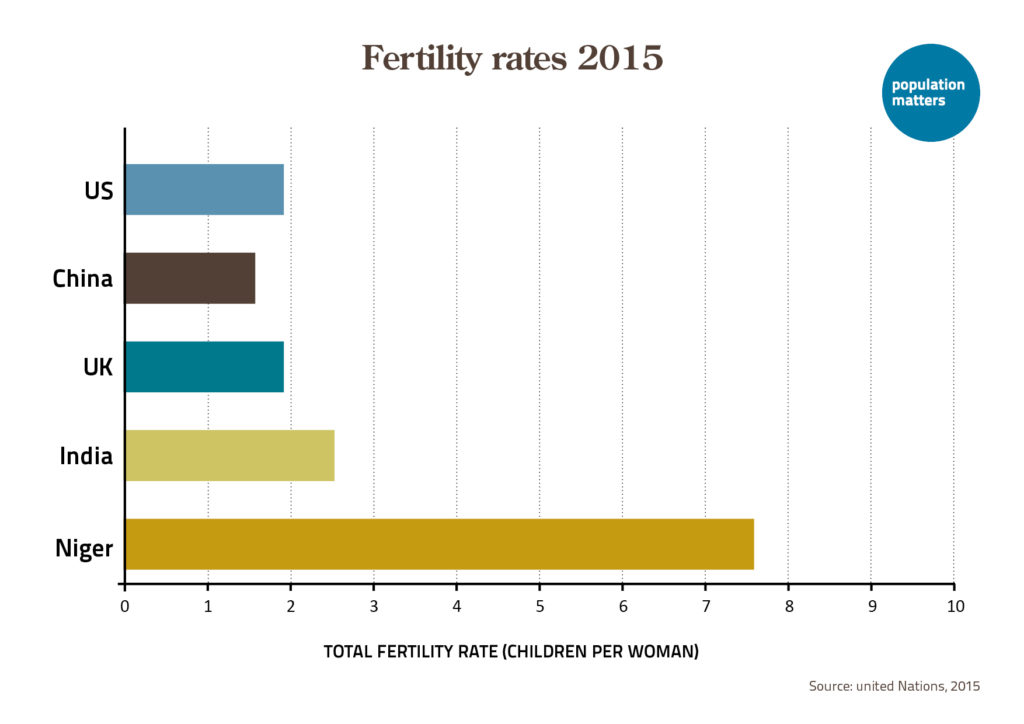
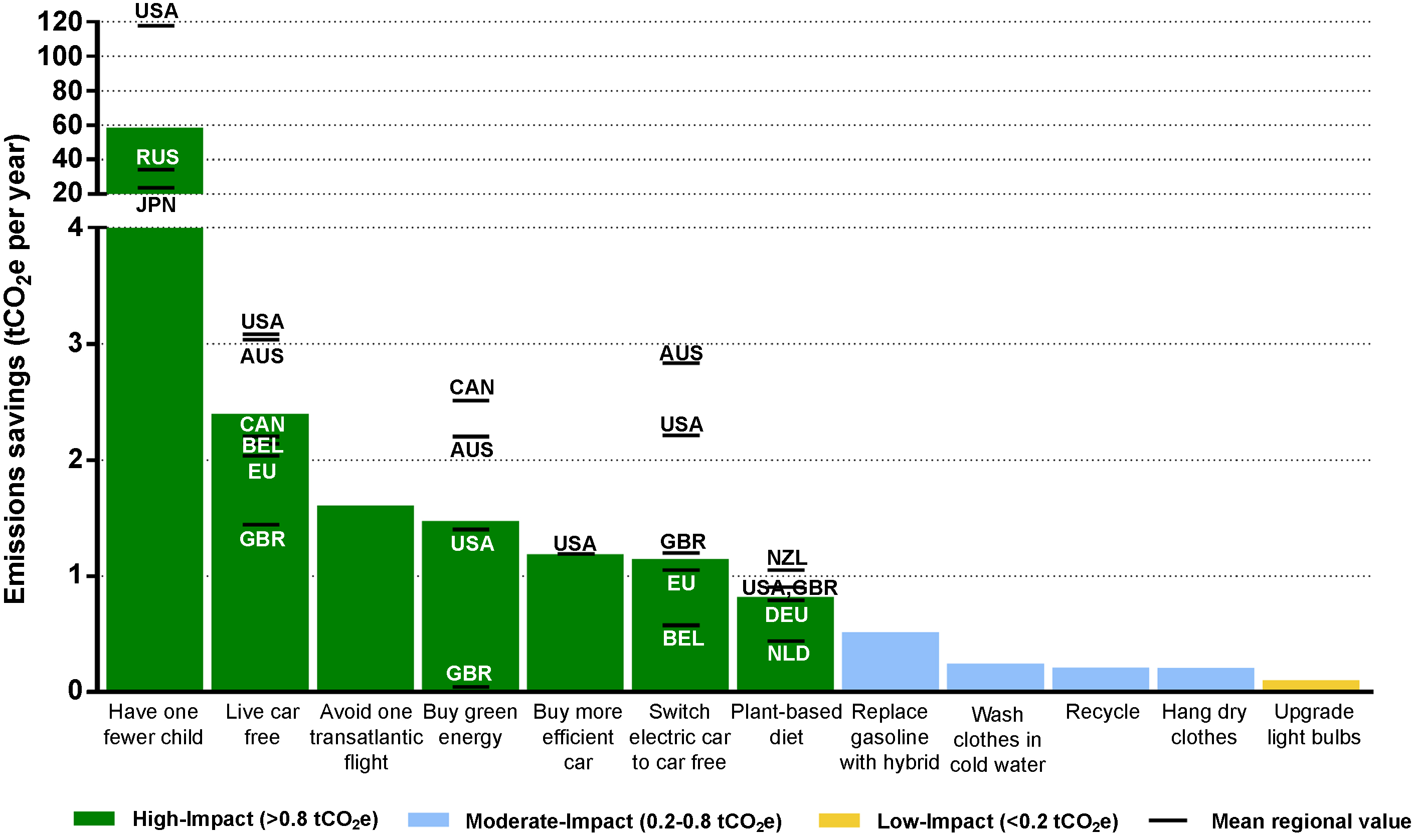
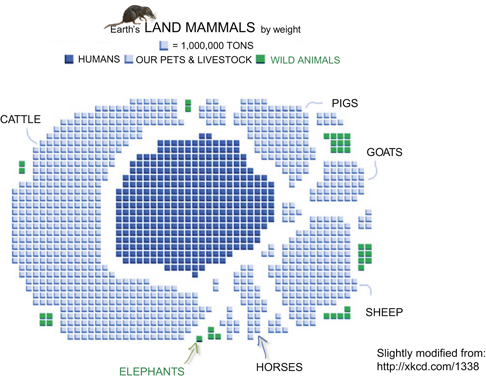
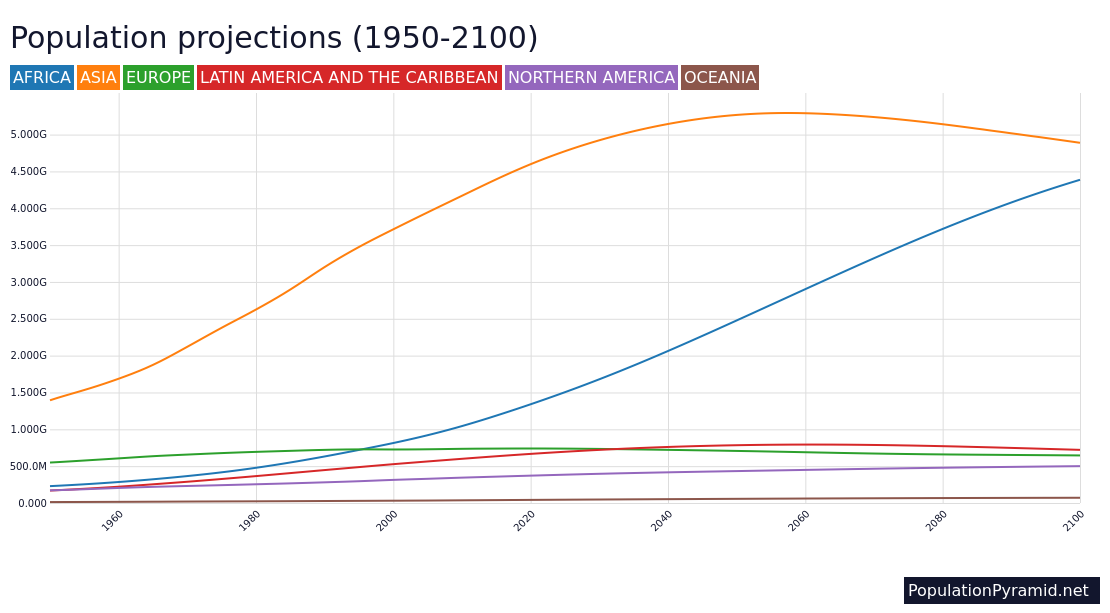
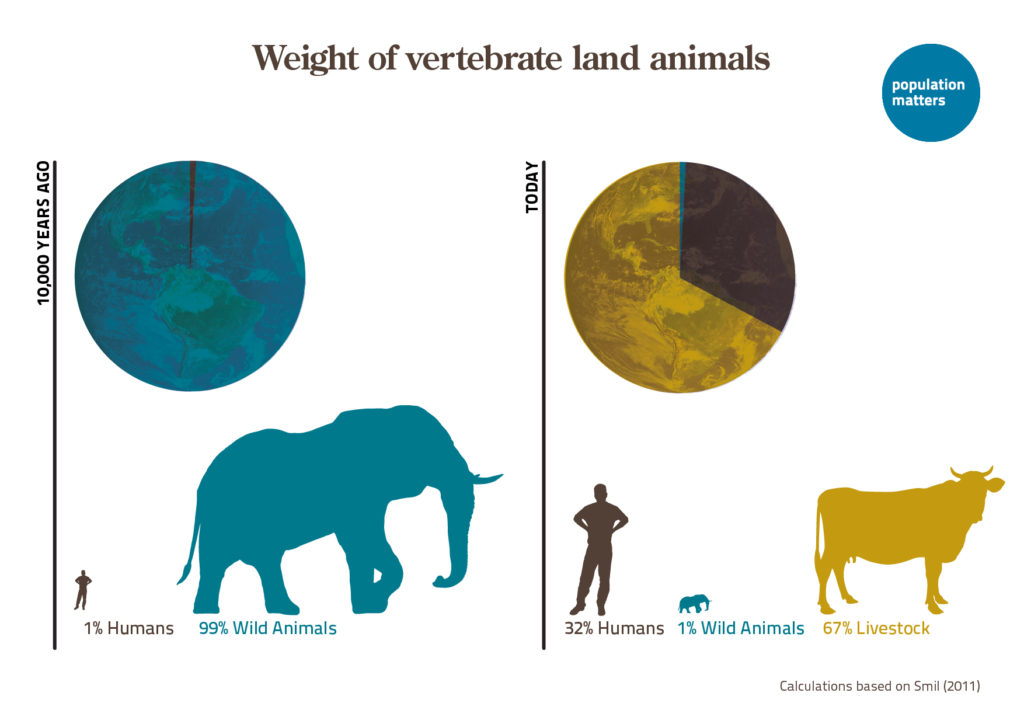
Graphic by Lauren Manning – Flickr

The more painfully the symptoms of demographic entrapment manifest themselves, in the increasingly interlinked metacrisis of environmental and social strains, the more ardently their link with population growth is denounced. We can always blame tyrants and terrorists for violent conflicts, and climate change for food and water shortages.

A recent study by Kompas and co-workers on the impacts of climate change on irrigated agriculture illustrates this capacity to squeeze around the elephant in the room with averted eyes. Their data clearly showed that food insecurity would escalate in the places with high population growth, not in the places where impacts of climate change would be most severe (Figures 1 and 2). Indeed, population decline would negate the climate change impacts in countries like China. Yet population growth was mentioned only incidentally.

Figure 1: Regional food production reduction from irrigated agriculture due to heat stress and water stress in 2050 relative to 2020 (% ranges)

Figure 2: Persons with severe food insecurity by region in 2050 relative to 2020 (% population range)

Source: Kompas et al. (2024) Global impacts of heat and water stress on food production and severe food insecurity. Nature Scientific Reports 14:14398. https://doi.org/10.1038/s41598-024-65274-z

To point out the connection between population growth and food insecurity is not to deny the impacts of climate change. Similarly, to point out the well-established connection between population growth and violent conflicts is not to deny the interference of Saudi Arabia in Yemen or petro-politics in Syria. Human societies are complex systems with many concurrent dynamics. Nevertheless, they say we manage what we measure, and over the past 30 years we have decided not to measure or discuss impacts of population growth.

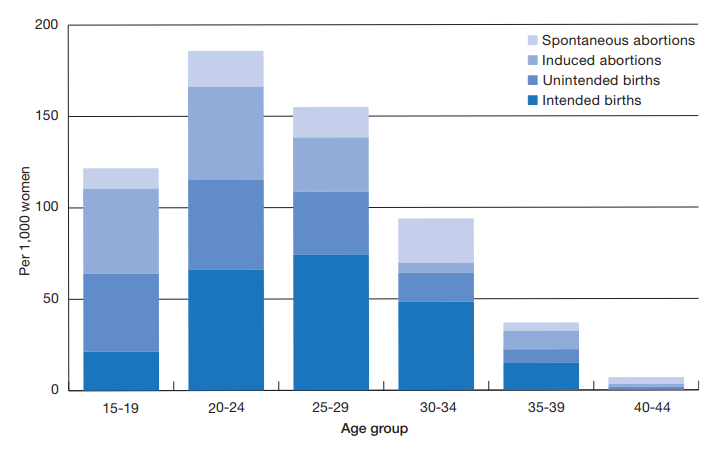
This leads us to the theme of this year’s World Population Day, ‘investing in data collection’. This is what sociologist Diana Coole termed ‘population decomposing’ in her anatomy of the population taboo. Assessing numbers of maternal deaths, births not attended by a trained health worker, women not receiving sufficient pre-natal and anti-natal care, child marriages, female genital mutilations, or women with an unmet need for contraception all add up to a praiseworthy interest in elevating women’s health and rights. But fertility decline and population growth rate are no longer metrics of interest.

It might, for instance, be salient to test the relationship between population growth rate and progress on any of the above-mentioned measures of women’s interests. Should it turn out that rapid population growth impedes improvements in economic and health outcomes, that would encourage bigger investments in the promotion of lower birth rates. That would seem to be exactly why the UN avoids any such analysis.

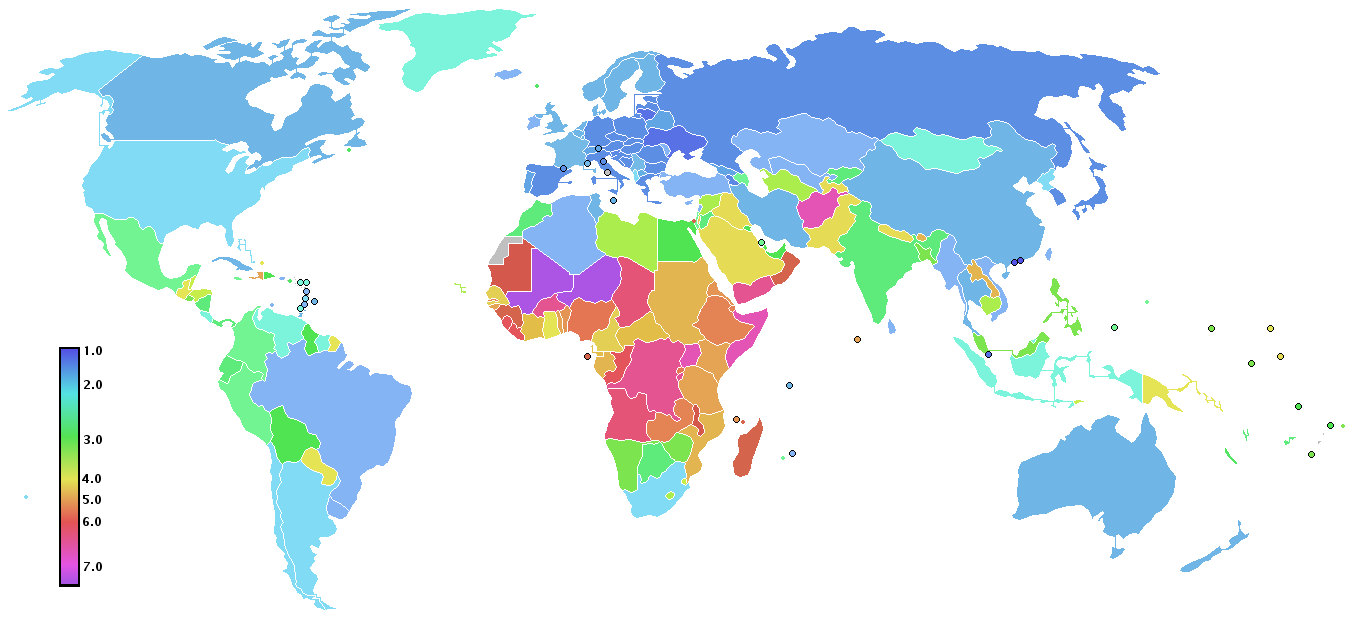
Figure 3, for example, shows unequivocally that high fertility impedes development. A fair corollary from this and other data would be that the voluntary family planning programs widely supported prior to 1994 proved to be the most effective development interventions ever known, and subsequent de-emphasising of fertility reduction has done massive harm to the people and natural environments of high-fertility countries.

Figure 3. Change in GDP per capita over 5 years as a function of the fertility level at the start of the period. All countries for all 5-year periods with available data from 1960 to 2010 are plotted. Boxes span the 25th, median and 75th percentile, whiskers extend to the 5th and 95th percentile. The few high fertility countries that (briefly) achieved rapid enrichment were all petro-states.
Source: Author’s analysis; data from World Bank and UN Population Division

A new International Conference on Population and Development might bring the best data together about the wider impacts of population growth and what programs best address it. It might question whether the UNFPA’s post-1994 agenda has, as promised, created an environment more conducive to advancing women’s rights, or whether, indeed, it has done the opposite by allowing population growth to deepen the poverty and insecurity of high-fertility countries.

Such conferences were held each decade from 1954 and became venues for intergovernmental consensus-building from 1974. But the 1994 conference was to be the last, its Programme of Action enshrined as a holy text that must never be challenged by new evidence. Then in 2014, lest anyone be reminded that the ICPD Programme of Action did actually raise concerns about population growth harming development and environment, it has been quietly superseded by the 2014 Framework of Actions for the follow-up to the Programme of Action of the International Conference on Population and Development, a document written behind closed doors, without the status of negotiated treaty. It mentions population growth only to vilify all past ‘population control’ efforts as ‘highly politicised’ (invoking racism, eugenics and/or neocolonialism – any motive other than the evidence-based humanitarianism that actually prevailed) and conducted ‘without heed to people’s reproductive aspirations, their health, or the health of their children.’ Yet women’s and children’s health, and their prospects for fulfilling aspirations of all kinds, have improved rapidly in the countries that implemented those programs. This is not true in countries where high fertility persists.

Meanwhile, most of the rich countries of Europe, North America and Oceania have been experiencing a resurgence in population growth driven by unprecedented immigration levels. They are not immune to the economic drag this causes, equivalent to the high-fertility countries in Figure 3. This malaise has nothing to do with the proportion of working age people. It is driven by the suppression of wages for the low-paid, inflation of housing costs and ballooning of debt, both private and public, in a futile effort to ‘catch up’.

Opposition to immigration is toppling governments, whether Left or Right. Although most commentary focuses on cultural incompatibilities and failure to ‘integrate’, the disgruntled voters are not wrong to conclude that their own prospects have been undermined by higher competition for jobs and housing, while government expenditure on infrastructure causes cut-backs in social programs. It is tragically ironic that lower immigration has been cast as a far-right issue and opposed by the green-left when population growth undermines all progressive and environmental goals.

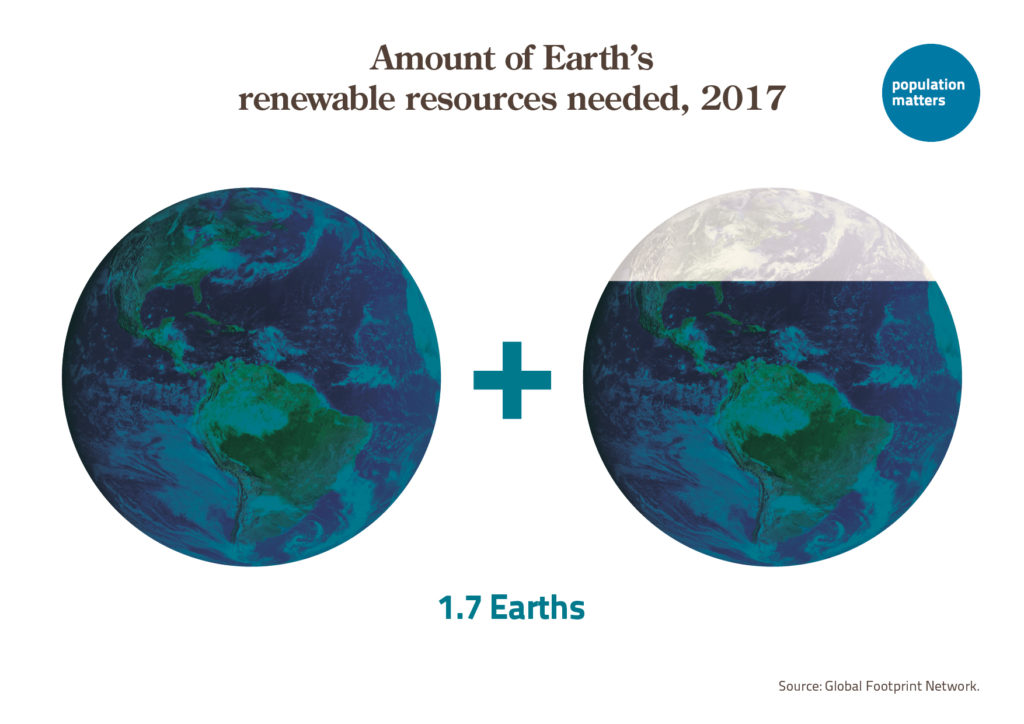
World Population Day is now only a couple of weeks from Earth Overshoot Day. Whatever economic justifications for high population growth are contrived by vested interests, let’s remember that overshoot has consequences that are best avoided. There is so much more that could be done to help countries, both rich and poor, stabilise their populations, without impinging on people’s reproductive rights and freedoms. To its shame, the UN has abandoned this agenda.

Published

13 responses to “UN World Population Day 2024 focuses on anything but world population”

  1. Stable Genius Avatar
    “To its shame, the UN has abandoned this agenda, in favour of the ‘climate policy’ and ‘net zero’ rainbows. A global marketing smash hit, never to be equalled.”

  2. Margit Alm Avatar

    raises the question who are the UN’s real masters

  3. gaiabaracetti Avatar

    “Opposition to immigration is toppling governments” – but is it? It might have in the past, but the tide seems to be turning again. Both France and the UK saw the victory of pro-immigration parties. There are many reasons for this; among them that if you promise to bring immigration down, but don’t, and are awful in every other respect, people will vote you out. Also, migrants and their children will get to vote too, and they often, though not always, will not vote for anti-immigration parties.

    As for the rest, just putting this here: https://www.theguardian.com/lifeandstyle/article/2024/may/25/american-pronatalists-malcolm-and-simone-collins
    How troubling. Not only are these people doing the opposite of what they should be doing, but also those poor children sound abused.

    1. Jane O'Sullivan Avatar

      Thanks Gaia, it’s true that regime change in European countries has not given power to anti-immigrant parties, but the votes captured by those parties did cause regime change. The UK and France don’t have preferential voting, so voters moving from centrist parties to far-right (or at least ‘further-right’) parties shrink the centrist vote to the benefit of the Left. That might be counter-productive in the short term, but maybe an escalation in asylum-seeker arrivals will test Labour’s position on immigration and force them to reconsider border control policies that they had previously opposed.

      1. gaiabaracetti Avatar

        As someone who feels closer to the left on most issue, I’ve been hoping for years that they wake up on immigration and start doing something about it – in the most humane, respectful way. But they haven’t, with some exceptions being centre-left parties that sometimes put in place harsh policies that people criticise less because they are not accompanied by incendiary rhetoric like those of the right. But even those policies are insufficient and mostly about choosing which people come in, rather than reducing the overall numbers.
        What I’m seeing is that, while a lot of leftist people will admit that it’s gotten to be too much, that it’s out of hand, they will oppose every single policy proposed to deal with it, and accuse of racism those that don’t.
        The best long-term investment, other than in family planning of course, would be making migration control one of those issues we all agree need to be addressed, but offer different solutions for.

  4. Kelvin Thomson Avatar

    Depressingly accurate analysis, Jane. For years now the UN has been part of the problem, when they should be the solution.

  5. susan hartley Avatar

    What

    1. Susan Hartley Avatar

      What changed in 1994? How did the pro natalists get control of the agenda and more worrying, keep it?

      1. Colin Butler Avatar

        I wrote about that here: https://www.cabidigitallibrary.org/doi/abs/10.1079/9781800620025.0010

        From the chapter’s abstract: “Controversially, it is also argued that (complementing neoliberalism and Catholicism; see previous chapter), a reason for persisting high fertility in some settings may be an inadvertent consequence of an ‘overreach’ led by elements of the women’s movement, evident at the 1994 Cairo International Conference on Population and Development. The chapter also appeals for respectful dialogue between those who perceive sinister ‘neo-Malthusian’ motivations as underpinning concerns about high population growth and those who argue that high fertility is a factor in underdevelopment.”

        “There can be no prosperity without family planning” (Karan Singh, 1992).

  6. […] UN World Population Day 2024 focuses on anything but world population, by Jane O’Sullivan […]

  7. Colin Butler Avatar

    I appreciate your citation of the late Maurice King’s paper on demographic entrapment. The BMJ (formerly known as the British Medical Journal) is soon to issue a call for essays based on King’s work.

    A statement written by UNFPA Executive Director (Dr. Natalia Kanem) to accompany the global launch of State of World Population 2023 asserted “its second key message is to “shatter the myth” that experts “blame fertility rates for the climate crisis”.

    To the contrary, experts overwhelmingly attribute climate change mostly to the behaviour of populations in high-income settings, including via their purchase of products from the global South. Most scholarly concern about high population growth rates in “developing” countries focuses on consequences for poverty, hunger, vulnerability to climate change, and other aspects of impaired planetary health.

    However, just as climate change has been called a “risk multiplier”, high fertility in low income settings can also be conceptualised as a “risk multiplier” of vulnerability. The 2023 UNFPA hints at recognition of this, writing:

    “To critique concerns about “too many” as overbroad and alarmist is not the same as dismissing concerns related to population growth or high rates of fertility. Many concerns are valid, including those around the impacts of population growth when it takes place without investments in sustainable development and advances in human well-being. Family planning can help address these worries and support declining fertility, yielding “a demographic dividend by reducing the dependency ratio, increasing women’s participation in the paid labor force, and allowing increased investments in human and physical capital” (Liu and Raftery, 2020). This paradigm has been well known for decades.”

    I am puzzled by the UNFPA’s cognitive dissonance. Their flagship report (at least from 2023) stated (to repeat) “Family planning can help address” problems (“concerns”) – these are, however, poorly defined but stated as “valid”. I would say one of the consequences of inadequate family planning access is worsened poverty and increased vulnerability, including to climate change. Yet – and in agreement with a theme of your essay – UNFPA appears unable to admit this. Other plausible “concerns” include famine, or at least extreme under-nourishment, child labour and slavery, and even genocide by machete, as occurred in Rwanda in 1994; Rwanda being one of the potentially “entrapped” countries that King mentioned in his paper from 1993 that you link to.

    I have elsewhere argued that the primary motivation in the shift of general thinking that high pop’n growth in low-income settings is a disaster in the making to irrelevant (i.e. other than for mavericks such as King) was the ascendancy of neoliberalism under US President Reagan. This was a hallmark of the “cornucopian enchantment”; the fantasy, ascribed especially to Julian Simon, that ingenuity would perpetually trump resource scarcity. Undocumented, but I think plausible, was the view that an indefinitely poor global South (kept poor in part by minimal family planning access) would long depress wages in the South, thus enabling cheap resource extraction, and maximising consumption by the “winners” of neoliberalism.

    1. Jane O'Sullivan Avatar

      Thanks Colin, for a very thoughtful post.
      We’d welcome a blog submission from you, perhaps in relation to your last paragraph.

  8. Colin Butler Avatar

    Thanks Jane – just spotted this. Will try to write something. I did just publish this: https://www.bmj.com/content/387/bmj.q2603/rr A 600 word “rapid response” to an obituary of Maurice King, in the BMJ.

Leave a Reply

This site uses Akismet to reduce spam. Learn how your comment data is processed.

NOTE: Comments with more than one link will be held in wait and will only become visible on the site after an admin has approved it.

Explore the content and topics covered by TOP, search here

Blog categories
Gallery of infographics – Learn more about overpopulation and environment

Discover more from The Overpopulation Project

Subscribe now to keep reading and get access to the full archive.

Continue reading