Thirsty for Growth: How Arizona is Trading Water for Sprawl

Touted as a conservation success story, new legislation in Arizona is actually a ploy to resume unsustainable development in areas that are running out of water. It foolishly seeks to override hard physical limits with paper water credits, displacing wildlife and farmland in service to sprawl.

by Phil Cafaro

In June 2025, the Arizona Department of Water Resources (ADWR) imposed a moratorium on new building permits for subdivisions in some areas in and around Phoenix, after new groundwater models revealed insufficient supply to support further development. At the same time, complaints have been increasing about the rising cost of housing in the state. This was a golden opportunity for Arizonans to rethink the state’s uncritical acceptance of endless growth. Instead, once again, its leaders chose to stick their heads in the desert sand.

State Senate Bill 1611 — the so-called “Ag-to-Urban Groundwater Conservation Program” — was passed in July specifically to override the moratorium on new building. It allows developers to substitute “groundwater credits” for proof of physical groundwater availability. This workaround allows unsustainable growth to continue, under the guise of “conservation.”

SB 1611 allows farmers near Phoenix to permanently relinquish their irrigation rights, dewatering farms to effectively circumvent the moratorium imposed by ADWR. Real estate interests understood the stakes. “This will alleviate some of that pressure … now they can get their certificates of assured water supply,” one industry leader explained. Another said bluntly, “this will be good for us”, capturing the law’s underlying purpose of serving developers, not the public or the environment.

Governor Katie Hobbs hailed the bill as a “historic bipartisan deal,” and it did indeed have strong support in both major political parties. But behind the bipartisan triumphalism is a growing ecological deficit. Arizona’s leaders remain unwilling to limit growth, even as water becomes scarcer, rivers dry up, and farms and native species are displaced.

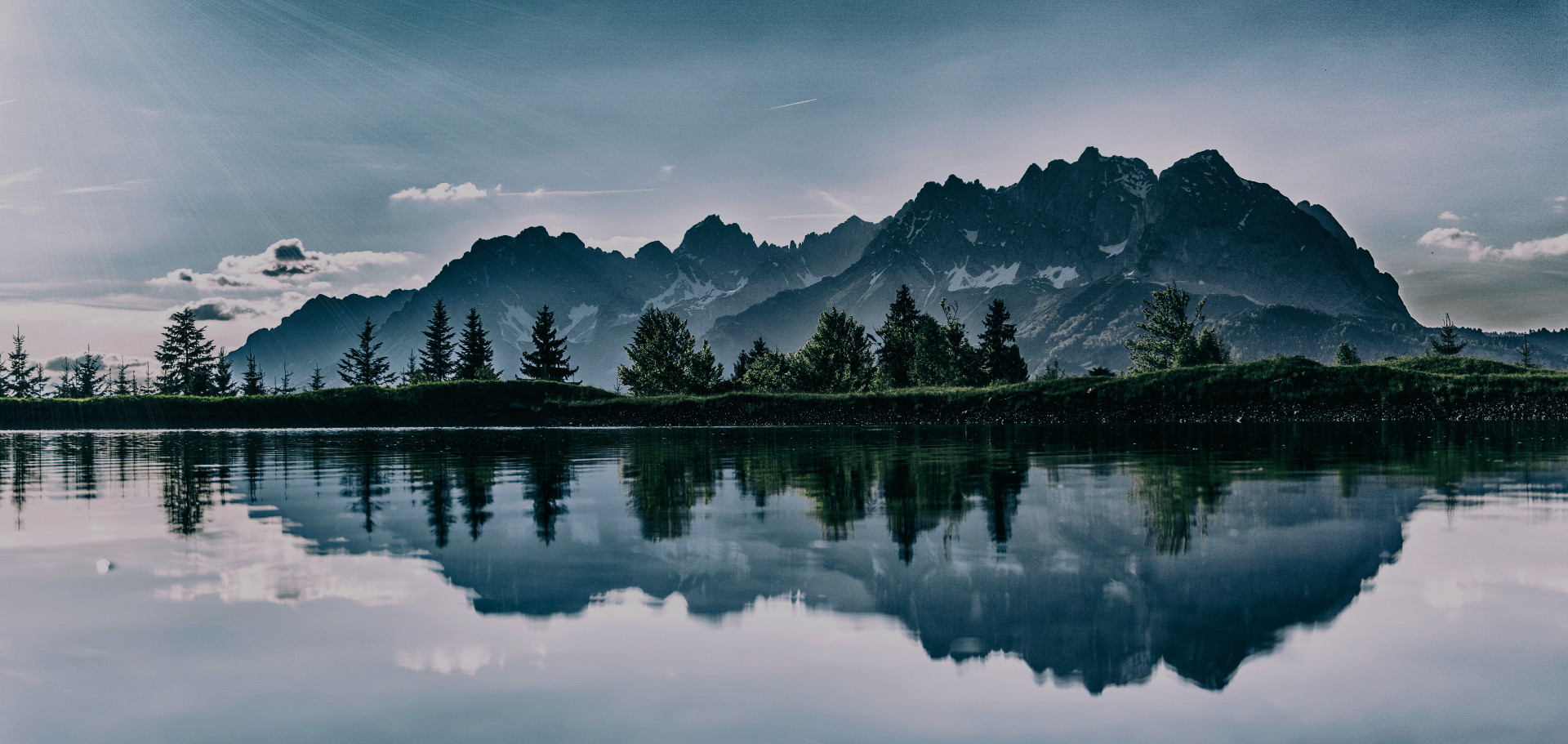
Lake Mead, Arizona, the largest reservoir on the Colorado River, is at historically low levels

Paper water, real sprawl

With an estimated 425,000 acres of farmland eligible for conversion, SB 1611 could enable up to one million new homes at suburban densities. That means bulldozing productive farmland, removing natural vegetation, and consuming ever more water to support lawns, pools, and golf courses in arid zones where the groundwater is already depleted. As a result, habitat destruction will increase, wildlife will lose access to water and migratory corridors, and aquifer depletion will accelerate. Human expansion continues to push other species aside — and the politicians responsible refuse to acknowledge the tradeoffs.

The truth is simple: no amount of policy tinkering can solve Arizona’s water crisis if population growth continues. Every new home, every new subdivision, every new resident increases total demand for water — not just for household use, but for electricity, food, transportation, and landscaping.

While per capita water use has declined in recent decades, aggregate demand keeps rising because the population keeps growing. Arizona’s population is now over 7.5 million — triple what it was three decades ago — and still increasing. To end that population growth, Arizona must stop promoting endless suburban development, and the U.S. federal government must adopt responsible immigration policies that reduce inflows and allow the U.S. population to stabilize.

Water reservoirs are at low levels in many parts of the western U.S., particularly in the arid southwest

Endless growth is draining Arizona dry

Political leaders in Arizona and elsewhere in the arid southwestern U.S. may continue to celebrate growth, but reality will impose its own limits. The aquifers will run dry. The rivers will stop flowing (as many already have). The land will no longer support the people pouring into it. If Americans are serious about securing a sustainable future, we must confront the truth: water conservation alone is not enough. We must end population growth — in Arizona and across the United States.

That means saying “no” to more sprawl, ending unsustainable economic practices, and shifting federal immigration policy toward population stabilization. Without those changes, every new environmental protection policy — no matter how well-intentioned — will be undone by sheer numbers. As long as growth continues, the water crisis in the American southwest will get worse.

Published

20 responses to “Thirsty for Growth: How Arizona is Trading Water for Sprawl”

  1. Esther Phillips-Constans Avatar

    Yes water the very basis for life. I am surprised that in the UK those who rightly oppose the vast numbers of migrants coming to the island have not mentioned dwindling water supplies…
    Sadly those who oppose migration often want to oppose it by higher “local” birth rates which is just as bonkers. I am still waiting to wake up from a bad, bad dream

  2. Aroop Mangalik Avatar

    Thanks for your coverage
    Aroop Mangalik

    1. Philip Cafaro Avatar

      You’re welcome Aroop. Thanks for reading!

  3. David Polewka Avatar

    Awhile back, I did a survey on Facebook. I asked: “Do you care
    what happens after you’re dead?”, and most people said: “No”.
    Most people don’t read a whole lot, so they don’t know a whole lot.
    And most people are not thinkers; they’re consumers and dumpers.

    1. gaiabaracetti Avatar

      Sorry, I meant to reply to you, but it ended up in a separate comment below.

  4. gaiabaracetti Avatar

    If this was true, people would not make wills, and inheritance laws might not exist. Since people generally seem to care a great deal about what happens to their stuff after they’re dead, and go to great length to give instructions, maybe you asked the wrong question or asked it to the wrong people.

    1. David Polewka Avatar

      One friend of mine, a scientist, about 5 years ago, said on Facebook, 3 times,
      “I don’t care; I’ll be dead in 20 years.” But he’s an atheist, and he and his wife
      don’t have any kids.

      1. gaiabaracetti Avatar

        I have no kids, and I still care.
        Some people really are selfish. But I suspect others say that for other reasons, for example because they do feel guilty, or as a way to cope because they feel they can’t make a difference. I’ve heard the “I’ll be dead anyways” thing from people who do obsess, for example, about where their personal belongings and money will go after they die, or what will happen to their house. So they care, they just have bad priorities.

    2. Dag Lindgren Avatar

      Few wills go to overpopulation project which has an important role to make life better for future generations thus almost all people care little about what happens with humanity after they die

      1. gaiabaracetti Avatar

        So people don’t care about humanity at large, or they don’t care about the environment, but that’s different from not caring at all what happens when you die.

  5. Philip Cafaro Avatar
    My sense is that many of my fellow citizens are narrowly focused on getting through the day and the week and the month, for themselves and their families. But there are still plenty who worry about the deeper future.

    Regardless, most people seem to have some sense of how they think society is moving, whether life is getter better or worse, their community more cohesive and friendly, or more atomized and antagonistic. It’s natural to tune in to that.

    1. Dag Lindgren Avatar

      All AI, personal computers and mobiles make my personal life very unpleasant as I cannot control them well and a lot of very frustrating time goes to unsuccessful attempts which makes me very upset and contribute to destroying my family life. Society in my opinion get worse without caring for important matters for a more stress-free life. So not surprising that the governing society is unable to act reasonable or even discuss about the urgent and growing overpopulation problem. Governing society prefers to avoid the controversial main problem.

      1. David Polewka Avatar

        Politics As Usual: you pick a few issues you think will give you the most support,
        “kick the can down the road” on everything else, and when something goes wrong,
        start pointing fingers. You have to be honest to solve problems; you don’t have
        to be honest to get elected!

  6. Stable Genius Avatar

    As readers of SPA “Big Thirsty Australia” will know, the beliefs that endless immigration brings more rain, and water-trading helps us get to “net-zero”, are not restricted to arid regions of the US.

    China, of course, has its own fake emissions-trading scheme, but not to my knowledge have they got into fake water-credits on any scale. However, even though UN loves China best, they too can’t escape, alarming groundwater-pressures. See Siao San et al (2025) in “Sustainability Science”.

  7. Dag Lindgren Avatar

    Studying hits on webs of environmental actors I got no hits on overpopulation but many on invasive species, thus environmental actors do not see a large and growing human population as an important problem https://www.stromstadakademi.org/befolkning/?p=740#comment-49 thus they overemphasize other ways to “solve” the problem

  8. Kathleene Parker Avatar

    I helped stop Denver’s proposed Two Forks project, which would have destroyed a gorgeous canyon and “dammed” the South Platte, but I have found no solace that–as Denver’s population has continued to explode–Denver has acquired water instead from farmers in eastern Colorado, including prime agricultural land and, I have been told, making it harder to get Colorado’s famous Rocky Ford cantaloupe, the sweetest, tastiest thing imaginable.

    As to Arizona, while I disagree with the author bemoaning the impacts of population as he includes a chapter espousing continued high immigration the source of our growth , William DeBuy’s book THE GREAT ARIDITY, if you haven’t read it, is essential to understanding many things about the Southwest, though I’ll add, he is a bit weak on his knowledge of the Colorado River Compact and that it is not just Arizona’s CAP water that’s threatened if drought continues.

    However, tellingly, he defines in his book while–even as their Colorado River water supply via the CAP project is threatened and will likely dry up if drought continues (and it will)–Arizona has still moved to plat over 650,000 new lots for housing around Phoenix.

    I watched Los Alamos not “get it” as the Cerro Grande Fire burned, literally, at the edge of town in May 2000, with many a PhD taking the family to shop in Albuquerque since the schools were closed, then for them to be shocked that the town was on fire and they couldn’t return.

    All this–Los Alamos’ and Arizona’s denial–makes me wonder if humankind is a species so focused on “Well, everything’s okay at this moment and we’ve always done things this way, so it’ll likely continue to be fine and we can continue always doing things this way,” that it threatens our very potential to survive as a species.

    1. David Polewka Avatar

      Right. Most people think that past performance guarantees future performance.
      So technology gave us all this, and technology will continue to solve the problems.
      But also we’ve had endless war since the beginning, so people say that “war is inevitable,
      and there’s nothing you can do about it; it’s human nature.”

      1. Kathleene Parker Avatar

        Especially as we continue to say “war is inevitable,” train warriors but never, as a society, shift toward STUDYING THE CAUSES OF WAR (such as water insecurity) and setting up institutions and focus to get rid of the causes of war, rather than saying, “War is inevitable.”

  9. Claire Cafaro Avatar

    I appreciate and agree with the messages and messengers who have posted in response to Arizona’s dangerous thirst for growth rather than sustainability.
    Those with scientific backgrounds cite technical reasons for their opposition, others comment on the wishful thinking and human penchant for short term gains.
    In that context, may I quote Gus Speth, when asked what the top environmental problems were: “The top environmental problems are selfishness, greed and apathy…and to deal with those we need a spiritual and cultural transformation and we, {Lawyers} and scientists, don’t know how to do that.”

    1. Kathleene Parker Avatar

      You forgot one other group that should be involved in solutions–not lies, half-truths, and distortions for purposes of ratings–the media. We used to have media that informed and educated. Now we have media that inflame, distort, present half-truths and function to censor, rather than to expedite the news. (I write as a life-long journalist from when journalism was an ethical profession–which it no longer is!)

Leave a Reply

This site uses Akismet to reduce spam. Learn how your comment data is processed.

NOTE: Comments with more than one link will be held in wait and will only become visible on the site after an admin has approved it.

Explore the content and topics covered by TOP, search here

Blog categories

Gallery of infographics – Learn more about overpopulation and environment

Discover more from The Overpopulation Project

Subscribe now to keep reading and get access to the full archive.

Continue reading