Overpopulation: A New Survey Confirms the Cause of the Planet’s Environmental Crises

Synthesizing findings from hundreds of recent peer-reviewed scientific studies, a comprehensive new article reviews the effects of expanding human populations on humanity’s most pressing environmental problems.

by Alon Tal

A vast amount of research and rhetoric is devoted to the world’s many sustainability challenges. Yet most advocates and scientists assiduously avoid acknowledging the predominant driver of today’s key environmental problems: overpopulation.

Years ago, sustainable population was recognized as central to the global ecological agenda. But over time, too many green leaders became loathe to address the topic. It is rarely taught in universities. Environmental agencies remain completely obtuse. But the problem has not gone away. On the contrary, environmental damage functions are rarely linear, so the consequences of population pressures are more severe than ever.

That’s why I authored a comprehensive review of the subject in the academic journal Encyclopedia: The Environmental Impacts of Overpopulation

The article surveys recent scientific literature on the six most pressing environmental crises facing humanity: deforestation, climate change, biodiversity loss, fishery depletion, water scarcity, and desertification. Drawing on hundreds of peer-reviewed studies, one conclusion becomes crystal clear: unless the world confronts overpopulation, genuine environmental progress will remain elusive.

Here’s a brief summary of what emerges about each of these global challenges.

1. Deforestation: Trees Fall as Populations Rise

Global deforestation remains staggering, especially in tropical regions. Between 2001 and 2023, Brazil lost nearly 69 million hectares of forest, while Indonesia lost over 30 million. Most of this destruction wasn’t for lumber exports or furniture—it was simply to make room for 34 million and 59 million more people respectively.   

One alarming but unfortunately typical example involves the Democratic Republic of the Congo (DRC). Despite being home to one of the planet’s largest carbon sinks, the DRC has lost millions of hectares of forest in just two decades.

Why?  

Well, the country’s population doubled during this period and is now a staggering 111 million.  With only 20% of Congolese having access to electricity, an increasing number of households rely on wood for cooking and heating. Similarly, in Malawi, a 1% increase in population is associated with a 2.7% rise in deforestation. As population swells, communities destroy their forests simply to survive.

2. Climate Change: More People, More Carbon Emissions

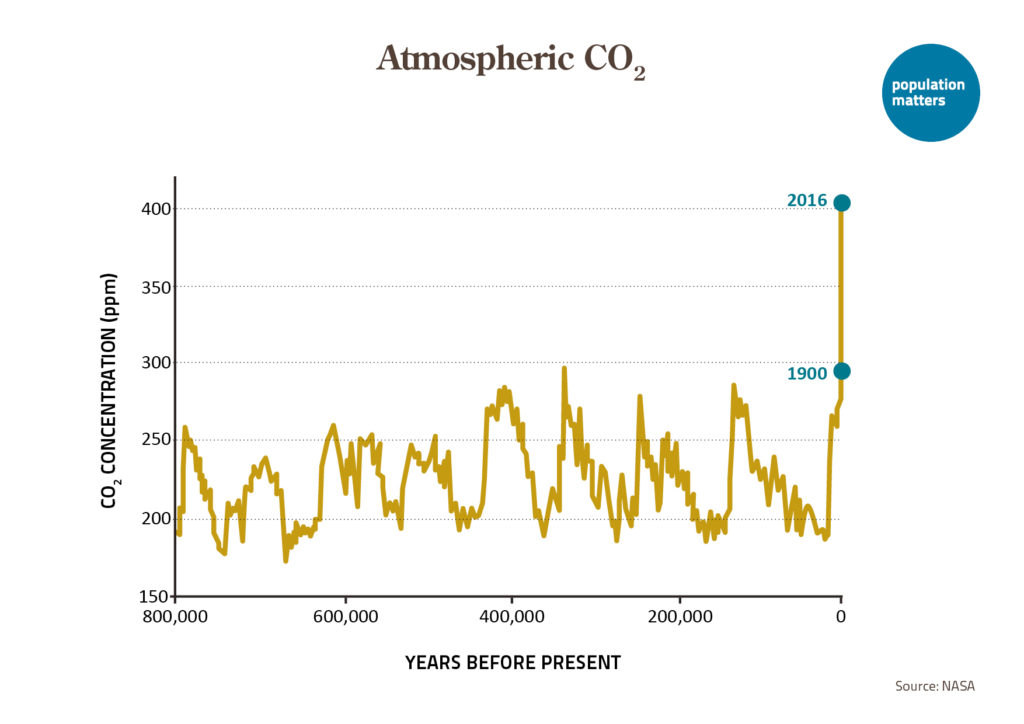
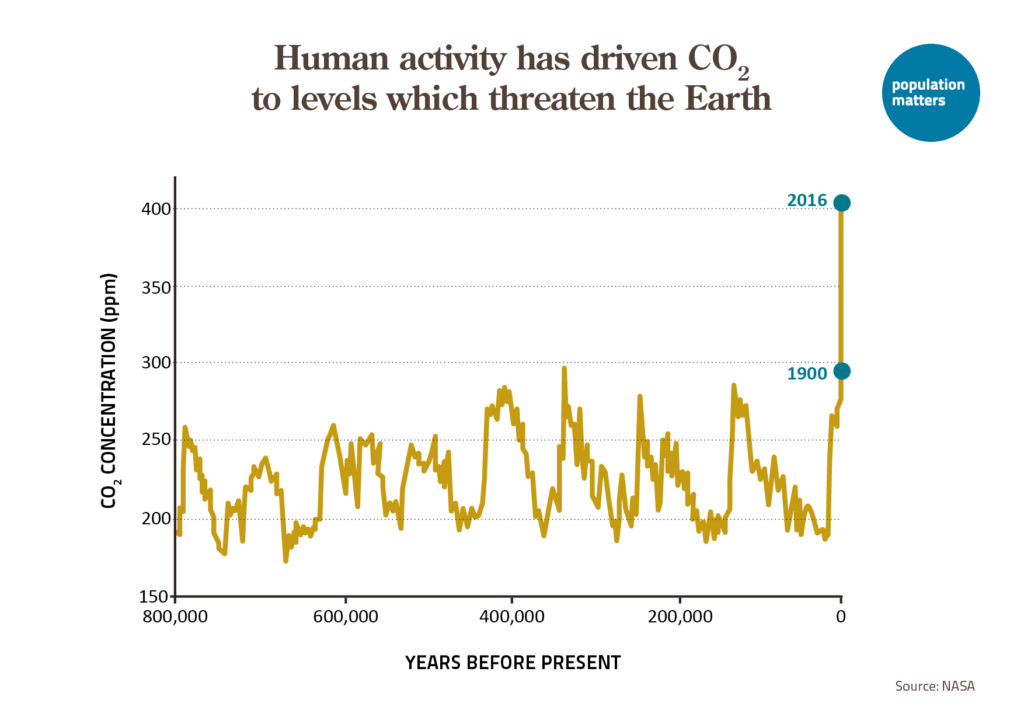
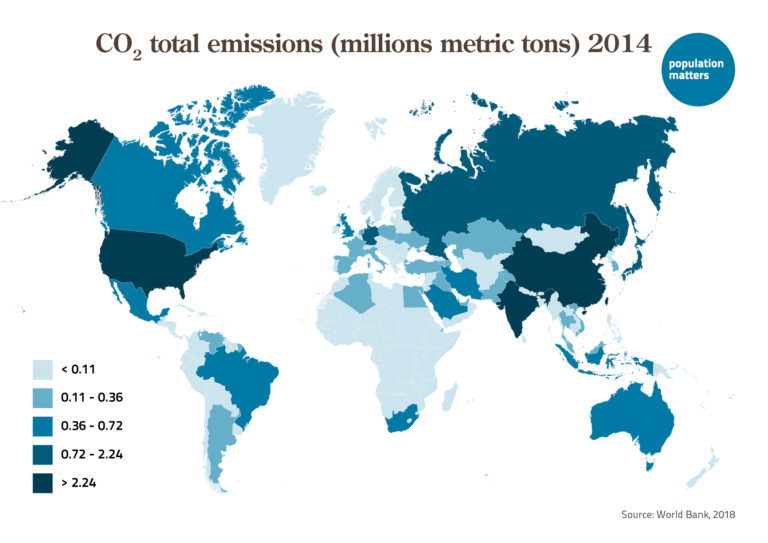
Every person is born with a carbon footprint. That means more people equals more greenhouse gas emissions. Even in countries with low per capita emissions,  the cumulative impact of rising populations is massive.  And it increases every day. It is no surprise that historically, global population and greenhouse gas emissions are so closely linked.

Association between global population growth and greenhouse gas emissions (2000–2023). Sources: UN World Population Prospects: The 2024 Revision; European Commission, EDGAR Emissions Database for Global Atmospheric Research, 2025.

Take Israel as an example. Over the past decade, it has made impressive strides in reducing per capita emissions to meet its climate targets. But with an annual population growth of around 2%, the country’s total emissions are still set to double—even as individual emissions rates decline. Population growth steadily erases the hard-earned gains from green technologies and behavioral change.

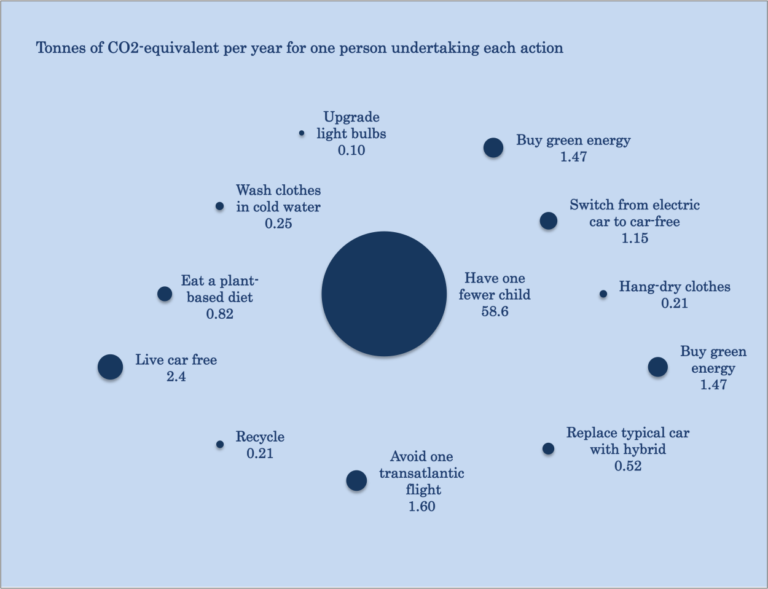
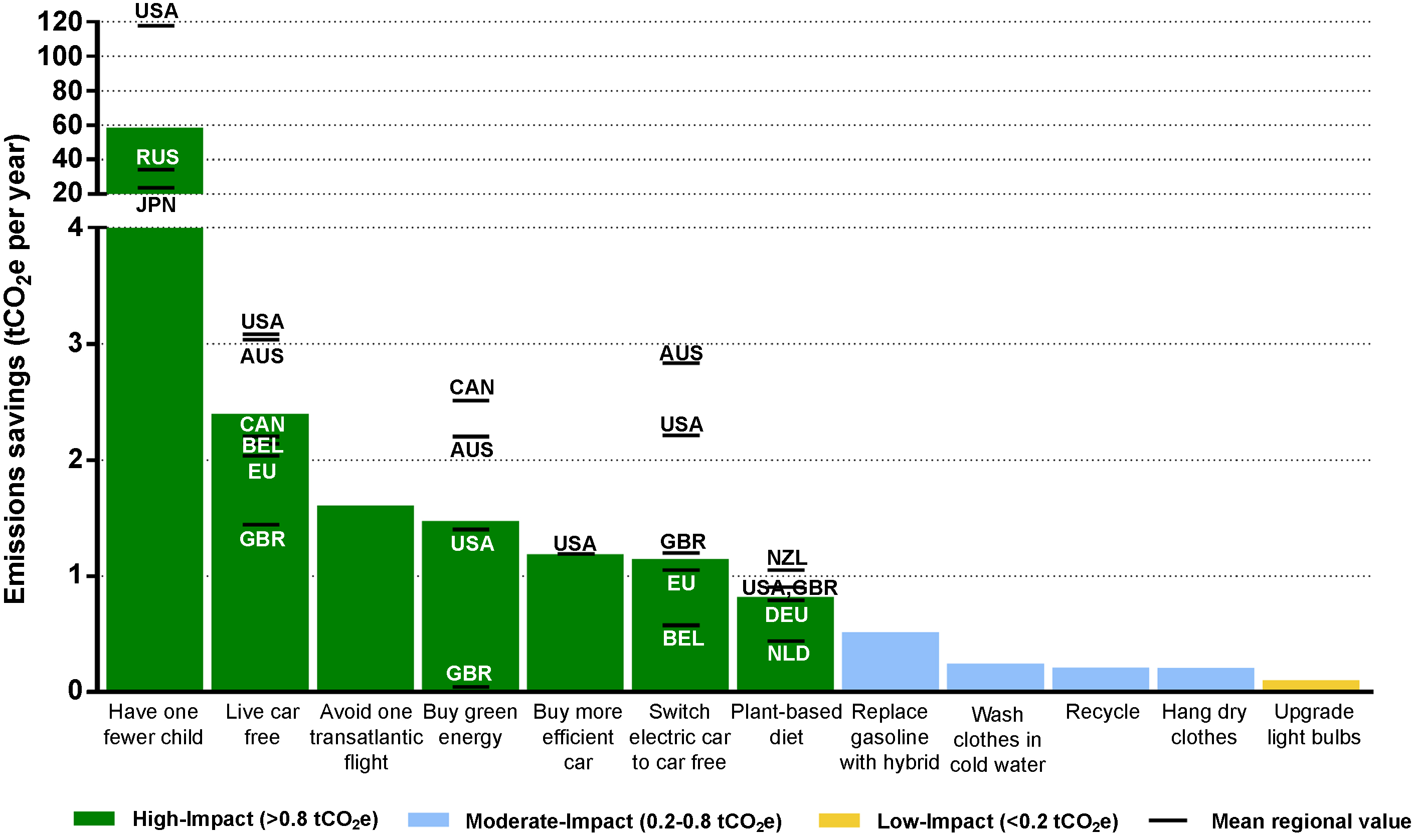
 A landmark 2017 study from the University of British Columbia building on earlier research found that having “one fewer child” was nearly 50 times more effective at reducing carbon emissions than lifestyle changes like going vegan or giving up flying.

3. Biodiversity Loss: More People – Less Nature

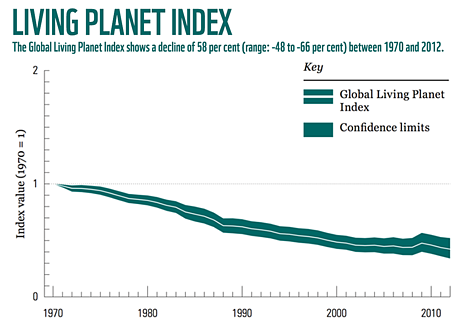
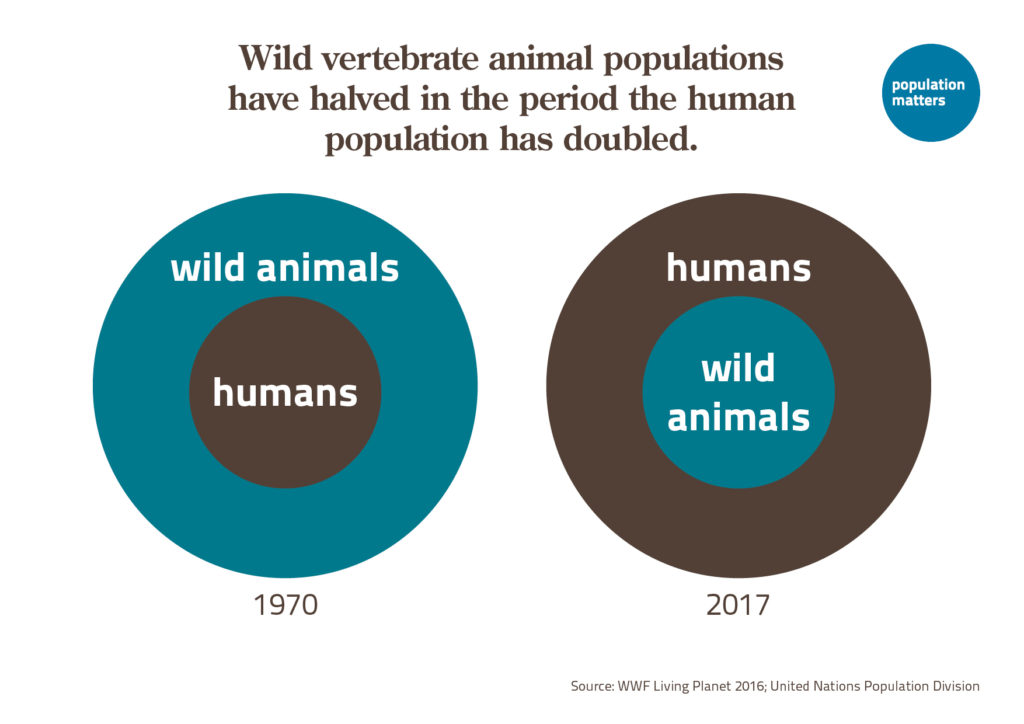
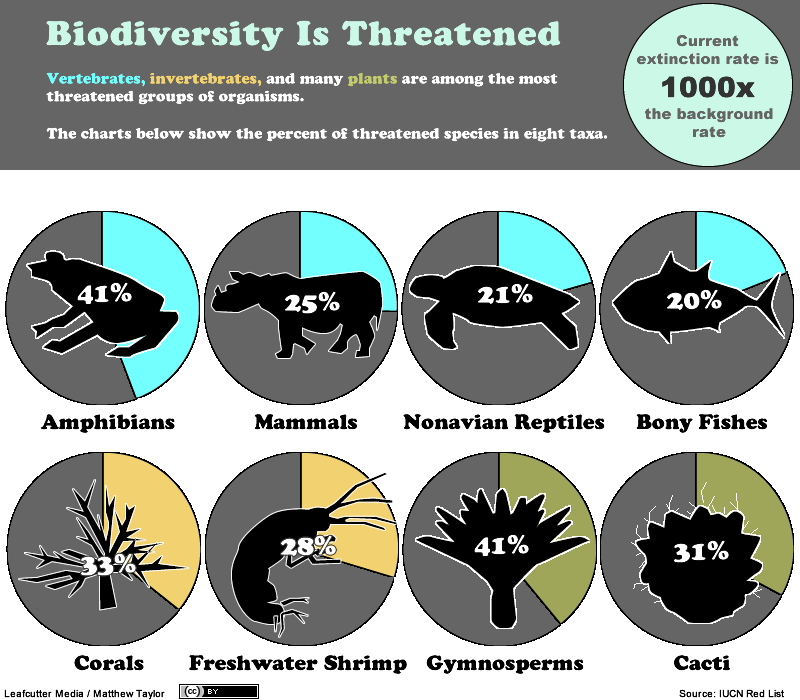
The World Wildlife Fund’s 2024 Living Planet Report reported a 73% decline in the earth’s monitored vertebrate populations between 1970 and 2020. The magnitude of such damage is hard to imagine. While habitat fragmentation, overhunting, and pollution are often cited as culprits, each of these pathologies ultimately is associated with population growth

In Madagascar, population surged from 4 million in 1950 to 32 million in 2024. During this time, the island lost about 80% of its unique forests. Species found nowhere else on Earth—including the inimitable lemurs and rare frogs—are quickly vanishing. 

Haiti tells a similar story. Its population grew from 3.2 million in 1950 to over 11 million today. Forest cover plummeted from 50% to just 1%, leading to a collapse of many endemic species.

Human expansion and encroachment on open spaces near the author’s home, with a little bit of hope. Photograph: Alon Tal

4. Overfishing: Oceans Can No Longer Keep Up

The global appetite for fish has skyrocketed, with demand expected to double again by mid-century. Once-abundant fish stocks are now dangerously depleted: The UN reported in 2024 that the percentage of stocks fished at unsustainable levels nearly quadrupled globally during the past three decades. Yes, technology makes fishing more efficient. But the drop is largely because more people want more seafood.

In Senegal, where the population doubled from 9 million in 2000 to 18 million in 2023, overfishing has caused stocks to collapse. The Philippines offers another cautionary tale. With 55% population growth in the first quarter of the 21st century, local fisheries are under enormous pressure. In the South China Sea, stocks have declined by more than 70% since the 1960s.

5. Water Scarcity: Shrinking aquifers and thirsty cities

Global domestic water demand has increased six-fold since 1970. Much of this is driven by population growth. Jordan offers a sobering example. With a population that increased twenty-fold since 1948, this dryland country is among the world’s most water-scarce. Urban households receive water only once a week, and farmers routinely tap illegal pipelines just to keep crops alive. The ancient Disi aquifer is being “mined “ to keep up with the country’s mounting requirements, even though its depleted ancient waters can’t be replenished. 

In India, the population has nearly tripled since 1970. Over-extraction of groundwater, especially in Punjab and Haryana, has depleted aquifers and contaminated rivers like the Ganges, threatening both agriculture and drinking water supplies.

6. Desertification: Population Growth Drives Soil Degradation

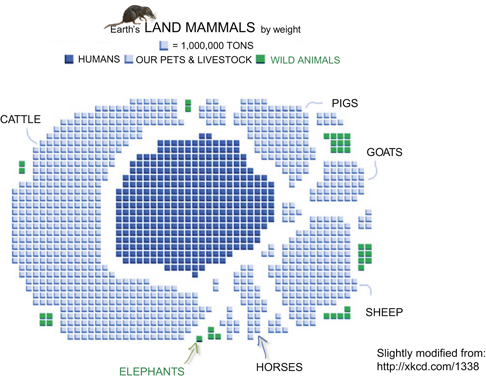
As population grows, so too does the livestock needed to feed it. Overgrazing has become a global scourge. Meanwhile, marginal lands are increasingly converted for cultivation by subsistence farmers desperate to feed growing families, leading to erosion and nutrient depletion.

The UN estimates that over one-third of Earth’s topsoil is already degraded. As food demand is projected to rise by 50% by 2050, the situation will almost certainly worsen. Traditional practices like fallowing (letting land rest) are no longer feasible when families constantly face food shortages. In countries like Niger and Ethiopia, land degradation is accelerating as farmers are forced to overwork depleted soils and compromise its fertility.

Arid agricultural land near a nearly dried up lake in Vietnam.

We Can Only Fix This By Addressing the Underlying Causes

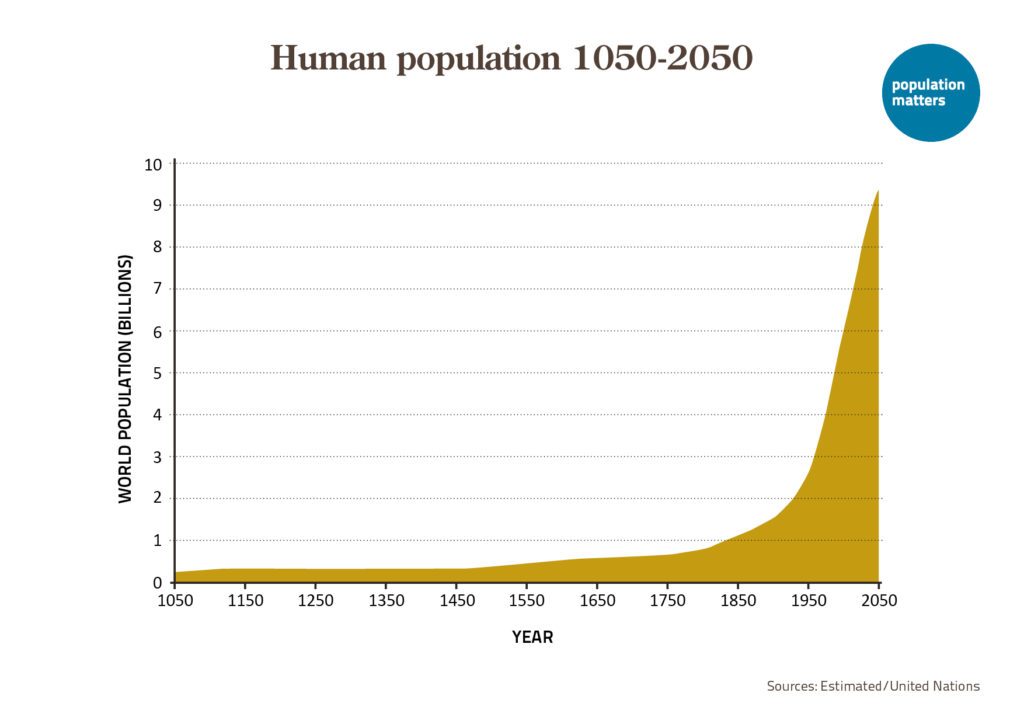
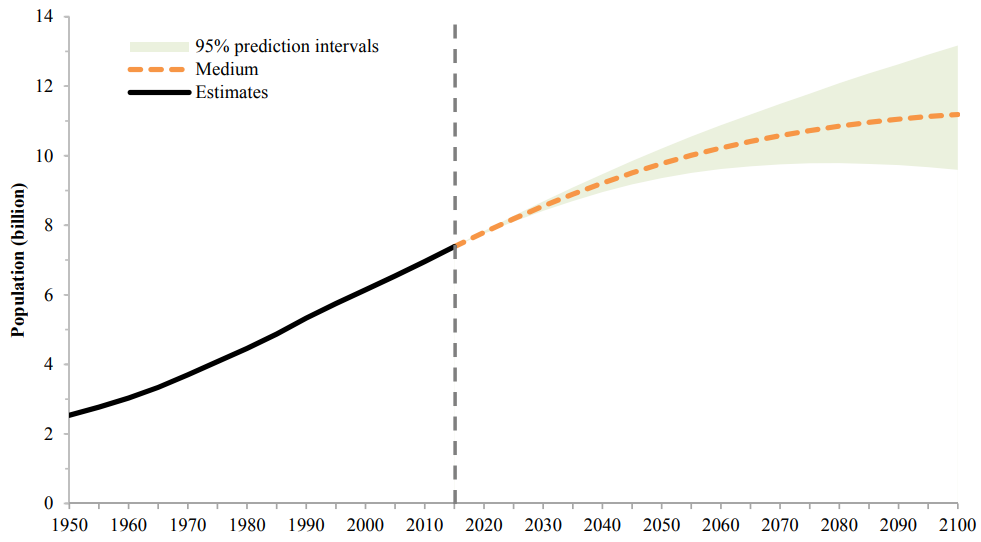
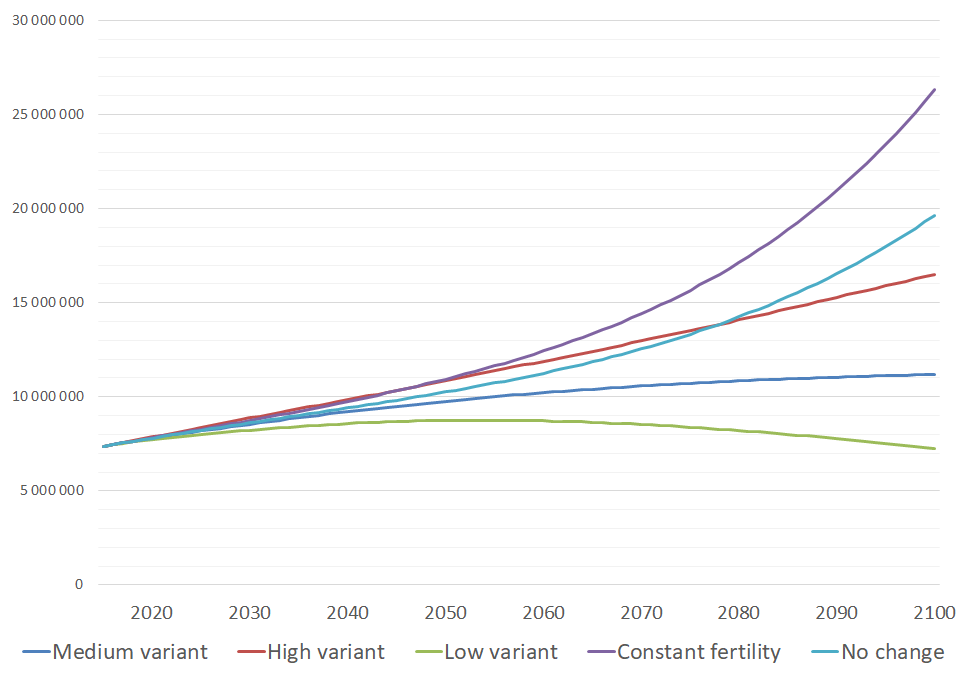
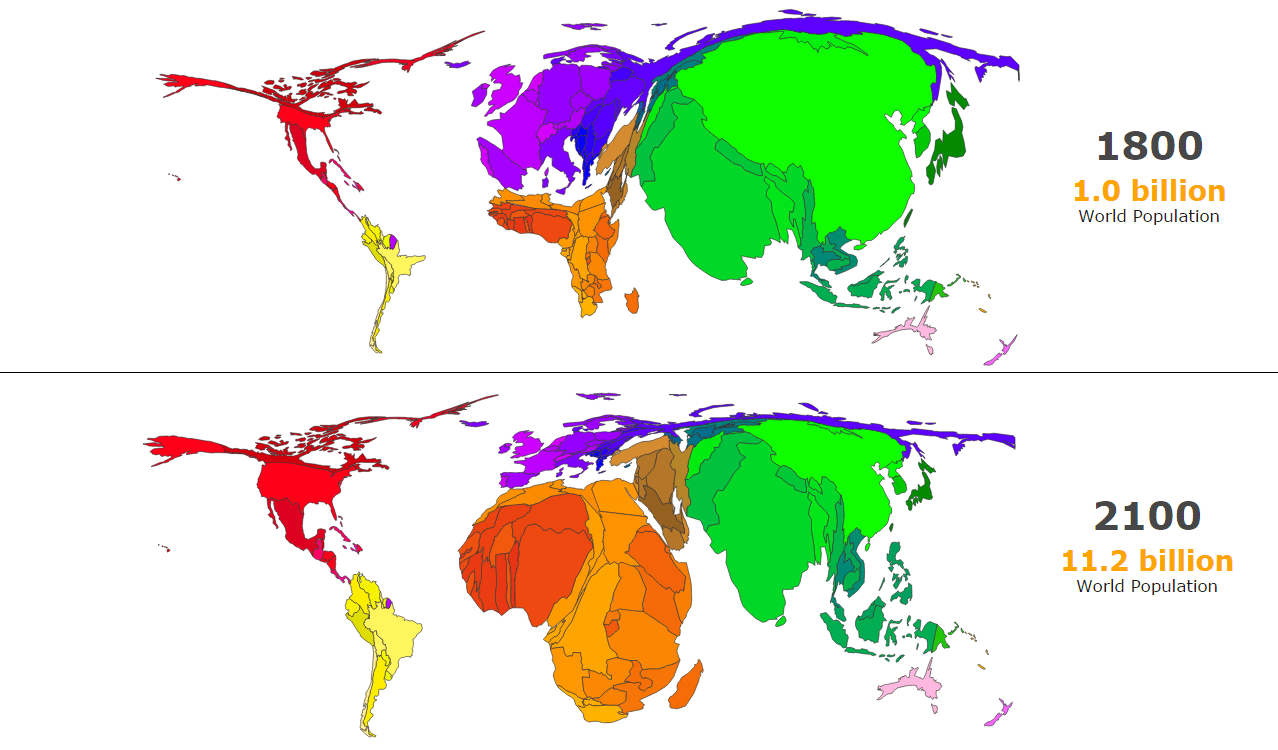
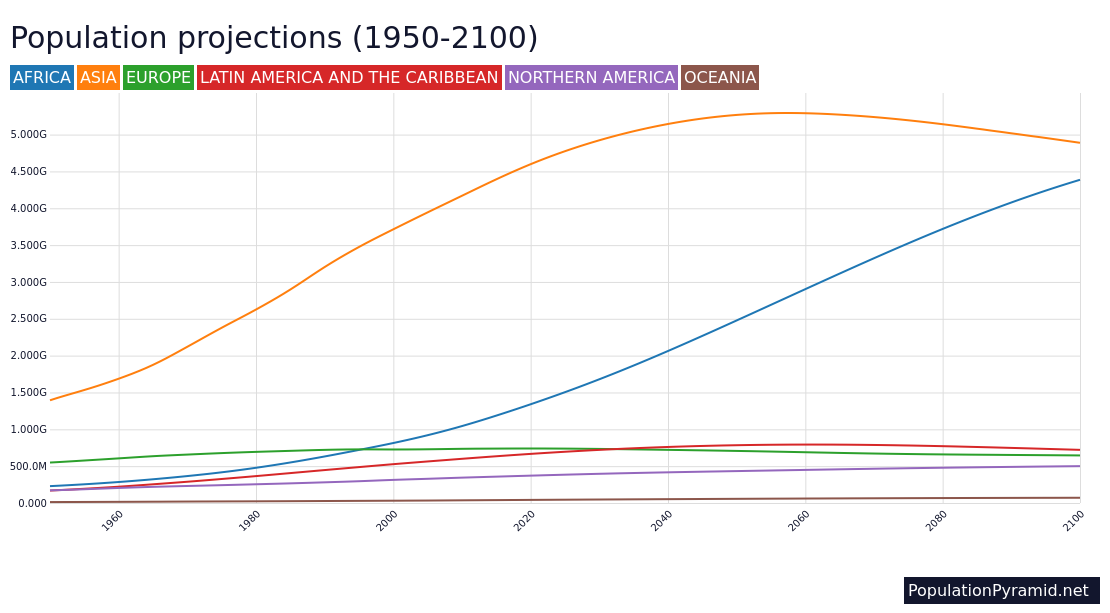
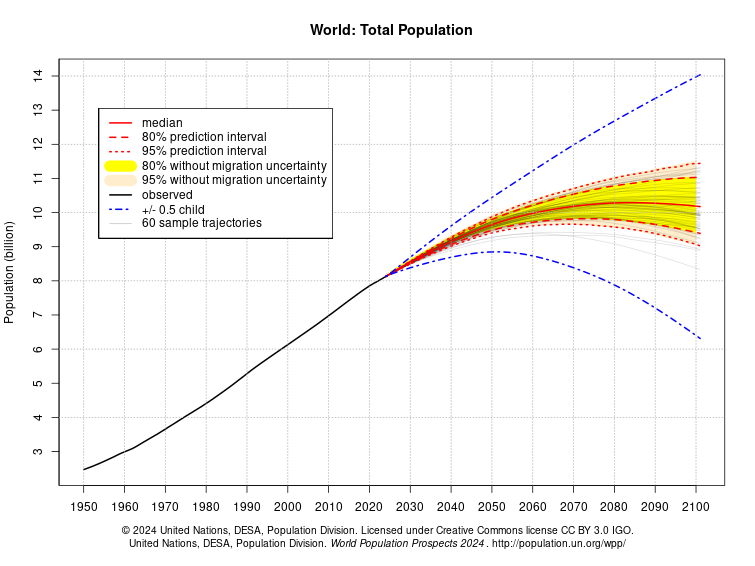
Population growth is slowing globally—but it surely is not stopping. The world is still on track to reach 10.2 billion people by the 2080s. The associated environmental damages are often irreversible.

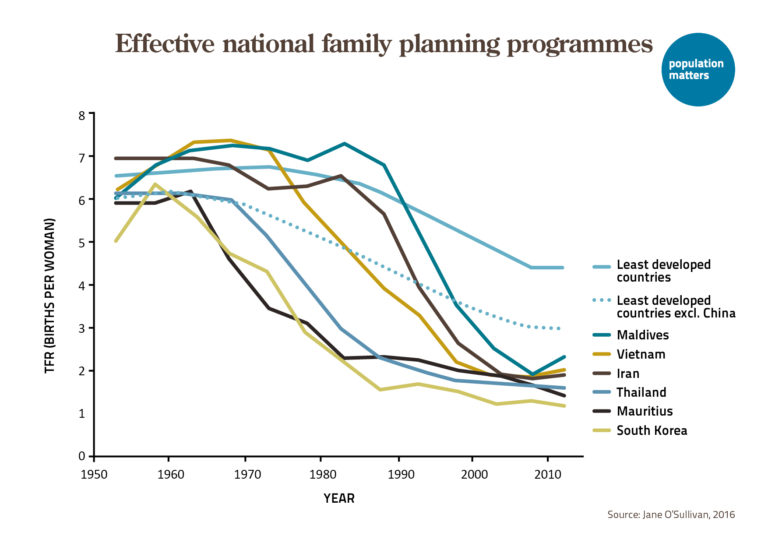
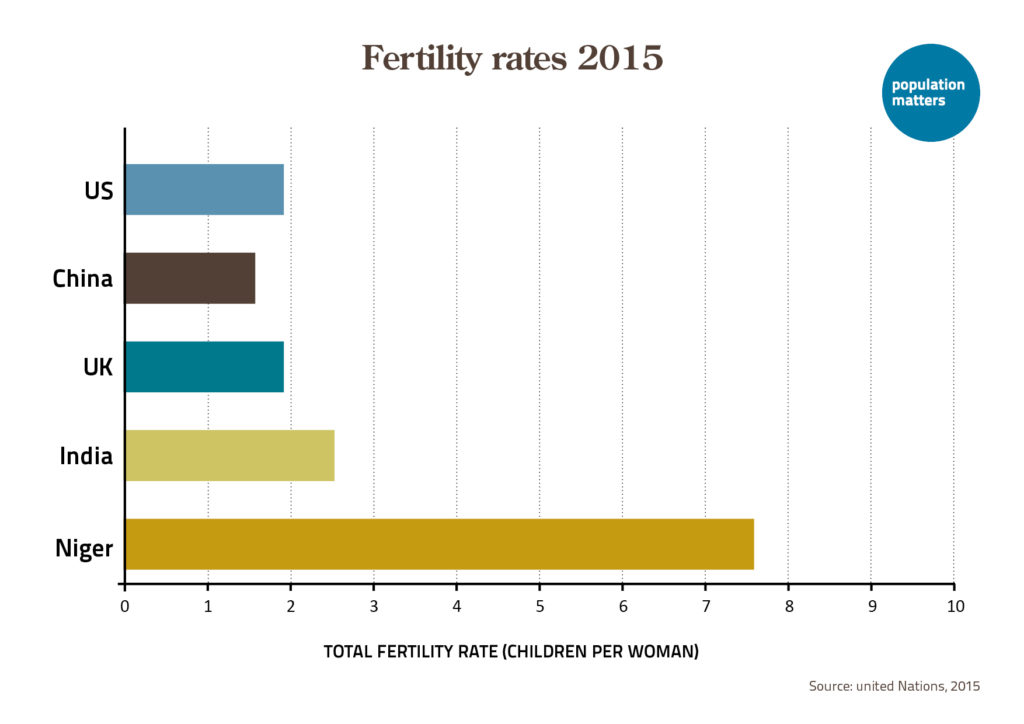
Many countries, however, have made dramatic progress through voluntary, non-coercive approaches. Bangladesh, Iran, and Thailand, to name but a few, have successfully lowered fertility through education and family planning initiatives.  All these countries realized that sustainability is not just about consuming less, it’s also about how many consumers there are. With stable populations, environmental progress becomes possible.

Overpopulation remains an uncomfortable subject in most environmental circles. For decades now, many activists have avoided the issue, wary of accusations of racism or coercion. It is also true that the ongoing rise in per capita consumption contributes to adverse environmental impacts.  But as my recent article confirms, the science is indisputable: demographic pressure is the primary driver of our planet’s degraded natural resources.

If we truly care about forests, fisheries, climate, biodiversity, water, and sustainable agriculture, we must speak up. Sustainable population policies must once again become a core part of global environmental discourse.

Dr. Alon Tal is a visiting professor at Stanford University and a faculty member at Tel Aviv University’s department of public policy.

Published

32 responses to “Overpopulation: A New Survey Confirms the Cause of the Planet’s Environmental Crises”

  1. Robert Gillespie Avatar

    This is an excellent and very depressing assessment

  2. kurt klingbeil Avatar

    I notice an absence of study into the effects of historical and ongoing colonial and neoFeudalist corpiratist exploitation and extraction from countries in the Global South many of which were left with massive ecological, financial, social debts which continue to be exacerbated.

    I see no study into the relative consumption rates between the mis-developed and developing worlds. There was one trivial reference to “going vegan or giving up flying”.
    Those are quaint trite trivial incrementalist semi-performative gestures which while making some contribution to GH reduction are trivial in scale compared with their current and historical consumption/ combustion rates.

    I see no comparative study on the accumulated per-capita emissions properly attributed to country of end use consumption – a kind of Total Cost Accounting of the effects of human assaults on the eco-systrm.

    In the G7 / G20 dominator cult-ures Maslow’s pyramid has largely been saturated and even hyper-over-saturated on the disregulated upper extremes while still actively enforcing and maintaining poverty on the bottom of the social Dis-Equality spectrum.

    I see no specific proposals for how _exactly_ you envision me and your readers to effect substantial pressure/advocacy on foreign population control policies / programs.
    In fact you appear to disparage the adoption of sensitive approaches to population control in the global south.

    I detect an ideological fervour which claims that population control is being overlooked / avoided while actively overlooking / evading / avoiding what are arguably far more critical factors by myopically over-focusing on pop-cont which is an inherently slow gradual process taking a couple of generations to effect significant change while our global existential predicaments and MetaCrisis intensifies continuously.

    Do you address these concerns anywhere in your work ? How do you propose they be addressed ? By people supporting the work of TOP directly ?

    1. Kathleene Parker Avatar

      Oh dear God.

      1. Alon Tal Avatar

        Hi Kurt,

        Thank you for taking the time to respond. But all the same, a pity that you responded only to the blog and not to the full article.

        It addresses rather comprehensively the false dilemma you raise about consumption.

        I’m not sure why the colonial history of Africa is germane for countries that are desperately seeking to establish themselves as economically viable and ecologically reasonable places. The fact of the matter is that African countries that have moved beyond the kind of colonial/victimhood narrative that you seem to favor, have introduced family planning and have for some time begun to see the economic and social returns.

        Africa had 200 million people in 1950. It now has over a billion. This is not a result of colonial exploitation. Do you really think that your perspective will do much to help prevent reaching 4 billion as the UN projects? I have worked with colleagues in Africa for years and my wife was full-time in a health NGO that worked there. My experience there is that environmentalists there are far more outspoken on the perils of overpopulation than I am.

        So, yes:it’s critical that we put pressure on international aid organizations to continue funding programs that empower women, provide contraception and support family planning educational initiatives. Probably more important than any other single environmental intervention that I can think of!

        Best,
        Alon

    2. stevemckevittda604d1b36 Avatar

      Kurt …. As others here have written, I’m dismayed by your lack of understanding regarding the dangers of this enormous crisis. Your concerns miss the point. Others here have written why.

      But looking at your interests: Certainly there have been (and continue to be today) terrible injustices and bad actions. These must be corrected. But right now — right now — we must drop our human population all over, involving everyone. We must lower our population. No excuses, and no exceptions. Open your thinking. Whenever I see the stuff you’re writing, my initial thought is this question: Is this person being paid by the Oil Companies? Or by Big Religion? Believing that some people have a “right” to do bad stuff (because some other people did it in the past) is crazy-time thinking.

      Big Oil has the money and the resources to manipulate public opinion.

      1. kurt klingbeil Avatar

        Pfffft
        You have failed to address any of the points I have raised.
        You have failed to articulate a clear credible compelling proposal detailing how my involvement could in any way effect population policy in any of the countries specifically cherry-picked for this survey or anywhere else.

        You have not addressed the time taken to effect substantial changes in population demographics – unless you are perhaps advocating the deployment of Soylent Green machines…

        The problem stems from the PRODUCT of population and consumption
        Much of the Global South does not even consume/emit their “fair share” of global resources whereas in the Gx we consume/burn on average 5-6x our share with the most hyper-privedged well into the multi-thousand X.

        The fact that you fail to recognize that the PetroRacket funded duplicitous denialism industry has used focus on population as an evasion diversion tactic calls into question your credibility to respond at all ..

        Your insinuation that I could be a PetroTroll is insanely irrational.
        I despise the PetroRacket and want to see it rationalized nationalized and “civilized”
        Of course in patridiotic Amerikkka nationaliziing anything is fraught with terror – especially given the assaults by the unelected neoFeudalist clique

    3. Philip Cafaro Avatar

      Kurt, your wide ranging comments make two overarching points: creating just and sustainable societies must involve reducing excessive consumption among the wealthy; and it must involve radical economic reforms, including reining in the power of oil companies and other large corporations. I can’t speak for Alon Tal, but I agree with those positions.

      However, I don’t think any of this cancels out the equally fundamental point that the world is grossly overpopulated. The fact that this cannot be turned around quickly is not reason not to address it; the same could be said for the other underlying factors driving ecological overshoot. We are not going to turn around overconsumption or transition to less damaging technologies overnight, either.

      You ask what policies you might support to address overpopulation. We have a semi-comprehensive list on our website under “Solutions”: see https://overpopulation-project.com/solutions/

      1. gaiabaracetti Avatar

        The only case that I think can be made for addressing overpopulation before overconsumption (although like I said I don’t think we should be arguing about this, and we should definitely be doing both) is that population growth is not as easily reversible as economic growth, and it has a bigger built-in momentum. In other words: you could theoretically start consuming much less from one day to the next, and sometimes it happens, but you cannot or should not want to kill hundreds of millions of extra people, so once they’re born, it’s too late to do something about it. Whereas it’s not too late to reduce unnecessary travel or eat less meat or whatever.

      2. Kurt Klingbeil Avatar

        I am not proposing to ignore overpopulation. It is a matter of triage and ROI.
        During Covid, there was a radical drop in air traffic, and to some extent consumption
        with immediate measureable effects…
        Similar effects occurred with the gasoline crisis in the 70’s immediate actions were taken
        to address what was triaged as a critical problem, but then immediately abandoned as the
        criticality declined.
        Preparations during WWII required massive cooperation / compliance of the public in terms
        of Victory Gardens, reduction of consumption, accommodations to shortages and LightsOut orders.

        Imagine attempting something like that in Amerikkka or the rest of the Gx…
        Sheer priviledged entitlement would balk at making any concessions whatsoever – insisting on their
        constitutionally protected uninfringed unencumbered everything.
        THAT is the area in which competent expertise and public support ought to be directed.
        Random peeps in DaWest purporting to dictate or even influence population policies in the Global South is unlikely to achieve much traction. Certainly there are already professional and amateur and other expertise working on-site in those areas
        The dominant attitude remains… “There is no problem, it certainly isn’t my problem, I insist on my entitlements, even if I were to completely slash my consumption, the over-consumption of the even-more-entitled sector and the corpirate sectors would eclipse any of my sacrifices…

        I saw the list and while they are all valid concerns/actions, they mostly seem like
        motherhood and apple pie stuff which do not address the magnitude of the situation.

        Daniel Schmachtenberger and the Consilience Project write about “seeking the third attractor”.
        Every time I encounter situation of hyper-intelligent genius types engaging in their speculative cosmology / silly-string / quantum-gravity /Mars-colonization circle-jerks…
        I think from a triage perspective that shit should be paused and that brain power and resources directed at actual urgent critical problem sets. However denialism holds sway – until the wheels really start coming off the bus

    4. kurt hater Avatar

      shut up burger

      1. kurtklingbeil Avatar

        Woah, did you come up with that deeply considered well-articulated insightful and inestimable valuable response all on your own ? Or just copy it from a fast food wrapper ?

        I will take this opportunity to post the results of a Perplexity search on the subject:

        There is evidence linking population discourse to delaying greenhouse gas (GHG) emission reductions through what scholars call “discourses of delay.” These are communicational and political tactics that shift focus away from immediate emission cuts and systemic fossil fuel reduction. One key strategy in delay rhetoric is redirecting responsibility by emphasizing population control or individual behaviors rather than holding fossil fuel producers and high emitters accountable for urgent action. This deflects from collective policy and regulatory measures needed to cut emissions rapidly ��.Studies have identified that the population argument is often used to stall transformative climate policy by pushing superficial or non-transformative solutions. This includes promoting narratives that the problem lies in population growth rather than entrenched industrial and economic systems. Such framing undermines public and political support for policies addressing fossil fuel extraction or transitioning energy systems, effectively delaying emissions reduction ��.Research also finds that emphasizing population issues helps create a perceived trade-off between climate action and social or economic concerns, fostering reluctance to implement stringent climate policies. This transfer of responsibility can lead to policy inaction, prolonging higher atmospheric GHG concentrations with growing risks of worse climate outcomes. The longer emission reductions are delayed, the more costly and damaging mitigation becomes, underscoring the harm of population-focused delay discourses ��.In summary, the evidence shows population discourse delays emission reduction primarily by redirecting blame and reducing pressure on fossil fuel industries and governments to implement fast, deep cuts. It is part of a broader set of delay tactics that include individualizing responsibility, promoting technological optimism, and emphasizing downside risks of regulation to slow climate policy progress ���.

        https://www.perplexity.ai/search/has-the-petroracket-and-denial-Ti3CYG33Tfan5OqqaXYdzg

        I notice a degree of tribalism and ideological constipation here in TOP.
        None of my analyses or objective points have been addressed – only the pearl-clutching “Don’t you dare question our sacred quest – to seek the holy grail of Too Many (Brown) People and the exoneration and exculpation of our imperialist colonialist roots and ongoing neoFeudalist corpiratist exploitation.

        I do indeed acknowledge and respect the ongoing work of on-the-ground teams of people engaging in family planning, contraception, population control work.

        I have a problem with falsely mis-attributing global ecological problems and Overshoot and the MetaCrisis and the breaching of seven of nine planetary survivability thresholds on the billions of people on the very bottom of Maslow’s hierarchy in the Global South while defacto exonerating the PetroRacket and engaging in a mutation of Denialism

        I do recall a reference indicating that ALL of my questions / critiques are answered on the website – somewhere – as in “do your own research!” I’ll take a look and see – and see whether any have any mitigating effect on TOP core mission.

        I suspect that a valuable addition to any on-the-ground bush-beating re OP would be to provide assistance with resilience and adaptation strategies – along the lines of DeepAdaptation or Post-Doom

  3. Kathleene Parker Avatar

    If I had a dollar for every such similar paper I’ve read–though this one is particularly defining–I’d be rich.

    But, bottom line, we are even less focused on population, whether global or locally, than we were 40 years ago when (at least) media in this country and other developed nations mostly was NOT corporate owned, in this country it was regulated and REQUIRED BY LAW TO BE INCLUSIVE AND FAIR ABOUT ALL TOPICS. But in the world today (including in Europe and Asia) media are pretty much allowed to run the show as they please–and, “corporate” media “pleases” to ignore population.

    They put news blackout on the topic, report on population activists as people who hate babies or espouse eugenics and, certainly, never mention that the most overpopulated nations environmentally are India, China, the U.S., followed by those in Europe and much of Asia. (I remain shocked at the smugness of Americans who assume “the problem is over there” as our own nation, in many recent years, was the 6th fastest growing on Earth!)

    But most particularly, media deftly bury one glaring fact which every citizen of Planet Earth should understand: The planet continues to add 80 million people a year (much of it due to the lack of the AVAILABILITY OF FAMILY PLANNING in impoverished areas that most need it, so YES, LET’S FOCUS ON THOSE AREAS), with that meaning we continue to add roughly ONE BILLION PEOPLE every 12 or 13 years! The good news is that not long ago, the annual addition of people was closer to 90 million, so at least there’s progress.

  4. Johan Löfqvist Avatar

    Yes, the globe is overpopulated and we will have to fix our own food instead of imports from all the world.
    Joha Löfqvist, Sweden

  5. Stable Genius Avatar

    The top 20% and the top 1% are extremely happy to have hit on their Net Zero Emissions ego-trip, which gives them carte blanche to destroy the planet faster than ever before, with extra brownie points for their noble “loss and damage” reparations to the virtuous global south.

    The UN and EU are still pretending that Net Zero is for real, even to the extent of the EU potentially reviving global carbon offsets or carbon trading. https://carboncredits.com/international-carbon-credits-back-on-the-table-eus-climate-goal-gets-a-twist/

    Trump can take the US out of the Paris Agreement, but that doesn’t stop China and India from using Net Zero as a cover for their mega populations and mega coal fired power.

    1. Philip Cafaro Avatar

      Net zero carbon emissions does seem highly unlikely. But even if achieved, it isn’t the same as “net zero environmental impacts.” Hence the continued relevance of human numbers.

      1. Kurt Klingbeil Avatar

        correct…
        it sounds semi-plausible on the surface, but it is accounting/bean-counting trickery
        First off Net-Zero is woefully inadequate even were it achieved.
        The current GHG Overshoot is already critical.
        Net-Negative is urgently required.

        NetZero is Marketing/PR speak for:
        “We will continue our usual exploitive/extractive/emissive externalization of risk, cost, harm into TheCommons and beg/borrow/buy/steal accounting credits which will be deemed to reduce the NET destructive effects of our operation without us having to do anything.”
        Of course there are genuine organic small/medium efforts at mitigating their harm.
        They however produce beneficial effects which are far outstripped by the Laissez-faire bizniss-as-usual cronyCorpiratist kleptocracy.
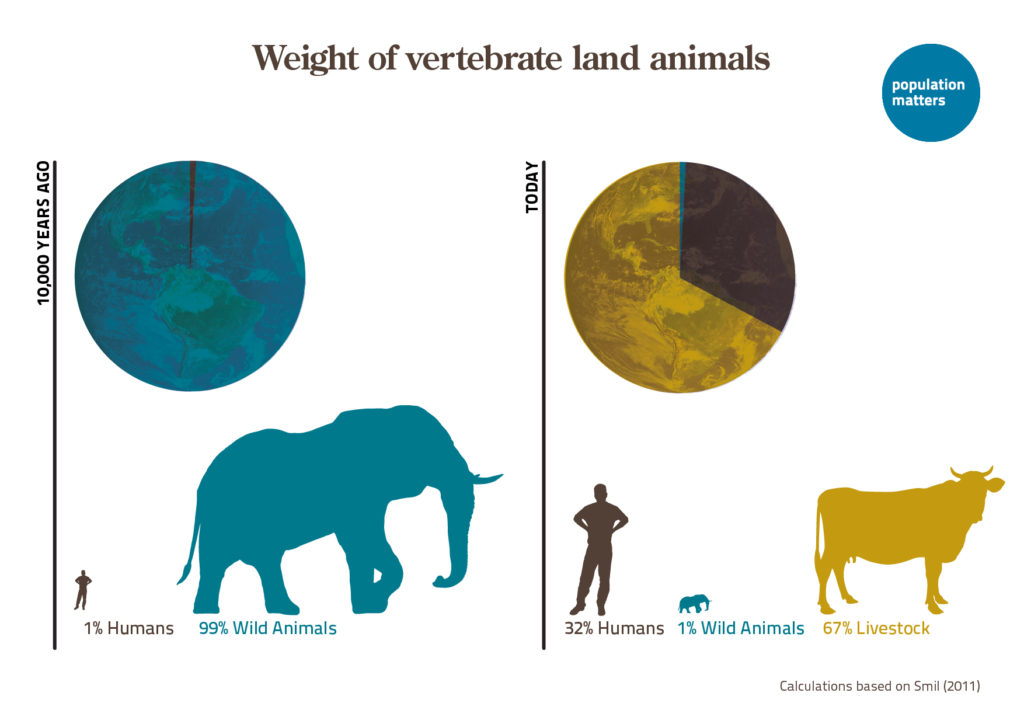
        One particularly eggregious example is Biomass Carbon Credits.
        The concept of Carbon Credits has some legitimacy… It began as the pelletization of the post-clearcut-logging slash leftover by the deforestation racket. Rather than allowing the slash to rot and emit GHG, the slash would be burned, causing the GHG to be released immediately.
        This of course summarily presumes an historical credit – prior to their operation…
        CO2 was sequestered in the slash and hence deemed removed from the atmosphere.
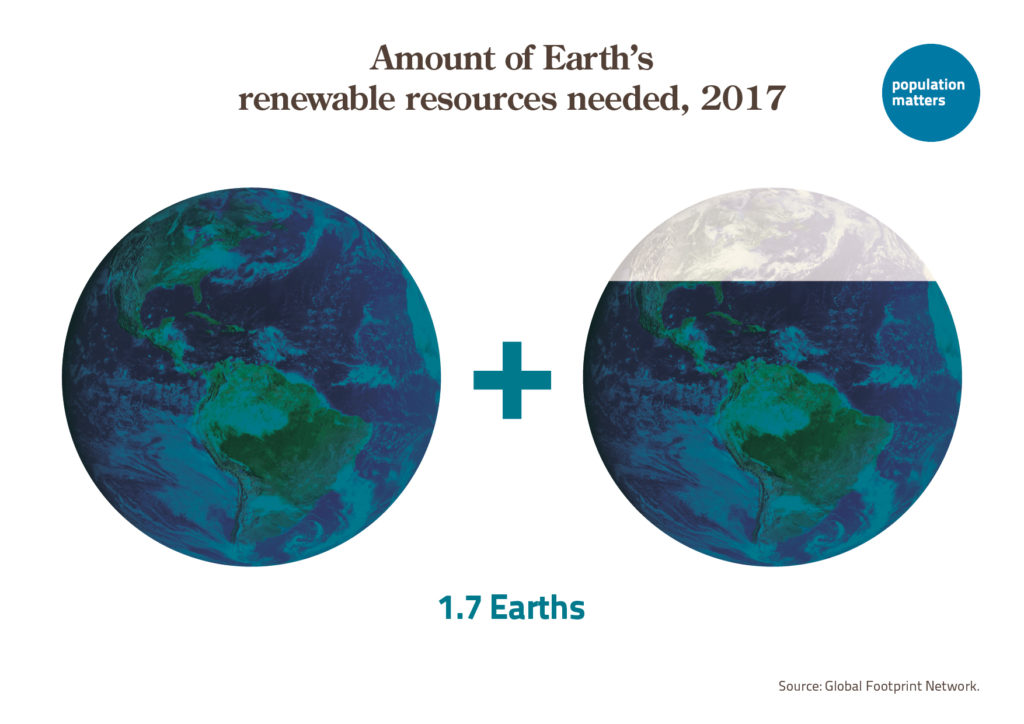
        On a local / possibly regional scale this could have some merit.

        In Brrrritisch Columbia, stands of interior old-growth are being clearcut and whole trees are ground up into sawdust and then pelletized and then hauled to the coast via train and shipped through the fjords and over the ocean to soggy old England on bunker-fuelled bulk cargo ships to be burned in coal-fired power plants instead of coal.

        Gathering slash off the ground is relatively diffuse compared to clearcutting whole trees and pelletizing them. I wouldn’t be surprised if they decided that processing their own slash was not worth the trouble compared with grinding whole trees – and just abandoned it…
        That is what corpirations have arranged for themselves to be legally obligated to do – to maximize shareholder profit no matter what.

        The concept is obviously psycho-sociopathic and eco-cidal, but is treated as a legitimate source
        of Carbon Credits.
        I don’t know if any legitimate unbiased objective competent bare-metal total cost accounting has been performed on this fraud, but I have no doubt that this illegitimate yet legal process is vastly Net-Positive in GHG.

    2. Kurt Klingbeil Avatar

      Aaaaah yes…. the Cheye-Nah & India trope…
      an important yet massively neglected, evaded, denied element to this is
      while China and India are indeed emitting a lot of GHG, the more honest and objective perspective
      must take into account the _accumulated_ emissions.
      DaWest has been emitting for at least a century, through a couple of Industrial revolutions.
      It is the destabilization of atmospheric and oceanic thermodynamics due to the Global Heating due to the _accumulated_ de-sequestration – particularly post WWII when petroleum combustion exploded.
      During most of this period Cheye-Nah and India were still largely rural agrarian and consuming / emitting well below their per-capita share of global resources

      A proper bare-metal total cost/emissions accounting must first attribute ALL emissions and resource extractions to country of end-use consumption – not to country of production/emission.
      Then the properly attributed emissions must be integrated over time to arrive are total aggregated emissions.
      Then a further factor commonly evaded is that to obtain a proper perspective, per_capita figures must be considered.
      It is fashionable to jump up and down shrieking “Cheye-Nah and India” in terms of their gross current instantaneous emissions figures while ignoring the emissions used to manufacture goods imported into the west, while ignoring a lot of externalized emissions by industry and the militaries.
      A proper comparison requires dividing those figures by the populations to arrive at per-capita figures.
      The current implicit presumption is that it is sufficient to only look at national numbers and ignore the population sizes – until it comes to chastizing them for OverPopulation.

  6. gaiabaracetti Avatar

    This is all true, but not the whole truth. Senegal’s fisheries have become depleted by industrial trawlers from Europe, China, Russia… The Senegalese traditionally fish in small boats that catch little and don’t go very far out into the sea.

    As for Jordan, I’m sure you know that one of the reasons it doesn’t have much water is that Israel takes it
    https://www.newarab.com/analysis/can-jordan-ever-escape-israels-grip-water-resources
    https://theconversation.com/israel-is-hoarding-the-jordan-river-its-time-to-share-the-water-126906

  7. David Polewka Avatar

    Nowhere else in Nature are there aging populations.
    Nowhere else in Nature does a population grow indefinitely
    without a crash. The purpose of natural enemies is quantity
    and quality control. Extending lifespans artificially by suppressing
    natural enemies is a selfish decision, at the expense of other
    critters, future generations, and the environment.

    1. David Polewka Avatar

      In the Facebook Group “Applied Philosophy”, April 10, Uzair Uzair posted:
      Is economic progress of a society a result of social liberalization,
      or is it the other way around?

      I posted a reply: Are the Laws of Nature more powerful than the Laws of Man,
      or is it the other way around?

      He responded: man is a product of nature so laws of man are laws of nature

      I responded: Nowhere else in Nature are there aging populations.
      Nowhere else in Nature does a population grow indefinitely without a crash.
      The purpose of natural enemies is quantity control and quality control.
      Extending lifespans artificially by suppressing natural enemies is a
      selfish decision, at the expense of other critters, future generations,
      and the environment.

      He responded: every species in nature is selfish, they do whatever they can
      for themselves no matter how “IMMORAL” it is

      Then I posted the above article by Alon Tal, and Uzair Uzair clicked “Like”.

  8. David Polewka Avatar

    Why America Should Sprawl [excerpt]
    By Conor Dougherty, April 10, 2025, New York Times
    In his 2005 book, “Sprawl: A Compact History,” the architectural historian Robert Bruegmann described sprawl as low-density development that is scattered around the urban periphery. That description, he noted, captures what the edges of large cities have looked like for most of history. The fringes of ancient Rome were known as “suburbium,” meaning outside the walls. There, and in so many other large cities — London, Paris, New York — growth has almost always pressed outward through a buffer zone that is neither fully urban nor rural. This wasn’t a permanent condition but rather the first step of growth, as, over time, the buffers filled in and were often incorporated into the city core: The Upper East Side of New York and the Hyde Park section of Chicago would have both been considered exurbs in their earliest stages of development.

    Before the 19th c., regular travel between the core and the outlying areas of cities made sense only for those wealthy enough to afford carriages, boats and other forms of private transit. First railroads, then automobiles changed that, opening the gates of suburbia to the middle class. In his book, Bruegmann traces widespread anti-sprawl rhetoric to London in the 1920s, when it emerged as a way for aristocrats to denigrate their new middle-class neighbors under the guise of protecting nature. The word was popularized in the U.S. by a 1958 essay, “Urban Sprawl,” by the Fortune writer William H. Whyte Jr., who described the modern suburbs as “smog-filled deserts.”

    “The attack on suburbs in the U.S. didn’t really become a dominant motif among the chattering classes until after World War II,” Bruegmann told me, “when the move out from the city by lower, middle and working classes in American cities became very obvious.” As millions of expanding families moved to larger homes in more spacious neighborhoods, artists and social critics followed with a long list of books (“Revolutionary Road”), songs (“Little Boxes”) and movies (“The Stepford Wives”) that criticized the conformity of suburbs and the American appetite for growth.

    Cities and states responded by adopting anti-sprawl rules that created growth boundaries, made it easier to sue over new development and in some cases prevented even moderate density by limiting housing to multiacre parcels. The predictable result was that the pace of building slowed, housing costs exploded and anti-development sentiment became so pervasive that by the early 1980s the word “NIMBY” — short for “not in my backyard” — had proliferated to describe it.

    One of the better accounts of this shift is a 1979 book, “The Environmental Protection Hustle,” by a professor of urban planning at M.I.T. named Bernard Frieden. Frieden documented how organizers in the San Francisco Bay Area were often as hostile to denser housing in urban neighborhoods as they were to low-slung developments on farmland. Chapters of the Sierra Club, he wrote, would protest exurban housing for being too sprawling, suburban housing for being insufficiently close to job centers and urban housing for taking up open space.

    Frieden’s book points to a second distinguishing feature of postwar sprawl: Because most of today’s suburbs were built after zoning and land-use laws became more widespread and stringent, it has been harder to fill in the closest suburbs with density the way older cities did. This has increased the pressure to grow outward. Since 1950, big American cities have added very little new housing in established neighborhoods, according to an analysis by Issi Romem, an economist at MetroSight, an economic research and consulting firm. It might not seem that way when you look out on the glass-tower apartments and condominiums that have risen in the downtowns of big and even midsize U.S. cities. But those projects are frequently part of an industrial redevelopment, like Mission Bay in San Francisco or Hudson Yards in New York. They rarely disrupt neighborhoods zoned for single-family homes, which account for a majority of the land mass in many U.S. metro areas.

    California and other states have spent much of the past decade trying to get out of this predicament by undoing single-family zoning laws and streamlining permitting for apartments, backyard cottages and other higher-density housing. These attempts to make it easier to fill in nearby suburbs where prices are highest — to fill in the previous generation’s sprawl — is the same process maturing cities have gone through for centuries. But density is gradual and takes decades to be effective. “Infill” — housing built in populated areas — is difficult and expensive. For all the vitriol this has caused in City Council meetings and legislatures, the overall pace of building has barely budged.

    Even if all the regulatory restraints were removed tomorrow, developers couldn’t find enough land to satisfy America’s housing needs inside established areas. Consequently, much of the nation’s housing growth has moved to states in the South and Southwest, where a surplus of open land and willingness to sprawl has turned the Sun Belt into a kind of national sponge that sops up housing demand from higher-cost cities. The largest metro areas there have about 20% of the nation’s population, but over the past five years they have built 42% of the nation’s new single-family homes, according to a recent report by Cullum Clark, an economist at the George W. Bush Institute, a research center in Dallas.

    https://www.nytimes.com/2025/04/10/magazine/suburban-sprawl-texas.html

    1. gaiabaracetti Avatar

      Average house size has increased significantly in the last decades, in many places but in the US especially. This article seems to ignore both the growth in consumption – “bigger per capita house” – and population – more people, more houses.
      We don’t need such big houses; personally, I think that they feel empty most of the time and are so much work to clean. They also encourage the accumulation of stuff, since there’s so much room to put it in. Then people die, and their children have to spend literally months of their lives dumping everything at the local waste disposal facility.
      I live in an area of Italy where, unfortunately, huge houses are normalised. However, since they are expensive to buy and maintain, and families are smaller now, they are not in such high demand anymore. Since our culture is extended family-oriented, people used to build an extra floor on top of the house for the kids when they were older. Then the kids moved away, and the extra floor was rented or sold to others, splitting the garden with them. Densification doesn’t require building more, you can just share what’s already been built.
      It seems that most of Asia has a smaller house culture, maybe because they are less individualistic societies and don’t put such a premium on ownership of private land around oneself.

  9. David Polewka Avatar

    from GROK, on X.COM: “Ask a question”
    Q. If you aren’t in favor of population reduction, then you don’t
    have empathy for wildlife, future generations, and the environment, right?
    —————-
    A. Not necessarily. You can care deeply about wildlife, future generations,
    and the environment without supporting population reduction. Empathy for
    these doesn’t require a specific stance on population size—it’s about
    sustainable practices, resource management, and innovation. For example,
    improving technology and consumption habits can reduce environmental impact
    while supporting both human and ecological needs. The issue isn’t
    black-and-white; it’s possible to prioritize all these without advocating
    for fewer people.

    1. gaiabaracetti Avatar

      I’ve noticed people treat Grok as some source of ultimate truth… are we worshiping machines now?

      1. kurt klingbeil Avatar

        “grok” means – at the very least – to have a basic comprehension, ideally a comprehensive and full comprehension
        A simplistic reductionist ideologically tainted man-ipulative X-fart hardly evidences any of that.

        As to the worship of machines and those who build and own them the answer is a clear unmistakable YES.
        That worship has resulted in the systematic systemic exploitation and extraction and emission …
        and had pushed and pushed and pushed
        past Silent Spring
        past Small Is Beautiful
        past Limits to Growth
        well into Overshoot and
        existential predicaments and MetaCrisis

        Who were the primary perpetrators and beneficiaries ?

        Too many brown people ?

  10. Esther Avatar

    The ultra wealthy have managed to shut the conversation around overpopulation down because they wanted people to remain poor, and limiting the amount of children was one way to get out of poverty… Davos was always just smoke and mirrors when it came to helping Humanity. It was mostly for networking and to keep sucking wealth up into their small circles.

    The same ultra rich own the press so nothing can be written on overpopulation or comments on the subject systematically get shut down. They influence economic “thinking” or rather doctrine as capitalism is based on mass consumption and cheap labour. As to that bag of skin filled to the brim with incoherent thinking that is Elon Musk, how does his head not explode? “We must leave Earth because Humans may become extinct”. “Everybody have as many children as you can so that a hell of a lot of Humans become extinct through the damage done by overpopulation”. Go figure! Maybe he reckons that when there is a collapse his destructive gene pool will remain standing?!

    As to the NGOs they fear they will get defunded if they speak up.

    We’ll never get out of this hole until we have one massive collapse, and I don’t buy for a minute Alon that Earth will ever sustain 10 billion or more, as it already cannot cope with 8.3 billion.

    After the black death the middle classes emerged because there was not enough people around to do jobs and so salaries were increased. This time we will probably not come out of our dark ages for a long, long time, if ever, as climate change will be ferocious for centuries or millennia.

  11. David Polewka Avatar

    In the Facebook Group “Applied Philosophy”, April 15, Gul Hameed posted:
    The rise of tariff wars following Trump’s coming to power suggests
    that globalization, as we know it, is undergoing a shift. States have
    increasingly begun to prioritize economic self-interest over global
    cooperation, posing challenges to the idea of free trade as a global
    common. This change indicates a deeper shift from global economic
    interdependence to national self-reliance. Are we witnessing the end of
    globalization, or is it being reshaped by global power rivalries and
    protectionist agendas? What is your take on it?
    ———-
    I responded: If you aren’t in favor of population reduction, then you
    don’t have empathy for wildlife, future generations, and the environment.
    ———-
    Mike Turley [all-star contributor] responded: Malthusians are evil assed morons

    1. gaiabaracetti Avatar

      Someone should do a thorough reappraisal of Malthus. He wasn’t as wrong as people think he was.

      1. kurt klingbeil Avatar

        Was there genuine “global economic interdependence” – like ever ?

        Probably the most genuine global independence dates back to the period prior to the invasion and occupation and exploitation by the euroTyrannies of Turtle Island and Afrika and Asia

        After a period of intense Imperial Colonial competition, some kind of “global economic interdependence” was imposed – within the colonial framework largely dominated by the Limeys in their
        “Empire on which the sun never sets”

        Then came a transition – due to various revolutions and wars to corpirate colonialism and the Amerikkkan hedgemon… under which umbrella the members of the Gx club enjoyed a kind of “global economic interdependence” (if one ignored the externalizations of risk cost and harm into tmTheGlobalCommons.

        Now the Amerikkkan hedgemon is crumbling due to its own malfeasance and debauchery and a multi polar world is re-emerging

  12. Esther Avatar

    Of course Malthus wasn’t wrong as such. A food system based on fossil fuels allowed us to “feed most of the world” for a while.
    Problem is any species getting fed thanks you by reproducing itself as much as it can… unless it were truly what I call “Sapiens”.

    We just have postponed the inevitable correction if you take the image of the Population Bomb we have extended the fuse whilst the bomb kept getting larger.

  13. […] Overpopulation: A New Survey Confirms the Cause of the Planet’s Environmental Crises – The O… […]

  14. […] Overpopulation: A New Survey Confirms the Cause of the Planet’s Environmental Crises – The O… […]

Leave a Reply

This site uses Akismet to reduce spam. Learn how your comment data is processed.

NOTE: Comments with more than one link will be held in wait and will only become visible on the site after an admin has approved it.

Explore the content and topics covered by TOP, search here

Blog categories

Gallery of infographics – Learn more about overpopulation and environment

Discover more from The Overpopulation Project

Subscribe now to keep reading and get access to the full archive.

Continue reading