Housing Costs a Matter of Supply and Demand

The Trump administration’s favors to big business threaten America’s environment. But its immigration crackdown has sparked welcome debates about the costs and benefits of continued growth, including its impact on affordable housing.

by Henry Barbaro and Philip Cafaro

Last month, U.S. Vice President J.D. Vance argued that a surge in illegal immigration has pushed housing prices beyond reach for many Americans. An average of 2.4 million immigrants per year arrived in the U.S. between 2021 and 2024 — and they all needed somewhere to live. Vance noted that inadequate new home and rental construction also contributed to the problem.

“Under the Biden administration,” Vance said, “the price of a new home literally doubled in four years.” This is true if you combine the 33% increase in retail home prices during this period with a large rise in mortgage rates, doubling the ultimate cost for a new home.

Politicians across the political spectrum are talking about America’s “housing crisis.” Home prices and rents have surged beyond what many households can afford. Numerous factors appear to have played a role in driving up housing prices, including high interest rates and a focus on building luxury homes, the most lucrative part of the industry.

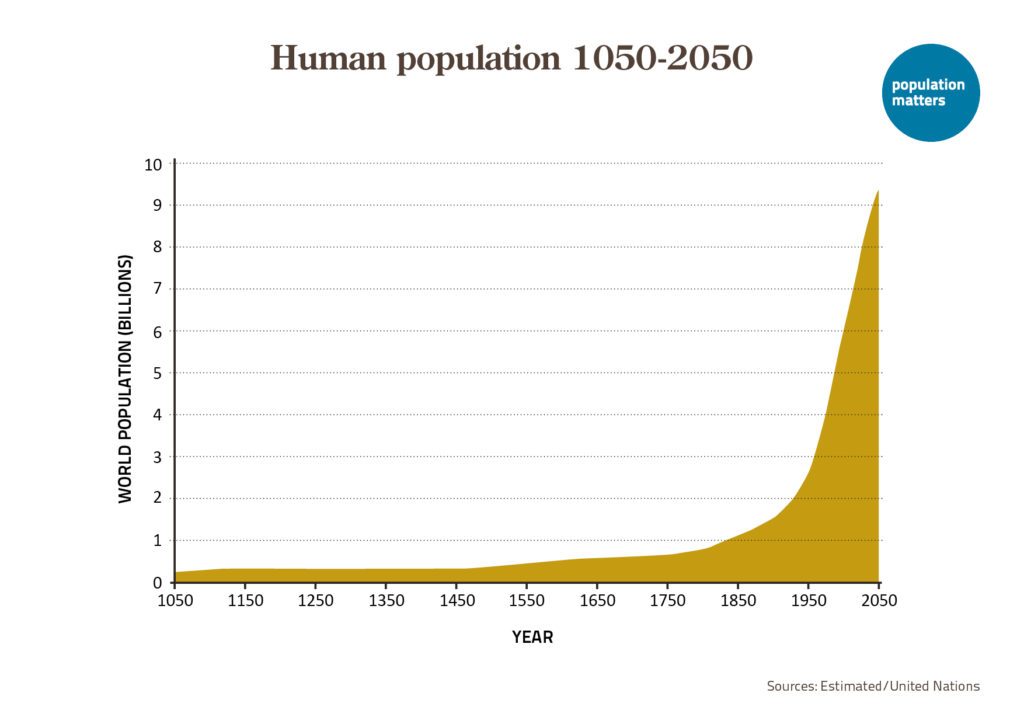
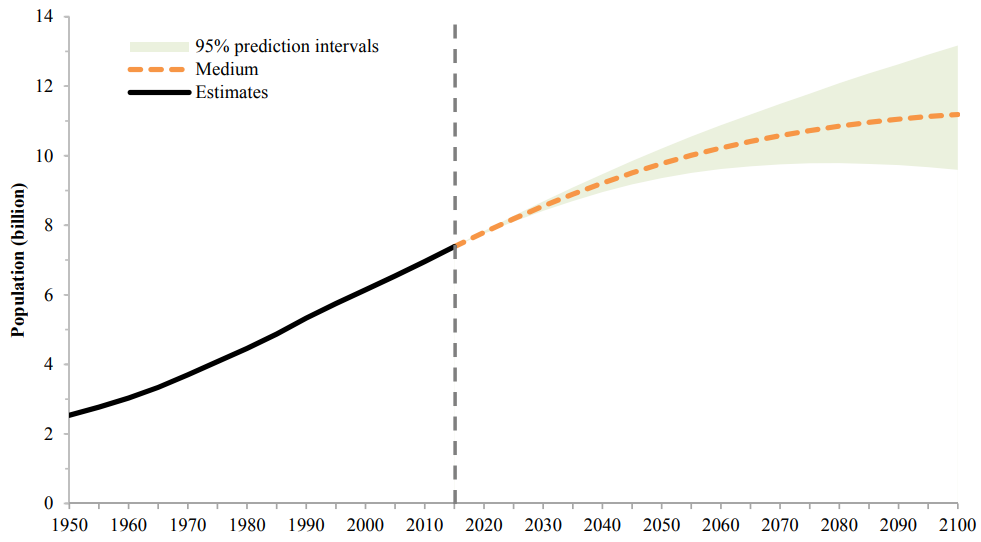
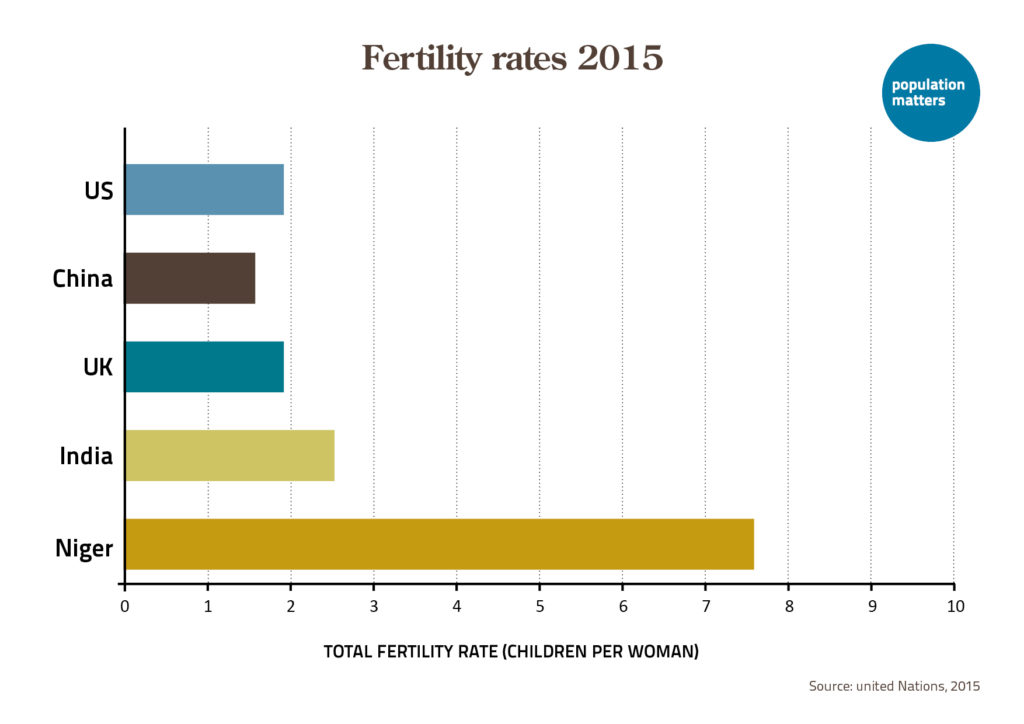
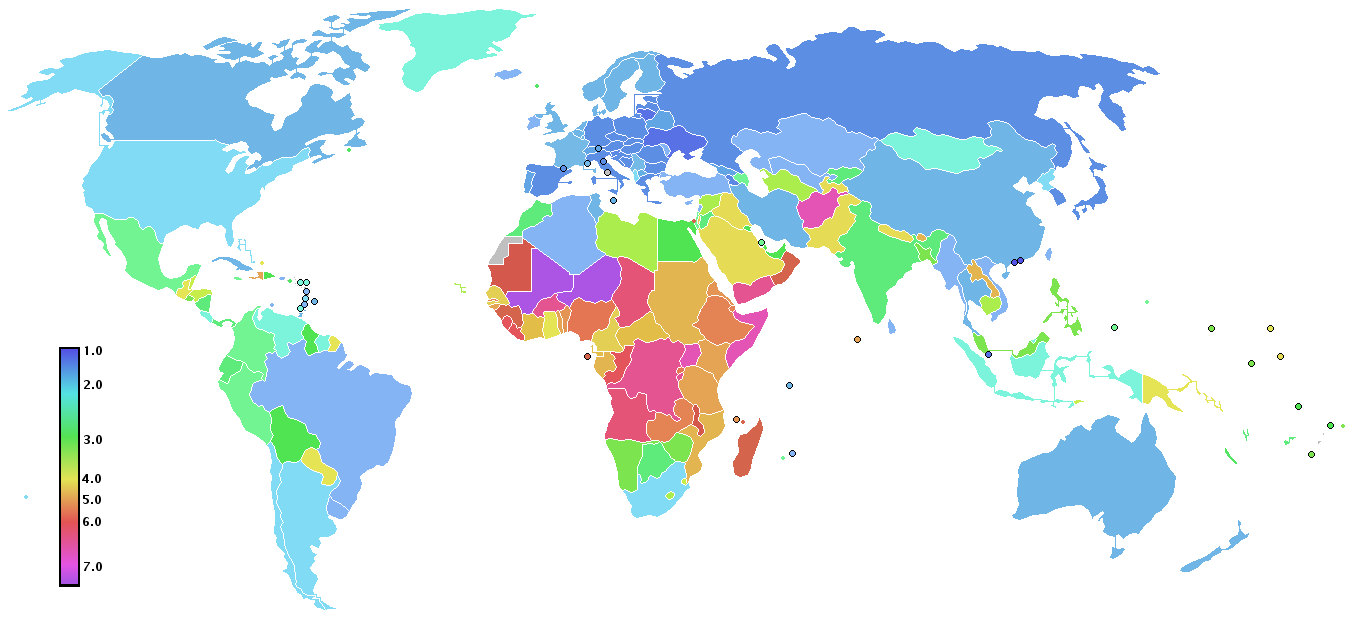
Still, housing prices are ultimately a matter of supply and demand, and demand is partly a matter of sheer human numbers, which continue to increase in the U.S. This population growth comes primarily from immigration, since American fertility rates have been well below replacement level since the 1970s.

Demand Outpacing Supply

While business journalists and housing experts focus almost exclusively on supply, the demand side of the equation is equally important in determining housing prices. When the number of families grows faster than the number of housing units, competition for existing housing increases and prices rise. This has happened in many parts of the United States over the past four years — and in Canada, Australia, and other developed countries where high immigration has driven rapid population growth.

The U.S. experienced a notable immigration surge under the Biden administration, with the foreign-born population reaching a record 53.3 million, the highest level ever, both in absolute numbers and as a percentage of the total population (currently 344 million). Millions of new arrivals required housing. Many located in the same metro areas where shortages were already most acute. This added demand tightened vacancies and drove rents up, while pushing actual homeownership even further out of reach for younger and lower-income families.

The Density Dilemma in Older Cities

Some argue that the solution to all this is simple: build more housing. But increasing supply comes with unavoidable trade-offs, depending on where construction occurs.

In older, land-constrained U.S. cities — such as Boston, Philadelphia, or New York — there is little open land left. Additional housing means greater density: taller buildings, smaller housing lots, fewer backyard spaces and shade trees, and infrastructure stretched beyond its capacity.

The construction of a new tall building in Boston.

Residents lose sunlight, green space and neighborhood character. Urban life grows louder, more crowded and more stressful. Taxes go up to accommodate more growth.

Quality of life diminishes in denser cities. While more apartments implies more affordable housing in theory, the reality is “shrinkflation” where you get incrementally less for the same price. Density tends to feed on itself, increasing demand even more. Housing prices almost never decline as urban densities increase; instead, they go up, along with the number of people chasing housing vacancies.

The Sprawl Problem in Newer Metros

In newer, fast-growing U.S. metropolitan areas — Phoenix, Atlanta, Dallas, Las Vegas — a different problem emerges. There is land, but expanding housing produces sprawl. Subdivisions creep across deserts, farmland and forests. Traffic worsens and commute times lengthen. Natural ecosystems disappear under concrete; the remnants get smaller and disconnected from one another.

The urban sprawl of Las Vegas.

New housing developments create demand for new highways, commercial distribution centers and schools, new sewer pipes and power lines. Taxpayers carry the costs of building all this new infrastructure for decades. Communities gain homes but lose open space, while wildlife loses essential habitat. Metro area populations go up, while their residents’ quality of life declines. Urbanisation means that more people live further away from natural areas, alienating them from wild nature.

The Missing Ingredient: Demand Management

Whether sprawling or dense, in both cases, more housing solves one problem only by creating others. The missing ingredient in America’s housing debate is demand management. If the U.S. continues adding millions more residents each year, no amount of building will restore housing affordability. But by moderating immigration-driven population growth, the country can relieve pressure on housing markets without sacrificing the livability of existing communities or paving over open spaces and driving wildlife populations extinct.

Aligning immigration policy with housing capacity is necessary to maintain Americans’ quality of life — and to share the landscape fairly with other species. Going forward, reducing immigration will be key to affordability, sustainability and livability in U.S. communities.

Published

54 responses to “Housing Costs a Matter of Supply and Demand”

  1. ET Avatar

    The hosts of this Overpopulation blog should be ashamed of themselves. Instead of scientific discourse, this has become the home for mindless rants against immigration.
    It should rename itself The Anti-Immigration Rant.

    1. Kathleene Parker Avatar

      Sorry, but those arguments ARE SCIENCE-BASED! Consider, how can we fight climate change as ours–the highest per-capita carbon nation on Earth (fair higher per-capita than China) explodes its population almost entirely through immigration? How can we accommodate ANY new growth in the American Southwest (the nation’s fastest growing area) consider the entire Colorado River system at the brink of collapse. And how about social considerations? Any concern at all about the concerns of CORETTA SCOTT KING, CEASAR CHAVEZ AND BARBARA JORDDAN (D. – Texas (back when Dems CARED about resident poor) that Blacks and other minorities are constantly pushed to the back of the line and replaced by immigrant labor? So, perhaps we require–scientifically and socially–and immigration “rant!”

    2. Philip Cafaro Avatar

      For a “mindless rant,” it took Henry and I a fair amount of time to write. I notice that you don’t point out anything that we got wrong in it, either. Not the connection between immigration and population growth, or the connection between population growth and rising housing prices, or anything else. So what, exactly, is your beef?

      Time’s up on shaming citizens who bring up the negative consequences of mass immigration on their societies. Fewer and fewer people are willing to accept that. Either tell us what we are getting wrong, or step off.

      1. ET Avatar

        Here is a scientific analysis of why housing prices have risen in the US.
        5 Reasons Behind the U.S. Housing Price Surge, Leaving Many Struggling to Buy or Rent https://share.google/GrRGEWfba2HTfQZQl

      2. Philip Cafaro Avatar

        That isn’t a “scientific analysis” of rising US housing prices. It is a standard business journal article. It doesn’t pretend to give a comprehensive account, saying: “the answer isn’t simple. Here are some of the primary reasons why homeownership and renting in the U.S. has becoming increasingly expensive.”

        The article begins by saying that “At its heart, the housing crisis comes down to a basic economic concept: supply and demand. ” However, as is typically the case in mainstream business reporting, the “demand” side is neglected. It does not, however, offer any justification for this.

      3. ET Avatar

        The article says the reasons for rising home prices are:
        1. Increasing demand (your point).
        2. Mortgage rate issues that discourage selling homes, so reduce availability.
        3. Local regulations that discourage home construction
        4. Institutional buyers buying homes as an investment, taking them off the market.

        So they point to 3 issues in addition to yours.

        It is silly to dismiss this as not scientific because it is a business analysis. Business analyses are incisive because they put their money where their mouth is.

        I am amazed you took the time to write thus article without doing some basic research.

  2. tom my Avatar

    The housing situation in the US is a microcosm of the situation on the planet. The human population continues to increase, while the amount and quality of habit is decreasing.
    We are playing by the same rules as the other species we share this planet with. So, we have seen plenty of examples of how this plays out.
    We know what needs to be done to begin to lower the pressure. But it appears we lack the will to do it?

    1. Kathleene Parker Avatar

      And all that as everyone ignores the ghastly water and energy requirements of AI and that with NO conversation about its myriad dangers.

      1. Philip Cafaro Avatar

        Good point Kathleene. Here is a recent article on data centers and increased electricity rates in the US, with lots of links to further information. We would be interested in hearing if other countries are experiencing similar problems with the proliferation of data centers: https://www.smithsonianmag.com/science-nature/with-ai-on-the-rise-what-will-be-the-environmental-impacts-of-data-centers-180987379/

  3. Walnuts Avatar

    Yes we have seen examples of how growth beyond carrying capacity plays out in other species. But we humans are so much more special than the rest (really, only in the way we have been able to carry our malignant behavior and perspective to such global extremes). Pride goeth before a fall…but we just can’t stop crowing over ourselves.

    1. Philip Cafaro Avatar

      The longer I explore these issues, the more convinced I become that this sense of human exceptionalism, this species conceit, is the heart of the problem. My mentor Holmes Rolston III, the environmental philosopher, passed on this year. His writings are a gold mine of insight into this aspect of our environmental challenges: https://philosophy.colostate.edu/people/rolston/

      1. Jack Avatar

        Last March was an in-depth editorial about David Suzuki. It was in a magazine insert in the Seattle Times. He now lives in Vancouver BC and the report was about his teachings and being fed up with humans inability to grasp the simple reality of where we are at in this present day and age. He and his wife are still living and active but, more and more, feel like their butting their heads against a concrete wall. https://en.wikipedia.org/wiki/David_Suzuki

  4. winthrop staples Avatar

    One dimension of the corporate globalist inspired …. what I would term the “culture of mass migration” that is seldom allowed to be mentioned in the media or academia is its damaging effects on the global south or 90% of human beings that live in developing nations. A number of very intelligent and patriotic foreign students I have studied with at American universities over the years have expressed their despair that so many of the best and brightest in their countries “go for the money” to the USA, Canada, Europe etc instead of staying home and working and perhaps even fighting to made their countries decent places to live. While at the same time pledging to return home and using what they learned here to improve their societies.
    And Latin American academics in the US have also reported the extreme damages that the “political escape valve” of the USA and European elites encouraging mass immigration does to their countries of origin – by removing the dissatisfied and most capable of forcing political progress in their home societies too. And finally, the transparent excuse or guilt-trip used by our 1% greedy for “bodies” mass immigration advocates – that “Well our ancestors came here seeking $$$ and abandoned their home lands to fester in authoritarianism and corruption too!” is obviously not an adequate moral reason for encouraging and continuing that same selfish behavior now!!!

    1. Gaia Baracetti Avatar

      While I 100% agree with this, it should also be pointed out that redistributing wealth at the global level (i.e. rich people consume less, poor people more) would do a lot to solve the problem at the root.

  5. Gaia Baracetti Avatar

    All of this is true and I wrote as much recently.
    There are, however, other reasons too for high housing prices: people owning second/empty homes, the costs of bureaucracy and regulations, often unnecessary, and short-term rentals to tourists.
    This doesn’t negate your point, but again, it’s a combination of population AND consumption.

    1. Philip Cafaro Avatar

      Absolutely. And there are good policy changes that can help with the factors you describe. The main point of our piece really comes in the second half, where we consider the trade-offs involved in trying to accommodate ever more people.

  6. Jack Avatar

    In the real world nature plays no favorites. We humans are slow to understand this simple fact and too quick to use the emotional ploy. This planet has a strict carrying capacity and we humans have already exceeded that capacity to the detriment of all life forms and ourselves. We ignore the fact of the imperative of facts on the ground and the immigration issue ignores the damage that the housing and other costs also affect them. They are not the problem. The problem is our thinking we can outsmart the system (natural) that supports all of us.

    1. gaiabaracetti Avatar

      Jack, replying to the comment above – David Suzuki has five children. Five.

      1. Jack Avatar

        Thank you for this. I went back and re-read the editorial and saw that he had 3 from his first marriage and, seemingly two daughters from his present marriage. Sometimes we see what we want to and miss some glaring inconsistencies. That said. Dr. Suzuki is pushing 90 and probably got involved with the environmental issue before overpopulation became formalized. He also lives in an upscale house on Kitsilano Beach and a vacation home on an island. He got these things before they became upscale. Still, too often we pay more attention to the messenger than the message and hypocrisy is a hard thing to overlook. I was the oldest of 7 and learned, even though we had a nice childhood, numbers can make things difficult. I didn’t want to have kids but my daughter was an oops baby so I then got snipped. I followed the UN Cairo Conference then joined the Seattle chapter of ZPG. This issue spoke to me, loudly. I started writing and getting published and was asked to join the board and trained as secretary. Every board I’ve since been on (environmental and non) I’ve been in that position. We all make mistakes we often come to regret (but I doubt anyone having kids do, especially if the kids turn out well). Unfortunately, those mistakes will and often do follow us. Recently, I had a run-in with a now former friend I’ve had for 17 years. I wrote and got published a letter (about immigrants and overpopulation) concerning an editorial and showed it to my friend. He went ballistic and screamed I was a racist. Accusations of racism destroys people’s careers and reputation. The world is full of non-thinking, thin skinned people. It’s a part of the human condition.

  7. Daniel Avatar

    One nitpick on https://www.numbersusa.com/blog/population-growth-degrades-water-quality/ this is an explicitly anti-immigration source and it would be good to have an additional source of this claim. From my understanding CSOs are much more a function of our legacy infrastructure. Those pipes have already been built (new systems are not built as combined) and so overflow events are more a function of high intensity rain events (increasing with global warming) and increased impervious surfaces (largely irrelevant in places like Philadelphia and NYC which have already been extremely heavily developed). Arguably, the effect is actually the opposite, when the population declines or becomes poorer in places like Philadelphia (without immigration, or with urban flight) then the per-capita expense becomes much harder to bear replacing the legacy infrastructure. So I would like stronger citations that specifically for cities quality of life reduces as density increases. Many aspects of life in fact go in the opposite direction (cost per citizen, access to nearby businesses / cultural events)

  8. Henry L. Barbaro Avatar

    Daniel, although I see your points — all else remaining equal, in older cities, CSO discharges increase with population growth for two reasons: 1) stormwater volumes increase as impervious area increases, and 2) sewage volumes increase. Philadelphia provides a good example — https://environmentamerica.org/pennsylvania/center/media-center/release-study-shows-over-12-5-billion-gallons-of-untreated-sewage-released-into-philadelphia-rivers-each-year/. The City’s expanding impervious cover is currently at about at 72%, and its population continues to grow. As is almost always true, population growth exacerbates environmental problems. There may be some economic and cultural benefits to population growth, but too often the downstream sacrifices to public/natural resources are not given the full consideration they deserve. True sustainability cannot be achieved without population stabilization.

    1. Daniel Avatar

      On average I agree. Sustainability requires population stabilization. Even in Philadelphia it’s true that the more people live there the more resources they’ll use. I’m only making a narrow point, which is that specifically for CSO discharges (and other legacy infra challenges) those are made more difficult with a declining population. The fixes for CSO really is to separate the sewage infra which costs billions of dollars. That is simply harder to afford the fewer people you have to spread that cost over. There’s lots of other reasons why the cons of a growing population outweighs the pros. But specifically for CSO discharge I’m not convinced from what you’re citing. The relationship between increased population and increased level of impervious surface isn’t strong enough to outweigh the increased difficulty of paying for the needed infra projects (and keep in mind in almost no city will the impervious surface decrease, even if the population declines). Would be curious to understand if you think the infra projects aren’t needed or if there just outweighed by the damage of more people?

      1. gaiabaracetti Avatar

        I think that where there’s serious depopulation, vegetation will slowly break impervious surfaces. It takes a long time though.

      2. Henry L. Barbaro Avatar

        Hi Daniel,
        Yes, I agree — the best way to mitigate CSOs is to separate the sewage from the stormwater (i.e., replace lots of piping). Maybe Philadelphia (for example) will get its act together and some day separate their sewers. But, in the meantime, their immigration-driven population growth will intensify their CSOs (e.g., more sewage, more stormwater).

  9. gaiabaracetti Avatar

    ET, “Local regulations that discourage home construction” is also related to demand (you need to build homes because someone wants them). Institutional buyers is more complex, but it’s also partially related to demand because if no one wants those homes they will eventually be worthless. Investors only buy them where there’s demand, or predicted to be.

  10. dag lindgren Avatar

    Decreasing population means lower cost for housing but also loss of value. Influent people own and fare to loose if population decreases. That is one of many factors acting against shrinking populations.

    1. Philip Cafaro Avatar

      We can speak of the ‘value’ of my house in two ways: the monetary amount I could receive by selling it, and the concrete benefits I receive from it in terms of shelter, community belonging, etc. As with so many things in the U.S. in recent decades, we have prioritized monetary value at the expense of other values.

      For example, we have allowed speculators to buy up apartments in our most expensive cities, turning them into air b and b’s, for tourists. When we should have limited or outlawed such ownership, to keep more of those apartments for full time residents, so they could enjoy the benefits of having their own home. It would have meant already wealthy people making less money, and maybe lessened the overall monetary value of the housing stock in these cities. But that would have been better in terms of people’s wellbeing.

      1. gaiabaracetti Avatar

        European countries and cities are putting restrictions on short-term holiday rentals – not sure about the US.

      2. Philip Cafaro Avatar

        Gaia, as usual, we are talking about it a bit, but not doing anything about it

  11. kurtklingbeil Avatar

    Quoting JD Vance – or any of the current incestuous clique of regressive reactionary REProbate who defile the governance structures in the current illegitimate – not yet decapitated and excised – MAGA coup is certainly a new low.

    The Van-ster is completely clueless about everything and what he doesn’t know he supplements with lies.
    Even if one were so credulous as to pick up a thought-fragment from anyone in the Vichy-esque regime, it would be (and is) intolerable and indefensible to quote them.
    The first impulse must be to fact check it and then to trace where they had accreted that random neuron firing.

    It seems clear that any semblance of concern about “overpopulation” is myopic xenophobic and rooted in MAWA

  12. kurtklingbeil Avatar

    Here’s a detailed comprehensive critique of this regressive reaction drool and drivel …

    This argument presents a fundamentally flawed analysis of the US housing crisis that misidentifies the root cause, ignores overwhelming economic evidence, and proposes a solution that would harm the economy while failing to address the actual problem ���.The Real Driver: Supply Restrictions, Not Population GrowthThe US housing shortage exists primarily because of restrictive zoning regulations and land-use policies, not immigration-driven population growth ��. Research shows that zoning regulations have lowered aggregate US economic growth by 36 percent, yet homeowners continue to impose strict regulations to protect local property values while failing to internalize broader impacts on metro-wide affordability �. The housing supply gap reached nearly 4 million homes in 2024, with some estimates ranging from 2.5 to 5.5 million units ���. This shortage stems from decades of underbuilding relative to population needs, not excessive population growth.Fragmented local zoning authority creates overly strict regulations that artificially cap housing supply and prevent cities from adapting to changing demographics ��. Municipalities with more regulatory fragmentation experience stricter zoning and higher housing costs �. Meanwhile, housing construction has actually aligned with current demand growth in recent years—developers built close to current demand over the last five years—yet affordability remains poor because existing regulatory barriers prevent supply from responding adequately to demand ��.Immigration’s Economic ContributionThe argument completely ignores immigration’s substantial economic benefits. The Congressional Budget Office projects that immigrants will add $7 trillion to the economy over the next ten years, with GDP growing by $8.7 trillion due to an expected surge of 5.2 million immigrant workers by 2033 �. Immigration increases national output and raises GDP per domestic worker by adding productive labor to the economy �. Research consensus among economists finds that immigration is, on balance, a net positive for the US economy �.Even in Canada, where immigration’s contribution to housing price growth has been studied more directly, immigration accounted for only 21% of housing price growth in major municipalities between 2006 and 2021 �. The study explicitly notes that government policies, limited housing supply, and rising regulatory costs are “just as critical in shaping the affordability crisis” �.The Environmental MisdirectionThe claim that building more housing requires “paving over open spaces and driving wildlife populations extinct” is a red herring that conflates housing construction with urban sprawl. Restrictive zoning is actually what drives sprawl and environmental damage �. When municipalities restrict dense, multi-family housing development, growth gets pushed to peripheral areas farther from urban centers, creating the exact sprawl pattern the argument claims to oppose �. Urban sprawl causes habitat fragmentation, ecosystem disruption, and biodiversity loss ���. The solution is allowing denser, more efficient housing development in existing urban areas—precisely what current zoning restrictions prevent.The False ChoiceThe argument presents a false dichotomy between housing affordability and environmental protection. In reality, enabling denser urban development through zoning reform would simultaneously improve affordability, reduce sprawl, and protect natural habitats. Research indicates that centralizing zoning decisions and reducing regulatory barriers could alleviate housing affordability challenges without requiring low-density sprawl �. The National Association of Realtors data shows that middle-income buyers need hundreds of thousands of additional listings priced below $255,000 to achieve a balanced market—this requires building, not restricting population �.Reducing immigration would harm economic growth, reduce GDP, and decrease tax revenues while failing to address the core regulatory barriers that prevent housing supply from meeting demand.

    1. Henry L. Barbaro Avatar

      I’m aware of your compelling arguments for more homebuilding and densification. But, rather than debate each point, I’m wondering whether you have opinions about any limits to population growth in America. My objective is to promote population stabilization (through immigration-reduction) so that America can one day achieve authentic sustainability. It seems that your vision is more Libertarian and market-driven, where mass immigration continues to drive America’s population growth. What do you think would be an ideal population for America? Our nation now is at ~345 million, and the Census Bureau projects another 40 million by 2060 — with the great majority of that growth due to immigration. Do you think America would be best with a population of 500 million? One billion? Or is the limit reached only when it no longer makes economic “sense” to keep growing?

      1. kurtklingbeil Avatar

        I would, hypothetically, challenge you to take a breath, defer any additional knee-jerk whattaboutist retorts, actually read and contemplate the content of the critique I posted (most of which I am not the Author) to the point of comprehension.

        Then, if it feels appropriate and you’ve got the chops, rebuke/repudiate debunk whatever you can and see whether just jumping on the “yabbut” bus is the most genuine response.

        Perhaps focus on the economic implications of a nation of “kicking away the ladder” immigrants slamming the door on new immigrants …

        Also, uplever whatever “arguments” you have about the increased eco-loading of new immigrants moving to the most resource consumption combustion place on earth and consider the ethical implications of arguing that only old-immigrants and descendants of the colonialist invaders have the fundamental right to excessive consumption/emussion

      2. Daniel Avatar

        I think you do have to consider the moral dimension of the arguments. I am assuming you aren’t in favor of holocausts in favor of reducing population. What about when natural famines occur, should the US help food aid or let “nature take it’s course”? What about man-made famines like in Sudan, should US help prevent the famine’s consequences from being realized? I think similarly, to a lesser degree, immigration has a moral component as a large portion of the immigrants are moving from desparate situations.

        In general, I am skeptical that all of these other countries won’t eventually catch up to the consumption footprint of the US unless something is done. And preventing immigration feels like twiddling at the margins and lets us maintain the illusion that the world doesn’t have too many people. The world is a very big place and the global population needs to drop. So I would rather focus on systemic sollutions that aligns people’s incentives with a sustainable earth. I do believe in markets being effective pricing mechanisms. So things like: not subsidizing flood insurance, a properly priced carbon tax (as the EU is making moves towards), a material resource consumption tax for any newly extracted materials, public transit investments, metered parking fees everywhere, heavy fees for developing undeveloped land, subsidies and investments for reuse of existing materials.

        I am sympathetic why it might feel like with US current politics none of those above solutions are feasible and immigration is the only level that we have to pull. But I think that is short-term thinking. If we don’t pull any of the other levels we will be quite screwed globally, whether or not we let in 50 million more immigrants.

      3. Daniel Avatar

        And to directly answer your question. My proposal would be to never cut off refugee immigration (which is a minority of existing immigration). You need a regulated border and to process people at the border instead of waiting for a court judgment 3-5 years later. Process at the border, if people can demonstrate a credible threat or are coming from countries that are actively in dire straights: Haiti, Venezuela, Sudan then they should be allowed in. For the rest of immigration I think the number should be a function of the mood that the American public is in. That acts as a natural responder to how overcrowded the current conditions are. Right now, that number can be lower, in a decade or two once people start feeling the consequences and realizing that immigrants are important to America then the number can go back up.

        But no, I don’t believe in arbitrary limits of population for just the US. We need to solve this globally.

    2. Stellarwind72 Avatar

      Next time, please use some spacing. No one wants to read a giant wall of text.

  13. kurtklingbeil Avatar

    https://www.perplexity.ai/search/analyze-and-critique-whether-s-IXVTtwgTRnqPEYRFDMYgHw

    Reducing immigration would harm economic growth, reduce GDP, and decrease tax revenues while failing to address the core regulatory barriers that prevent housing supply from meeting demand. The “demand management” framing fundamentally misunderstands that housing markets can and should respond to population growth when regulations allow them to function properly.

    1. gaiabaracetti Avatar

      “harm economic growth, reduce GDP” – these are not bad things, actually

    2. Philip Cafaro Avatar

      Basically, your position is we should encourage continued population growth, including by doing away with local control of zoning decisions. Regarding our worries about sprawl, you say once we do away with zoning restrictions, that will encourage more dense building.

      Actually, relaxing zoning restrictions tends to encourage both densification in older areas AND sprawl into previously undeveloped or lightly developed areas. That’s because many people prefer less dense neighborhoods.

      One thing that should be beyond dispute: when you add more people, there is less habitat and resources for other species. We have published on that issue here at TOP.
  14. Henry L. Barbaro Avatar

    kurtklingbeil: I’m hoping you can give your views on growth and limits. Also, because it’s relevant to this webpage, do you believe America (or the world) is overpopulated?

  15. Mark Tang Avatar
    It’s the ‘Holocene’ stupid! …is my standard remark these days to an array of frighteningly retrograde ideologies.

  16. gaiabaracetti Avatar

    Daniel, if you wait for every problem to be solved globally before you do anything at home, you’ll never solve anything.
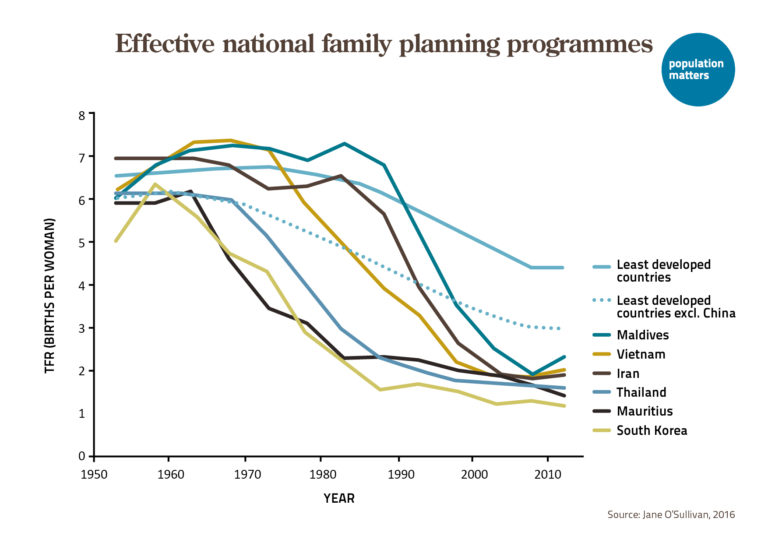
    Still, this blog has repeatedly argued for providing family planning options to people in all countries, especially high fertility ones, as a win-win strategy.

  17. Richard Garner Avatar

    I’d like to add another note to this discussion. It is not just the affordability of housing that is negatively impacted by population growth. Housing growth, whether it is single-family homes causing sprawl, or high-rise apartment buildings and everything that comes with it, increased construction for business, trade and distribution has a negative impact on the biosphere given a sufficiently large number of people involved, that we need to be concerned about. Both population growth and economic growth have to be stopped and gradually reversed if humanity and much of the rest of life on Earth are to have much of a future. I read your book How Many Is Too Many? and the book you co-edited with Eileen Crist, Life on the Brink, some years ago. Good work.

    1. Philip Cafaro Avatar

      Thanks Richard, I appreciate your kind words about my books!

      You are right: “Both population growth and economic growth have to be stopped and gradually reversed if humanity and much of the rest of life on Earth are to have much of a future.” Frank, Jane and I started TOP eight years ago focused on population. But we’ve always recognized overpopulation is only part of the larger problem: ecological overshoot caused by an excessively large human economy. We and our various collaborators and contributors over the years have grappled with the relationship between population and the other factors contributing to overshoot.

      In any case, dialing back the size of the human project appears to be the key to ecological sustainability. My sense is that more people are coming around to this view, but not nearly enough yet to have a real impact on economic policies. Although if any readers have hopeful stories about societies embracing limits, we would love to share them!

  18. Wilson Avatar

    Sorry, I’m slightly confused. You see, I live in China where high housing costs are often cited as one of the main reasons for the low birth rate. My question is: If reducing population is the goal, wouldn’t you want housing costs to continue to be high?

    1. Henry L. Barbaro Avatar

      Yes, good question. In America the average fertility rate is below replacement (about 1.6), so high birth rates are not causing overpopulation and high housing costs. This blog’s thesis is that mass immigration into America is raising the demand for housing and exacerbating the lack of affordable housing.

    2. gaiabaracetti Avatar

      High housing costs only benefit the rich and rich foreigners and speculators. China is overbuilt, so I don’t think that too few houses are why people aren’t having many children. I think it’s more cost of living in general.
      Mainly, you don’t want your environmental policies to hurt the poorest members of society. It’s better to limit speculation on housing and the influx of people. I don’t think that people migrate to the US and Europe because houses are cheap…

  19. gaiabaracetti Avatar

    Jack, I personally believe that people that preach about the environment but are either living a high consumption lifestyle, or have many children, should not be taken seriously. I wrote an article on this very topic for this blog, citing Leonardo Di Caprio as an extreme example.
    There are some people who do regret having children, unfortunately, but as far as I can tell it’s more about lifestyle and personal preferences than the environment. If a person made the choice to have more than 2 kids before they realised that the planet is overpopulated, that’s fine, we understand that people usually love their children no matter how they came about and don’t tend to wish they didn’t exist, but I think it would be fair for them to say something like: “I don’t regret having my children because they are all wonderful people and I wasn’t as aware then as I am now, but with this newfound awareness I would recommend no more than two to people who are yet to make a choice.” Or something like that. Otherwise it’s just a matter of “do as I say, not as I do”, and people don’t respond well to that.

    1. Jack Avatar

      Again, more complexity to a serious problem. To me, it’s the message that’s important and hypocrisy from a high living messenger creates problems that, may and often does, hurt the critical issue. I’m aware that with an increasing number of us there is also an increasing variety of how many of us view the world. Maybe we should have a topic devoted to the increasing population contributing to a wider variety of viewpoints.
      I remember when Al Gore was running against W Bush, Gore was seen as being a hypocrite with his high lifestyle. We saw what happened to that idea and the world lost.

      1. gaiabaracetti Avatar

        I don’t think that the world would have “won” had Al Gore become president. We’ve had world leaders elected who were apparently willing to do something about climate change, and where has that got us so far?
        I remember thinking the same when I saw Gore’s movie and he was driving everywhere in an SUV (SUVs weren’t as prevalent then). It was jarring and made him look ridiculous, just that alone.
        I personally live a very modest life style by Western standards, so it’s not like the messenger trumped the message for me, but I know a lot of people who use the hypocrisy of others as an excuse to do nothing. Also, if the rich aren’t ready to give something up, why should we ask the poor, for whom the cost is higher, to do so?

  20. Jack Avatar

    You are right as too many are lazy and don’t want to stick their necks out especially when so many messages are conflicted by counter messages. People like us must become fully informed about this serious issue and do as we are doing, talking using reason and trying to stay away from emotion.
    Like you I try to walk my talk. I live, modestly and awaringly, in San Juan Island county WA. and right now a group of us are trying to help the county find ways to lower our greenhouse gas emissions. A new group, Islands Stewards seem to understand the problem. However, at a recent zoom meeting, there was little agreement on what needed to be done. One was very vocal in the need for more affordable homes. Here on little Lopez we just finished 15 tiny, affordable homes in a wetland and, across the street in a wooded area 6, land trust, not tiny condos were built. In the wetland another 30 are planned and about 100 ft away a large area has been cleared for another 30, market rate homes.We are true islands and our resources are limited yet some feel we can keep growing albeit at a slower pace. It just the same old make a few changes but do not interfere with our business community. I sent them a long message with an item by Dr. Karen Shragg (NPG), the Jane Goodall talk and items from this site + my own message. I doubt they will listen as overpopulation is still the doom and gloom idea among too many.

    1. Philip Cafaro Avatar

      Good that you are bringing population discussions into local politics. That’s worth doing, and you never know when concerns about growth will resonate and lead to changes in policies. It happens!

  21. […] This was a diverse year for blogs, including everything from book reviews (Richard Grossman on Carl Safina’s Alfie and Me) to photo essays (George Wuerthner’s beautiful The Need for More Wilderness Preservation) to Leon Kolankiewicz’ eloquent obituary for the beloved defender of wild animals and places Jane Goodall. Our most commented on blog is also our most recent: Henry Barbaro and Philip Cafaro, Housing Costs a Matter of Supply and Demand. […]

Leave a Reply

This site uses Akismet to reduce spam. Learn how your comment data is processed.

NOTE: Comments with more than one link will be held in wait and will only become visible on the site after an admin has approved it.

Explore the content and topics covered by TOP, search here

Blog categories

Gallery of infographics – Learn more about overpopulation and environment

Discover more from The Overpopulation Project

Subscribe now to keep reading and get access to the full archive.

Continue reading