
In the 60s and early 70s, we talked about overpopulation, but now it’s taboo. A new paper, using depth psychology, explains why: Unconscious wishes and fears related to reproduction, envy and omnipotence derail the conversation.
by Miriam Voran
It’s a bewildering fact: Humans abhor talk of overpopulation.
Back in the 60s and early 70s, we somehow relaxed the ban. The counter-culture, protesting the alienation of modern life, embraced environmentalism and rallied to protect Mother Earth. Many of us Americans remember the Cuyahoga River in flames and Rachel Carson’s Silent Spring. We remember Anne and Paul Ehrlich’s The Population Bomb, warning us against unlimited population growth. We remember urban crowding and violence, and the Cold War claims that population growth fueled Communism. And we remember that in 1970 President Nixon created the Commission on Population Growth to address what he considered “one of the most serious challenges to human destiny in the last third of this century.” For a moment, overpopulation mattered.
But the demands to silence this forbidden truth had already taken hold, so the Nixon Commission never released their report. We’d ventured into overpopulation, and stepped on a snake. Just as forager tribes ostracize and even kill members who touch the untouchable, our culture censored the population conversation. Within just twenty years, when delegates at the 1994 UN population conference in Cairo declared overpopulation a shameful, morally-indefensible topic, the curtain had fully descended.

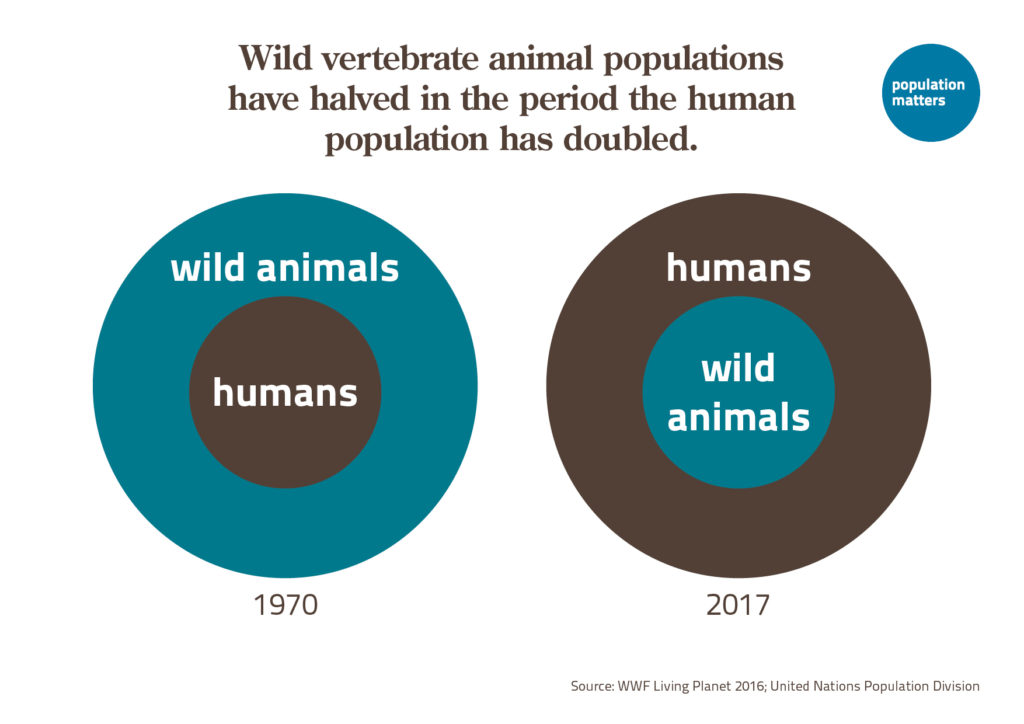
Social scientists finger political and economic factors for this flight from population. The demographic transition led to declining fertility rates, which eased fears of the population bomb, even as it created The Population Explosion. Rising immigration to the U.S. was fueling population growth and de-population activists feared being called racist. Religious conservatives opposed birth control as attacking the sanctity of life. Women’s groups condemned the population conversation as oppressive and anti-woman. Human interests reigned supreme over habitat protection for other species. And capitalist expansion demanded endless population growth.
But there are deeper reasons than these for our flight from population. In a recent paper, “Human Population Overshoot,” I explain the taboo using depth psychology. Population, we know, is not just an abstract issue. The sanitized term “fertility rate” connects to the most intimate experiences of sex, pregnancy and childbirth. Our psyches load these experiences with powerful conscious, preconscious and unconscious meanings. Consciously and preconsciously, parents see a child as conferring status and immortality. Siblings envy the new baby and fear loss of parental attention.
The unconscious meanings of reproduction, coming from early mental life, seem counter-intuitive and even preposterous. Melanie Klein, a British psychoanalyst, showed in case after case, how exclusions provoke destructive envy. She showed that the young child feels excluded from parental coitus. This exclusion stimulates fantasies of both plundering the mother’s body and murdering the new baby. These primitive fantasies usually go underground, but they continuously agitate the human psyche. They surface in dreams, fairy tales, folk songs and myths. Wolves and witches gobble up children, and Rock-a-bye Baby’s cradle crashes to the ground. American psychoanalyst J. J. Penniman has worked out the connections between these Kleinian ideas and our resistance to overpopulation in a new book, Envious and Deceived. Beneath the surface, the population conversation reverberates with fantasies of homicide and infanticide. According to Penniman, “we associate depopulation with attacks on the unborn.” No wonder we declare the topic taboo.
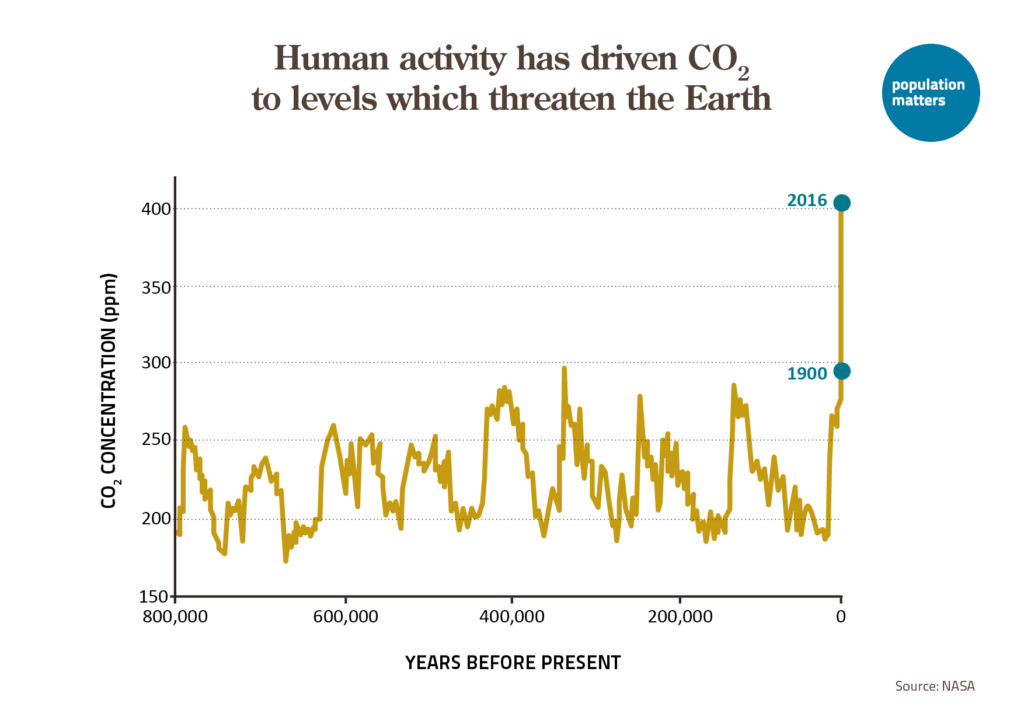
A taboo is a reaction formation (a defensive reversal of an unacceptable impulse, often unconscious, into its opposite). For example, a parent might reverse resentment (bad) into coddling (good). The resulting overindulgence, masquerading as love, actually harms the child. Similarly, ecological limits imply depopulation, which we unconsciously consider tantamount to infanticide. So instead we embrace the apparent goodness of both perpetual growth and universal acceptance, despite their ecological destructiveness. The more dire our resource scarcity and climate derangement, and the more we hate human crowding, the stronger the taboo against discussing population.
There’s a related reason: The fantasy of omnipotence. This is one of the child’s earliest defenses against helplessness. The baby is helpless to the terrors of exclusion and the envy and destructiveness that exclusion awakens. Omnipotence negates helplessness, and corrupts our reasoning. It helps us ignore the painful truth that our greed and destruction hurt what we love and need.
Humans have never relinquished the illusion of omnipotence. We’ve harbored it in our gods, in the conceit of eternal life, in the soaring achievements of technology. We’ve convinced ourselves that we’re exceptional. Human exceptionalism—the belief that we are exempt from the laws of nature—is a fantasy of group omnipotence. The population conversation, the one that implies limits, insults that omnipotence.

Omnipotence hides out in reproduction. Unconscious wishes motivate even the most rationally-planned pregnancy. Making a baby, in the parents’ fantasy, will compensate for their childhood deficiencies and heal their mortifications. It’s easy to see why we’ve sacralized reproductive freedom.
Clinging to omnipotence, frantic to evade destructiveness, we can’t acknowledge overpopulation. This collective inability resembles psychosis, as Wilfred Bion, a British psychoanalyst, described it. The psychotic personality, he said, masks reality with “an omnipotent phantasy that is intended to destroy either reality or the awareness of it.“ But even extremely ill patients, Bion wrote, harbor a realistic personality. It’s that personality which Bion tried to reach with empathic speech, feeding back a version of reality that the patient’s mind could stomach. With speech, Bion recognized, “problems can be solved, because at least they can be stated, whereas without it certain questions, no matter how important, cannot even be posed.” This shows the depth of our environmental dilemma. If we can’t name and digest true threats, we’re doomed.
Psychoanalysis, mindful of unconscious terrors and defenses, aims to name unthinkable truths. However, as I show in my recent paper, even psychoanalysis has succumbed to the population taboo. The psychoanalytic literature on the ecological crisis is a case study of disavowal, evasion and distraction with side-issues. (Some psychologists, like social psychologist Douglas Kenrick, name overpopulation, without explaining the taboo.)
That overpopulation denial seduces even psychoanalysis illustrates the depth and power of the taboo. The proscription against waking humanity from its dream seems inviolable. In this dismal suffocating culture, The Overpopulation Project provides refreshing freedom to speak realistically about the most fundamental threat to our survival.











Leave a Reply