
That’s the title of a paper just published in Biological Conservation in response to TOP’s recent paper on population and biodiversity loss in that journal. Are its authors right?
by The Overpopulation Project
In one sense, Alice Hughes and company clearly are correct. Efforts to protect wild nature are ongoing throughout the world, and for the most part they take place with no attempt to link them to human numbers, either by biodiversity conservation practitioners or the wider environmental movement. Like efforts to mitigate climate change, or curb air or water pollution, efforts to protect other species do not typically address human numbers, even where those numbers are immense. So clearly, people can work for biodiversity conservation without addressing overpopulation.
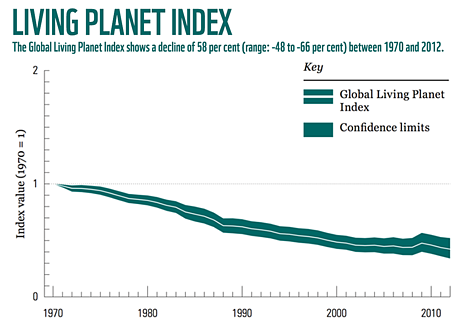
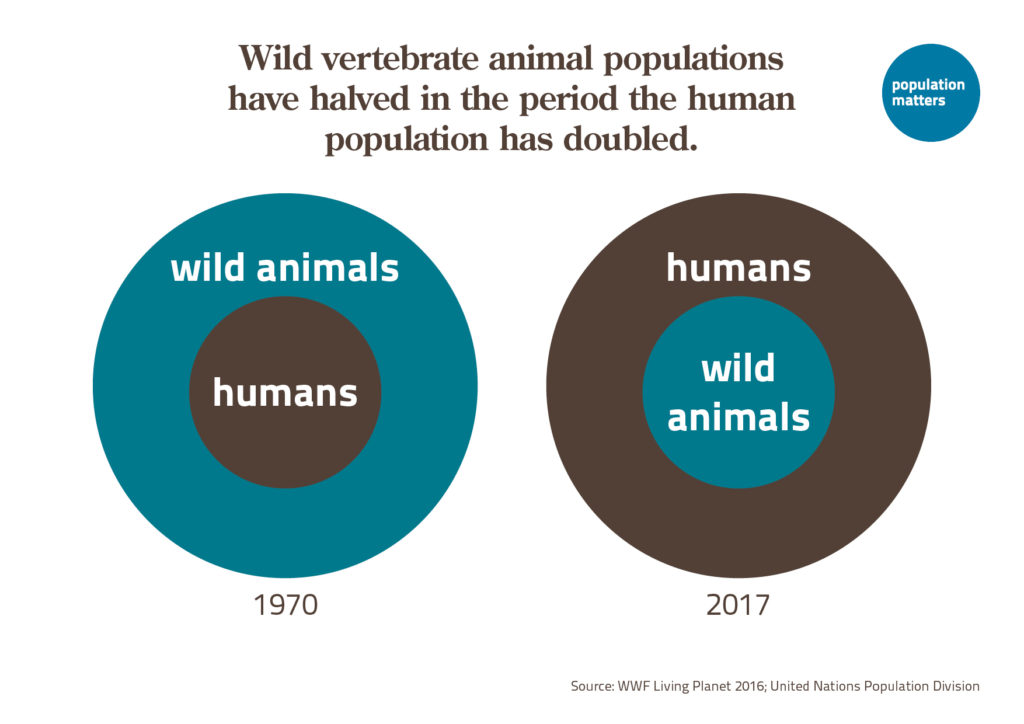
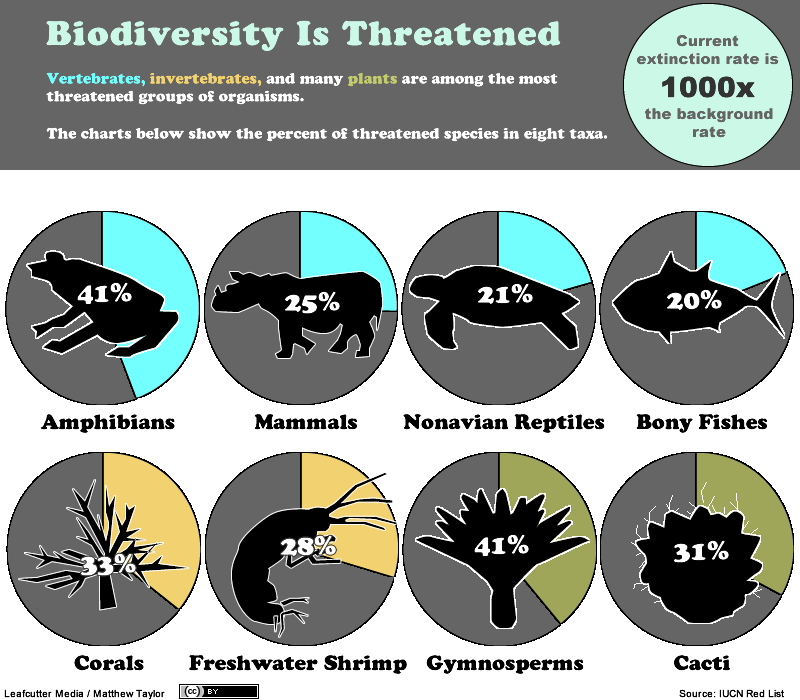
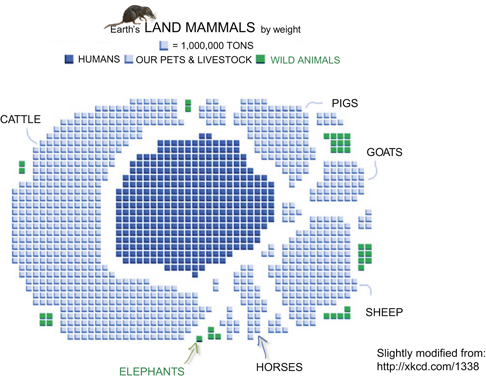
The real question, though, is whether we can achieve biodiversity conservation at current or higher human numbers. By all accounts, global biodiversity is rapidly decreasing. There is overwhelming evidence that higher population densities increase pollution, habitat loss, overharvesting, and the other direct drivers of biodiversity loss. So it is hypothetical at best to claim that we can reverse biodiversity loss without addressing our growing numbers. To us, this hypothesis seems quite unlikely. But in our paper, we ask conservation biologists to explore it.

What we call success in biodiversity conservation depends on how high we set the bar. If the goal is to preserve robust populations of all their native species, then probably few countries around the world can achieve it at their current population levels. If the goal is merely to slow current rates of habitat and species loss — to lose global biodiversity a little slower than we otherwise would — we can probably do that without addressing our own numbers. Hughes et al. are careful not to specify concrete goals for biodiversity conservation, the better to argue that addressing population isn’t necessary to achieve them. But those committed to getting at the truth of these matters and conserving biodiversity permanently need a more rigorous approach.
In our paper, we stipulate that overpopulation exists where people are displacing wild nature so thoroughly that they are extinguishing numerous other species, and this cannot be avoided without significantly decreasing the size of the human population. This definition has both empirical and ethical aspects. Empirically, it implies that human numbers are an important determinant of human impacts on biodiversity. The evidence for this is overwhelming, as we show in our paper and document in a recent bibliography of research on population and biodiversity conservation containing over 160 citations. Hughes et al. resolutely refuse to engage with the conservation science literature (in a rare case where they do, they cite an article from Camilo Mora to support their contention that high population levels do not lead to biodiversity loss, when his article claims the opposite and laments that population is “a fundamental but fading issue”).
Ethically, our definition of overpopulation implies that human beings have a moral responsibility to limit our environmental impacts to levels that do not extinguish other species. That commits us to speaking clearly about difficult ethical and economic issues, and the trade-offs necessary to create societies that don’t displace other species. Hughes et al. are free of this commitment, since they set no explicit moral limits to human expropriation of the resources and habitats other species need to survive. Thus they are free to criticize the creation of protected natural areas, for example, because such areas limit human economic activities. Hughes et al. neither acknowledge the rights other species may have to the resources in such areas, nor the fact that protected areas are essential to preserving Earth’s remaining biodiversity going forward, nor the practical difficulties this raises in a crowded world with many competing needs and demands.
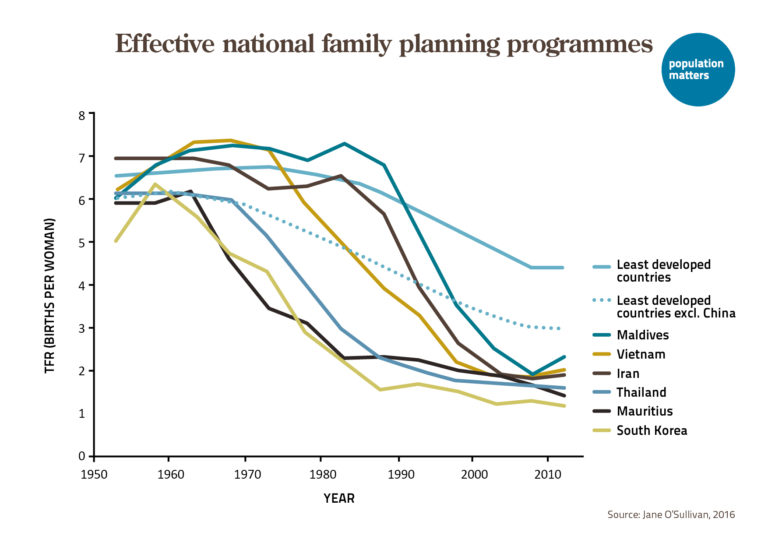
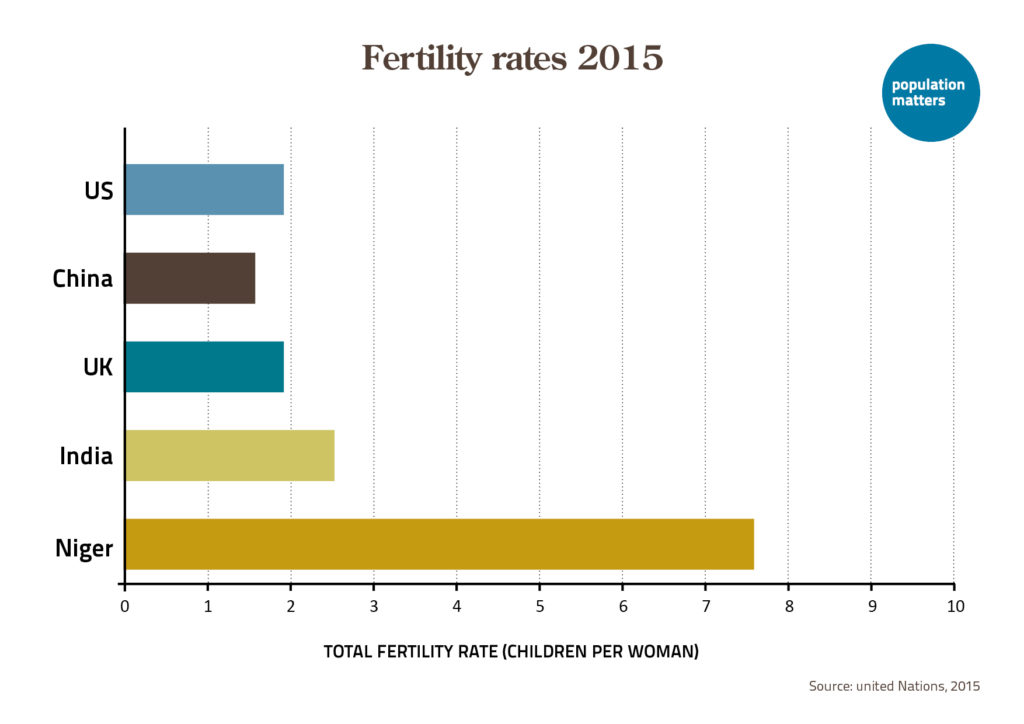
Instead, from an imagined position of moral superiority, they charge those who raise population issues with an open-ended list of ethical transgressions. We are “neo-Malthusians” unconcerned about human rights abuses, “neo-colonialists” dictating how brown-skinned people in the developing world should live their lives: all in all, pretty rotten people. In wielding these accusations, they claim that the only means to intervene to lessen population growth are coercive measures that violate human rights, such as occurred under China’s one-child policy. This claim follows a long tradition of rewriting history in order to silence population concerns. The existence and success of many voluntary family planning programs around the world over the past sixty years – are they even interested in this? Women’s right to choose how many children to have does not appear to be on their radar. We advocate for rights-based, voluntary family planning programs, for which the need is huge.

Hughes et al. say, “whilst declines in fertility and birthrates are generally the bi-product of holistic conservation and development programs, there is no need for population reduction to be the main goal.” They offer no evidence for this conclusion. Yet robust analyses show that the greatest determinant of fertility decline has been the strength of voluntary family planning programs, while general “development” has played little role. Where conservation programs have been sufficiently “holistic” to include family planning and reproductive health components, such as under the Population, Health and Environment (PHE) model, then the synergies between natural resource protection, fertility reduction and livelihood improvement have achieved strong results across all three goals. But where the population issue has been ignored, conservation efforts have not reduced fertility. Overall, their central conclusion, that “not only is there little evidence for ethical ways of imposing control on human population, but there is no scientific evidence that overpopulation, or more accurately, high population, is a direct driver of biodiversity loss,” flies in the face of overwhelming evidence gathered in the demographic and conservation biology literatures, respectively.
*
Hughes and company mischaracterize our paper in many ways, most of which are unlikely to interest anyone besides the authors. But one is too important to overlook: they say “Cafaro et al. (2022) argue that overpopulation is the major cause of various environmental issues such as biodiversity loss and climate change.” In fact, the paper’s very title asserts “Overpopulation is a major cause of biodiversity loss” and we are careful to reiterate that point several times in the text. A whole section of our paper is devoted to entreating conservation scientists to explore the relative impacts of population and other fundamental drivers of biodiversity loss. We fully agree with Hughes et al. that smaller human populations are not a sufficient condition for biodiversity conservation. They must be combined with efforts to rein in per capita economic demands, so that total human impacts on the biosphere decrease. When decreased economic demands are combined with more efficient and less polluting means of satisfying those demands, human societies will be on the way toward fairly sharing Earth with the rest of life.
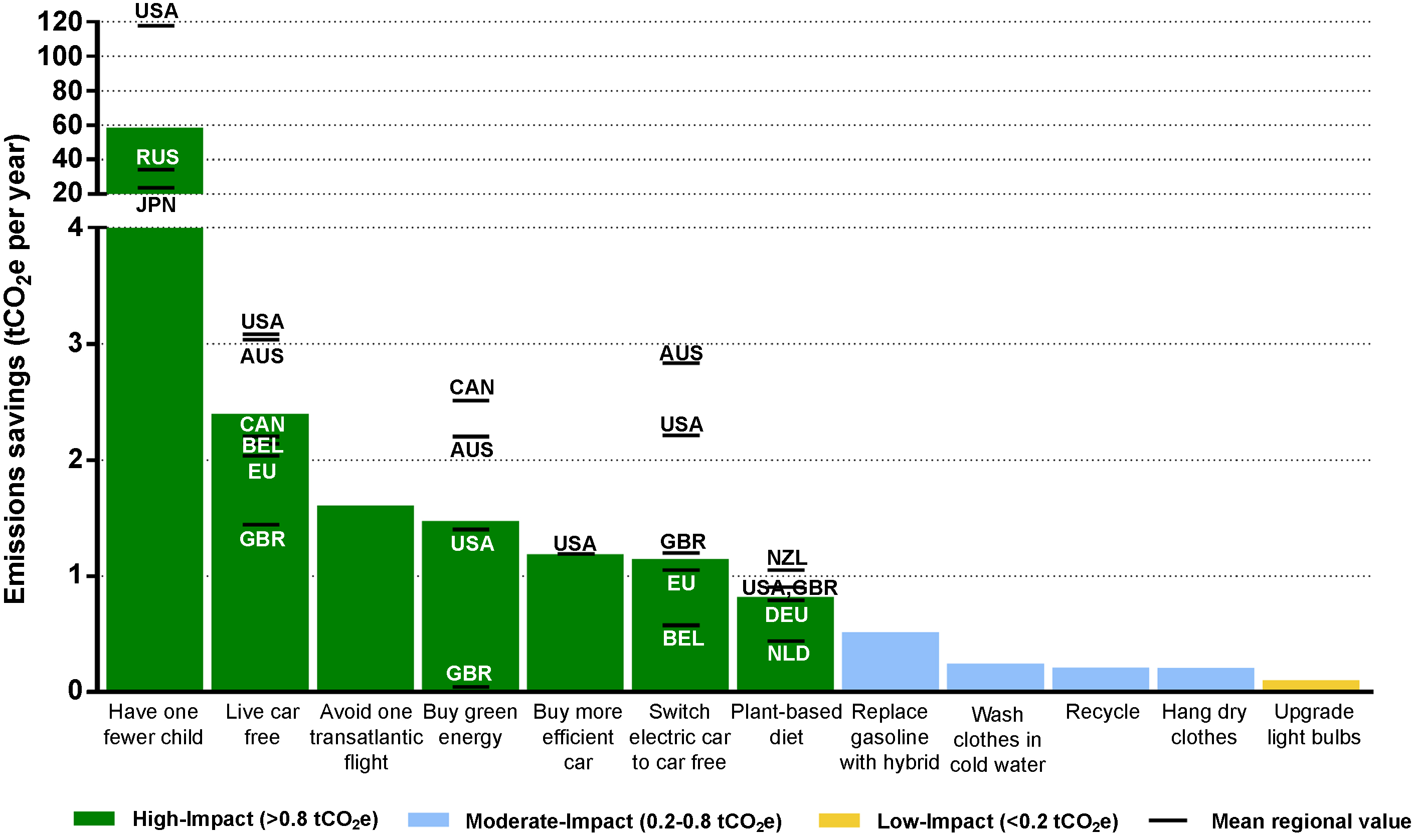
Excessive overall economic activity and an unfair hogging by people of Earth’s limited resources are the fundamental causes of rapid biodiversity loss. Too much total consumption and production are the problems, and total consumption and production are a function of per capita consumption times the number of people. To think we can address excessive consumption while ignoring the number of consumers is delusional. It assumes an infinite ability to decrease per capita consumption which simply does not exist.

Hughes et al. embrace this delusion throughout their paper, particularly in their treatment of agriculture. They write, “reducing meat consumption is an essential component of addressing habitat loss and degradation” — but not reducing the number of potential meat eaters. “Expansion of fishing pressure is largely from large companies registered in developed countries” — but this fishing pressure apparently is unrelated to the number of potential seafood consumers. Increasing consumption of biofuels leads to tropical deforestation — but this increased consumption has nothing to do with the number of people that use the biofuels. In the end, Hughes et al. place their hopes in a technological miracle, calling for “an agroecological transition in both high and low-income countries to minimize the impacts of agriculture on local biodiversity whilst maintaining food security, which is sustainable regardless of population size.” It is hard to believe such a statement made it through peer review in a reputable scientific journal.
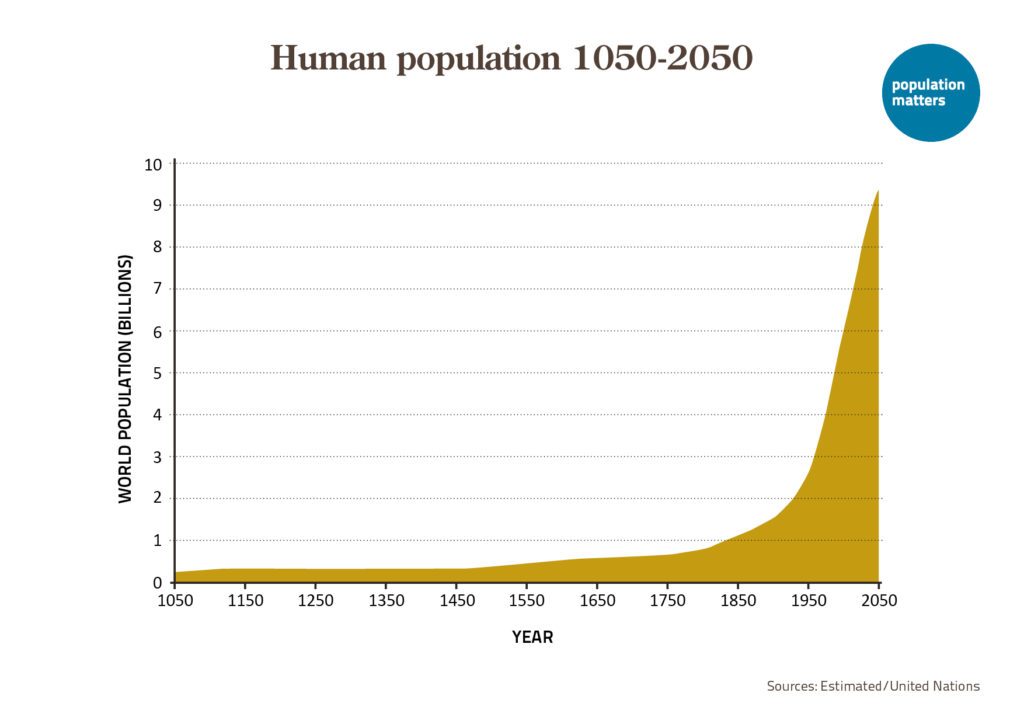
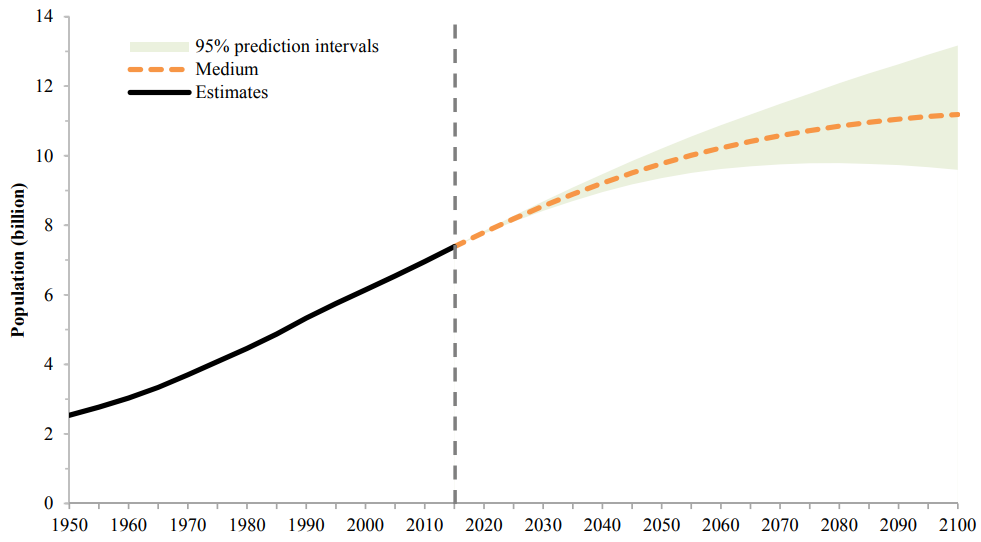
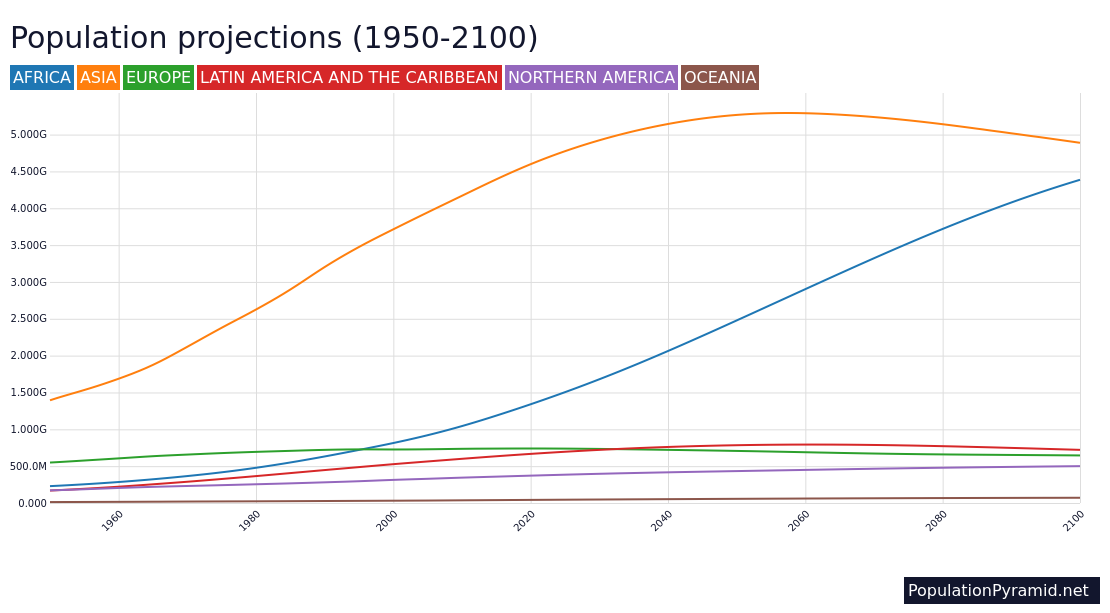
No agricultural system is sustainable “regardless of population size.” Recent studies asking whether humanity will be able to feed itself in 2100 without seriously damaging the biosphere are more or less optimistic. But they all find the challenge very difficult and recognize that higher human populations make it even harder. The complexity of feeding 9 or 10 billion people without degrading the ecosystem services we depend on, the massive changes that will be necessary in order to do so, the uncertainty about whether humanity is up to the challenge—all these make a mockery of the idea of “maintaining food security … regardless of population size.” According to the 2019 IPBES Assessment Report, agricultural expansion is a leading cause of terrestrial biodiversity loss and is set to remain so in coming decades. This demand is obviously tied tightly to the number of consumers for agricultural products. Just as obviously, the human demand for food will trump other species’ needs for habitat and essential resources when they conflict.
Hughes et al. emphasize the outsized role developed-world consumers play in driving biodiversity loss in the developing world. It’s a valid point, yet hardly a convincing reason to ignore population matters. Decreasing bloated populations in developed countries is necessary to preserve global biodiversity, as our paper explicitly states. Doing so both opens up opportunities for rewilding within their own borders and decreases their economic demands on wild lands elsewhere. Just because a population isn’t growing does not mean it represents a fair distribution of habitat and resources between people and other species. In most cases in the developed world, the reverse is true. For us, that means that most developed nations should set achieving smaller populations as a key environmental policy goal.
It seems to us that those with a serious commitment to preserving biodiversity should advocate for smaller families, universal availability of modern contraception, and smaller populations in both developed and developing nations. But perhaps we are missing something. We invite the authors of “Smaller human populations are neither necessary nor sufficient” to respond to this critique, in a future blog here at The Overpopulation Project or in the comments section below.










Leave a Reply