
Those of us who care about overpopulation need to pay far more attention to the powerful pro-natalists who are coaching or instructing people to have more children. Religion is obviously a big factor, although not the only one, and there has been much coverage of evangelical Christians. Much less has been written about the Catholic Church, apart from some leading theologians and organisations within the church such as the US-based Catholics for Choice. Yet it is possible to argue that the most influential pro-natalists on the planet, in recent history and the present day, are the Catholic Church hierarchy.
By Barbara Rogers
Given its importance, the role of the Catholic Church in limiting access to contraception has been written about relatively little. Perhaps it is because their ban on modern contraception and abortion has been a factor for as long as we can remember. For an important outline of the hierarchy’s position, see the TOP blog by Patricia Andresz-Derer. My own research has been about Church efforts to impose contraception bans on members and non-members alike, through their influence on governments and especially in international organisations.
My own explanation for the Church’s opposition to contraception is that childless men of the clergy – who are not permitted to have their own families or children – have been attempting to impose their opinions about women and babies in a form of coercive control over women’s bodies and fertility. This is now the road to promotion for priests within the hierarchy, which requires them to adopt the most conservative view on this subject. Even the current Pope, Francis, although a particularly kind and forgiving figure, is personally committed to the view that terminating a pregnancy is “homicide” although he has also said that it could be forgiven.
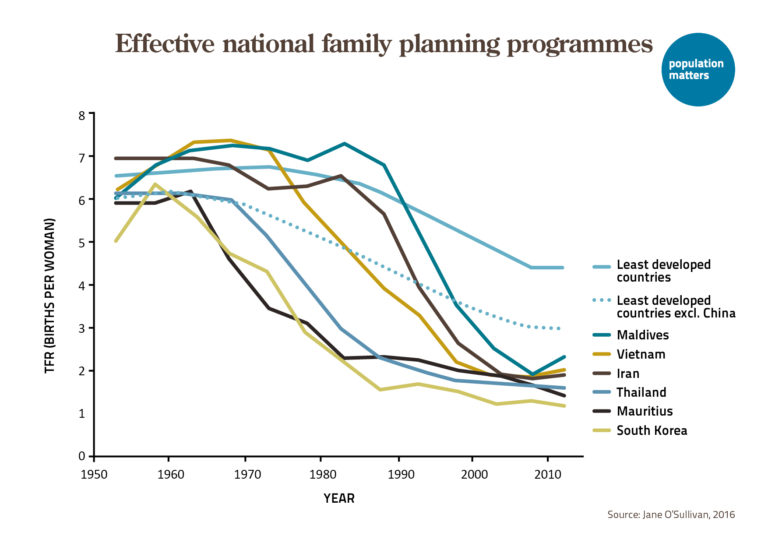
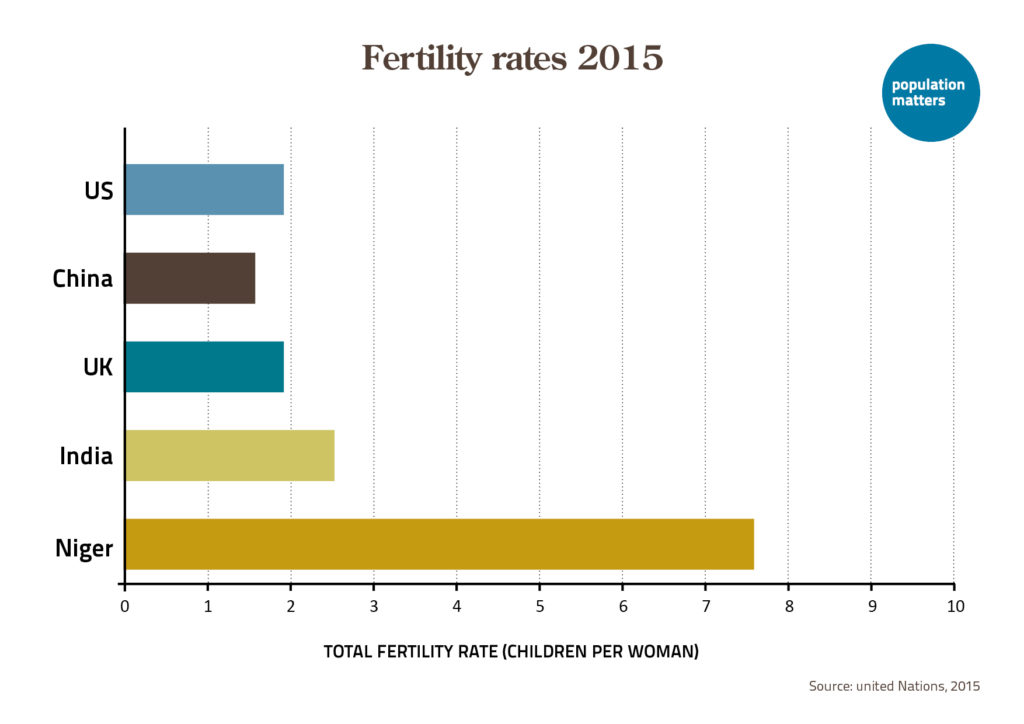
One of the biggest social changes in the last century has been the rapid decline in family size, mainly within the wealthier countries, as family planning became increasingly available and effective. Catholic families stood out as the exception, with so many of the faithful obeying the instruction to avoid any “unnatural” contraceptives. As soon as these became freely available, however, Catholics started to use them with many priests turning a blind eye, some even encouraging the use of modern contraceptives, as in Costa Rica. Family planning (FP) use now is almost the same as in the general population. The demographic changes in strongly Catholic countries like Ireland, Italy, Spain and Portugal are witness to this, with birth rates falling to surprisingly low levels. And perhaps surprisingly, in Sub-Saharan Africa fertility rates are similar among Catholics and others.
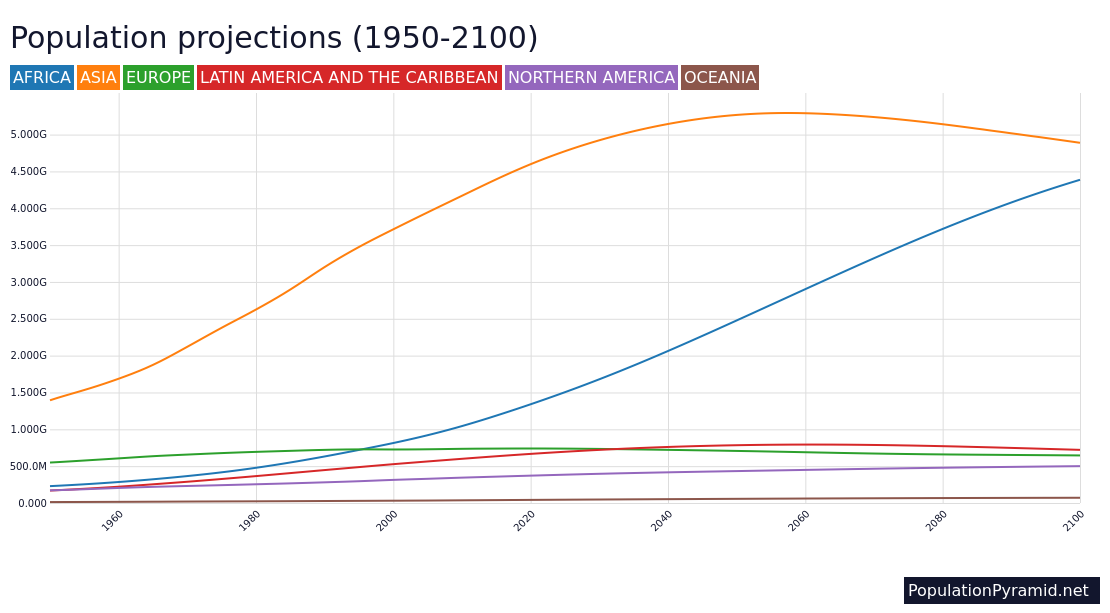
The Vatican’s response to their inability to instruct their own members has been to go secular: fix national and international policies and legislation to ban FP programmes. There are around one billion Catholics in the world, and 7.8 billion of us overall, so this was going to have a massive impact.
The Catholic commentator Stephen D. Mumford has described how the Vatican works in practice, and its international lobbying. A political element exists alongside the religious one, and in a case like this it is the political Catholics, who may not be particularly religious, who win out. He also outlines their use of Protestant or secular leaders and politicians as a front for their agenda in the US so that it does not appear to be a Catholic campaign.

Mumford attributes the American Evangelical church’s sudden obsession with abortion, beginning in the 1970s, to Catholic influencers rallied by the US government’s emerging position favouring population stabilisation. The resulting “pro-life” movement built political support for the “Mexico City Policy”, which made funding for FP globally a political football in the American abortion debate. That policy was part of a coup overturning the US position on global population, and the personnel representing it, immediately prior to the 1984 UN Population Conference in Mexico City. When developing country leaders were increasingly convinced of the economic burden of population growth, the new US position declared that “population growth is, of itself, a neutral phenomenon”. [1] As Mumford suggests, the “pro-life” issue is best read as a cover for pro-natalism since it often includes the promotion of large families. [2]
The importance of “pro-life” themes is confirmed by David Yallop in his book In God’s Name about the sudden death of the reforming Pope John Paul I. Yallop’s book describes both the corruption and the goodness that co-exist within the Vatican, and the bitter fights over money and birth control. [3]
Alongside fundamentalists of other religions, many Catholic organisations spread misinformation far and wide to try and stop people using modern methods (the rhythm method is approved, perhaps because it often fails). This includes being vigorous advocates of “pro-life” organisations. Their most effective weapons against people’s choices are largely hidden from view, however: their ultra-conservative bishops and cardinals who may use election contributions to influence the politicians, their “diplomatic corps” who have accreditation in 184 countries as well as the UN and its specialised agencies, which set international policy and sometimes handle very large international programmes.
The Catholic Church and its various organisations also have huge social and health programmes in low- and middle-income countries, as outlined in Robert Calderisi’s book Earthly Mission: The Catholic Church and World Development. [4] World Health Organisation (WHO) figures show that Catholic hospitals and clinics provide up to 50% of all health facilities in some countries, especially in Africa. These may also be government-funded, but Catholic organisations sometimes control the accreditation of other providers’ health facilities. In addition, the Catholic church has many schools in Africa, but its teachings and mission there have hardly been studied.
The Vatican is not remotely a State (as defined by the Montevideo Convention) and yet it has a quasi-membership in the UN which goes above and beyond any of the genuine member-States. There is no documentation about how they achieved this, but it must have been at the height of the Cold War when the Secretary General would not have taken any significant action without the agreement of either the United States or the Soviet Union. Presumably a conservative American delegation forced through this highly irregular move.
The Vatican, known there as the Holy See, has been given an office at the UN headquarters, which no government has. It receives an advance copy of every document produced there. This also gives it easy access to the Delegates’ Lounge and other meeting spaces for lobbying purposes, where almost all the non-governmental organisations are excluded. I have observed the anxiety among staff at the Secretariat to rush new documents to the Holy See office in case they make an official complaint. Indeed, a well-placed source has told me that UN and agency officials are extremely nervous of saying or doing anything to challenge the Holy See position within the organisation because they are seen as having forced people out as a result.
The Holy See also has speaking rights and a vote at all the specialised conferences, especially those relating to overall human rights, women’s and LGBTQ+ rights, and FP. It uses this access shamelessly to block the necessary consensus on any topic it opposes, which goes beyond “reproductive rights”. Participants and observers in international debates on women’s rights have found the Holy See opposing the very mention of “rights” for women, on the basis that they may imply sexual and reproductive rights. The rights that activists are pushing for include protection from domestic violence, forced marriage, child marriage, genital mutilation, rape and sexual abuse, and even murder. The Holy See has also become adept at organising small coalitions of conservative countries (including ultra-Islamic states and the US under Trump) to vote against any progressive motions on women’s rights.

The Catholic-led coalitions have managed to prevent any of the specialised organisations of the UN, including the Refugee Agency (UNHCR), the children’s agency (UNICEF) and the WHO, from providing FP services from their own funds. The former Assistant Director General of the WHO, Milton P. Siegel, has revealed how the WHO was stopped from its early plans to incorporate FP in its health programmes by just three delegations (Belgium, Ireland and Italy) and since then has done very little to promote a choice agenda. The only UN agency which is doing this is the UN Fund for Population Activities (UNFPA) whose budget is a small fraction of theirs – and part of this has been diverted by having to work on population censuses around the world.
At the UN International Conference on Population and Development (ICPD) in Cairo in 1994, the Holy See’s tactic was to give up operating through government delegations, instead claiming a right to speak and lobby on the floor. They stopped the conference for six days, and then fiercely opposed many proposals. Women’s representatives were forced to observe this, with no right to speak until the Chair announced they could come and lobby the delegations. Since Cairo, attempts to advance the agenda for FP in review conferences have made no progress because of the unanimity rule which allows the Holy See and a few others to block resolutions. One advance has been inclusion of “universal access to sexual and reproductive health-care services, including for FP, information and education” as part of the UN’s Sustainable Development Goals (SDGs) (Target 3.7), but moves to implement this have been met with obstruction within the UN. Sadly, slowing population growth is not a goal of the SDGs.
This all matters because the UN and its agencies are major actors for development policy and practice around the world. We need to challenge the Holy See’s anomalous position in the UN. The policy-making assemblies of the specialised agencies should also be asked to review the situation. A General Assembly (GA) resolution instructing the agencies to include FP in all relevant programmes would only require a simple majority, and could make all the difference since these agencies are accountable to the GA.
Meanwhile the very limited funds available for FP services in lower-income countries could be greatly increased by allowing climate change funding. Hopefully, after COP26, we will see extra support for FP programmes; it is now understood to be under consideration in the UK Government and could be adopted by other donors.
Another move that would sidestep the pro-natalists is to emphasise family planning as an element in basic needs, especially for women. To approach this as a matter of “sexual and reproductive rights” or “SRHR” plays into the hands of conservative delegations that will oppose any extension of human rights generally, and women’s rights in particular. I kno w this is controversial, but several leading FP organisations already emphasise needs, and the link with basic health, rather than the SRHR case.
For women, the need for autonomy necessitates access to contraception and safety from sexual abuse and forced marriage. For children, it includes the need to be wanted, loved and sufficiently provided for, which invokes a duty to educate prospective parents on responsible procreation. For youth, livelihood opportunities are scarce in rapidly growing populations, and excessive pressure on environmental resources further erodes their prospects. These should be further considerations for prospective parents. We should also be speaking the language of universal basic health care (UHC), which is based on medical need.
Referring in particular to Catholic health and education work, liberal Catholic theologian Christine Gudorf, has commented:
“There are certainly days when I believe that the institution is so deeply corrupted that it should be destroyed… (but) there are parts of the world where the only place you will be medically treated is by a Catholic. It does enormous good and enormous evil.”
To point this out is not any more anti-Catholic or anti-religious than to campaign against child abuse by priests, or publicise the deaths of small children in Catholic orphanages. Ultimately the men of the Vatican should relent on their prohibitions against choice and let the faithful decide. The moral guidance which the Church exerts in other spheres of life should not shy from advocating small families. Let the Church do enormous good and let us stop the enormous evil. Within the Church, members should be aware of the squandering of church resources on pro-natalist work, rather than on humanitarian support for people struggling with poverty.
Meanwhile, our own movement needs to think seriously about a united position on these issues, and how to work together. For instance, we need to create alliances with the women’s movement and environmental organisations. Should we argue for population numbers to be the focus when some oppose making that connection? Should we link this with immigration into high-income countries? How about a common approach between the “SRHR” advocates and the “FP” ones? Like it or not, language matters – especially at the UN, where it is the wording that makes all the difference. Let us have a real debate about this, and how we can all move forward.
Barbara Rogers has worked at the United Nations in New York as a lobbyist, petitioner and employee. She is now an independent commentator on women’s issues and has just released a new book, “Children by Choice? Double standards, population and the planet”, which reviews these issues in more detail. It is available as an e-book or paperback from Amazon.
References
- Finkle, J.L. & Crane, B.B. (1986) Ideology and Politics of Mexico City: The United States at the 1984 International Conference on Population. Population and Development review 11(1):1-28. https://www.jstor.org/stable/1973376
- Church and State website, Stephen D. Mumford. http://churchandstate.org.uk/2010/08/articles-by-stephen-mumford/
- David Yallop, In God’s Name: An Investigation into the Murder of Pope John Paul 1 (Jonathan Cape, 2013) https://www.amazon.com/Gods-Name-Investigation-into-Murder/dp/0552132888
- Robert Calderisi. Earthly Mission: The Catholic Church and World Development. (Yale University Press, 2013) https://www.amazon.co.uk/Earthly-Mission-Catholic-Church-Development/dp/0300175124










Leave a Reply