
The ancient Greeks have exerted tremendous influence on western thought and culture, including in the realm of ethics. Yet few today realize that the founders of western political philosophy advocated a steady-state economy and limits to human numbers.
by Theodore P. Lianos
In the fifth century B.C., the Athenian philosopher Socrates (470-399) changed the course of philosophical endeavor from Mathematics and Physics towards a new field: Ethics. For Socrates the basic question of philosophy was a simple one: how should we live?
Socrates’s student, Plato (427-347) wrote two treatises to provide answers to this basic question. He eventually considered his famous Republic (Politeia) written around 380 B.C. as too advanced for the time, and thus later in life he wrote Laws (Nomoi) which he considered second best but immediately applicable.
Plato’s student Aristotle (384-323) in his Politics (Politica) written sometime after 336 B.C. gives, in book VII, his model of a city-nation that would have the “most desirable mode of life”.

Plato’s vision
Plato expounds his model by imagining the creation of a new colony. The first thing to do, he argues, is to “let the citizens at once distribute their land and houses and not till the land in common, since a community of goods goes beyond their proposed origin and nurture, and education” (Laws, 740, A). The distribution of property should be such that there would “be no disputes among citizen about property” (Laws, 737,B).
The next task is to determine the number of people and the amount of land. These must be determined simultaneously so that two requirements are satisfied: first, citizens must have a decent standard of living, and second, the size of the population must be large enough to be able to defend the city and also help neighbouring cities. In Plato’s words,
“The number of citizens can only be estimated satisfactorily in relation to the territory and the neighbouring states. The territory must be sufficient to maintain a certain number of inhabitants in a moderate way of life—more than this is not required; and the number of citizens should be sufficient to defend themselves against the injustice of their neighbours, and also to give them the power of rendering efficient aid to their neighbours when they are wronged” (Laws,737,C,D).
What is important in the relation between population and land is that they form a common factor, or they become a pair. Plato’s text says “so that every man may correspond to a lot.”
Plato’s central idea here is that land and population should be determined simultaneously in such a way that citizens might enjoy a good but moderate standard of living and the city should be safe from enemies.
What makes this model a steady-state economy is the following requirement, strongly stated by Plato:
“And in order that the distribution may always remain, they ought to consider further that the present number of families should be always retained, and neither increased nor diminished” (Laws, 740, B).
In other words, population must be constant. Plato suggests several ways that this can be done. The farm should be inherited by only one child so that the property would not split. Incentives, disincentives and proper advice may be given to encourage or discourage changes in population as needed. Finally, if necessary, immigration or emigration may be allowed.
Plato recognizes that although all citizens may have equal opportunities to begin with, wealth inequalities may arise. Regarding the question of the level of economic inequality that should be allowed among citizens, Plato proposes that the richest citizen be no more than four times richer than the poorest and any excess wealth, however acquired, should be turned over to the city.
“The citizen must indeed be happy and good, and the legislator will seek to make him so; but very rich and very good at the same time he cannot be, not, at least, in the sense in which the many speak of riches. For they mean by ‘the rich’ the few who have the most valuable possessions, although the owner of them may quite well be a rogue.” (Laws, 742, E)
Thus, Plato’s answer to Socrates’s question is that we should live in a safe environment enjoying a moderate lifestyle. Given that land is limited, the moderate way of life can be achieved by determining and keeping constant the right size population. Economic equality or inequality within limits is also important in a good society. The question may be raised what is a “moderate way of life”. Plato uses the Greek word σώφρων (sophron) which means wise, sensible, prudent, reasonable and judicious. Of course, none of these meanings can be measured objectively in meters or kilos, but certainly in every society at any given time there is a common feeling of what is a moderate way of life.
Aristotle’s refinements
In his own analysis of the relationship between population and land, Aristotle introduces several new elements. First, instead of a moderate way of life he suggests the notion of the “best life,” which presupposes both virtue and a degree of material wealth:
“But a better definition would be ‘to live temperately and liberally’ (for if the two are separated a liberal mode of life is liable to slip into luxury and a temperate one into a life of hardship), since surely these are the only desirable qualities relating to the use of wealth” (Politics 1265a 33-38).
In modern terms we may say that we should live comfortably but not wastefully. The attribute of best life refers both to individuals and to the state.
“For the present let us take it as established that the best life, whether separately for an individual or collectively for a state, is the life conjoined with virtue furnished with sufficient means for taking part in virtuous action” (Politics 1323b40-1324a2).
For Aristotle there is nothing wrong with wealth, it is the use of wealth that can be good or bad. The possession of wealth is desirable, but only insofar as it is put to good use. However, the amount of property sufficient in itself for a good life is not unlimited (Politics 1256b 30-34). The external goods have a limit, as has any instrument (and everything useful is useful for something), so an excessive amount of them must necessarily do harm, or do no good, to their possessor. (Politics 1323b7-10).
According to Aristotle the size of the population of the city should be within limits. The lower limit is that below which the autarky of the city is lost and thus the reason for its creation and development is negated. The upper limit of population size is determined by considerations related to the effective administration of the city. If the population is too large, it will be difficult to run the city effectively and to enforce the law. For example, it would be difficult to find a town crier with a stentorian voice. Also, in an overcrowded city it would be difficult to make the correct decisions regarding the distribution of public offices according to merit, since this requires adequate knowledge of the abilities of individual citizens. Contrary to Plato who specifies the exact number of farmers, Aristotle provides no exact limit except in one case by way of an example:
“You cannot make a city of ten men, and if there are a hundred thousand it is a city no longer. But the proper number is presumably not a single number, but anything that falls between certain fixed points” (Nicomachean Ethics 1170b 30—33).
For the regulation of population, Aristotle thinks that “there must be a limit fixed to the procreation of offspring” (Politics 1335b23-24). Also, he suggests that “it is fitting for women to be married at about the age of eighteen and the men at thirty-seven or a little before” (Politics 1335a28-30). The last suggestion is made for population health purposes, but is clear that it can help limit population growth. He also suggests for the same purpose that “persons exceeding this age [of fifty for men] by four or five years must be discharged from the duty of producing children for the community” (Politics 1335b22-24). It is characteristic of the significance Aristotle attributes to population control that he suggests that “if any people have a child as a result of intercourse in contravention of these regulations, abortion must be practiced on it before it has developed sensation and life” (Politics 1335b24-25).
A message for our times
The ideas of Plato and Aristotle on optimal population size can be understood better in the historical context of their time. As can be surmised by their colonization of the areas around the Mediterranean Sea, many Greek city-states were overpopulated. The population of Greece in the fifth century B.C. is estimated to have grown to three million.
The word land should be taken to mean, in modern language, resources for the production of commodities. Technology of production is not mentioned and is implicitly assumed to be constant, but changes in technology can be easily introduced in the two models presented above.
Both philosophers are very much concerned with social justice and the happiness of citizens as individuals, and also as a totality which forms society. In modern times it is implicitly assumed that higher income brings happiness or that it is a precondition for achieving happiness. For these ancient writers, much wealth is not a precondition for a happy life. Of course, it should be high enough to allow a temperate and generous life-style but happiness is almost synonymous with virtuous action.
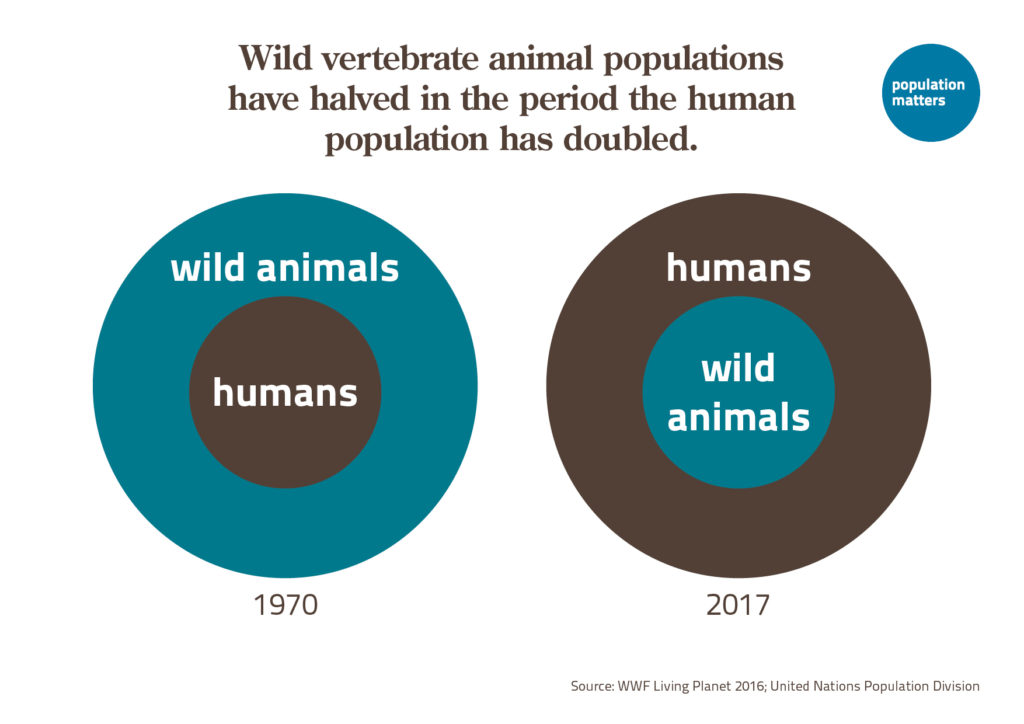
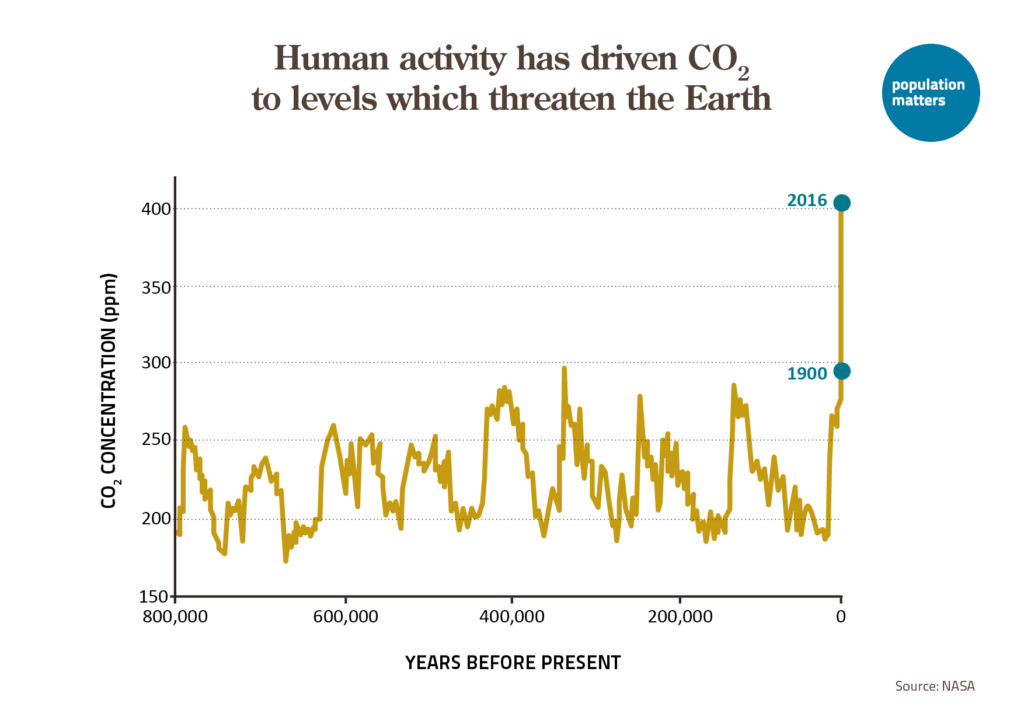
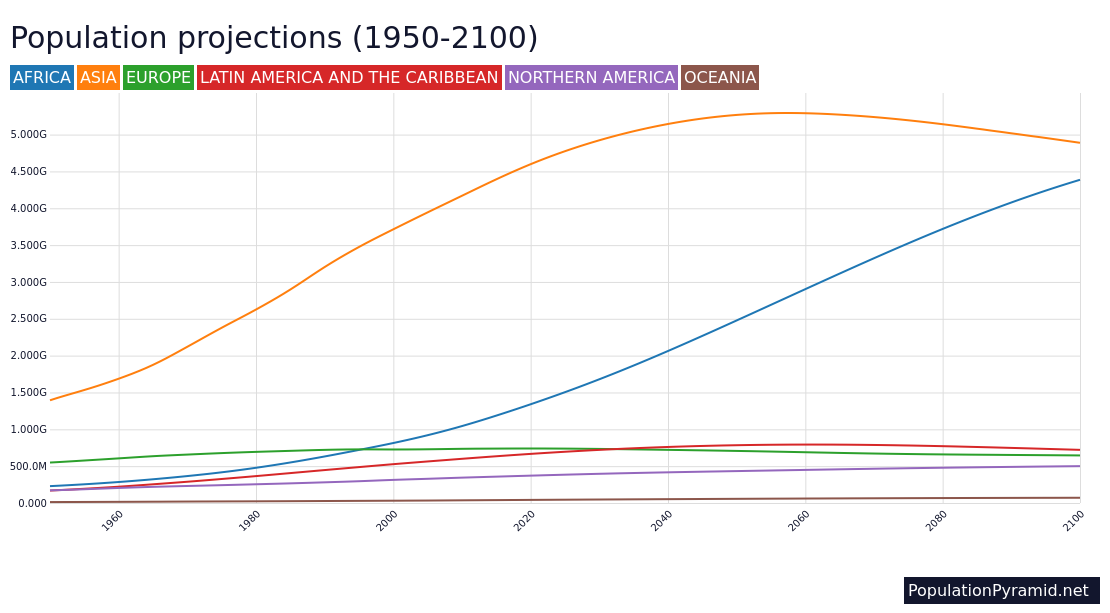
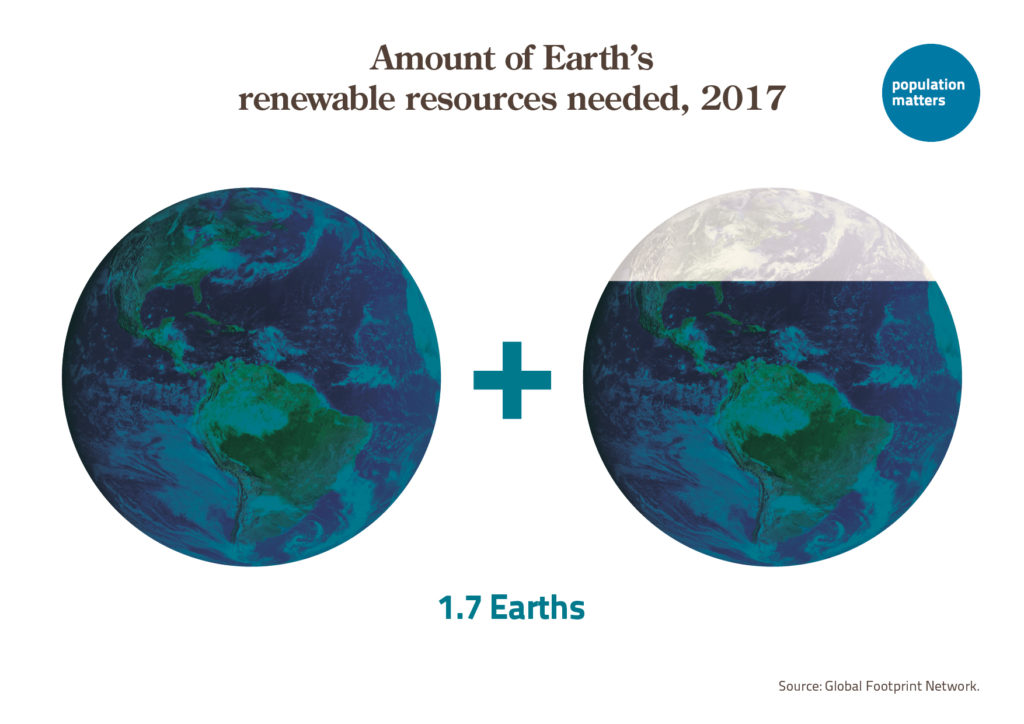
The ideas of Plato and Aristotle are not just history. Their message is relevant to our time. We have exhausted the resources of our planet and our efforts to increase production lead us to catastrophic practices (e.g. deforestation). At the same time three billion people (38% of the world population) are undernourished. It is not an exaggeration to say that we have led ourselves into a dramatic and nightmarish situation which is getting worse as the world population increases by approximately 200 thousand every day. As Plato and Aristotle taught, political wisdom is inseparable from an appreciation of limits.

This piece is a summary of Theodore Lianos’ article Population and Steady-State Economy in Plato and Aristotle, published in The Journal of Population and Sustainability.



















Leave a Reply