A new definition of global overpopulation, explained and applied

Some environmentalists believe current environmental problems can be addressed successfully without reducing human numbers, while others disagree. Which side is right? Our new working paper tries to get to the bottom of the matter.

by Philip Cafaro

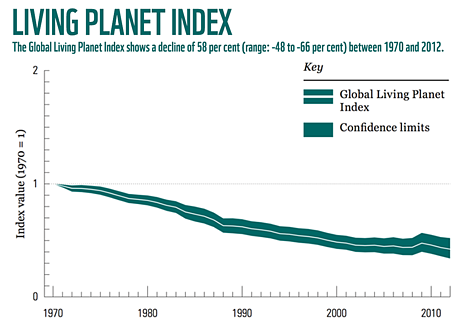
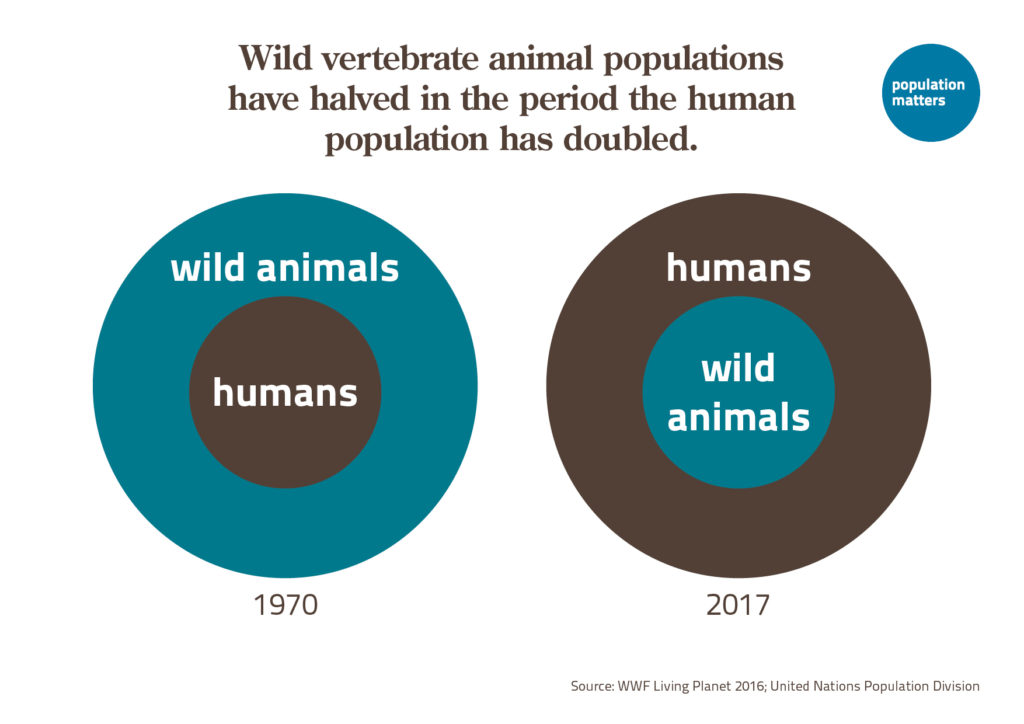
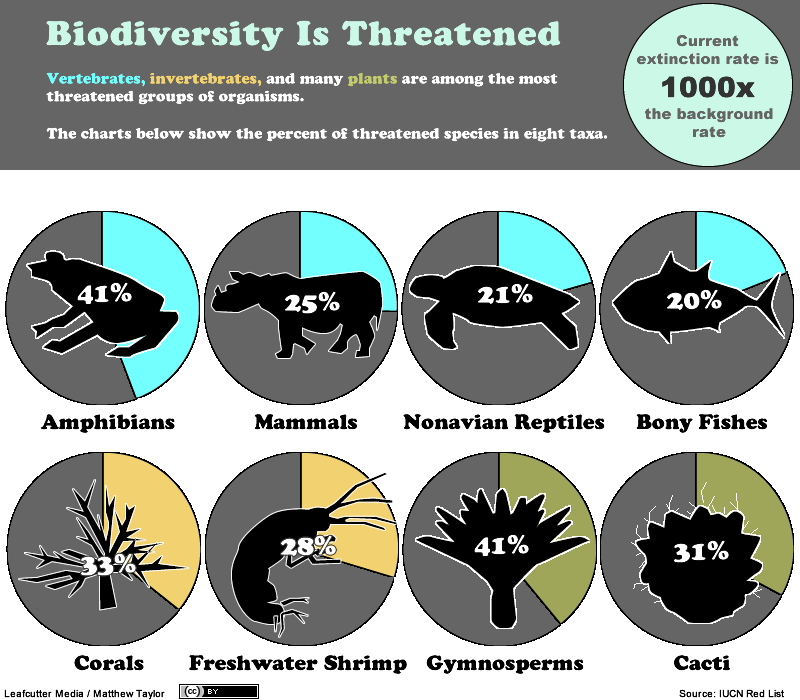
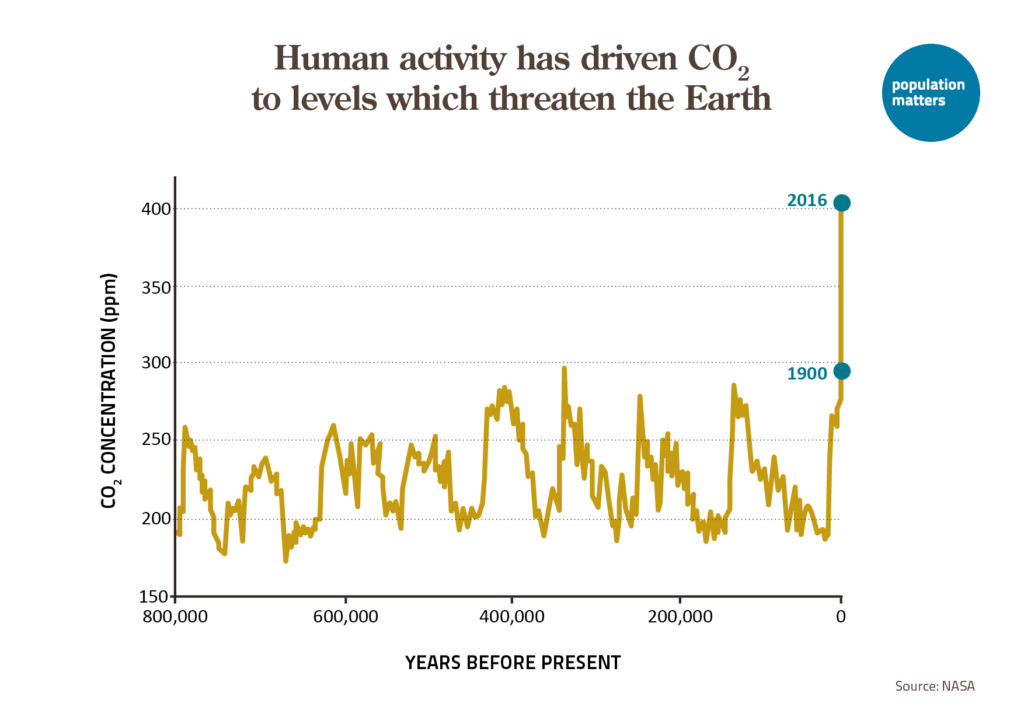
Recent years have brought a cascade of bad environmental news from around the world: melting glaciers and acidifying oceans; fires of unprecedented size and intensity; unusually numerous and severe tropical storms; record-breaking droughts; dying coral reefs and dying boreal forests; massive bird losses and insect die-offs; and much more. The news is grim and the trends suggest worse to come.

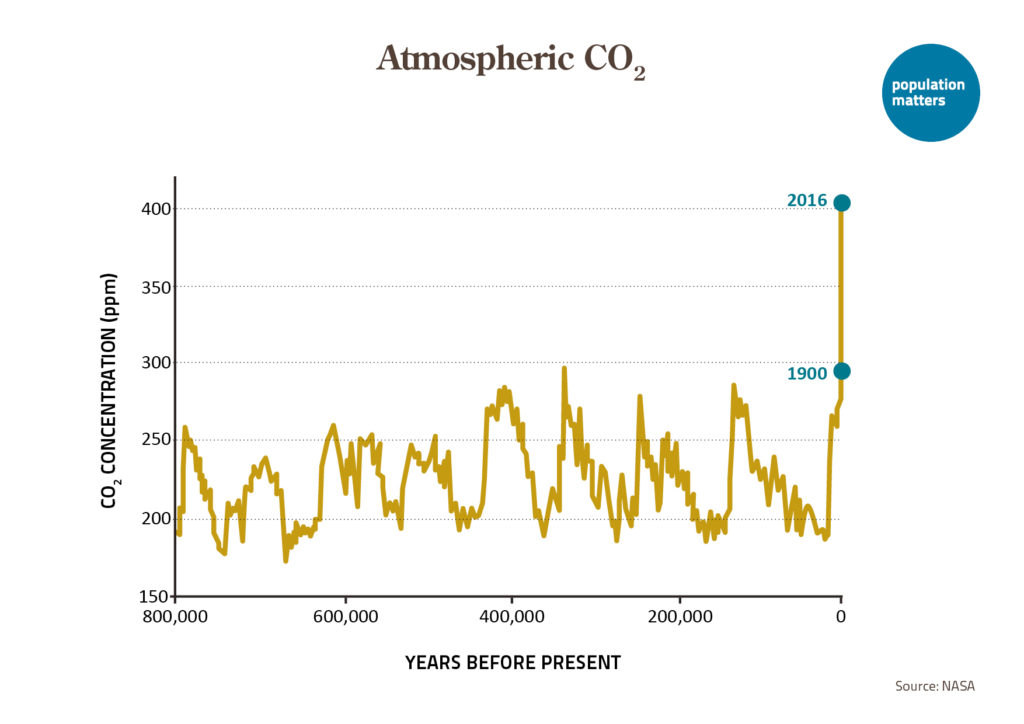
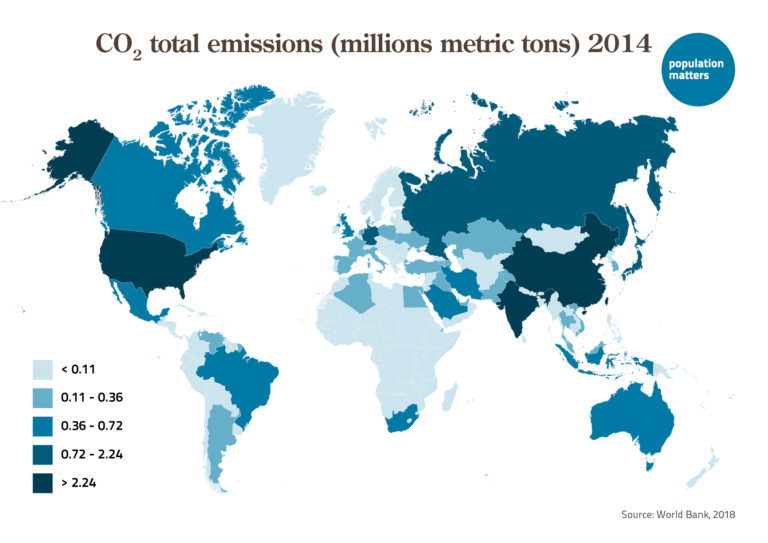
While the details and proximate causes vary, the underlying cause of all this bad news seems clear enough: an immense and rapidly growing human population and its economy, serving huge numbers of two-legged consumers. We are generating so much atmospheric carbon because there are many more of us than there were one hundred years ago, we are on average much wealthier, and we have more powerful technologies at our disposal: the ability to drive cars, fly around the world, grow a lot more food, get fatter, and pour a lot more concrete.

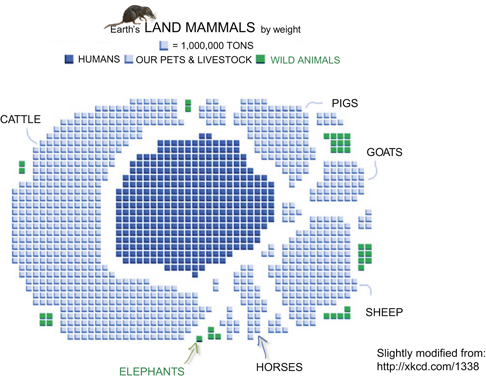
One might object that there are still large wild areas on Earth and that urbanization, with many more people living in big cities, will leave room for wildlife. Yet mammals, birds and insects, frogs and fish, are all in serious decline. We apparently also need their habitats for our own uses – above all farmland for increased food production. Those who argue that technology and improved efficiency “will fix the problem” have much to prove.

As a “World Scientists’ Warning of a Climate Emergency” put it in 2020: “profoundly troubling signs” of ecological degradation include continued human population increase and rapid increases in world gross domestic product. “To secure a sustainable future,” advised the more than 11,000 scientists who signed the warning, “we must change how we live,” enacting “bold and drastic transformations regarding economic and population policies.” The warning explicitly emphasized the need to limit overall human economic activity, not just make it more efficient. In line with the obvious fact that more people generate more economic activity, it admonished that “the world population must be stabilized — and, ideally, gradually reduced — within a framework that ensures social integrity.”

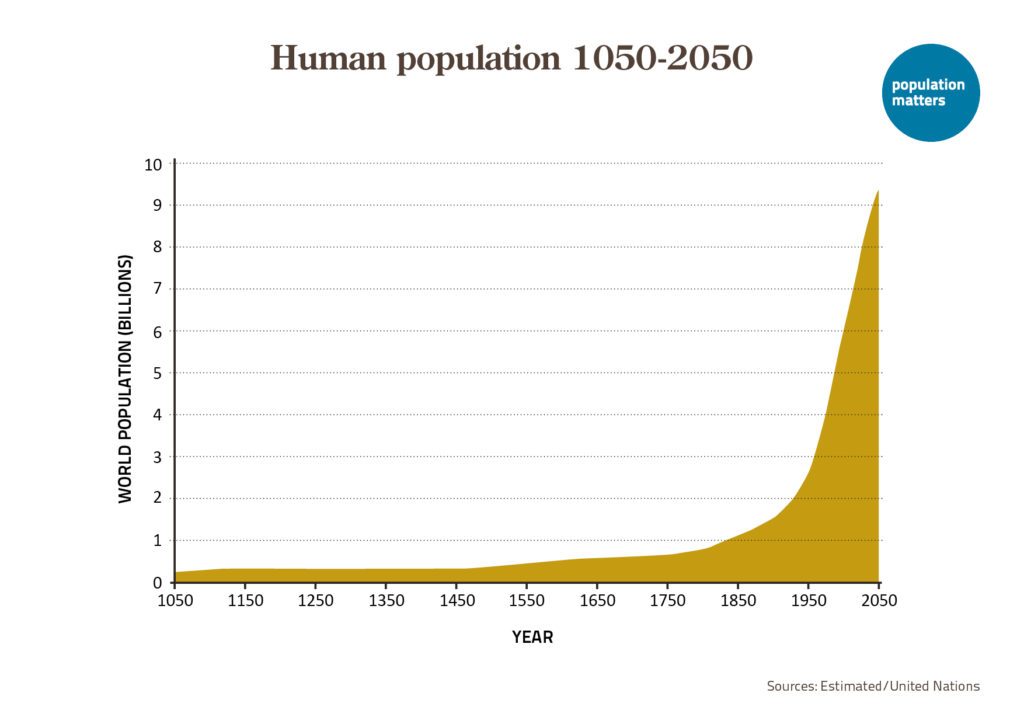
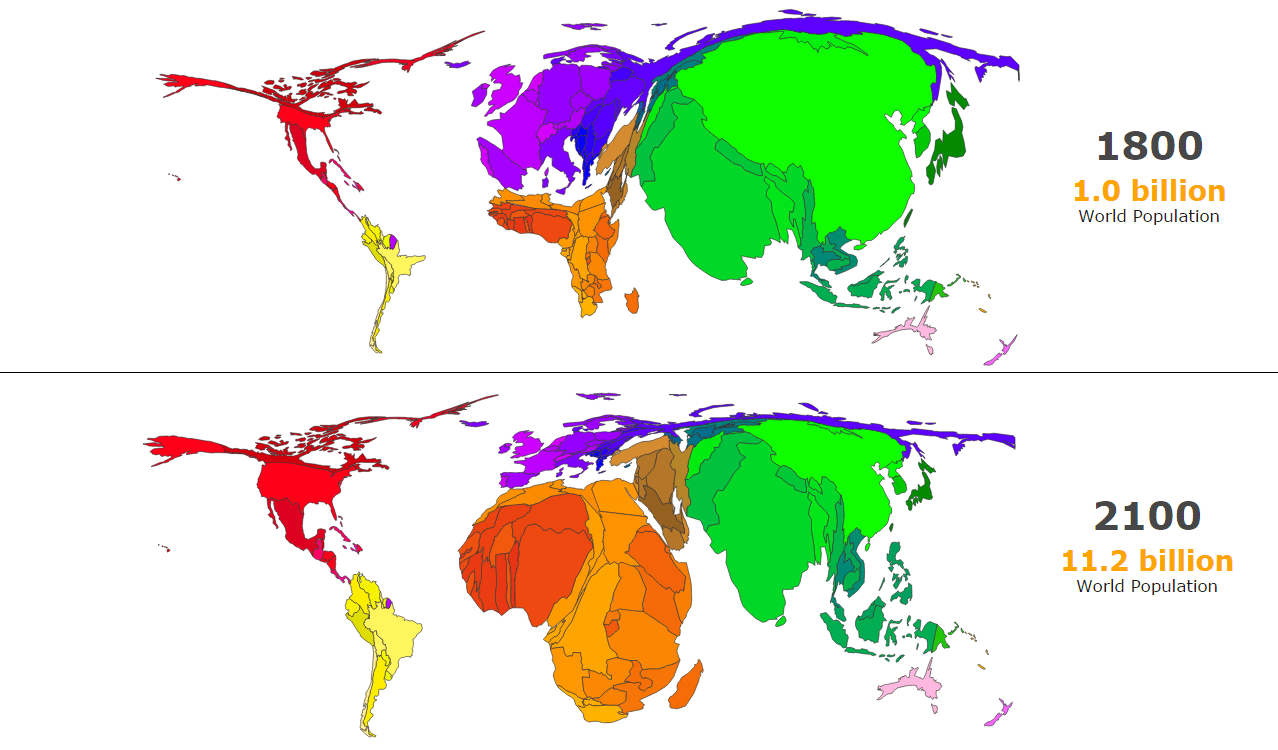
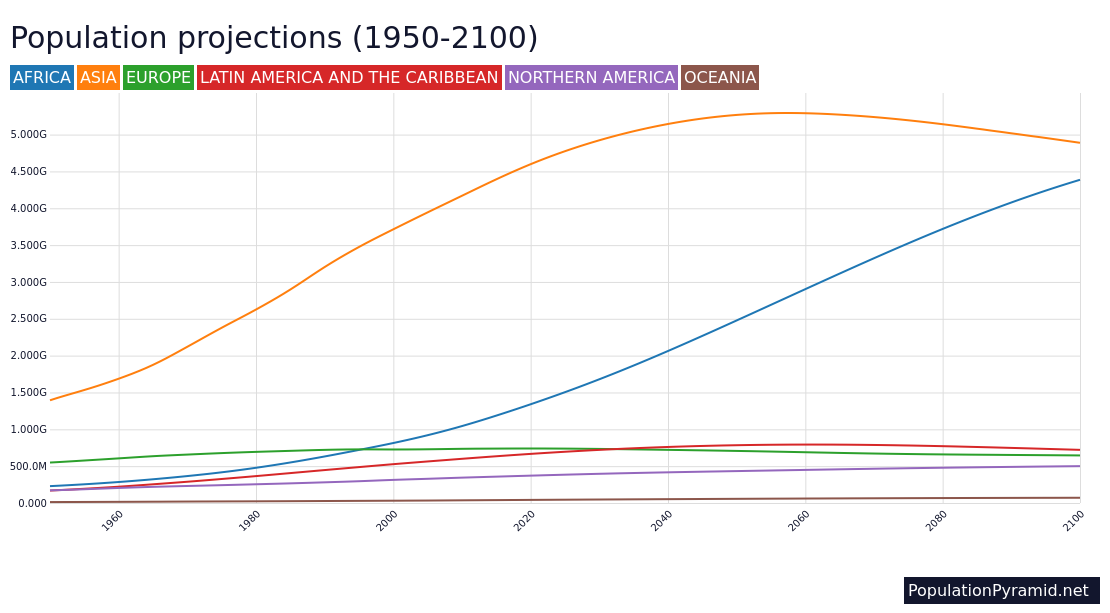
The overwhelmingly bad environmental news, combined with the past hundred year’s population explosion — from two to eight billion human beings — support an argument that the present condition can be referred to as global overpopulation. Yet many environmentalists reject the idea that we need to reduce our populations to achieve sustainable societies. In an effort to get to the bottom of this, TOP now publishes the working paper A New Definition of Global Overpopulation, Explained and Applied. We invite you to read it, to share it, and also tell us what we’ve gotten wrong in the comments below. Go ahead, criticism is valuable and can help us improve the text. If so, we will thank you in the acknowledgements.

*

Judgements regarding population matters, including claims regarding overpopulation, necessarily involve both ethical principles and empirical claims. A useful discussion must make both aspects explicit.

Harming our descendants by degrading essential ecosystem services appears to be an important and preventable evil on any rigorous and defensible approach to ethics. Likewise, extinguishing numerous other species appears to be an important and preventable evil. Stipulating these two ethical principles — it is wrong to seriously degrade future human generations’ necessary ecological support systems, it is wrong to extinguish other species — a working definition of overpopulation follows:

Human societies, or the world as a whole, are overpopulated when their populations are too large to preserve the ecosystem services necessary for future people’s wellbeing and to share the landscape fairly with other species.

In the working paper,  we go on to stipulate and defend the following formal definition of global overpopulation. The world is overpopulated if:

  • people are degrading essential global ecosystem services in ways that could seriously harm current and future human generations; or
  • people are displacing wild animals and plants so thoroughly that we threaten to cause a mass extinction: an event in which a large percentage of Earth’s species are permanently extinguished; and
  • (1) or (2) (or both) are being caused, in part, by an unprecedentedly large global human population; and
  • avoiding (1) or (2) (or both) would become significantly more likely with a smaller global human population.

Formally this should be understood as if [either (1) or (2)] and (3) and (4), then the world is overpopulated.

We hope this definition is broad enough to appeal to the majority of readers, not just hard-core environmentalists, and that it thus can help people set aside ideology and wishful thinking and honestly answer the question: are we overpopulated? Do you have objections? Please let us know.

This definition does not assume an ability to specify an optimum global human population, or a maximum one. Such efforts are also valuable and interesting, but involve many difficult assumptions. They thus typically end in uncertainty, leaving the sense that the question is unsolvable, absolving people of any responsibility to address population matters.

This definition does not ask for “proof” that any particular population size could never be sustainable, either in theory or given sufficient environmental reforms. After all, we can always imagine deploying magical new technologies, or convincing our fellow citizens to undertake unprecedented feats of temperance and self-control.

Instead, given the severity of the potential harms involved and the difficulty of getting people to reform themselves, our definition claims that if those harms are impending and if lowering our populations would likely help us avoid them, people should consider ourselves overpopulated — and take steps to reduce our numbers.

What those steps should be is a further question, one we will be coming back to at TOP. But the case for action requires a clear definition of overpopulation to begin with. Let us know what you think!

Published

40 responses to “A new definition of global overpopulation, explained and applied”

  1. Barbara Rogers Avatar

    This looks reasonable to me.
    The next stage is: how to put the case. Some major environmental and conservation groups are starting to incorporate health and family planning into their strategies for conserving and renewing nature. All credit to a small organisation, the UK-based Margaret Pyke Trust, for tirelessly working to this end. Let’s all join in.
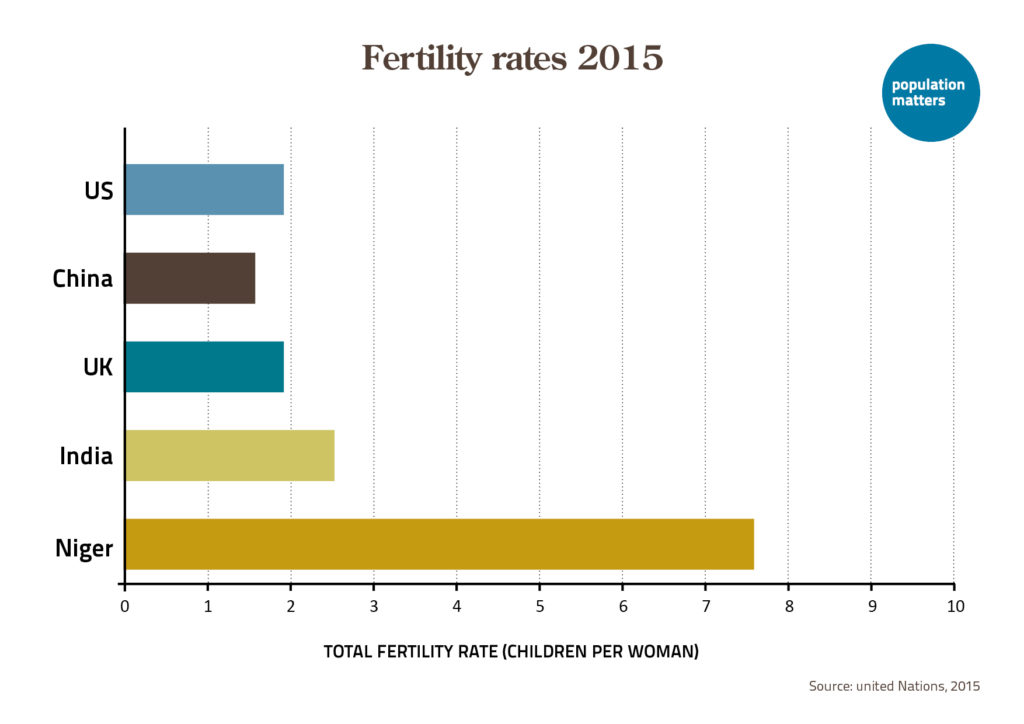
    I suggest that we could also move beyond the “Have more babies for the ageing population” versus “Stop the population growth” argument. We see huge differences between the rich and poor worlds (with exceptions – the US and Bangladesh) by focusing on a balanced approach. The haves and the have-nots: have health systems and family planning, and don’t have any of that. Only when the have-nots are supported will the population issues be finally capable of resolution.

    1. Kathleene Parker Avatar

      Yours is the classic–and incorrect–view that overpopulation is only a “have not” problem, when in fact the core overpopulation problem for Planet Earth is in the “have” nations!
      The primary example–requiring only basic math–is climate change. Let’s start with the “have” nation of the United States with its per-capita carbon emissions of a staggering 18 metric tons per person. (I’m not taking time to double-check these figures, but they’re reasonably accurate.) Meanwhile, the per-capitol carbon emissions of China–deftly unreported or misreported by corporate media–is roughly 8 metric tons per person, while India, the other leading carbon producers comes in at roughly 2.5 metric tons per person.

      This then leads into the math: China’s 8 metric tons must be multiplied by their 1.3 billion (but dropping) population, India’s times their 1.4 billion and (and, as always, rising) population, while the U.S.’s 18 metric tons per capita must be multiplied by our 350 million (rising) population (roughly 330 at the last census, plus Biden’s estimated 18 million increase, comes to roughly 350 million), meaning we are the NEAR-CARBON EQUIVALENT OF CHINA AND INDIA! And if anyone thinks we can solve climate by “green” initiatives while adding more “per capitas,” I must assume they also believe in the tooth fairy.

      Let me also remind everyone that the overpopulated “have not” nations come in at per-capita carbon levels that are essentially, by comparison, inconsequential because some family huddled around a campfire in Zaire simply does not equate environmentally with a U.S. family commuting, having central air and heating, taking trips in jet planes and drying everything in a dryer as though they never even heard of a clothesline. (Yes, the “have not” nations do cause staggering habitat lose to plants and animals.) But, we must get beyond our smug, self-righteous belief that our “small” population doesn’t matter, because (for one thing) it is NOT SMALL. The U.S. is the 3rd MOST POPULATED NATION ON PLANET EARTH, behind India and China (in that order) and has no room to blame others for overpopulation.

      In fact, as Carl Pope once stated in a bumper sticker he ordered the Sierra Club to print (before a multi-million dollar contribution caused him to change his opinion, the United States is “The world’s most overpopulated nation.”

      And while, with our borders mostly closed, 93 percent of the source of the staggering growth rate of recent years is finally slowing, as I’m sure you all know, there is the problem of “momentum,” or it can take 3 or 4 generations to stop growth. My parents had 6 children, my siblings and I had smaller families but had a total of 12 children, much of the next generation had no children, but still weighed in at 10 children.

      1. Philip Cafaro Avatar

        Yes, Paul Ehrlich has often said that the United States may be the world’s most overpopulated nation, given the combination of our numbers and our wealth and attendant consumption.

      2. gaiabaracetti Avatar

        Per capita is not the only measure that matters; I made this argument in a blog here a while back…

      3. Jack Avatar

        The basic formulas are: for population gain is births minus deaths. The basic formula for Impact (I) is I= PAT (population X Activity X technology (often a wild card but also often makes problems worse). Many developing countries have a much higher birth rate than the developed countries. Some of this is due to the higher death rate but a lot is about having more kids as a way to alleviate poverty (mush is also cultural). Problem is, when those from developing countries move to the developed ones their activities goes way up (their reason for moving). It has also been shown within the first generation those from a developing country tend to have more children than the general citizenry. That number goes down with the 2nd generation. The first overpopulation organization, ZPG, reformulated the population gain to specify the different environmental footprint of countries and for those with a higher footprint the formula was: Population gain is births + immigration minus deaths. The immigration part was what the corporations did not like and gave some $100 million to both ZPG and the Sierra Club to remove immigration from the formula.

  2. Barbara Rogers Avatar

    Yes, I know the US is unusual in being a rich nation whose birth rate is high.
    The loss of biodiversity (which is linked to climate change) is very acute in many poorer countries. The natural world is being stripped for agriculture, some of which is of course for export to the global North. It is at the local level that the pressure of more mouths to feed is felt most acutely. This is why it is critical that environmental organisations get involved with our efforts to stabilise population numbers. I agree with you that a decline in our numbers would be no bad thing, but politically this is much more difficult to advocate.

    1. Philip Cafaro Avatar

      Yes, “we need to stabilize our population” sounds much less scary than “we need to reduce our population.” Easier to defend.

      1. Jack Avatar

        Sounds like one of the first groups to get organized at the start of the environmental movement (and got bought out by corporation money) ZPG.

    2. Kathleene Parker Avatar

      By “involved” environmental groups–bear in mind that before it became politically incorrect–I served on the Sierra Club’s national Population Issues Subcommittee, back when ALL environmental organizations focused on population and I=P.A.T. Then, led by Sierra Club, which accepted a (if memory serves) $280 million donation in return for backing off U.S. population, because our growth is essentially (MOSTLY ONLY) from immigration, Executive Direct Carl Pope backed off the topic so fast he left brake marks. That marked the beginning of an era when local chapters had a GAG ORDER placed on them and were banned from even talking about U.S. population, while great national environmental leaders like Governor Dick Lamm of Colorado and Sierra Club great David Brower were condemned by the Sierra Club as “racists” because of their concerns about the demographic impacts of unfettered immigration, which from 1918 to 1967 had been tightly controlled at low, 250,000 or fewer a year!

      Most other environmental groups followed suit, resulting in the dismal situation where the greatest force affecting the U.S.–OUR STAGGERINGLY HIGH POPULATION GROWTH–simply is no longer addressed as a problem by major environmental groups and, in fact, like a religious taboo, can’t even be discussed objectively.

      For a perspective of our population growth, in the early 1970s–about the time of the first Earth Day–the U.S. population was just slightly over 200 million people. Then, in October 2006, we hit the hallmark that the early Rockefeller Commission on Population warned we should never “risk” reaching, or 300 million people, with upwards of 89 percent of that growth driven by immigration. (Births now fuels only 8 percent, or less, of U.S. growth.) But then–and please think about the consequences of this to us and the world–here we are LESS THAN 20 YEARS LATER, already bumping up against 350 million people. In fact, that’s a number the U.N. (whose numbers I trust more than our own Census Bureau’s numbers), said we hit that number in 2020! That as we pretend to believe we can solve climate while still exploding our numbers!

      But for those of you still clinging to the belief our media–thanks to deregulation now legally owned by huge corporate interests not previously allowed, for example, to own broadcast media–is still reporting honestly on anything, please note that their only headlines imply we aren’t growing because of our low birth rate (when immigration, not births, has been the primary growth driver since the 1980s!) and as, when each Census is released, they deftly manage to omit any PERSPECTIVE ON THE STAGGERING GROWTH RATE THAT REPRESENTS! (During the Biden years, we rang in at about the 6th fastest growing nation on Earth, with that 92 percent or more immigration, much of it illegal.)

      1. Philip Cafaro Avatar

        The failure of the Sierra Club and other environmental orgs to face up to the toxicity of growth — demographic and economic — is THE great failure of the modern environmental movement. We debated growth at length in the 1970s, considered being forthrightly anti-growth, and decided to instead get with the neo-liberal program. Big mistake!

      2. Barbara (Bea) Jean Rogers Avatar

        Yes, that was a very sad episode, which I also outline in my book “Children by Choice?” However, as a result of a long and exhaustive campaign there is now beginning to be a turnaround. Look at the IUCN resolutions, for example. (International Union for the Conservation of Nature) The Margaret Pyke website also has plenty of news about this.

    3. Jack Avatar

      A major problem is one of culture. Africa has one of the highest fertility rates in the world and there the women are made to and do feel their role in life is to procreate. Traditional cultural norms do emphasize this role and the leaders of many countries feel that increasing their numbers presents a buffer against invaders. There is also a very paternalistic attitude by men that they are the top dogs. Often, their manhood is determined by how many kids they have. A group that mostly works with developing countries is called EngenderHealth (look it up). The envision a gender free world and works on sexual and reproductive health. One thing they noticed was the role of men so they created a program known as MAP (men as partners). They are one of two in my estate plan.

      1. Kathleene Parker Avatar

        True enough. But where is there ANY real leadership from the Developed Nations on demanding that every reproductive-aged human in the developing world (and developed) has easy, affordable access (Why not FREE access?) to family planning? I hear a great deal from woke friends on the economic advancement of women, but nary a one of them seems to understand that until women (like happened to women in the United States last century) have the ability to control their reproduction, that advancement will be slow to nonexistent.

        How many of us, for example, have considered the social, economic and political implications of “the pill?” I’m of an age where I can remember an aunt (who was not particularly fond of children) being doomed to have four children because, during her reproductive years, there was no truly effective contraception.

        And, “top dog” men, that they ceased having total control over women when women could control the number of children they had, get EDUCATIONS (Two of my aunt’s daughters had advanced degrees or another was high ranking in the military–all had only children they wanted!) and alternatives to being subservient to men that their mother hadn’t had! But then, I also remember a couple of older women in my family enduring abuse from husband who told them they would take it or “be kicked out without a penny” if they didn’t take it–and they did, because that was the social and economic reality for women back in the day.

        The silence of the (alleged) left (in this and other developed nations with the resources to bring change) on the topic of contraception and family planning is something I’m finding hard to forgive, especially considering the direct link (as defined by the Cairo Conference on Population) between population and carbon emissions and species extinction. All of this reminds me of the great population activist Dr. Al Bartlett’s quip that such people believe in “Disney’s First Law: Wishing will make it so!”

  3. Bert Russel Avatar

    In the working paper I think you wrote that the Holocene started around 12,000 BCE. BCE is the same as BC. Since the Holocene started around 12,000 (11,700) years ago, it would be more accurate to say that it started around 10,000 BCE, or around 12,000 years ago (BP).

    1. Philip Cafaro Avatar

      Thanks Bert, I think you are right. I’ll double check that and correct as necessary.

    2. Jack Avatar

      Thank you. As an amateur historian and non-theist I am finding the old dating system BC and AD irksome. The new terminology BCE (before the common era) and ACE After the Common Era – often abbreviated to simply AC) irksome.The world is not Christian so why should everything be measured fro the time of one particular person? Still, it’s been this way a long time and is a set time designation. But we must go back to a non-denominational term but many important institutions as The Smithsonian and the National Geographical still use the older terminology. I have written to both institutions but so far no reply.

      1. gaiabaracetti Avatar

        For what it’s worth, I think that battles against conventions are often a waste of energy. Any other choice would be controversial and force everyone to rewrite all the dates.

  4. gaiabaracetti Avatar

    “convincing our fellow citizens to undertake unprecedented feats of temperance and self-control”, ” difficulty of getting people to reform themselves”
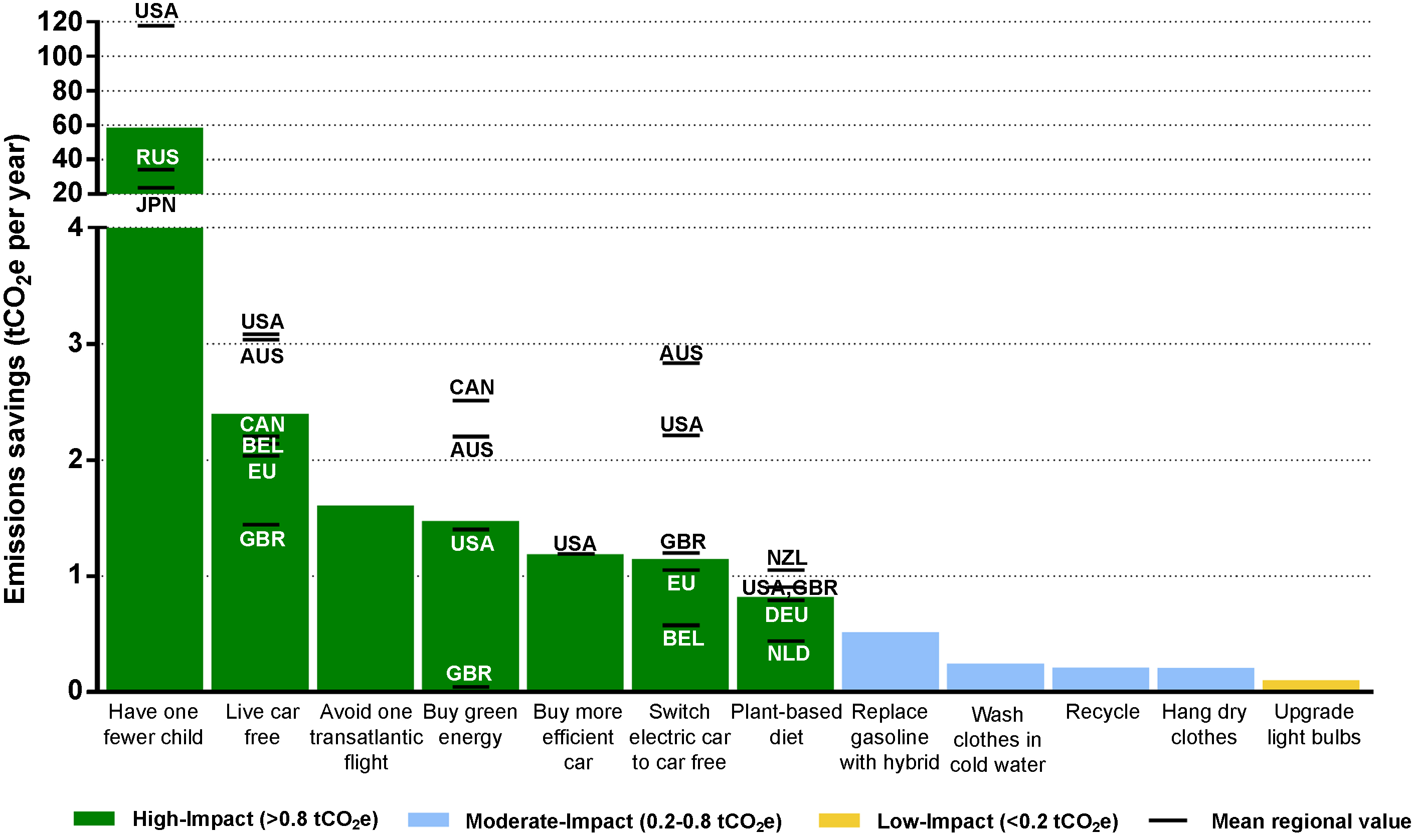
    You keep making these statements and I keep saying the same things in disagreement, so I don’t want to insist too much, but I think that this is both wrong and signalling a subtle bad faith. First of all, it’s not a matter of convincing, but of making different collective choices – even more so than reproduction, actually (see below for why that is). And, of course, you can “convince” people to do anything! Humans are social animals that are unable to live outside of society, so you can get them to do absolutely anything with the right kind of pressures or incentives, including kill, be killed, enslave and be enslaved, and many more other extreme actions. So of course you can influence consumption levels, very easily, with taxes, for example, but also through public spending. Most consumption is structural, not individual; it’s not the result of what people do, but of what their governments and other collective forces do. If you are in a rich country you could live like a hermit and still have a high per capita footprint due to things that are simply imposed on you by law or by everybody else. So it’s not just a matter of people not wanting to “reform themselves”.
    As long as you keep saying stuff like this, it will always sound like it’s rich people who don’t want to stop being rich and think no one else does either, so they are telling others to have less kids. That is the main reason there’s push back against your message. It doesn’t matter how many articles you write and how clearly you state your position; as long as you keep assuming that reducing consumption is not possible or very hard to do, lots of people won’t listen to you.

    1. gaiabaracetti Avatar

      Put another way, how would you feel about an article accepting as an undeniable fact that “convincing our fellow citizens to undertake unprecedented feats of temperance and self-control” was almost impossible when it came to sex and reproduction, and that given the ” difficulty of getting people to reform themselves” in their preferred family size, only lower consumption was an option?

    2. Philip Cafaro Avatar

      Gaia, perhaps you are right. My basic view, which I think you share along with the rest of us at TOP, is that we need to combine fewer people with a new approach to economics that rejects high levels of consumption and the endless pursuit of growth. So I shouldn’t say anything to suggest i am pooh-poohing efforts to consume less or reform our economies in ways lead to less consumption.

      1. gaiabaracetti Avatar

        Yes, of course I share it! And I also agree that it’s fine to focus more on one side of the equation rather than the other if you feel that this is where efforts might be more effective, or if it speaks more to you (a general you), as long as one acknowledges that other approaches are also needed and commendable. I find that among people who care about making the world a better place, no matter what they focus on, so much energy is expended arguing about what is the most important issue, rather than supporting each other towards a common goal. The attention of the general public and of decision makers is so limited, maybe we all feel that we should get a bigger share of it, but I think that being effective in one’s field and leading by example is the best way.

    3. Jack Avatar

      Thank you, again. Too many seem to focus on what should happen but not understand the push back should if the should becomes reality. My late partner, an immigrant from Iran, once told me, in her country the tax code was one child got a tax break, a second child no tax break and a third+ meant an extra tax.
      Making different choices means a better education system and in some poorer countries the supposed need seems to be increase the population as a way to protect oneself from outside invaders. Also, we all know the problems with paternalistic male culture. A group I support is Engender Health which works in developing countries (started with surgical sterilizations) but soon realized there had to be another program aimed at educating men. It’s called the MAP project (men as partners). Still there is an extreme shortage of money for any sexual awareness programs even in developing countries (my state, Washington, has mandated sexuality be taught in the public schools even down to the 1st grade).
      I have found that it’s not a matter of ‘won’t’ but simply do not want to.
      One tiny item, that bothers me, is the word less rather than fewer. Fewer denotes a number whereas less is a quantity. Still, more and more the word fewer is becoming obsolete but, again to me, it sounds just plain wrong.

  5. David Polewka Avatar

    Universal Health Care: If it doesn’t include other critters, future generations,
    and the environment, then it ain’t “universal”!
    https://imgflip.com/i/9p5k3n
    ——————-
    Universal Health Care is not “justice”; it’s “just us”!
    https://imgflip.com/i/9p5iot

  6. Fons Jena Avatar

    I’ve read the working paper with much interest and attention and I’m very glad I did! This is a very nice and solid text that summarizes many aspects I’ve been thinking about too (and which I’ve written down in the manuscript for my book ‘Too many of us – an introduction to overpopulation’).

    It already feels complete for what it’s meant to be so I don’t know what to comment on. One thing that came up during the read is the distinction between sustainable and optimal population size. ‘Optimal’ is used a couples of times while we are in the middle of a text about sustainable numbers. But you clarify this point in the blog post above, so I understand. You want to define overpopulation in general, yet I feel this distinction is an important part that has to be distinguished in a ‘complete’ definition for overpopulation. And thanks for referring to my blog post in optimum population! It’s something I’ll continue working on for my manuscript.

    Something that might maybe be stressed more is the application of the definition on the different continents. To counter ‘leftist’ critique you could add for example that according to this definition current rich countries are more overpopulated then Africa for example. Europe for example is the most overpopulated continent while it is often said that the overpopulation argument is taken by Europeans against non-Europeans. Of course this will change in the coming century, where Africa and Asia are going through (and will complete) both their wealth and demographic transition (the former always follows the last) meaning a exponential growth in consumption and environmental degradation.

    I completely agree with the 5 types of population policies. They are all important and necessary. The last one (5) is necessary for addressing local overpopulation which is often overlooked by people but very important too.

    Congratulations!

    1. Philip Cafaro Avatar

      Thanks Fons, for the useful and supportive comments. Keeping clear on optimal versus maximum sustainable is important. I agree that keeping the focus on excessive population numbers in the developed world can help deflect people “playing the race card.” Keep up the good work yourself!

      1. gaiabaracetti Avatar

        But the race card doesn’t go away because population growth in rich countries is exclusively due to migration…

      2. Fons Jena Avatar

        Gaiabaracetti,
        True, and that should be a strong argument for the ‘right’ to pay attention to overpopulation. But they are like all current political ideologies growth addicted.
        And I believe this dangerous card can only played when the rich countries lead by example and accept population decline. Once we can convince our own leaders and ‘business people’ that population shrink is OK than we gain the moral right to limit migration to a sustainable level (= a level that allows population to shrink).

  7. Forrest Daniel cring Avatar

    My academic research involved the social consequences of global human overpopulation.

    Daniel Cring
    Anthropologist

    https://mahb.stanford.edu/blog/social-distance-an-anthropological-perspective/

    1. Philip Cafaro Avatar

      Interesting article which is well worth the read, thanks for sharing it!

      1. Kathleene Parker Avatar

        But, as a group focused on overpopulation, could we please have at least some discussion of the recent NPG paper (Sorry, since they were legitimately concerned about U.S. overpopulation, they dared to embrace radically reduced U.S. immigration rates.) on why pronatalist policies ALWAYS fail with encourage data showing that ALL global birthrates are falling, with most countries at well-below-replacement level birthrates. That means we have to wait for momentum to do its thing–and no other help, other than to kill people to get rid of population–and Earth will start losing population, though I must admit developed nations should long have been doing more to make sure every adult on the planet has access to free contraception.

  8. gaiabaracetti Avatar

    Fons Jena, I don’t think that a country needs to ask for moral permission from others to curb migration if it chooses to do so. It shouldn’t be doing it the way the US is doing right now, which is cruel and illogical, but that’s what happens when you let a problem fester for too long. I’ve been shocked by how many Americans seem to be ok with people being sent to torture prisons abroad only for having a tattoo… but that’s another kind of problem. There are better ways to do this.

    1. Fons Jena Avatar

      Gaiabaracetti, I agree that we don’t need any permission but I’m being delicate about this lately because our local overpopulation non-profit is trying to get in contact with the ‘environmental’ movement in Belgium. But it looks hopeless. ‘Left’ is woke and ‘right’ doesn’t care about the planet. And we live in a completely polarized society/world where you have to fit in one of those sides otherwise you do not exist. Saying that we need to limit migration because otherwise we have infinite growth on a finite land surface is a golden gate bridge too far. I think they prefer a Belgium that is one big city with 20 million inhabitants instead of limiting migration to a sustainable level that makes shrinking possible.

      1. gaiabaracetti Avatar

        I can totally relate. Unfortunately people are completely out of touch with the natural environment, so they have no idea what it takes to physically sustain a human being. Crowding can be solved with “management”, i.e. limiting people’s mobility, and farmers mostly only see land as something for human use. When I tell people that things cost money because they are not infinite, they are made of stuff that does not come in unlimited supply, they don’t believe me. It must be someone up there taking the money from them, that’s it.
        Brussel being flooded with people who aren’t from there won’t help you, either. Bonne chance!

      2. Fons Jena Avatar

        Ahah thank you gaiabaracetti. Yes the higher the population density the more complex the society and more limited the individual freedoms (and the more anthropocentric the reference frame). We are good at that kind of management…
        I don’t mind a little bit of migrants and taking our ‘responsibility’ for refugees, but reality is a totally different scale. We are talking about replacement-level migration, phenomena that only happened now and then in human history with results we all know (disappearance of ethnicities and cultures). It’s a shame that we’re being called the bad guys while we are in fact the complete opposite.

    2. Kathleene Parker Avatar

      And yet, the decades of silence by people like you over what the influx of THOUSANDS of cartel members, of drugs (including fentanyl that recently killed 4 who presumed to just TOUCH SOMETHING at my local high school), the crime and the “imported” poverty into states like my impoverished New Mexico where one of the joys of open borders is the development of massive ghetto-like colonies. (But, of course, CORPORATE, OPEN-BORDERS MEDIA don’t report on things like that. A favorite of mine (sarcasm) is how Hernandez, New Mexico–where Ansel Adams photographed “Moon over Hernandez”–as it looked then, versus how it looks now, with trashed mobile homes serving as housing being particularly charming, though on the up side, I hear reports of extra planes having to be affixed to routes south from Albuquerque to accommodate those who’ve suddenly decided to “self-deport.”

      I also stand firmly with those who advocate due process for those who are citizens and who have respected our immigration laws and who are in our country LEGALLY, while questioning why it is that those who deliberately entered our nation in flagrant violation of our laws to bring drugs, South and Central American gangs, human trafficking, CHILD TRAFFICKING and violent crime are now allowed to scream for “due process.” The extremist actions of the Trump administration are exactly what you get in a direct one-to-one reaction to an administration that, in violation of our Constitution (If you believe what Obama earlier said about suggestions he do what Biden later did.) and that as media looked the other way. We’ve had years of a gutted border, a “come one, come all” approach, no thought to consequences, including that national security experts (such as at Los Alamos National Laboratory) were trying to sound the alarm about the worst of the worst coming out of Venezuela, Brazil, Columbia, Mexico–and that as the “deporting” country looked on with delight that their violent criminal problems were becoming our problem.

      I do think, if we had an HONEST FOURTH ESTATE, they’d be polling the American people to ask just how much of the righteous indignation over deportations and even imprisonments is real and how much of it is pure media depictions and constructs–and that by a media owned by “corporate” interests that have profited mightily from open borders.

  9. Dag Lindgren Avatar

    I claim that the world is overpopulated NOW and the world should welcome further reduction in births even in countries where birth rates are low. But that does not mean that I agree that the criteria mentioned are fullfilled, even if some think so. The reasons I strongly claim we are overpopulated are much more complex, although the factors mentioned are important parts of the picture.

  10. Dr Graham Clews. Avatar

    Hi Phil,
    With regard to your definition, I would propose the following amendment: After ‘extinction’ in point two add: “or continue to diminish abundance.” or, perhaps, amend to “so thoroughly that we continue to diminish abundance and threaten mass extinction.”
    I remember reading an article some years ago that warned of a focus on diversity at the expense of abundance and it has stayed with me ever since. I think the message was that a focus on diversity alone leaves the field — or a great portion of it — open to the endless human encroachment into natural spaces and the ongoing decline in the volume of flora and fauna. Developers and greed-and-growthists could ask for nothing more!
    In Australia, our current Minister for the Environment, Tanya Plibersek (just another disaster in a long line of disasters), declared “No more extinctions” at the beginning of her term. Meanwhile, we have had enormous immigration-fed population driving an endless growth in our consumption. Accompanying this, we have been given details of the her 70/30 environmental split — 70 % for us and 30% for everything else! That she is able to promote simultaneously these two antithetical aspirations is an example of the void that is created when we prioritise diversity over abundance! Now, clearly, abundance is most helpful if one is to avoid extinctions, but it is not critical and the gap between these two aspirations is large enough to drive a truck through — and much else! I submit that your focus on mass extinction alone has given that truck a four lane highway!
    At the end of her tenure, Ms Plibersek could readily argue that she had fulfilled her commitment re extinctions even if there were but a handful of a species left (and some of those in cryogenic chambers!) and given the chance she will. She might even do a Noah and claim a breeding pair sufficient! Meanwhile, our environment — flora and fauna — could continue to shrink under the population juggernaut, as, indeed, it is.

    Anyway, food for thought, I hope.

    Regards,
    Dr Graham Clews.

    1. gaiabaracetti Avatar

      This is a good point! I’ve often wondered why we are so focused on biodiversity, whether it reflects our obsession with “diversity” in human affairs more generally. Of course there are obvious benefits to diversity, but there are benefits to homogeneity too. And yes, species abundance is underrated.

      1. Dr Graham Clews. Avatar

        Given Gai’s comment, I feel the need to clarify. By inviting Phil to consider emphasizing the importance of abundance in the definition he proposes, I was not intending, in any way, to diminish the critical importance of diversity.
        I think Gai is conflating two issues when writing of those who continue to push cultural diversity over homogeneity within human populations. Her point is valid re: those populations but are not relevant to the point I was making.
        Phil, I would appreciate your thoughts on the importance of ‘abundance’ and its inclusion in your definition.

  11. gaiabaracetti Avatar

    Dr Graham Clews, I’ve definitely noticed that science follows social trends. So there could be a relation between the two.
    And there is definitely a conflict, in some cases, between abundance and diversity. For example there’s a debate now when it pertains to Europe, wood vs pasture. If you preserve the pastures/meadows/grass you get a lot more biodiversity, but less woods with the associated species.

Leave a Reply

This site uses Akismet to reduce spam. Learn how your comment data is processed.

NOTE: Comments with more than one link will be held in wait and will only become visible on the site after an admin has approved it.

Explore the content and topics covered by TOP, search here

Blog categories

Gallery of infographics – Learn more about overpopulation and environment

Discover more from The Overpopulation Project

Subscribe now to keep reading and get access to the full archive.

Continue reading