Toward sustainable economies

Creating economies that do not devastate the natural world on which they depend is the economic challenge of the 21st century. An intriguing new book from Theodore Lianos explores different answers regarding what that might look like.

by Anastasia Pseiridis

Capitalism has fuelled unprecedented economic growth over the last three centuries. The emblematic phrase ‘grow or die’ aptly captures its trajectory and results. However, ‘everything changes and nothing remains the same’. Capitalism, a victim of its own success and the greed it cultivated, seems to have reached its end. An objective observer can discern this by examining the state of international politics, economics, and the planet.

The end of capitalism, in its current form, is near. The interesting question is ‘what will follow?’ A new type of socialism? A system of a steady state economy working within the planetary limits? A truly mixed economy?

These are the topics addressed in a new book by Theodore Lianos, Capitalism, Degrowth and the Steady State Economy: Debating Future Economic Models. It is essential reading for anyone who has ever wondered about the future of humanity. There is also a latent anxiety, shared by many, about whether humanity has the luxury of time to search for the new system that will ensure her survival before being torn apart by the monstrous problems she has created.

The main advantages of the book are its simplicity and clarity, making it particularly easy to read, despite the gravity of the topics it addresses. The author helps the reader navigate a vast bibliography of ideas presenting facts about the current state of humanity and the main arguments of competing ideas for organising society and the economy, as well as offering a brief but in-depth evaluation of these ideas. The material is organised in small chapters and the chapter sections are easy to read as stand-alone snippets.

Perhaps the most important aspect of the book is that the author incorporates the need for sustainability into the evaluation of each system and equips the reader with the tools to ask better versions of old questions and form their own opinion.

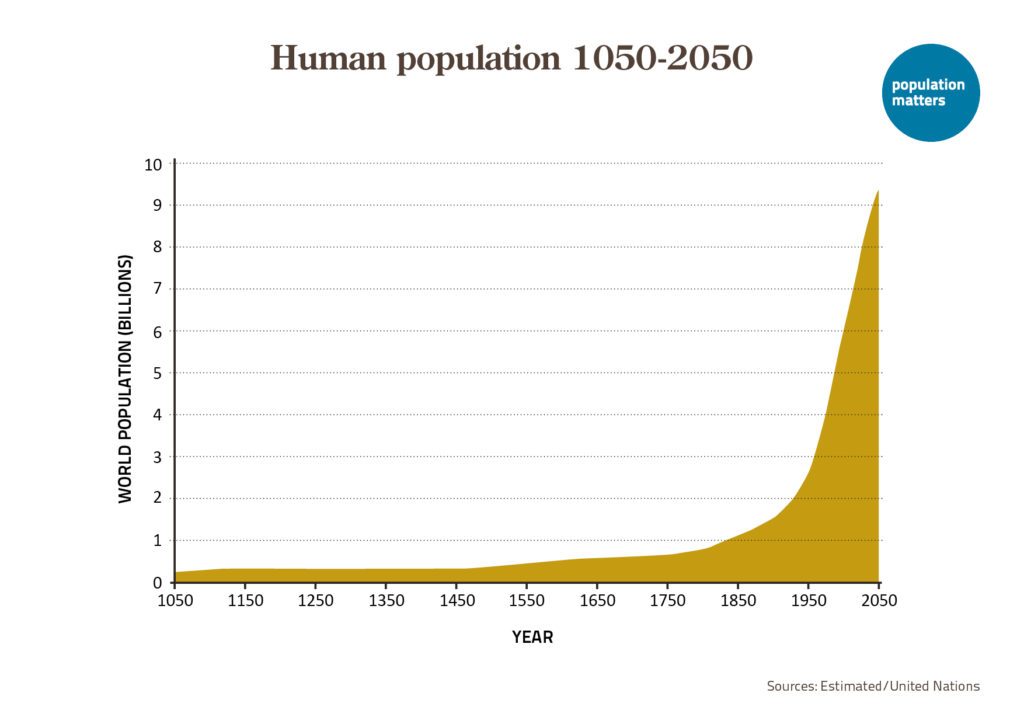
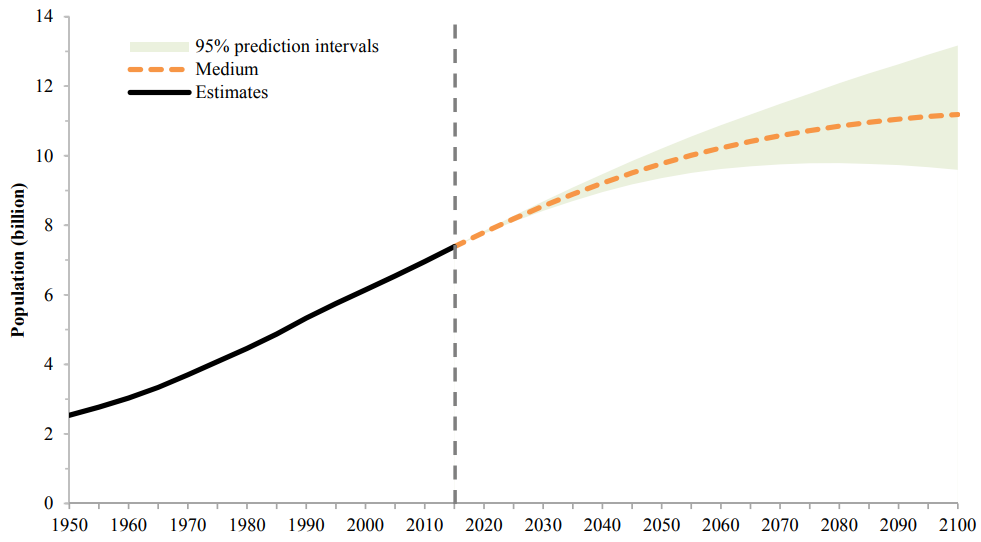
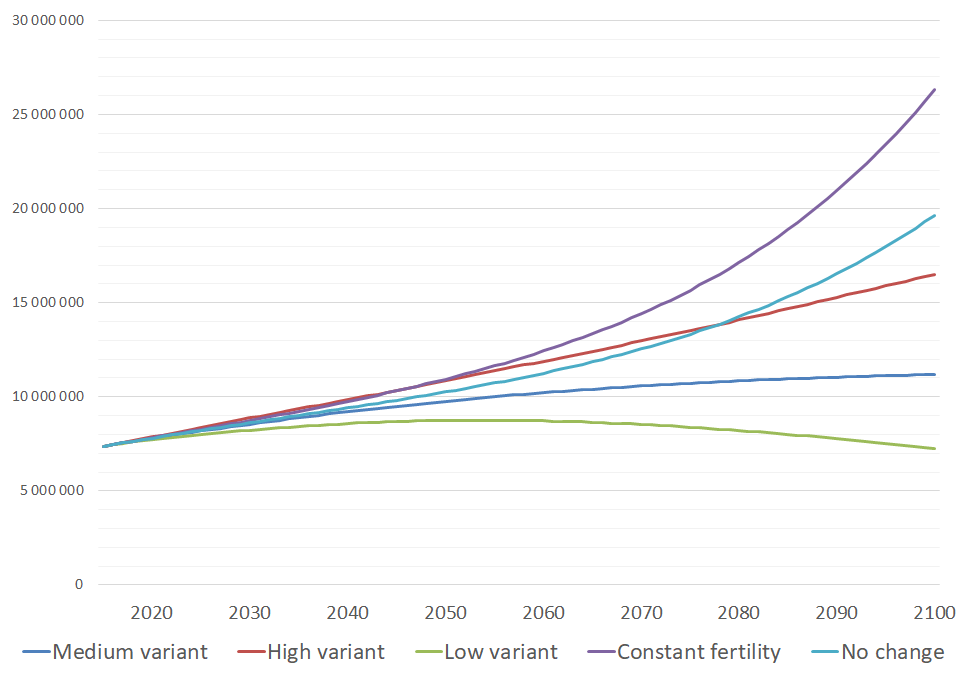
The content of the book can be divided into four sections. The first presents various views that have been expressed about the future of capitalism: from the Communist Manifesto of Marx and Engels to Keynes and contemporary economists, sociologists, and political scientists. The second section examines contemporary data on the state of the planet and the global population, with an emphasis on the problems of modern capitalism – economic, social and environmental. The third section explains how the growing population and the limited resources of the Earth will bring economic and political changes and small and large wars, and will lead to the search for new forms of social organisation. The final section describes and evaluates some alternative models that have been proposed: the model of the steady-state economy, participatory socialism, degrowth, eco-socialism, and the communist model of Oskar Lange. More space in the book is devoted to the steady state economy, as it serves as a tool to evaluate alternative systems.

While the book is an engaging read, many of its ideas may disturb the reader’s enjoyment. Not so much because of the pessimism of the author himself, but because it will become clear that the lack of pessimism (or its deliberate avoidance) has allowed human societies to live and dream beyond their capabilities. It nurtured societies that risk self-destruction by neglecting the long-term consequences of their actions – societies that do not care for a large part of the current population nor for the future generations of humans, non-human animals, and the environment. It created fragile societies that do not consider the cost of their decisions to other people, to other animals, and to nature.

But… global GDP has increased eightfold (in real terms) in the last sixty years. One would expect, thinking simply, that the problems people faced in 1960 would be solved today, at least 7/8 of them. This remains a critical question.

By integrating sustainability and the planet’s finite resources into discussions of alternative economic models, the book challenges conventional political narratives. It exposes how many of these ideas, rooted in flawed assumptions, fail to promote democracy, equality, justice, or the protection of nature and the weak. It demonstrates that humans have become the greatest enemy of their own species.

Paraphrasing Gandhi, the quality of a civilisation can be judged by how it treats the weakest. The harms currently experienced by the weakest humans (hunger, economic suffering, inequalities of all kinds, armed conflicts) show us that the quality of our civilisation is disappointingly low. Strikingly absent from discussions of justice and equality are non-human animals. These sentient beings, whether exploited for production or living freely in the few fragments of nature that still escape the continuous destruction of natural habitats, remain excluded from moral considerations in economic systems. It would be unorthodox to find them in Professor Lianos’ discussion. But to be fair, they should; writers with similar interests have at least acknowledged this issue (Ehrlich, 2018; Daly, 2018). The destruction of the environment renders non-human animals and nature as the ‘invisible weak’. If we consider the harm we inflict on them, too, then the quality of our civilisation is even lower.

While reading the book, I wondered whether there is a political figure who can claim to have achieved something positive for the weakest without burdening other people in some other corner of their country or the Earth. One thing is certain: the unbridled post-WWII ‘growth party’ has taken place at the expense of the weak – of all kinds – and ‘politics as usual’ has not served the interests of all equally. The Furies that will destroy the current system have already been born and are breathing down on us; Professor Lianos is amongst the few who clearly see this.

Towards the end of the book, one gets the feeling that humanity’s primary need is not actually a strong economy but an alternative political discourse and an alternative organisation of society, uniting people and guaranteeing peace. The trade of politics will have to create other arguments, other ethics, other goals than those it has today. The discussion about the future of capitalism underscores the urgent need to turn to more humane and more sustainable goals when discussing the economy, development, and societal wellbeing. The economy should serve as a means to promote progress, not a vehicle for self-destruction. Development and wellbeing should be redefined in terms of democracy, justice and equality, rather than being measured in monetary terms.

The myth of Erysíchthon, invoked in the book’s epilogue, serves as a potent metaphor for humanity’s current trajectory. This king chopped down a grove of trees sacred to the goddess Demeter, who cursed him with an insatiable hunger, driving him to exhaust all his and his subjects’ wealth and eventually devour his own flesh. If we fail to redefine progress and well-being in terms of democracy, justice and sustainability, we risk a fate akin to Erysíchthon. Theodore Lianos’ work is a compelling call to action that transcends political ideologies and urges a collective reimagining of our future.

References

Daly, Herman. 2018. ‘Envisioning a successful Steady-State Economy’. The Journal of Population and Sustainability 3 (1): 21–33. https://doi.org/10.3197/jps.2018.3.1.21

Ehrlich, Paul. 2018. ‘Anthrozoology: Embracing co-existence in the Anthropocene. Michael Charles Tobias and Jane Gray Morrison’ The Journal of Population and Sustainability 2 (2): 63–65. https://doi.org/10.3197/jps.2018.2.2.63

Published

14 responses to “Toward sustainable economies”

  1. gaiabaracetti Avatar

    I’ve always found the idea that it’s all the fault of capitalism too narrow. Humanity was destroying nature well before capitalism, and major alternative systems, such as communism, were no better. I think that the problem is the obsession with all forms of growth, and the excessive prioritization of human interests above everyone and everything else.

    1. Philip Cafaro Avatar

      I think capitalism here is shorthand for “the current economic system,: which is indeed a capitalist one. But your comment brings up the point that merely transitioning to a more socialistic system will not get us to sustainability. I think Lianos agrees, which is why he wrote this book: to explore potential alternatives.

      It would be interesting to know what he makes of efforts to create a reformed, green capitalism. Perhaps he discusses this and decides it isn’t possible …?

      1. gaiabaracetti Avatar

        I think that you cannot have capitalism without growth; hence, it is inherently unsustainable.

    2. Kathleene Parker Avatar

      You asked how grazing contributes to wildfire. Duh, in the American Southwest, it’s causative, and let me remind you that Europe’s forests BEAR NO SIMILARITY TO THE MID-ELEVATION PONDEROSA PINE FORESTS of the American Southwest, where stands of timber SHOULD be a couple of dozen per acre, but because livestock grazing interrupted the natural burn cycle, combined with fire suppression by the U.S. Forest Service, etc., combined with logging that took the HUGE fire-resistant trees and left the burgeoning numbers of small, sickly “dog-eared” thickets, the Southwest has forests that are now being called “forests of gasoline.” I suggest you read my recent article in the SANTA FE REPORTER, available online and entitled, “Forests of Gasoline.”

  2. Kathleene Parker Avatar

    And yet a great economist, Adam Smith, who most economist revere as the founder of Capitalism, was quite clear in one of his short, defining documents, we must grow within reason, to a certain point and then move to simply maintain or risk (He sounds like an environmental looney!) burning up, exhausting and destroying that upon which our economy depends.

    And it is too much to just blame capitalism–though as I listen to today’s media PRETEND to care about climate in one breath, then pitch fits over tariffs reducing bringing things from half-a-world away or those espousing concern then maxing out their unpaid credit cards again–there is plenty of blame to go around.

    My main concern is that in the 1970s, humankind seemed to show some focus on moving toward stabilized population and lower consumption, but then with media deregulation (revocation of the Fairness Doctrine in 1987 and passage of the 1996 Telecommunications Act (which meant our oligarch, for the first time, could control our media) all seemed lost since we are no longer even being allowed the correct conversation on the state of our planet.

    How many people, for example, know the U.S. population (or how fast we’re growing) or the global population (or how fast its growing) or that the National Academies of 54 nations, way back in the late 1980s, said that we cannot fight climate change, species extinction, or ANY environmental problem without first addressing population. Worse, many are such environmental dufouses, they have no concept of the link between the two–education that media USED TO (under Cronkite, Huntley-Brinkley, McGee) used to do.

  3. Raghu Kalakuntla Avatar

    I think I am a well meaning person but I was talking to my mom and she said my ancestors 200 years ago cleared a forest to build their small hamlet back in India.

    1. Kathleene Parker Avatar

      Well, my ancestors–people who I know loved Nature and the land–grazed their livestock in ways that, today, mean the forests of the American Southwest are subject to “mega fires,” or landscaped-sized fires that consume hundreds of thousands of acres. They can hardly be faulted, as no one at the time understood what they were doing, though this does point directly to population. People have to live and earn livings somehow, with the harm partly a direct product of our numbers.

      1. gaiabaracetti Avatar

        How was grazing related to wildfires? In Europe it’s the opposite, they are paying people to graze as it supposedly reduces fire risk.

  4. David Polewka Avatar

    What Are Microplastics Doing to Our Bodies? This Lab Is Racing to Find Out.
    By Nina Agrawal, April 8, 2025, New York Times
    The characteristics of the plastics Dr. Campen’s team found in human tissue suggest they came primarily from waste that was produced many years ago and was weathered over time. The researchers found a significant amount of polyethylene, for example, the dominant type of plastic produced in the 1960s, but less of the plastic used in water bottles, which took off in the 1990s.
    Because plastic production has doubled every 10 to 15 years, even if we were to stop making it today, so much plastic is already in use that more and more plastic waste would accumulate in the environment and, potentially, in our bodies for decades to come.
    Dr. Campen suspects the main way these plastics get inside our bodies is when we ingest them, long after they’ve been discarded and started to break down. He is less concerned about so-called fresh plastics, like those that slough off cutting boards and water bottles as we are using them, because those particles are much larger and newer than what he has measured. And research suggests that the body clears out some larger microplastics.
    Dr. Campen acknowledged that his view on fresh plastics was “unconventional,” and other scientists say it’s worth taking steps to reduce your exposure. It’s clear that microplastics can leach out of water bottles, microwaved food containers and synthetic clothing, and research from animal studies suggests these particles could be harmful, said Tracey Woodruff, director of the program on reproductive health and the environment at UC San Francisco.
    “Maybe more of it is coming from this degraded microplastic, but that doesn’t mean you’re not getting exposed from these other, fresher microplastics,” Dr. Woodruff said. Larger particles can still affect the gut, which might then affect the rest of the body, Dr. Campen said.
    Additionally, scientists believe that certain chemicals in plastics, like phthalates, bisphenol A and flame retardants, can harm human health. “There’s many years of study on these plastics to be done,” Dr. Woodruff said. “But we still have plenty of science to be like, ‘Wow, I know I don’t want to be exposed to any more plastics.’”
    Dr. Tyler said the University of New Mexico lab had done the best work possible for such a nascent field. “Matt’s group is at the very cutting edge,” she said.
    But, as with any early science, there are caveats. For one, these tiny particles are extremely difficult to measure. And nobody has yet repeated the research to see if the results hold up. The big question is whether everything they’re measuring is actually plastic — or if some of it is lipids, which can look similar chemically but occur naturally in the body.
    “The estimates they have for how much is in the brain seem high,” Dr. Woodruff said. But even if they are, she said, “that wouldn’t negate the findings that they’re seeing more plastics over time. And that actually is very consistent with what we know about the production of plastic.”
    There’s one question Dr. Campen and Dr. Garcia feel they have started to answer with some confidence. That’s the one they began with: How much plastic is in our bodies?
    Now they are ready to explore possible links between certain doses and human health outcomes, such as heart disease, fertility issues and multiple sclerosis.
    And they are starting an experiment in animals to understand what doses might be harmful.
    Teya Garland, a pharmacy student, was beginning that process in the lab. Wearing a mask to avoid inhaling particles, she inserted bits of what looked like colored chalk into a machine that howled eerily as it froze and pulverized the plastics. Eventually, researchers will feed them to mice and study how different levels and types affect their brains and behavior.
    The pieces had come from the beach in Hawaii, where Dr. Garcia and others collected 1,800 pounds of plastic debris and 500 pounds of netting. Volunteers there clear about that amount every few weeks.
    “It’s one thing to see a picture,” Dr. Garcia said, looking at a video he shot on his phone. “To see it when we were there, it just opens your eyes,” he added. Every imaginable use for plastic — takeout containers, bleach bottles, cigarettes, plastic bags and even lab equipment — seemed to be represented on that beach and in the ocean that stretched beyond it. And every day, it was breaking down, getting smaller and smaller.
    One day, some of it could end up in us.
    https://www.nytimes.com/2025/04/08/well/microplastics-health.html

  5. David Polewka Avatar

    Salmon migration affected by drug pollution in water from antianxiety medication
    By Mindy Weisberger, CNN, April 16, 2025
    Fish with clobazam implants were also faster at getting past two hydropower dams along their migration route — about 2-8 times faster than fish in the other groups. These dams are notorious death zones, where churning turbines can swiftly reduce smolts to salmon tartare.
    By diminishing fear in smolts, clobazam might briefly benefit the fish by boosting their migration success. But the drug could also increase their vulnerability to ocean predators, decreasing their chances of surviving long enough to return home to spawn, Caudill said.
    “The transition from freshwater to saltwater is one of the most dangerous times in the life of a salmon because they experience many new predators in the ocean,” he said. Drug-exposed and risk-taking salmon may be more likely to reach the Baltic, but less likely to ever leave it alive.
    Caudill’s research investigates how environmental change affects fish ecology and evolution. In future work, he said, “I do plan to consider the potential for behavioral effects from pharmaceutical pollution.”
    Further study will clarify how behavioral changes from drug pollution affect long-term survival, reproduction and how populations change over time — in salmon and in other wildlife that are vulnerable to pharmaceutical contaminants.
    “While more drug-exposed salmon may reach the sea, it doesn’t mean they’re healthy or that the population benefits in the long term,” Michelangeli said.
    “The bottom line is we need to be cautious with this interpretation. Changing behaviour with pharmaceuticals — even unintentionally — could reshape whole populations in ways we don’t yet understand.”
    https://www.cnn.com/2025/04/16/science/drug-pollution-affect-salmon-migration/index.html

  6. Stable Genius Avatar

    Going back 100 years and more, sustainable economies have never been a more distant or hopeless cause. Capitalists, religionists, UN, all speak as one voice. Endless growth is fine these days, because “climate-action” for net-zero rainbow will fix thing, only racists think otherwise. Ironic, that the ego-brainiacs who dreamed up “net zero” had, by the accounts that can I find, “good intentions”.

  7. Anthony Deg Avatar

    The Overpopulation Project,

    Please send me your LIST of How to Stop Overpopulation so that I can forward to world so they can Help and DONATE to your organization.

    Please send me your LIST of How to Stop Overpopulation in a separate email.


Leave a Reply

This site uses Akismet to reduce spam. Learn how your comment data is processed.

NOTE: Comments with more than one link will be held in wait and will only become visible on the site after an admin has approved it.

Explore the content and topics covered by TOP, search here

Blog categories

Gallery of infographics – Learn more about overpopulation and environment

Discover more from The Overpopulation Project

Subscribe now to keep reading and get access to the full archive.

Continue reading